How a Company Goes from Zero to $100 Billion in Value | 5Y View

In the constant process of making decisions, companies seize pivotal opportunities to stand out.

Kai Liu
Partner, 5Y Capital
Traditionally, East Asian civilization has been at a disadvantage when it comes to building abstract concepts and engaging in speculative thinking. We're drilled with rules and norms from childhood, but rarely does anyone explain the reasoning behind them. Whether it's personal life decisions, corporate strategy choices, or even national policy settings — do we rely on past experience, cross the river by feeling the stones, or is there actually a more systematic, scientific decision-making framework we can depend on?
Today's recommended article offers a very clear and actionable decision-making framework, fully applicable to entrepreneurs who make a living building companies. I hope it proves useful in your daily lives as well.
This article is republished from the WeChat public account "Pangfu Mantou."
Coinbase, the "first digital currency exchange" to go public, listed on Nasdaq on April 14, 2021, with its market cap briefly surpassing $100 billion. Founder Brian Armstrong is an extraordinarily ambitious person. He first encountered Bitcoin during the 2010 Christmas season, when the blockchain and digital currency industry was still in an extremely barren state. In 2012, Coinbase was born into such an early-stage industry with extraordinarily high uncertainty. Under Brian's leadership, Coinbase gradually grew over the past decade, navigating countless deeply consequential decisions. Brian open-sourced the decision model he refined throughout Coinbase's development — one particularly suited to high-stakes decisions in the face of ambiguity.
The following is an article by Coinbase founder Brian Armstrong:
At Coinbase, one of our core values is "transparent communication, efficient execution." This decision-making framework is an embodiment of that value. It can be applied to decisions such as:
- Whether to hire a particular candidate
- Prioritization calls in a product roadmap
- Whether to acquire or divest a company
- Naming a product or team
- And so on...
If difficult, slow decision-making processes are leading to endless meetings, frustrated employees, and second-guessing, then tough decisions are dragging your organization down and seriously hindering growth. Coinbase's decision framework might just save you. We've also created a Coinbase decision template to help you better master the entire decision flow.
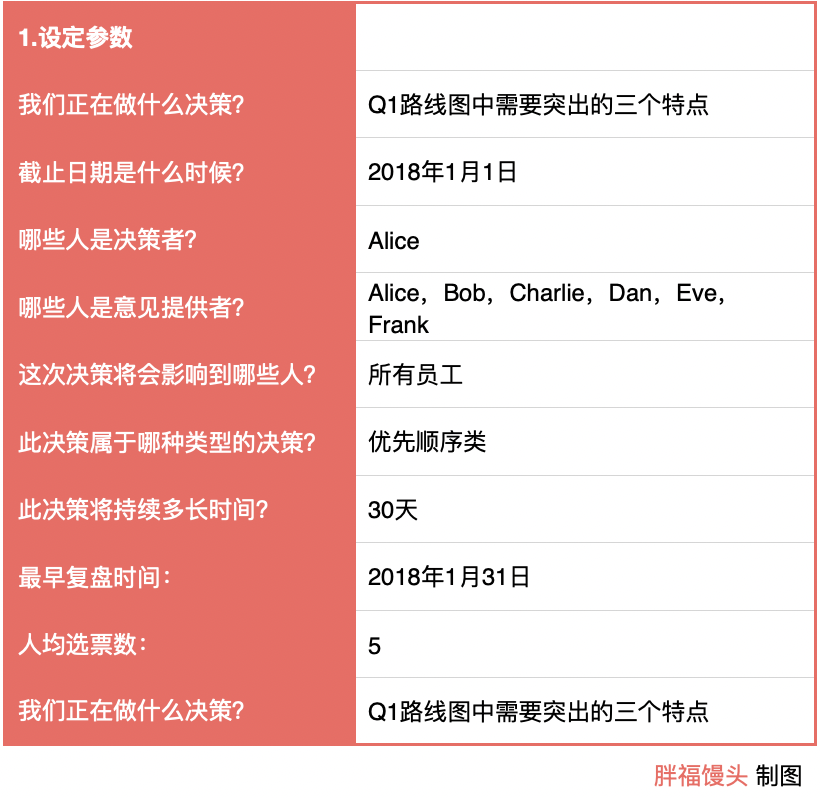
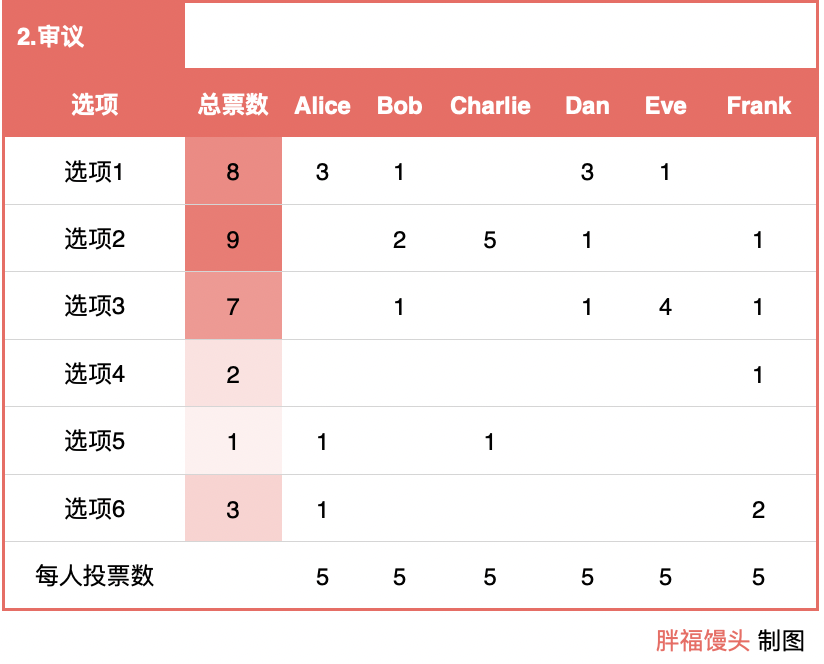
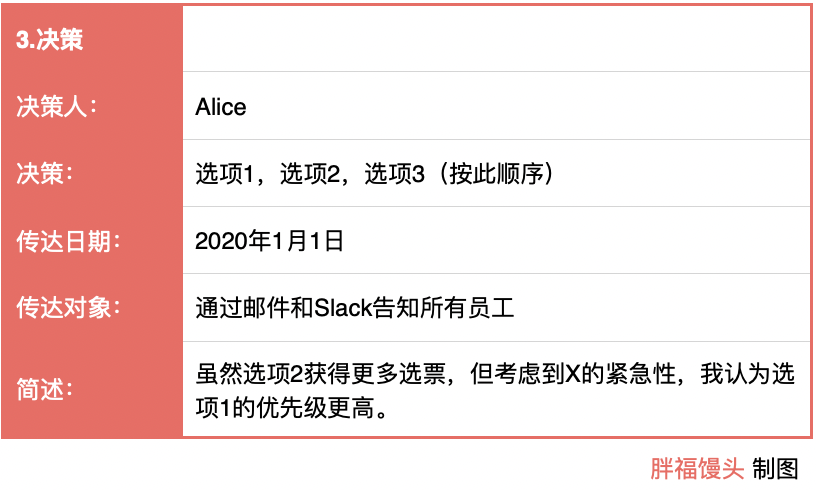
The Coinbase decision template framework consists of three steps:
- Set parameters
- Deliberate
- Decide
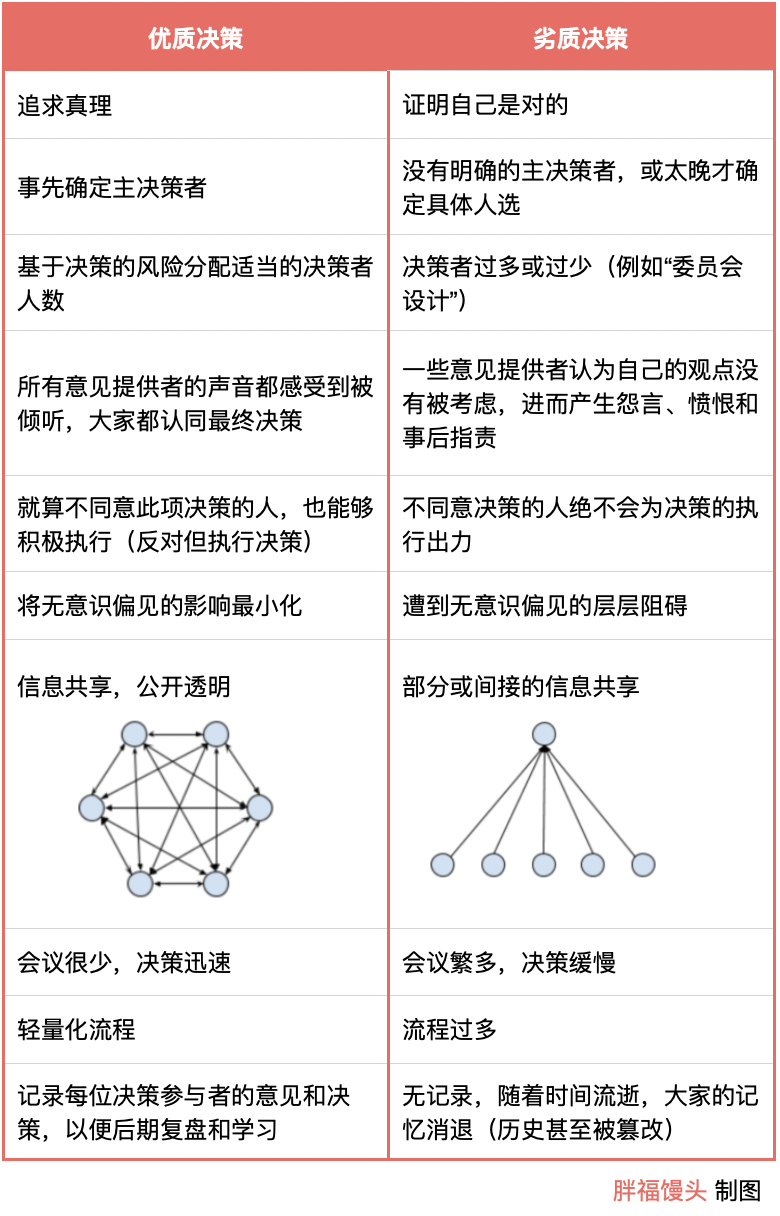
Next, we'll elaborate on each step. But first, let's look at what distinguishes good decisions from bad ones.
01 What Does a Good Decision Look Like?
02 When Do You Need a Decision Framework?
Most decisions in a company are low-risk and can be made unilaterally by the leader in that domain (for example, whether to move this week's meeting from Monday to Tuesday).
You only need a decision framework when facing ambiguous, high-stakes decisions. High stakes mean the decision has long-term consequences, or that making the wrong call would carry a heavy price.
The decision process can be very lightweight — I've seen a decision go from zero to done in a 15-minute video call. But for major decisions, it might take several weeks.
With experience, you'll likely be able to more quickly judge when this framework fits best. In other cases, you'll only know to apply Coinbase's framework when you encounter disagreement or aren't clear on next steps.
Whatever the decision, once you choose to adopt this framework, simply follow these steps.
03 The Coinbase Decision Framework
1. Set Parameters
In this step, you need to ensure everyone fully understands how the decision will be made. Giving participants advance notice of the decision content helps secure buy-in and minimizes second-guessing.
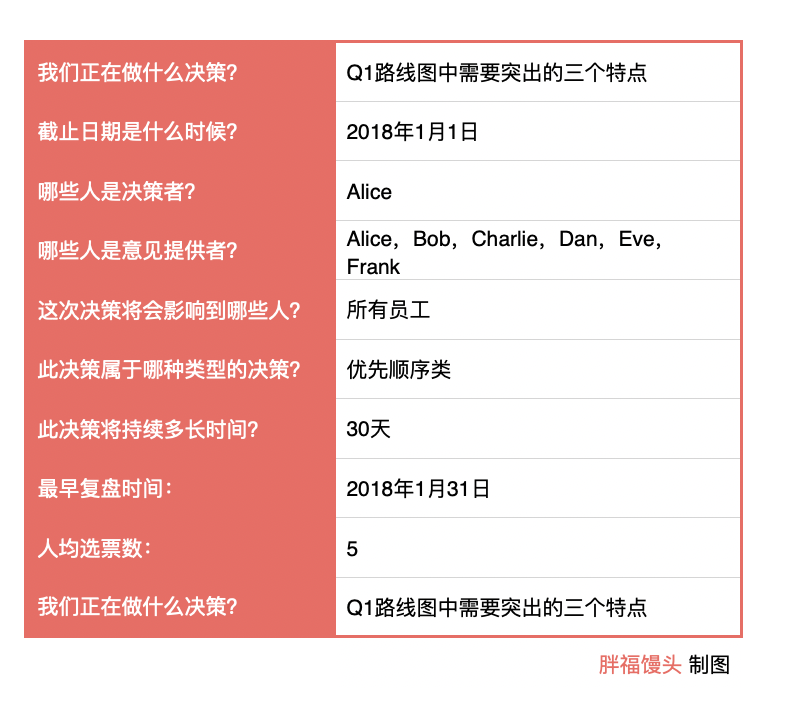
A few points to note:
Decision Date
Set a clear deadline upfront to avoid analysis paralysis (waiting too long to gather more information). A firm deadline also gives peace of mind to those less in the loop who are eagerly awaiting the decision.
Review Date
Ask the decision group in advance to set an execution timeline for the decision, so you don't revisit it too early. No decision is set in stone; you just need to clarify when and how to reopen discussion. When things head in the wrong direction, decision-makers also have the right to cut losses and hit the "emergency button" to trigger a second discussion.
In any decision process, there are three types of people:
- Decision-maker(s) — responsible for making the final call
- Input providers — who influence the final decision
- Stakeholders — individuals or groups affected by the decision
The ideal number of input providers is roughly 3–8; discussions tend to suffer with more than 8 or fewer than 3. Since decisions may affect large numbers of people, try to ensure each affected unit has a representative involved.
Finally, decisions fall into three categories:
- Binary — "yes or no" decisions, such as whether to hire someone or acquire a company
- Prioritization — ranking a set of options, such as choosing the top 5 features to focus on from 100 possibilities
- Selection — choosing one from many options, such as naming a new product
"A good plan, violently executed now, is better than a perfect plan next week." — Gen. George S. Patton
Should the decision-maker be one person or a group?
For most decisions, I prefer a single decision-maker — it's cleaner and more efficient. However, having multiple decision-makers also makes sense for high-stakes decisions (where the cost of an incorrect "yes" is higher than an incorrect "no").
Just as banks require multiple approvals to transfer large sums, you can increase the number of decision-makers and give them veto power to better control high-stakes decisions. This means a decision only passes if everyone agrees.
If you go too far and insist that all input providers must unanimously agree before a decision passes, this will further reduce the chance of error but also compress your upside (hello, "design by committee"). In some fields (venture capital, for instance), yes decisions can look like contrarian bets, and team members are unlikely to reach consensus — so excessive conservatism can actually introduce greater risk.
Weigh the trade-offs and find the right number of decision-makers for your specific decision.
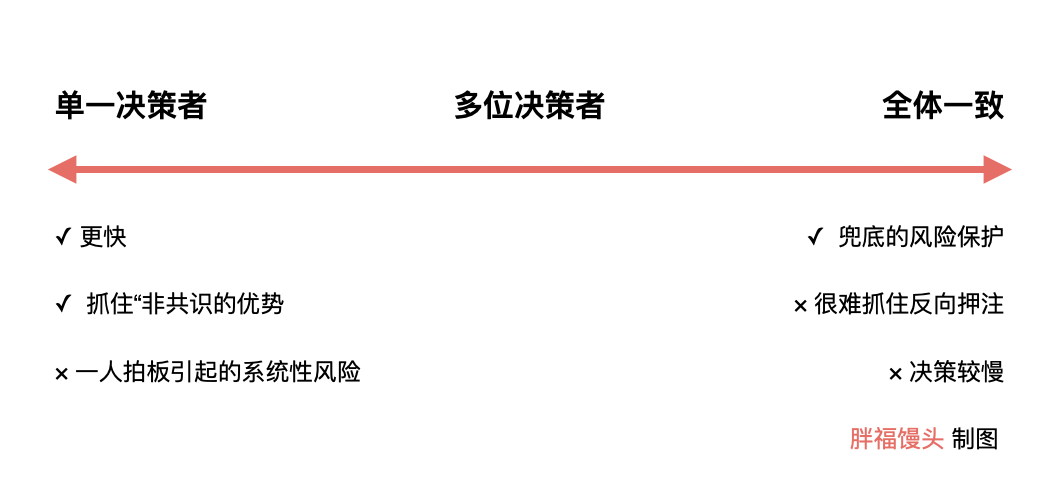
In general, if the cost of a wrong decision is acceptable, choose a single decision-maker to capture speed advantages. But if the cost of a wrong decision would be catastrophic or irreversible, increase the number of decision-makers to reduce excessive downside risk.
2. Deliberate
Next, you need to gather all input providers and decision-makers in one room to share information and secure their support.
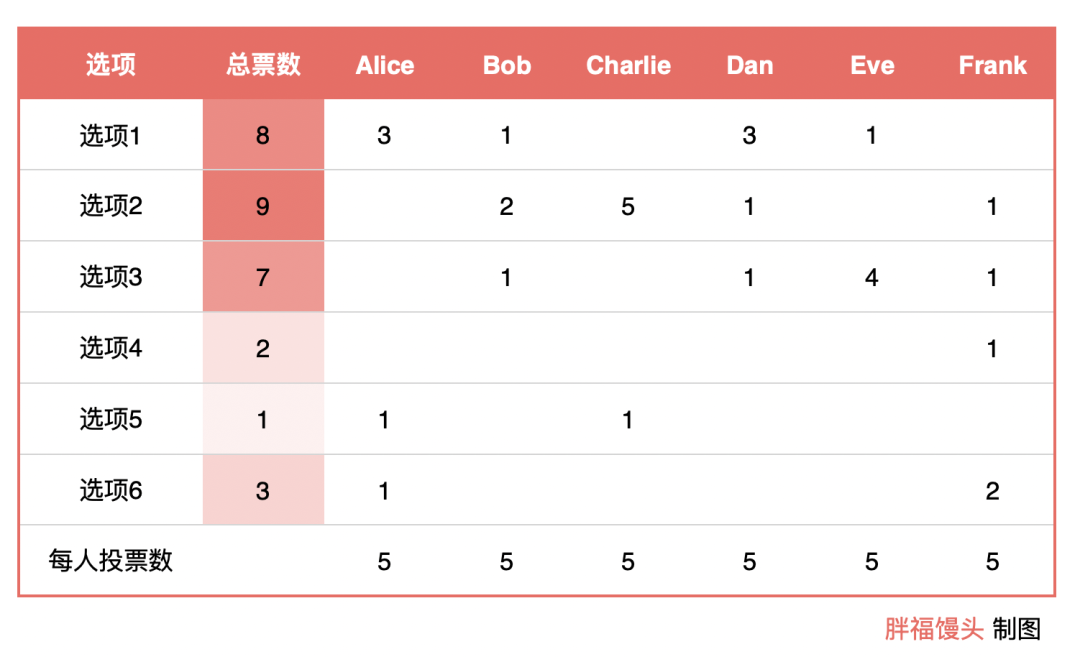
List Options
Hold a mini-brainstorming session on options. Generate as many as possible first, then apply judgment to filter. Encourage every participant to think actively and contribute ideas. Once decided, try to merge duplicate options. Note: for binary decisions, you can skip this step since you already know the options: yes or no.
Present Data
At this point, present all data collected from customers, A/B tests, legal teams, external consultants, etc. to the decision group — ideally sent in advance of this meeting for pre-reading.
First Round Vote (Blind)
Organize a first round of voting among input providers to gauge the landscape; this works best if done blindly, where no one knows how others voted. For binary decisions, count down from three and have everyone show thumbs up or down. For prioritization or selection decisions, have everyone fill out a spreadsheet (and try to prevent them from referencing others' answers).
Discuss Pros and Cons
Engage with every participant in the room, from most junior to most senior, to understand the reasoning behind their votes. The format can be flexible, but keep it time-bound. Record the pros, cons, and reasoning for each option. Encourage every participant to speak up, spark their curiosity, and lead them to explore and learn new perspectives. In this process, you'll discover that every option you listed has flaws — there is no perfect choice. You can continuously update this table, adding or merging options.
Second Round Vote
Finally, once all input providers have carefully listened to others' views — when information sharing has been maximized — hold a second round of voting and observe whether anyone changes their selection. Record the second-round results in a spreadsheet for archiving.
In rare cases, consensus emerges at this stage and the decision-maker's job becomes incredibly easy. The team simply communicates the decision and the work is done. But more often, the decision-maker's work is far from over.
If necessary, you can hold additional rounds of discussion and voting within the decision date.
3. Decide
Make the Decision
The decision-maker(s) can take one to two days to weigh all input and make the final call. Even if no "best option" has emerged, the decision-maker must still make their choice by the decision date.
Communicate Downstream
Send the decision via email to all stakeholders, including: the list of input providers, options considered, a summary of reasoning (pros and cons of this decision), and the review date. The email doesn't need to include who voted for which option — at this stage, your team has reached consensus and will move forward together.
Document the Decision
Finally, properly save the spreadsheet used for voting, such as by archiving it to Google Drive for future reference. You can also create a "review date" reminder to reconvene all input providers for further discussion and continuous learning. Retrospecting on how a bad decision was made (post-mortem analysis) is also incredibly valuable, and a good guard against historical revisionism. If there is dissent over the decision, informing people via email and giving them time to process is more appropriate than confronting their immediate reactions in the office.
Conclusion
In many organizations and companies, difficult decisions are a source of stress — but you can turn that stress into momentum. At fast-moving, excellent companies, tough decisions are often rare opportunities to drive rapid growth, spark innovation, and become a winner.
Many factors can block decisions and cause chaos, but practice makes perfect. As you gain more experience with decisions, you'll become increasingly adept. I've made a list of patterns that can cause decision failure, and given them memorable names:
- Too Many Cooks
Too much meaningless small talk, too little quality input and information sharing.
- Headless Chicken
No clear decision-maker until the battle lines are already drawn.
- Surprise Drop-in
Only discovering late that someone should have been providing input, and trying to add them mid-process.
- Conflict of Interest
Decision-makers have taken sides and cannot remain neutral.
- Disordered Chaos
A manager designates themselves as decision-maker when the authority should actually go to someone else on the team.
- Abuse of Power
A manager designates someone as decision-maker, then vetoes their decision at the last minute. (When you delegate someone as decision-maker, you must commit to respecting the final call regardless of what it is, without interference.)
- Yes-Men
Discussion outcomes are swayed by the most authoritative, vocal, or senior person's views, without listening to others.
- Accidental Consensus
Decisions made through email chains (everyone hitting +1 to agree), one-off conversations, or hastily gathering people who are already busy — effectively conclusions reached with zero careful thought.
- Analysis Paralysis
Delaying a decision repeatedly to gather more data, missing the decision date. ("Let's run an A/B test!" is one form of excessive data pursuit.)
- Creativity Killer
Failing to distinguish between option generation and option evaluation.
- Rejecting Good Enough
Constantly thinking "there's no good option" and overlooking a "good enough" choice.
- Process Overload
Applying the decision framework to low-risk decisions, overcomplicating matters. In these cases, a manager making the call unilaterally would be more efficient and faster.
- Unconscious Democracy
The decision-maker, feeling pressure to avoid responsibility, chooses the option with the most votes rather than what they believe is best.
This decision framework has helped Coinbase make better decisions faster, and I hope it can help your team too.



5Y Capital (formerly Morningside Venture Capital) currently manages approximately RMB 32 billion in dual-currency USD and RMB funds. 5Y Capital seeks out, supports, and inspires solitary entrepreneurs, providing them with support ranging from spiritual to all operational matters. We believe that if the "crazy" you in others' eyes begins to be believed in, the world will become a different place.
BEIJING · SHANGHAI · SHENZHEN · HONG KONG