Seeking Entrepreneurs for the Era of Tech Innovation 2.0 | 2024 5Y Capital USD Fund Partner Meeting Recap

They don't just have cross-disciplinary technical integration capabilities — they also bring a global perspective.

"We believe the continued development of China's economy is driven by some fundamental new underlying factors. Over the past 30 years, the main drivers of China's economy have included global exports, urbanization, and demographic dividends. However, we now sense that many things are shifting, many changes are underway." In November 2024, at 5Y Capital's USD fund partner meeting in Shenzhen, Qin Liu shared his observations on the present moment. He pointed to new structural opportunities in China — the positive, dynamic segments within the overall picture.
Liu highlighted AI and new technology as growth engines. Beyond that, China's engineer dividend and entrepreneurial spirit give him even greater confidence. "In the wave of Technology Innovation 2.0, a large cohort of emerging entrepreneurs is coming to the fore. Compared to the innovative entrepreneurs of the 1.0 era, paradigm entrepreneurs of the 2.0 era possess dual-core capabilities. They must have deep technical literacy — without it, they cannot make accurate judgments in technology. At the same time, they are just as sharp in business insight as the previous generation of entrepreneurs."
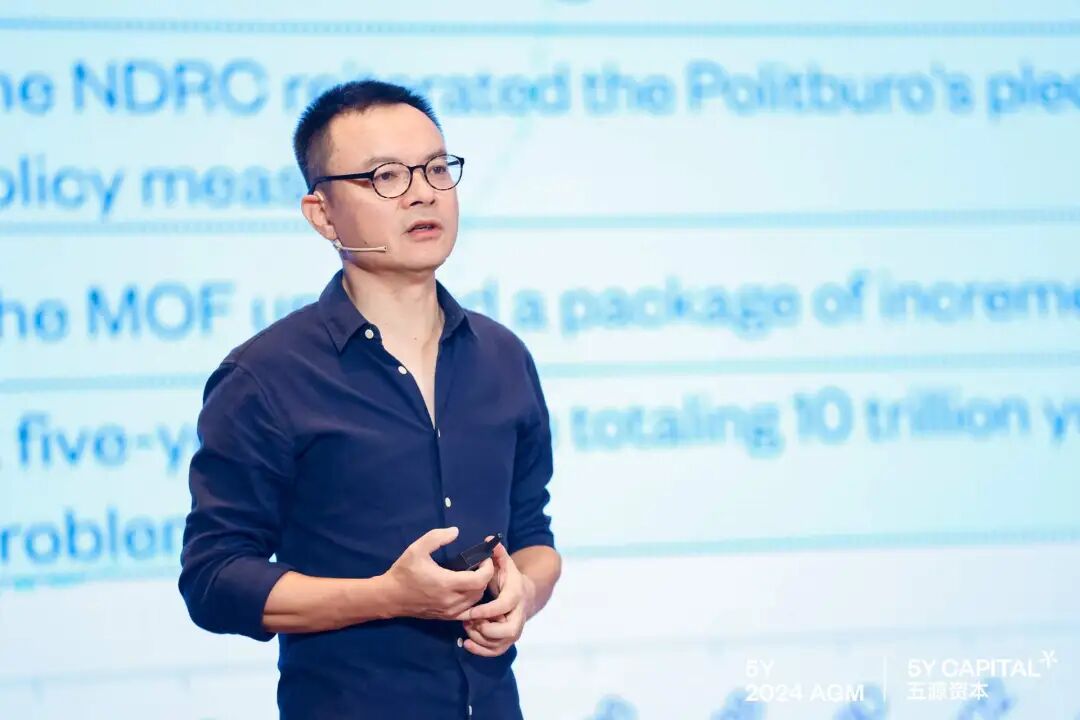
Qin Liu, Founding Partner of 5Y Capital
At the event, entrepreneurs from various fields shared their experiences. 5Y Capital partner Zhang Fei held a dialogue with unicorn companies in the AI large model space. Several founders in AI infrastructure and applications shared their insights; emerging entrepreneurs in life sciences offered their industry perspectives; and robotics founders discussed their experiences and lessons from going global. Two entrepreneurs whose companies went public in 2024 — Kai Yu, founder of Horizon Robotics, and Shuhao Wen, founder of XtalPi — joined Qin Liu to share their outlooks on the road ahead.
We also see more of this "dual-core" quality in the new generation of founders: technical literacy paired with global vision. Below are selected excerpts, which we hope will be illuminating:)
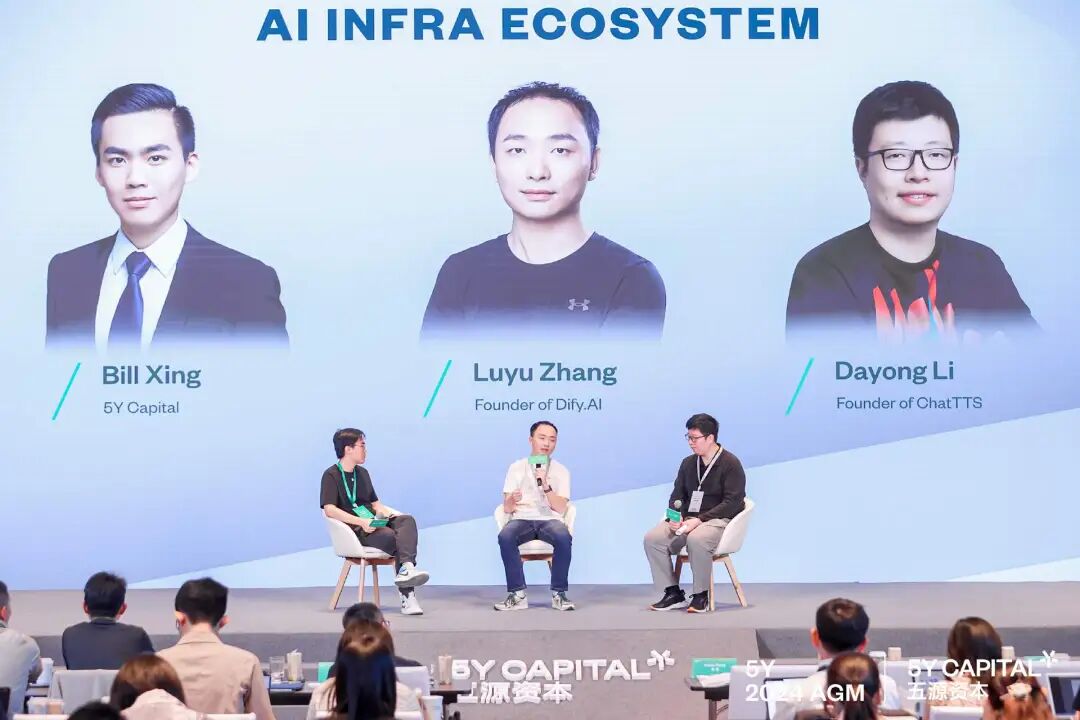
Zhang Luyu, founder of Dify.AI, discussed their thinking on open source and global entrepreneurship: "Open source is a strategically crucial decision for Dify.AI. It helps us solve several problems. First, it facilitates smooth global expansion and rapid market share growth. Second, open source makes users feel we're trustworthy. When engaging with many enterprises, we can establish credibility without complex proof processes. We believe that in the Infra space, most of the world's significant open source products are borderless — they're an international network. If you look at the top ten developer tools or open source projects globally, in many cases you may not even know which country they come from."
Li Dayong, founder of ChatTTS, shared one insight on team building: finding passionate people matters more than impressive titles. "We found that when building a team, finding people passionate about audio is more important than finding those with high titles. These passionate people can spot where big companies fall short, or realize that big companies never gave them the chance to do this kind of work. Big companies may need your models to be more stable, with zero errors, whereas when you're starting up, we don't face that constraint."
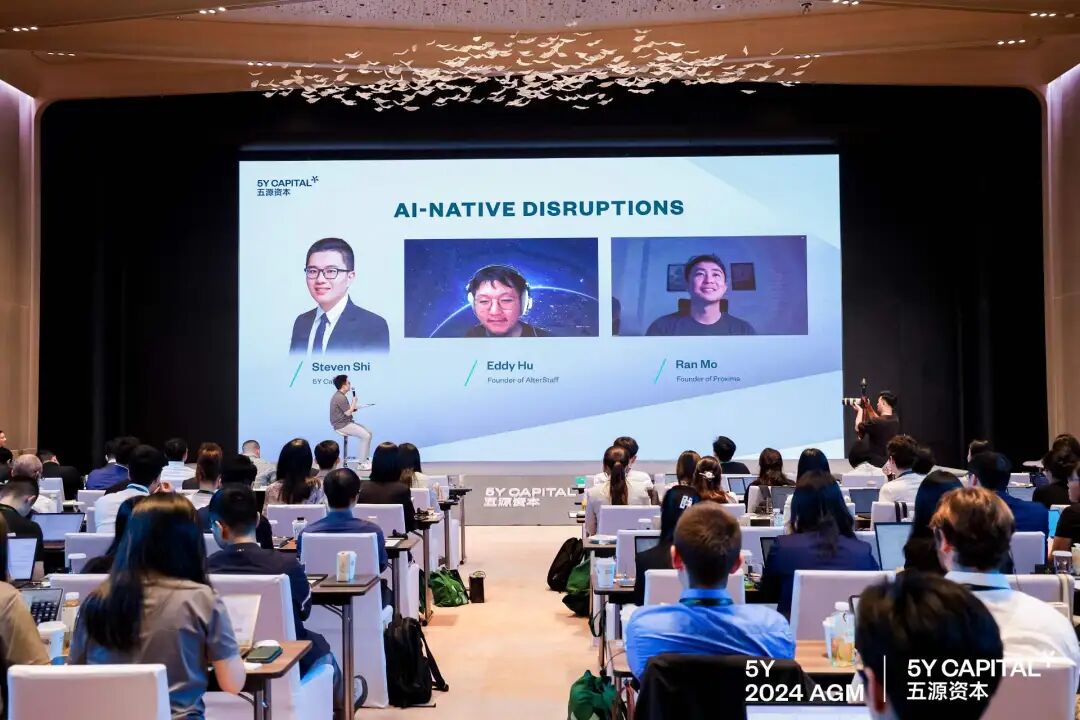
AI is also rewriting the rules across different fields, something two gaming entrepreneurs spoke to. Da Gu, founder of AlterStaff, noted: "The entire gaming industry is actively embracing AI right now, and we're looking for ways to integrate this new technology into games. We hope to achieve connections with multiple NPCs and create an immersive world overall, one that can accommodate thousands or millions of players. At that point, we can build something like the city in Ready Player One, where AI characters interact seamlessly with players without significant distinction. That's what we hope to gradually achieve over the next three to five years through multiple projects."
Ran, founder of Proxima.gg, said: "In traditional game development, there's structured gameplay based primarily on rules. For example, pressing A triggers one event, pressing B triggers another. This design has been the foundation of computer programming for the past 30 or 40 years. But in the AI era, this paradigm is challenged because AI is fundamentally generative, bringing a massive amount of unstructured gameplay and, with it, a different design mindset. For us, the key is building a platform where players can create more unstructured gameplay, letting people's imaginations run wild. That's what's fascinating, and it's where many games are headed in the future."
Over the past two years, global pharmaceutical companies have been extremely active in seeking out Chinese biotech assets, and Chinese entrepreneurs are making their mark in many fields. Two emerging entrepreneurs in life sciences expressed similar sentiments.
Dr. Zhang Xiao, founder of Syneron Tech, noted: "Just two years ago, no one would have imagined Chinese biotech companies could strike multi-billion dollar deals with major pharmaceutical companies, but a lot has happened in the past two years. There are several reasons behind this. First, the quality of drugs developed by Chinese biotech companies has improved dramatically, narrowing the gap with global standards. Second, Chinese biotech companies are far more efficient than companies in other mature markets — this too is the result of hard work. An important part of drug development involves not just scientific knowledge but also a great deal of engineering work, mainly solving engineering problems. Chinese companies have many well-educated, hardworking people in science."
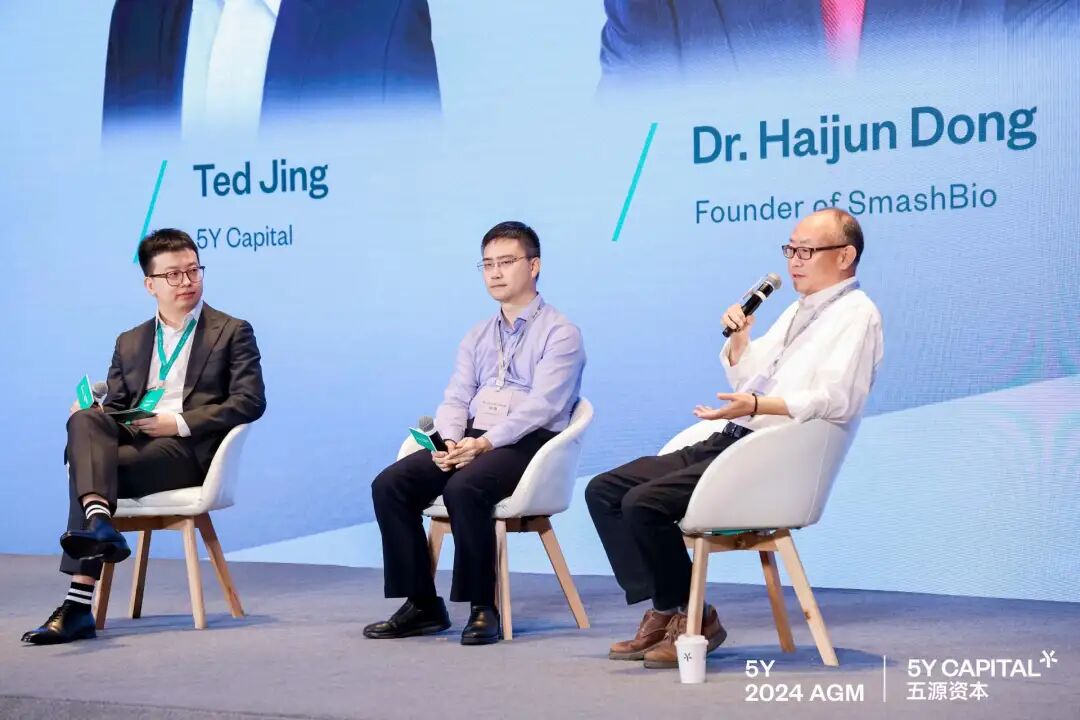
Dr. Dong Haijun, co-founder and CEO of SmashBio, also shared his industry observations: "Although still behind the US and other Western countries in basic research, in certain fields many Chinese researchers are emerging as world-leading researchers. They are excellent researchers, and when they start companies and try to translate lab discoveries into practical applications, they tend to attract attention. Their research is usually very novel, very innovative — and this is one reason why emerging basic research in China draws major pharmaceutical companies to come looking for assets."
"We look for entrepreneurs who excel at both technology and business, who not only possess cross-disciplinary technical integration capabilities but also have a global perspective. The main difference between technology innovation and consumer internet model innovation is that with the latter, you could achieve scale by leveraging China's massive market of 1.4 billion people even without going global. Technology innovation, however, inherently requires competing on a global scale. If you can't be globally leading, you can't be leading in China either. Therefore, having global mindset and vision is a crucial trait for this type of technology entrepreneur.
On the other hand, many scientists who choose to start companies may lack the comprehensive capabilities needed to be business leaders. But if an entrepreneur not only has excellent technical literacy but also strong business insight and managerial acumen, such a person is extremely scarce — and we hope to find these kinds of tech entrepreneurs with that contrast. 5Y is looking for a new generation of entrepreneurs. We believe they will grow into their potential. All the doubts, criticism, and lack of understanding they face today are precisely their opportunity. We have the ability to identify them, make non-consensus judgments, and concentrate and overweight our bets. This is what I've been doing for the past 20 years, and it's no different in today's era."
— Qin Liu, Founding Partner of 5Y Capital



5Y Capital seeks out, supports, and inspires lonely entrepreneurs, providing everything from spiritual to operational support. We believe that if the "crazy" you in others' eyes begins to be believed in, the world will become a different place.
BEIJING · SHANGHAI · SHENZHEN · HONG KONG