Future Tech Entrepreneurship Vision | 5Y 3Sigma Roundtable Annual Review

Scan the QR code at the end of the article to fill out the form, and join fellow founders in exploring what's ahead!

5Y 3Sigma Roundtable is an invite-only program for early-stage founders that we launched in April 2022. Over the past year, we've organized eight online and offline sessions covering topics from consumer robotics and general-purpose robotics to autonomous driving, 3D metaverse, large language models and NLP, and AIGC — with nearly a hundred friends from industry and academia sharing and debating ideas.
What are the technology and application trends for large models?
How will autonomous driving redefine the future of mobility?
3D content creation: how to think about fuzzy, high-variance opportunities?
Humanoid robots? Companion robots? What is the future of consumer robotics?
How far are general-purpose robots from human society?
AIGC as a new species: how can AI unlock creativity and productivity?
...
The original vision behind 5Y 3Sigma Roundtable was to bring together founders with grand visions and wild imaginations to discuss technology and industry evolution. The name reflects our belief that in every era, the innovators who reshape human society are outliers beyond 3 sigma — bravely following the call of intellect rather than conforming to the safety rules that the majority swear by.
We've compiled highlights from 5Y 3Sigma Roundtable discussions, hoping they inspire you. In the year ahead, 5Y 3Sigma Roundtable will focus on even more technology and entrepreneurship topics. Scan the QR code at the end of this article to fill out the form, and join us to explore the future with more founders, industry professionals, and academics!
Content Recap
AI + Robotics: A New Wave of Disruptive Transformation
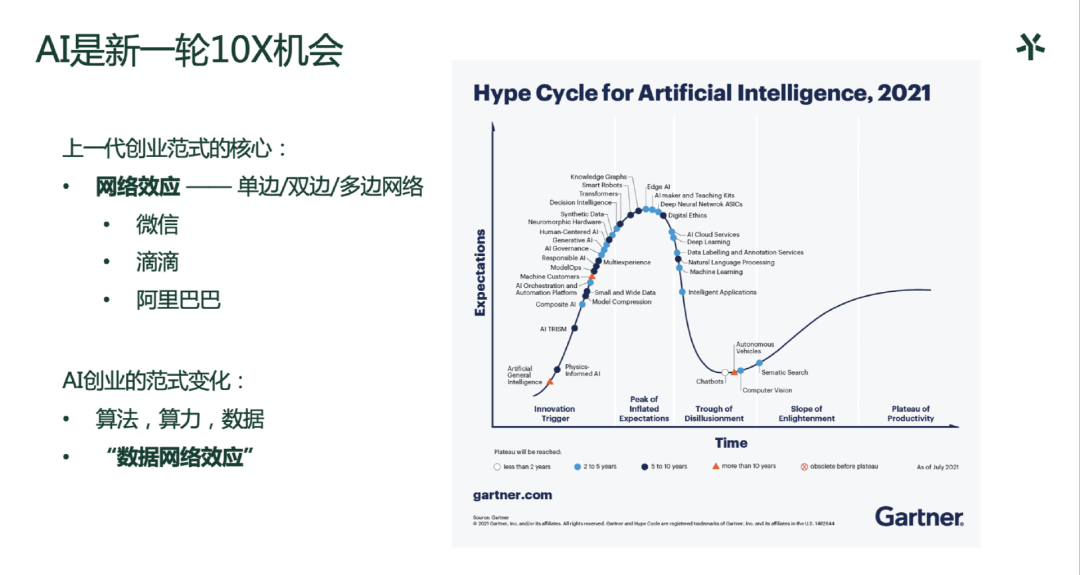
We believe AI represents a new 10x opportunity that will bring disruptive changes to both technology and business models. We hope to identify domains with massive consumer and market value, as well as more foundational infrastructure-level opportunities.
— Peter, 5Y Capital
Robot perception is evolving from 2D to 3D. While 3D high-precision LiDAR and structured light solutions work well in industry and academia, they remain extremely difficult to deploy at consumer scale. For most startups, the core problem is that data collection, labeling, and hardware costs are prohibitively high. If we could build a simulation platform for Sim2Real pre-training across various scenarios, while using low-cost sensors for Real2Sim environment capture and simulation validation, it would significantly accelerate the robotics industry — this represents a massive market opportunity.
— Cong Wang, GM of AIoT & Robotics Division, Horizon Robotics
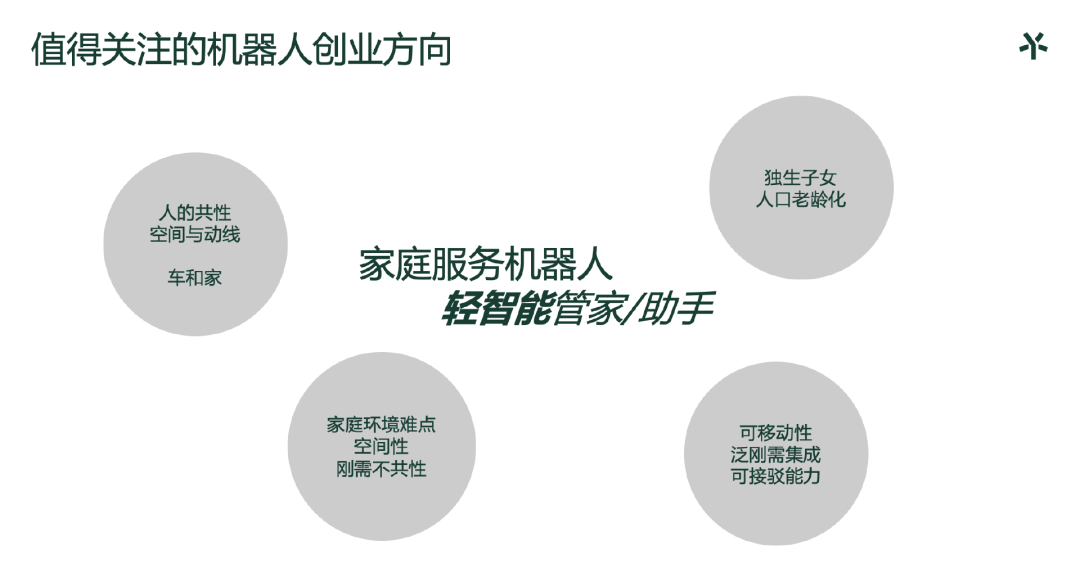
Compared to inside vehicles, indoor spaces offer robots much more room to maneuver, manipulate, and perceive. With the popularization of robot vacuums over the past two years, the market has been reasonably educated, and mobile capabilities have gradually matured. However, household intelligent robots currently remain simple tool-like products. Future lightweight butler-style home service robots will need to achieve mobility, docking capabilities, and integration of more broadly essential tool functions.
— Robotics Expert, Meituan
3D Content Creation: How to Think About Fuzzy, High-Variance Opportunities?
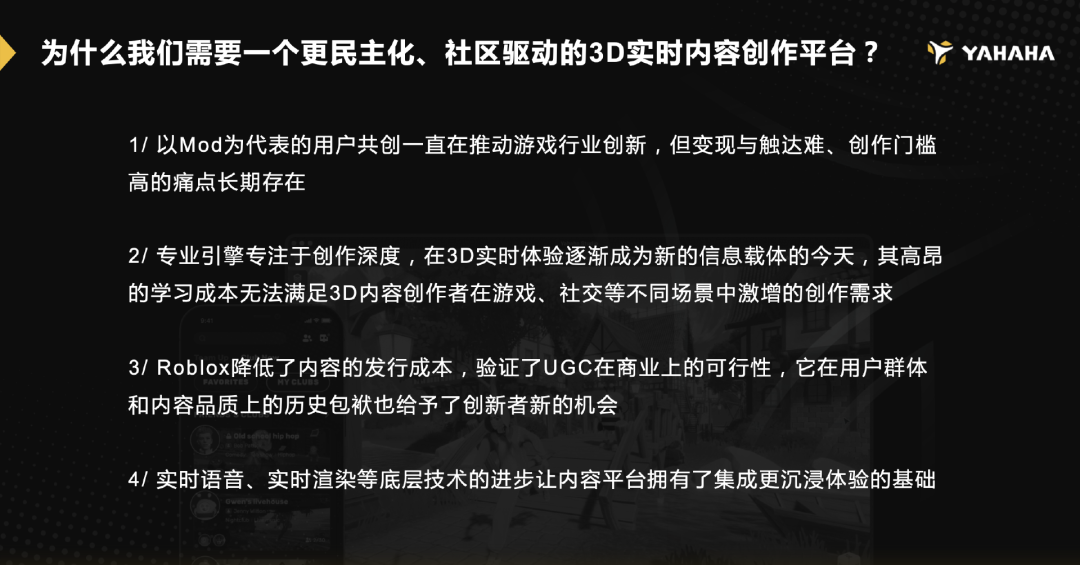
We believe 3D creation platforms should be characterized by 3D, multi-user, real-time, interactive, and instant features. This requires a powerful underlying architecture and engine capability, while providing comprehensive development support and experiential interaction for both developers and end-users.
— Patrick, Yahaha
When 3ds Max launched around 2000, it defined the classic paradigm for 3D model creation. Today, AI development has opened possibilities for disruptive innovation in 3D model creation. But 3D model creation runs deep — formats, vertex/edge/face layouts, materials, sculpting, performance optimization all pose challenges for innovative products trying to achieve rapid cold start. Beyond the AI variable, new products offer two clear user values. First is being online: online assets enable remixing and creator ecosystems. Creators can publish models, trade them, and earn income. Second is collaboration: Tuxing Qiyuan has already achieved multi-user online collaboration similar to Lark.
— Haitian Shi, Founder, Tuxing Qiyuan
In 3D model creation and interaction, we've identified two major user pain points: 1) Model quality: there's still a significant gap between UGC content and what's ultimately deliverable for commercial or high-value consumer use; 2) Limited consumption scenarios: 3D models themselves are rather dry. Even with AR placement in reality or VR environments, most consumers simply look briefly — the mainstream consumer market remains gaming. Therefore, new scenarios for 3D interactive experience are extremely valuable and would greatly expand the boundaries of 3D applications.
— Alina Zhang, Founder, 172 Labs
In early-stage domains that are directionally correct but near-term fuzzy, founders' path-planning capabilities face higher demands. Three critical elements stand out: hypothesis validation, rapid iteration, and derisking uncertainty.
— Kaiyan He, 5Y Capital
Technology, Product, and Emotion: What Possibilities Does AIGC Open?
AI-generated content will go through two phases. The first is AI-assisted GC, where AI primarily optimizes existing content creation workflows. Constrained by today's technical boundaries, we haven't yet reached true AIGC — where AI dominates the entire process from creative conception, production, feedback and iteration mechanisms, to emotional generation.
— Peter, 5Y Capital
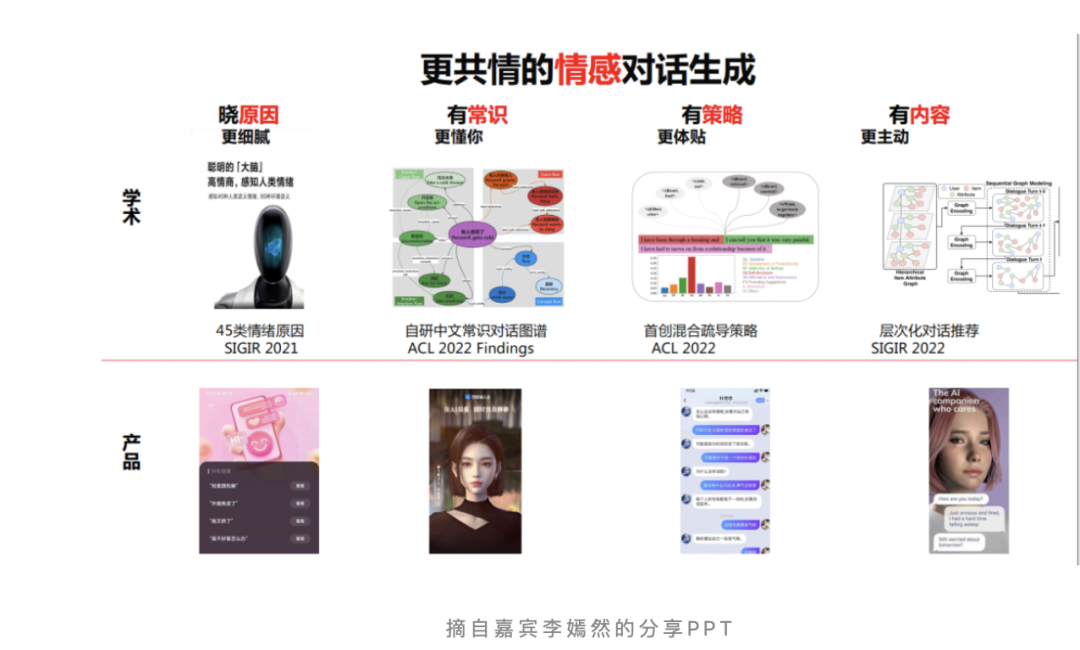
If an important direction for AI products is evolving to be more human-like, the most crucial technical breakthroughs will still be in intrinsic intelligence. Machines (AI) should be able to explore autonomously — to actively initiate actions and communication in order to acquire knowledge about their environment, and then feed back what they've learned and felt after acting. This is what I see as a very important breakthrough direction.
— Yanran Li, Former Technical Expert, Xiaomi
The challenge we currently face is that AI's memory is insufficient, and its intelligence itself is insufficient. We need to somehow combine reinforcement learning-based intelligence with this statistical intelligence of natural language to push overall intelligence forward. If we rate Colorful Cloud Xiaomeng's current intelligence at one, our goal is to reach ten — there's roughly tenfold potential remaining.
— Xingyuan Yuan, Founder, Colorful Cloud Technology
AIGC as a New Species: How Can AI Unlock Creativity and Productivity?
AI generation and NLP capabilities are clearly evolving faster, with openness and creativity yielding the greatest returns. Creative products are exploding, but PMF and business models remain in early gestation. Unlike traditional human replacement, this AI revolution may first achieve breakthroughs in open-ended, somewhat uncertain creative labor domains with higher error tolerance. This is an illuminating clue for us in searching for new paradigms.
— Peter, 5Y Capital
AI-assisted creation is fundamentally a search problem — how to find the solution in AI's feasibility space that best satisfies my needs. Two variables are involved: first, how large is the feasibility space? The leap from GAN to Diffusion has dramatically expanded this space. Second, how to search effectively — this is what people are currently exploring with text/image prompts.
— Yuxuan Zhang, Founder, Artflow.ai
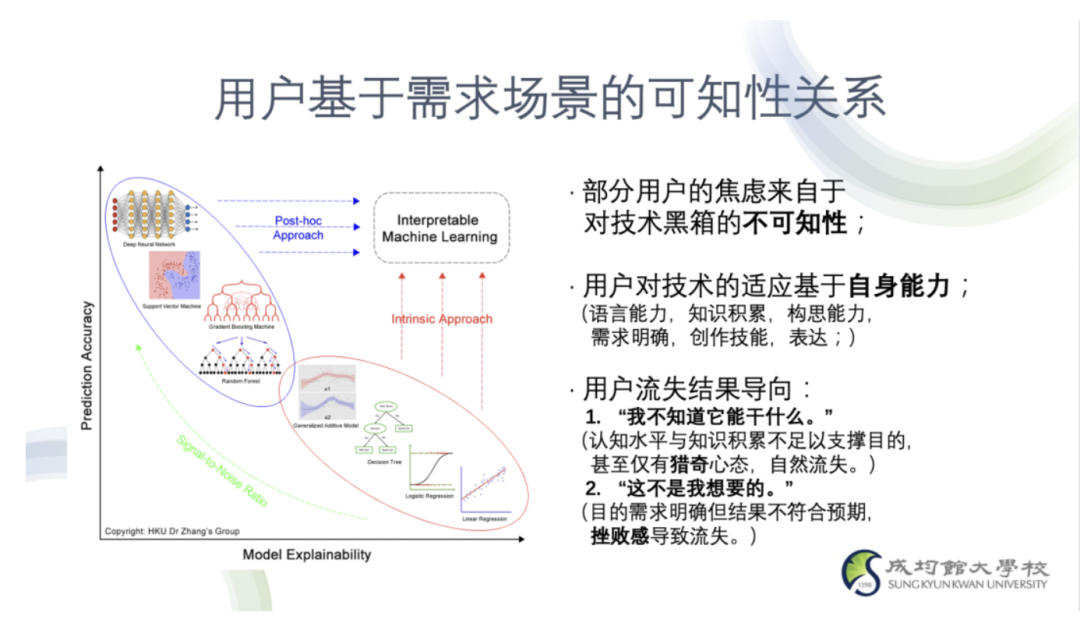
The principle of creative controllability means that creativity should be controllable at the input stage, while creation should be precisely controllable at the output stage. Providing rules at the input stage doesn't mean forcing users to follow a specific method, but rather offering options that allow users to grow along a relatively smooth learning curve. Currently, some users experience anxiety because of AI technology — it's unpredictable, and the technology currently demands too much adaptation from users. AIGC hasn't become a tool for most people; instead, it's exacerbated a certain degree of polarization. This may be unexpected for many, but it also means opportunity exists.
— KABA (Jiabo Yu), Information Science Student, Sungkyunkwan University
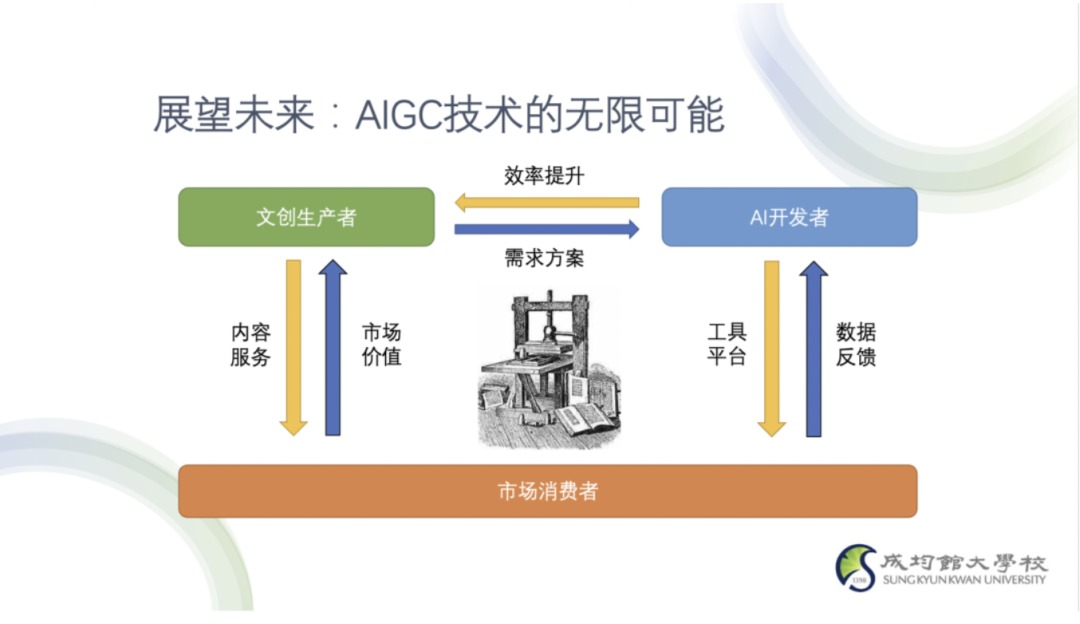
Will AI replace humans? Many people often talk about who it will replace or substitute — there's really no need for such concern. Technology has always been unstoppable in any era. The desire for communication and expression among the general public, and the creative communities formed around these, will inevitably persist long into the future. With both of these existing, talking about who gets replaced is meaningless. What's more important is finding the meshing point through organic coupling, so that existing technology and productivity can be unleashed. AIGC plays more of a collaborative role, liberating people from meaningless mechanical labor and allowing human creativity and thinking ability to reach their fullest potential.
I also hope that while AIGC frees professional creators' productivity, it can lower the barrier to expression for the general public — allowing more people with ideas, cognition, and knowledge accumulation to express themselves directly, bypassing very high learning costs. Just as the printing press enabled massive dissemination of religious knowledge, contributing to the later Enlightenment and Renaissance, I personally hope AIGC technology can bring a similar liberation of expression. As for how this era will be defined and written about in the future, let's wait and see.
— KABA (Jiabo Yu), Information Science Student, Sungkyunkwan University
Application Trends for Large Models and NLP
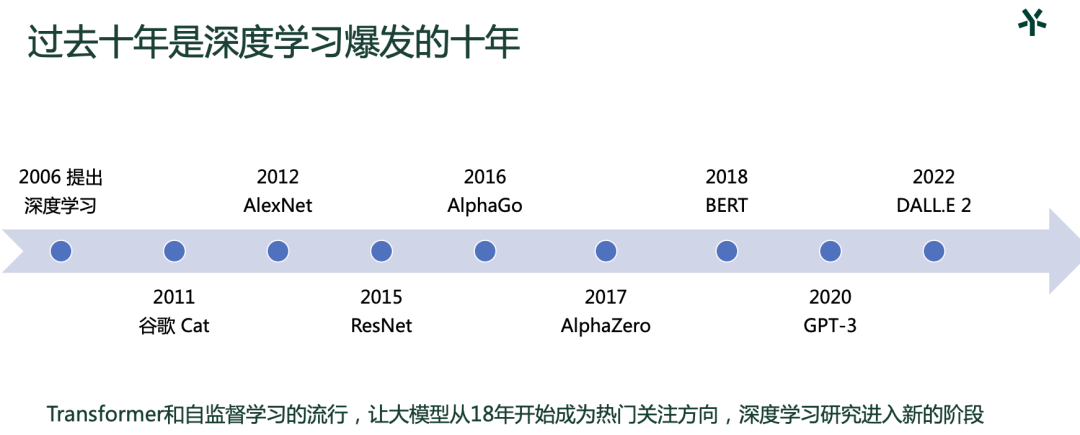
Why develop a new framework? Because deep learning models are getting larger with more parameters, and architectures originally designed to work well on small models become less effective — new architectures are needed.
Models with hundreds of billions or trillions of parameters are too large. I believe billions or tens of billions of parameters are sufficient for many domains. The main challenge in training large models is having data. Some public data is available to everyone, while other data resides in different companies. How to solve the data problem is critical — that is, how to enable mutual use of data without transferring ownership.
— Jinhui Yuan, Founder, OneFlow
Any large model currently faces a significant problem: insufficient personalization. It's a completely general-purpose model without its own personality or behavioral preferences. So it's very necessary to develop personalization capabilities, allowing large models to develop special preferences and execute special actions based on your particular characteristics through prompt engineering and similar methods.
— Hongyong Song, Qiyuan World
Autonomous Driving: How to Define Future Mobility?
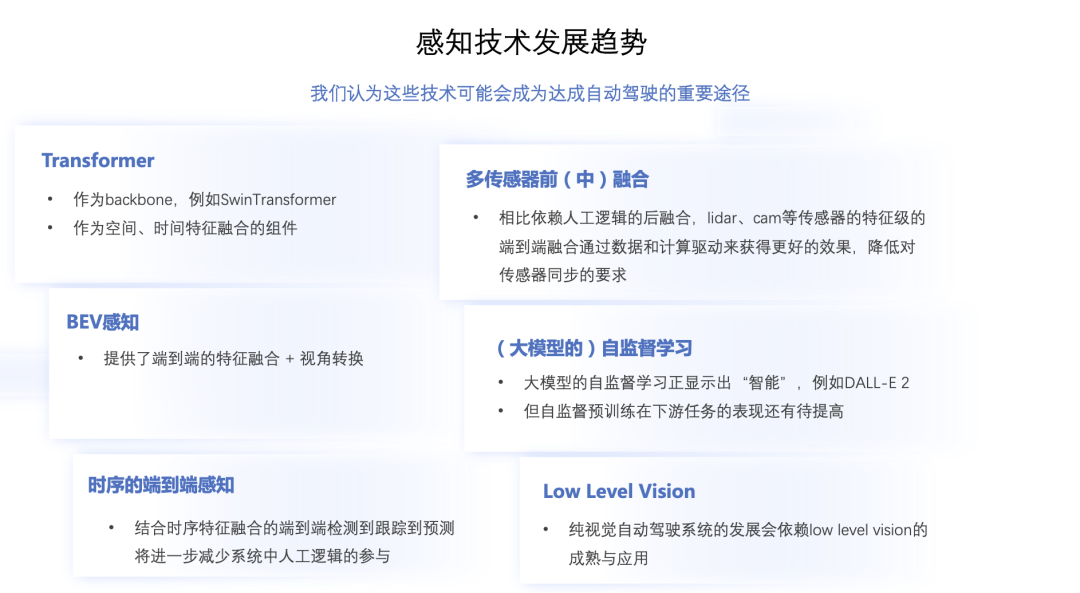
Currently only Tesla uses some Transformer in mass production. To better leverage Transformer, chips need increased bandwidth, but this reduces compute power — trade-offs must be made. Transformer will achieve better utilization on Journey 6.
— Zhizhong Su, Director of Perception Algorithm R&D, Horizon Robotics
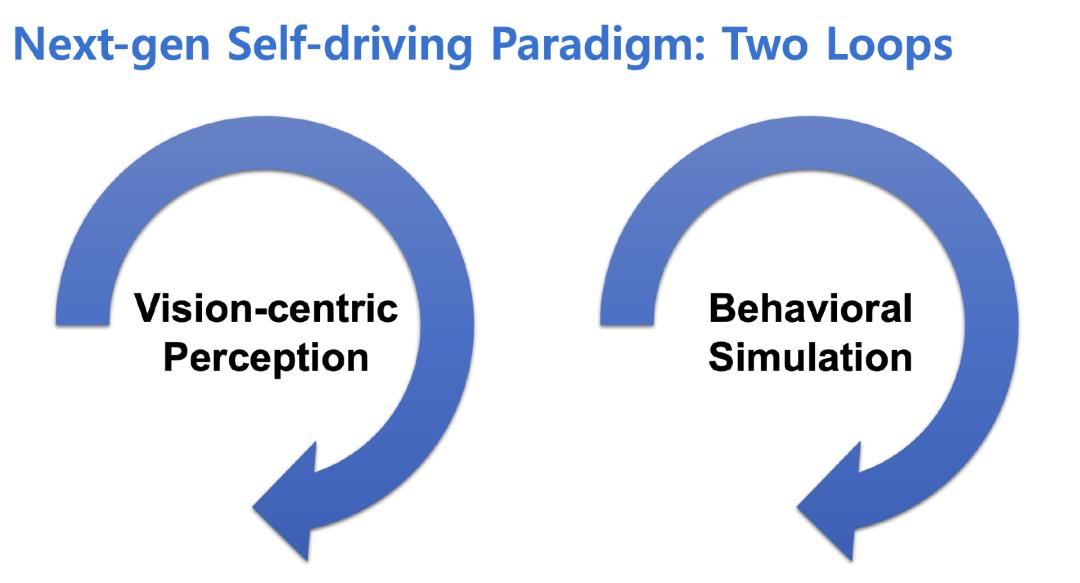
Autonomous driving and robotics both need to solve two major problems: perception and behavior, which differ significantly. An interface is needed between these two major problems, such as semantic space, then deep learning and data-driven methods can respectively address each. In 2015, some people explored end-to-end autonomous driving solutions, but that was too radical. A cut needs to be made in the middle, dividing into perception and behavior loops.
Perception: In the long run, vision will be the foundational and mainstream solution, with different configurations of other sensors for different vehicle models. Previously, autonomous driving perception relied on LiDAR, with insufficient exploration of vision algorithms. Vision solutions are also highly scalable, with very standard compression, storage, and transmission algorithms. Behavior: A general-purpose simulation platform needs to be built; prediction and planning can be placed within a unified simulation framework.
— Hang Zhao, Assistant Professor, Tsinghua University
What Is the Future of Consumer Robotics?
Whether looking at the present or history, the largest robotics companies have always been consumer robotics companies. The core requirement is access to a massive consumer market serving hundreds of millions or billions of people. From this perspective, autonomous electric vehicles are a form of ultra-large-scale consumer robot.
We hope to find products in intelligent robot form that can influence a generation's lifestyle or provide spiritual fulfillment to a generation. If this can be achieved, great and enduring consumer robotics companies will surely emerge, just as the greatest consumer electronics companies in history — Apple or Tesla.
— Peter, 5Y Capital
Home scenarios may involve more non-standardized tasks and value creation. But in B2B scenarios — company cafeterias, offices, and similar spaces — there's more room to operate. Additionally, service robots differ from industrial robots in that they can have fairly high error tolerance. If a robot picks up the wrong trash or doesn't clean a table thoroughly, it's not the end of the world — this creates room for them to exist.
— Zhuo Xu, Google Technical Expert
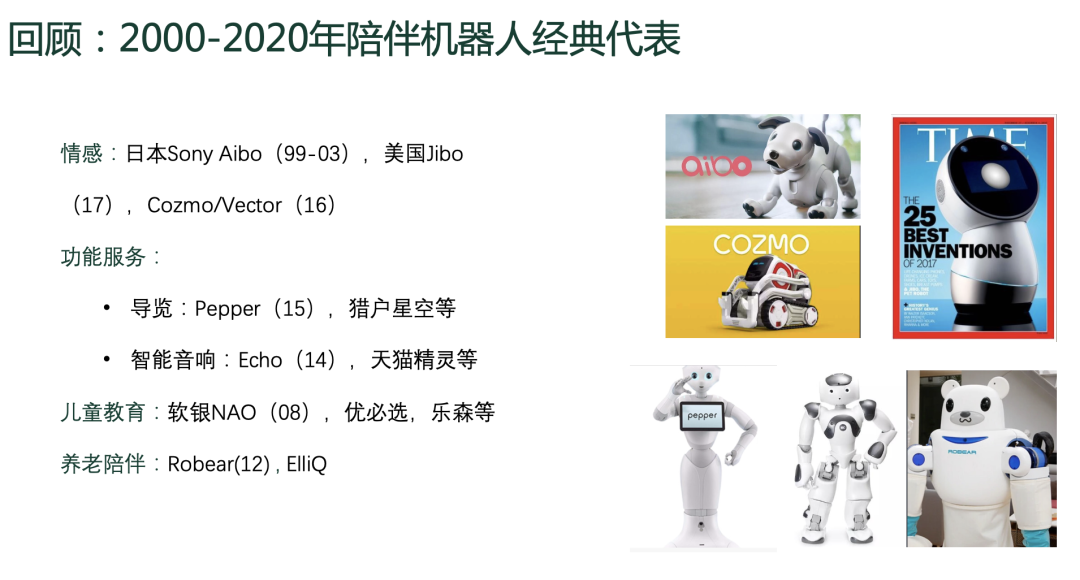
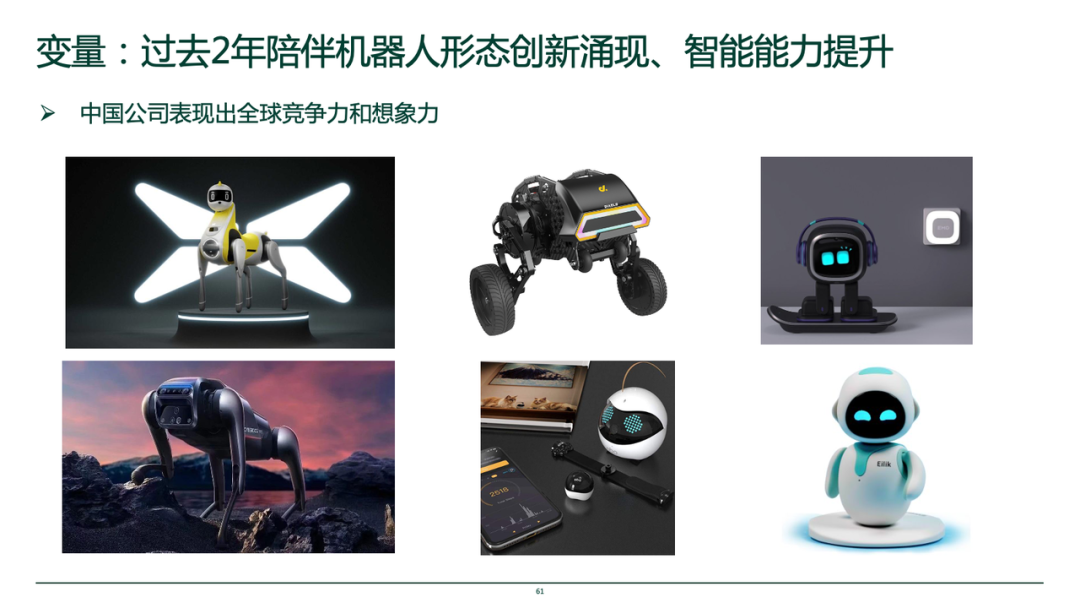
Chinese companies are demonstrating an entirely new capability to define products in the companion robot space. Opportunities and challenges will coexist over the next decade. China has the largest consumer market and the most mature robotics supply chain. Breaking down companion robots' four capabilities — perception, mobility, cognition/emotion, and manipulation — perception and mobility have relatively clear iterative development paths, but cognition/emotion and manipulation remain unclear, with very obvious challenges.
— Kaiyan He, 5Y Capital
Companion robots represent an entirely new track. Users may not yet have defined what they actually want, so product makers are essentially imagining something themselves and putting it out in the market to test. The core of companion robots lies in companionship itself; form factor isn't the key. Whether the robot concept can enhance the companionship attribute is the most critical point for companion robots.
— Junyi Song, Founder, Elephant Robotics
Tesla's vision for general-purpose robots is quite ambitious, but I believe the true first general-purpose humanoid robot will likely not be an all-encompassing solution, but rather something that penetrates gradually, slice by slice, with partial functions.
— Di Zhang, Founder, Benben Technology
How Far Are General-Purpose Robots from Us?
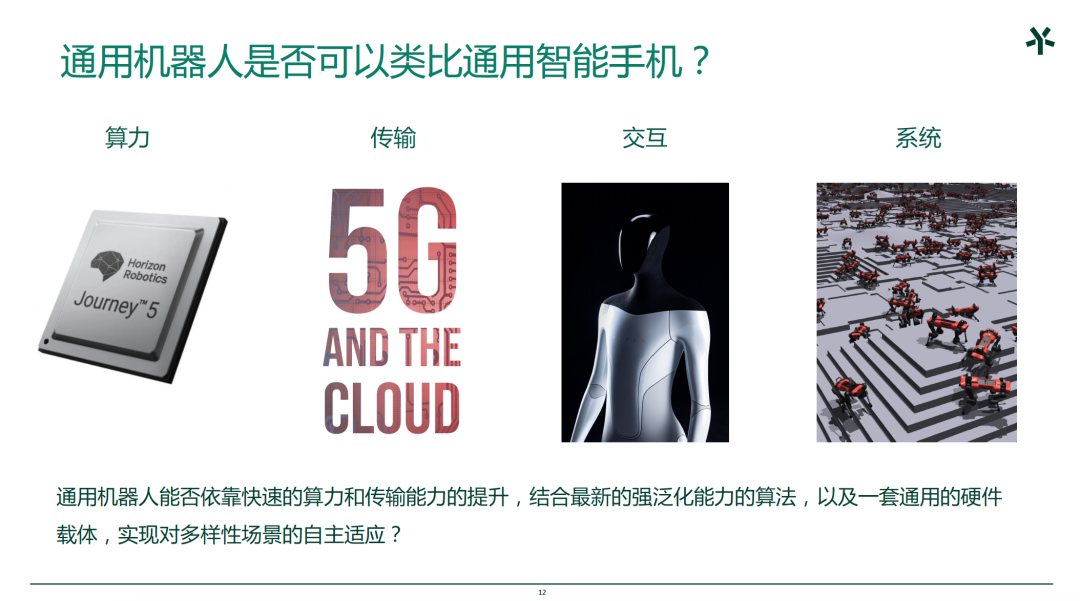
General-purpose robots and smartphones back in the day share similarities across several dimensions. In compute power, we've moved past the simple stage of CPU performance increases; with deep learning's development, numerous high-performance edge AI processors have emerged. At the transmission layer, low-latency technologies like 5G represent massive improvements over ten years ago for robot communication. More critically, at the interaction level: Tesla is actively researching humanoid robots, attempting to achieve standardization in robot interaction scenarios — because only humanoid robots can ideally adapt to different interaction scenarios in human living environments.
— Peter, 5Y Capital
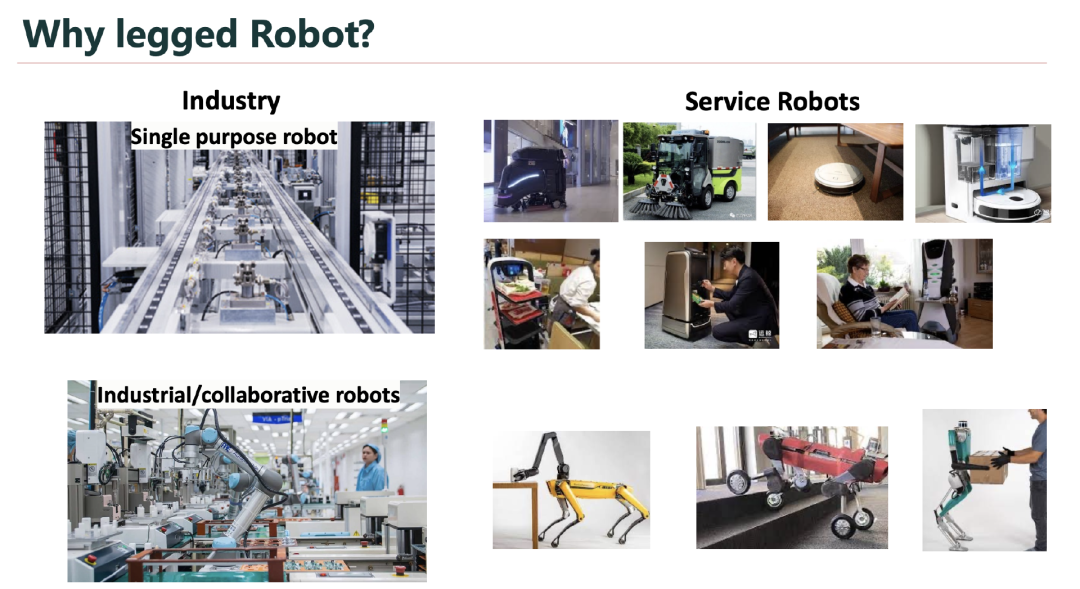
For general-purpose robots to actually be usable, the most critical factor is scenarios, and scenarios require strong AI empowerment. Simply having a robot that can walk around and pick things up is relatively easy to solve. But having it do many things in an open scenario requires massive AI capabilities to truly work. And Tesla's autonomous driving data, chip foundations, and top-tier R&D capabilities are things many companies likely don't possess.
— Wei Zhang, Professor, Southern University of Science and Technology
General-purpose and specialized robots represent two development curves. Specialized robots' moat lies in whether their performance advantages hold, while the general-purpose curve will inevitably rise. The two coexist initially, but when general-purpose can outperform specialized, the shift may happen extremely rapidly — similar to the commercial logic of the mobile phone market back then. As for which year general-purpose robots will truly surpass the specialized curve, it will likely be at least five years after general-purpose deployment. It's hard to specify now, and it varies across different vertical scenarios.
— Qibin Wang, Senior Director of Last-Mile Delivery, JD.com
About 3Sigma Roundtable
In a normal distribution, when a sample's distance from the mean exceeds three standard deviations (3 sigma), it becomes an anomalous outlier. But transformation often begins beyond the range of conventional attention. In every era, the innovators who reshape human society are outliers beyond 3 sigma — bravely following the call of intellect rather than conforming to the safety rules that the majority swear by.
3 sigma embodies 5Y Capital's long-held belief: the essence of innovation is stepping beyond paradigm boundaries, even when that means what others perceive as madness.
Scan the QR code or click "Read More" to register for the new year's 5Y 3Sigma Roundtable, and join us with more friends from industry and academia to explore the future together!





5Y Capital seeks out, supports, and inspires lone founders, providing support from the spiritual to all operational aspects. We believe that if the you whom others see as crazy begins to be believed in, the world will become a different place.
BEIJING · SHANGHAI · SHENZHEN · HONG KONG