Humanoid Robots? Companion Robots? What Is the Future of Consumer Robotics | 5Y 3Sigma Roundtable

How Will Consumer Robots Change Our Lives Over the Next Decade?
As technology advances and AI finds broader application, the robots once confined to science fiction are no longer utopian fantasies — they are gradually weaving into our daily lives. The journey may not unfold exactly as sci-fi writers imagined, but technology and imagination are prying open the barriers of reality, carrying us toward a future that is already unfolding.
How will consumer robots change our lives in the next decade?
At the first 5Y 3Sigma Roundtable, guests from across the robotics field — Di Zhang, founder of Direct Drive Tech; Fei Cheng, technical director of Horizon Robotics' robotics division; Yiheng Peng, founder of Walnut Technology and Kickstarter's Greater China representative; Junyi Song, founder of Elephant Robotics; Steve, overseas brand director at AgileX Robotics; Zhuo Xu, roboticist at Google X; Yalun Zhu, senior product manager at ECOVACS' global product center; and an R&D director from a leading robot vacuum company — shared their insights.
We also selected 8 robotics founders, 10 university researchers, and 4 startup executives from over 300 applicants. These 22 roundtable participants joined the speakers in distinctive, imagination-rich discussions.
We've excerpted some of the highlights, hoping they spark new thinking. And — a new 5Y 3Sigma Roundtable is now open for registration. Welcome to apply and join the conversation :)
Highlights from the 5Y 3Sigma Roundtable
- The biggest robotics companies are all consumer robotics companies. The key is having a massive consumer market that can serve hundreds of millions or even billions of people.
- We hope to find products in intelligent robot form that can shape a generation's lifestyle or provide spiritual fulfillment to a generation.
- The first truly general-purpose humanoid robot likely won't be a do-everything device, but something that penetrates gradually, slice by slice — partial functions seeping in over time.
- Breaking down companion robots into four capabilities — perception, mobility, cognition/emotion, and manipulation — there has been fairly clear iterative progress in perception and mobility, but the challenges in cognition/emotion and manipulation remain stark.
- The core of companion robots lies in companionship itself, not form. Whether it can enhance the attribute of companionship is the central question.
- The truly big opportunity is finding blind spots in mass-market demand. Don't just stare at the small slice of cake — find the right angle to cut across the whole thing.
- The ceiling for a hardware product's imagination lies in the size of user space it can potentially occupy. The larger the space, the more possibilities exist.
Why Consumer Robots?
Peter, Managing Director at 5Y Capital: Why discuss consumer robots? Looking at historical patterns, new technologies always progress from research to industrial, commercial, and finally household applications. Unlike industrial and commercial robots, which generally serve as productivity tools, consumer robots offer additional value — including human interaction, companionship, and the scarce commodity of emotional value.
Whether looking at the present or history, the biggest robotics companies are all consumer robotics companies. The key is having a massive consumer market that can serve hundreds of millions or even billions of people. From this perspective, autonomous electric vehicles represent a form of consumer robot at enormous scale.

In other niche areas, we hope to find products in intelligent robot form that can shape a generation's lifestyle or provide spiritual fulfillment to a generation. If this can be achieved, great and enduring consumer robotics companies will surely emerge — just as the greatest consumer electronics companies in history, like Apple and Tesla, have done.
5Y Capital has invested in many innovative robotics companies in recent years, and we look forward to finding more with strong consumer attributes in the years ahead. The reason we host the 5Y 3Sigma Roundtable and share our thinking with entrepreneurial partners is that we hope to become the earliest, most long-term, and most influential partner for China's top technology entrepreneurs.
At this 5Y 3Sigma Roundtable, guests and participants shared their experiences, insights, and imagination about humanoid robots and companion robots across two panel discussions.
Roundtable: How Far Away Are Humanoid Robots?
Participants:
Di Zhang, Founder & CEO, Direct Drive Tech
Zhuo Xu, Roboticist, Google X
Peter, Managing Director, 5Y Capital
Q: How far away are humanoid robots, and what are the biggest obstacles they currently face?
Peter: Elon Musk has stated that humanoid robots will eventually be more valuable than cars, and that Tesla will unveil a Tesla Bot prototype at AI Day this September. The market is paying close attention to potential innovations in technology, form factor, and use cases that Tesla might bring. We haven't yet seen clear evidence of form-factor innovation from Tesla, but the company does possess genuinely world-leading capabilities in motor design, robot control, and autonomous perception.
Di Zhang: Science fiction has given everyone certain aspirations about humanoid robots. But what people aspire to isn't necessarily the humanoid form itself — it's an affordable, emotionless, highly efficient machine that can replace human labor.
Early robots all tried their best to replicate humans. The most outstanding commercial and academic representative was ASIMO. Yet ASIMO hasn't seen technological updates since its debut decades ago — because there was no commercial impetus. So when we ask how far away humanoid robots are and what problems they may face in the future, commercial challenges may outweigh technical ones. The main thing is finding product-market fit — whether there's a large enough environment to support demand.
Zhuo Xu: The complexity of human living environments is also a factor. Humans have lived in urban environments — these steel-and-concrete environments — for a very long history. Getting robots to adapt to such complex external environments is technically far more difficult than adapting to a simple environment purpose-built for robots.
Peter: Humanoid robots actually consist of many components — mobility, manipulation, computing, and perception. Previously, when companies like Nvidia, Google, Dyson, and TRI thought about humanoid robots, they focused more on mobile manipulation without paying much attention to bipedal or humanoid legged locomotion. What was the reasoning behind this approach?
Zhuo Xu: The product-market fit for bipedal or humanoid robots is further out. Many teams are searching for landing scenarios, possibly in places where legged robots face some constraints. In what scenarios would a leg actually be needed? Is there a large enough environment to support such demand? It may be more expensive and more difficult — but is it necessary? That's the most important question.
Di Zhang: From a technology stack perspective, robots are fundamentally about mobility and manipulation. OpenAI, Google, and others are heavily investing in manipulation, but beyond logistics sorting scenarios, we haven't yet seen large-scale applications. Studying humanoid robots isn't just about studying legs, hands, or heads — it's an extremely broad problem.
Zhuo Xu: Home scenarios may be more non-standard, with non-standard tasks and value creation. But in B2B scenarios — like company cafeterias, offices, and similar environments — there's more room to operate. Also, service robots differ from industrial robots in that they can have fairly high fault tolerance. Take the often-cited example of robots picking up trash or wiping tables — if it picks up the wrong thing or doesn't wipe completely clean, it's not the end of the world. That gives it room to exist.
Di Zhang: A robot's form doesn't necessarily need to look human. The necessity of humanoid appearance is very low. If a general-purpose robot could hit around the $1,000 price point and solve some portion of go-and-get needs within roughly two kilometers, it might more easily find product-market fit and take the lead in entering millions of households.
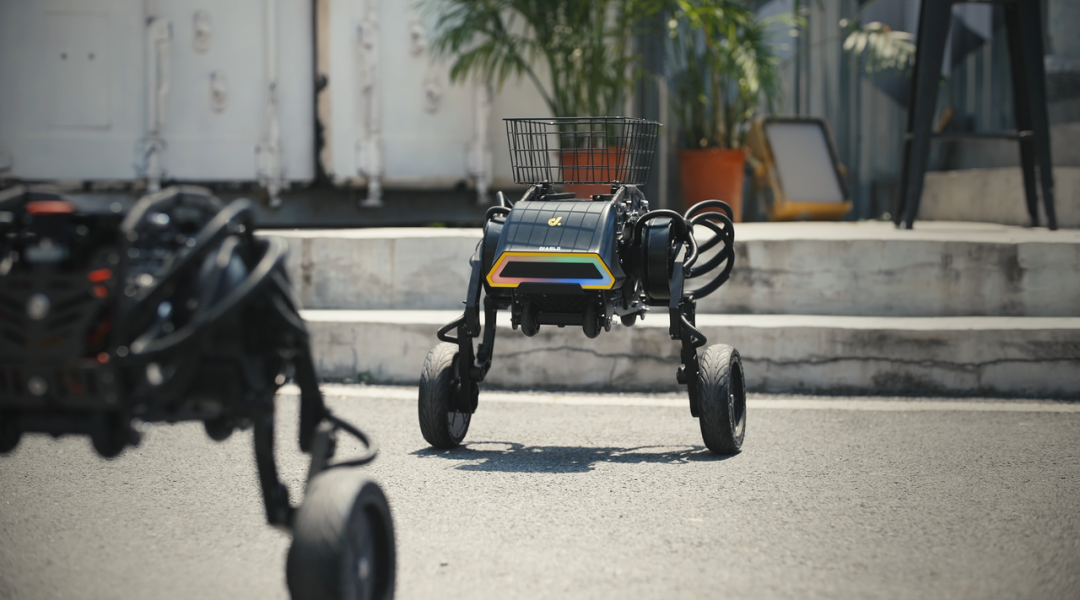
For us, we put go before get. Though both stand on the shoulders of giants, their foundations are different. Go aligns with the trend represented by autonomous driving in the new generation of automotive industry — moving forward with the pulse of the era. Manipulation aligns with the industrial robotic arm sector, but that industry's iteration speed currently lags behind autonomous driving.
Most of what we need to solve are engineering problems — problems of implementation and cost. These aren't solved by betting on a single reinforcement learning model. Autonomous driving technology existed decades ago too, but only with recent developments in lithium batteries, the three-electric systems, and other technologies has it become a viable market and commercial opportunity. Whether go or get, mobility or manipulation — as long as one thing is thoroughly solved, there's massive demand to be mined.
Q: What are your expectations for the Tesla Bot announcement on September 30?
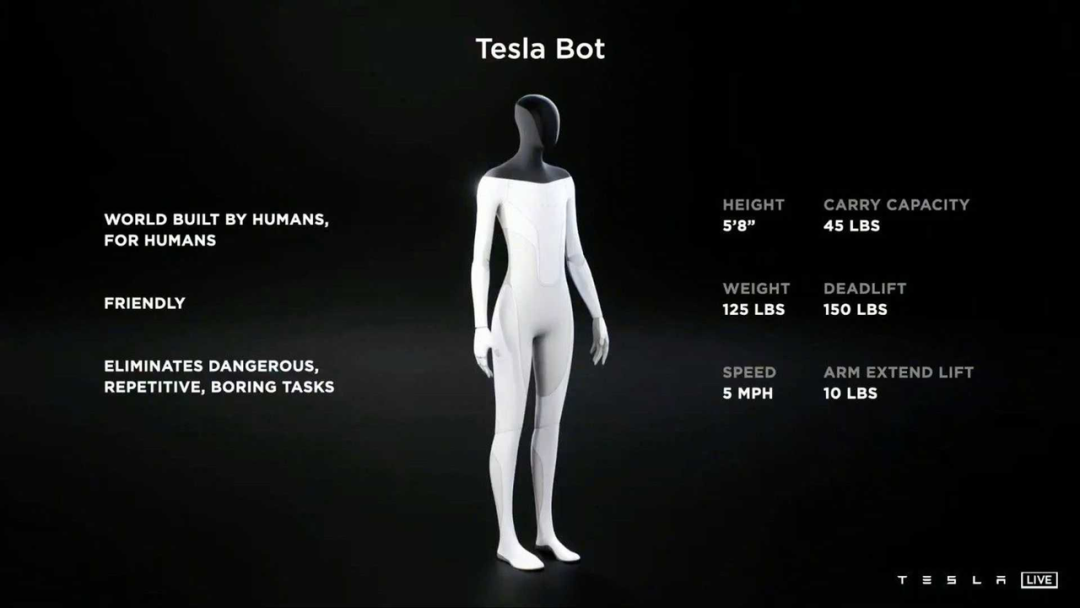
Di Zhang: From an R&D perspective, achieving particularly dexterous real-time robot control in a short timeframe requires connecting too many pieces. Even if Tesla excels at the three-electric systems and computing, many technologies in real-time control aren't directions where the new energy vehicle sector has accumulated expertise. But we would very much look forward to whether Tesla brings fresh market perspectives on product definition.
Zhuo Xu: Beyond Tesla, many new humanoid robotics companies in Silicon Valley are tackling things we previously considered very difficult — walking, using arms to open doors, and so on — with some fairly impressive technology already. But if humanoid robots are still used in security, patrol, and other routine service scenarios, they may be less competitive than wheeled robots in terms of both cost and stability.
Di Zhang: Tesla's vision for this is quite ambitious, but I think the first truly general-purpose humanoid robot likely won't be a do-everything device. It will be more of a salami-slicing approach, with partial functions gradually penetrating — such as the security, home cleaning, elevator navigation, and door-opening scenarios mentioned, or doing one thing well in a particular niche. This may be the paradigm for how general-purpose robots grow.
Roundtable: The Future of Companion Robots
Participants:
Junyi Song, Founder, Elephant Robotics
Yalun Zhu, Senior Product Manager, ECOVACS Global Product Center
Kaiyan He, Investment Manager, 5Y Capital
Q: Over the next decade, what will be the ultimate form of companion robots, and what should their functions be?
Kaiyan He: Chinese companies are demonstrating a completely new capability to define products in the companion robot space. Opportunities and challenges will coexist over the next decade. China has the largest consumer market and the most mature robotics supply chain. Breaking down companion robots into four capabilities — perception, mobility, cognition/emotion, and manipulation — there has been fairly clear iterative progress in perception and mobility, but cognition/emotion and manipulation remain unclear, with very obvious challenges.
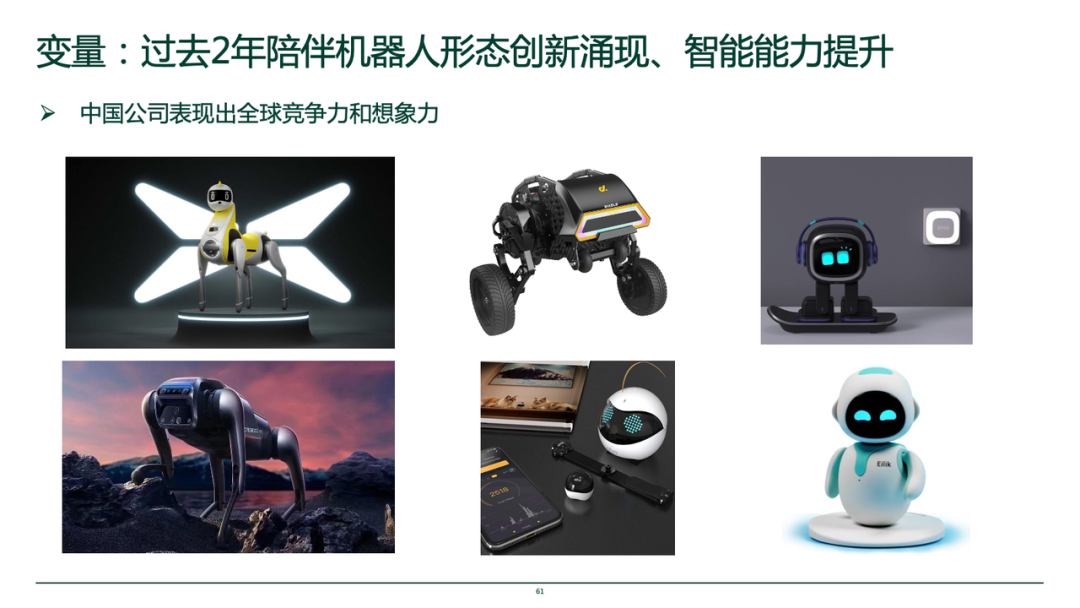
Junyi Song: First, how do we define companion robots? In the narrow sense, they are humanoid or biomimetic, generally requiring more than two degrees of freedom — otherwise they wouldn't be called robots, like smart speakers. If you have a very realistic humanoid robot at home, it might have the intelligence of a five- or six-year-old child. But if it's a biomimetic robot, it might only need the intelligence of a one-year-old — a weak AI product. Beyond these, there are also products like Vector that created the desktop robot category. So these three types — humanoid service robots, biomimetic animal robots, and desktop robots — will become companion robots most quickly, with many distinctive products possible in emotion, movement, expression, voice, touch, and interaction.
Q: How should startups choose their entry point and evolution path?
Yalun Zhu: Looking across a ten-year horizon, companion robots will likely divide into two major categories. One is more specialized robots handling complex tasks — cleaning, organizing clothes, and caring for the elderly. The second is humanoid or pet-like interactive companion robots, more focused on addressing spiritual companionship needs. For those of us born in the 1980s and 90s, Doraemon is probably everyone's dream robot, but that's too difficult. I think robot toys in their current form make for a very good entry point.
Kaiyan He: Looking at the two branches of functional versus emotional companionship, robot vacuums have succeeded as a home service robot. Beyond that, there haven't been particularly big successes in companion robots. What significant lessons can we draw from this?
Junyi Song: From product quality, shipment volume, and functional usage perspectives, Vector was still quite a good product, and many companies have attempted companion robots. Because companion robots represent an entirely new track, users may not yet have defined what they actually want — so product makers essentially imagine something and put it in the market to test.
After several years working on companion robots, my feeling is that the core of companion robots still lies in companionship itself; form is not the key. Whether the concept of "robot" can enhance the attribute of companionship — that is the central question for companion robots.
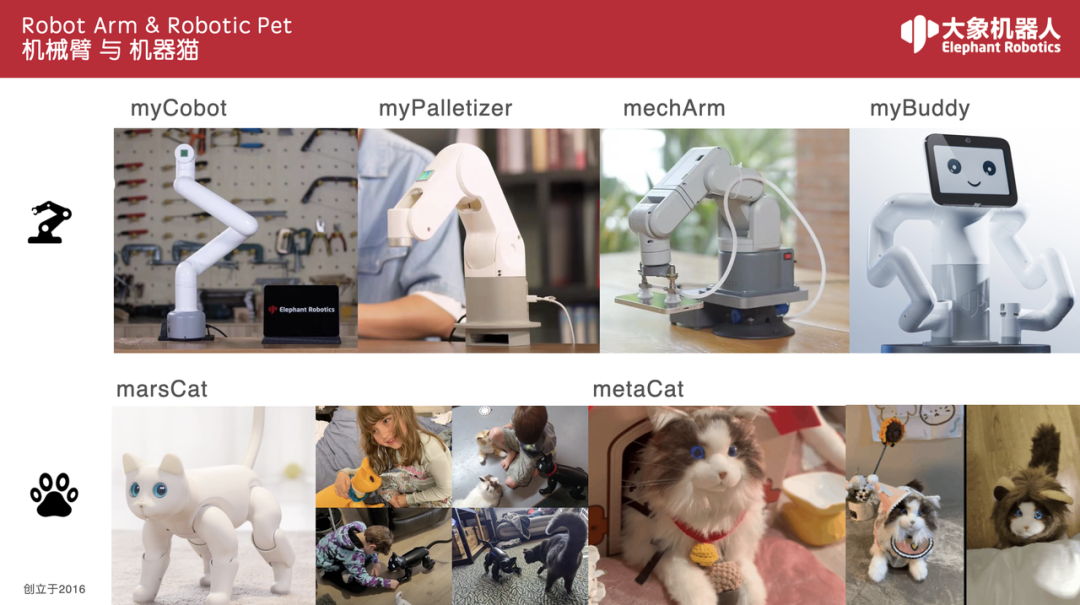
If the movement of our robot can make it more cat-like, or if its feedback and interaction can strengthen companionship, then that's good — it's additive. Extrapolating from this over the decade ahead, we will continue enhancing the companion attributes of robots, continuing with animal-category robots and desktop robots.
Yalun Zhu: One point I'm currently focused on is that humans have a psychological expectation of very long-term companionship with playmates. We also worry that companion robot products might initially satisfy our curiosity but fail to maintain deep-level interaction and feedback over time — remaining stuck in one state. In subsequent technological development, we'll need collective experimentation to define all concepts more clearly. From a lifecycle perspective, content updates should cover more than five years, making users feel the product is completely attuned to them.
The economic and time costs of market education for companion robots won't be short. For startups, technological accumulation and experimentation with new products and models may be more important. We can break out specific sub-capabilities — interaction capability, voice capability, object recognition capability, and feedback capability — all of which represent good entry points for entrepreneurs.
Kaiyan He: To summarize, from a user psychology perspective, current understanding of this category is quite fuzzy. The considerations are: how to get users to pay an emotional premium beyond functionality at the right price point; how to properly define the interaction form; and finally, how to solve supply chain and operational issues so that lifespan and stability continuously improve. Most importantly, can a long-term connection with users be formed?
Q: What leading core indicators or variables could help entrepreneurs judge when the industry has reached an inflection point?
Junyi Song: We have one very important metric for companion robots: daily active use — this should be an absolute indicator. The prerequisite for achieving daily use may require gaming attributes, where you can obtain virtual rewards and must make contributions. Achieving this requires strong control over movement, expression, and voice details. Beyond daily use, another metric is annual sales exceeding ten million units.
Yalun Zhu: As an industry inflection point, we might look at several dimensions. First, whether household user pain points are strong enough. Second, whether product accessibility is sufficiently low — the entire supply chain can provide complete technology, and costs are low enough. Second, from a market perspective, explosive growth may be difficult all at once, but it's a process of gradual maturation.
Experts from Horizon Robotics, AgileX Robotics, Walnut Technology, and a leading robot vacuum company also shared their perspectives. We've selected some of their content; for more highlights, please continue following the 5Y 3Sigma Roundtable.
Next-Generation Robotics Product Design and Globalization Path
Speaker:
Yiheng Peng, Founder of Walnut Technology & Kickstarter Greater China Representative

- Niche demand isn't enough to sustain a great company, but mass-market demand is — "Don't just stare at the small slice of cake — find the right angle to cut across the whole cake." The real opportunity is finding blind spots in mass-market demand.
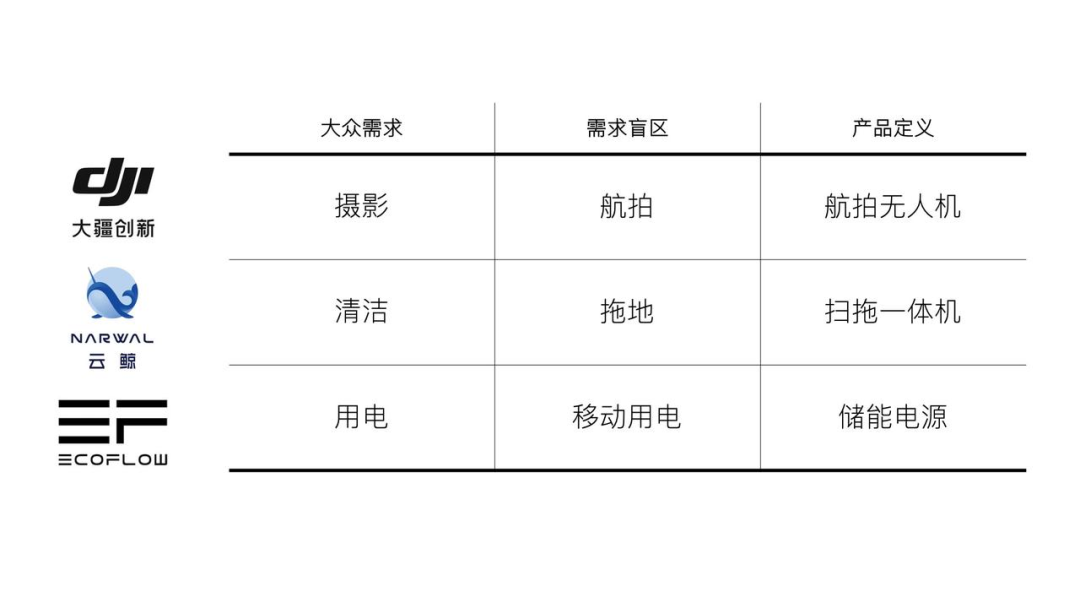
- Taking DJI and Cloud Whale as examples, photography and cleaning are both mass-market needs, while the blind spots in demand were aerial photography and mopping — using differentiated product solutions to give users a new experience.

- Software products occupy users' time; hardware products occupy users' space. The ceiling for a hardware product brand's imagination lies in the size of user space it can potentially occupy. The larger the space, the more possibilities exist.
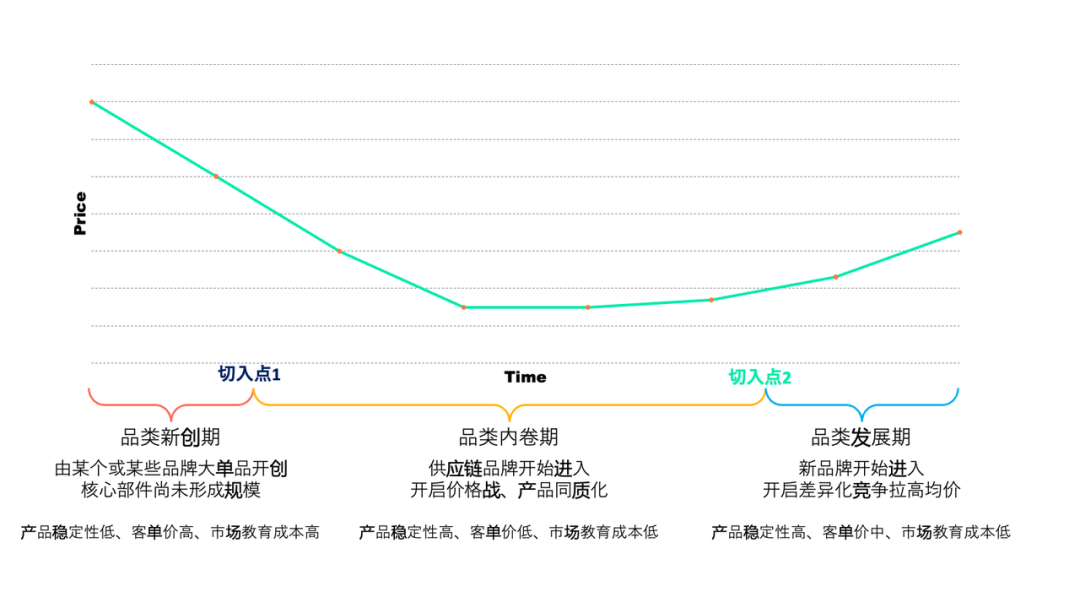
- Any new category goes through several stages, and you need clear awareness of which stage you're in. In the category creation phase, product stability is low and core components are immature — you must seize the most core demand to define the category. In the category development phase, products have stabilized and market education costs are lower — differentiation becomes key.
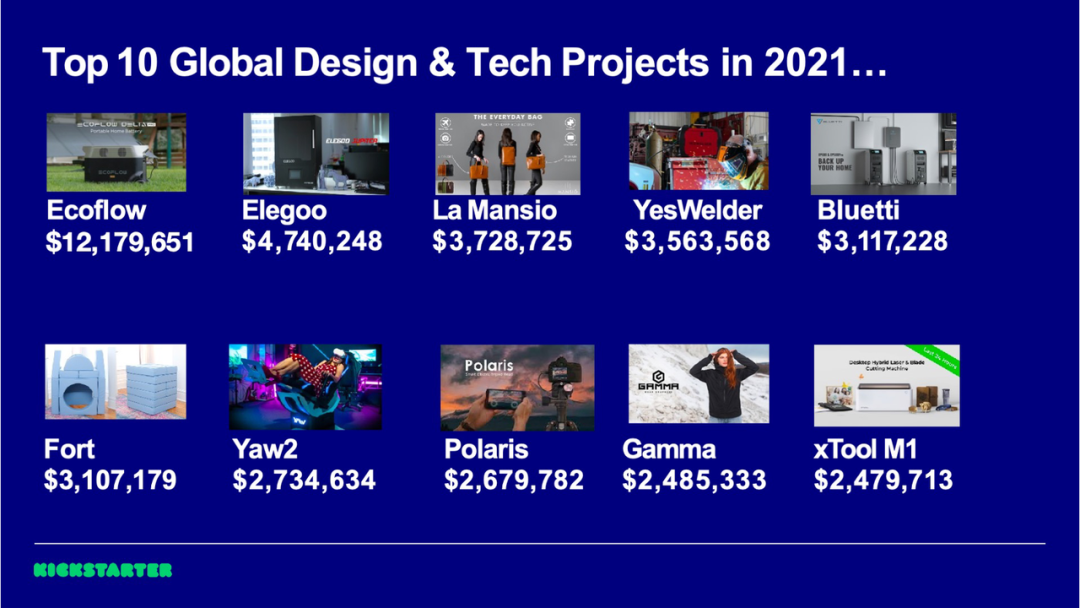
- Chinese technology brands are demonstrating stronger capabilities in innovation and global commercialization. Among the top ten projects on the Kickstarter crowdfunding platform in 2021, Chinese companies accounted for seven. Data from the first half of 2022 shows that for the first time in Kickstarter's 13-year history, total funds raised by projects from China exceeded those from the US.
The new 5Y 3Sigma Roundtable will be held this Sunday, August 28, from 9:30-12:30, on the theme: How will the combination of AI and imagination disrupt digital content creation and consumer markets?
Welcome to [scan the QR code on the poster] or click [Read More] to register and join the sharing and discussion.





5Y Capital seeks out, supports, and inspires lonely entrepreneurs, providing support from the spiritual to all operational matters. We believe that if the "crazy you" in others' eyes begins to be believed in, the world will become a different place.
BEIJING · SHANGHAI · SHENZHEN · HONG KONG