5Y News | GalaxySpace Closes New Funding Round, Becoming China's First Satellite Internet Unicorn

GalaxySpace, a leading satellite internet company, has closed its latest funding round at a post-money valuation of nearly RMB 8 billion.

GalaxySpace, a leading satellite internet company, has completed its latest funding round with a post-money valuation of nearly RMB 8 billion, becoming China's first unicorn in the commercial aerospace and satellite internet sectors. The round was led by Nantong Development Zone Intelligent Manufacturing Industry Investment Fund, with participation from Hundsun Investment, Matrix Partners China, and CICC Capital's CICC Infrastructure Fund. Existing shareholders Shunwei Capital, 5Y Capital (formerly Morningside Venture Capital), Legend Capital, and Source Code Capital continued their investment.

Xu Ming
Founder & CEO, GalaxySpace
Q1
Why did you cross over into building communications satellites? Any stories to share?
Xu Ming: When I was studying at Harbin Institute of Technology, I actually knew nothing about aerospace. I was into software, which is why I later co-founded Cheetah Mobile. In 2011, as the company went through business transformation and commercialization challenges, I found myself lost in the confusion of my first startup. Then a documentary about the Hubble Telescope happened to enter my life. It showed footage from NASA's Voyager 2 probe — a pale blue dot that was Earth. From that perspective, the universe is so vast; everything in human history happened on that tiny blue dot, yet in the cosmic scene it might not even register as a pixel. This cosmic perspective felt like discovering a parallel world where I could find relief. That was my first encounter with aerospace.
Later, my thinking gradually clarified: smartphones had become more than phones — they were mobile computers in our palms. The Hubble Telescope was essentially a large computer floating in space, powered by solar energy. In 2015, I spent considerable time researching technology trends in the US and found that my vision for the aerospace industry was becoming reality. During this period, the era of global commercial aerospace was arriving, and China was no exception. In 2016, the State Council released the 13th Five-Year National Strategic Emerging Industries Development Plan and the China's Space Activities in 2016 white paper, successively proposing to "encourage and guide private capital to participate in aerospace research and production, and vigorously develop commercial aerospace and satellite commercial applications." This policy openness gave me tremendous confidence. Combined with technological feasibility and talent mobility opportunities, I decided to found GalaxySpace — based on judgment of trends, industry, and policy.
The development of the aerospace industry is fundamentally about answering what value space can provide to society. The original intention behind GalaxySpace was a mission: to develop space technology that truly serves human society and delivers the value of aerospace technology to the world. That was the starting point.
Q2
What's been the biggest difficulty in your more than ten years of entrepreneurship? In retrospect, how did it shape you?
Xu Ming: I think the greatest difficulty in entrepreneurship is actually staying the course — not being tempted by other more attractive directions. The hardest part is filtering out distractions amid complex external environments, reducing desires, and sticking to your original choice. It's a kind of ascetic approach to building a company. Of course, this process also requires long-term accumulation and experience, so that when real opportunities arrive, you can strike with precision. There's a saying that "in martial arts, speed conquers all." For example, at Cheetah Mobile, seizing the overseas market opportunity, and at GalaxySpace, landing strategically important customers — these were all precisely timed moves.
If I had to say what this difficulty gave me, it would be resilience and a long-term mindset.
Q3
Why did you choose 5Y Capital's investment?
Xu Ming: 5Y Capital (formerly Morningside Venture Capital) began participating in China's early-stage venture capital activities over a decade ago, growing alongside China's internet development and backing well-known companies like Xiaomi and Xpeng Motors. From what I understand, 5Y Capital has consistently tracked the cyclical changes of the technology industry itself, rather than focusing only on short-term gains.
From an industry perspective, aerospace is likely the last large-scale industrial system in China to fully open up, with enormous prospects. But commercial aerospace is a long race, requiring long-term thinking. We're confident in the commercial aerospace track, but we also need patience. My view on aerospace development is: "Don't overestimate the next two or three years, but never underestimate the next ten." This entrepreneurial long-termism aligns well with 5Y Capital's approach of tracking technology industry cycles, and that's why GalaxySpace chose 5Y Capital.
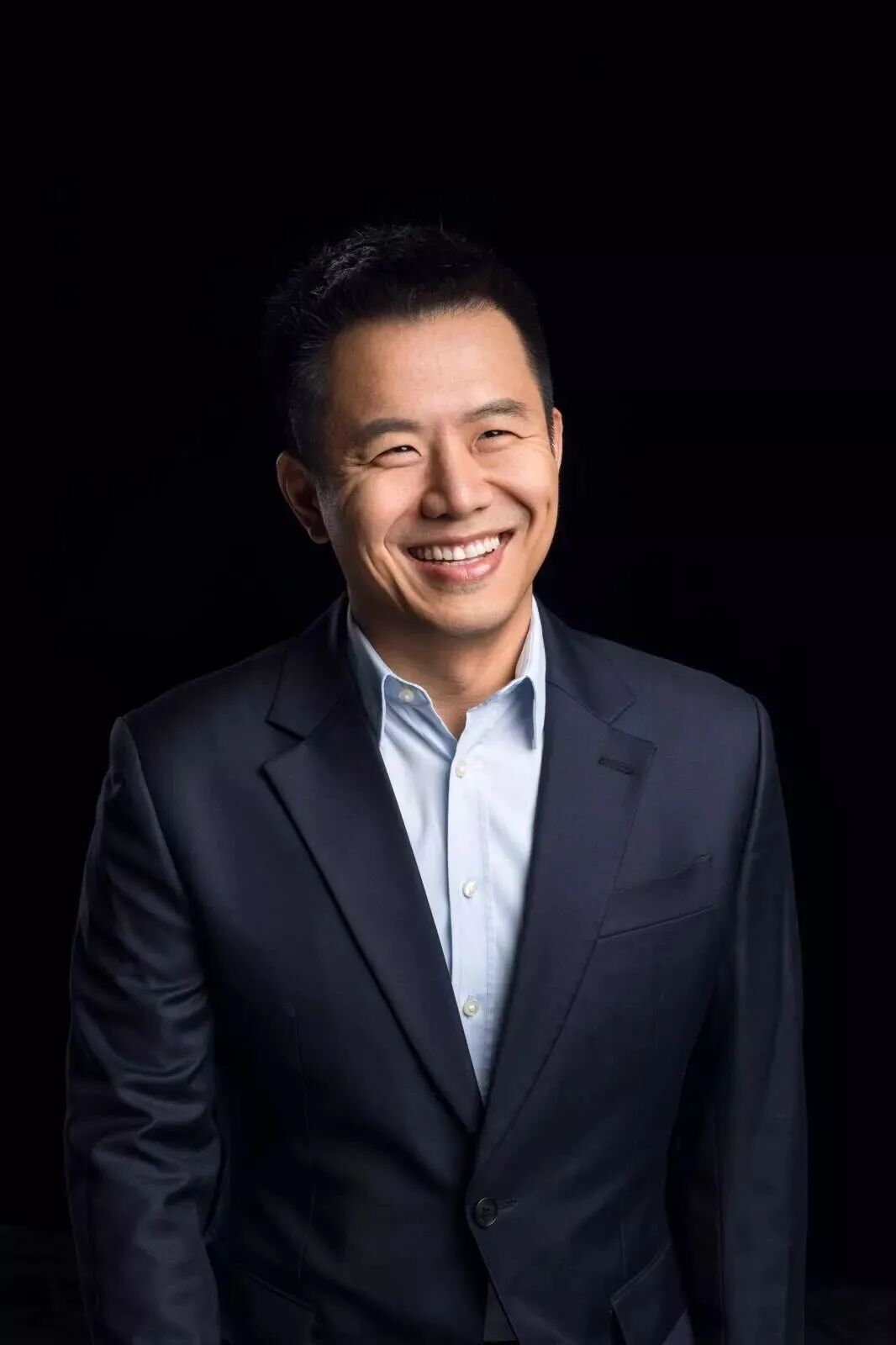
Cheng Yu
Partner, 5Y Capital
Q1
5Y Capital participated in GalaxySpace's Series A in 2018 and has supported every round since. What's your investment thesis?
Cheng Yu: A few years ago, when we discussed investment opportunities for the next decade internally, one major trend we identified was the explosion of "machine intelligence" bridging the digital and physical worlds. Hundreds of millions of new AIoT devices, combined with personal and commercial demand, all pointed toward the need for ubiquitous, always-on, high-speed, broad-spectrum, highly reliable internet connectivity — and satellite internet will undoubtedly bring an entirely new dimension of connectivity.
Satellite internet itself is a market with depth and extensibility, with a supply chain spanning manufacturing, launch, ground equipment, and operations. And serendipitously, this industry is also experiencing a "10x effect" driven by large-scale industrial production and new technological revolutions.
From a team perspective, founder Xu Ming is not only an excellent successful entrepreneur, but also the most internet-savvy aerospace person and the most aerospace-savvy internet person I've met. It's precisely this cross-disciplinary capability that enables him to build the industry's best fusion team of aerospace and internet talent, continuously iterating over the past two years while delivering the industry's most advanced satellite products.
Q2
What has impressed you most about the GalaxySpace team during your collaboration?
Cheng Yu: In a recent conversation with Xu Ming, I asked what his years of internet experience had brought to this venture most importantly. His answer was "belief." This belief — between people, between users and products, between capital and dreams — is the cornerstone of the entire new internet economy, and it's also GalaxySpace's faith.

Satellite internet is becoming a new engine driving global economic growth. A Morgan Stanley report notes that building satellite constellations capable of providing low-cost, high-speed internet is fueling the growth of the global space economy. By 2040, the global space economy is expected to reach $1 trillion in value, with satellite internet accounting for 50% to 70% of that market growth.
Currently, global satellite internet has entered a rapid deployment phase. US commercial aerospace company SpaceX is accelerating deployment of its Starlink constellation of nearly 42,000 low-earth orbit satellites. China's satellite internet construction is also gaining speed. On January 16, 2020, GalaxySpace launched its first satellite, which was not only China's first low-earth orbit broadband communications satellite with communication capacity reaching 24Gbps, but also the only broadband internet satellite currently in orbit developed by a private Chinese company. GalaxySpace's self-developed second broadband communications satellite has now entered final assembly.
Xu Ming stated that going forward, GalaxySpace will focus on building a next-generation satellite intelligent manufacturing super-factory in Nantong, targeting annual production of 300–500 satellites. Once completed, this will be China's first commercial aerospace production line benchmarked against Starlink — an intelligent production line capable of low-cost, batch manufacturing of next-generation low-earth orbit broadband communications satellites, potentially narrowing the gap between China's next-generation satellite mass production capabilities and the US to within two years.
On April 20 this year, the National Development and Reform Commission included satellite internet in its new infrastructure initiative. A Nantong Development Zone representative noted that satellite internet and related industries are currently facing major historical opportunities. As a leading enterprise in satellite internet, GalaxySpace has strong prospects. Nantong Development Zone will use GalaxySpace as an industry anchor to attract and support high-quality upstream and downstream projects, building a satellite internet and commercial aerospace industry cluster, and accelerating China's satellite internet construction and commercial aerospace industry development.


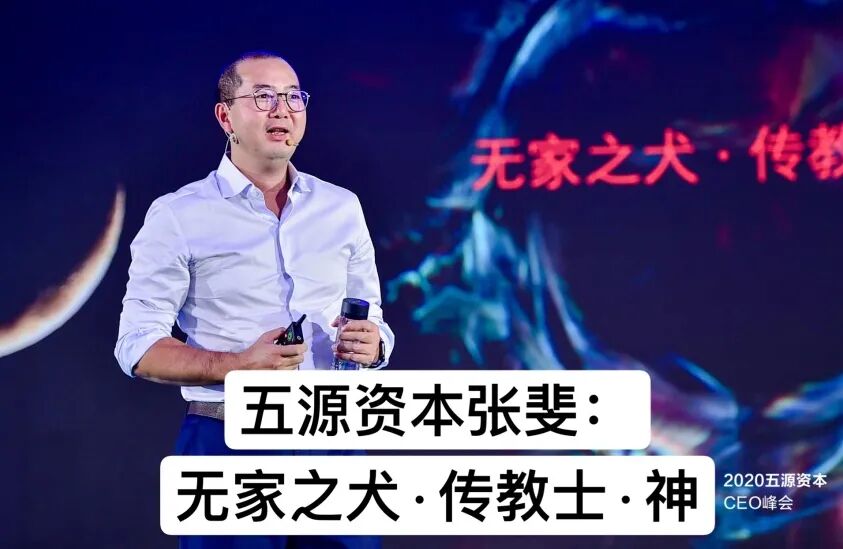


5Y Capital (formerly Morningside Venture Capital) currently manages approximately $3 billion across USD and RMB dual-currency funds. We believe that if the crazy you in others' eyes begins to be believed in, the world becomes a better place.
BEIJING · SHANGHAI · SHENZHEN · HONG KONG