5Y News | "Zansi" Raises Tens of Millions of RMB in Series B Funding, to Launch Vertical Brand "Wei Laodi" Following "Mr. Soup"

A bowl of soup, a cat, a restaurant management group.

Recently, Shanghai Zansi Catering Management Co., Ltd. (hereinafter referred to as "Zansi") completed a Series B financing round of tens of millions of RMB, led by 5Y Capital and IDG Capital.
Xiao Zhou, Vice President at 5Y Capital, stated that the catering industry is transitioning from labor-intensive to industrialized and standardized operations, driven primarily by food technology-enabled standardized supply chains such as compound seasonings and prepared dishes, as well as algorithm and intelligence-powered store operating cost and profit models. Zansi possesses both supply chain and algorithm-driven operations capabilities, combined with Huabin Chen's retail operations experience at the Fiyta Group, which has enabled the successful incubation of various catering brands. We saw potential in Chen and chose to invest in Zansi.

Huabin Chen
Founder of Zansi
Q1
What was your original intention in founding Zansi?
Huabin Chen: My original intention in founding Zansi has never changed — I believe the food and catering industry needs to be transformed and upgraded through industrialization and digitalization, and I hope to create value for this process.
In terms of outcomes, Zansi's development has gone through three stages, corresponding to our aspirations to contribute in brand incubation, store digital operations, and supply chain upgrading. Along the way, we've made tactical adjustments based on market pain points, but our fundamental strategy has remained consistent — it's always been about leveraging whatever core capabilities we've accumulated to do what makes sense.
Q2
What is Zansi's main industry layout? How do the pieces connect?
Huabin Chen: In the first stage, we focused on the Tang Xiansheng brand, targeting the healthy fast-food market with additive-free stewed soups and healthy coarse grain rice as our signature offerings. We actively embraced food delivery channels, providing C-end users with products in the 28-40 RMB price range.
Throughout this process, we constantly reviewed and reflected on what capabilities this organization had actually built. Roughly two: one is a data-driven middle-office system for on-site catering operations, and the other is a compound seasoning supply chain centered on soup bases. I wouldn't say we've perfected either, but we've been continuously iterating. Take the middle-office system — this year alone we completed its 2.0 iteration. On one hand, we fully integrated business flow, data flow, and financial flow, making every restaurant and every brand's core business visible across the value chain, so that even store managers can understand data, understand profit and loss, understand food delivery traffic, and every ROI. On the other hand, on the supply chain side, we've made cost flows visible across multiple brands, multiple stores, and multiple warehouses nationwide, improving precision in controlling raw material costs.
The second stage was essentially about leveraging these two capabilities to attempt moving from single-brand to multi-brand empowerment, ultimately achieving our own multi-brand incubation. To date, Zansi's Zanyunying has successively empowered chain brands including Yelixiali, Blue Frog, Yu Ku, Xia Lou Chi Fan, and Dazhuang Niuzha, bringing them business upgrades and growth aligned with next-generation small-store models, while切入对应的复合调味料供应链 — and ultimately investing in and incubating brands such as Dazhuang Niuzha.
The third stage is essentially where we are now. The catering business itself can't be rushed. Zansi hopes to maintain its foundation through steady growth and incubating one brand per year, while launching the Weilaodi brand as a growth engine. This isn't something created from nothing — it's an amplification to the C-end of the soup-based compound seasoning capabilities accumulated through the first two stages. Weilaodi hopes to provide flavor solutions for young people who aren't skilled at cooking, including both seasonings and prepared dishes, and fundamentally, the boundary between sauces and prepared dishes is increasingly blurring.
So we joke that Zansi is a company that really knows how to simmer — simmering soups and simmering sauces.

Xiao Zhou
Vice President, 5Y Capital
Q1
Why did you invest in Zansi?
Xiao Zhou: I've been following innovation opportunities in food industrialization since 2016. Huabin Chen is one of the few founders I've encountered who possesses both product taste and a belief in algorithms. He combined his genuine passion for food with his retail operations experience at the Fiyta Group to incubate catering chain brands such as Tang Xiansheng and Dazhuang Niuzha, as well as the compound seasoning brand Weilaodi.
5Y's investment style has always placed heavy weight on the person. We saw in Huabin the potential to create tremendous value, so we chose to believe in his vision.
Q2
What changes are happening in the catering industry? What opportunities exist?
Xiao Zhou: Today's catering industry is transitioning from labor-intensive to industrialized and standardized operations. The core drivers are food technology-enabled standardized supply chains — such as compound seasonings and prepared dishes — as well as algorithms and intelligence structurally transforming store operating cost and profit models.
When an industry begins to enter industrialization and standardization, there's an opportunity for an era-defining company to emerge. When personal care products moved from handicraft workshops to industrial production, companies like Procter & Gamble and Unilever were born — and if you notice, they all emerged in the second half of the 19th century. In the 1970s, when American dining began to industrialize, companies like McDonald's and Yum! Brands were born.
Today we're already seeing more and more standardized supply chain-driven companies in the capital markets — from $50 billion Haidilao to $6 billion Jiumaojiu, and so on. China's catering industry is a massive market of 4 trillion RMB growing at over 8% annually, but the industry's standardization capabilities and digital foundation still have significant room for improvement.
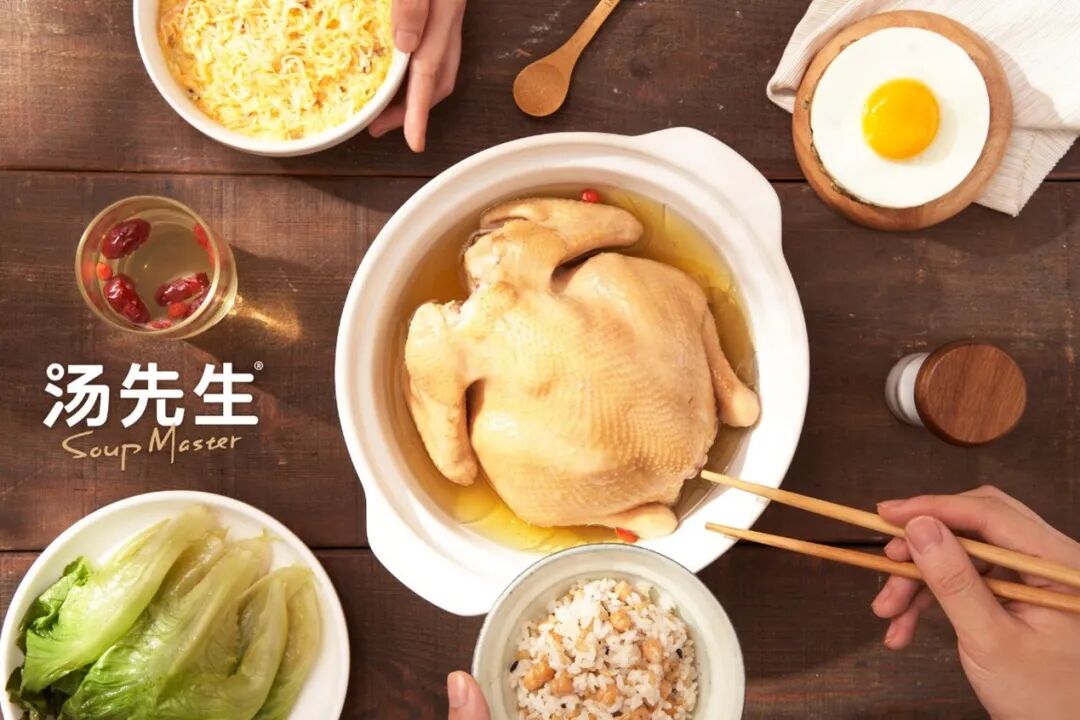
In its early days, Zansi focused on the "Tang Xiansheng" food delivery brand, targeting the healthy fast-food market and providing C-end users with additive-free stewed soups and healthy coarse grain rice. Zansi currently operates 108 stores across more than 30 cities nationwide. Products are sold through dine-in, proprietary mini-program ordering channels, and online food delivery platforms including Meituan and Ele.me, with a per-customer transaction value of 28-40 RMB.
Founder Huabin Chen stated that Tang Xiansheng will complete a 2.0 brand and store upgrade within the year, enriching its product line to expand the dine-in experience, while also deepening its presence in East and South China to establish the user perception that "for soup, go to Tang Xiansheng."
In 2019, Zansi expanded from single-brand operations to multi-brand incubation. Through its Zanyunying platform, it has served hundreds of restaurants across multiple chain catering brands including Blue Frog, Dazhuang Niuzha, Yelixiali, Yu Ku, and Xia Lou Chi Fan, with an annual renewal rate as high as 90%.
The successful incubation of these chain catering brands owes to Zansi's operational and supply chain capabilities: one is a data-driven middle-office system for on-site catering operations, and the second is a compound seasoning supply chain centered on soup bases.
Chen noted that the company's middle-office system has been continuously iterating. For example, this year the system achieved data visualization of "business flow → data flow → financial flow." Through this system, catering brands can view their business from the bottom up — every store manager can understand data, read profit and loss, food delivery traffic, and ROI, enabling precise, data-driven store management.
Additionally, on the supply chain side, the platform visualizes cost flows across multiple brands, multiple stores, and multiple warehouses nationwide, improving the company's precision in controlling raw material costs.
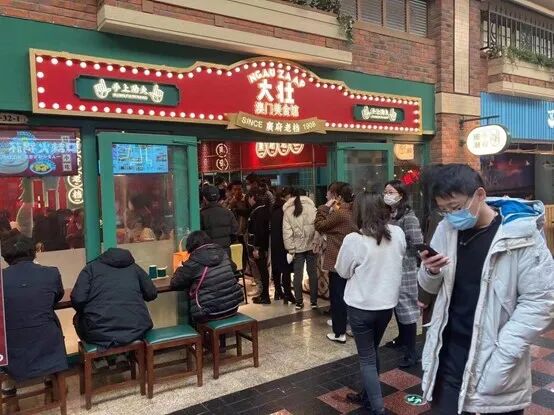
Incubated brand "Dazhuang Niuzha"
The time-honored Fujian brand "Dazhuang Niuzha" saw its performance plummet due to the pandemic. Dazhuang Niuzha's dishes feature radish and beef/offal ingredients — in addition to food delivery sales, passersby can also take them away as snacks, similar to Tang Xiansheng's small-store model. After partnering with Zansi, Dazhuang Niuzha grew from two stores to eight in Fuzhou last year, opened a flagship store in Shanghai, and saw revenue increase more than tenfold.
For brand incubation, the company's goal is to incubate one brand per year. Chen stated that the catering business itself can't be rushed — steady growth requires patient refinement.
At the end of 2020, Zansi entered the compound seasoning track, and will soon launch the vertical brand "Weilaodi," targeting young people who aren't skilled at cooking to provide them with more flavorful solutions. Weilaodi focuses on soup seasonings and prepared dishes, featuring labels such as "added dietary fiber," "no added chicken essence or MSG," and "quantified use with fresh ingredients." Seasoning flavors include curry, Thai hot and sour, and mushroom.
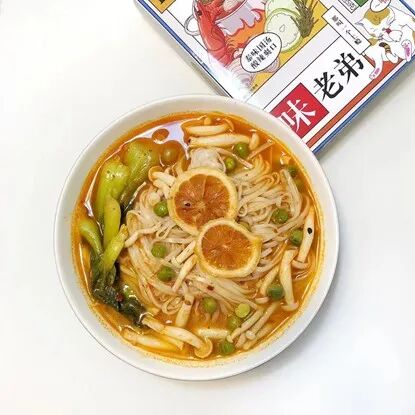
Interestingly, Weilaodi's packaging features a cat. Chen explained that this design stems from the very high proportion of young people living alone who own cats, which can resonate with consumers.
Weilaodi products will be sold through online channels including Douyin, Xiaohongshu, Tmall, and Taobao, as well as community group buying channels such as Meituan Youxuan and offline catering stores.
Launching the compound seasoning brand "Weilaodi" represents Zansi's amplification of its soup-based compound seasoning capabilities to C-end scenarios. Chen stated that Tang Xiansheng has advantages in the soup base category, and when soup is simmered thicker it becomes sauce — this laid the foundation for Weilaodi's products. At the same time, because of the company's catering background, it places great importance on chef craftsmanship, because good flavors come from restaurants and chefs. Additionally, the company leverages its direct-to-consumer store advantage to test Weilaodi products through offline stores.
According to Chen, impacted by the pandemic, the company's GMV dropped to just 160,000 RMB in February 2020, but ultimately achieved annual GMV exceeding 150 million RMB for the full year, with B2B revenue accounting for 50%. Zansi positions itself as a catering brand based on compound seasonings and data-driven operations. In 2021, it will continue to develop around its own brands Tang Xiansheng and Weilaodi, as well as incubated catering brands, providing operations management and supply chain services.
(Partial content adapted from 36Kr)




5Y Capital (formerly Morningside Venture Capital) currently manages approximately $3 billion in USD and RMB dual-currency funds. We believe that if the crazy you in others' eyes begins to be believed, the world will be a better place.
BEIJING · SHANGHAI · SHENZHEN · HONG KONG