5Y News | Vastai Technologies, a high-performance intelligent vision chip design company, announced the completion of a $50 million Series A funding round.

Vastai Technologies has completed a $50 million Series A financing round, with 5Y Capital co-leading the investment.

Vastai Technologies (hereinafter referred to as "Vastai" or "the Company") announced today that it has raised a total of $50 million in its Series A funding round. This round was co-led by Kuaishou, Redpoint China Ventures, and 5Y Capital (formerly Morningside Venture Capital), with SAIF Partners and all existing shareholders — including ZhenFund, Sirius Capital, and Yaotu Capital — participating as follow-on investors. Vastai is dedicated to providing high-performance intelligent vision chip design and comprehensive solutions. The proceeds from this round will primarily be used for scaling production of the Company's existing flagship chip products for downstream applications, further expansion of the R&D team, and accelerating global customer outreach.
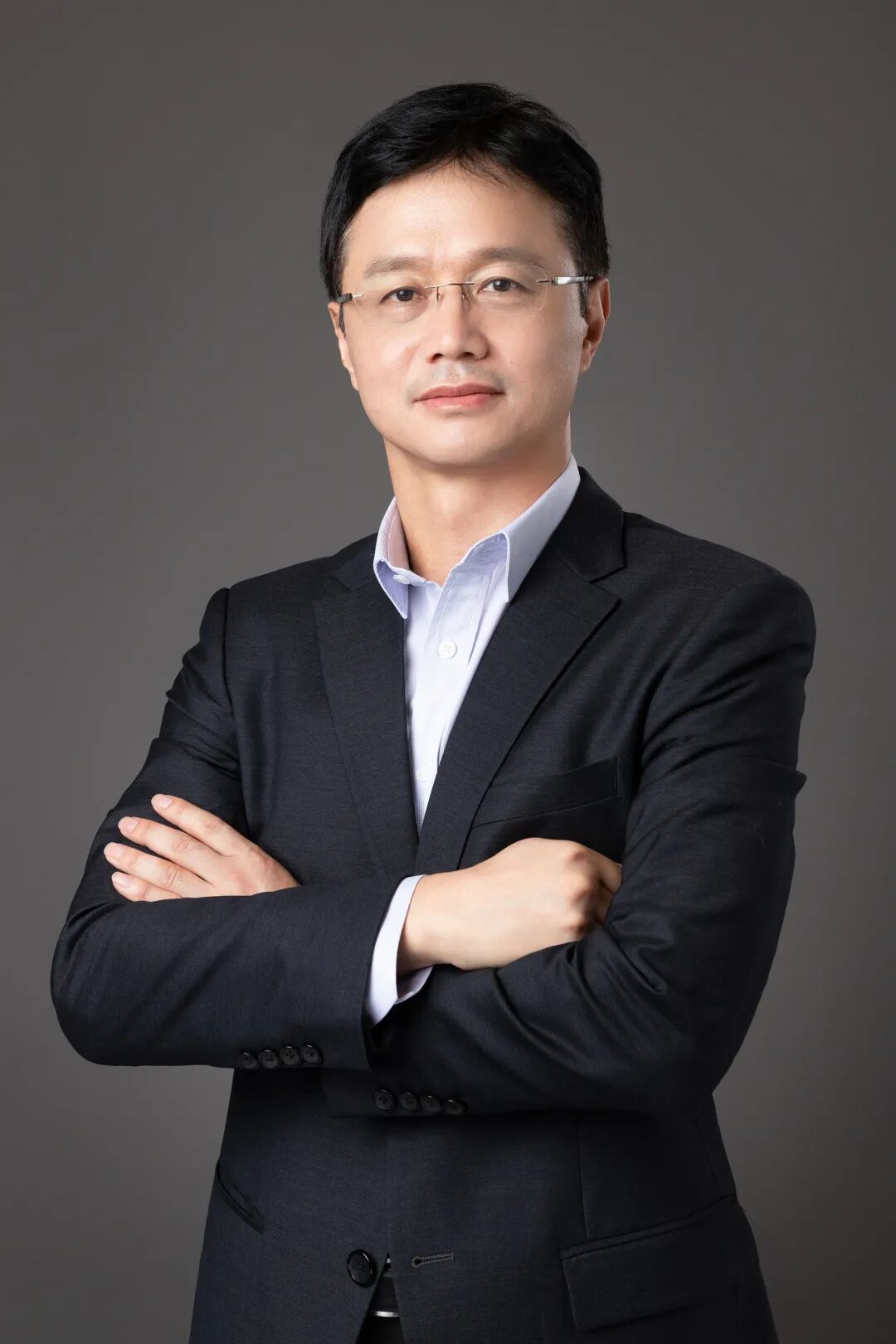
Jun Qian
Founder & CEO, Vastai Technologies
Q1
You've spent more than two decades in the chip industry and founded Vastai at the end of 2018. What did you most want to disrupt — or rather, what innovation did you most want to bring to the industry?
Jun Qian: In 2012, University of Toronto professor Geoffrey Hinton (note: Hinton is known in academic circles as the "Godfather of Neural Networks") proposed some new machine learning algorithms, including deep learning. As demand for AI applications has continued to grow, the gap between the computing power that computers can provide and what applications actually need has become increasingly wide.
To narrow this gap, many companies and professionals have made various efforts and attempts — whether in chip architecture or process technology — hoping to shrink it as much as possible. In fact, they've already done quite well. Overall computing power has grown faster than Moore's Law, roughly doubling every year. But compared to the computing power demands of AI applications, it's still far from enough.
What I most want to do is achieve a breakthrough in computing power growth through our chip design, to truly help the industry — particularly to meet the computing power needs of AI applications both domestically and internationally.
I'm not particularly fond of the word "disrupt." In some other industries, that word might be exciting. But when it comes to AI chips, especially server-grade chips for the cloud, what's needed is a very solid and pragmatic strategy. Every decision should be traceable and grounded in eventual execution. For example, when it comes to CPU performance improvements, sometimes you see about a 20% boost from one generation to the next. But that 20% is actually the accumulation of many, many incremental gains — 0.5% here, 0.1% there.
I hope we can make truly outstanding products, but the actual process of doing so will be very pragmatic.
Q2
Vastai's vision is to "become a benchmark for Chinese chip design companies and one of the global leaders in chip design." When and how was this aspiration planted?
Jun Qian: I was sent to China by AMD in 2011. For the five or six years before that, while I was still working at Cisco in the U.S., I had already started recruiting in China and trying to move some chip design work there. After arriving in China in 2011, my overall sense was that local design capabilities, design philosophy, design methodologies, and the sheer number of qualified people were all far from what would be needed to build a good chip company.
When was this aspiration planted? It would have been around 2016.
The problem with starting a chip company is that it requires huge investment, has long cycles, and carries high risk. Realistically speaking, this is very challenging in terms of returns for investors. So Silicon Valley was long referred to as "Software Valley" — because truly good semiconductor companies that got funded and achieved massive success had become rare.
But by 2015, after Google's TPU came out and was accompanied by a massive surge in computing power demands at the application layer, more and more startups began to emerge. That was also when I started to think about building such a company in China. The reason was simple: after returning to China in 2011, I had grown a team from several dozen people to nearly 400, and through that process I could see everyone's growth. I felt I had the confidence to do this.
Q3
You've been an entrepreneur for nearly two years now. What's the biggest difference between the reality and what you had anticipated when preparing to start the company?
Jun Qian: I've thought about this quite a bit. The actual process differs from what I had imagined in quite a few ways, but the biggest difference is that I didn't expect I would so thoroughly "enjoy" the entrepreneurial process. When I first started, I had carefully considered the overall difficulties and the various challenges I would face along the way. Having actually gone through these two years, despite the challenges, the hardships, and sometimes staying up all night to solve problems, I feel genuinely happy doing it. I often find myself thinking, why didn't I start a company earlier? I really feel "like a fish in water" now.
Q4
What book have you been reading recently? Any takeaways?
Jun Qian: A book I've been reading recently is called Crossing the Chasm. It mainly discusses how in business, to go from a simple innovation to an initial product with some early customers, you need to cross the chasm to truly scale the business, promote your product to a much broader customer base, and build a truly great company. What needs to be done right in this process, what challenges need to be overcome, what issues need attention. I've been reading this book recently to prepare for the Company's future development. I haven't fully digested it yet, so I hope to have another opportunity in a future interview to share my deeper thoughts.
Q5
Why did you choose to take investment from 5Y Capital?
Jun Qian: This is actually quite easy to answer (laughs), because 5Y Capital started on Wuyuan Road! Wuyuan Road is a very artsy, bourgeois kind of place. I grew up studying in Shanghai — my high school, Shanghai No. 2 High School, was near Wuyuan Road, so I essentially grew up in that area. I have an emotional attachment and fondness for Wuyuan Road. Shanghai No. 2 High School also has many famous alumni, including Hu Ge, Yao Ming, and others. The first time I went to 5Y Capital's office, I fell in love with the place, and at that moment I thought, I absolutely must get 5Y Capital to invest in us.
That meeting was with Levi (Kai Liu) and Richard (Qin Liu). What left a deep impression on me was Richard's extensive knowledge of video technology, though he was always very modest in saying he didn't really understand it that well. Later I learned that 5Y has actually invested in many video-related internet companies (such as Kuaishou, Xiaomi, YY, Huya, Agora, musical.ly, and so on), and has done deep work in this area. In terms of investor fit, we greatly admired 5Y. Our entrepreneurial DNA was very similar — in terms of grasping the big picture and our resolute, all-in approach to execution. So after that conversation, we became even more determined to have 5Y invest in us, and also hoped to earn Richard's recognition, to prove that 5Y, like us, was equally bullish on the video + AI market. As it turned out, we ended up coming together.
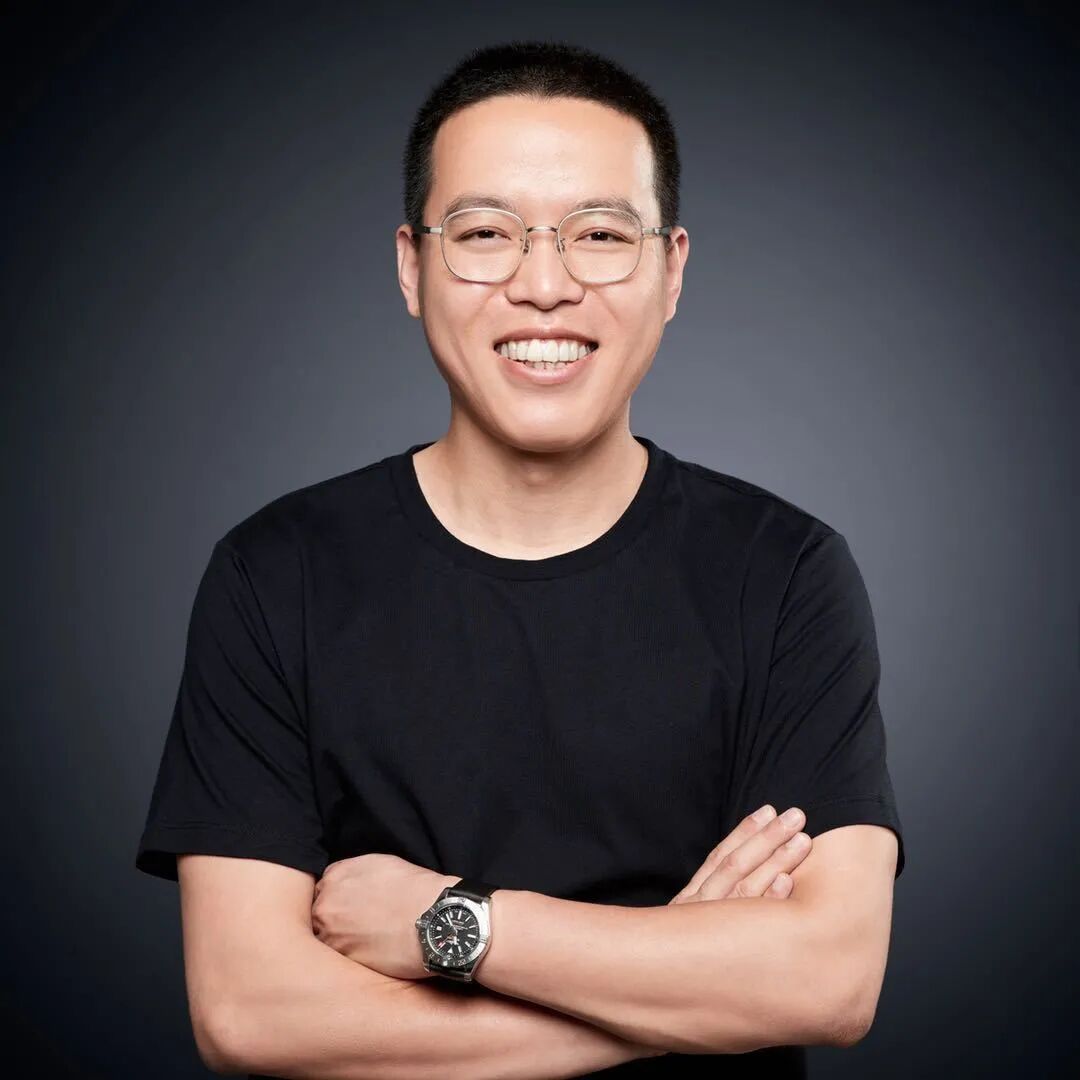
Kai Liu
Partner, 5Y Capital
Q1
This is 5Y Capital's first foray into semiconductor investment. Could you briefly share your investment thesis?
Kai Liu: Software and AI have always been core investment focuses for 5Y Capital. We recognized early on that software and hardware are difficult to separate, especially in the infrastructure space. Only when extreme software is paired with extreme hardware can you achieve optimal performance and user experience. In AI, we've invested in a series of star companies whose moats are built on algorithms and industry expertise, and we've been thinking about where the bigger opportunities in AI lie. We firmly believe AI will become a foundational capability empowering all industries. Therefore, our encounter with the Vastai team was both coincidence and inevitability. We had in-depth conversations with the company at the angel round stage and have maintained close attention to the team ever since. The experience and expertise that Jun Qian's team has accumulated in both software and chips left a deep impression on us. We're delighted that we ultimately came together, from meeting to understanding each other to growing together. We believe Vastai will become a leader in the next generation of AI-driven semiconductor companies.
Q2
What most impressed you about the Vastai team?
Kai Liu: John (Jun Qian) and Louis (Lei Zhang) have extremely deep experience in the semiconductor field. They have not only led R&D management for large multinational teams but also possess top-tier cutting-edge research capabilities. What moved us most was the team's entrepreneurial conviction and ambitious vision. Although Chinese companies are world leaders in AI application layers, we have consistently lagged behind in the infrastructure layer. Both Vastai and 5Y firmly believe that the companies leading the next generation of global semiconductor development will be Chinese companies. This belief stems not only from our world-leading application scenarios but also from our possession of top-tier talent. Even as a small startup, the team's eyes are fixed on the global market — that left a deep impression on us.

Founded in Shanghai in December 2018, Vastai Technologies' core team members come from the world's top technology companies, with an average of more than 15 years of relevant chip and software design experience. Vastai focuses on optimization for computer vision and video processing, offering rich features and highly efficient performance-to-power ratios. Vastai's products are applicable to multiple AI domains, covering edge to cloud, SOC, and server markets. The company is committed to becoming a top-tier chip design and comprehensive solutions provider in China and globally, providing efficient computing power for intelligent applications and enabling AI innovation and application deployment.




5Y Capital (formerly Morningside Venture Capital) currently manages approximately $3 billion in USD and RMB dual-currency funds. We believe that if the crazy you in others' eyes starts to be believed in, the world will be a better place.
BEIJING · SHANGHAI · SHENZHEN · HONG KONG