5Y News|Horizon Robotics Plans to Raise Over $700 Million in Series C, Completes C1 Tranche

Horizon Robotics announced the completion of its Series C1 funding round, with continued backing from 5Y Capital.

On December 22, 2020, Horizon Robotics announced the launch of its Series C funding round, with total expected proceeds exceeding $700 million. The company completed its $150 million Series C1 tranche, jointly led by 5Y Capital (formerly Morningside Venture Capital), Hillhouse, and Capital Today. Other participants in this round included Guotai Junan International and KTB, with additional strategic investors and global institutions expected to join in subsequent tranches. The proceeds will primarily fund the accelerated R&D and commercialization of Horizon's automotive AI chips and intelligent driving solutions, as well as the development of an open and collaborative partner ecosystem.
Qin Liu, Founding Partner of 5Y Capital, commented: "Artificial intelligence is one of the few technology domains where Chinese entrepreneurs can compete globally in real time, and autonomous driving has become the most important sub-sector within AI. I'm grateful that five years ago, I had the opportunity to hear Kai Yu articulate his chip ambitions, and to continue accompanying the company's growth. A layman in semiconductors, Yu seized this once-in-a-generation opportunity with foresight amid controversy. As smart vehicles gradually move into the mainstream, Horizon has step by step come into the spotlight."
5Y Capital led Horizon's angel round in 2015 and has since continued to participate in its Series A, B, and C1 rounds. We are delighted to have witnessed and accompanied the company's development throughout this journey.
This March, we conducted a brief written interview with Horizon founder & CEO Kai Yu. We are republishing it here, in hopes it offers you some insight :)
Q & A
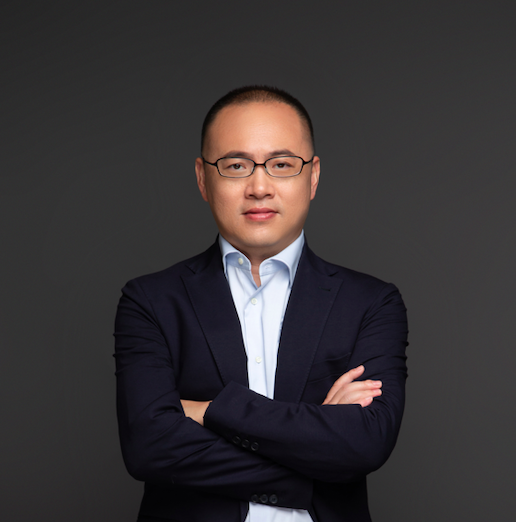
Kai Yu
Founder & CEO, Horizon Robotics
Q1
5Y: Five years ago, you were the first to propose building AI chips — very forward-thinking. How did you come up with that idea?
Yu: Technological innovation unfolds in two stages. The first is breakthroughs in core hard tech; the second is consumer-facing application innovation built atop those breakthroughs. We judged that after two decades of internet dividends, China was incubating a new wave of innovation — and this wave would necessarily begin with breakthroughs in core hard tech.
Five years ago, most people were just beginning to engage with deep learning algorithms for AI. At that time, I felt that when everyone piles into something, it's usually not particularly good. During the AI gold rush, actually striking gold in any given vertical was quite difficult. But selling pickaxes might be a good business. So I concluded that becoming an underlying enabler — building AI chips, breaking through the core hard tech of AI from the bottom up — was the most interesting thing to do. So I started.
Q2
5Y: This year marks the first year of mass production for Horizon's automotive-grade AI chips in pre-installed vehicle models. Horizon's Journey 2 achieved zero-to-one breakthroughs for domestically produced AI chips in both intelligent cockpit domains (on Changan UNI-T) and advanced driver-assistance domains (on Chery's Ant). Why are mass-produced vehicles beginning to adopt Horizon's automotive-grade chips this year? How do you understand this market inflection point?
Yu: The auto industry operates on its own inherent rhythms and timelines. Automotive-grade chips, from R&D and project initiation, to OEM design-in, to large-scale commercial deployment, follow their own cycles. Driven by automotive market conditions and policy tailwinds, OEMs are increasing investment and deployment in intelligent features. L1 and L2 ADAS, as early-stage products of automotive intelligence, are expected to achieve widespread adoption in the coming years. According to research institute projections, China's domestic ADAS market will see a CAGR exceeding 37% over the next five years, reaching RMB 120 billion by 2023.
Horizon has closely followed industry fundamentals, steadily advancing the R&D and real-world deployment of automotive-grade AI chips. On the commercialization front, we've moved relatively quickly. Horizon spent four years to launch China's first automotive-grade AI chip last year. This year is our inaugural year of mass production deployment in vehicles. This is a milestone for Horizon, and also a milestone for China's intelligent vehicle industry. Next year, we hope to work hard on securing more mass-production vehicle models, but this year's core priority is to solidly ensure the quality of our chips in mass-produced vehicles. Because automotive chips concern safety, we must rigorously maintain quality control.
Q3
5Y: You are a pioneer — you built China's first AI research institute, and founded the world's first AI chip company. Being a pioneer is extraordinarily painful. You are destined to grope in darkness, with no one to point the way. How do you live with that pain?
Yu: I find it difficult to say that being a pioneer, or contrarian thinking, brings so-called pain or excessive emotion. On the contrary, I feel that the entire process of entrepreneurship and innovation is an extremely rational one.
Entrepreneurship necessarily involves thinking about trends, discerning what constitutes genuine market demand; then distinguishing, amid noise, what is signal, and in chaos, what is direction. I find this process captivating. I believe the most important prerequisite for doing something well is genuinely loving it, truly losing yourself in it. Many breakthroughs may appear distinctive or contrarian, but when you've grasped a true direction, you actually feel quite a sense of accomplishment inwardly. So I feel that what entrepreneurship truly requires is this rationality, not emotional experience.
Q4
5Y: Across all times and places, you may dispatch one person to assist you in your entrepreneurial journey. Whom would you choose? Why?
Yu: I quite admire Warren Buffett. He is like a master of rationality, very quietly observing the world from a small city, doing very calm things. For instance, before this economic downturn arrived, during last year's stock market surge, he converted his holdings to cash. Many people found this baffling at the time. But in retrospect, it demonstrated extraordinary foresight. Buffett's contrarianism is actually rooted in deeper insight into the trends of the era. This astonishing rationality is what I admire, and entrepreneurship in fact requires precisely this kind of rational insight. So if I had to choose, it would certainly be Buffett.
Q5
5Y: Describe for us the sci-fi scenario you most firmly believe will become reality in the next decade.
Yu: We have been contemplating: after the PC and mobile eras, what will be the largest-scale computing platform affecting humanity over the next 20 to 30 years? Many people may now wonder whether it is cloud computing. But I believe the next largest computing platform will certainly be oriented toward terminal robots, on the edge side. This may be another contrarian thought. And in-vehicle computing is unquestionably one of the most important vertical applications within the robotics computing platform.
I believe that over the coming decades we will enter the era of robotics — ubiquitous robots with autonomous decision-making capabilities will reconstruct the entire value chain of our production and livelihoods. This is the greatest trend of the future. This is also Horizon's vision: to be the underlying enabler of the robotics era. From the present through 2030, we will focus on in-vehicle computing, because this is the prelude to the robotics era.

Founded in July 2015, Horizon Robotics is the world's first AI chip startup, dedicated to the R&D of edge AI chips and solutions. Based on its innovative AI-dedicated computing architecture BPU (Brain Processing Unit), the company has established a comprehensive R&D roadmap. In 2017, Horizon launched China's first edge AI chip; in 2019, it successively introduced China's first automotive-grade AI chip Journey 2 and the next-generation AIoT intelligent application acceleration engine Sunrise 2; in 2020, Horizon further released the all-new AIoT edge AI chip Sunrise 3 and the next-generation high-efficiency automotive-grade AI chip Journey 3. Horizon is preparing to launch Journey 5 for high-level autonomous driving, developed according to functional safety (ISO 26262) processes, to create an in-vehicle central computing platform and system meeting the automotive industry's highest safety level, ASIL D.
2020 marks the first year of mass production for Horizon's automotive-grade AI chips in pre-installed vehicle models. Horizon's Journey 2 achieved zero-to-one breakthroughs for domestically produced AI chips in intelligent cockpit domains (on Changan UNI-T) and advanced driver-assistance domains (on Chery's Ant). As of November 2020, shipments of Journey 2, China's first automotive-grade AI chip, had exceeded 100,000 units.
Currently, Horizon maintains deep cooperation with leading domestic and international OEMs and Tier 1 suppliers including Changan, SAIC, GAC, FAW, Li Auto, Chery Automobile, Great Wall Motor, as well as Audi, Continental, and Faurecia. The company has secured more than 20 mass-production design-in models, with projected installations reaching one million units next year.
From its founding, Horizon targeted the in-vehicle AI chip domain, adhering to long-termism and persisting for five years. Today, it has achieved阶段性成果 in the application and deployment of in-vehicle AI chips, and has also gained support and recognition from capital markets. Currently, Horizon's shareholders include top-tier funds such as 5Y Capital, Hillhouse, Sequoia Capital, Capital Today, and DST; global leading semiconductor giants Intel and SK Hynix; and several top-tier domestic automotive groups.
Going forward, Horizon will firmly maintain its positioning as an "underlying enabler," adhering to its "chip + algorithm + toolchain" foundational platform, combining complete data closed-loop capabilities for open underlying technology enablement, working hand-in-hand with partners to jointly advance the R&D and application deployment of intelligent driving, continuously advancing toward new journeys.




5Y Capital (formerly Morningside Venture Capital) currently manages approximately $3 billion across USD and RMB dual-currency funds. We believe that if the you whom others see as crazy begins to be believed in, the world becomes a better place.
BEIJING · SHANGHAI · SHENZHEN · HONG KONG