5Y News | PingCAP Closes $270 Million Series D, Setting a New Global Database Milestone

We believe this round of funding is only the beginning of our global expansion — a small step toward the future. The $100 billion global database market is our true north.

Enterprise-grade open-source distributed database company PingCAP recently announced the completion of its $270 million Series D round, setting a new milestone in global database history. The round was co-led by GGV Capital, Access Technology Ventures, Anatole Investment, Jeneration Capital, and 5Y Capital (formerly Morningside Venture Capital), with participation from BAI, Coatue, FutureX Capital, Kunlun, Trustbridge Partners, and existing investors Matrix Partners China and Yunqi Partners. UBS served as the exclusive financial advisor for this round.
Qin Liu, Founding Partner of 5Y Capital, said: "Congratulations to PingCAP for successfully closing this new round in this year's environment. In terms of both scale and investor lineup, this is the largest financing in the database sector and the global open-source space at this stage. Moreover, during the pandemic, the company accelerated its global business expansion and the build-out of its international team, evolving from a tech geek shop into a global technology services company.
Open-source cloud-native databases emerged alongside the internet and cloud computing. This is a market that was global from day one. To lead this market, a company must establish global leadership in technology, product, and commercial ecosystem — a completely new competitive dimension for Chinese companies used to business model innovation, and one that implies enormous unknown challenges.
Since we first met Max Liu and the founding team in 2015, the company has grown amid tremendous controversy. What brought 5Y Capital and PingCAP together was precisely the mutual recognition and appreciation on both sides in the face of this enormous controversy. We are thrilled to witness Max leading the team to accomplish the impossible year after year, expanding their influence globally step by step. We believe this round is only the beginning of the globalization journey, just a small step forward. The $100 billion global database market is our true north."
Founded in 2015, PingCAP is an enterprise-grade open-source distributed database company offering open-source distributed database products, solutions and consulting, technical support, and training certification services. It is committed to providing stable, efficient, secure, reliable, and open-compatible new data infrastructure for global industry users, unlocking enterprise productivity and accelerating digital transformation.
TiDB, the distributed relational database created by PingCAP, is built for mission-critical business applications. It features enterprise-grade core capabilities including "distributed strongly consistent transactions, online elastic horizontal scaling, high availability with automatic fault recovery, and multi-active cross-datacenter deployment," helping enterprises maximize data value and fully unleash growth potential.
Five years ago, wanting to build a distributed, elastic database that could solve their own problems — and help fellow programmers with similar pain points — Max Liu left Wandoujia with colleagues Dongxu Huang and Cui Qiu to start a company. From day one, they laid the groundwork for international expansion; adhered to the philosophy of "small is big," with only one product for five years; and as a B2B company, recorded zero revenue all the way through their Series B... PingCAP chose an unusual path from its very first day, committed to long-term value, which made the journey all the more difficult and misunderstood.
But from being doubted by everyone, to being believed by some, to today being deployed in production environments by nearly a thousand leading enterprises across different industries, successfully capturing top-tier customers in the US, Europe, Japan, Southeast Asia, and other regions, and completing a $270 million Series D that sets a new milestone in global database history — PingCAP has carved out a path of its own.
Previously, 5Y Capital partner Liu Kai and PingCAP co-founder & CEO Max Liu had an online conversation. Today, we're republishing selected excerpts, hoping they offer some inspiration :)
Q & A
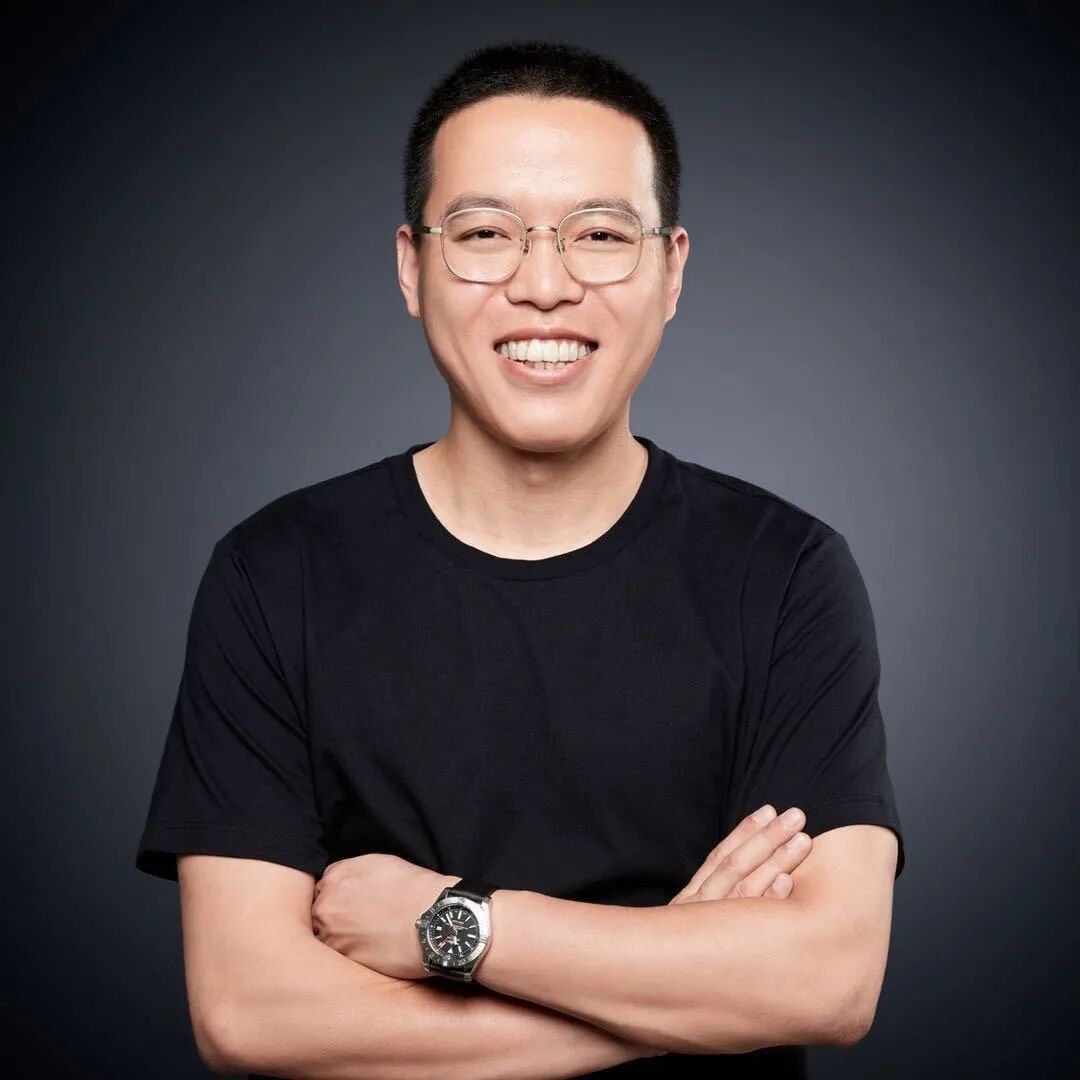
5Y Capital Partner
Liu Kai
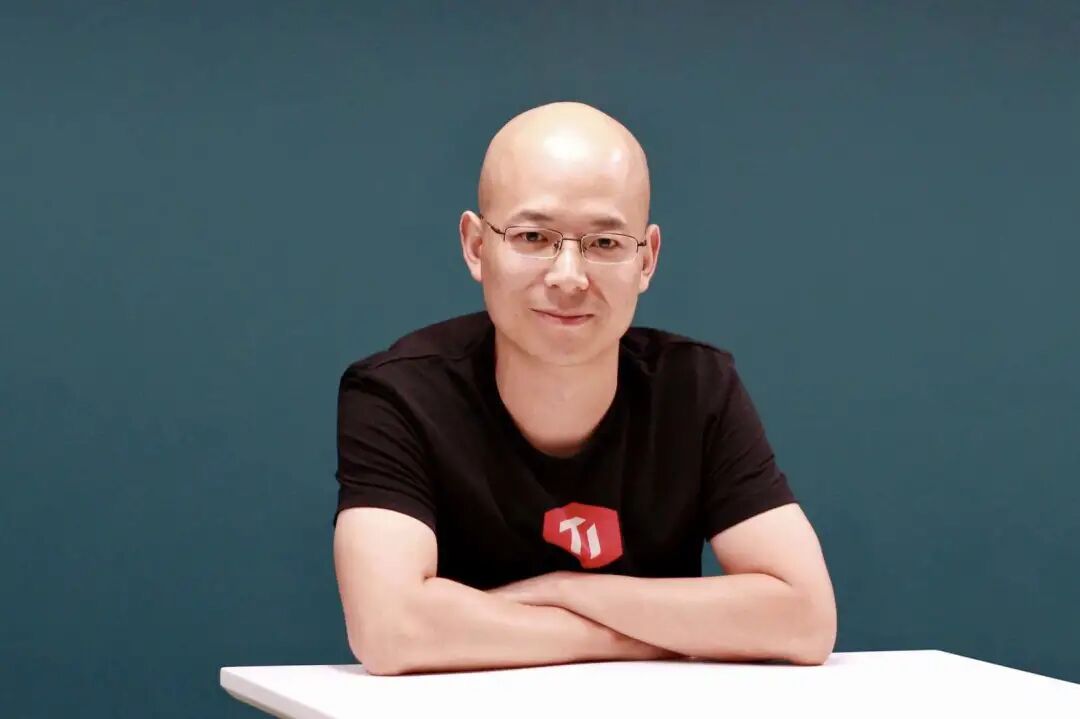
PingCAP Co-founder & CEO
Max Liu
Q1
Liu Kai: Where did your entrepreneurial motivation come from?
Max Liu: At first, I wanted to build a distributed, elastic database that could solve my own problems, and maybe help other programmers with similar pain points too. I remember there wasn't a mature, usable distributed database back then. It's really just programmer obsession, and I'm no exception. Every programmer wants to change the world through code, solve problems, make things more efficient, automated, smarter — to discover and create. That way you can be lazier, and have time to tackle other interesting problems. After all, there are so many interesting problems, and life is too short. Being able to solve even some of them is pure happiness.
Q2
Liu Kai: As a CEO, how do you get input and keep growing?
Max Liu: Business travel is a pretty reliable way for me to get input. Before getting on the train, I grab a book. When I arrive, I leave it on the seat. If someone who gets on later thinks it's good, they can read it.
I usually flip through the whole book during the trip. Not necessarily in great detail, but after finishing, I ask myself: "What is the author really trying to tell us?" What's the structure of this book? What's the main point? If there are too many main points and I can't remember them all, what's the one most important thing to remember? After going through this process, I can comfortably leave the book behind when I get off the train or plane.
Most books are like this. Only very rarely do I finish one and still feel unsatisfied, thinking about it and not wanting to let go. Then I'll take it with me to reread later. This is a pretty time-efficient way to get input.
Q3
Liu Kai: Of the books you've read, which had the biggest impact on your entrepreneurship?
Max Liu: I recommended a book before called Small Is Big. The biggest takeaway was "the importance of focus" — when you do every small thing well, it can eventually produce great scale effects.

In our five years of entrepreneurship, PingCAP has had only one product: TiDB. This is extremely rare among domestic startups. By our second year, friends were joking: you guys haven't pivoted yet? By year three, they asked: how do you still only have one product? Where's your product matrix?
This is PingCAP's fifth year, and we still have only one product. That book — those four words "small is big" have been reminding me all along. Five years of practice in, I think it's right, and I want to keep practicing it.
Q4
Liu Kai: To some extent, this runs counter to today's startup philosophy, which is all about finite and infinite games — "focus on growth, not boundaries."
Max Liu: It really depends on the stage. If the market space itself is large enough, but I haven't yet solidly become number one and captured most of the market share, then rushing to expand may not be worthwhile.
For startups, doing one product well is hard enough. We've been at it for five years, and TiDB hasn't become a global de facto standard yet. We still have enormous room for improvement, so I'm not in a hurry to expand into different categories or build a new product matrix.
The current situation for many domestic software startups is: they launch a new product line before the first one is mature, then become a product matrix, but with very small investment in each product. In the end, none of them are competitive.
We took a different path. Our single-point R&D team now exceeds 200 people, which globally is already a very large R&D investment in this field. Plus TiDB is an open-source product, so the entire community's contribution may be equivalent to or even greater than ours. So for TiDB alone, the actual personnel R&D investment may exceed 500 people. Having so many people concentrate their efforts on doing one product well is incredibly powerful. But even so, I feel it's not enough. We expect combined social forces to reach 2,000 people this year.
Perhaps it's this focus that produced the breakthrough, so our international progress has been very strong. We have top-tier customers in different countries: Japan's largest payment company PayPay, video company U-Next, Vietnamese unicorn VNG, payment company ZaloPay, India's Zomato and BookMyShow, Southeast Asia's largest e-commerce platform Shopee, France's largest video internet company Dailymotion, plus users in the US and Germany. We're especially grateful they chose us and trusted us.
Q5
Liu Kai: PingCAP chose the internationalization path from the very beginning. For a purely domestic company, this isn't an easy road. Why go international right away?
Max Liu: One seemingly reasonable explanation is that when we started in 2015, we looked at the database market distribution. China's database market revenue at the time accounted for only about 3% globally. The global market was roughly $50-60 billion. If we only focused on such a small market, we couldn't satisfy our expectations for the future.
Another, more reasonable explanation is we simply wanted to go international. Good products should work everywhere in the world, so we chose the hardest path from the very beginning.
Q6
Liu Kai: Taking a product from zero to one, from domestic to global — this is a process of breaking through your own and your team's capability boundaries. Were there any particularly painful experiences along the way?
Max Liu: The painful part is feeling like I'm never qualified enough, always feeling like we need more outstanding talent to join. So what I need to do is give these talented people more authority, more freedom to do things beyond our previous cognitive boundaries.
A CEO's growth rate can't possibly keep pace with the business. I quite agree with Yiming Zhang's line: develop a company as a product. If you view the company as a product, outstanding talent is like modules of the product. These modules can have more efficient algorithms behind them, iterating and operating in more efficient ways. So my main focus now is actually on talent — how to find even better people.
The three most important things for a CEO: find people, find money, find direction. Our direction hasn't changed in five years, so that's one less thing. I just focus on finding people and finding money. Specific operations are basically delegated to other outstanding colleagues.
Q7
Liu Kai: Over these years of entrepreneurship, what conventional wisdom from others have you most wanted to break?
Max Liu: Revenue, for example. Many investors in B2B companies hope to see revenue early on. But database development cycles are particularly long. Without two or three years to get it to a usable state, there's no way to generate revenue. So all the way through our Series B, our recognized revenue was still zero.
Long-term value and short-term value are often in conflict. If we choose high-growth, rapid expansion as our long-term value, some short-term value has to be sacrificed. Early revenue was actually a conventional framework I wanted to break, so our financing has never been valued on multiples.
I also hope to create an example that allows more people to focus on long-term value. Of course, if we succeed we're pioneers; if we fail we're martyrs. But whether pioneer or martyr, I want to try.
Q8
Liu Kai: After more than five years of entrepreneurship, what experiences or advice would you share with other technical founders?
Max Liu: I think what suits you is best. Usually when you give advice, people won't listen anyway, haha. Different industries, different founders — the differences are huge. This is something we're very happy to see and take comfort in. If everyone were the same, how boring would the world be?
Q9
Liu Kai: For the next five years, what changes do you hope PingCAP's existence and efforts will bring to the industry and society?
Max Liu: I hope PingCAP can become a case that lets more and more startups see and believe: the world belongs to us. Treat internationalization as standard equipment from day one. Don't just position yourself as a Chinese company serving a Chinese niche market from the start. Dream big and act bold — go for the global market. What if you succeed? Haha.
Also, I hope that in the future, our users won't have to worry about managing data anymore. In the future, the shape and flow of data should be like water — it changes according to whatever the user needs.




5Y Capital (formerly Morningside Venture Capital) currently manages approximately $3 billion in USD and RMB dual-currency funds. We believe that if the crazy you in others' eyes begins to be believed, the world will be a better place.
BEIJING · SHANGHAI · SHENZHEN · HONG KONG