Medicine Is the Science of Uncertainty and the Art of Possibility | 5Y Talk × Sihui Ma Xuguang

Illness is part of being human, and humans are part of society.

How do we understand disease? How do we understand healthcare?
Max Ma, founder of Medbanks Health Technology, offers his perspective — drugs are part of treatment, treatment is part of disease, disease is part of the person, and the person is part of society. When we view medicine and pharmaceuticals through this wider lens, we better appreciate the value of Medbanks's integrated ecosystem of healthcare, drugs, and health insurance.
On December 23, 2022, Medbanks listed on the Hong Kong Stock Exchange. Over eight years of entrepreneurship, Medbanks has dedicated itself to building infrastructure for China's pharmaceutical and healthcare services sectors, gradually constructing an ecosystem spanning medicine, pharmaceuticals, health insurance, and data. The journey has been filled with the science of uncertainty and the art of possibility.
Recently, Xu Tian Jing, Managing Director at 5Y Capital, sat down with Max Ma, Chairman of the Board, Executive Director, and CEO of Medbanks Health Technology. They discussed pivotal decisions from Medbanks's eight-year journey, the unique nature of the healthcare sector, and the company's mission. We've compiled their conversation in the hopes it offers something valuable:
01
Disease Is Part of the Person; the Person Is Part of Society
Jing: Though we haven't been with Medbanks for very long, we've seen tremendous growth in just two years. What's been your biggest takeaway from this past year?
Ma: The past year hasn't been easy for many companies — internal conditions, the external environment, and overall business sentiment have all been challenging. But Medbanks has navigated it with composure. We've always believed in two things: first, anticipate difficulties thoroughly and proactively prepare; second, maintain conviction that the future will be better. In the end, we achieved what we set out to do, and with relative calm.
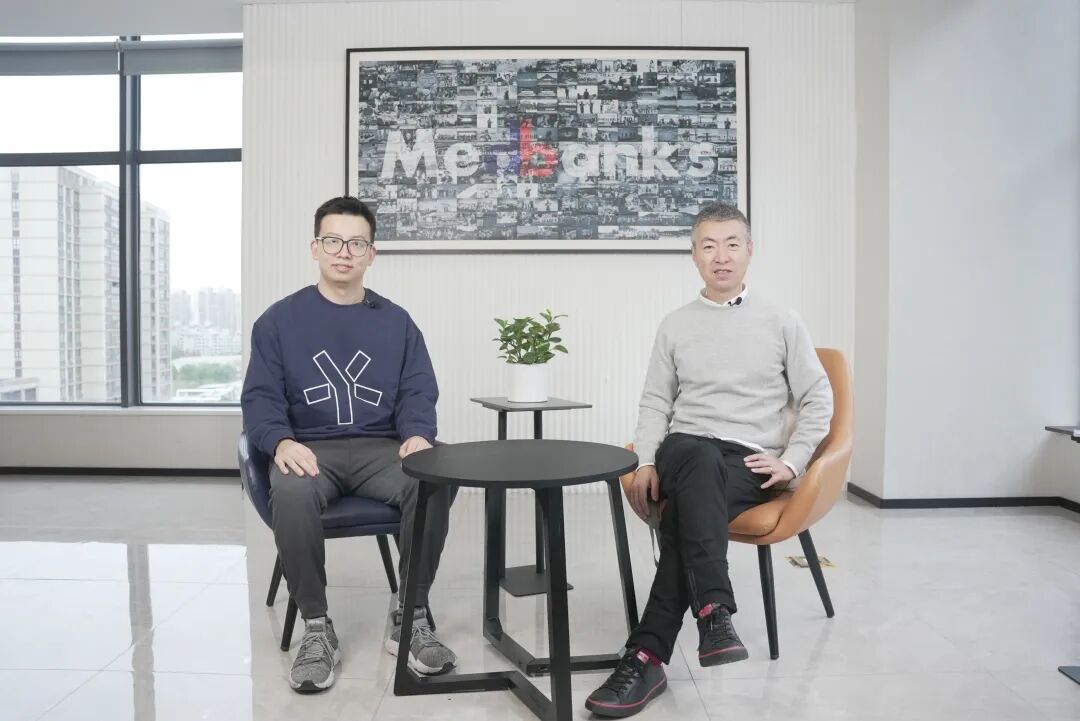
Xu Tian Jing, Managing Director at 5Y Capital (left); Max Ma, Chairman of the Board, Executive Director, and CEO of Medbanks Health Technology (right)
Jing: Medbanks was founded in 2014. What sparked the decision to start the company?
Ma: Before this, I worked at multinational pharmaceutical companies, rising from sales representative to district manager, regional manager, and finally overseeing oncology and specialty drug marketing. I was also a practicing clinician, which gave me a somewhat different perspective on the pharmaceutical field.
As a drug rep, I initially saw only the medicine itself. Over time, I came to realize that drugs are just part of treatment, treatment is part of disease, disease is part of the person, and the person is part of society. With this framework, when we consider a person's treatment, we must also factor in their ability to pay, their long-term employment situation, and view things through a broader lens.
I began wondering whether I should step out of the pharmaceutical industry and examine drug marketing from a longer, wider perspective — whether this could create more value for more people. So I left Bayer and started my own company.
Jing: Looking back from 2014 to now, what would you identify as Medbanks's key inflection points and milestones?
Ma: China's healthcare sector is fundamentally a policy-driven market, and Medbanks's overall trajectory has followed the path of healthcare and pharmaceutical reform.
In 2014, Medbanks's first business was clinical oncology big data. Since the team largely came from pharmaceutical backgrounds, we quickly became China's largest multi-disease, multi-region clinical oncology database operator. But we were also asking ourselves: where's the commercial future of clinical oncology data? We visited corresponding institutions in the US to learn and exchange ideas, formed some preliminary conclusions, and then convened our board for a very candid report.
At that point, clinical oncology data faced three major challenges. First, data rights were unclear. Did the data belong to patients, doctors, hospitals, or us? There was no clear answer — and in fact, other countries hadn't resolved this either. When rights are unclear, investment may not yield returns. Second, data structure and quality: healthcare data varies enormously, making standardization and unification extremely difficult and costly. Third, and most pointed: after looking worldwide, we hadn't found a single institution that had truly commercialized clinical data.
I made a clear judgment at the time: clinical data will certainly drive medical and healthcare advancement, but this is an extremely long-term endeavor — not something a startup can undertake. We'd die on that path as martyrs, not pioneers. We acknowledged this openly and began searching for our next direction. This was Medbanks's first milestone.
Right around then, in 2015, the government issued a dense series of regulations and documents strongly promoting new drug R&D. We understood exactly what this meant: any pharmaceutical company wanting long-term development in the future market had to develop innovative oncology drugs and secure patents, because only patents bring pricing power, and pricing power means survival. We dove straight into this market, helping pharmaceutical companies and experts complete clinical trials for new drug development.
The market was very new then. Many innovative drug companies didn't know hospitals or experts, and hospitals and experts didn't know innovative drug companies — but Medbanks understood both sides. We helped experts find good clinical trials and launch research projects in their departments, while helping pharmaceutical companies advance their trials smoothly. We became the best partner for both drug companies and experts, and within two years became China's top SMO (Site Management Organization) in clinical oncology. This was Medbanks's second milestone.
By 2016–2017, the government began pushing for outpatient pharmacy socialization and zero drug markups — a critical turning point. Before this, the pharmacy department was a core revenue source for hospitals; afterward, it became a cost center, and hospitals lost motivation to purchase more or more expensive drugs. Drugs and prescriptions began flowing outward to retail pharmacies. In 2017, Medbanks quickly opened its first specialty pharmacy. That year was a trial run with just 10 million RMB in revenue. Today, we've become China's largest private specialty pharmacy and the service provider for all newly launched specialty drugs. We serve not only pharmaceutical companies but also healthcare security bureaus. This was Medbanks's third milestone.
The fourth was an even more pivotal event: the establishment of the National Healthcare Security Administration in 2018. Its mandate was clear — provide basic medical security for 1.4 billion Chinese people, covering fundamental healthcare benefits. This created another massive gap in the market, meaning there was substantial self-pay demand that would need to be covered by commercial insurance.
According to NHSA statistics, it covers roughly 50% of China's medical expenses, about 2 trillion-plus RMB, with another 2 trillion in self-pay market corresponding to that. From that day on, Medbanks entered the commercial health insurance market — our fourth milestone.
Jing: Were there any notable setbacks along the way, and how did you overcome them?
Ma: In our earlier businesses — clinical trials and specialty pharmacies — we were relatively comfortable because the core team had deep experience in both areas. But when we reached health insurance, we encountered enormous challenges.
Frankly, when I first started meeting with insurance companies, I couldn't understand much of what they were saying and had to go back and cram. During that phase, we were constantly learning while also exploring and trial-and-erroring in practice. We took a small team and tried everything that could be done in insurance, quickly determining whether each direction was worth pursuing. Through this process, we gradually gained clarity on what commercial health insurance really is.
We made many painful mistakes over three years. What I'm deeply grateful for is that during this exploration, we encountered two highly professional teams. One joined Medbanks to help us launch Huiminbao — urban resident supplementary medical insurance — and another joined to help us launch urban employee supplementary medical insurance. These are now Medbanks's two core health insurance products.
02
Healthcare Is Both Science and Art
Jing: Last year, on the company's 7th anniversary, I saw you wrote a letter saying that what Medbanks does is both science and art. Why do you say that?
Ma: The science and art formulation comes from William Osler, the father of modern medicine, who said that medicine is a science of uncertainty and an art of probability.
I trained in medicine. Within the broader healthcare ecosystem, there are several core elements. The heart of pharmaceuticals, medicine, and insurance is people — we're building health around the person. Yet people may be what we understand least in this world. How the human body works still holds many mysteries.
Science gives us partial explanations; what science can't explain falls to art and theology — and healthcare is exactly this combination. The person and disease form one science-art pairing; medicine and healthcare form another. Within healthcare, drugs, examinations, treatments, devices — they're all constantly evolving.
Another set of elements is doctors and hospitals. Medicine is a lifelong learning profession; every three years, a doctor's knowledge and capabilities undergo major breakthroughs. You'll find the same doctor changing significantly at different stages, and doctors in different cities have different understandings even when reading the same medical texts. There's tremendous uncertainty.
Finally, a patient's economic capacity and ability to pay greatly influence the healthcare process. With so many elements in play, healthcare becomes this combination of science and art — different elements promoting and constraining each other. For Medbanks, we must first recognize and follow the scientific logic between these elements, accepting the uncertain combinations among them. That's what I mean when I say medicine is science and art combined.
Jing: Great companies often solve very difficult problems. What makes Medbanks's problem difficult, and what changes has it brought to the industry?
Ma: "Great" is too high a bar. When we entered this industry, we came with somewhat different thinking — we felt that making some changes would be good enough.
Because we entered healthcare, and it's a B2B industry, changing it is extremely difficult. But I also clearly recognized that at China's current development stage, we're transitioning from the relatively coarse operational approaches of the past 10–20 years toward more refined, professional management — from crude sales models to professionalized models.
We hope to improve industry efficiency through professionalized services across all our areas, whether clinical trials, pharmaceutical services, or health insurance services. While serving, we continuously accumulate and acquire data, using data to further improve our operational efficiency.
03
On Management: "Everything I Say Is a Suggestion — You Can Ignore It"
Jing: As founder, you have to make many decisions. How do you approach decision-making? Especially as the company grows larger and each decision's impact increases, how do you ensure high-quality decisions?
Ma: I'm fortunate that relatively few decisions require my direct involvement, because at Medbanks we've always had a tradition: I tell everyone that the vast majority of what I say is suggestion — you're free to ignore it.
If everyone had to follow what I say, the company would be in danger of becoming a one-man show. If someone said "Lao Ma, you're wrong," that would take courage, but in Chinese culture that's somewhat difficult. So I can accept that someone heard me, didn't object, but simply didn't do it. I give people considerable latitude — what I say is suggestion. Only in rare instances do I clearly state something is a decision, and those are limited to a small number of core decisions.
So how are these core decisions made? That's why Medbanks pays my salary (laughs). I believe you must focus intensely on the essence of things. What's the essence of clinical trial business, and what principles should it follow? What's the essence of pharmacy? Many people think a pharmacy is a place that sells drugs, but Medbanks's specialty pharmacies provide professionalized services for pharmaceutical companies, follow-up and rapid delivery for patients, and prescription review for healthcare security bureaus — that's the essence of what we do. And what's the essence of commercial health insurance? It's large-scale prepaid medical aggregation.
We need to think through the essence, understand what principles are at work, and ensure our decisions follow these principles. Do this, and we can trust our decisions are correct.
04
Restoring the Value of Physicians
5Y Capital: In what context did you two first meet, and what were your impressions of each other?
Jing: When I first met Lao Ma, Medbanks was already a very leading unicorn. I was actually quite nervous — unsure whether he'd respond if I sent him a message on WeChat — so I came well-prepared with a long, carefully composed message.
Compared to many similar companies in that space at the time, Medbanks was genuinely distinctive — very low-key and grounded, advancing steadily step by step. That was my main motivation for reaching out. After meeting Lao Ma, I indeed sensed strong mission orientation. Additionally, he had very clear insight into the relationships between the healthcare security system, doctors, and hospitals, and the industry's core pain points. We could see the founder's professionalism and long-term vision for this endeavor. That was deeply compelling to 5Y Capital, so we moved through the financing process very quickly.
Ma: Medbanks does operate according to certain principles, which relates to our industry development patterns. We focus on healthcare, and specifically on B2B. Healthcare itself develops very slowly; B2B does too. We're operating precisely at the intersection of two of the slowest, most long-term-cultivation-requiring fields, so you have to be particularly able to endure this growth pattern — both fast and steady.
At the same time, we think about what kind of investors we want — those who can clearly understand our field, know what kind of company this domain needs, and are willing to support such a company. When I first met you, I felt you really understood us — knew what we were doing and what rhythm of development suited us. I'm very glad we ultimately gained 5Y Capital's support.
Jing: Throughout your entrepreneurial journey, is there anyone you'd particularly like to thank?
Ma: I'm very grateful to my family, because I basically fly to a different city every three days — you can imagine what that's like. I'm also especially thankful for the brothers and sisters at Medbanks. I'm able to delegate so much responsibility, have time to think, and face many problems with composure — I'm deeply grateful for that.
Jing: What's been the biggest industry misunderstanding about Medbanks, or what skepticism have you encountered?
Ma: The biggest misconception is that Medbanks is an internet healthcare company. Around 2014–2015, we were first called a big data company, then people said we were an internet healthcare company. We've always felt we're not an internet healthcare company, but rather a data-driven, professionalized ecosystem platform spanning healthcare, pharmaceuticals, and health insurance.
Where Medbanks stands today is determined by strong organizational DNA. We have a core management body called the Medbanks Development Committee. Not a Management Committee, because we believe people don't need managing — everyone just needs to develop themselves well. Members of this committee come from medical, pharmaceutical, or biological backgrounds, mostly with 10–20 years at multinational pharmaceutical companies, having served as heads of medical affairs, marketing, or sales. Two colleagues were previously our investors and later joined Medbanks.
Because of these people's characteristics, we understand better how a hospital operates, how a doctor grows, and we're very familiar with drugs and pharmaceutical companies. We know the interests and pain points at each link, and are well-acquainted with the industry's internal patterns.
Healthcare itself has distinctive features. First, it's a low-frequency, non-stimulable event — you won't go see a doctor just because someone gives you a discount coupon. Second, the healthcare market looks enormous, but viewed through a professional lens, it's composed of countless细分 professionalized fields. Third, interests in the healthcare market are extraordinarily complex. These characteristics create the market's barriers.
Our team happens to understand every aspect of this market, which is why we can dig deep. We've always emphasized that we operate in a B2B market. Serious healthcare is necessarily B2B — the real payers are only healthcare security bureaus and commercial insurance companies. Healthcare is payer-driven behavior, driven by public and commercial insurance, a domain with massive demand for professionalized services. This is a core insight at Medbanks. When people called us internet healthcare, we didn't argue — it's not where we should spend our energy — but it was indeed our biggest misunderstanding.
Jing: One of Medbanks's values is doing what's beneficial for doctors and patients. When did this value take shape?
Ma: Nearly all healthcare companies say they're patient-centered. Only one is different: Medbanks. We want to do what's beneficial for doctors and patients. If you restore the physician's value, patient service naturally follows — that was our original intention.
A doctor's true value is telling the patient what's wrong with them; diagnosis may be the most valuable part of what a doctor does. We hope doctors can focus entirely on maximizing their value, which also serves patient interests.
So even when I was at Bayer, I was considering: could we enable doctors to stop worrying about how much revenue their department needs today, how much revenue the hospital needs, whether they'll have salary and bonuses afterward? If they could be freed from this, healthcare value could be maximized — and that was part of why I started my company. So in Medbanks's first two business segments, whether clinical trials or specialty pharmacies, we emphasized "doing what's beneficial for doctors and patients." In health insurance, the scope broadens to "making life healthier."
Jing: How would you define entrepreneurial success, or Medbanks's success?
Ma: As Medbanks has evolved, the standard of so-called success keeps changing. Today our goal is clear: over the next ten years, serve 100 million healthcare and insurance members, providing them with professionalized, high-standard, high-quality services, and manage 300 billion RMB in medical and health markets.
Jing: What about success in life?
Ma: On December 23, 2022, at Medbanks's IPO, many of my brothers and sisters stood on stage. When I met them 20 years ago, 15 years ago, they were very young, just in their twenties, doing frontline marketing work. Today they may lead 2,000 people, manage hundreds of millions in business, oversee pharmacies across the country. If you ask me what success is, this may be what I cherish most — I hope they too will have this experience in the future.
Jing: Helping others achieve success.
Ma: Yes. Very happy.
Giveaway :)
Share your thoughts in the comments — we'll select 2 commenters to receive a "5Y Capital New Year Book Blind Box + 5Y Capital Coffee Cup" gift set.
Note: Deadline is 18:00, January 20, 2023. Please reply with shipping information within 24 hours of notification.




5Y Capital seeks, supports, and inspires lone entrepreneurs, providing support from spirit to all operational matters. We believe that if the "crazy you" in others' eyes begins to be believed in, the world will become a different place.
BEIJING · SHANGHAI · SHENZHEN · HONG KONG