Let the Strong Wind Be Your Friend | 5Y View

At least I made it to the finish line.

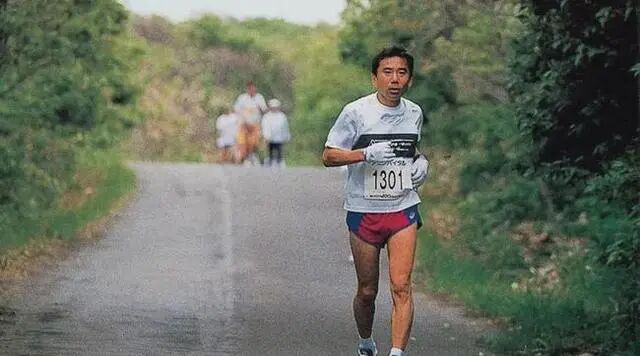
The essay we're sharing today comes from Haruki Murakami's collection What I Talk About When I Talk About Running. In the autumn of 1982, at age 33, Murakami began practicing long-distance running right as he embarked on his career as a professional writer. He woke at 4 a.m. daily, wrote for four hours, then ran ten kilometers — a routine he maintained with few interruptions for more than forty years.
People often say that building a company is like running a marathon. There's something in Murakami's reflections on running that resonates with the entrepreneurial path too — how the road forges a person's body, mind, and will, and how one learns to make the headwind a friend.
"Times, rankings, and what other people say — these are all secondary concerns. For a runner like me, what matters most is using my own two feet to actually cross each finish line, so I can face myself without regret: I've done what I could do, I've endured what I could endure. Drawing concrete lessons — however small — from those failures and joys, investing time and years, and finally arriving at a state I can fully accept, or something infinitely close to it."
We've selected a chapter from the book. We hope it offers something to you.
From What I Talk About When I Talk About Running by Haruki Murakami
At Least I Ran to the End
I think I was sixteen. I'd waited until the house was empty, then stood before the full-length mirror and carefully examined my body, listing every part I considered below average — my eyebrows were a bit too thick, my fingernails an ugly shape, and so on. I remember reaching twenty-seven items before I grew tired and stopped. And I thought: just from checking the visible parts of my body, I'd found this many flaws. If I went further — into personality, intelligence, athletic ability — there'd be no end to it.
As you probably know, sixteen is an exhausting age: fixating on trivial details, unable to see your position objectively; swelling with pride over insignificant things, just as easily sinking into self-loathing.
Only with age, after countless mistakes, picking up what should be picked up and discarding what should be discarded, do you arrive at this understanding: "If you count flaws and defects one by one, they'll never end. But there must be some strengths too. We can only face the world with what we have at hand."
Standing naked before that mirror, cataloging my physical shortcomings — that rather miserable memory stays with me. More liabilities than assets, with hardly any income to speak of: that was my meager net worth.
Forty years passed in a flash. Now, wearing a black wetsuit, swim goggles pushed up on my forehead, standing on the shore and waiting idly for the triathlon start gun, that old memory suddenly resurfaced. I became aware again of how pitiful, how insignificant a vessel I am. Lacking strength, full of holes, embarrassing to behold — probably futile no matter what I do. I was about to swim 1.5 kilometers, bike 40 kilometers, run 10 kilometers. But what would come of it? Wasn't it like pouring water furiously into a pot with a hole in the bottom?
The weather was flawless — a perfect day for a triathlon. No wind, the sea's surface unruffled. The sun poured warm light onto the earth. The temperature was around 23 degrees, the water temperature equally ideal. This was my fourth time at the Murakami International Triathlon in Murakami City, Niigata Prefecture, and every previous year the conditions had been terrible. Once, the sea was so rough they canceled the swim and replaced it with a beach run. Even when it didn't come to that, there was cold autumn rain drizzling endlessly, or high waves making freestyle breathing difficult, or shivering through the bike leg — utterly wretched. So driving the 350-plus kilometers from Tokyo to Niigata, I'd always imagined the worst weather and prepared myself thoroughly: don't expect anything good. It was a kind of visualization training. So when I saw such a calm, placid sea, I felt almost cheated. No no no, I wouldn't be fooled. Perhaps this was only surface appearance; unimaginable traps awaited me along the course. Maybe the sea was swarming with venomous jellyfish; maybe bears, ravenous before hibernation, would lunge at my bicycle; maybe unpredictable lightning would strike as I ran; maybe giant hornets, driven by inexplicable rage, would attack me. What might happen was impossible to predict. I was thoroughly suspicious of this Murakami International Triathlon.
Yet at this moment, everything appeared clear blue skies. Standing in the sun, the black rubber wetsuit grew warm and toasty.
Around me, others in identical wetsuits waited on the sand with equal unease. If this wasn't strange, it was certainly a strange sight. We looked not unlike pitiful aquatic creatures accidentally washed ashore, waiting for the tide to rise. The others seemed immersed in somewhat more positive thoughts than mine. Or perhaps only appeared to be. I told myself: stop thinking nonsense. At this point, there was nothing but to focus on finishing. For three-odd hours, think of nothing — just swim, just bike, just run.
Why wasn't the race starting? I checked my watch, but barely any time had passed. Once the race began, there'd be no leisure for idle thoughts...
This was my sixth triathlon, combining various distances. But from 2000 to 2004, I'd stayed away from the sport for four years. If you're wondering why, during the 2000 Murakami Triathlon I'd suddenly been unable to swim and had no choice but to withdraw. Recovering from that blow took all that time. The reason I couldn't swim remains unclear; I puzzled over it endlessly without understanding, and my confidence was completely shattered. Because I'd never withdrawn from any race before.
I wrote "suddenly couldn't swim." To be precise, struggling in the triathlon swim wasn't entirely new. Whether in pools or the ocean, I could usually swim long distances in freestyle with relative ease. Fifteen hundred meters typically took me about thirty-three minutes. Not particularly fast, but at that pace I could keep up in races. I grew up by the sea and was accustomed to ocean swimming. People who practice only in pools often find sea swimming difficult and frightening. I was different — in the ocean, with open water and greater buoyancy, I actually found it easier.
Yet when it came to actual races, for some reason I couldn't swim well. At the Tinman Triathlon on Oahu, Hawaii, I couldn't manage freestyle either. I dove in, prepared to swim hard, and suddenly couldn't breathe. I tried to lift my face to breathe as usual, but for some reason couldn't find the rhythm. Once breathing becomes unnatural, fear takes over the body, muscles stiffen, the heart pounds for no reason, limbs won't obey, and you can't bring yourself to submerge your face. This is what's called panic. The Tinman swim was shorter than standard, only 800 meters, so I abandoned freestyle and switched to breaststroke to get through it. But in a normal 1,500-meter swim, breaststroke wouldn't suffice — it takes far longer than freestyle, and over that distance your legs would tire, so at the 2000 Murakami Triathlon I had no choice but to withdraw with deep regret.
After withdrawing, I climbed onto the beach, but slipping away like that was too mortifying, so I tried swimming the same course again. Of course, the other athletes had long since emerged from the sea and were off on their bikes, nowhere to be seen. I was alone, swimming in an empty ocean. This time I swam freestyle without difficulty, breathing easily, my body moving freely. Why couldn't I do the same thing during the race?
At my first triathlon, the start line was in the water. A floating start — athletes lined up in the water and set off at the signal. That time, the person next to me kicked me hard, repeatedly. In competition, this can't be helped. Everyone wants to get ahead, to take the shortest line. During the swim, there are elbows and feet — getting water in your mouth, losing your goggles, these are routine. But perhaps at my debut, being kicked hard right at the start caught me off guard, unbalancing me, and this memory resurfaces each time I start. Though this explanation isn't entirely convincing, mental factors are crucial in races.
There was another possibility: something wrong with my swimming form. My freestyle was self-taught; I'd never received expert instruction. I didn't find it inconvenient and swam freely, but my stroke couldn't be called flawless — classified, it belonged to the muscle-powered type. I'd long considered that if I wanted to seriously compete in triathlons, I'd eventually need to overhaul my stroke. Taking this opportunity, I might as well investigate the mental causes and resolve my freestyle form issues as well. If I could identify the technical defects, perhaps other problems would become clear too.
And so, my triathlon challenge went on a four-year hiatus. During this time, I continued running as always, entering one marathon per year. Honestly, I wasn't in a good state of mind. That triathlon failure was unforgettable. I kept hoping for a chance at proper redemption. I have a rather stubborn character. If something isn't accomplished, I'll keep at it until it succeeds; otherwise I can't let it go, can't find peace.
To improve my stroke, I worked with several swimming coaches, but couldn't find anyone satisfactory. There are plenty of good swimmers in the world, but few who can skillfully teach swimming technique. This is my genuine feeling. Teaching novel writing is difficult too (at least I can't do it), but teaching swimming seems no less challenging. And it's not limited to swimming or novels — while there are many teachers who use clichés, follow old methods, and repeat conventional wisdom, those who can teach according to individual needs, prescribe the right remedy, and devise original approaches are few and far between, practically nonexistent.
For the first two years, I wasted considerable effort searching for a coach. With each new coach, my stroke was manipulated this way and that, my swimming became completely disordered, and at my worst I couldn't swim at all. My confidence was utterly lost — competing was out of the question.
Progress came when I'd nearly given up, thinking "overhauling my stroke is probably hopeless," gradually losing faith. The person who found my coach was my wife. She couldn't swim at all, but at the gym where she went to exercise, she worked with a young swimming coach and transformed almost miraculously, quickly learning to swim. So she recommended to me: "Why don't you try learning from this teacher?"
The coach first watched how I swam, then asked my purpose. "I want to compete in triathlons," I said. "So you need to learn long-distance freestyle in the ocean, is that right?" she asked. "Yes. I don't need short-distance speed." "Understood. Clear goals make things easier," she said.
Thus began one-on-one stroke reform. That said, it wasn't a total negation of my swimming, rebuilding from scorched earth. I believed that compared to teaching a non-swimmer from a blank slate, reforming the stroke of someone with some swimming ability was more difficult for a teacher. Abandoning poorly learned form you've already acquired is no easy matter. So she didn't force a complete overhaul, but spent considerable time correcting subtle body movements one by one.
Her teaching method didn't begin with textbook swimming from the start. For example, to teach me body roll, she first taught me to swim without rolling. Self-taught freestyle swimmers tend to over-rotate side to side, which actually increases water resistance, reduces speed, and wastes energy — so I needed to learn to stop rolling and swim like a flat board. She taught the exact opposite of swimming textbooks. Of course, this method couldn't produce smooth swimming. I felt like I'd become an extremely clumsy swimmer. But following the teacher's instructions and practicing persistently, even with this illogical, extremely awkward method, I could still swim.
Then she began teaching body roll, little by little. Even then, she didn't earnestly explain: "This is body roll practice!" She simply transmitted certain body movements. The student didn't understand the specific purpose of the practice, only followed the coach's directions, diligently moving that body part. For example, practicing shoulder rotation exclusively, stubbornly repeating until sick of it. There were times I spent entire days practicing only shoulder rotation. It was considerably tiring, and boring. But with time, looking back, you understand: "Aha, so that's what it was for!" When the parts are assembled and the whole emerges, only then do you understand the function of individual components. Like night passing and dawn arriving, the shapes and colors of countless rooftops emerging distinctly from the hazy blur.
This was perhaps similar to practicing drums. Days of only bass drum practice, days of only cymbal training, then days of only gong... Monotonous and boring. But when they become one, perfect rhythm emerges. To reach that point requires stubborn, strict, persevering tightening of each screw in turn. Of course it takes time, but in this case, investing time is the best shortcut. And so, after a year and a half of reform, I could swim long distances with a far more elegant, far less strenuous stroke.
During swim training, I figured out one problem. When I couldn't breathe properly swimming freestyle in races, it was actually due to "hyperventilation." The exact same symptoms appeared when swimming in the pool, and I finally understood. Before starting, I was breathing too deeply and rapidly — probably from pre-race tension, drastically taking in excess oxygen. Once swimming began, I'd be panting desperately, my breathing rhythm thrown into chaos.
Identifying the specific cause was a great relief. I just needed to avoid triggering hyperventilation. Before races, I'd jump into the sea for practice swimming, letting my body and emotions acclimate to ocean swimming; to avoid hyperventilation, I'd breathe with restraint and moderation; I'd cover my mouth with my palm when inhaling to prevent excessive oxygen intake. "This time it'll be fine, my stroke's improved too, it's like night and day from before," I told myself.
So after four years, I challenged the 2004 Murakami Triathlon again. At the start gun, everyone swam out together, and someone kicked me hard in the side. I was shocked: "Am I going to fail again?" Fear flashed through my mind, and I swallowed a little water. Switch to breaststroke for now? But I immediately rallied: "No! No need. This time there definitely won't be a problem." I adjusted my breathing and started freestyle again, focusing on exhaling underwater rather than inhaling above. The nostalgic sound of water flowing reached my ears. Yes, this was right. I felt my body moving smoothly through the waves.
Thus I finally overcame my starting panic and completed the triathlon. With the long gap between entries and no time for bike training, my time wasn't worth mentioning. But my primary goal was redeeming my previous withdrawal, and that was achieved. A weight lifted.
Through the hyperventilation episode, I realized: "I thought I was fairly thick-skinned, but surprisingly, I'm quite the nervous type." I'd been so worked up before starting without even noticing. But I definitely was tense, exactly like ordinary people. No matter how old you get, as long as you're alive, you'll keep discovering new things about yourself. No matter how long you stand naked before a mirror, you can never see your inner self.
October 1, 2006, a crisp autumn Sunday morning, 9:30 a.m. — I stood again on the coastline of Murakami City, Niigata Prefecture, waiting for the race to start. Somewhat tense, but careful not to hyperventilate. As a precaution, I checked my equipment once more. The timing chip ankle bracelet was securely fastened. To quickly shed my wetsuit after exiting the water, I'd applied Vaseline all over. I'd stretched thoroughly. I'd hydrated properly. I'd used the bathroom. Nothing forgotten, probably.
Having entered this race several times, there were familiar faces. While waiting for the start, I shook hands and chatted with such people. I'm not good at social interaction, but with triathletes I can converse easily. We are, I suppose, unusual people in this society. Consider: most athletes have jobs, families, lives, yet day after day complete swimming, cycling, and running training — quite intense training. This naturally takes time and energy. By common sense, this can hardly be called a proper life. Being seen as eccentric or odd is hardly surprising. Even if it's not something as grand as "solidarity," among us there's something like the pale, faint mist drifting between mountain peaks in late spring — a faint sense of warmth and recognition. Of course, this is a race, and undoubtedly we compete for results, but for ordinary triathletes, rather than saying they enter to win, it's more accurate to say the race is a ritual to confirm this recognition — the shape and color of this mist — and that meaning is more significant.
In this sense, the Murakami Triathlon is a very suitable event. Not too many participants — roughly three to four hundred. The race operations aren't ostentatious, run by a small local city itself. The townspeople cheer warmly. No flashy, excessive elements; the calm, peaceful atmosphere suits my taste perfectly. Also, though unrelated to the race: there are abundant hot springs, the food is excellent, the local sake delicious. Each time I go for the race, local acquaintances increase; some even come specially from Tokyo to cheer for me. At 9:56, the bell signaling the start rang, and everyone set off swimming freestyle. This was the most tense moment.
I plunged into the water, kicking with my feet, pulling with my arms. I驱逐多余的思绪 from my mind, focusing consciousness on exhaling rather than inhaling. My heart pounded erratically, I couldn't find the rhythm, my body was somewhat stiff. As usual, someone kicked my shoulder, and someone rode on my back from behind, like a turtle with another turtle on its shell. Thanks to that, I swallowed some water, but not much. Don't panic, I told myself. Don't enter a panic state; breathe regularly, rhythmically — this is crucial. Gradually, I felt my body's tension easing bit by bit. Yes, seems manageable; just keep swimming like this. Once you find the rhythm, simply maintain it.
But before long — seemingly unavoidable in triathlons — an unexpected problem awaited me. Swimming hard, I looked up to check my direction. "What?!" I couldn't see anything ahead. One lens of my goggles had fogged over, as if I'd entered thick fog; the world was朦胧白浊一片. I stopped, treading water, and rubbed my goggles hard with my fingers — still couldn't see clearly. What was happening? These were my usual goggles, and I'd practiced sighting while swimming for a long time. What was wrong? Suddenly, I remembered something. I'd applied Vaseline earlier and hadn't washed my hands, then absentmindedly wiped my goggles with those fingers. What an irredeemable fool! I always moistened my goggles with saliva before races so the inside wouldn't fog — only this time I'd forgotten.
Through the 1,500-meter swim, I was constantly troubled by fogged goggles. Repeatedly I veered off course, swimming in wrong directions, wasting enormous time. I had to stop repeatedly, remove my goggles, and tread water to confirm direction. Imagine a child trying to split a watermelon blindfolded — perhaps something like that.
Thinking back, I could have simply removed the goggles and been done with it, just swimming straight ahead. But I was swimming hard, suddenly encountering an unexpected event, and panicked — my mind simply wouldn't work. So it went, this swim leg kept me frantic, my time far worse than expected. By ability, I should have been faster; I'd trained quite hard. But I didn't withdraw, didn't fall too far behind, and finished the entire course. At least during the stretches where I swam straight, I swam well.
Emerging onto the beach, I headed straight for the bike transition. This seems simple but is surprisingly difficult: stripping off the tight, narrow wetsuit, putting on cycling shoes, fastening the helmet, donning wind glasses, gulping down water, getting onto the road. Mechanically completing this series of actions. Coming to my senses, I'd been splashing in the sea moments ago, and now my feet were on pedals, flying forward at 30 kilometers per hour. Despite having done this many times, it still produced a strange sensation. Gravity was different, speed was different, the feel was completely different — like a salamander suddenly evolving into an ostrich. In any case, my mind couldn't switch this quickly. My body lagged behind, couldn't catch the rhythm, and in an instant seven people passed me. "This is a bit dangerous," I thought, but I didn't pass a single person until the turnaround point.
The bike course ran along the famous "Sasagawa Nagare" coastline, with strange rock formations everywhere in the sea — a scenic place, but we had no leisure to enjoy it. From Murakami City north along the coast, near the border with Yamagata Prefecture, then turning back along the same route. There were some ups and downs, but no steep climbs that emptied your mind. I tried not to care about passing or being passed, maintaining consistent pedal cadence, shifting to lighter gears, letting my feet push the pedals solidly in turn. Regularly reaching for my water bottle, simply hydrating. As I kept riding, the feeling of cycling returned. This should be fine. So after the turnaround, I boldly shifted to heavier gears, speed increased greatly, and in the latter half I suddenly passed seven people. The wind wasn't strong, so I could pedal hard. In strong wind, an inexperienced cyclist like me would surely lose heart. Making the headwind a friend requires years of experience and corresponding technique. Without wind, it simply becomes a contest of leg strength. Forty kilometers — I finished at a better pace than expected, then changed into my beloved running shoes and entered the final running leg.
Because I'd gotten carried away and overexerted in the latter half of the bike leg, the run became quite grueling. Saving energy in the final bike section to preserve strength for the run is standard practice. But my mind hadn't switched; I'd charged into the running leg at full power. As expected, my legs wouldn't obey. My brain commanded "run faster," but my leg muscles refused. Though running, I barely felt like I was running.
With some variation, this is a phenomenon that occurs in every triathlon. The muscles brutally used for over an hour in cycling remain in "business mode," so the muscles needed for running can't smoothly begin working. This muscular track-switching takes time. For the first three kilometers or so, both legs were nearly locked; only with difficulty did they shift into "running mode," taking far longer than usual. Running is my strongest of the three disciplines — in the run I could normally easily pass thirty or so people, but not this time; I only passed ten to fifteen. Having been passed by many on the bike, I'd now barely broken even. The run time was unremarkable, regrettably, but the gap between my strong and weak disciplines had narrowed, the overall performance becoming more balanced — perhaps indicating I was gradually approaching a triathlete's physique. This was probably cause for celebration.
Amid the townspeople's cheers, I ran through Murakami City's old, beautiful streets, crossing the finish line with all my strength. An exhilarating moment. Despite the pain, despite the mishaps, once across the finish line, everything was wiped clean. Relieved, I smiled and shook hands with the competitor wearing number 329 — we'd been battling since the bike leg, passing and re-passing each other several times. Good work. I'd picked up my pace in the final stretch, nearly passing this person, but fell three meters short. After starting, my shoelace had come loose; stopping twice to retie it cost me time. Without that, I'd definitely have passed him. Of course, all responsibility lay with me for not checking my laces before the race.
In any case, the race was over. Congratulations — I'd crossed the finish line in front of Murakami City Hall. No drowning, no flat tires, no stinging by vicious jellyfish, no attacks by ferocious bears, no giant hornets seen, no lightning strikes. My wife waiting at the finish hadn't witnessed anything unpleasant about me, but gently blessed me. Ah, wonderful!
What made me happiest was that I'd genuinely enjoyed this race from the bottom of my heart. The results weren't worth boasting about, and there were numerous small mistakes. But I'd given my all, and that feeling remained in my body. And I felt I'd improved in many ways — this was invaluable. A triathlon combines three disciplines; the transitions between each are certainly difficult, but it's an experience-based sport where experience can compensate for physical gaps. In other words, learning from experience is the joy and interest of triathlon as a sport.
Physically it's painful, and mentally, discouraging situations sometimes arise. But "pain" is a prerequisite for this sport. Without accompanying pain, who would challenge time-consuming, energy-draining sports like triathlons and full marathons? Precisely because of pain, precisely because I deliberately experience this pain, do I discover the feeling of being alive from this process — or at least discover part of it. I now realize: the quality of existence is not something fixed like results, numbers, or rankings, but something fluid contained within action.
Driving back to Tokyo from Niigata, I encountered several people with bikes loaded on car roofs, heading home after finishing their races. Each was deeply tanned, visibly athletic — the triathlete's physique. We'd completed our small early-autumn Sunday event and would return to our respective homes, to our respective daily lives. Then, for the next race, we'd continue our quiet training as always in our respective places. Viewed coldly or from above, such a life may seem impermanent and futile, or extremely inefficient. But that's how it is. Even if it's a futile act like pouring water into an old pot with a small hole in the bottom, the fact that we once made the effort remains. Whether effective or not, whether it looks good — the things that matter most to us are almost all invisible to the eye, yet can be felt with the heart. And truly valuable things are often obtained through highly inefficient endeavors. Even if this is a futile act, it is by no means a foolish one. I believe this, as a real feeling, as a rule of experience.
Can such inefficient endeavors be sustained? I myself don't know, but I've persevered tirelessly and persistently until today, and I'm willing to continue as best I can. It was long-distance running that cultivated and shaped who I am now, for better or worse, more or less. If possible, I will continue aging and seeing out my life alongside similar things. This is probably — though I can't claim it's entirely reasonable — a life. Or rather, at this point, there probably is no other choice. Gripping the steering wheel, I suddenly thought these things.
I may go somewhere in the world this winter to run another full marathon. Next summer I'll probably challenge another triathlon somewhere. Thus seasons cycle, years flow irreversibly, I grow another year older, and probably write another novel. Bravely facing the problems before my eyes, giving my all, solving them one by one. Focusing consciousness on each step forward, while simultaneously viewing problems with the longest possible perspective, gazing at the scenery from the farthest possible distance. I am, after all, a long-distance runner.
Times, rankings, appearances, what other people say — these are all secondary concerns. For a runner like me, what matters most is using my own two feet to actually cross each finish line, so I can face myself without regret: I've done what I could do, I've endured what I could endure. Drawing concrete lessons — however small — from those failures and joys. And investing time, investing years, accumulating such races one by one, finally arriving at a state I can fully accept, or something infinitely close to it. Yes, this expression is probably more apt.
If there were to be an epitaph for me, and I could choose the words myself, I would want it to read:
Haruki Murakami
Writer (and Runner)
1949 — 20XX
At least he ran to the end
This, at this very moment, is my wish.


[
](http://mp.weixin.qq.com/s?__biz=MzkwMDI2ODE0OQ==&mid=2247497632&idx=1&sn=a9cbe839d85c75339f70d52282be05f4&chksm=c0441ebaf73397aca4c052a99cb91a9222bc828c2287cb4e72c8c9563ececdc30d5fa4f45684&scene=21#wechat_redirect)[
 ](http://mp.weixin.qq.com/s?__biz=MzkwMDI2ODE0OQ==&mid=2247501469&idx=1&sn=101d4442db6e7363cf22e320eb39a60f&chksm=c0442f87f733a6916eadde139e8e3c571f8ef2b8e3550c34b6737106b59cae4f8660a342a278&scene=21#wechat_redirect)
[

5Y Capital seeks out, supports, and inspires lonely entrepreneurs, providing support from spirit to all business operations. We believe that if the "crazy you" in others' eyes begins to be believed in, the world will become a different place.
BEIJING · SHANGHAI · SHENZHEN · HONG KONG