Not Just a Director, But a Person With a Visionary Imagination | 5Y View

*Oppenheimer* Sweeps the Oscars — What Makes Nolan, Nolan?

At the 96th Academy Awards, British director Christopher Nolan's latest film Oppenheimer emerged as the biggest winner, taking home seven trophies including Best Picture, Best Director, Best Actor, Best Supporting Actor, Best Cinematography, and Best Film Editing.
Prior to this, Nolan had been nominated four times for the Directors Guild of America award — for Memento (2002), The Dark Knight (2009), Inception (2011), and Dunkirk (2018) — but came up empty each time. Despite his frequent setbacks on the Oscar trail, Nolan's films had long earned widespread recognition among audiences and critics alike, making him one of the most closely watched and talked-about directors working today.
His films are renowned for their "practical effects" and "mind-bending" complexity. Many of their most stunning visuals are achieved through in-camera work, creating an almost perfect sense of audiovisual authenticity through extreme dedication to craft. He also consistently structures his narratives around time, space, dreams, and the subconscious to confront the most complex questions of our era. His self-assessment: "Like my predecessor Hitchcock, I'm not just a director, but someone who possesses the capacity for wonder."
How did Nolan become Nolan? Veteran film critic Tom Shone, who has known Nolan for over 20 years, conducted an in-depth interview with him spanning three years, compiling it into The Nolan Variations. The book weaves together conversations and critical essays, revisiting Nolan's personal life, tracing the trajectory of his filmmaking career, and exploring the stories behind his masterpieces. What follows are excerpts from select chapters, offering a look at how the details in many of Nolan's films were crafted — we hope you find them illuminating :)
The following article is republished from the WeChat account "我们侃片" (We Talk Film)
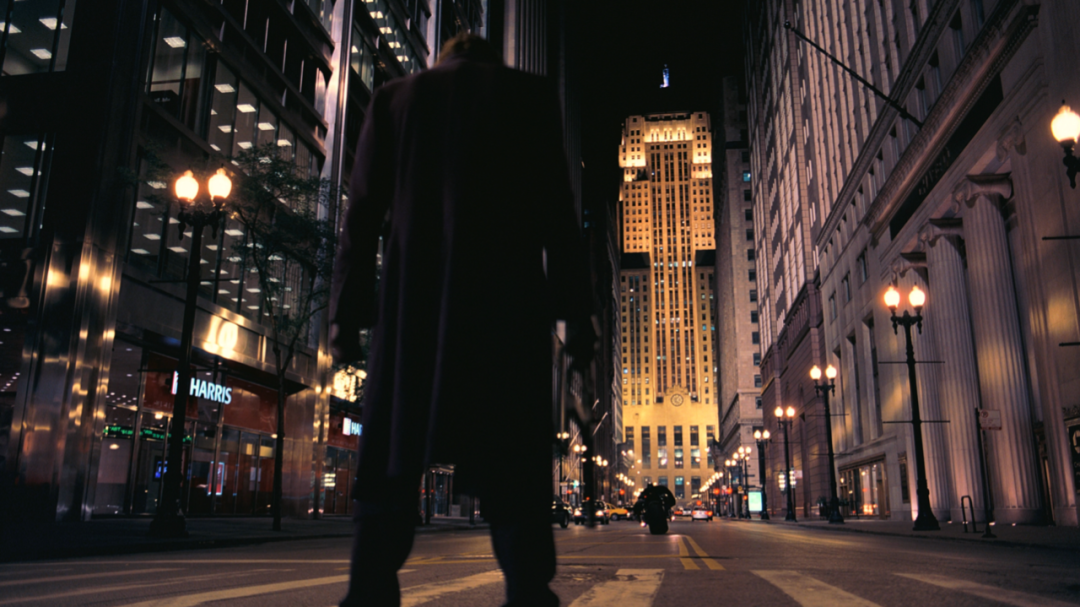
Batman wraps a long steel cable around the wheels of an 18-wheeler, yanks hard, and the cab and trailer flip 180 degrees, landing on their backs with a thunderous crash — like the fall of Agamemnon.
This shot is more than a practical stunt. It's practically Nolan's artistic manifesto.
Christopher Nolan — one of the most closely watched and talked-about directors in the world today. His name alone guarantees cinematic quality. Each release sparks enormous attention, with audiences eagerly penning thousands of words of exegesis, while anecdotes about the man himself circulate endlessly among cinephiles. "Mind-bending genius," "practical-effects obsessive," "film-stock loyalist"... But in short, Nolan's entire philosophy as a filmmaker comes down to this: using the rules of genre, then subverting them.
It wasn't just the truck. Everything in The Dark Knight gets upended — morality, testimony, and in the film's climactic sequence, the camera itself slowly inverts to shoot the Joker dangling upside down outside a skyscraper.
He satisfies the studio's requirements while smuggling in his own contraband, and every time he gets it through customs.
Nolan's most recent directorial effort, Oppenheimer, grossed over $922 million worldwide, becoming the highest-grossing biographical film in global box office history, and pulled in 400 million RMB in mainland China. We've heard scattered legends about his pursuit of perfection behind the scenes, yet Nolan himself has never offered the public a complete, in-depth retrospective of his personal growth and creative career.
Until The Nolan Variations arrived, there was no thorough answer to the question — how did Nolan become the Nolan we know today?
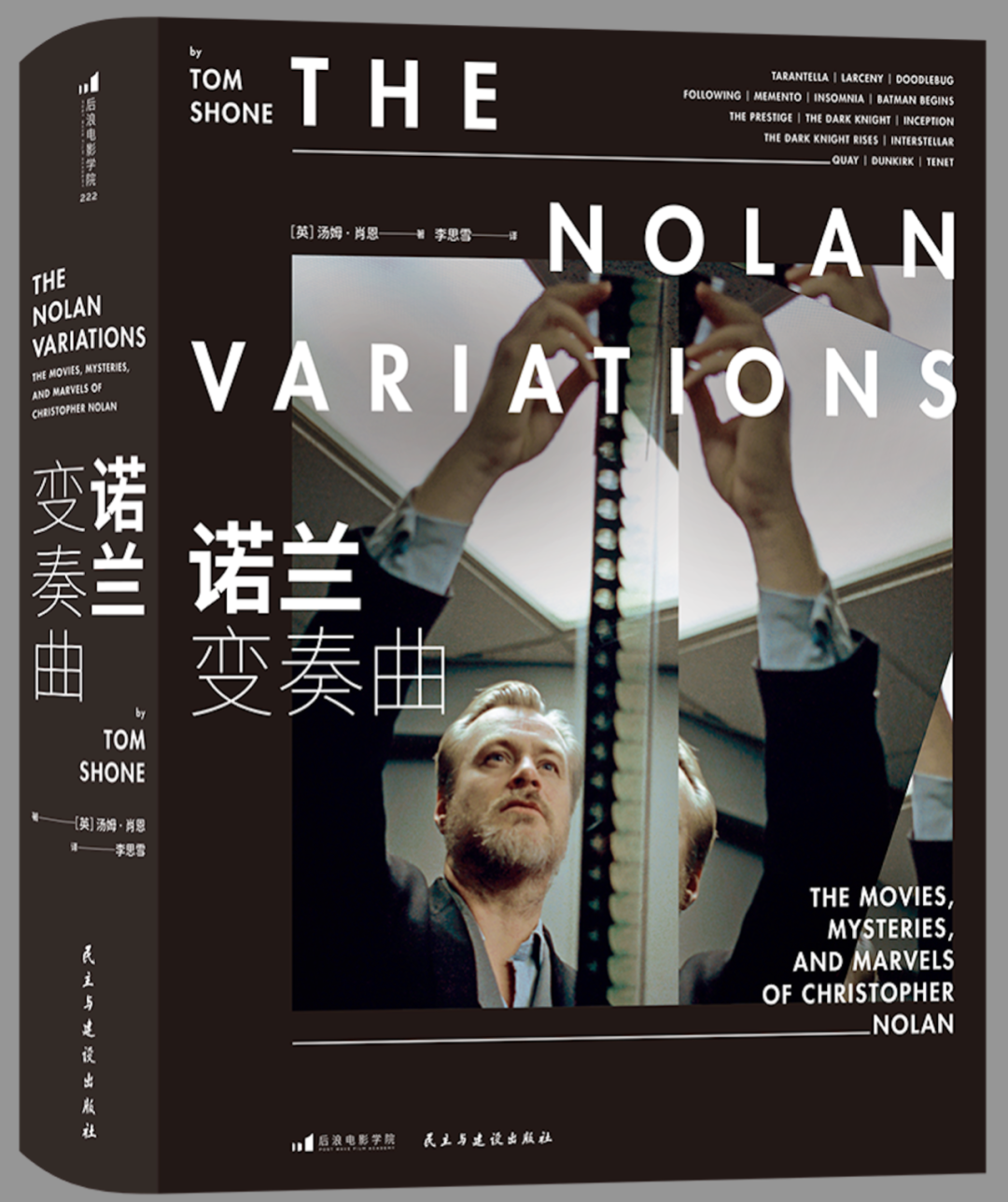
The Nolan Variations (by veteran film critic and scholar Tom Shone)
On the Joker:
A White-Knuckle Experience
Compared to Batman Begins, The Dark Knight is a brutal, cold-blooded film.
Nolan says (gray text indicates Nolan's words, same below):
People always say my films are cold, but I only feel that way about this one, because the Joker drives the whole thing like an engine, in such a terrifying way. The entire movie is a series of horror scenarios meticulously designed by the Joker, and they're all intentional, nothing accidental. When I pitched it to the studio, I said: "This will give you a white-knuckle experience. It's just constantly falling."
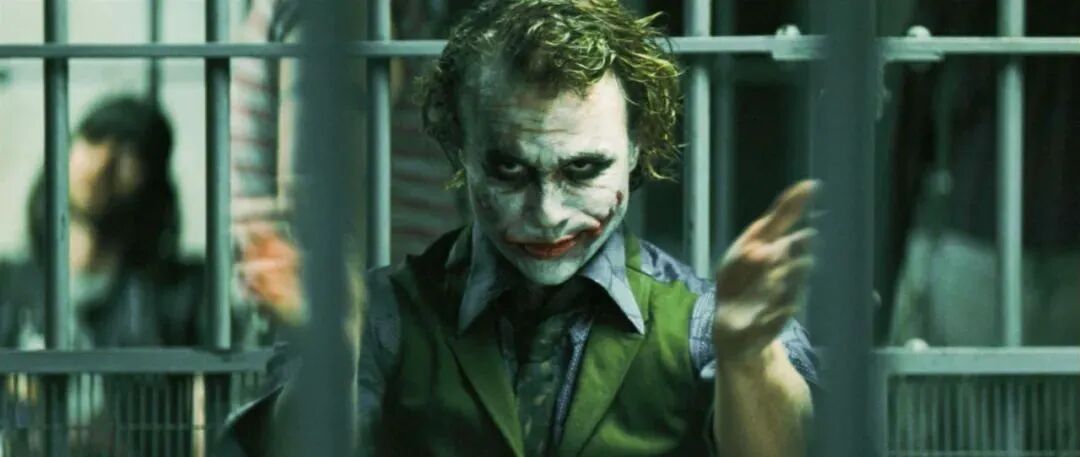
Nolan saw the character as an anarchist, running through the story like the shark in Jaws or a serial killer — a force of nature driving the film from start to finish, full throttle, no explanations. The character's sole motivation: to sow chaos.
Heath and I discussed Alex from A Clockwork Orange many times. I think Alex was the closest precursor to the Joker. He was just a teenager thinking: I'm going to cause destruction. He didn't even care why he was doing it. He was that willful.
In The Dark Knight, there's a scene where the Joker bursts in and grabs Senator Patrick Leahy. Nolan remembers pushing Heath Ledger hard while directing this. "We shot this scene early," Nolan says. "I told Heath: 'You need to manifest this force of nature. This is a high-end party, you walk in and tear it apart.' After we finished, he said: 'Thank you for pushing me.' He really brought the character to life."
Nolan's Self-Reflection:
Willing to Create Against His Own Nature
To say Nolan felt no thrill from the chaos the Joker unleashed seems unlikely — after all, audiences certainly did. But Nolan found it terrifying. The reason The Dark Knight became the film it is, is because the director was willing to create against his own nature, willing to arm his own demons.
I'm afraid of that side of human nature. The Joker is what I fear most. He's the villain who scares me the most, especially at a time when I feel civilized society is hanging by a thread. I think the Joker represents the id. We made this trilogy with complete sincerity. What are we worried about? What am I afraid of? What's the worst thing the villain could do? I'm a very controlled person. I'm afraid of being unrestrained. I carefully channeled that impulse as the driving force of the film, but I was afraid of it throughout the entire shoot.
Nolan notes, interestingly, that The Dark Knight is always everyone's favorite of the trilogy.
On the Makeup:
Inspired by Francis Bacon
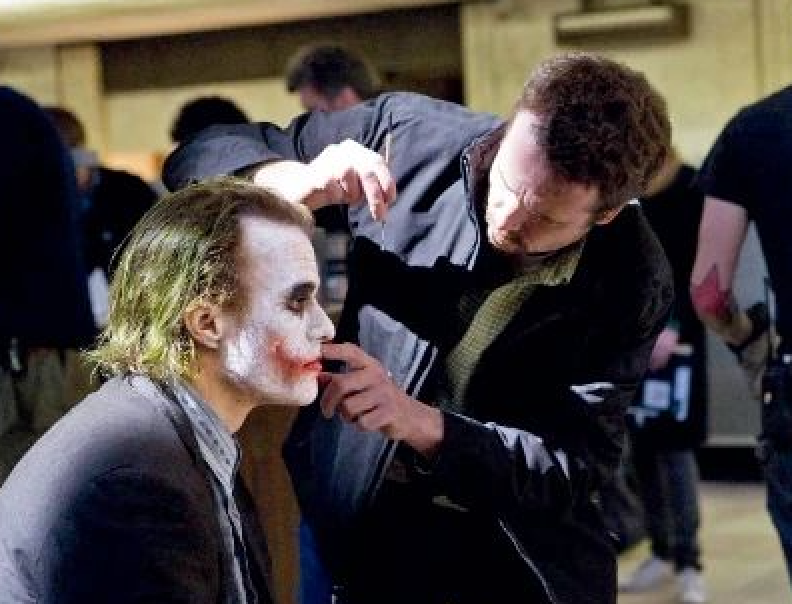
During the filming of The Dark Knight, Nolan brought a book of Bacon's paintings to Heath Ledger's trailer, showing them to makeup artist John Caglione Jr. and the 28-year-old actor for reference. The Joker's makeup is damaged, flaking, and smeared, as if he hasn't removed it for days and nights, the surface cracking from within.
The inspiration for this look partly came from Francis Bacon's Study after Velázquez's Portrait of Pope Innocent X (1953), better known as The Screaming Pope.
Nolan says: "They completely understood what I wanted. They applied the white and red makeup first, then started adding black, covering the skin, then smudging it with specific techniques. In certain places you could see Heath's skin, like the canvas visible in Bacon's paintings."
The scar prosthetics extended all the way into Heath's mouth. They would loosen during his performance, and rather than sitting for another 20 minutes of touch-ups, he kept licking his lips — which created the character's most uncanny twitch.
The Musical Idea:
Coming from the Chaotic, Disorderly Joker
As soon as Nolan finished the script, he met with Zimmer in London to discuss the Joker — his motivation, or rather, his lack of one; how he represents no principle beyond pure chaos. How do you express chaos and disorder through music? Zimmer returned to his studio in Santa Monica, taped a photocopy of Francis Bacon's Pope painting beside his computer screen, and began digging into his roots — electronic synth music and punk, drawing inspiration from Kraftwerk and The Damned. What he saw in the character was fearlessness and refusal of double standards. As the Joker tells Dent: "You know the thing about chaos? It's fair."
This quality made Zimmer think of a single note — urgent, terrifying, and simple. He spent months obsessing over this idea, experimenting on vintage synthesizers, generating wild noise, bringing in musicians to record experiments: rubbing piano strings with razor blades, scraping pencils across tables and floors, unaware that he should have long since started writing usable music for the film. In the end, Zimmer produced 400 pieces and 9,000 bars of music. He loaded everything onto his iPod for Nolan to listen to on the flight to Hong Kong for the final round of location shooting. The moment the plane landed, Nolan told Zimmer the listening experience had been "deeply unpleasant." "I don't know which of those 9,000 bars is the Joker's music, but I can feel it's in there."
Eventually, they settled on variations of a single cello note performed by Martin Tillman, enhanced with barely audible guitar tones. It was actually two notes — one ethereal and sustained; the other joining in, slowly sliding upward as if a string were being pulled tighter and tighter without ever fully snapping. We hear increasingly harsh dissonance, mixed with metallic hums and scrapes. Rather than a theme, it's more like a tonal experiment. Nolan says: "The Joker's theme is very unusual because it worms its way into the film. Then at different points, this sound grows larger and louder — this tiny variation can make you think of the Joker."
While editing the scene where the Joker ambushes Dent's convoy with a rocket launcher, Nolan made an equally bold decision: he stripped out the music entirely, meticulously orchestrating the gunfire, sharp metallic scrapes, and other sound effects into a piece of percussion.
He says, we actually wrote a score. But I told sound designer Richard King — since there's already so much music in the film, I want you to try replacing music with sound effects, so that engine noise becomes the kick drum, high-end sounds become the hi-hat.
On New Technology:
Pursuing a Lo-Fi, Grainy World
Nolan's agnostic stance toward new technology has profoundly shaped him. He firmly believes in a distinction between photographed imagery and computer-generated imagery. He prefers the granular texture of celluloid over smooth digital images; location shooting over soundstage work; physically built sets over CGI backgrounds.
To some extent, the appeal of Nolan's films is the same as people's love for boutique hotels, lo-fi recording equipment, glitch music, and Etsy. In the information age, it's precisely these elements that resist copy-paste — their value only increases. The draw of his films lies in secrets, original ideas, plot twists, and the authenticity of photographed imagery.
The Secret of Cinematic Space:
Inspired by Heat
In terms of geographic scale, this time they didn't go bigger than Batman Begins, but adopted a smaller, tighter, more confined strategy.
Nolan says: "We had to look at scale differently. Batman Begins was already the biggest thing we could make. Geographically, I knew we couldn't cram more in. So we had to look at scale differently, and I ultimately approached it through storytelling and cinematography."
The most epic film I've seen in terms of scale is Michael Mann's Heat.
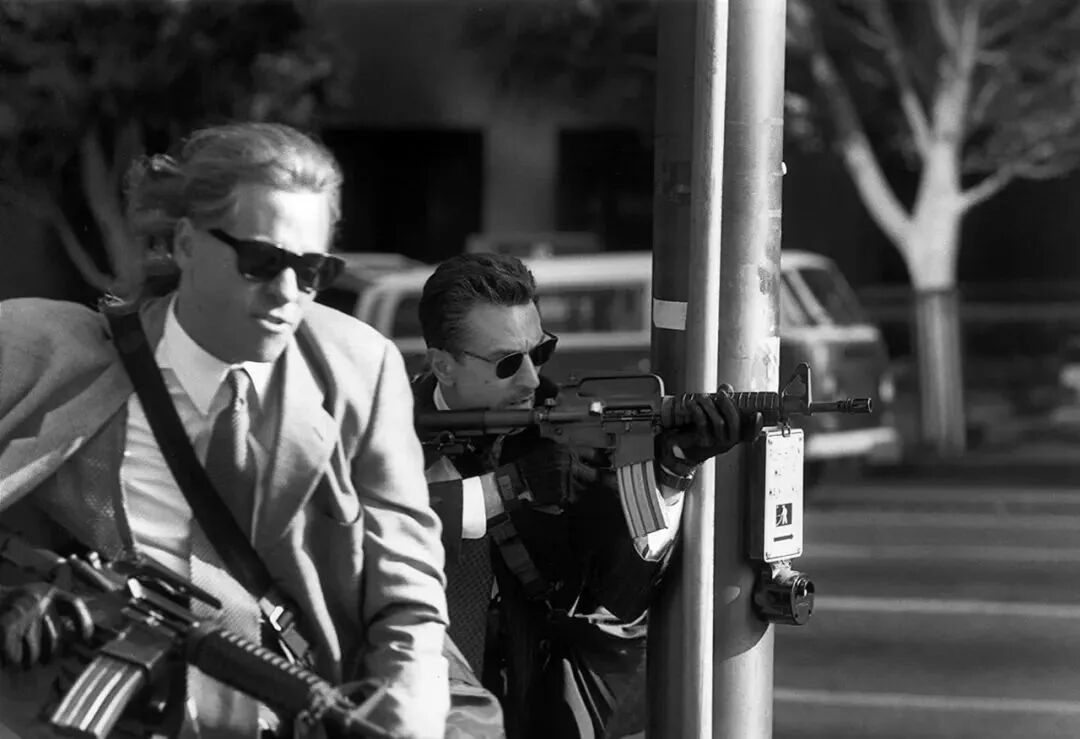
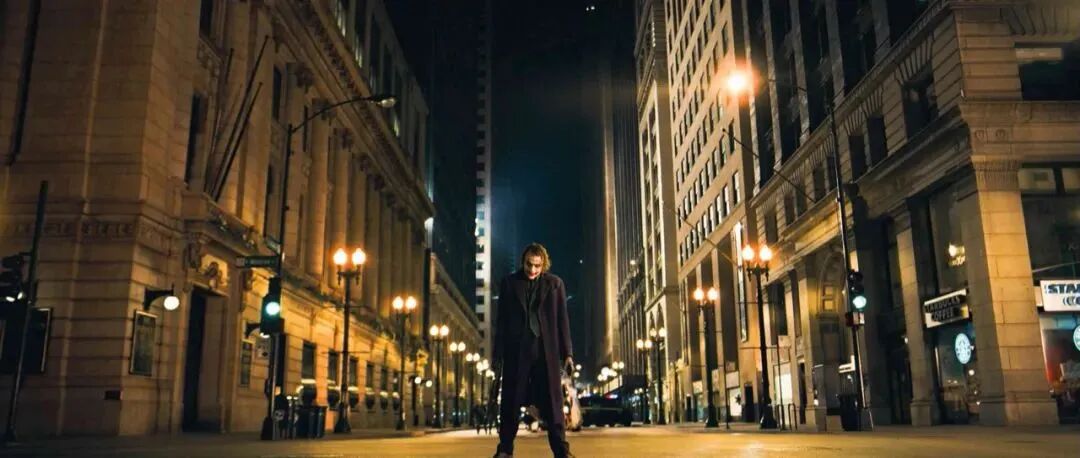
It's a real Los Angeles story, showing every corner of the city as it is. So this time we'd make a city story too. We'd shoot in a real city, real streets and buildings, because that way scale can be huge. We'd use IMAX cameras, capturing buildings from rooftop to ground; then we'd create a villain who disrupts the fabric of this city. In our shooting approach, simply having the Joker walk down the street is already a big set piece.
Heat was hugely influential on this film, because Michael Mann is also obsessed with architecture, he understands the grandeur of cities, knows how to turn them into epic playgrounds. I don't think we realized at the time that images of the Joker in the street would become so iconic.
On one side, chaos unleashed by the Joker; on the other, the hard, clean lines of Chicago's Loop.
And when the truck in this film smashes into a police car, based on our perception of its size and mass, it's like watching two spacecraft collide. From Batman Begins to The Dark Knight, there was a massive leap in cinematography, editing, sound design, and scoring.
IMAX photography creates a sense of scale while also slowing Nolan's editing rhythm, lending the shots a formal elegance. After the Joker's attacks leave audiences disoriented, the cutting becomes unhurried, each shot flowing gracefully. Nolan no longer needs to shroud Gotham in darkness; he can focus on composition.
Just as John Ford shot Monument Valley in his Westerns, Nolan shoots the "canyon" of glass and steel that is Chicago's Loop. He uses architecture to make space tangible, transforming the viewer's perception of depth into something approaching physical pleasure.
Enclosed Spaces
Nolan's Characters Trapped
Nolan has a fondness for enclosed spaces: the motel in Memento, the cabin in Insomnia, the Manchurian prison where Bruce Wayne wakes at the start of Batman Begins, the prison in The Prestige, the trawler in Dunkirk. Yet in his films, enclosed spaces rarely trap his characters — or if they do, they only trap the body.
Especially his villains, who often willingly cross boundaries of space and time like Faust. In Batman Begins, the Scarecrow says of Falcone, locked in Arkham Asylum: "He ruled the streets outside, but in here, only the mind can grant you power."
In The Dark Knight, the Joker launches his master plan while held in a police detention cell, detonating a bomb with a single phone call to engineer his escape. He sticks his head out the police car window, joyfully lolling his tongue in the wind like a dog — he's already free.
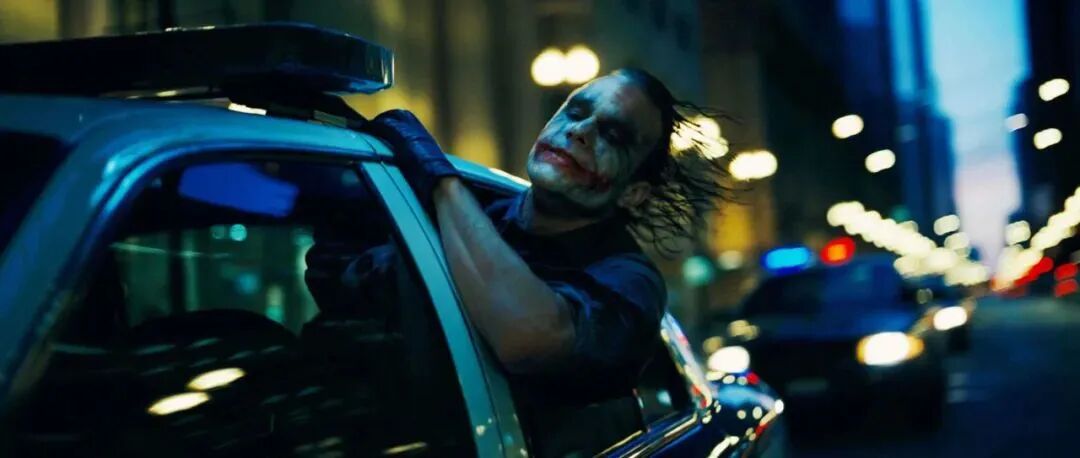
All of Nolan's protagonists must confront enclosed spaces, or reach some accommodation with them. Within these confines, they must learn acceptance, even find ways to reclaim freedom. When Bruce Wayne explores the well he fell into as a child, he discovers an underground cave — once used by escaped slaves fleeing north, now transformed into the Batcave: enclosure brings redemption, identity, and a base of operations.
Interpreting Batman
Carrying Guilt and Fear Forward
Years ago, a panicked mugger fired the shots that killed Bruce Wayne's parents. Now we understand why Bruce Wayne dresses as a bat — because he has seen the devil.
If we wanted to make a film perceived as transcending its genre, if Batman is not just Batman but a figure Bruce Wayne transforms into, we had to pull out all the stops to make audiences believe this.
"What's the cost for a real person to put on a bodysuit and fight crime?" Nearly every previous Batman adaptation had foundered on this question.
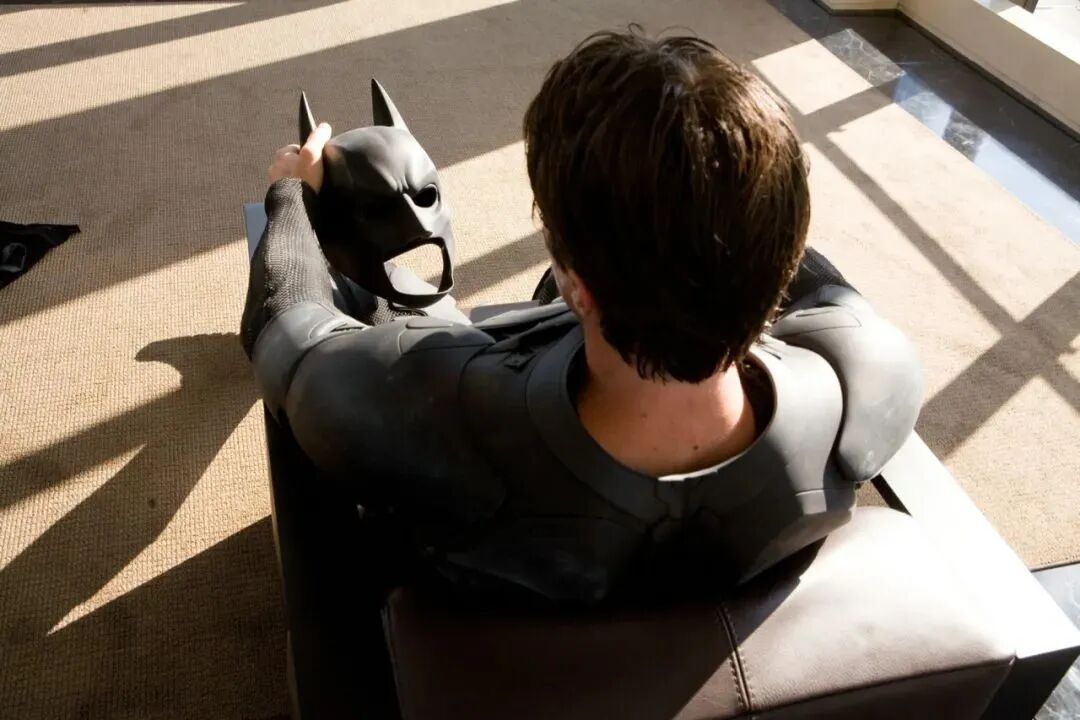
I wanted him to be able to carry this heavy burden of guilt and fear forward — that's a major driving force. Throughout the trilogy, you feel what becoming Batman costs Bruce Wayne. These elements were already present in the first film, but it took three films to tell the story fully and properly. I find Faustian narratives compelling — there are variants in Following and Insomnia too.
Dr. Faustus, obsessed with "proud knowledge," is a tragic figure. He wants to become God, to fly and become invisible, to be king of the world — and is ultimately punished for his hubris. In his autobiography Dichtung und Wahrheit, Goethe writes: Faust believed there was a contradiction in nature... compressing time while expanding space. It seems to favor only the "impossible" while disdaining the "possible."
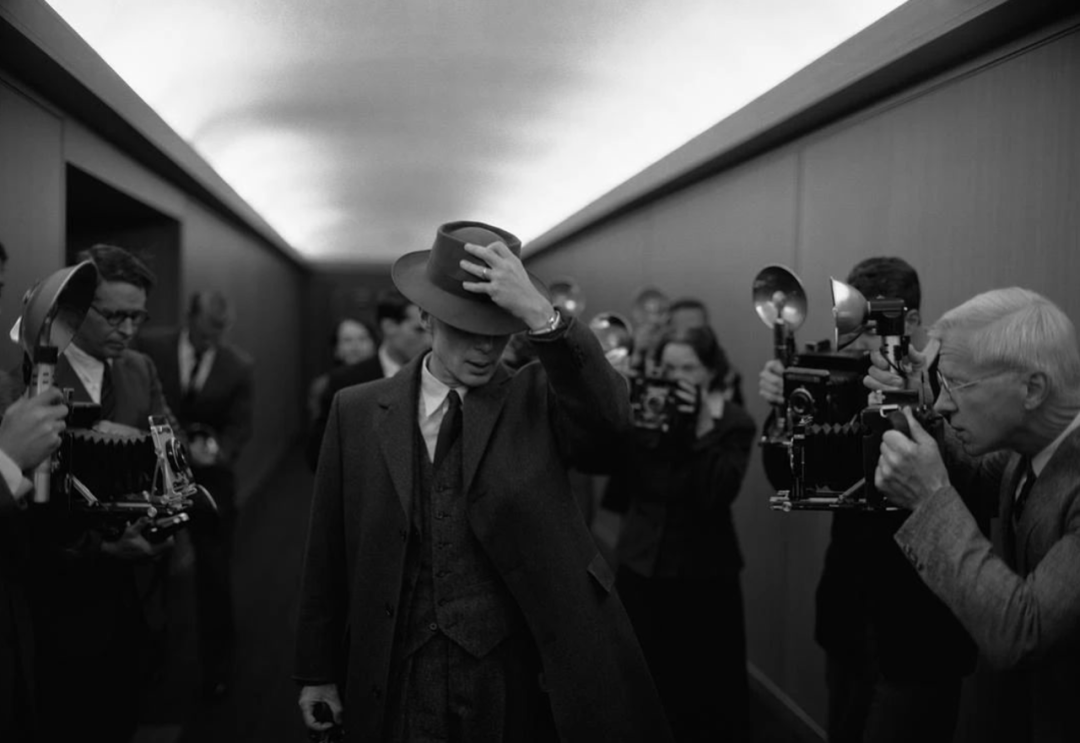
Oppenheimer is the ultimate Faustian figure
A Superlative Ending
Can Truth Ever Prevail?
The contradictions this film conveys are something Americans have particular reason to contemplate. The Dark Knight entered the public consciousness in a year that was both a presidential election year and a critical period in internet development — dual factors that gave the film extraordinary prominence.
After one screening, German director Werner Herzog encountered Bale and Nolan. "Congratulations," he said, "this is the most important film of the year." Nolan thought he must be joking. The German responded: "No no no! This is a film that matters, whether it's mainstream or not." Herzog, who grew up in bombed-out Berlin, understood the film's underlying implications more fully than most.
Nolan says: "I can say with a clear conscience that we've never done that. We never try to be topical. Because we know how long it takes to make a film, and how fast the world changes. For us, starting with Batman Begins, the films have always been about what we fear — and obviously after 9/11, what we feared was terrorism."
The reason The Dark Knight's ending features all that discussion about "heroes becoming villains" and "we got the hero we needed, not the one we deserved" — all of this stems from how the concept of heroism was massively devalued in the post-9/11 era.
"(Harvey Dent is) a hero — not the hero we deserved, but the hero we needed." "Because sometimes truth isn't good enough. Sometimes people deserve more." Nolan is known for his endings, but The Dark Knight's is superlative. It evokes Chandler's fallen world, where truth can never prevail, where the best good people can hope for is to escape the corrupt system intact. This ending is a perfect slipknot, gathering plot threads together while releasing all contradiction and ambiguity. It makes viewers feel swept into something larger and grander — the coda of one story, and the overture to another.
Mind-Benders
Reflecting an Increasingly Ambiguous World
In the late 1990s and early 2000s, a wave of films emerged: Pulp Fiction (1994), 12 Monkeys (1995), The Usual Suspects (1995), L.A. Confidential (1997), The Truman Show (1998), and The Matrix (1999), Being John Malkovich (1999), eXistenZ (1999), Nolan's own Memento (2000), Waking Life (2001), Vanilla Sky (2001), Donnie Darko (2001), Minority Report (2002), plus Eternal Sunshine of the Spotless Mind (2004). They all featured multi-threaded narratives, brain-twisting twists, temporal structures that inverted cause and effect, deliberately blurred boundaries between reality and fiction, and explored the idea that "life is but a waking dream." In Steven Johnson's words, these films formed a "new micro-genre": the "mind-bender."
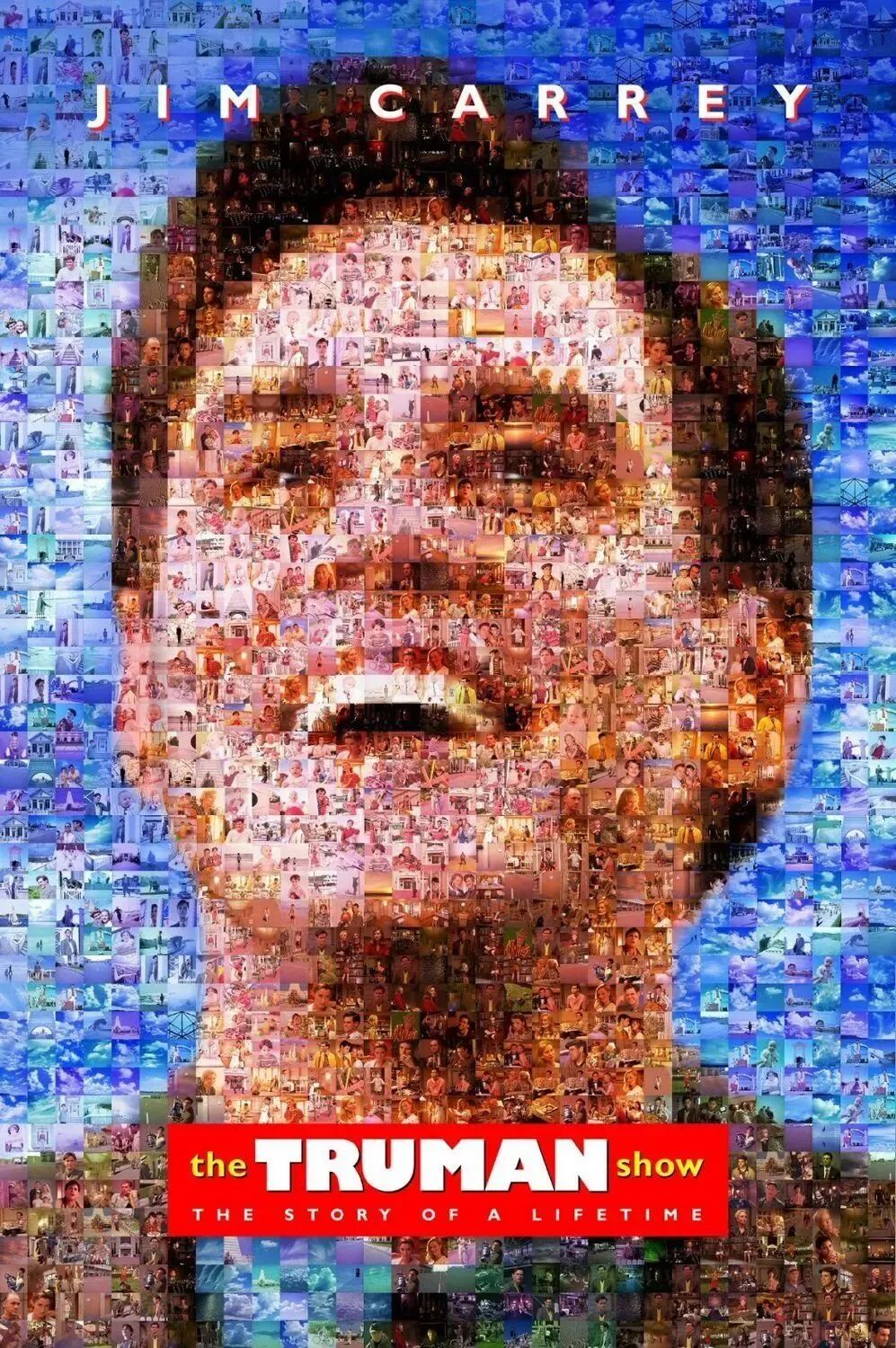
The Nolan brothers, consciously or not, identified a key factor for success in the information age: in an era saturated with spam, bot-generated troll armies, and self-justifying lies, "what you don't know" possesses more mysterious power than "what you know." So what is the only thing more valuable than either? "What you cannot possibly know." In a sense, Memento was the world's first film unafraid of spoilers: no one could fully comprehend it.
"When I was making Following and Memento, many films were fundamentally about overthrowing our perception of reality. The Matrix (1999), Fight Club (1999), The Sixth Sense (1999) — these films clustered together. Back then all these films were saying: your reality is completely overturned. You don't know what you're looking at. I had a strong feeling that in some sense, we were all making the same film. I find ambiguity difficult to handle, both in film and in life."
Inception
How a Narrative Engineering Feat Was Forged
When they asked Nolan what he wanted to make next, he first pitched Inception — that gothic tale of dream theft. He'd conceived the idea while in his sixth-form dorm at Haileybury. Over the years he'd revisited it repeatedly, and now it had evolved into a heist film set against corporate espionage, with the opposing Japanese chemical company lifted directly from You Only Live Twice. Lorenzo di Bonaventura and Jeff Robinov were excited by the pitch — Soderbergh's Ocean's Eleven had just been a massive hit for their studio.
But when Nolan sat down to write the script in 2002, he hit a wall at page 80. He says: "I got stuck at the beginning of the third act, and stayed stuck for years. One reason I couldn't finish the script was that it lacked an emotional element. That was missing. The nature of dreams is that they're deeply personal. Dreams are truly part of our soul, so there has to be emotional weight. I'd tried to approach it more generically, drawing heavily on noir conventions, but in the end I didn't write anything with real punch. The script became like watching someone else play a video game — someone lost in their own world, so you don't care."
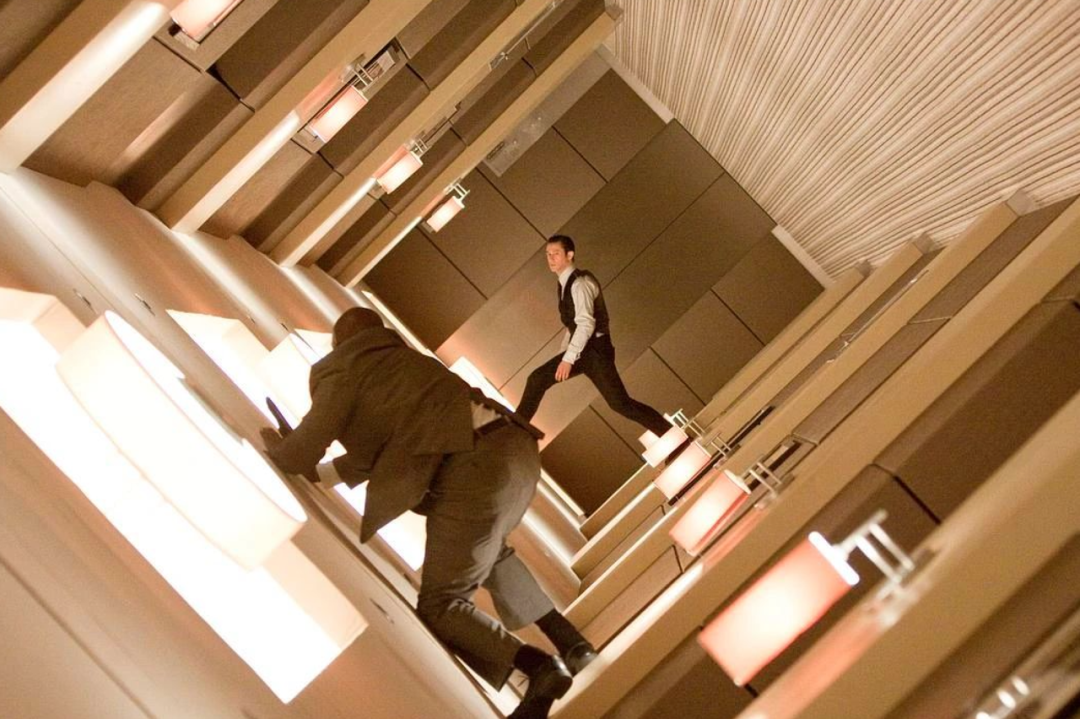
The hotel corridor rotates like a hamster wheel.
The "top-down" influence of upper dream levels on lower ones provides the film's most consistent visceral pleasure — like forgetting to use the bathroom before bed resulting in a downpour in the dream. Meanwhile, in the third dream level, Cobb and his team restage the snow chase from On Her Majesty's Secret Service: characters on snowmobiles pursuing each other, a squad besieging a mountaintop fortress, while the still-falling van triggers an avalanche. Imagine simultaneously screening North by Northwest, Rear Window, To Catch a Thief, and Vertigo in four different theaters, with Hitchcock leading us from one to the next — immersing us in each ongoing narrative, then switching at precisely the right moment. This approximates the narrative engineering feat Nolan achieved.
Interstellar
Born from Something Deeply Personal
It was a few years earlier, on Christmas, when Zimmer, Nolan, and his wife Emma Thomas were dining at The Wolseley on London's Piccadilly Circus — a large, bustling Art Deco restaurant. It was snowing outside, central London's traffic had ground to a halt, and the three of them were essentially stranded. They talked about their children. Zimmer's son was 15 at the time. He said: "Once you have a child, you can never look at yourself through your own eyes again. You always see yourself through theirs." Around 1 a.m., they found themselves on the deserted streets of Piccadilly Circus, and after figuring out how to get home, they started a snowball fight.
Zimmer worked all the next day, and by 9 p.m. the following evening, he'd completed a four-minute piano and strings piece inspired by his experience of fatherhood. He called Emma to say the music was ready. "Should I send it over?" Zimmer asked. "Oh, Chris is itching to hear it — would you mind if he came by now?" Emma replied. Zimmer later recalled that Nolan drove to his Santa Monica studio and sat down on the sofa the moment he entered. Like composers hearing their new work performed for someone for the first time, Zimmer made excuses not to look at Nolan, staring straight ahead until the performance ended before turning around. He could tell Nolan was moved. The director said: "I think I'd better make this film now." Zimmer asked: "Well, great — but what's this film about?" The director began describing this sweeping epic about space, philosophy, science, and humanity. "Chris, wait — I wrote something deeply personal, you know?" "I understand. But now I finally know where the heart of this film is."

That night in London, what Zimmer said: "Once you have a child, you can never look at yourself through your own eyes again. You always see yourself through theirs." It has become "a kind of fable," Nolan says: "You can read Interstellar as a ghost story, about a father revisiting his children as a ghost, then struggling to become free."
Nolan often thinks of his 11-year-old daughter Flora, and feels actual heartache when he has to leave home to shoot. Nolan says: "I deeply relate to this dilemma — someone who has to leave their children to do something, who desperately wants to be with them but also really wants to do this thing. I absolutely love my work. I'm incredibly fortunate to do this, but I feel guilty. So much guilt. The kids keep growing, and I want to hold onto the past. The swift passage of time is melancholy. All parents talk about this, all parents feel this. So Interstellar came from something deeply personal."




5Y Capital seeks out, supports, and inspires solitary entrepreneurs, providing everything from spiritual to operational support. We believe that if the "crazy" you that others see begins to be believed in, the world will become a different place.
BEIJING · SHANGHAI · SHENZHEN · HONG KONG