5Y Capital's Kai Liu: Tech Investing Should Create Flywheel Effects That Ultimately Benefit Everyone | 5Y View

The New Paradigm of Hard Tech Investment

"Early-stage investment in hard tech is like a farmer tilling the soil. If the hard tech industry is still relevant ten years from now, it will be because the seeds planted early on have benefited many downstream companies, and their products and technologies have ultimately reached hundreds of millions of Chinese people."
Recently, at the 23rd China Equity Investment Annual Forum hosted by Zero2IPO and PEDaily, 5Y Capital partner Liu Kai shared his perspectives during a panel on "New Paradigms in Hard Tech Investment." Liu noted that successful technology investment can create a flywheel effect, forming a virtuous closed loop from initial investment to end-user consumption, which in turn fuels further technological innovation.
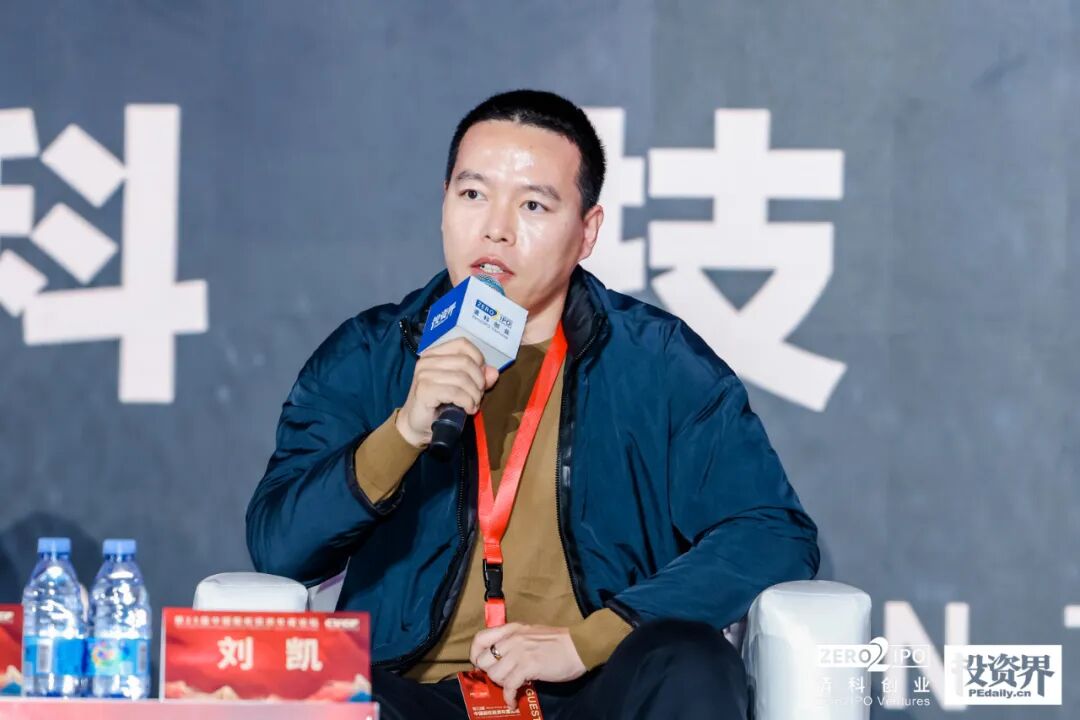
Excerpts from the session:
Looking from this moment toward the next decade, China has tremendous opportunities coming from底层创新 (fundamental innovation). Tech investing faces considerable challenges, which can be summed up with three "thousands": 千山万水 (a thousand mountains and ten thousand rivers), 千难万险 (a thousand hardships and ten thousand dangers), and 千奇百怪 (a thousand strange things). There are also three "longs": 久久为攻 (perseverance over the long haul), 久久相随 (long-term companionship), and 九死一生 (nine deaths, one life) — all fitting descriptions of hard tech entrepreneurship and investment.
Hard tech cycles are exceptionally long, and the probability of success is low. Compared to the companies that eventually make it to shore, there may be more than ten times as many still underwater. China's semiconductor development has followed a similar trajectory, built up over many years. This reality isn't unique to China — hard tech worldwide follows comparable paths, with countless stories of hardship behind them. More and more people are coming to understand these difficulties.
On the other hand, over the long term, economies capable of nurturing systematic hard tech innovation are exceedingly rare. Chip War is a good representation of this — only China and the United States have independent, complete semiconductor industries. New energy and automotive sectors follow similar patterns.
Early-stage investment in hard tech really is like the farmer model. Our daily work is like tilling the soil. We don't really know how the crops will sell, and the farmer doesn't particularly care who ends up eating the grain. If the hard tech industry is fortunate enough to still be here ten years from now, it will be because this cultivation and these early seeds have benefited many downstream companies, and their products and technologies have ultimately reached hundreds of millions of Chinese people.
Returning to first principles of technology: there's a book called The Dream Machine that notes the most advanced technology of the 18th century was watchmaking — Europeans built many watches, people wanted to buy them, and a technology flywheel was formed. The 19th century's highest technology was automobiles; the 20th was information technology. Looking back at these major technological innovations, they all eventually created an industrial flywheel. Government investment may be an important catalyst, but ultimately technology must form a closed loop with society at large and end users.
Today we're doing a great deal of this early-stage farming. Looking back at the first phase, everyone was investing in import substitution. Also, we're seeing more and more internet investors coming into hard tech. Why are the boundaries between hard tech, soft tech, and applications becoming increasingly blurred today? I don't think people are just jumping on a bandwagon — it's because everyone sees the trend of the next wave of technological innovation, including AI, large models, intelligent manufacturing, new energy systems, intelligence, and electrification. This is the ultimate stage that can accommodate all of today's investment capacity and companies, and it requires some convergence. Today we're investing so much in hard tech, and it will ultimately return to end-user scenarios, forming a truly virtuous commercial closed loop that feeds back into the next wave of technological innovation.



5Y Capital seeks out, supports, and inspires lonely entrepreneurs, providing them with support ranging from the spiritual to all aspects of business operations. We believe that if the "crazy" you in others' eyes begins to be believed in, the world will become an entirely different place.
BEIJING · SHANGHAI · SHENZHEN · HONG KONG