A Founder's Self-Awareness | 5Y View

A founder's character determines a company's future.

Successful leaders pay attention to the personality traits that help them succeed, identifying their talents and flaws. Without adequate self-awareness, strengths can become weaknesses. But regularly examining your strengths can turn them into a superpower.
This article introduces the personality traits commonly found in successful founders, and how founders can leverage their strengths. Hope it gives you some inspiration :)
This article is republished from 36Kr's "Shen Yi Ju" (Divine Translation Bureau). Original link: https://36kr.com/p/2444031802464387
Dr. Emily Anhalt is a psychologist who works on "self-awareness" — helping people discover patterns that hold them back and consciously build new ones that drive success. "The whole concept of self-awareness is that the more you know, the more you realize you don't know. Self-awareness is a moving target — we always need to learn more about ourselves," Anhalt says.
Anhalt spent a decade as an executive coach, working one-on-one with founders, giving her a unique behind-the-scenes view into the inner world of founders. This perspective gave her deeper insight into founder DNA — the core traits of successful founders that allow them to dream bigger, work harder, and withstand doubters.
But as she's seen in her practice (and as a founder herself), this is a coin with two sides. The very traits that make founders successful can also hold them back. "Anything that makes you successful can become your stumbling block. For example, working hard is good. Having high expectations for employees is good. But when does it start becoming a problem?" Anhalt says.
Successful leaders pay attention to the personality traits that help them succeed. Without adequate self-awareness, strengths can become weaknesses. But regularly examining your strengths can turn them into a superpower.
In this interview, Anhalt explores this concept further, examining five common traits and behaviors she sees in successful founders.
1. Work is their identity
2. Greater ability to delay gratification
3. Value autonomy and independence
4. Narcissism coexists with "impostor syndrome"
5. Need to prove something
She delves into the duality of these traits — how each can be an incredible buoy on choppy seas or an anchor dragging on the seafloor. She shares tactical advice for each trait so founders can amplify the positive and mitigate the negative.
Founder Trait #1: Work Is Their Identity
Anhalt's definition: The boundary between a founder's work and personal life is nearly invisible because their identity is intertwined with the company's success or failure. As a result, work may become all they think and talk about.
Why This Is a Strength
Regardless of industry, early-stage founders don't work nine-to-five. On the path to product-market fit, there's an endless list of concerns — from building the product, trying to sell to customers, assembling the early team, to crafting a fundraising strategy. Keeping up with this zero-to-one intensity requires focus and relentless effort.
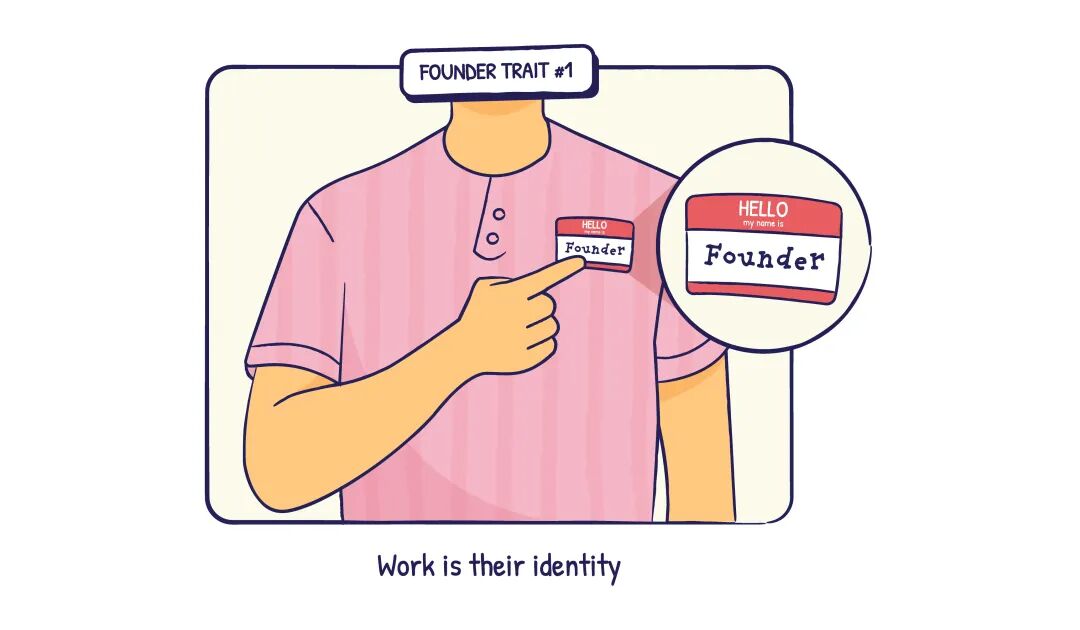
Image source: review.firstround.com
"When we care deeply about something, we do better work. Some of the most amazing things in the world were created by people who were passionate about that field. In short, transformative companies emerge when founders are obsessed with a problem and how they might solve it," Anhalt says.
Why This Can Also Become a Weakness
"Any good financial expert will advise you to diversify your investments for better returns, and the same is true in our own lives. If we invest completely in only one part of life, that becomes a problem," Anhalt says.
Startups are characterized by ups and downs, and the perfect company trajectory is often a myth that masks harder details. There will always be days, weeks, months, even years when the company isn't performing as hoped. If founders haven't prioritized other parts of their identity worth spending time and energy on, they'll suddenly feel like their entire life is on fire — not just that their work life isn't where they want it to be.
As a founder, this also affects your decision-making. "If it feels like your whole life is burning, it's hard to focus on solving problems, so you spiral into an even bigger crisis," she says.
In terms of how you interact with the rest of your team, when work becomes your entire identity, delegating becomes more difficult. "You'll have a harder time trusting people because it feels like you're handing over your whole life to them, not just your work. You might find yourself becoming a tense micromanager," Anhalt says.
When you pour your entire being into the company, it sends a message to the rest of the team that they should do the same. "I've seen many people leave startups because they felt the company expected them to sacrifice everything. But the average startup employee doesn't own 42% of the company like the founder does," Anhalt says.
Even if you don't think you're prone to burnout, how do you ensure the rest of your team doesn't burn out trying to keep pace with you?
How to Protect Your Most Valuable Resource: Yourself
The idea that work should be a founder's entire identity leads to an all-or-nothing mentality that Anhalt has seen time and again. "They either work until they burn out, or worry they shouldn't be a founder at all. This mentality is harmful to founders — you need the ability to play the long game," Anhalt says.
Borrowing from investor Michael Dearing: "Startups have plenty of money, plenty of talent. What founders really need is the emotional capacity to withstand the grind of startup life."
Anhalt finds that in her one-on-one executive coaching, there's often a hidden undercurrent that starts pulling founders under. "Imagine you're playing a card game that will last a long time. Without realizing it, you might start making unwise moves that cause you to lose and quit the game," Anhalt says.
She sees this same self-sabotage in founders. "They're so exhausted that they can't see that slowing down or prioritizing other parts of life wouldn't be so bad. Instead, I see them subconsciously self-sabotaging because it feels like the only way out," she says. This might look like: "They might not send investors the information they need and start damaging those relationships. Or they might start having more conflicts with co-founders."
Tips for Avoiding Burnout:
Anhalt finds that often, founders and startup leaders don't notice burnout creeping in until they're already in the vortex. "In our hustle culture, no one bats an eye when founders sacrifice sleep, skip most meals, or lose relationships for the company. In fact, this behavior is praised," she says. Just as your partner shouldn't be your only deep relationship, your work shouldn't be your only passion. For healthier returns, you need to diversify your life.
Anhalt proposes a three-step framework so you can start taking preventive measures when burnout begins to creep in, rather than reaching for a bottle of vitamins when you already have a terrible cold. "Solving burnout is much harder than preventing it," Anhalt says. "Prioritize your health as an asset to the business."
Step 1: Identify your warning signs. "Early warning signs of burnout vary from person to person. You might not want to eat lunch, or you might lose patience with people easily. You might find yourself less wanting to get up for work, or you might complain more, or you might start having trouble sleeping. So take time to dig deep and understand what your warning signs are."
Step 2: Find an accountability partner. "Find someone to watch for these burnout signs. It's hard for us to spot these signs in ourselves, so ask someone close to you — a co-founder or partner — if you're starting to skip lunch or complain more."
Step 3: Take action. "When someone tells you you haven't eaten lunch in four days, what do you do? Schedule a vacation or a learning session? Delegate more or ask your co-founder for help? Don't just sit with the information — take action. Instead of telling others to take care of themselves, start showing them."
Founder Trait #2: Greater Ability to Delay Gratification
Dr. Anhalt's definition: Founders work for ten years in ways others won't, so they can live lives others can't. They take lower salaries, sacrifice relationships, all for that 1% chance of a company exit.
Why This Is a Strength
The path to sustainability is winding, and few founders succeed on their first idea. Instead, they need to pivot and find something that sticks. And even after achieving product-market fit, the road to the ultimate goal remains long. "Few startups succeed immediately — you have to play the long game," Anhalt says.
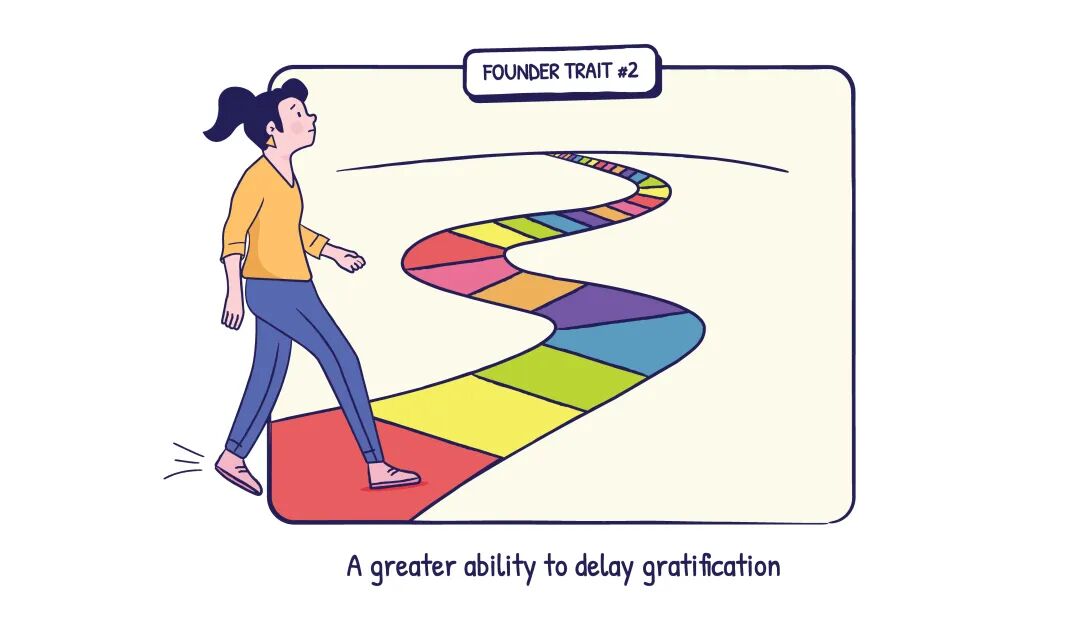
Image source: review.firstround.com
Beyond delayed gratification (like financial rewards), founders aren't likely to receive much recognition along the way. "Whether as a founder or working with other founders, my experience is that people won't be cheering for you constantly. People don't know about all the hard work you're doing behind the scenes. Investors won't pat you on the back for every small victory because they'll be eagerly awaiting the next milestone," Anhalt says.
Founders have a unique gift for keeping their heads down and pushing forward without much recognition.
Why This Can Become a Weakness
Anhalt reminds us: "In a founder's life, every goal achieved produces five new goals. Founders are notoriously bad at slowing down and celebrating along the way. Yes, they may need less recognition than others, but as humans, we still need fulfillment in life," she says.
"I worked with a founder who had just reached a huge, amazing milestone — the most important goal he'd been working toward for years. In our coaching session I said, 'Wow, can we pause and celebrate?' His response was that there was no time, because he needed to focus on the next milestone," she says.
But eventually, the seemingly bottomless well of confidence and motivation runs dry. "It's hard to keep going forever if you don't stop to feel proud of what you've accomplished so far," Anhalt says.
She also finds founders tend to interact with their teams the same way. If founders don't think their own small successes merit recognition from others, they're less likely to recognize their teams. They're less likely to say 'great job' or celebrate milestone events," Anhalt says.
A common mistake founders make: because they need less recognition along the way, they make sure no one else on the team gets the fulfillment they deserve either.
How to Find Fulfillment in the Grind of Startup Life
Anhalt offers founders some advice to recalibrate themselves — to inject a dose of affirmation for themselves and send words of praise to others.
Be your co-founder's cheerleader. "Not getting recognition for your work can feel very lonely, but tooting your own horn can also feel very uncomfortable. I recommend co-founders cheerlead for each other and share with the rest of the team what the other is doing. For example, I'll introduce my co-founder to the team: 'Erickson put in so much behind-the-scenes effort to secure our next round of funding.' This way, the rest of the team can share in that pride."
Ask for it. "Founders are quick to seek constructive feedback, but I suggest they also solicit positive feedback. Ask your team what they think you're doing well, or where they feel supported. What milestone can they not wait to reach? Why are they most excited about working at the company?"
Tell people they're making a difference. "People want to know if what they're doing matters. It's important for employees to understand that their hard work is seen and contributes meaningfully to company goals. While it's important to let employees know when they need to make changes, it's equally important to cheer for them when things are going well."
Founder Trait #3: Value Autonomy and Independence
Dr. Anhalt's definition: For many founders, the idea of working for someone else makes their skin crawl. Founders want to be masters of their own destiny.
Why This Is a Strength
When you abandon a traditional career path to become a founder, you take enormous risks, going all-in hoping to create your own fate. "For many people, the ability to decide what kind of life they want is a powerful draw of the entrepreneurial lifestyle," Anhalt says.
As she's seen in her therapeutic practice, this mindset often takes root very early. "I find that many founders I work with, for better or worse, are very independent people. I say for better or worse because many are truly independent because they had to be — their life circumstances gave them no choice, so they learned independence early," she says.
"This independence serves you well because building a startup doesn't come with a step-by-step navigation system. In many cases, you have to forge ahead, follow first principles, and move at your own pace," Anhalt says.
Why This Can Become a Weakness
Even if you're an independent founder, building a company isn't a solo pursuit. You need to assemble an early team and eventually bring in investors and a board. "The downside of this independent personality is the inability to believe others will support you, and the inability to ask for help even when you know you want or need it," Anhalt says.
Especially when you start building a team, this impulse begins to spread. "We all know that ideally, you should hire people smarter than you, better than you in certain areas. But if you see yourself as someone who doesn't need others, you might unconsciously not want to hire people better than you," Anhalt says.
For any founder, letting go of a half-built Lego set is hard to accept. "You might see a founder reluctant to hire a head of product because they want to hold onto that role tightly. They think, 'Product is my expertise, no one will do it better than me, so I'll do both jobs,'" Anhalt says.
But as the company scales, the founder's role changes dramatically — it's no longer just a few people making decisions in a room. "No one does exactly the same thing two years into building a company as they did when they first started. But I've seen many founders refuse to change their role," Anhalt says. The harsh reality is that the skills needed to start a successful company aren't the same as those needed to run one.
How to Build Delegation and Collaboration into Company DNA
Getting over the hump to hire people to take on roles you currently play as founder is just step one. Once they're on board, you have to start letting go. You'll get more from them if they feel like the driver, not just a passenger. "Think about it from an early employee's perspective: if you work at a company but don't think people actually need you, you won't want to work very hard, you won't feel needed or important," Anhalt says.
As a founder, instead of asking "Can I do this alone?", you should ask "Do I have to do this alone?" or "Would someone else do this better?"
One of Anhalt's favorite phrases: "I trust you." She says: "When people feel trusted, supported, and empowered, they show their best selves and do their best work."
As a founder, there are things only a founder can do — like fundraising or setting strategic direction for the company. By delegating everything else, you free up time and energy to focus on what's unique to the founder role.
Anhalt's advice is a bit meta. "If you're not good at asking for help, ask someone to help you ask for help. First, you can say to your co-founder or other leaders on the team: 'I'm working on improving my ability to ask for help, so I want you to regularly come help me ask for help,'" she says.
As a founder, this is something Anhalt has had to confront in her own entrepreneurial journey. "In my own growth, someone said to me, 'Emily, you need to let this go — you're not the only one who can do this, there are others on the team who can do this,'" she says. "I had to accept that so I could delegate to others."
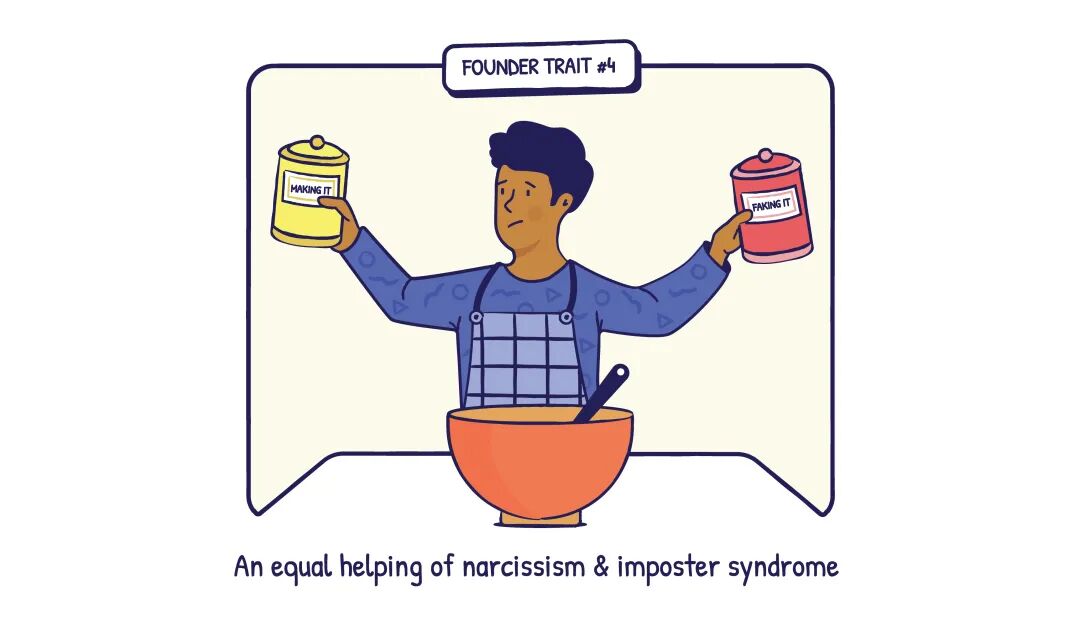
Founder Trait #4: Narcissism and "Impostor Syndrome" Coexist
Dr. Anhalt's definition: I call it narcissistic impostor syndrome. Narcissism is a necessary defense to push toward a reality that others don't see or think is possible. At the same time, most founders are terrified that they don't know what they're doing and will be exposed at any moment.
Why This Is a Strength
Anhalt says: "Narcissism is sometimes criticized, but there's healthy narcissism." Here's how she distinguishes the two: "Healthy narcissism is when you think highly enough of yourself to believe you can accomplish incredible things and have confidence in yourself. Unhealthy narcissism is when you're actually deeply insecure and use confidence as a mask to deny your insecurity."
So while the word narcissism might make people bristle, it may be a necessary component to withstand the storms of founder life. "As a founder, you have to believe you're capable of doing something even when you're told 'no' almost every time. But if every founder gave up after being told their idea wouldn't work, we wouldn't have companies."
On the other hand, impostor syndrome has its downsides too. But in Anhalt's view, people often overlook its benefits. "It's important to recognize how much you don't know. As a founder, it's a strange job where everyone is figuring it out as they go — there's no perfect playbook, and you need to be good at asking for help," she says.
As a founder coach, Anhalt knows this inner voice well. "People share all their wins and successes on Twitter, projecting this confidence on the surface, but don't feel it inside. In my practice, I haven't met any founder who feels consistently successful. They're all struggling, all overwhelmed," she says.
Why This Can Become a Weakness
Healthy confidence is necessary to keep moving forward amid doubt and obstacles. But when does confidence become too much? "At some point, you also have to be able to hear whether what you're doing is working. If something needs to change, you need to adjust your product; if people are unhappy with your leadership, you can't always think they're wrong. Sometimes you have to quiet your own voice and listen to what others think before making decisions," Anhalt says.
It's an ongoing process of trying to tune the dial to the perfect level. "However, the downside is that many founders start to experience intense self-doubt, which can paralyze them," she says.
Founders often experience a jumping thought pattern where they can simultaneously think they're amazing and terrible, flipping back and forth within minutes.
How to Get Out of Your Own Head
The antidote here is to bring in a chorus of voices, not just listen to one solo. "Our inner voice isn't always true — don't believe everything you think," Anhalt says.
Seek feedback: "You shouldn't be the only one deciding how you're doing. Actively seek feedback from those around you — your co-founder, your investors, your board, your closest team members. Let others tell you when you're doing well and when you could do better."
Talk to each other. "As founders, we often get into trouble. For me, building a community of other founders was a great solution. Discovering that other founders also feel like they don't know what they're doing — what a relief. Phew, none of us have it figured out, we're all figuring it out as we go. They'll say, 'No, I'm with you,' 'Here's how I approached this problem.' Founders need other founders."
Founder Trait #5: Need to Prove Something
Dr. Anhalt's definition: Whether they want to prove something to parents, to themselves, or to the world, founders carry a pressure on their shoulders and won't rest until they've achieved their goal.
Why This Is a Strength
On the highway of company-building, there are countless exit signs encouraging you to pull off the road. But in startup lore, the stories that spread are of those who kept their foot on the gas, ignoring the exit signs. They might make a 180-degree turn — like Stewart Butterfield pivoting from building an online game to creating Slack, or Notion's founders scrapping their code and rebuilding from scratch — but they didn't get out of the car. Anhalt notes: "Feeling like you have something to prove, whether to the outside world or to yourself, can become an incredibly powerful motivator to keep going when things aren't going well."
Why This Can Become a Weakness
But becoming a founder just to be a founder — rather than being intensely driven by founder-market fit or obsessively focused on solving a particular problem — can blind you. "If you want to become a successful entrepreneur because you want to prove all the doubters wrong, you won't always have clarity about what needs to be done at any given moment. I've seen founders who, when they needed to pivot, didn't pivot because they were too attached to their original idea, allowing no room for change or for their idea to look different," Anhalt says.
As Annie Duke, special partner in decision science at First Round, points out, "The hardest thing to walk away from is who you are." (She tackles this thorny topic head-on in her new book Quit: The Power of Knowing When to Walk Away.)
Finding Your Deepest Motivation
On this issue, the key is to carve out time to dig deep rather than blindly chasing to-do lists. "The truth is, not everyone should be a founder — many people might live more fulfilling, meaningful lives doing something else. But they feel this is the only way to prove to themselves, their family, or the world that they're valuable and successful," Anhalt says.
How do you know if you have the "right reasons"? Anhalt suggests writing down your answers to these questions:
- If this company doesn't have a "successful" exit, will I still be glad I spent this time on it?
- Can I find fulfillment in the changes we make along the way (rather than focusing solely on the exit goal)?
- When I look back on these years of my life, will I feel proud and excited about the work I've done?
Working with a therapist or coach can also help unveil these questions. "When I work with founders, I tell them directly that my goal isn't to ensure they have the most successful company. My goal is to help them feel satisfied and happy with their lives, because we only get one shot at this," Anhalt says. "Is your ultimate goal to prove something to the world? Or is the ultimate goal to successfully find product-market fit and solve a problem you're passionate about?"
Anhalt warns that if your motivation for starting a company is to fill a deep inner void, you're likely to disappoint yourself.
The biggest myth about entrepreneurship is that the founder path will give you all the autonomy, affirmation, and recognition you crave. But it won't — you definitely don't get it right away, and often you don't get it at all.
"I can't tell you how many founders I've worked with who finally reached the milestone they were convinced would make them feel capable, successful, and fulfilled. But that milestone came and went without bringing satisfaction — instead it was frustrating because they'd worked so long and hard to get there," Anhalt says.
Beyond working with a trusted professional to unpack deeper issues, Anhalt finds a common prescription across these traits: carve out time for other things that bring you joy and fulfillment, whether challenging yourself in a fitness class or taking walks with friends.
Taking Care of Yourself Like an Olympic Athlete
Anhalt concludes with one of her favorite analogies: "I've compared this to Olympic athletes before. Look at how many athletes seriously damage their bodies from training so hard — that level of intense training for that long is actually not the healthiest lifestyle. Similarly, being a founder isn't the best choice for a balanced life, because the stress is incredible."
When you put your physical and mental health under such intense pressure, you must give your mind and body extra care. Anhalt says: "I constantly have founders tell me they want to try therapy or coaching, but they're too busy running the company."
Can you imagine an Olympic athlete eating fast food every day because they're too busy to nourish their body with healthy food? How could you possibly win gold on a fast-food diet?
Without proper nutrition, support, and rest, you can never achieve extraordinary things. On the entrepreneurial path, you need the support and help of others — to hold you accountable to your goals, to help you mine the strengths in your founder DNA while eliminating the weaknesses that may secretly hold you back.



5Y Capital seeks out, supports, and inspires solitary entrepreneurs, providing support from the spiritual to all operational aspects. We believe that if the "crazy" you in others' eyes begins to be believed in, the world will become a different place.
BEIJING · SHANGHAI · SHENZHEN · HONG KONG