When We Admit Ignorance, We Find Our Way | 5Y View

Great progress always begins with admitting ignorance.

The advance of scientific knowledge always brings deeper, more beautiful, and more mysterious things, drawing us to explore further. Most of the time, the process is filled with uncertainty and doubt — and any great progress often begins there.
Today's piece comes from a lecture by Nobel laureate Richard Feynman titled The Value of Science, reflecting his thoughts and insights on the subject. In a sense, science provides humanity with rich imagination — it transforms our concepts of the world, allowing us to imagine infinitely wondrous things.
We must frankly admit that we know very little about the world. Yet it is precisely when we make this admission that we begin to find our way forward. I hope this article offers you some inspiration :)
This article is excerpted from the book What Do You Care What Other People Think? Author: Richard Phillips Feynman. Translators: Li Shaoming, Li Chao.
Often, people ask me why scientists don't pay more attention to social problems, especially the impact of science on society. There seems to be a widespread belief that if scientists would just focus on these complex social issues instead of getting lost in the minutiae of research, great success would naturally follow.
I believe we scientists do care about these social problems; we simply don't treat them as our full-time job. The reason is that these social issues are thousands of times more complex than scientific research, and we are equally baffled by them — we have no magic bullet.
I think that when a scientist thinks about non-scientific questions, he is as ignorant as anyone else; when he speaks about non-scientific questions, he is as naive as any layman. Today's lecture, "The Value of Science," is not about a scientific topic but about value judgment; viewed this way, what I am about to say will likely be rather superficial.
Science Has Changed Our Conception of the World
The first value of science is well known. Scientific knowledge enables people to make many products and accomplish many things. Of course, when science is used for good, credit belongs not only to science itself but also to the moral choices that guide us. Scientific knowledge gives people the ability to do good or evil; it does not come with instructions for use. This ability is clearly valuable, though whether it is good or bad depends on how it is used.
On a trip to Hawaii, I learned a way to express this. The abbot of a Buddhist temple spoke to tourists about Buddhism, and at the end said his parting words would be unforgettable. They were a verse from Buddhist scripture: "To every man is given the key to the gates of heaven; the same key opens the gates of hell."
What then is the value of the key to heaven? If we cannot tell which door leads to heaven and which to hell, the key in our hands is a dangerous thing.
Yet the key does have value — without it, we cannot open the gates of heaven; without it, even if we could distinguish heaven from hell, we would still be helpless. Following this logic, although scientific knowledge may be misused to cause disaster, its power to produce enormous effects is itself a value.
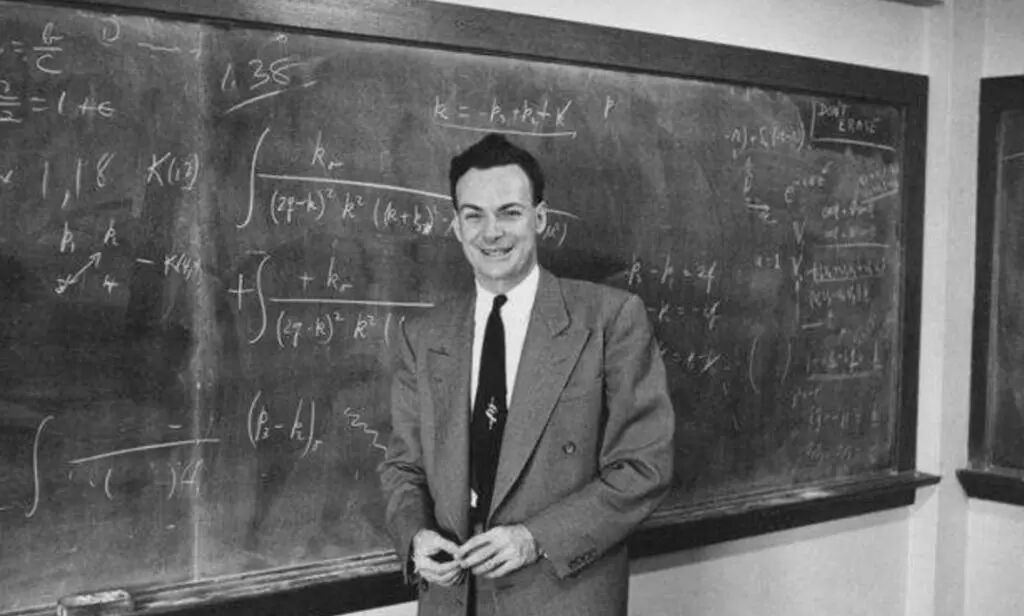
Another value of science is the intellectual enjoyment it provides. Some people find this enjoyment through reading, learning, and thinking; others only find satisfaction through genuine deep research. The importance of this intellectual enjoyment is often overlooked, particularly by those who constantly lecture us scientists about our social responsibilities.
I am certainly not saying that personal intellectual enjoyment is the entire value of science. But if the ultimate goal of social progress is to allow all kinds of people to enjoy what they want to do, then scientists' enjoyment of thinking and seeking knowledge is equally important as anything else.
Another value of science that should not be underestimated is that it changes people's conception of the world. Because of the development of science, we can today imagine infinitely wonderful things — thousands or millions of times richer and stranger than the imaginings of poets and dreamers. Nature's imagination is far greater and more varied than human imagination. For example, a poet might imagine a giant sea turtle carrying elephants on a journey through the ocean; science gives us a picture — a huge sphere rotating in the heavens, on whose surface people are held by mysterious gravity and carried along in its rotation.
I often think about these wonderful things, things that people in the past could never have imagined, but which scientific knowledge now allows us to imagine.
Once, standing on a beach by the sea, I fell into such deep reflection:
The tides rise and fall
Countless molecules each running in solitude
Distant yet intimately connected
Raising harmonious white waves
Across unfathomable ages
In ancient times before life existed
Before eyes had appeared
Year after year
The crashing waves now
For whom, for what?
On a lifeless planet
With no being to rejoice in it
Ceaselessly
The blazing sun radiates energy
Into the boundless universe
Stirring the waves of the sea
In the ocean depths
Molecules repeat unchanged
Then suddenly, new combinations arise
They replicate themselves
Thus a completely new act unfolds
Growing larger
Growing more complex
Life, DNA, proteins
Their dance becomes ever more wondrous
Leaping from the ocean
Walking onto land
Standing upright
Atoms with consciousness
Matter with curiosity
Facing the sea, toward the ocean
A curious one being curious
I —
An atom in the universe
A universe within an atom
Such excitement, wonder, and mystery arise again and again as we study problems. The progress of knowledge always brings deeper, more beautiful mysteries, attracting us to explore further. Sometimes the results of exploration are disappointing, but what of it? We always dig deeper with enthusiasm and confidence, discovering unimaginable wonders and the deeper, more beautiful mysteries that follow. Is this not the most thrilling exploration of all!
Indeed, those without research experience likely cannot have this quasi-religious feeling. Poets will not write of it, artists cannot describe this marvelous sensation. I do not understand — are they not excited by the universe we have discovered? Singers do not yet sing of the wonders science brings; for people, science is still received in lectures, not in poetry and song. This shows we have not yet entered a scientific age.
One reason for this silence without song is perhaps that people must know how to read the musical score to sing. For example, a scientific paper says, "Radioactive phosphorus in a rat's brain decreases by half in two weeks." What does this mean?
It means that in the rat's brain (your brain, my brain — no difference), half the phosphorus atoms are no longer the ones from two weeks ago; they have been replaced. So I ask: "What then is the molecule that carries consciousness? Nothing? These brand-new molecules can carry memories from a year ago in my brain, yet the molecules that formed those memories have long since been replaced! This discovery is like saying that I myself am merely a choreographed dance. Molecules enter my brain, dance a dance, and leave; new molecules enter and dance exactly the same dance as yesterday — and they can remember!"
Sometimes we read in the newspaper: "Scientists believe this discovery is very important for treating tumors..." See, the report only focuses on what the discovery can be used for, completely ignoring its intrinsic meaning. Yet how wonderful it actually is! Occasionally, a child will realize these meanings; at such moments, a potential scientist appears. If we only teach them these things when they reach university, it will be too late. We must teach them from childhood.
The Experience of Ignorance, Doubt, and Uncertainty
Now, let me speak of science's third value — it is somewhat indirect, but not far-fetched. What scientists experience daily is ignorance, doubt, and uncertainty, and this experience is extremely important. When a scientist does not know the answer, he is ignorant; when he has a tentative guess, he is uncertain; even when he is quite confident, he always leaves room for doubt. Admitting one's ignorance and leaving room for doubt are both essential for any development. Scientific knowledge itself is a collection of varying degrees of credibility: some is fundamentally uncertain, some is relatively certain, but nothing is completely certain.
Scientists are accustomed to this situation; they naturally question because of uncertainty and admit their ignorance. But I think most people do not understand this. In history, science fought repeated battles against authority before gradually winning our freedom to question. We must never forget this history — it is our scientists' responsibility to society.
Human potential is so great, human achievement so small — it is rather sad to think about, feeling that humanity could be so much better. Our ancestors dreamed of the future in nightmares; we (who are their future) see that some of their dreams have come true, but most remain dreams, just as before.
Some say the lack of universal education is why humanity cannot advance. But if education were universal, would everyone become Voltaire? Bad and good can be equally taught; education also has enormous power to lead toward good or evil.
Another dream is that full communication between nations would surely increase mutual understanding. But the tools of communication can be manipulated. Thus what is communicated can be truth or lies. Communication also has the dual possibility of leading to good or evil.
Applied science can solve people's material needs, medicine can control disease — surely this is perfect? Yet many people are devotedly manufacturing terrifying poisons and bacteria, preparing for chemical and biological warfare.
Almost no one likes war; peace is humanity's dream — people developing their potential as much as possible. But perhaps future people will discover that peace too can be good or bad. Perhaps people in peaceful times, lacking challenges, will become unbearably bored and drink all day, while drunken people cannot develop their potential or achieve great things. Peace is clearly a great force, like rigor, material development, communication, education, honesty, and the dreams of our ancestors. Compared to our ancestors, we have indeed progressed, have more capability. But compared to what we could achieve, what we have attained pales in comparison.
Why is this? Why can we not overcome ourselves?
Because we find that great potential and power do not come with instructions for how to use them. For example, the more people understand the material world, the more they feel the world is truly without purpose or meaning. Science cannot guide us to do good or evil.
When We Admit Our Ignorance
We Begin to Find Our Way Forward
Throughout history, people have been exploring the meaning of life. They thought: if there were some meaning and direction to guide us, human greatness would surely be fully realized. Thus there have been many explanations and doctrines of life's meaning. These different doctrines have their own believers, and the believers of one doctrine always view believers of other doctrines with fear. This fear comes from the incompatibility of beliefs, causing originally good intentions to run into dead ends. In fact, it was from the enormous errors produced by these mistaken beliefs in history that philosophical thinkers slowly discovered humanity's wonderfully unlimited capabilities. People dreamed of finding a way forward.
So what does all this mean? How do we solve the riddle of existence?
If we consider everything — not only what our ancestors knew, but what they did not know that we know today — then I think we must frankly admit that we still know very little. Yet it is precisely when we make this admission that we begin to find our way forward.
This is not a new idea; it is the idea of the Age of Reason, an attempt — a systematic method of correction. This systematic method was established precisely because by the late 18th century, science had successfully proven its feasibility. At that time, people concerned with society had realized: an open mind toward possibilities brings opportunity; questioning and discussion are the keys to exploring the unknown, and if we want to solve problems we have not solved before, we must open the doors to the unknown in this way.
Humanity is still in its initial stages, so it is no surprise that we encounter various problems. Fortunately, there are millions and millions of years ahead. Our responsibility is to learn what we can, do what we can, explore better methods, and pass them to the next generation. Our responsibility is to give future people hands free from constraints. In humanity's rash and impulsive youth, people often make enormous errors leading to long stagnation. If we arrogantly claim that we have clear answers to many questions, we young and ignorant ones will surely make such errors. If we loudly proclaim "Look, my fellow people, here is the correct answer, humanity is saved!" we will necessarily confine humanity within existing imagination.




5Y Capital seeks out, supports, and inspires lone founders, providing them with support from the spiritual to all operational aspects of running a business. We believe that if the "crazy" you that others see begins to be believed in, the world will become a different place.
BEIJING · SHANGHAI · SHENZHEN · HONG KONG