To Deep Space, Mars, and the Moon — And the Universe Within | 5Y View

On boundless imagination of the unknown.

Exploring the universe has always been humanity's distant and ancient obsession — a boundless fantasy about the unknown, a romantic quest toward the future. In the past two years, as technologies "related to the future" have kept breaking through, we've drawn ever closer to this dream.
Today's recommendation is a reading list on the theme: The Universe and the Inner Self. There's a line in the film The Great Buddha+: "Although we're now in the space age, and humans have long been able to ride spaceships to the moon, they can never explore the universe inside another person's heart." What we want to say is: for anyone, at any point in time, you can go searching for a universe of your own.
The list includes science fiction as well as popular science. Some works also emphasize reflection on history, the present, and the inner self. Beyond that, we've specially recommended Yang Liwei's "old book," The Nine Layers of Heaven and Earth. We hope this list helps you unlock the mysteries of your inner universe in this space age :)
This article is republished from the WeChat account "Wuyun Banzhuangzhe" (The Man in the Black Cloud)
01

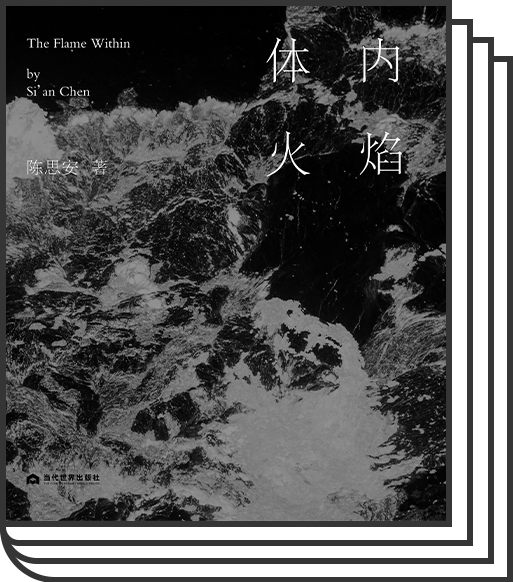
Flames Inside the Body is a short story collection by Chen Si'an, divided into three parts — "Flames Inside the Body," "The Parrot's Ventriloquism," and "The Ventriloquist" — comprising fifty-eight stories in total. The writer Xi Chuan once commented: "Her fiction is something like wild fable, eccentric and forceful in its execution, setting itself apart from the mediocre writing all around us." Read a few stories and you'll find this is no exaggeration, but an apt description — the author starts from the everyday life most familiar to us, yet exercises an imagination that transcends the universe in the tiniest details, exploring the subtle relationships between people, humanity's place in the world, and thereby excavating the most refined workings of human consciousness. And the flame beating inside the author may well spark a sudden flash of insight in the reader.
02

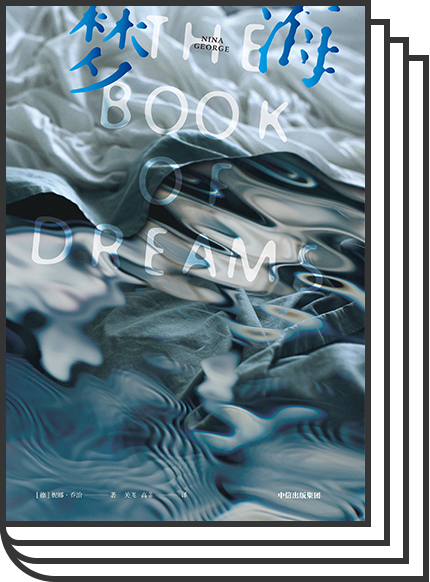
Born in 1973 in Bielefeld, Germany. She has worked as a freelance journalist since 1992, writing columns, and eventually became an award-winning, globally bestselling author. The Sea of Dreams is her second novel, following her 2013 bestseller The Little Paris Bookshop. Many of us have probably wondered: as we lie dying, what might we or our loved ones experience?
Henri, a successful war correspondent, falls into a coma the day before meeting his son for the first time. In his prolonged half-dreaming state, he repeatedly encounters and separates from the important figures in his life. Under the twisted narration of space and time, you'll experience something like the hallucinatory journey of David Lynch's Mulholland Drive — suddenly understanding life in a moment of bewildered clarity.
03

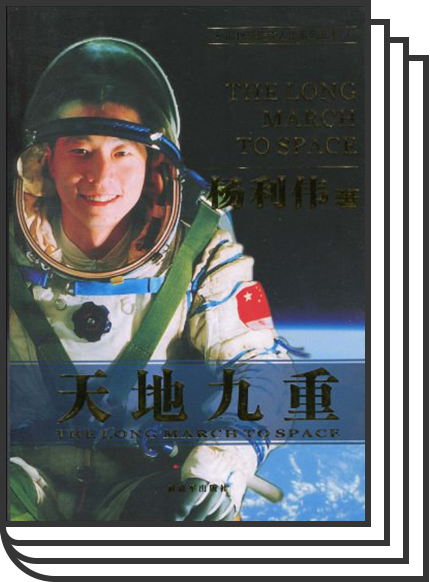
The most powerful stories require only the plainest telling — that's how I felt after finishing this book. The excerpted chapter about "Shenzhou-5's launch" that circulated on Weibo was captivating enough; as an autobiography covering Yang Liwei's entire life, the book's richness of detail and exclusive content aren't even its greatest strengths. What matters most is the "experiential" quality it brings to readers: it's like reading a person's character.
His honesty, for instance. His humor. His willingness to share. After reading this book, one can't help but admire the "mental focus" of this space hero — those topics rarely discussed in our era, like collectivism, discipline, ideals, and conviction, all shine brilliantly under the light of Yang Liwei's noble character.
04

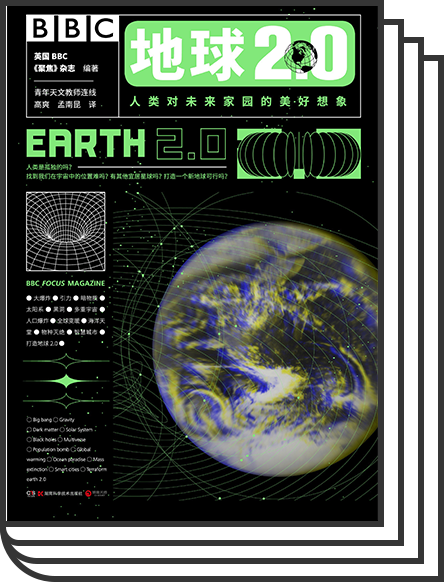
Earth 2.0 is a popular science book about humanity's continuous exploration of possible futures for Earth and the universe, authorized by the British BBC Focus magazine.
The book not only summarizes most of the space theories humans have understood to date — the Big Bang, relativity, gravitational waves, dark matter — providing a comprehensive theoretical foundation for building Earth 2.0, but also focuses on the population, resources, climate, and environmental problems facing Earth today, exploring solutions together with readers. It is a true guide to building humanity's Earth in common. In this book, you can explore the various possibilities for humanity's home in the universe — both to pursue the meaning of life's existence and to search for unknown intelligent life forms.
05

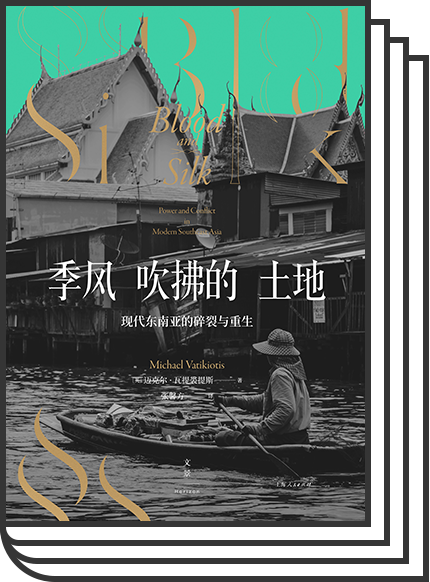
The warm tropical climate and mysterious Eastern fantasies of Southeast Asia have always obsessed Westerners, yet its modernity and warfare also shatter such illusions. Blood and Silk: Power and Conflict in Modern Southeast Asia is precisely a reflection and analysis of Southeast Asia's modernization process and the problems it faces. Author Michael Vatikiotis lived in Southeast Asia for nearly forty years, serving successively as a BBC correspondent, editor at the Far Eastern Economic Review, and conflict mediator. His writing is not only authentic and professional, but also reveals a "concern and anxiety" that comes from having truly lived there.
At a book launch event at Jian Tou Bookstore, a guest remarked that when you view this book as a course syllabus or table of contents, you'll understand its structure: each chapter seems to open a new question, and when you hope to dig deeper, you find you can only consult other sources.
06
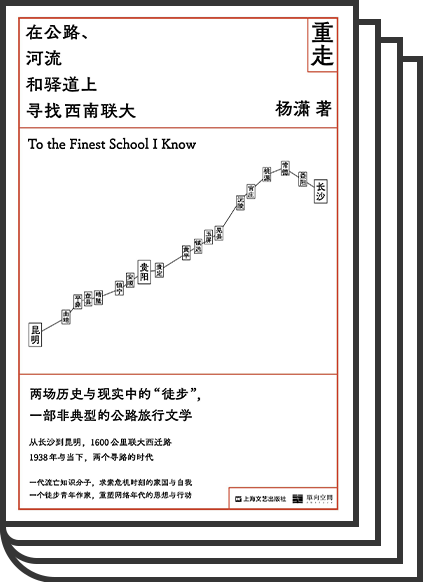
During the heyday of print media a few years ago, journalist Yang Xiao produced many influential feature stories. He interviewed Aung San Suu Kyi, visited turbulent Egypt, and also paid attention to helpless teenagers in small cities and bottomless internet addiction centers. Over the course of his media career, he gradually developed an aspiration to "write history through geography, write time through space." Now his new book about "walking again" the path of Southwest Associated University has been published — living in contemporary China, you will sooner or later encounter texts like Yang Xiao's. 1,600 kilometers of road. This is an atypical road-walking journey, constantly brushing shoulders with big trucks, yet along the way the mountain colors, water reflections, bird calls, and human voices gradually overlap, interweave, and even converse and resonate with what exiles walking the same path in history saw and heard. His physical practice opens up answers to both the grandest and the most minute questions.
07

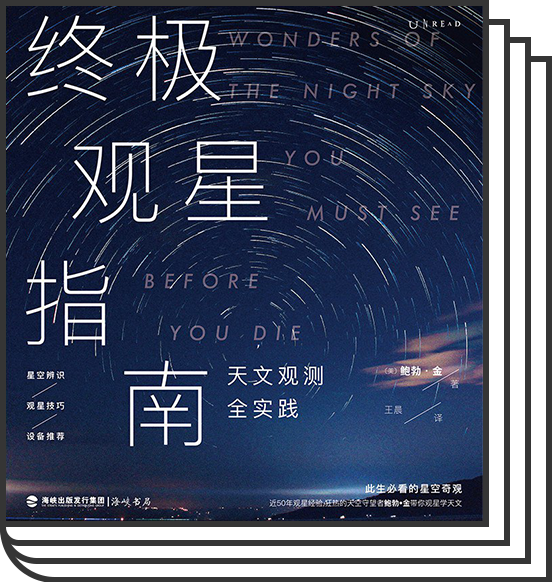
A common misconception about stargazing is that it's an activity with a high barrier to entry. Not so — many night sky wonders require little effort and cost almost nothing to experience; all you need is a practical guide. Drawing from nearly fifty years of stargazing experience, the author has summarized fifty-seven must-see night sky wonders. Beyond accessible astronomical knowledge, the book's main event is telling you — when can you observe stars with the naked eye? How do you choose the right telescope? How should you use apps? Where should you look up relevant information?
People sacrifice sleep just to see as much of the universe as possible. Whether meteor showers, solar eclipses, auroras, or paraselenae, these beautiful and mysterious astronomical phenomena not only provide special viewing experiences but also reveal some fundamental aspect of the vast universe to tiny humanity. And the author shares ways to approach the universe without reservation because he believes that the beauty of the universe belongs to everyone.
08

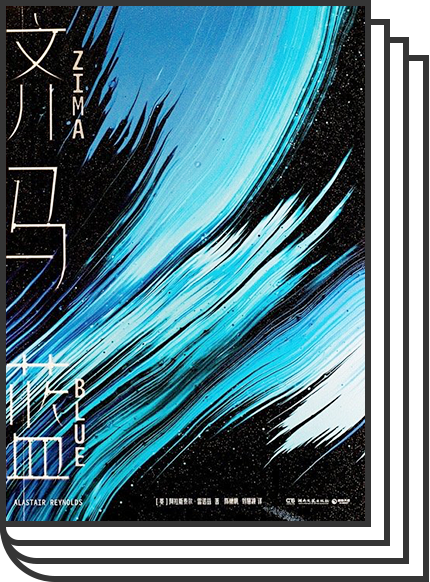
Viewers of Love, Death & Robots Season 1 won't forget this episode — the rough brushstrokes, the deep tones, the artist Zima dismantling himself in his final work, returning to his original form: a pool-cleaning robot. The original author of this book, Alastair Reynolds, is David Fincher's go-to screenwriter, personally adapting his own short stories "Zima Blue" and "Beyond the Aquila Rift" into Episodes 7 and 14 of Love, Death & Robots Season 1. The book Zima Blue collects thirteen science fiction short stories including "Zima Blue" — some set on Earth in the not-too-distant future, others in cross-galactic new space opera — but all maintaining Reynolds's writing style: unbridled imagination, unconventional forms of expression, profound and weighty thematic substance, and an unceasing philosophical questioning within science fiction narratives.
09

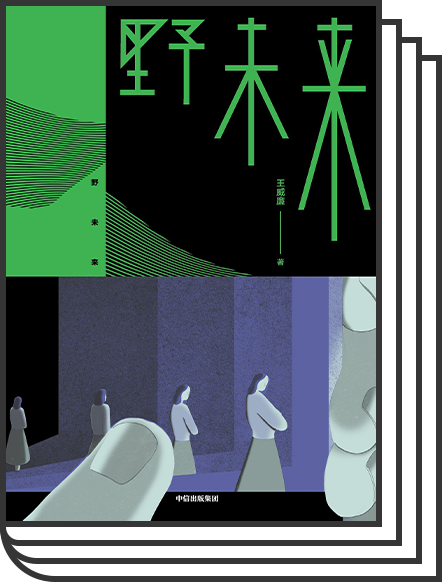
The Wild Future is a collection of science fiction realist stories. The characters — taxi drivers, portrait photographers, airport security guards — though living in the future, consciously or unconsciously return to old ways of life, maintain old habits, and find satisfaction in "backward" conditions. These people living in the future seem to have found a way to escape anxiety. In these stories, we can clearly discern whether we are truly, genuinely alive. We now live in a cyber world where networks are everywhere, yet the space for real life is extremely limited; this book also powerfully articulates the spiritual predicament of modern humans under the assault of information.
10
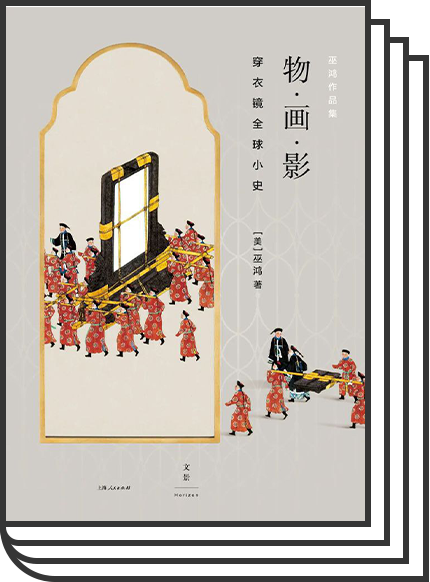
The mirror is a fascinating subject, not only for its auxiliary role in the mysterious realm of "knowing oneself," but because the space for reflection it opens up — extending into literature, art, and philosophy — is extraordinarily vast. This book is a highly "fluid" narration of that vast space.
The author Wu Hung is an erudite art historian and a captivating storyteller. Taking the modern full-length mirror as protagonist, he strings together luxury goods, painting, and imagery in global circulation, exploring how these circulations occurred. From Versailles to the Forbidden City, from the Happy Red Court to the Hall of Mental Cultivation, from queue-cutting commemorative photos of the 1911 Revolution to Morisot's Psyche, the text sees the large through the small, the illustrations are rich and exquisite, and reading it is utterly delightful.
11

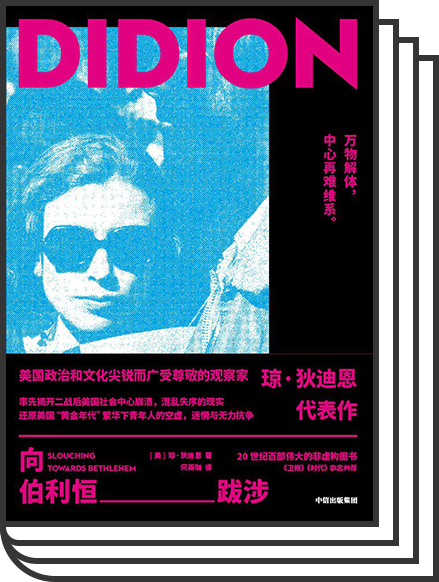
This book collects twenty short stories by contemporary American cultural icon Joan Didion, written in the 1960s. In her fragmented narration, one can glimpse the disordered reality beneath the prosperous surface of postwar America.
When asked why she named the book Slouching Towards Bethlehem, Didion said this piece represented her first direct and frank encounter with and description of evidence that everything was dissipating, proof that everything was coming apart. On this land of nothingness, literary creation is no different than sailing on land; if you tear away the nearly laughable disguises, what is revealed is the authentic soul of a particular era in America.
12

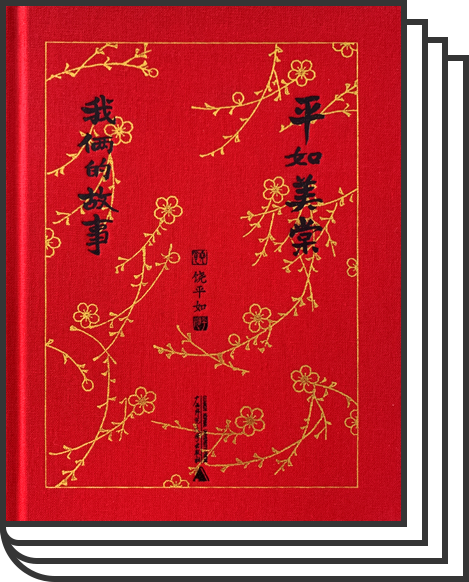
Our Story: A Memoir of Love and Life in China is author Rao Pingru's remembrance, through brush and pen, of the time he spent with his wife of sixty years, Mao Meitang, after her passing. Sixty years of togetherness was not easy; they chose to accompany each other across mountains and seas through letter after letter. And the story finally concluded last April: "Pingru went to find his Meitang."
Our Story is more like a title from the reader's perspective, allowing one to witness this moving relationship from a third-person "outside the painting" viewpoint; while A Memoir of Love and Life in China corresponds to the subjective expression of the text, as the author uses the first-person "I" to narrate their entire lives. But regardless of perspective or voice, all the lines, colors, and words in the book serve to add weight to that single sentence on the back cover: The sea is not deep; missing someone is deeper than the sea.
13

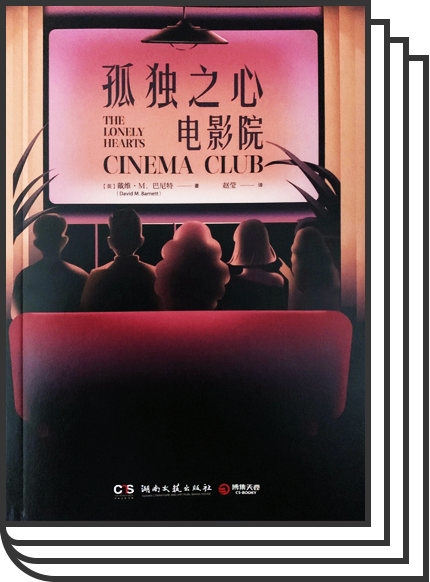
The latest work from acclaimed British novelist David M. Barnett, following The Lonely Dreamer, tells the wonderful story of Jenny, a girl determined to switch her major to film studies, and the eccentrics she meets at the "Sunset Promenade" apartment after falling out with her parents.
This book is not only a warm retrospective of human encounters but also an encyclopedia of film noir. Here you can follow Jenny and her friends to see Billy Wilder's greatest work Double Indemnity, and you won't miss Hitchcock's classic Vertigo either. Perhaps in these films, Jenny and her friends all find their own ultimate answers.
14

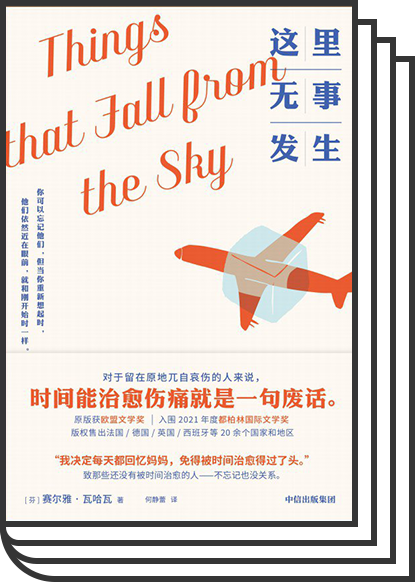
Finnish writer Selja Ahava's second work, Things That Fall from the Sky, explores an important question: Does time really heal all wounds? For young Saara and her father, "time heals all wounds" is nonsense; facing her mother's plane crash, this father and daughter seem trapped in time forever. And when the father gradually emerges from his grief, where does Saara's time go? Selja Ahava uses a light touch to tell a warm story in an extremely cold land. Sometimes "nothing happens" is a good thing.
15

The dual identity of neurologist and writer allows Oliver Sacks's words to function like a medical microscope: in Everything in Its Place, he magnifies the various memories and stories from his eighty years of life, projecting them onto the macroscopic screen of human life and the world of existence.
This book shuttles continuously between neuroscience, mind and cognition, and natural history and art, containing nearly forty articles written from the 1980s to just weeks before Sacks's death, painting for us the childhood memories, clinical experiences, and late-life reflections of the "Shakespeare of science," leading readers to contemplate the complexity of human existence.
16
In an era when personal privacy is gradually dying, we remain constantly confused about balancing self-promotion with overexposure. The author's purpose in writing How to Disappear is quite simple: to share with everyone bearing the pressure of social media the value and pleasure of "not being seen."
The author excels at using those small everyday experiences we've all had as starting points to unfold reflections on "disappearing." The discussion spans psychology, sociology, literature, and art, from Facebook to Mrs. Dalloway to the landscapes of Iceland, the writing is extensively referenced, providing new perspectives from which to observe familiar things. Though revolving around the sensitive and serious topic of "privacy," poetry and tranquility run through it, allowing both social media addicts and the socially anxious to learn comfortable and practical "ways of disappearing," thereby reclaiming time that belongs to themselves.
17
Robert Iger, Chairman and CEO of the world's largest entertainment company Disney, reviews his forty-five-year career in this book, sharing for the first time the birth processes of super IPs like The Avengers and Star Wars — as the book's main content, since the narrative perspective comes entirely from Robert Iger, you'll see many moving details. From the preface alone, he presents the thrilling process of the week before Shanghai Disneyland's opening: within one week, difficulties abounded, but you'll discover that in resolving all these difficulties, besides the "calm" that required professional knowledge, Robert also contained emotions and tears he couldn't suppress. We see a father's role, a colleague who is like a friend — this probably better matches our image of Disney, and differs from most success studies and big-company methodologies. This book is not a "product" of the Disney company, but it is a credit to Disney.
Article authorized for republication from "Wuyun Banzhuangzhe" (The Man in the Black Cloud)
Written by: Andy, Ma Sha, J, HaN, Lili
5Y Capital (formerly Morningside Venture Capital) currently manages approximately five billion USD in dual-currency USD and RMB funds. We believe that if the you whom others see as crazy begins to be believed in, the world will be a better place.
BEIJING · SHANGHAI · SHENZHEN · HONG KONG