Do the Scientific Spirit and Miracles Share Common Ground? | 5Y View

Things that appear contradictory can often be traced back to the deep cognitive foundations of human understanding.

What is a miracle? Something that exists beyond the laws of nature, something science cannot explain.
On the surface, believing in miracles seems at odds with modern life. Science and miracles represent two fundamentally different worldviews, and the gap between them is difficult to bridge through argument. Yet the author of this article offers another angle — the two sides may have more in common than people think. Many seemingly contradictory things can often be traced back to deep cognitive roots we all share. Hope this gives you something to think about :)
This article is republished with permission from the WeChat public account Liweitan (ID: liweitan2014)
Author: Alan Lightman. The article represents only the author's views and does not reflect the position of 5Y Capital.
On the morning of October 13, 1917, roughly a year before the end of World War I, tens of thousands of people gathered in the small Portuguese town of Fátima to witness a miracle.
Three young shepherds had predicted that the Virgin Mary would appear on this day to deliver a message to humanity. Months earlier, the three children — Lúcia Abobora, Francisco Marto, and Jacinto Marto — claimed to have seen strange visions that had been hotly discussed in the Portuguese press.
That day, the assembled pilgrims apparently saw what they had come for. The spectacle would later become known as the "Miracle of the Sun."

From left: Lúcia Abobora, Francisco Marto, and Jacinto Marto. © Joshua Benoliel
Avelino de Almeida, editor and reporter for O Século (the most influential newspaper in Portugal at the time), was present and reported on the event:
"The crowd turned toward the sun... We heard those at the innermost ring shouting 'Miracle, miracle! Marvel, marvel!' Before the astonished eyes of the people, the sun trembled and, violating all cosmic laws, moved inexplicably — it began to 'dance'... The crowd generally admitted seeing the sun tremble and dance, while others claimed to see the smiling face of the Virgin Mary herself, swearing that the sun whirled like fireworks and descended toward the earth, nearly scorching it."
For several reasons, the topic of miracles has long held my attention. First, some friends recently told me about experiences they consider miraculous. According to Pew Research Center, 79% of Americans believe in miracles — things that exist beyond the laws of nature and cannot be explained by science.
This includes not only stories like Moses parting the sea, the resurrection of Jesus, and Muhammad splitting the moon, but also contemporary "supernatural" phenomena: ghosts and spirits, voices of the dead, divine revelations, accurate prophecies, sudden healings from serious illness, telekinesis, and resurrection from the dead.
Hundreds of people have written about miracles on the website of Mario Murillo Ministries, an evangelical church. Recently, one woman wrote that her brother had been paralyzed by a stroke in March 2019, but recovered overnight after prayer. "It was a miracle, and I believe it with all my heart," she said.
Violinist and musician Bonnie Rideout wrote to me about her first experience of a miracle: "A light of unknown origin appeared in the clover field before me. It was a sphere of light about six feet off the ground, motionless, with a warm breeze around it. I felt warm and peaceful. I was only six years old. No one had told me about guardian angels, but I knew this was something like that. This experience made me aware of the existence of mysterious entities with their own will that were always watching over me."
In the United States, some 200 million people believe in miracles. Their accounts are just a drop in the ocean. Moreover, Pew Research Center data shows that 65% of Americans believe miracles don't necessarily have anything to do with God.
On one side, the general public widely believes in miracles; on the other, the vast majority of scientists flatly reject anything "supernatural." For things that appear to be miracles, almost all scientists insist on finding a logical, reasonable "natural" explanation. (Scientists explain the "Miracle of the Sun" as a combination of local atmospheric conditions, retinal afterimages from staring at the sun too long, and self-deception.)
Even when no logical or reasonable explanation is immediately found, most scientists remain loyal to cosmic order, confident that a scientific explanation will eventually arrive. Nobel laureate biologist David Baltimore recently articulated this common view: "If something could only be explained as a miracle, would I believe it was a miracle? I think the answer is still no — I would just consider it some outcome I don't understand."
When discussing or witnessing things that seem like miracles, those who believe and those who don't feel they share nothing in common — as if one speaks French and the other Swahili. These two vastly different attitudes represent fundamentally different worldviews, and the gap between them is difficult to bridge through argument or divine revelation.
Yet, remarkably, recent writings in physics suggest the two sides may have more in common than they themselves believe.
Miracles only have meaning and significance in contrast to the non-miraculous. In other words, to claim something is "supernatural," we must first form a concept of the "natural" — what constitutes the normal course of things. Early humans lacked this concept — perhaps except for individual death and the sun's regular rising and setting. Things simply happened.
Nature was strange, sometimes beautiful, mostly elusive, and often terrifying. In early civilizations, certain "supernatural" concepts must have been understood as the power of gods. These mysterious beings could accomplish feats beyond mortal flesh. In ancient Chinese mythology, the archer god Yi had the power to shoot down nine of the ten suns in the sky with his bow. The same concept is evident in the miracles of Jesus.
What science calls natural law began in ancient Greece, offering a clearer distinction between natural and supernatural. Around 250 BCE, Archimedes proposed the "law of buoyancy": the buoyant force on a submerged object equals the mass of the fluid it displaces, which equals the object's mass, regardless of its shape or volume. In an orderly universe, there are no miracles. In this history of conceptual formation, Newton was a milestone figure. In 1687, he proposed the law of universal gravitation: the gravitational force between two objects is proportional to the product of their masses and inversely proportional to the square of the distance between them.
This law was not merely a mathematical expression of a fundamental interaction between objects — it was the first demonstration that the laws of motion governing the material world apply equally to celestial bodies, the first true understanding of the universality of natural law.
By the 19th century, physicists had hypothesized and confirmed the principles of electricity and magnetism. By 1900, the concept of inviolable natural law was deeply entrenched in the scientific community. Scientists had observed thousands of natural phenomena — from planetary motion to neuronal firing to atomic radiation — and always found reasonable, logical, and usually verifiable explanations. This further convinced them that nature was orderly and predictable.
Where do the roots of strong belief for and against miracles lie?
In 1748, in an essay titled "Of Miracles," Scottish philosopher David Hume identified part of the appeal of miracles: "The passion of surprise and wonder, arising from miracles, being an agreeable emotion, gives a sensible tendency towards the belief of those events, from which it is derived."
In Wonders and the Order of Nature, science historians Lorraine Daston and Katharine Park documented humanity's obsession with the strange and marvelous — the anomalous, the astonishing, the wondrous. Marco Polo was ecstatic to discover pure black lions in the Indian kingdom of Quilon. Other travelers excitedly recorded narrow-necked bottles containing goat-like creatures, beasts with human faces, scorpion tails, unicorns, and people vomiting worms.
Ross Peterson, a practicing psychiatrist in the Boston area, told me: "People need miracles when they feel helpless or are searching for deeper meaning. Miracles lift us out of ordinary, mundane life." He added that we all exist on a spectrum, with hysterical excitement at one end and extreme coldness at the other.
I would argue that those who believe in miracles are more prone to surrendering to infectious experiences and the immaterial world they may symbolize, without analysis or rational thought. Scientists, who venerate scientific achievement and especially the logical architecture of natural law, prefer fully reasonable explanations and dismiss all supernatural phenomena as nonsense.
This isn't to say scientists occupy the extreme coldness end of Peterson's spectrum, but they do insulate themselves from intensely emotional states. They have deep faith in cosmic order; any personal experience or "story" that appears to violate natural principles is labeled "awaiting a more reasonable explanation" rather than accepted as anti-order or miraculous.
**
I remember when I first became aware of the concept of a "reasonable explanation." I was twelve or thirteen, and had built my own laboratory stocked with test tubes, petri dishes, Bunsen burners, beautiful curved glassware, resistors, capacitors, and spools of wire. In some experiments, I began trying to make a pendulum by tying a lead weight to a string. I had read in Popular Science or some similar magazine that a pendulum's period of swing is proportional to the square root of the string's length. I verified this wonderful law with a stopwatch and ruler.
Logic and pattern, cause and effect. As far as I was concerned, everything could be analyzed and quantitatively tested. I didn't understand why anyone would believe in supernatural things or any other unproven assumptions.
Beyond Hume's and Peterson's arguments, I would add another reason why many people believe in miracles. We want to escape from finite material existence. We long for something eternal, something immortal that persists beyond individual death. And a world where miracles can occur might hold such possibility. Thus, it's not surprising that Pew Research Center's 2014 Religious Landscape Study found 72% of Americans believe in heaven, "where people who have led good lives are eternally rewarded."
Recent scientific discoveries have intensified the extreme divergence in worldview between the two camps. In the 1960s, scientists first noticed what we now call the "fine-tuning problem": many fundamental constants of nature are constrained to a narrow range for life to emerge — the speed of light, the strength of nuclear forces, and so on. This is critical not just for life on Earth, but for any form of life. For example, if the nuclear force were slightly stronger, all hydrogen in the early universe would have fused into helium. No hydrogen means no water. And biologists consider water, with its special chemical properties, essential for life. Conversely, if the nuclear force were slightly weaker, heavier atoms essential for life, such as carbon and oxygen, could not combine to form compounds.
One of the most striking fine-tuned constants is the so-called dark energy value in the universe. Dark energy, first discovered in 1998, fills all outer space and produces negative gravity. It causes galaxies to recede from each other at ever-increasing speeds. The density of dark energy has been measured at roughly one hundred-millionth of an erg per cubic centimeter (if these mysterious units are unfamiliar, don't worry — the point is that it's a definite value).
If the dark energy value in the universe were slightly larger than this constant, gaseous matter might not coalesce to form stars; if slightly smaller, the universe might have collapsed and died before stars could form. Physicists have strong evidence that the heavier atoms necessary for life are produced in stellar cores. No stars, no heavy atoms, no life.
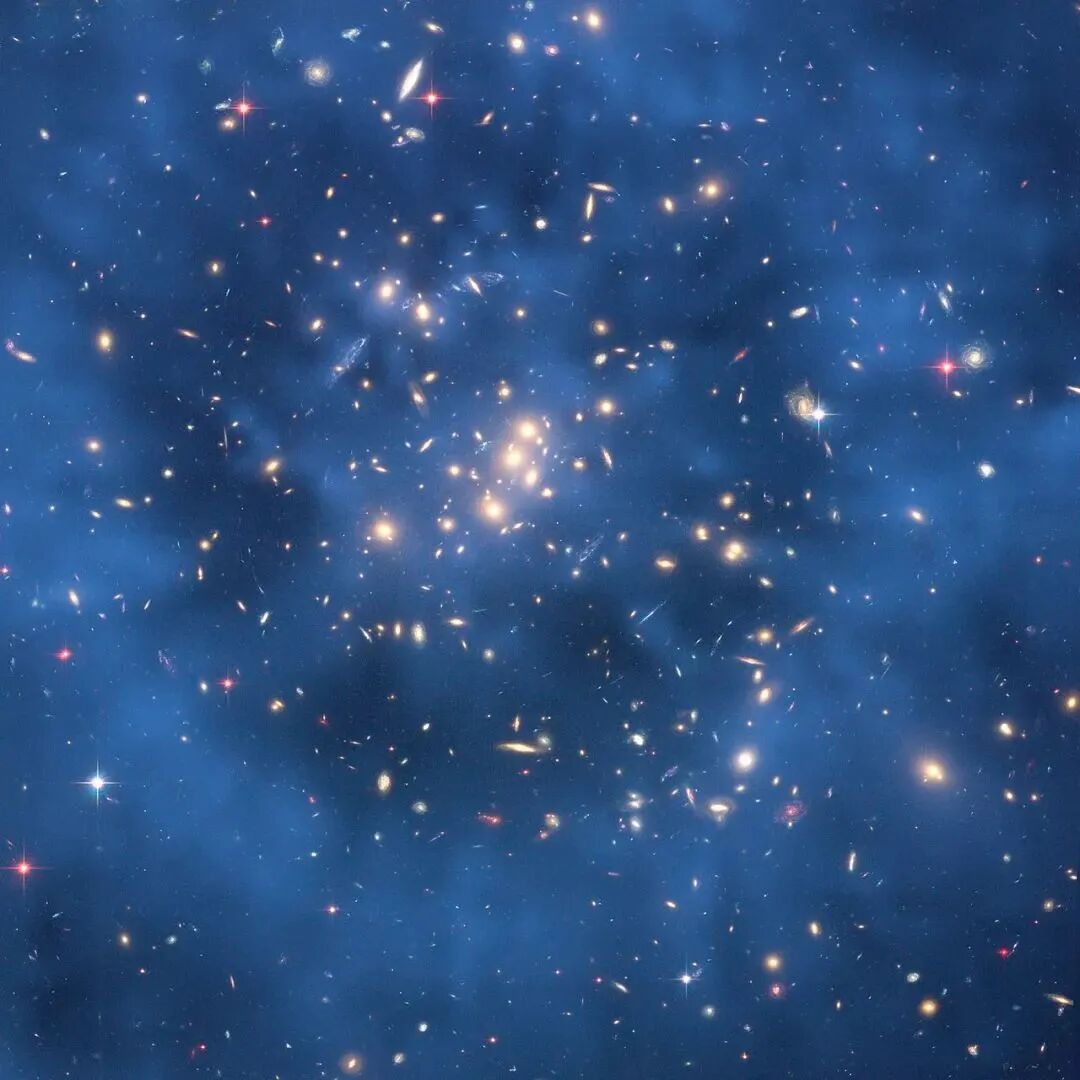
A dark matter ring within galaxy cluster CL0024+17, discovered through gravitational lensing effects, is shown in blue in this Hubble Space Telescope image. © NASA
So how to explain the observed fine-tuning problem? Why does our universe produce life? Each camp has proposed an explanation. Those who believe in miracles have offered intelligent design — the universe was designed by God, who wanted the universe to produce life. Alvin Plantinga, professor emeritus of philosophy at the University of Notre Dame, writes: "That these constants should have just the values they do have is still mind-boggling... It is hard to see how this could be unless God wanted a universe that is friendly to life."
The vast majority of scientists are uncomfortable with this explanation, not because it mentions God, but because the argument doesn't follow logical analysis. Another explanation favored by many scientists is the "multiverse" theory. If there are many universes, each with different properties — some with 17 dimensions, others with 12; some with much greater dark energy values than ours, others with much smaller; some with stronger nuclear forces, others with weaker — then some universes might happen to have the properties that produce stars and life. Most universes would not satisfy these conditions.
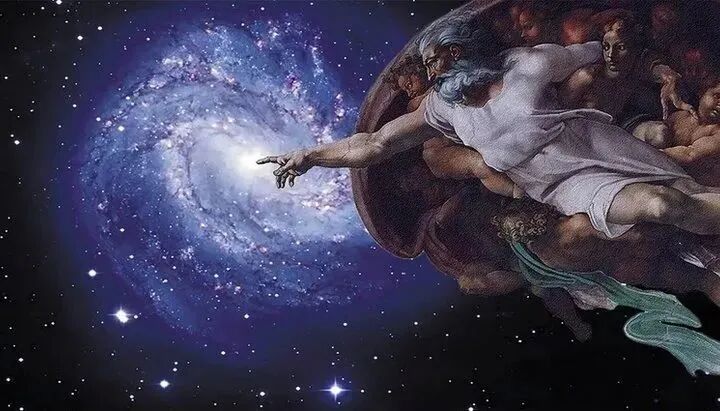
By definition, among the several universes suitable for life, ours is just one. According to this explanation, our universe is merely a random event, a die cast at random. This reasoning also applies to explaining why our planet is just the right distance from the sun to produce liquid water. If we were slightly closer, all liquid water would evaporate from high temperatures; slightly farther, and water would freeze into ice from low temperatures. Behind this seemingly exquisite phenomenon lies a plain scientific explanation. Because beyond Earth there are countless planets, some just happen to be positioned the right distance from their stars to produce liquid water, but most planets lack such conditions.
Verifying whether either explanation for the fine-tuning problem is true is difficult, because neither intelligent design nor the multiverse theory can be proven. Both sides can only treat them as matters of faith.
Those who believe in miracles cannot prove God's existence, let alone that God's intentions specifically included creating the universe. And scientists cannot confirm that other universes actually exist. In the hypothesized multiverse, because the future is infinite, different universes cannot communicate. If they could have contacted each other in the infinite past, proving such a connection would be even more fantastical — like proving our universe existed before the Big Bang. Despite having theories, verifying them is nearly impossible. This also shows that scientists hold their own beliefs, proposing the potentially unverifiable multiverse theory in order to prove that the universe is orderly and miracles do not exist.
In 1934, the great philosopher of science Karl Popper introduced the concept of falsifiability to demarcate the boundaries of science. A scientific hypothesis or view may never be confirmed, because we cannot ensure that new circumstances tomorrow won't contradict it.
However, observing just one contradictory instance can falsify a scientific hypothesis. Popper argued that if a proposition, belief, or hypothesis cannot be tested and thus has the possibility of being proven wrong, then it falls outside the scope of science we are discussing. It may be philosophy, religion, or myth, but it is not science.

Karl Popper (1902–1994). © IBSA Foundation
What brings us back to the multiverse theory? Is it science? Do the many physicists who support the multiverse view think like scientists? Indeed, there is a chain of scientific arguments supporting this view. Before the constant value of dark energy was discovered, Nobel laureate physicist Steven Weinberg used the multiverse perspective to predict the approximate value of dark energy. Stanford University physicist Andrei Linde's "inflationary universe" theory actually predicts the production of multiple universes with different properties. But the multiverse view remains unverified and may be unverifiable.
The frontier of physics has encountered a similar predicament with "string theory." This theory holds that the smallest subatomic units of matter and energy are not point-like particles but one-dimensional energy strings. Moreover, according to this theory, these strings vibrate in 10 or 11 dimensions, but three of these dimensions (length, width, height) may be curled up so small that we cannot see them. Many powerful theoretical arguments and beautiful mathematics support string theory, but like the multiverse view, it too may be unverifiable.
According to Popper's definition of science, we thus face a paradox: faith in a scientific worldview leads to hypotheses that may not be scientific.
In a sense, those who believe and disbelieve in miracles have found some common ground. This doesn't mean that miraculous visions and other transcendent experiences have merged with the orderly nature of modern science, nor that the two worldviews have fused. Rather, the theories championed by both sides are unverifiable. Those passionate beliefs must spring from deep within the heart, born in some secret chamber of the mind common to all humanity — as ancient and necessary as the rituals of our distant ancestors.
Article republished from Liweitan, by Alan Lightman, translated by Yord
Original: www.theatlantic.com/science/archive/2021/03/miracles-and-multiverses/618349/
Published on Liweitan by Yord under a Creative Commons license (BY-NC)
The article represents only the author's views and does not reflect the position of 5Y Capital




5Y Capital (formerly Morningside Venture Capital), currently manages approximately five billion US dollars in dual-currency USD and RMB funds. We believe that if the "crazy you" in others' eyes begins to be believed in, the world will be a better place.
BEIJING · SHANGHAI · SHENZHEN · HONG KONG