Be Kind to Those Crazy New Ideas | 5Y View

Having a new idea is lonely — only those who've tried it know.



Haichuan Hu
Vice President, 5Y Capital
Letting strangers stay in your home? Inventing a digital currency that only exists on the internet? To 99.9% of people, these sounded like crazy, unreliable ideas. They became Airbnb and Bitcoin.
When you're confronted with an idea that seems crazy — whether it popped into your own head or someone else pitched it to you — how do you react? Most people's first instinct is "that won't work, there are too many problems with this." That skepticism is often right, but it also kills the truly great ideas that can change your life, your destiny.
This essay comes from Paul Graham, founder of Y Combinator and Silicon Valley's startup guru. He wants to tell us: don't dismiss new ideas lightly, and how to tell whether a new idea is actually viable.
People with new ideas are lonely. And it's precisely this loneliness of new ideas that drives creation. Be kind to crazy new ideas.
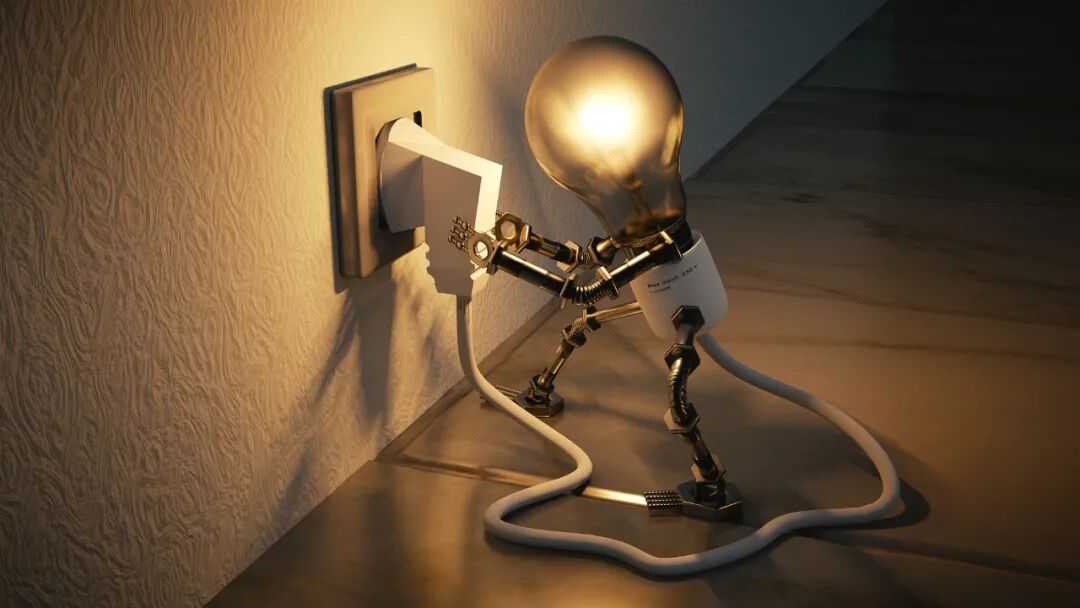
Crazy New Ideas
By: Paul Graham
Source: Guifabu
There's one opinion I'm afraid to voice publicly: when someone I know is an expert in a field, a genuinely reliable person, and they propose an idea that sounds absurd — I'm extremely reluctant to say, "That won't work."
Because anyone who's studied the history of ideas, especially the history of science, knows how great enterprises begin. Someone proposes an idea that sounds crazy. Most people dismiss it. Then, gradually, it takes over the world.
Most ideas that sound crazy are bad. You can safely ignore them. But when a crazy idea comes from a reliable expert in a given field, it's different.
If the person proposing the idea is reliable, they actually know how unbelievable it sounds. The fact that they're proposing this project means: they know something you don't. If they have deep knowledge in their domain, that deep knowledge may be the very source of this idea.
Of course, these ideas aren't guaranteed to succeed. Actually, they don't need to be. They just need to be a good enough bet — that is, they need to have sufficiently high expected value. And I think on average, these ideas are exactly that.
I believe that if you bet on all the seemingly unreliable ideas proposed by reliable domain experts, you'll come out ahead in the end.
The reason: everyone is too conservative.
We're all so surrounded and constrained by "paradigms" that even people with new ideas initially underestimate their value. This means that before they reach the stage of publicly proposing these ideas, they've already filtered them too strictly.
For these kinds of ideas, I think the wise response is: don't voice your opinion, ask questions — because there's something here genuinely worth thinking about.
Why would this smart, rational person propose something that looks so absurd? Are they wrong, or are you? Someone here is definitely wrong. If it's you, great — that means there's a hole in your model of the world. But even if they're wrong, understanding why is fascinating. The pitfalls experts stumble into are ones you need to watch out for too.
Everything I'm saying seems pretty obvious, yet clearly, many people don't share my fear when dismissing new ideas.
Why do they do it? Why risk looking like a jerk now and a fool later, instead of reserving judgment?
I think there are four reasons.
One is envy. If you propose a radical new idea and succeed, your reputation (and perhaps your wealth) will increase accordingly. When that happens, some people feel jealous, and this latent jealousy conveys a belief that you must be wrong.
The second reason is that dismissing new ideas is easy and makes you look smart.
When a new idea first appears, it usually has no power. It's just a hatchling. By contrast, the views most people hold are like mature eagles. So it's easy to launch a devastating attack on a new idea, and anyone who does so looks smart to people who don't understand this asymmetry.
This phenomenon is worsened by the different reward structures for those committed to new ideas versus those attacking them.
Because the payoff for new ideas is based on the value of the outcome: if something has a 10% chance of success, it needs to make things ten times better to be worth doing. Yet the payoff for attacking new ideas stays roughly the same no matter what you attack — you just look smart.
The third case: people also attack new ideas when they're vested in old ones.
This isn't rare. For example, some of Darwin's fiercest critics were churchmen. When someone's entire career is built on certain ideas, they feel threatened when someone says those ideas are false or outdated.
The lowest form of dismissal is partisan: automatically rejecting any idea associated with the opposition. Equally low is rejecting something just because of who proposed it.
But the main reason rational people dismiss new ideas is the pervasiveness of the current paradigm. This is also what prevents people from proposing new ideas in the first place.
Only a few people can step outside the current paradigm. And even they have to suppress their intuition at first, like a pilot flying through clouds who has to trust his instruments rather than his own sense of balance.
Paradigms don't just define how we think now — they also suck up the breadcrumbs flying toward them, making our standards for new ideas impossibly high.
Because to us "descendants," the paradigms currently in operation seem so perfect that we assume they were accepted immediately upon discovery, as if there were no twists or struggles in between. As if, regardless of what the Church thought of heliocentrism, astronomers were convinced the moment Copernicus proposed it. But that's not what happened. Copernicus published heliocentrism in 1532, yet the balance of scientific opinion didn't tip in its favor until the mid-17th century.
Few people understand how weak new ideas are when they first appear. So if you want to be able to propose new ideas yourself, one of the most valuable things you can do is understand what they look like at birth.
Read about how new ideas came to be, and try to put yourself in the minds of people at the time. When a new idea was only half-formed, when even the person who had it was only half-confident — how did they see this thing?
But you don't have to stop at history.
Right now, you can pay attention to the great new ideas around you. Find a reliable domain expert, and listen to their ideas that sound off.
If you're smart and kind, you won't attack these people — you'll encourage them.
Having new ideas is lonely. Only those who've tried it know how lonely. These people need your help, and if you help them, you might learn something in the process.


5Y Capital (formerly Morningside Venture Capital) currently manages approximately $5 billion across USD and RMB dual-currency funds. We believe the world would be a better place if the crazy you that others see started to be believed.
BEIJING · SHANGHAI · SHENZHEN · HONG KONG