Why Can't We Talk Without Memes and Viral Jokes Anymore? | 5Y View

The Secret of Expression
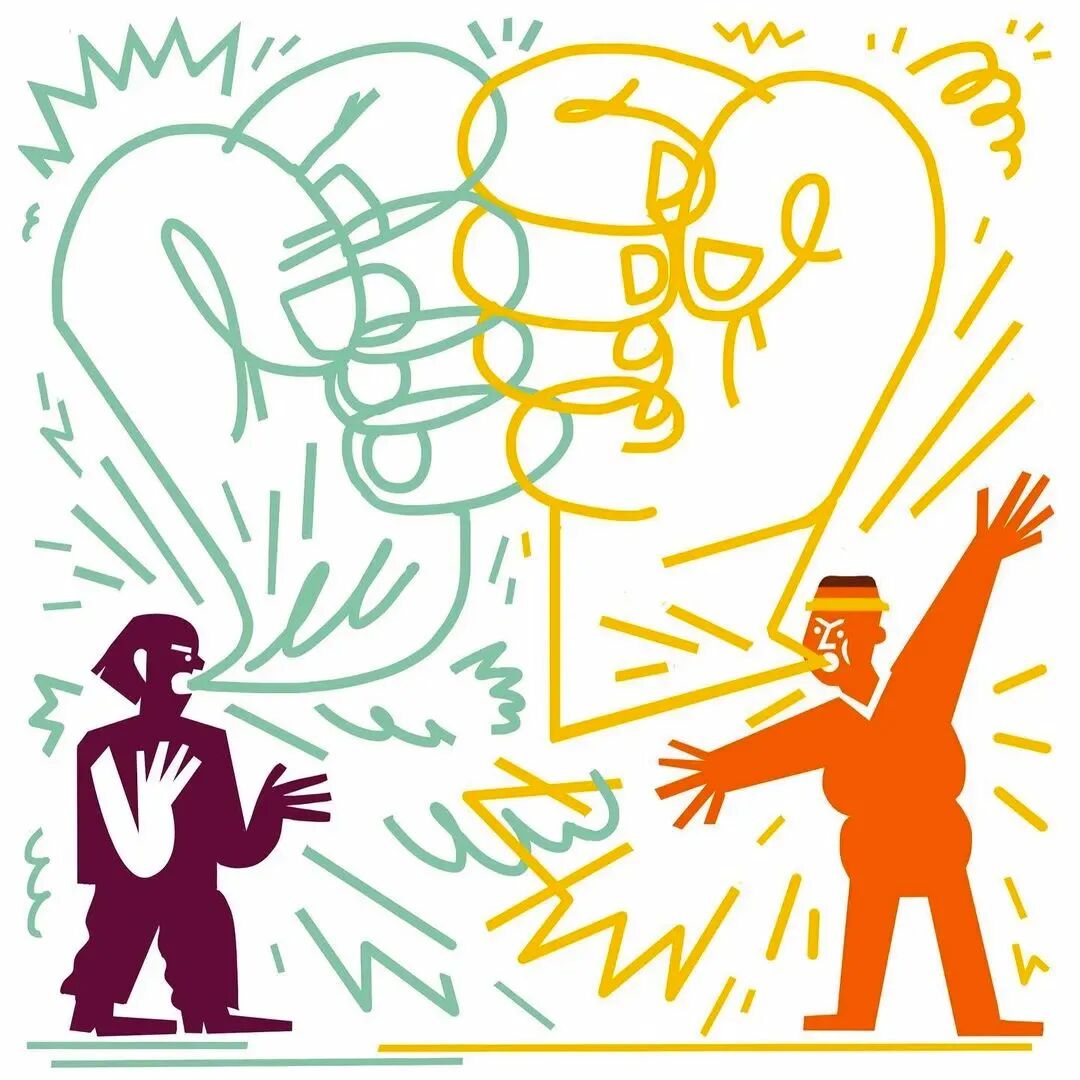
When do you feel the paralysis of expression?
Expression and communication are foundational skills for any entrepreneur — the ability to organize your thoughts logically, articulate them in clear and precise language, and transmit them to colleagues, users, and investors. For anyone, expression is also the bedrock of social connection.
Yet it seems more and more young people are becoming aware that they're experiencing a kind of expressive aphasia. Earlier, the term "ugly from exhaustion" (累丑) went viral on Weibo, generating 600 million views. As originally defined by the blogger, it described the withered, drained state of someone who's been pulling consecutive all-nighters, working at high intensity, without proper rest. But someone quickly punctured this neologism: "Looks like the average netizen's language skills have degraded to the point where they can't even type 'haggard' anymore." A China Youth Daily survey found that 76.5% of respondents admitted their vocabulary was becoming increasingly impoverished.
Today's article is about why the inability to express oneself has become a predicament for so many. It analyzes the causes, and offers some methods and tips for improving expressive ability at the end. We hope you find it enlightening :)
Why has the inability to express become a problem of our era?
The amount of reality that can be described in everyday language is shrinking. The pace of change in politics, economics, technology, business, and entertainment is impossible to keep up with. Anxiety and panic seem to chase modern people relentlessly: go half a day without checking the news and you feel left behind by the times; miss a day online and you might not understand what others are talking about; string together a sentence without a few buzzwords or memes and you seem to have lost the ability to speak.
The world changes so fast. Faced with a chaotic, complex world and powerless predicaments, old words can no longer describe our emotions.
Yet in the age of social media, we are extremely dependent on language to describe our lives. So the task of describing this new world has fallen heavily on fandom-culture "internet buzzwords" and knowledge-economy "business jargon" — wolf-like competitiveness, runways, leverage points, post-mortems.
One phenomenon is that these emerging "buzzwords" are iterating faster and faster, and increasingly reflecting the mood of the times.
Five years ago, phrases like "primordial power," "blue skinny mushroom" (a pun on "feel like crying"), "the boat of friendship capsizes at the slightest disagreement," and "at the drop of a hat" — which now seem like ancient relics — were mostly just childish wordplay.
But in 2020, terms like "involution," "foodie laborer," "wage slave," and "small-town exam ace" expressed the collective predicament of young people. These buzzwords carried clearer stances. Language moved from the sublime to the "sub-sub lime," conveying a new attitude among young people: compared to intellectuals, experts, or big-V influencers, people prefer to defensively label themselves as "leeks" (韭菜, chives — slang for gullible consumers) or "salted fish" (咸鱼, a resigned underachiever). Ordinary people can use these terms countless times to make sense of daily life, increasingly identifying with this position.
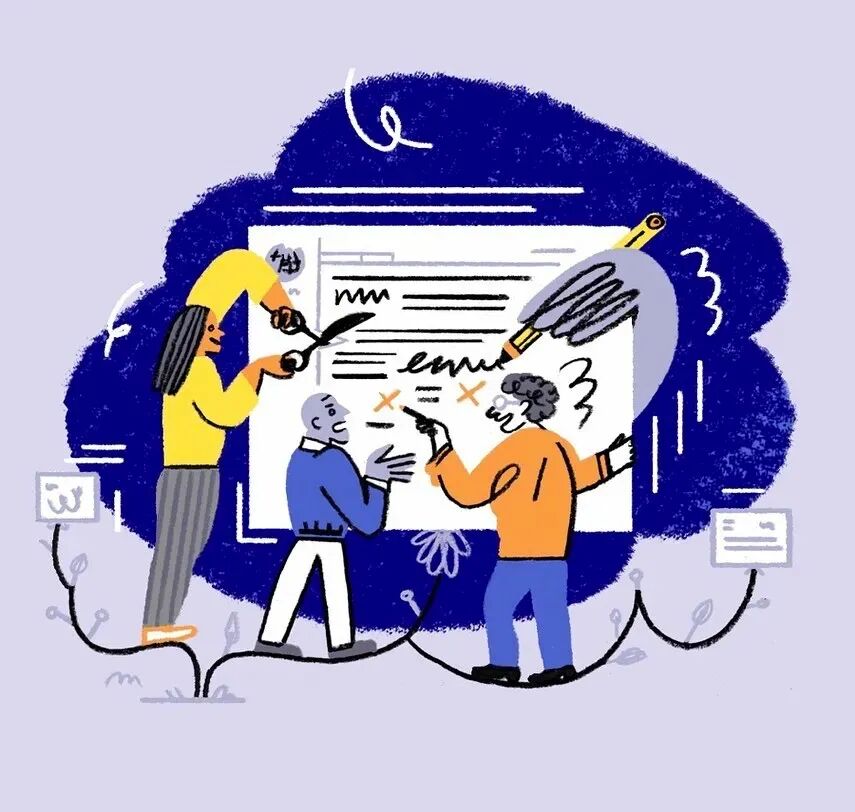
Another characteristic is that when a new buzzword spreads widely, it's often not to accurately describe our lives, but to "distinguish friend from foe." The purpose of these words is not to build meaning, but to oppose. Because understanding is difficult, they represent a swallowing-whole gesture toward complex ideas that are hard to grasp: I oppose.
Similarly, "involution," "wage slave," and "lying flat" express doubt, mockery, reflection, and resignation toward certain phenomena and values. Modern people readily adopt these buzzwords because they urgently need collective vocabulary to display their emotions and position, gathering like-minded people into an empathy alliance. But apart from getting rich overnight, most can't actually articulate what they want or how to solve it.
Terms like "little pink" (小粉红, nationalist netizens) and "杠精" (pedantic arguers) are also oppositional in this way. These words do increase efficiency. The problem is, language that rolls off the tongue crowds out the thinking process. We use it without accurate understanding, or let existing impressions reinforce themselves. In the end, the meaning of words becomes increasingly fuzzy. We're not quite sure what we're expressing anymore, yet we can no longer have pleasant discussions with people we've labeled with our own hands.
In the "post-truth" era, where truth and falsehood blur, the world grows more chaotic and turbulent. Critical rationality based on factual truth no longer serves as the foundation of an open society. We can hardly find any consensus; no value can persuade everyone. Unfamiliar issues and complex concepts impoverish public language.
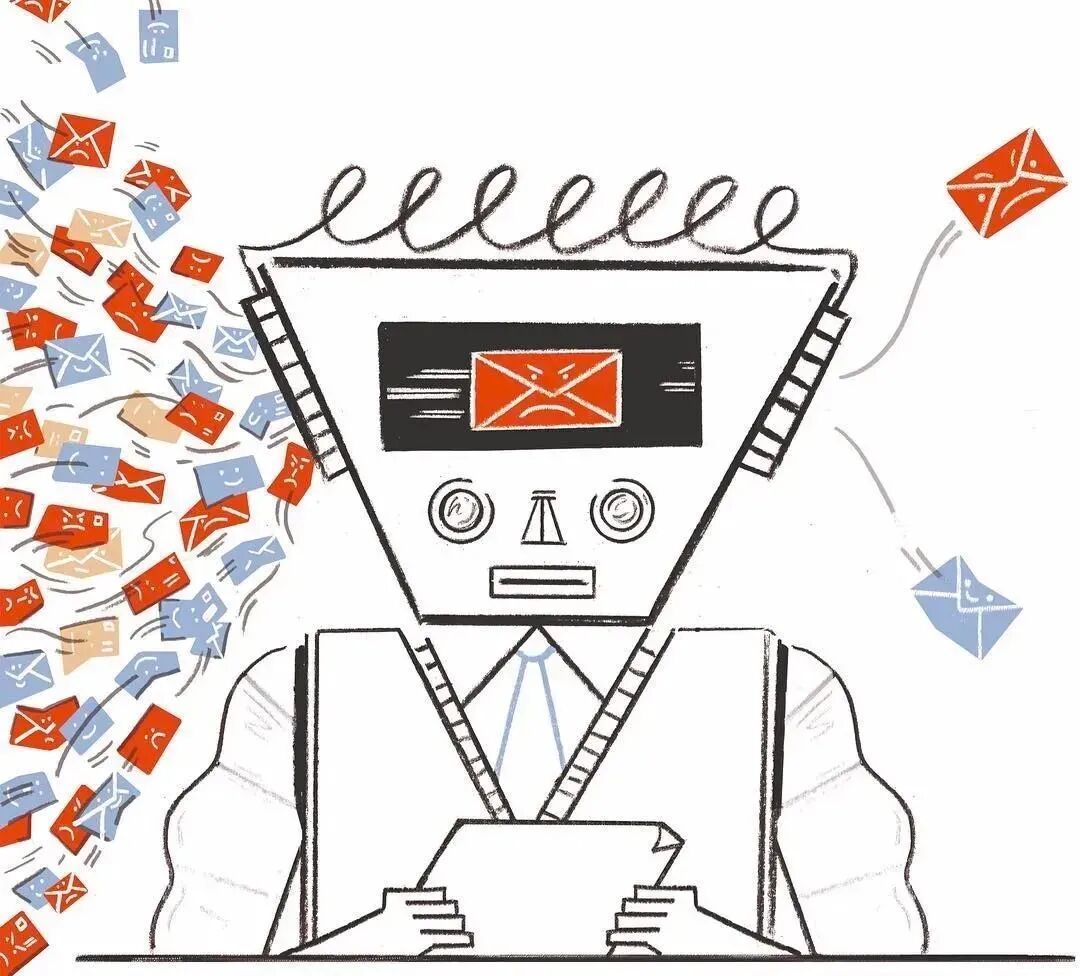
Why is extreme expression becoming more common?
Under the anxiety of "being abandoned by the times if you don't check your phone for a few hours," macro issues flood our conversations. Trump, Brexit, systemic predicaments — these supply endless topics for offices, break rooms, dining halls, and the internet. People speak with righteous indignation about international situations and systemic crises; reality elsewhere outweighs reality here and now. An increasing trend: people discourse fluently on grand propositions, yet fall silent about the real, immediate world around them.
On social media, controversy means heat. Moral and emotional slogans and catchphrases are optimally suited for virality. Encouraging and amplifying extreme expression has become a mechanism. A study in PNAS (Proceedings of the National Academy of Sciences) found that information with strong moral and emotional coloring spreads more easily on social media — each additional moral or emotional word in a tweet increases its probability of being retweeted by 20%.
The internet also has "Godwin's Law": in any argument, the probability of comparing one's opponent to a Nazi or Hitler approaches 100%. Reducing the other side to a stereotype turns people into binary diodes — right or wrong — with no patience for expression, skipping argumentation to slap on labels and deliver conclusions directly.
"Scumbag" and "green tea bitch" presume there's a standard template for intimate relationships, putting men and women who don't follow the mainstream in awkward positions. "PUA" casts a strange shadow over all criticism in workplace, romantic, and parent-child relationships. "Straight man" no longer refers simply to sexual orientation but has become almost an original sin. In public discourse, "pedantic arguer" seals off the space for opposition; public demands are crudely bundled with "populism"; under critical comments, retorts like "shill," "agenda-pushing," "biased," and "someone's triggered" are everywhere.
Perhaps the easiest opposition tactic in discussion is to knock someone down with a dirty word, then demand they prove their innocence. After that, no matter how they defend themselves, you simply emphasize "you have your story, I have my truth." This fills interactions between different temperature layers with exhaustion. The will to survive consumes some of the desire to express, so more people retreat from the internet to preserve peace, joining the silent majority.
Another manifestation of linguistic poverty is the inflation and devaluation of words. That is, in internet communication, because bodies are not present and we must rely on mediation, people find they need stronger, more intense words to express the same meaning. So language becomes increasingly exaggerated, and we ultimately lose nuance. Every good performance is "lit," every evenly matched competition is "gods fighting gods." Not only is being single a "critical hit," but gentleness, joy, and sweetness also constitute "critical hits."
Such expressive habits ultimately lead to mental laziness. George Orwell warned in 1984 that reducing vocabulary narrows the range of thought, eventually making it impossible for people to commit thoughtcrime — because there are no words to express it.
When everything worships efficiency, how does it make us worse at speaking?
Scholar Dai Jinhua believes that "today's leading science is statistics. You don't exist in a statistical sense, so you don't exist in a sociological sense — this is what's called the 'discarded population.'"
Literary critic George Steiner, in Language and Silence, traces the origins of the modern language crisis: before the 17th century, the language of knowledge was always descriptive. But after the rapid progress of natural science, sociology, history, economics — nearly every discipline — picked up mathematical habits. Words were replaced by statistical tables, curves, and graphs. Where words had to be used, terminology from the exact sciences was borrowed.
Mathematics freed itself from the shackles of language. Philosopher George Santayana wryly compared mathematics to a purely suspended game of manipulating hypotheses in the kingdom of essence. But outside natural science, language has now also become a suspended game. Knowledge has detached from public experience, no longer seeking truth but engaging in mutual combat between logics and languages. Language has become a prop in this intellectual competition. Real experience and language have split into two different systems.
For example, after experiencing the thrill of taking sides on the internet, we've grown increasingly adept at categorizing people. Over time, this becomes "finding scenarios to use a buzzword, rather than finding the right word for the scenario." As psychology says: we easily confuse truth with familiarity — the more we use something, the more we mistake opinion for fact.
This validates what George Steiner said: "Language is no longer experienced, language is merely spoken." On one side, incomprehensible disciplinary jargon; on the other, language as social currency, as a tool for advancement and examination. Literature, history, and philosophy are deemed inefficient.
Today, we remain fond of speaking in a pseudo-mathematical spirit, especially a statistical spirit — for instance, equating statistical results with truth.
Then we quantify ourselves in every domain: time is money; achievement becomes monthly income; drinking 8 glasses of water and walking 8,000 steps equals health; mastering ten knowledge points in ten minutes prevents anxiety. Rankings demand top 2 placement; everything we watch, eat, read, and listen to is determined by algorithms/rankings. How important something is depends on traffic; truth is stacked charts and numbers. A book or film being "engrossing" or "captivating" is replaced by "4 stars" or "rating 9.1." Credit links to purchasing power; honesty, courage, and kindness yield to looks, height, income, and property. Being in good shape means wearing a certain brand in a certain size with room to spare. Ability becomes quantified IQ, EQ, and AQ according to some framework. Self-introductions declare oneself as INFP / ESTJ.
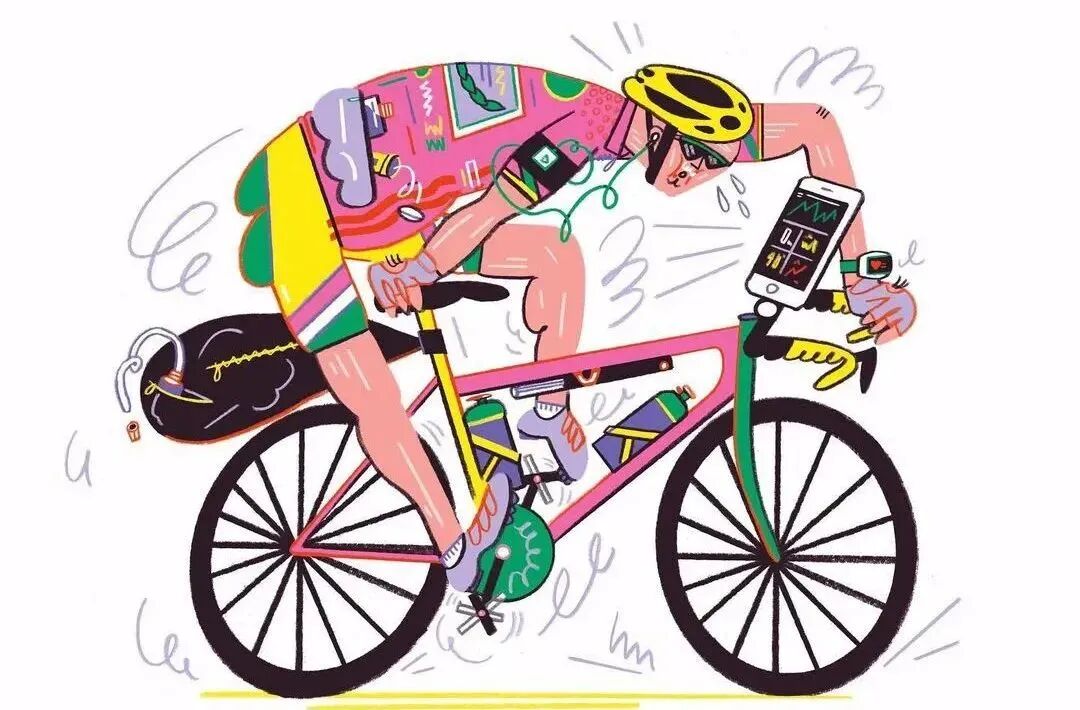
We also live in an era especially dependent on collective rationality. Everything requires guides and strategies — from dining and travel, to school and job applications, to watching movies and playing games, to checking daily trending topics. When something happens, consult search engines and social media. Align views with opinion leaders. Express emotions through forwarding and quoting. Accumulate secondhand discourse through secondhand experience. Everyone's way of living and expressing differs little.
People simultaneously want to be themselves and express their true selves, yet worry about excessive self-exposure. At such times, adopting a standardized mode of expression is safe. Especially since "coping studies" (糊弄学) has distilled reply templates, fandom abbreviations save time and effort, and emojis provide a buffet of meaning-rich expression. A cat face can substitute for complex human expressions, gestures, and text, doing our emotional labor for us. Ambiguous language, catchphrases, and carefully polished emojis bring efficiency and new modes of communication. Fresh expression has paradoxically become a signal of "I value you enough."
Or, simply use "like," "love," and "rating" to mark "I was here."
This is what The Plague describes: prisoners unable to find true language of the soul, with no choice but to express visceral pain through clichés, in order to elicit sympathy from spectators and interest from listeners.
When large quantities of such expression repeat endlessly, linguistic meaning is diluted, sentence meaning becomes fixed. This leads to situations like "not knowing how to express wanting your girlfriend to drink more hot water," "others think it's a routine move when it's actually genuine feeling," and "yet it's embarrassing to post true feelings on Moments." Insincerity, hesitation, ambiguity, and failure to convey intended meaning — young people's expression faces numerous crises, breeding linguistic corruption.
Thus even within the same language, translation is often needed: they said A, so what they actually meant by B is what? To express "thanks," we say "crab crab" (蟹蟹, a pun) with a [bowing emoji].
So, what to do?
The question is: if linguistic expression remains our primary way of "knowing the world," how can we avoid being obscured by buzzwords full of positions and emotions? How can we more accurately and diversely increase our understanding of the world through language? How can we improve our expressive ability?
Honestly, we also think this section repeats common knowledge, and your language teacher probably nagged you about it in school. But basically, these are the principles:
1. Discover your word "allergies." Language is a form of identity; there are always words that trigger allergic reactions. Some authors are strict about language. For example, an article in the cultural magazine Aeon called for abolishing the word "interesting." The article argues this judgment is hasty and subjective, and leads to a value where novelty trumps seriousness, and boring truth loses to glossy lies.
2. If you couldn't use the "so X" construction, how would you express it? Adjectives are shortcuts in language. Saying the weather is "good" means you don't have to figure out how to describe the sky, clouds, and light. Similarly, "the movie was so good," "today was so happy," and "that person is so amazing" are all forms of laziness.
3. Learn some foreign or dialect expressions. The strangeness of foreign languages can aid rational thinking and stimulate expression. For those "word deserters" that everyone knows but that don't exist and therefore can't be spoken, Steven Pinker gives examples in The Stuff of Thought:
Elbonics: the act of two people maneuvering for one armrest in a movie theater. Shoeburyness: the vague uncomfortable feeling of sitting in a seat still warm from someone else's body. Furbling: the zigzagging walk through empty roped-off mazes at airports or banks. Sarchasm: the gulf between the author of sarcastic wit and the reader who doesn't get it. Dopeler effect: the tendency of stupid ideas to seem smarter when they come at you rapidly.
4. But also practice your native language. Many references are available. Yu Guangzhong's How to Improve British-Style Chinese and Chan Wan's Chinese Detox rescue poisoned Chinese. For example, English uses nouns as subjects, while Chinese uses an event/a short phrase.
5. Read some poetry, or even write it, or try nonsensical collage poetry. Collect fragments from newspapers, book pages, or phone screens; paste them together randomly or deliberately, and see what you create. It can help you break out of daily language habits and discover the possibilities of language.
6. Read difficult things. The purpose of algorithmic recommendations is to keep you hooked, letting you lie in the comfort zone of language. A University of London survey of 9,400 people found that reading difficult literary fiction and broadsheet serious newspapers in adulthood increases vocabulary. Nabokov's Favorite Word Is Mauve reveals the trend of bestsellers using increasingly simple vocabulary, but the author also found that the reading difficulty of serious literature has remained basically unchanged over half a century.
7. Process buzzwords. You tell me — does "hahahahaha — I'm laughing until the rooster crows" count as a xiehouyu (a two-part allegorical saying)?
8. Translate buzzwords. What does "white moonlight" (白月光) mean?
9. Narrate yourself. Anthropologist Xiang Biao found that most young people can't clearly explain things about their own class or school — how the system operates, power structures, dominant ideologies, each person's motivations and categorizations. "But this is actually very important training. Everyone must develop interest in the small world of their own life, consciously use their own language to narrate their own life, become an independent narrator — no analysis needed, just narration."
10. Describe giraffes, starry skies, and other things. This was writer Italo Calvino's method. He said he completed these exercises "like a middle school student." The method looks clumsy, but he learned it from other poets, and these materials eventually became his book Mr. Palomar.





5Y Capital, currently managing approximately three billion dollars in dual-currency USD and RMB funds. We believe that if the crazy you in others' eyes begins to be believed in, the world will be a better place.
BEIJING · SHANGHAI · SHENZHEN · HONG KONG