How to Build AI-Native Products? Their Entrepreneurial Thinking | 5Y Capital Tavern Vol. 14

Passion without boundaries, a belief in technology.

Notes from the 5Y Tavern
Since ChatGPT's debut last year, the AI space has ignited a new wave of enthusiasm. For founders, the past year has been one of profound transformation. The age of AI exploration promises new possibilities, but also brings greater uncertainty. How do you identify AI Native products? How do you build teams for AI products? How do you balance the long-term nature of research against a rapidly shifting market?
Today marks ChatGPT's one-year anniversary, and this edition of the 5Y Tavern brings together several entrepreneurs who have been exploring AI for years to share their experiences and reflections. They offer observations on AI Native products and insights on team-building. We've excerpted some highlights — hope they spark something for you :)
This episode's guests:
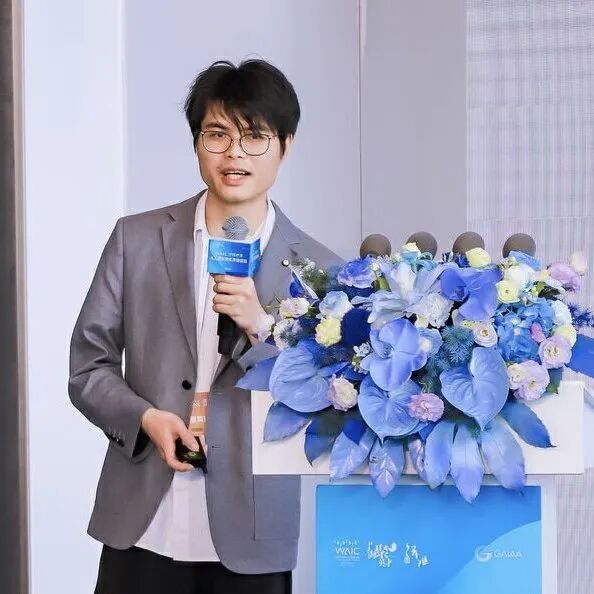
Guohao Li
Camel-AI.org
Founder

Jianren Li
Huanying Tech
Founder

Yifan Gao
Chuanfu Tech
Founder
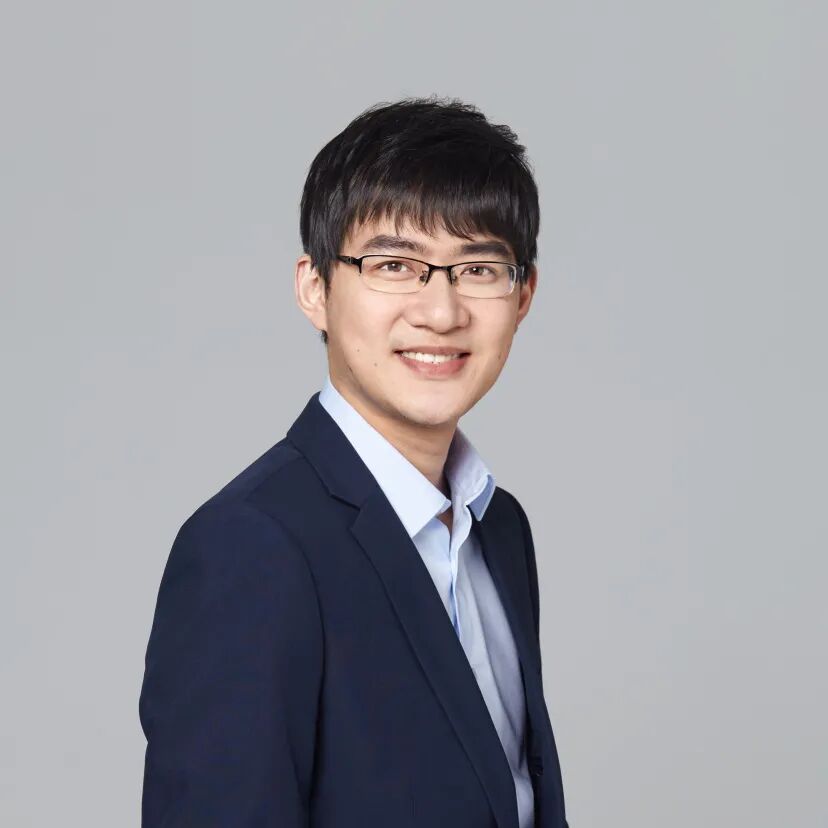
Xingyuan Yuan
Caiyun Tech
Founder
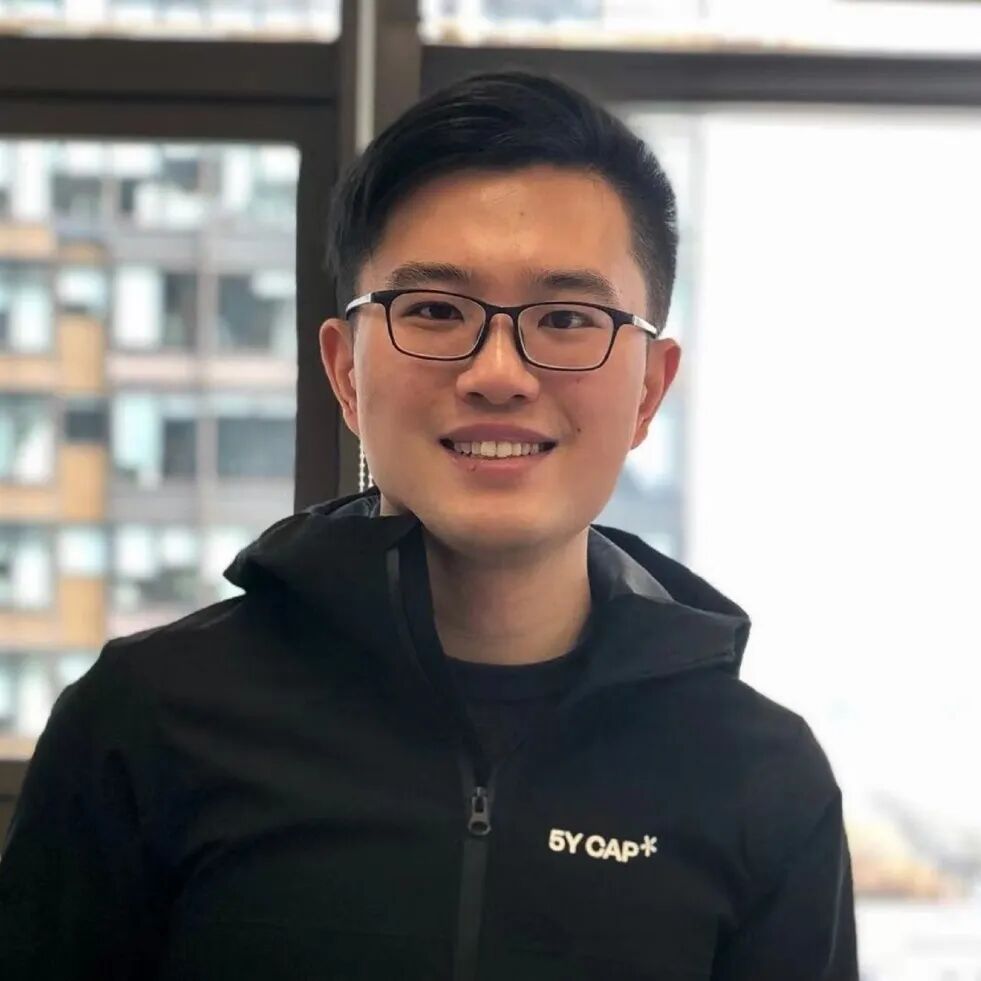
Yunfeng Shi
5Y Capital
Yunfeng Shi: Let's start with introductions.
Xingyuan Yuan: I'm Xingyuan Yuan, CEO of Caiyun Tech. Our earliest product was Caiyun Weather. After 2017, we moved into text and natural language processing applications, including Caiyun Translator and Caiyun Xiaomeng. We've gained some expertise in story creation and dialogue, with several million users generating hundreds of millions of characters of fiction and tens of millions of conversation rounds daily.
Jianren Li: I'm Jianren Li. My company is Huanying Tech, and we're building an AI-based anime romance game. "Huan" means illusion — we're making a product that lets people dream. "Ying" is for cherry blossom, because our team has six Wuhan University alumni who've known each other for over ten years.
Yifan Gao: Hi everyone, I'm Yifan Gao from Chuanfu Tech. We're building a product based on diffusion models.
Guohao Li: I'm Guohao Li. Strictly speaking, we're not quite a company yet — we're Camel-AI.org, an open-source community. We believe open source matters enormously, especially in the direction of large language model agents. We want to build frameworks that help people develop products and technology. The name "camel" comes from my PhD in Saudi Arabia — a little Middle Eastern flavor.
What Is an AI Native Product?
Yunfeng Shi: You've all been exploring AI for a very long time. Now that AI technology has achieved clear breakthroughs, many people are wondering what an AI Native product looks like in this era. What's your take — what are the core elements of an AI Native product today?
Xingyuan Yuan: An investor once said there's a simple test for whether something's an AI product: look at your GPU usage. I think that makes a lot of sense. What it really measures is compute power — whether your product can handle complex problems and information. Higher information processing capability means it's more AI-like.
With a product like ChatGPT, you can clearly feel it's processing problems at the complexity level of a college entrance exam student or an undergraduate. Behind every question you ask, there's a compute cluster doing the work. So whether your app demonstrates that every command is backed by sufficient compute to handle complex logic — logic that might take an undergraduate several minutes to work through — that's an important criterion for judging how AI Native a product is.
Jianren Li: People used to discuss how to evaluate products from the mobile internet wave. Mobile or smartphones were means to solve problems. AI is the same today — it's also a means to solve problems. I think defining the problem matters more than solving it.
We define problems constantly, breaking open-ended problems down into finer open-ended ones until they become closed-ended problems that can be solved technically. That's what we do as founders. But the process of defining problems has an origin — where the dream begins. In the PC era, Jack Ma said "make it easy to do business anywhere." The world is infinitely complex, with endless problems to solve and intricate systems to design. But once you define the business model as "make it easy to do business anywhere," everything downstream can be progressively defined and solved, and the system becomes tractable. Yiming Zhang said "information creates value." Hua Su said "Kuaishou is a mirror reflecting real life." These were the previous generation's definitions of their core problems. In summary, they reduced information asymmetry along some dimension to improve some utility in real life. Of course, mobile wasn't only about eliminating information asymmetry — there were also tools, productivity apps, and other applications.
AI Native apps have many categories too. I notice we all share something in common: we're all making products that let people dream. There's a pre-AI category worth referencing: games. Take The Legend of Zelda — the dream-maker is Shigeru Miyamoto, perhaps the world's greatest game designer. Before making Zelda, he had a simple formulation of the problem he wanted to solve. He always remembered exploring caves as a child, that feeling of venturing deeper into the darkness bit by bit, and he wanted to recreate that sensation somehow.
Miyamoto wasn't just a game creator but also a talent scout. Through investment and incubation, he supported another young man much like himself. This young man loved catching insects in the fields as a child, then raising them at home to battle his friends' insects. He wanted to make a game that recreated this cricket-fighting feeling. That young man later created the world's biggest IP: Pokémon.
"Make it easy to do business anywhere" and "I want to make a product that recreates cricket-fighting" — these are very different starting points. If we go further in defining the dream-making products we're creating today, I'd say it's using some means of simulating reality to recreate certain human sensations.
Today through AI, we're essentially simulating a person's dream, or even simulating a living person or creature, or simulating an event with many living things. With newer technology we can create new simulations, and imagine what human sensations we might satisfy.
Returning to games: those who know gaming history may know a milestone work from 1992 called Wolfenstein 3D. Its core technical lead was John Carmack, an extraordinarily skilled programmer. He developed humanity's first relatively mature 3D physics engine. By describing physical rules in computer language, he created a means to simulate how objects behave in the physical world, and from that made the game.
That was 30 years ago. What are we fundamentally doing today? For example, when we use AI or agent methods to make robots — robots fundamentally have no life, but we simulate the feeling that they do. Today through existing games and simulation methods, we can let humans have better dreams. That's what excites me and feels infinitely imaginative.
One final tangent — an interesting observation. I love a book by Schrödinger called What Is Life? It essentially argues that life is essentially advanced physical movement aimed at reducing entropy. By his definition, we can seemingly connect tools like agents with game engines: game engines simulate relatively lower-level, simpler physical processes, while what we're doing today — to put it dramatically — is building a life engine. It transcends basic physical rules, using probability to attempt simulating and recreating something that feels alive. I think this may be, 30 years later, our inheritance of the spirit and will of those earlier dream-making entrepreneurs.
Yunfeng Shi: Excellently said. Raven, you must have some thoughts on this dream-making idea too.
Yifan Gao: In my view, there are essentially two types of companies leveraging AI technology. The first type could be called GPT wrappers — basically building a UI layer around OpenAI's technology or perhaps another provider's, like Anthropic. In this case, you need to decompose user needs into two parts: the first part solved through an efficient UI layer, the second part outsourced to GPT-4 or GPT-3.5.
The second type could be called truly AI Native companies. The key difference is that while the second type also decomposes user needs into two parts and solves the first through a UI layer — so it can be a product and raise funding — they can incorporate some user needs into the process of training their machine learning models. In this case, you can actually solve user needs by training the model and combining these two elements together. I think this is what AI Native products are.
Yunfeng Shi: Guohao is building a framework for multi-agent interaction systems, so you may have some unique perspectives.
Guohao Li: The previous speakers were excellent — they're all seniors with product experience. This question may be less friendly to me since we haven't built a product yet, so I can only speak from what I've observed. First, what is an AI Native product? There are two keywords. The first is "product": if a product ceases to be a product when you remove AI, then it's likely AI Native. Kuaishou without AI is still a product, but ChatGPT without AI isn't — that might be one test.
The other keyword is AI — artificial intelligence. If we want to see how AI a product is, perhaps we can look at how much human effort it requires. The less human effort needed to accomplish something, the more it's an AI product. Many previous AI products required lots of human effort — if you didn't understand programming and principles, they were hard to use. But ChatGPT is arguably the first truly successful AI product because it made interaction so simple: you just need to understand language to use it and derive value from it. I think that's a good AI Native product.
Boundaries, Passion, Conviction
Yunfeng Shi: Creating a good product also requires a good team. What team configuration do you think is ideally suited to building a good AI product?
Xingyuan Yuan: As Raven (Yifan Gao) mentioned, there are two types of companies: those that self-develop models and those that wrap. Self-developing models requires an algorithm team. But whether self-developing or wrapping, you need what's now popularly called a prompt engineer. I think people are still quite resistant to this — many say publishing papers through a bunch of prompts is low-skill. But in fact, something as famous as chain of thought — it's just adding one sentence after every question, and it changed the world: "let's think step by step."
So prompts are the magicians connecting models and users. You need someone who can do prompt optimization as a product manager, who knows how to deliver intelligence to users. Of course, it's not 100% AI — there's some user intelligence in the middle, and some prompt engineer intelligence. For us doing literary creation, ideally this person is someone who does literary creation themselves, who has aesthetic sense and also knows how to use AI. This person is extremely scarce. Can you transform GPT's stiff text generation engine into something rich, vivid, with dramatic twists? If you have good prompts plus some fine-tuning, you can do it. I think this is something people may be overlooking.
Yunfeng Shi: Alex (Jianren Li), what do you think are the core traits of excellent AI teams in this era?
Jianren Li: Team configurations differ greatly by direction, but there are still some commonalities. Before starting up, I worked at ByteDance for about a year and a half and learned a lot. I joined at an interesting time — the core algorithm engineers at ByteDance numbered just over ten, but you could clearly see that the systems these ten-odd people built in 2017 weren't fundamentally different in core performance from what they built six years later. These people had two major traits. First, in Yiming Zhang's words: excellent young people don't set boundaries on what they do. They could simultaneously work across many domains — writing algorithms, doing model training, system architecture, even participating in product strategy decisions. They operated in a cross-disciplinary state. One engineer could handle many things simultaneously, keeping everything in their head to think about together and let chemical reactions happen.
The second is passion. A counterintuitive point: many of ByteDance's algorithm engineers didn't really know machine learning when they joined. They basically learned it on the job. But they were all exceptionally good at coding — they had outstanding strength in writing code. Many engineers who made major contributions came from open-source communities. Open-source communities are quite interesting: if you worked on open-source in college, writing code and building systems without expecting returns, that shows real passion. I often feel passion is the most important talent, and it's critical for building China's top large-scale machine learning training systems. Strong comprehensive ability, no boundaries on what you do, and passion for coding — these are the core keywords I've observed.
From the perspective of the work itself, content products differ greatly from autonomous driving or social products. The latter two have relatively decoupled technology and product, while for a content product, AI technology, system architecture, and product are highly coupled. This also requires compound talent — as Xingyuan just said, someone who understands both algorithms and literary creation. This is what we've discovered in our AI exploration.
Yunfeng Shi: Raven has many ideas and theories on team organization. What do you think an AI Native team should look like?
Yifan Gao: One important point is that you need two teams with different styles and rhythms. The first is the product engineering team — no different from mobile internet companies. You basically ship something, collect user feedback, iterate based on feedback. You just need to iterate fast enough to collect abundant signals from the market and refine your product.
The second team is somewhat different. If you were in a traditional academic institution or just an AI research company, research culture would dominate and you could do long-cycle research — half a year or more. But for a startup, you must align with the product engineering team's rhythm, and this is the hardest part. Because a startup's funding cycle might be 18 to 24 months — you can't really do a year of research, have a breakthrough when the world has already changed, or only realize at the end that it doesn't work. That cost is unbearable for startups.
What's important is having an AI product manager role as a bridge between the product engineering team and the AI research team. The AI product manager needs to know exactly how to seize market opportunities, how to enter the market and launch products. But at the same time, they also have awareness of pushing research boundaries forward. So they won't tell the research team "give me something in two weeks" — that's clearly not feasible — but they'll push the research team to deliver something useful to the product engineering team within three months, half a year, while also persuading the product engineering team to build something and wait for the research team.
Balancing these two team cultures matters because for product engineering, the dominant culture is product culture — you need to learn things very quickly. For research teams, you need patience to wait for research to complete, and you must be very careful about rapidly shipped products. These are two contradictory cultures. The AI product manager is the person who connects these two different cultures and resolves conflicts between the two teams. I think this is the most important part of building an AI team.
Yunfeng Shi: Guohao has been an important contributor to open-source AI projects in neural networks and large language models, and has done much influential AI research work. If you were to build an open-source AI company, what makes a good team?
Guohao Li: This is something I've been thinking about constantly, since I don't have a team yet. What makes a good AI team? My understanding: first, learning ability under fast-paced conditions. Because AI moves extremely fast — whether you're in technology, product, or operations, you need to absorb massive amounts of new information daily and convert that into company value. So strong learning ability is the first requirement for a good AI team.
Second, I think you need conviction. Doing AI research brings joy, but frankly not many AI companies are actually making money yet. If you're really building a company, you have to think about profitability, about whether people will actually use your product — so conviction becomes crucial. Because you're doing something with extremely high uncertainty; no one sees the finish line, or even sees much beyond the starting line. So I think conviction is the most fundamental driving force.
Third is having a strong enough heart to tolerate uncertainty. AI has gone through several ups and downs in history. Before neural networks exploded, people working on neural networks were considered frauds. We people working on AI might well be considered frauds a few years from now — we'll definitely take some hits. Being able to withstand this uncertainty and persist until success — these may be the traits a team needs. I also hope to find like-minded friends to join our team.
Comment & Win
What do you think makes an AI Native product? How do you build an AI team? Share your thoughts in the comments — we'll select 2 featured comments to receive 5Y Coffee.




5Y Capital seeks out, supports, and inspires lonely entrepreneurs, providing support from spirit to all operational matters. We believe that if the crazy you in others' eyes begins to be believed in, the world will become a different place.
BEIJING · SHANGHAI · SHENZHEN · HONG KONG