Great CEOs Are Great HR: How Elon Musk Assembled a Team of Geniuses | 5Y View

To build a startup, you have to move heaven and earth to find the most talented people.

Haichuan Hu
Senior Investment Manager, 5Y Capital
Today's article reveals Elon Musk's secret recruiting techniques.
From payments to energy to aerospace, few have built companies across so many fields and reached the pinnacle in each. Behind this extraordinary track record, beyond first-principles thinking and exceptional learning ability, lies his knack for attracting brilliant colleagues and pushing their talents to the limit.
Finding people, finding capital, and finding direction are the three core tasks of any founder. A great CEO is typically the company's chief HR officer. Let's see how Musk takes that role to the extreme.
Source: Caijing Zibenbang Author: Jiang Xiaoting
As the real-world template for Tony Stark, the "Iron Man" of the Marvel universe, Musk revolutionized internet payments and rewrote the history of commercial spaceflight and automotive development — all backed by his own "Avengers" team.
The PayPal founding team was Silicon Valley's "Whampoa Military Academy." It produced the founders of YouTube, LinkedIn, and Yelp, as well as top-tier tech investors like Reid Hoffman. The PayPal Mafia, composed of former PayPal employees, was long considered Silicon Valley's ruling class.
"When starting a company, you must do everything possible to find the most talented people," Musk believes. The best employees need two qualities: not just outstanding talent, but also a track record of exceptional achievement in their careers.
He has a mature recruiting methodology. "I ask candidates to describe the toughest problems they've handled in their careers, how they handled them, and how they made decisions at critical junctures." Musk digs deep into the details of how they solved problems, watching whether they can actually answer.
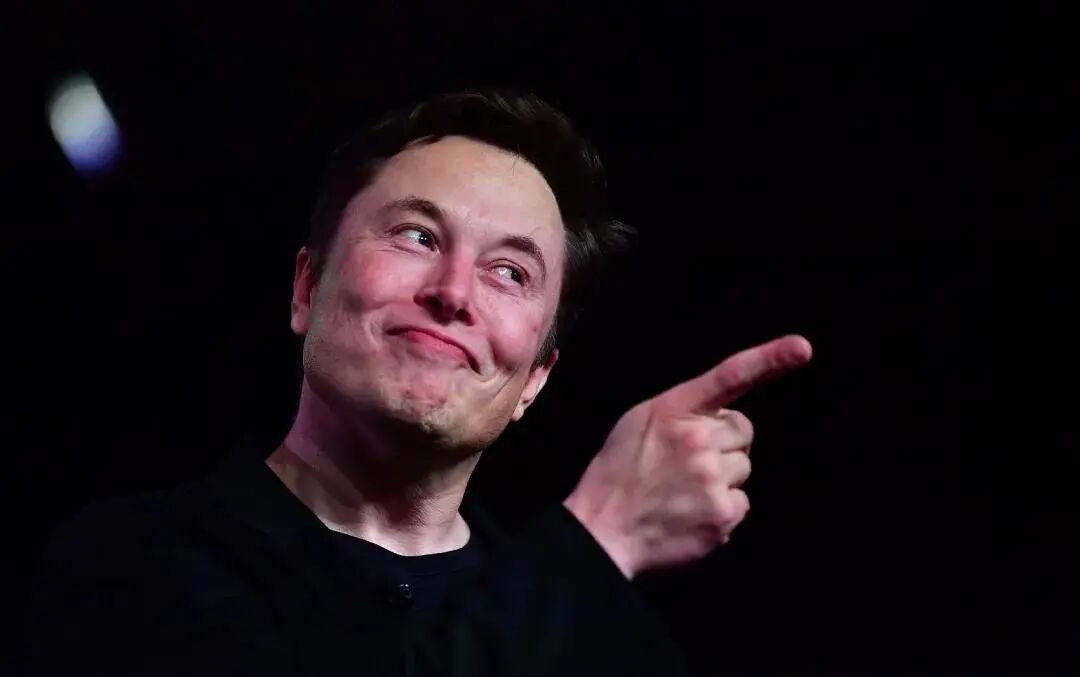
Elon Musk
Across Chinese and foreign entrepreneurs, every seasoned CEO seems to be an excellent HR officer. Hua Su pursued one engineer for six years. During Xiaomi's first year, Lei Jun spent 80% of his time on recruiting, talking with the same person more than ten times over two months, with some conversations lasting ten hours. Yiming Zhang was known as ByteDance's first HR officer, personally interviewing the company's first 100 employees and even screening receptionist candidates. To win over Sina VP Zhao Tian, he spent months meeting for coffee three times; for weeks on end, he met with the same candidate...
Musk's magic lies in his ability, behind his string of entrepreneurial victories, to consistently find brilliant colleagues and maximize their abilities.
Musk has repeatedly emphasized that he doesn't care about degrees, only capability; yet in practice, he honestly only recruits the elite among elites.
Most SpaceX engineers are top students from elite universities. The first 1,000 employees, including security guards, were personally interviewed by Musk. Tesla now receives nearly a million resumes annually, with an acceptance rate below 0.5% — far lower than many Ivy League schools' admission rates. And since its founding, every single hire has been personally approved by Musk.
According to employer branding specialist Universum's 2020 ranking of most attractive employers for American students, Musk's Tesla and SpaceX ranked first and second among engineering students for two consecutive years. Even among computer science and business students, Tesla placed in the top ten, far ahead of other automakers like BMW (51st), Daimler (65th), Toyota (80th), and General Electric (95th).
Perhaps HR professionals worldwide should take notes from Musk.
01
"First-principles thinking" is Musk's go-to theory — approaching problems from a physics perspective, stripping away surface layers to see the underlying essence, then building back up from that foundation.
In talent recruiting, Musk follows the same first-principles approach: the right professionals for the right jobs. In a 2017 Glassdoor interview, Musk repeatedly stressed the importance of HR: hire excellent employees, because hiring the wrong people creates significant problems for the company.
In 1995, when Zip2 was founded, Musk was just a grassroots entrepreneur with no money or reputation. He showered at the YMCA, ate fast food four times a day, and slept on a mattress on the floor of an unfurnished apartment.
Yet he spared no expense for recruiting. He offered free housing and free transportation — a beat-up BMW 320i — to convince a young engineer to intern. To build a sales team, he bought ads on TV and in newspapers, though the investment only bought a tiny string of text at the bottom of the screen or a small classified ad. The team he assembled was mostly inexperienced with the internet.
After two startups made him worth hundreds of millions, to fulfill his childhood space dream, Musk had only one requirement for talent: not just better, but the best.
To access aerospace's top talent, Musk moved to Los Angeles — a city that had been the backbone of America's space industry since the 1920s, home to Howard Hughes, the U.S. Air Force, NASA, Boeing, and space enthusiast organizations, with the richest aerospace culture in the nation.
Musk then infiltrated the "Mars Society," a group of amateur rocket enthusiasts. This seemingly small social circle included industry engineers, space enthusiasts, director James Cameron (of Titanic and Avatar fame), and NASA scientists.
With the Mars Society as his foothold, Musk donated $5,000 upon joining and $100,000 to join the board. Once he became a prominent figure, Musk kept his interview radar constantly active.
While showing his wife Justine around a member's workshop to see rocket construction, he spotted a tall, thin man carrying an 80-pound rocket thruster and immediately interviewed him on the spot about whether he'd built larger equipment, not missing a single detail. Hours later, Musk had secured SpaceX's first engineer. This man, who had positions available at TRW — an established American aerospace giant — and other major space companies, chose the unthinkable Option C: joining Musk's team from scratch.
By June 2002, when SpaceX was founded, the startup team was an all-star roster including national space agency scientists and executives from Boeing, JPL, and other commercial space companies: Chris Thompson, Boeing's VP of operations who had managed production of Delta and Titan rockets; Tim Buzza, Boeing's top rocket test expert; and Steve Johnson, a senior mechanical engineer at JPL...
To recruit VP Jim Cantrell — a rocket scientist who had worked at NASA's Jet Propulsion Laboratory and been deeply involved in Mars balloon missions with the French space agency and the former Soviet Union — Musk's overly enthusiastic approach was initially seen as a scam. He cut short his self-introduction on the first call to rush for a meeting: "I have to talk to you, I'm a billionaire, I want to execute a space program."
Once he sets his sights on someone, Musk doesn't mind paying extra. At an aerospace conference, he spotted engineer Gaddard, whose academic work was partially sponsored by defense contractor Northrop Grumman — a costly sponsorship to break. Musk offered to repay it. Gaddard, within six months of joining, developed an automated valve testing system from scratch, fulfilling Musk's expectations by completing a creative feat no aerospace engineer had accomplished, immediately establishing his credibility.
Beyond recruiting industry veterans, Musk also systematically targets rising talent.
SpaceX's ordinary engineers include top students from elite universities. Musk personally visits university aerospace departments to find the best-performing students, or calls teaching assistants to ask: which graduate students or PhDs are hardworking, smart, and unmarried — then immediately calls their dorms to invite them for interviews. If the conversation goes well, these students receive job offers the next day.
With Musk's methodology leading the way, SpaceX's HR team deploys creative recruiting tactics. Some search academic papers to find targets, calling labs to reach researchers, or poaching engineering talent from campuses. Others act like spies,埋伏 at industry conferences and seminars, secretly handing invitation envelopes to target candidates, then interviewing at nearby bars or restaurants.
Tesla's internal operations are no different. Musk often holds standing meetings with Tesla's HR team — improving efficiency while silently sounding the drumbeat of urgency: faster, get out of this meeting and go recruit.
02
Tracing first-principles thinking to its conclusion, the essence of talent recruiting is problem-solving — being results-oriented.
As a跨界 entrepreneur who transformed from internet upstart to founder of two high-barrier manufacturing industries, Musk's methodology seeks compound talent for his companies: people with achievements in specific fields who can also integrate knowledge across domains. He hires employees with deep industry expertise alongside innovative thinking — able to break from traditional frameworks, think boldly, and develop products from fresh perspectives.
SpaceX's employee roster is remarkably diverse: veteran aerospace experts, recent graduates, U.S. military personnel, and automotive industry professionals. A mechanical welder might be a rapper on the side; an aerospace engineer might also be a craftsman.
Many Tesla executives lack automotive backgrounds, with most coming from major internet companies like Apple and Google. In 2015, when Musk personally interviewed Tesla's Autopilot software team, his core requirement was top software engineers proficient in programming and AI — automotive industry experience not required.
The classic case was poaching Apple VP George Blankenship as Tesla's global VP to oversee sales and experience, creating Tesla's retail experience stores. Though George knew nothing about vehicle manufacturing and had never sold cars, his nearly 30 years of retail experience in clothing and phones launched Tesla's experiential sales approach, later shifting online in 2019.
George once praised Musk for "letting experts in various fields perform at their best without excessive oversight."
Being results-oriented, for employees who don't meet performance standards, Musk cuts losses fastest: "If you want to fire someone, you should do it immediately, otherwise you're just wasting each other's time." This has made him synonymous with being cold and unfeeling.
In this regard, George unfortunately became a case study. Due to low conversion rates at experience stores and inability to boost Tesla's sales, George left Tesla in under three years. During the same period, multiple underperforming senior leaders also departed.
Inside Tesla, presentations cannot be ambiguous — if you can't answer, you might be fired the next second. Marketing staff with grammar errors in emails are asked to leave. Dissatisfied with factory progress, he once fired hundreds of employees including engineers, managers, and manufacturing workers. His longtime right-hand Mary Brown was dismissed after decades of service when she asked for executive-level compensation.
Though Tesla employees work 90-hour weeks, over 12 hours daily, LinkedIn data shows Tesla's average employee tenure is 2.1 years — low compared to Apple and other tech companies.
Yet few blame Musk for this, at least not current employees. With SpaceX and Tesla making history, when Musk appears at Tesla's quarterly all-hands meetings, employees spontaneously erupt in applause. According to Ashlee Vance's Elon Musk: Tesla, SpaceX, and the Quest for a Fantastic Future, nearly everyone, including fired employees, worships Musk deep down. They sincerely acknowledge that working with Musk is a journey of "pain and joy."
Outside the company, Musk has become a golden brand. Ben Shaffer, president of American company Unplugged Performance, calls Musk a "talent magnet": "Most of the world's brilliant engineers want to work with Musk at Tesla."
03
A FirstRound Capital survey of hundreds of startup founders showed that from 2015 to 2016, Musk twice ranked as the most popular tech company leader, with 23% of respondents naming him most admirable. Apple founder Steve Jobs ranked third with only 5% support.
George Blankenship, who worked with both Jobs and Musk, rated the latter higher: "(Tesla) was my first time truly working at a company that could change the world."
Reviewing Musk's 25 years of entrepreneurship, leading teams from one victory to another, repeatedly assembling elite teams, it's clear that in maximizing employee value, Musk is a true master.
A 2017 Glassdoor study showed that companies invest heavily in recruiting new employees. On average, filling one open position takes 52 days and costs $4,000. This expensive investment drives HR to prioritize retention.
"Reduce workplace gossip" — in Musk's view, helping employees perform at their best for the company starts with efficient communication.
Unlike traditional aerospace companies that pinch pennies on labor and rent, opening factories in cheap locations with engineers and mechanics separated by thousands of miles creating communication barriers, SpaceX's offices seat computer scientists, machine design engineers, welders, and mechanics together for instant exchange.
Inside Tesla, every employee receives emails from Musk — sharing articles, expressing work opinions, praising teams, or implementing new policies. His requirement is free-flowing information with constant colleague communication. When internal acronym usage ran rampant, Musk sent a memorably titled email: "Acronyms Seriously Suck" — nipping this communication-killing habit in the bud.
When his decision to keep SpaceX private triggered employee negativity, Musk immediately sent a public email to solidify morale, explaining that staying private enabled better new product development, while giving employees reassurance: "If you believe SpaceX will operate better than the average public company, our stock will keep rising, and faster than the stock market."
According to Tesla employee reviews, Musk's team may be brutally cold, but the work atmosphere is refreshingly direct: "No workplace garbage, rarely any political maneuvering, if you have an idea just say it without worry."
More importantly, Musk has his own techniques for ensuring employees meet performance targets.
Rather than pressuring subordinates to complete tasks by deadline, he "reverses roles," throwing the task back to them and guiding employees to exceed their own expectations.
"I need this difficult task completed by the deadline. Can you do it?"
Once someone answers yes, they're working hard for themselves, having invisibly written a guarantee for their work. "Just keep working, working, and working. One person working 16 hours is more efficient than two people working 8 hours each." Until individual potential is maximally extracted.
And throughout, employees accept Musk's methods wholeheartedly, even gladly.
Let's rewind to SpaceX's early days. Before Musk was a legend, as the company's most dedicated HR officer, he added at least one or two people to the team weekly. These hires often started work the day after their interview, picking any computer in the office and working 12-hour shifts.
To prepare for the first rocket launch in early 2004, as the target date approached, these young engineers worked 20-hour days, at least six days a week, only resting briefly around 8 p.m. on Sundays. Even exhausted, they loved this work style.
"Because someone is telling you that you're changing the world, that your contribution matters," one employee said.



5Y Capital (formerly Morningside Venture Capital) currently manages approximately $3 billion across USD and RMB dual-currency funds. We believe that if the "crazy" you that others see begins to be believed in, the world becomes a better place.
BEIJING · SHANGHAI · SHENZHEN · HONG KONG