Optimism Is Written in Founders' DNA | 5Y Capital Pub Vol. 6 x Shanghai Founders

A cloud-based pub for Shanghai entrepreneurs.
Notes from the 5Y Capital Tavern
For this edition of the 5Y Capital Tavern, we invited several entrepreneurs based in Shanghai. Our virtual gathering took place on the evening of April 19. Trapped at home by the pandemic, after many days of lockdown, we broke out the "scarce goods" of this extraordinary period — collected bottles of red wine, beer gifted by neighbors, and Coca-Cola said to be "tradeable for anything" — while listening to these entrepreneurs share their atypical lives of working from home.
Though setbacks have always been the norm in entrepreneurship. In this sudden, abnormal state, individuals are already mired in uncertainty; entrepreneurs, who bear the rise and fall of an entire company, face even greater pressure.
But they are far more optimistic than we imagined. Perhaps optimism is simply written into the DNA of entrepreneurs. Whether it's leading their teams to find, by any means necessary, the most important thing to do at each moment, or reflecting as individuals and discovering another side of isolated life. When we are physically confined to one place, our spirits can still journey deeper.
This episode's guests at the 5Y Capital Tavern:
Lin Xi, Co-founder of Daily Black
Shi Yi, Founder of Cooloo Tech
Fangfang Xiao, Founder of UHAlean
Jeff Yin, Founder of Oasis
Tong Ji, Senior Investment Manager at 5Y Capital
What they talked about:
Most concerned about when they can get out and see clients.
For many, the pandemic has also been a lesson in empathy.
A palpable sense that this team can fight.
Life before seemed rich, but much of that richness was actually a kind of shallowness.
First thing to do after lockdown: get in shape.
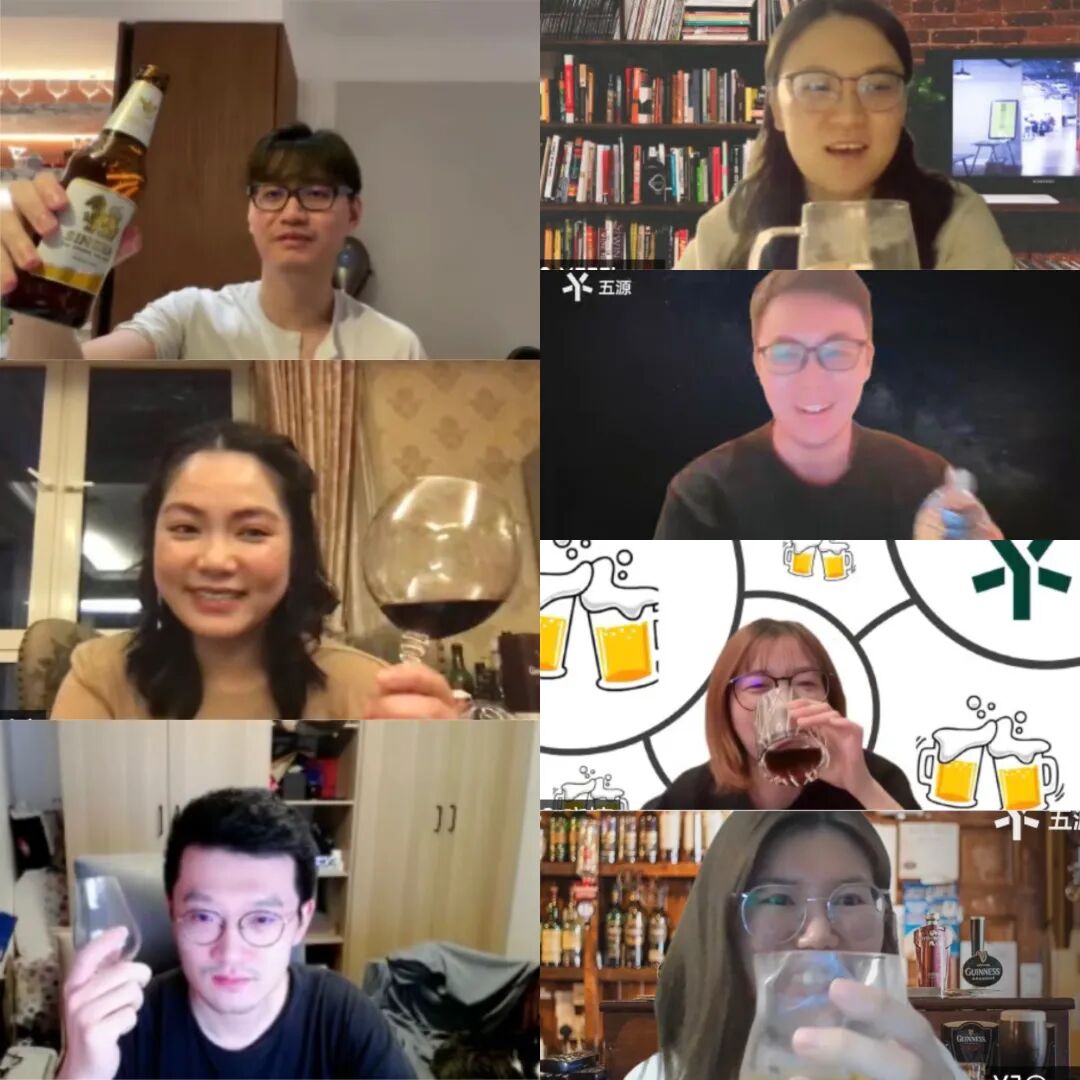
Everyone brought out their scarce pandemic supplies.
Jeff Yin: I'm drinking Talisker 57° North whisky. Its distillery is at 57 degrees north latitude. It's very heavy on sea salt — you should try it, you can really taste the ocean.
Fangfang Xiao: Our household is pretty low on supplies. Only some 85-proof or 75-proof Moutai left. I was going to use soy sauce to fake the look of red wine, but my brother said that's a critical strategic resource — don't touch it.
Lin Xi: I love drinking. Tonight I'm having Pinot Noir, from New Zealand. I also collect a lot of whisky. I'll share with everyone after lockdown ends.
Shi Yi: I'm drinking Thai beer gifted by a neighbor. I usually drink more red wine, but today my wine opener is gone, and I was afraid I couldn't finish a whole bottle once opened.
Many things have become more real.

Jeff Yin
Our company and my home are both in the subdistrict of Shanghai Huating Hotel, one of the earliest areas with outbreaks, so we've been locked down for quite a while. I had stockpiled quite a lot of supplies — a one-person-full-house-fed situation. Even if I got sent to a makeshift hospital, I'd treat it as life experience. The bigger hassle was cat food, but group buying and errand runners could still get that.
Our generation probably hasn't experienced this kind of "distant relatives aren't as good as close neighbors" life before. This time I got a taste — I once traded a bottle of red wine in my compound for a bottle of body wash. I also spotted many investors and entrepreneurs in errand-runner group chats. Everyone had dropped their airs, though perhaps also feeling awkward — people weren't really chatting.
This pandemic has made many things more real. Before, a lot of people lived in pink bubbles, thinking everything was fine, the future full of hope. But this time made everyone more truly aware of what the world is actually like.
Personally, I haven't changed much. I've always been a crisis-ist, with thorough knowledge of the real world, familiar with survival methods in many situations — train derailments, cars falling into rivers, mid-air plane disintegration, or what to do when stabbed in different body parts. Including that I live on the 20th floor; if there's a fire, I keep rope on hand to rappel down like on a wire stunt. Of course, none of these are 100% effective.
Shi Yi
You can get down from the 20th floor?
Fangfang Xiao
That's a lot of work. There are tens of thousands of ways to die, and the ones you've researched are all pretty low-probability events.
Shows you cherish life, cherish beauty, prevent disaster. There's risk in walking too, so I rarely walk.
Jeff Yin
Do you avoid a lot of risky things? Like some outdoor sports?
That's different. That's seeking another kind of scenery and experience — it's enjoyment. High-risk sports like skiing are fine. Getting hit by a car while walking and dying in a skiing accident — those are two different epitaphs.
Lin Xi
Jeff has his own logic when it comes to danger.
Lin Xi
We have a large household — elders, kids, and cats. The elders' lifelong habit of stockpiling grain came in handy this time; we had no supply issues. But as a food company, we need to supply and deliver goods. Our headquarters is in Shanghai, and core warehousing, logistics, and suppliers are mostly here too. We went through an extremely painful three weeks with zero supply to the national market.
Since we started working from home on March 20, we've thought of many ways to restore supply. Markets outside Shanghai were still circulating normally, and later we got our "essential supply enterprise" application approved and restored partial supply. During the pandemic, chocolate can still help people be a bit happier.
Something quite touching happened in our compound recently. One day a neighbor asked in the group chat if anyone could lend her a white veil. She and her husband were supposed to have their wedding in early April; now they wanted to eat braised pork with some ceremony to commemorate their original wedding date. Suddenly neighbors in the chat all jumped out to send blessings, encouraging them to hold a lawn wedding in the compound. One neighbor said they had a pastor's license and could officiate. Others offered guitar, violin, keyboard — forming a live band on the spot. Someone volunteered their kid as flower girl. Others brought photography, videography, drones, offering to be the film crew. On the wedding day, neighbors all came out to bless and witness this lawn wedding in the compound.
Shi Yi
I'm also near Huating Hotel, but at first I hadn't stockpiled anything — just put aside some instant noodles. Later I realized I had to start hoarding. I got lucky: our company is also registered here, so I'm quite familiar with the subdistrict. And I usually like eating, so I know many restaurants. Two were on the essential supply list, so I asked the restaurant owners to buy some kitchen ingredients from their back rooms, getting through that difficult first week of lockdown.
After that, group buying and delivery capacity gradually recovered. During this period I also subsidized many compounds. I posted on Moments saying anyone in need or any compound could reach out to me. Actually quite a lot of people signed up. Our admin did some screening, and after filtering there were about a dozen or so compounds. The main groups we subsidized were elderly people — many of whom probably don't know how to group buy or aren't good with smartphones. And some blue-collar workers, many living in crowded group rentals, sometimes a dozen people in one unit. They had it pretty rough; many later ran out of even rice. In the end we donated roughly 38,000 portions of supplies — dumplings, rice, and bread.
Fangfang Xiao
Our whole company started working from home on March 15. Early on we basically achieved voluntary stay-at-home, but later discovered there's a difference between choosing to stay home and being forced to.
I live with my brother. At first he really only bought four days' worth of vegetables. During that period we went hungry for three days. From three dishes a day to one dish over three days. Two plates of cucumbers, staring at them longingly, eaten over two days. Later we survived thanks to a big bag of vegetables sent by a guy who owed us money, making it to the emergence of group-buying chats, where we started stockpiling widely.
What I care about now is when I can get out and see clients. Not all problems can be solved online. Maybe 99% can, but that offline 1% is also very important.
A lesson in empathy.
Fangfang Xiao
I've also been thinking recently: if a sudden situation arises in company management and the business needs to make rapid decisions, what would be the more scientific approach? Early hesitation might miss some good timing. I haven't thought it through completely.
I also have a fairly deep feeling that in the management process, you need to pay more attention to colleagues' emotions and some basic human needs. I didn't really consider these before, or felt emotions were a kind of fragility — people should be smarter and more rational. But this time I also recognized that emotional things matter too. Like this time we organized vegetable deliveries for employees. By my previous logic, I might have thought it unnecessary, since community group buying would be more efficient and carry lower transmission risk than company-organized delivery. But some things may not be efficient, yet they matter deeply to people.
Jeff Yin
It's probably not simply about caring about emotions, but about having empathy. People say this word often, but I think truly empathetic people are actually rare. Especially for many investors and entrepreneurs — the people they interact with are always other investors and entrepreneurs. They live in an even smaller bubble, completely unable to imagine ordinary people's life needs: their family, their mortgage, where their next meal comes from.
For example, after we started working on the metaverse, we said users could dance, play cards, ski in it. An investor asked, why wouldn't they just ski in reality — wouldn't that be more fun? I said, do you know how many people in China can't even afford to go to the movies? I feel that whatever our work, at least we're all human beings who need to communicate and interact with other people.
My first startup was at 19, from 2012 to 2016. I had just returned to China, very self-absorbed, thinking why can't you all understand my great dream? Why are you still worrying about where to rent an apartment? Later, in my second startup, one major realization was: try to be friends with everyday people. Play board games, watch movies, go out together. Though I still don't agree with many people's states — like some just have no long-term planning, living meal to meal — but these are ordinary people. When you go back to management, empathy comes naturally.
Empathy isn't necessarily emotion — it's knowing what people need. At my previous company, we laid off 900 people in three days. I talked to each employee one by one. You need to know what each person needs — helping them get recommended to their next company, making sure their social insurance doesn't lapse — these matter greatly to many people. I think the essence of management is communication, and effective communication must be built on empathy.
Shi Yi
I also came back from abroad to start a company at 19. Jeff and I were probably both in the CEIBS entrepreneurship program in 2015. My first company was acquired by a listed company, then I started two more companies after that.
I think companies should have empathy, but that work needs a deputy to handle. If as CEO you have to consider the thoughts of hundreds of people every day, you basically can't do the right things. The CEO still needs to focus on the numbers and maximizing decision accuracy and operational efficiency.

Lin Xi
Maybe Fangfang and I are complete opposites — I spend an enormous amount of time on organizational management. Perhaps because we're a consumer brand, a good organization and brand must have an emotional side.
I think the company leader is the chief human resources officer. Whether attracting partners early on or managing today, you don't necessarily need to chat with every employee, but in every public speech and every matter, empathy permeates the company's values. Today our team members are basically knowledge workers. Whether your every move has warmth — everyone sees it.
I think as long as there are people, as long as it's a people business, there must inevitably be an emotional side, a human side, especially in Chinese culture. I spend a lot of time on people.
A palpable sense that this team can fight.
Are you anxious?
Shi Yi
I've been an entrepreneur since 2009 — 13 years now. Done several companies, with ups and downs in between. The most anxious times were far worse than now. The most hair-raising episode was taking a product to 24 countries in six months. Because we hadn't optimized the unit economics model, the company was burning $10 million a month. Wanted to slam the brakes but couldn't. All kinds of drama. Having been through these things, not much can affect me now.
Probably for founders, the more time passes, the more you experience, the stronger your tolerance becomes. For example, if it's your first time opening a restaurant and right after renovation the pandemic hits, you'll definitely be very anxious. But if you've already opened many chain stores and been through the Wuhan outbreak, then this pandemic might be more manageable. The more you experience, the less anxiety you have.
Since we're an online business, the impact is okay. But many clients have lost confidence in the future and are tightening budgets. Starting this year, we synchronize P&L with each team daily. This process is actually a精细化盘点 of all business — how to grow while controlling costs, maximizing efficiency. At this stage, efficiency definitely comes first.
Jeff Yin
Personally, I think if you can imagine the worst-case scenario, that calmness actually makes you less anxious. Anxiety comes from uncertainty. If everything's determined, you're not anxious — because when the cart reaches the mountain, there will be a road, right? In a determined situation, you know exactly what to do, how to pivot.
What truly makes people anxious is when the market is extremely hot. Everyone feels their company is amazing, destined to succeed. This arrogance and ignorance is more dangerous. Much of history has proven this — the most desperate, broke moments are often turning points, while false prosperity and satiety are what most need guarding against.
In today's environment, I think the core for entrepreneurs is to be real with yourself. You absolutely cannot lie to yourself. Probably the same with investors — even if you tell them this business isn't working, we're changing direction, that might not be bad news for investors. It's much better than staying on a road to nowhere for 100 years.
Also, I think today whether you're watching and waiting or thinking about a way out, decisions must be fast. Looking back at all my entrepreneurial decisions over the past 10 years, whether right or wrong, what I regret isn't whether I made the decision, but not making it fast enough.
Lin Xi
All human emotions stem from the gap with expectations. If expectations are set low enough or expectation management is done well enough, when you truly face difficulties there won't be a sense of gap.
I've been an entrepreneur for many years too. Our company was founded in 2013. After all these years, I'm very calm — no great joy or great sorrow. Even when the pandemic affected our actual business, tens of millions in orders simply couldn't be shipped, I was relatively calm facing it. More focused on preparing for how to make up these lost orders in the second half.
This period is actually a very important window for us. Our team's expansion hasn't stopped during the pandemic. Because if you wait until the market is good to hire and integrate teams, it'll be too late. Based on our forecast of consumption recovery, we're doing a lot of preparation work now.
Our cash flow management is also more detailed than before, ensuring every investment matches the business. In consumer goods, if your spending is certain today but revenue uncertain, that endgame is terrifying. So we've shifted to a budget system for expense control — a fairly big adjustment. Ensuring the whole enterprise is healthy, while simultaneously being in a rapid expansion phase — this balance really tests us.
Currently everyone on the team is busy as usual every day. Since the pandemic, we've entered a new communication mechanism of daily meetings. This has been enormously beneficial for the whole company. Never tried managing the team with daily meetings before, but once it became habit, the team developed a very positive state. The most obvious feeling is: this team can fight.
No matter what problems arise, a founder needs to stay calm and find the most correct thing for the company to do at this moment.
Fangfang Xiao
I've also never been one for emotional fluctuations. When I first started my company, I had this thing where if things felt especially bad, like we might collapse, I'd record it on Moments when I accumulated 50 such moments, noting my mood and state at the time. But after the 18th such moment, it locked up — never a 19th.
In most situations I probably don't feel pressure. Maybe the average lifespan in my family isn't very high either. I've always felt life is very short, so every day I work hard seriously. Whatever the state — good or bad — I strive to make it better on that basis. External influences don't affect me much.
The pandemic has, to some extent, forced us to think. Because there are so many uncontrollable factors, we've thought of various ways to improve efficiency, sparking a lot of internal discussion and coming up with methods we hadn't before. Previously, marketing events cost a lot to put on; now we've switched to large-scale livestreaming, with not much difference in actual results. But there are still some concerns — future volatility is still quite high. We're internally discussing strategies, including three-location team deployment and overseas expansion strategies.
When living environments narrow, spirit can still reach broader places.
What have you been reading during isolation?
Fangfang Xiao
Since the pandemic, internally we've happened to take time to do a lot of management process梳理 discussions. Meetings from 8 a.m. to 10 p.m. daily — almost no reading time at all.
Shi Yi
During the pandemic I bought paid subscriptions to four websites — Bloomberg, Financial Times, Wall Street Journal, and NYTimes. A lot of the reading has been quite useful.
Lin Xi
Our track is very special — we're the only one of our kind, the rest are all international giants. We work with many consulting firms to research the company's overall brand positioning.
I've also been reading the Selected Works of Mao recently. I think essential things are cross-cycle. Whether in history or the present, as an innovator and entrepreneur, how to find your positioning — this helps us greatly. Looking back, I still find it very moving; much content is worth spending a lot of time pondering.
Jeff Yin
I've been studying Web3 and the metaverse online — important for us. Actually, when your living environment becomes increasingly barren and narrow, your spirit can still go to broader skies.
Normally we're just a bunch of Shanghai entrepreneurs drinking and bullshitting together, living quite happily in this shallow life, because life itself is shallow. People's lives normally look rich, but much of that so-called richness is actually a kind of shallowness.
I've always had this view: people can be vulgar, but not shallow. People inevitably have vulgar hobbies, but shallowness is a state — immersing yourself in vulgarity is shallowness. Now, cutting off this shallow part from life, you can look at the outside world, communicate with entrepreneurs and investors from other countries — it's also a kind of peace of mind.
Of course some continue choosing shallowness, which is also normal. People truly living through history often don't realize they're living through history. If ten years from now you look at this period with a God's-eye view, we who are different — I think it will definitely change many things.
Lin Xi
Following Jeff's expression, I want to say that our drinking, gatherings, or so-called secular behaviors are actually reminders that we exist as a social form. Perhaps in philosophy or higher-dimensional thinking, we can find another self in another world, but today being in society, we still have these things, reminding ourselves that we are social beings. So the drinking will continue — hope we can grab a drink offline after the pandemic ends.
Bonus
More than twenty days have passed since this virtual tavern gathering. The situations entrepreneurs face are constantly changing. Before publishing, we asked everyone this question again.

What's the first thing you want to do after lockdown?
Lockdown has already worn away my enthusiasm and curiosity. After lockdown, I'll continue self-isolating (manual doge)
Exercise more, build up stamina. Next time I can bike to another city.
Go see more of the outside world :)
Buy a black-and-white Devon Rex cat with a dog-like personality. Add a new member to the family.
The 5Y Capital Tavern
Gift Time — Share Your Thoughts
Welcome to share your takeaways in the comments section. We'll select 3 featured comments and send a Daily Black gift box. Hope it brings you more joy.
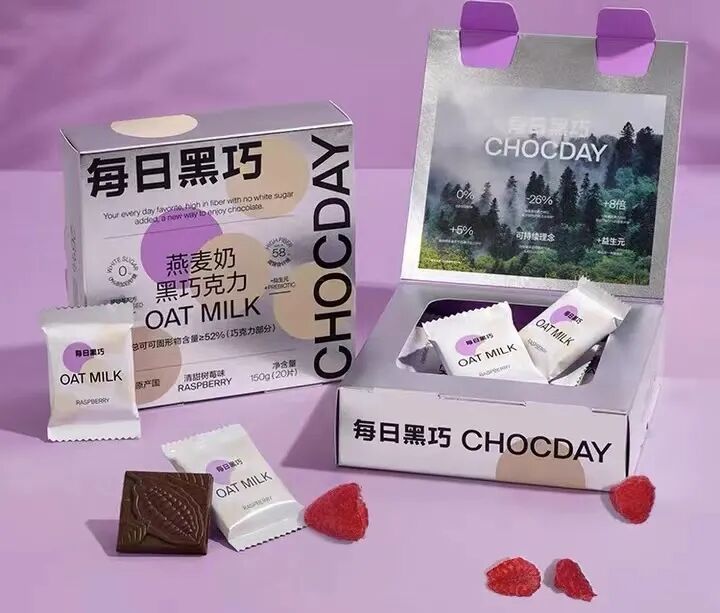
Comments accepted until May 22. Due to pandemic effects, gifts may be delayed. We'll reach out to you in advance.


5Y Capital seeks, supports, and inspires lonely entrepreneurs, providing support from the spiritual to all operational aspects. We believe that if the you whom others see as crazy begins to be believed in, the world will become a different place.
BEIJING · SHANGHAI · SHENZHEN · HONG KONG