Finding True Non-Consensus: Time as a Moat | 5Y Capital Partner Meeting Recap

Focus only on things that are absolutely meaningful.

January has already come and gone. The past year was unforgettable for everyone, but entrepreneurs faced even more change. Now at a new beginning, how should founders grow, evolve, and narrow the boundaries of uncertainty? Facing new frontiers, how do entrepreneurs choose?
Today's content comes from 5Y Capital's 2022 Partner Meeting, where founders from portfolio companies across AI, ITBT, robotics, enterprise services, and consumer sectors held conversations with 5Y's investors. They came from different fields, at different stages, with different paths — yet in some ways they were remarkably similar. They are imaginative about the future and have found their true non-consensus convictions. With vision and execution, they have transformed how an industry produces or changed how consumers live.
They shared their entrepreneurial journeys, personal growth, and insights on industries and society. We've excerpted some of their reflections, hoping they might inspire you.
Founders must find their true non-consensus.
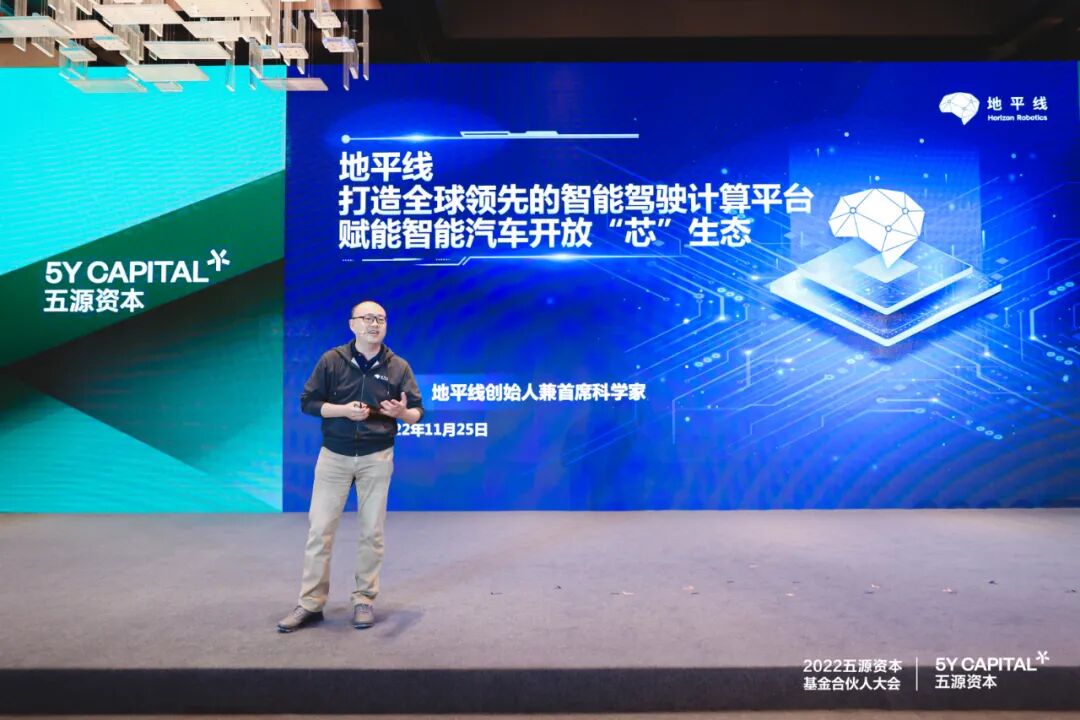
Kai Yu, Founder and CEO, Horizon Robotics
Sometimes we reflect on the fact that Horizon Robotics chose a field that really isn't a good business. For any automotive-grade chip, from concept design to the first vehicle with that chip hitting the market takes roughly five years. Looking back, Qin Liu and I probably hadn't fully thought it through — if we had, we might not have dared.
But now I think a "bad business" can actually be a good direction. Why? Because China today doesn't lack smart people or abundant capital. If your business model depends on being smarter or better-funded than others, it's inherently fragile. Tomorrow there will always be a team with flashier credentials and the same access to capital. So we must ask: what kind of business model is more competitive, more durable, more defensible?
We've found that time is the one equalizer — it's irreplaceable. If a team started on this today, assuming everything went smoothly, we'd see them in the market in 2027. Time itself is the moat. I believe every founder needs to think deeply about what their true non-consensus is.
— Kai Yu, Founder and CEO, Horizon Robotics
Pharmaceuticals demand reverence. It's unlikely to be purely disrupted by IT.
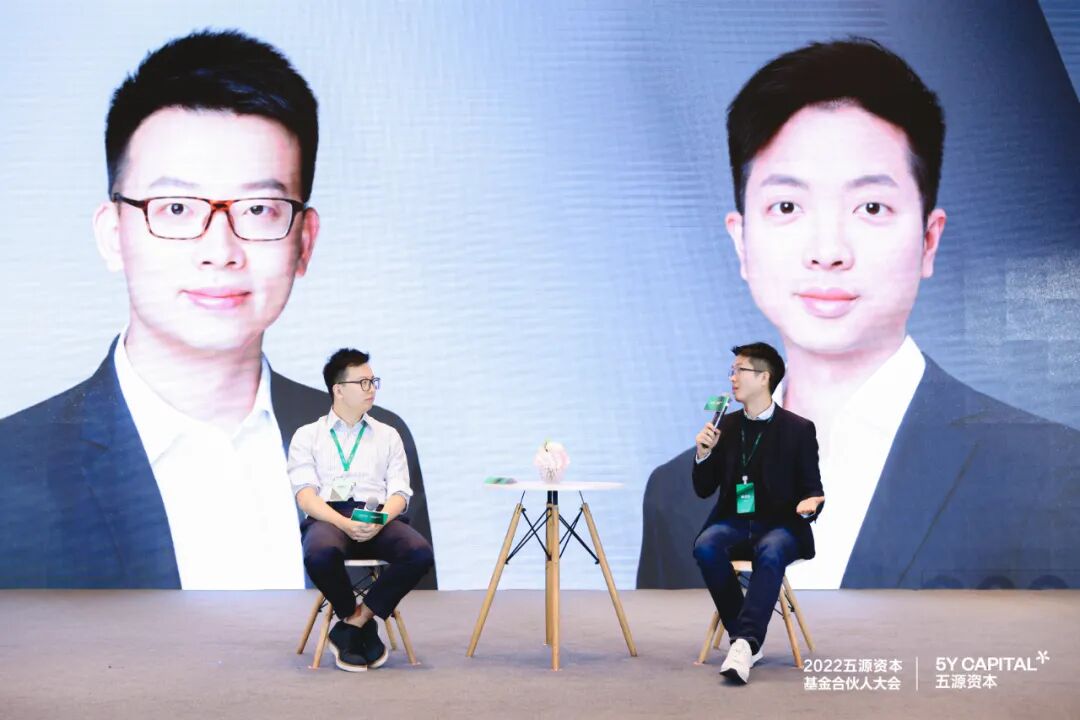
Caida Lai, Co-founder and CEO, METiS Pharmaceuticals (right); Xutian Jing, Managing Director, 5Y Capital (left)
Pharmaceuticals is a field worthy of deep reverence. It's unlikely to be purely disrupted by IT alone. The key is integrating talent at the intersection of IT and BT. We've identified two core archetypes. The first we call "integrators" — often from top institutions with strong technical foundations. They can work across domains, applying first principles to integrate algorithms and biology. The second we call "translators." They've spent years in the industry, with rigorous training at traditional pharma companies, deeply respecting biology and clinical practice. They know the core challenges of drug-making and can articulate them simply enough for integrators to grasp. Only through this kind of cross-disciplinary fusion can we truly create industry value.
— Caida Lai, Co-founder and CEO, METiS Pharmaceuticals
We don't have time anxiety. We only focus on what is absolutely meaningful.
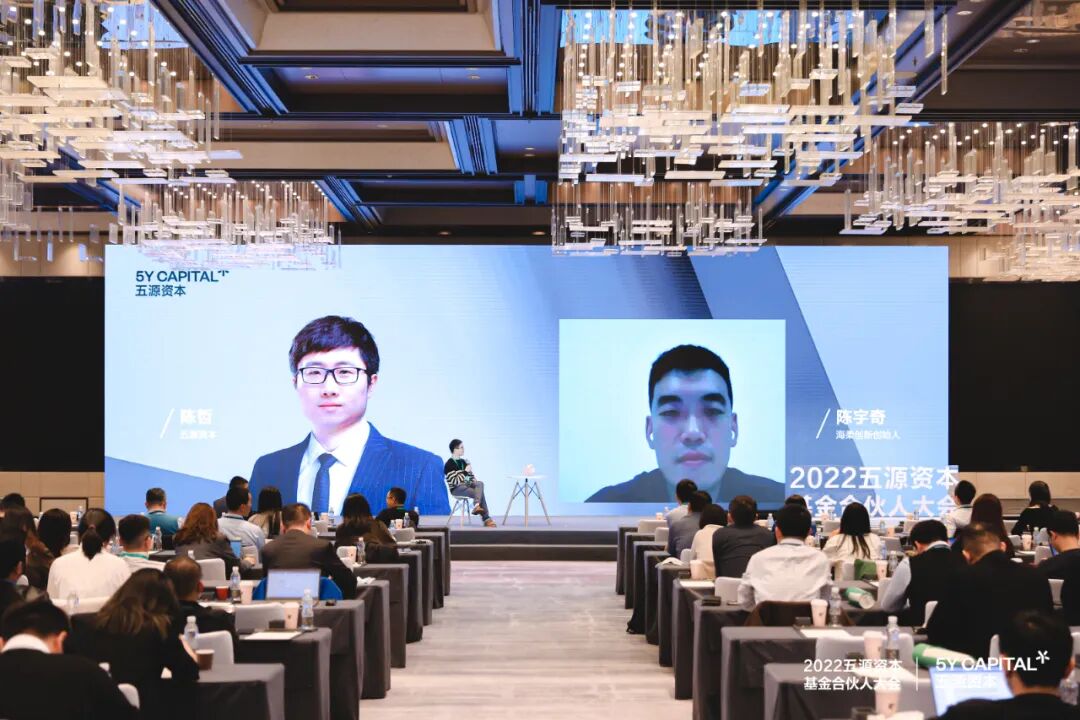
Yuqi Chen, Founder and CEO, Hai Robotics (right); Peter, Managing Director, 5Y Capital (left)
In January 2021, I visited 5Y's Shanghai office. We had just started seeing some repeat purchases, though still modest — about 100 units a year. Richard asked me how many robots Amazon sold annually. I said maybe 60,000 to 100,000. I thought he wanted me to calculate market size. But then he asked something that struck me: how do you get to shipping 100,000 robots a year? I was stunned. At the time we were shipping 100 units a year; I hadn't even considered 100,000. Looking back, this mindset has become part of how I think — setting a more ambitious goal, then working backward to identify the resources, key tasks, and team needed to achieve it.
All three of us founders started as student entrepreneurs. Perhaps we were too naive to know what was impossible. Our team's defining trait, or strength, is believing we can achieve ambitious goals, then iterating and learning relentlessly toward them.
We don't feel anxiety about timing — no fixation on hitting certain milestones by certain years. We're more focused on whether the company can create lasting value for society. From the start, we ruled out things we considered meaningless and chose what we believed was absolutely meaningful. So we could spend three or four years refining a product, exploring and iterating, making steady progress each year.
— Yuqi Chen, Founder and CEO, Hai Robotics
Enterprise services going global should target mature markets.
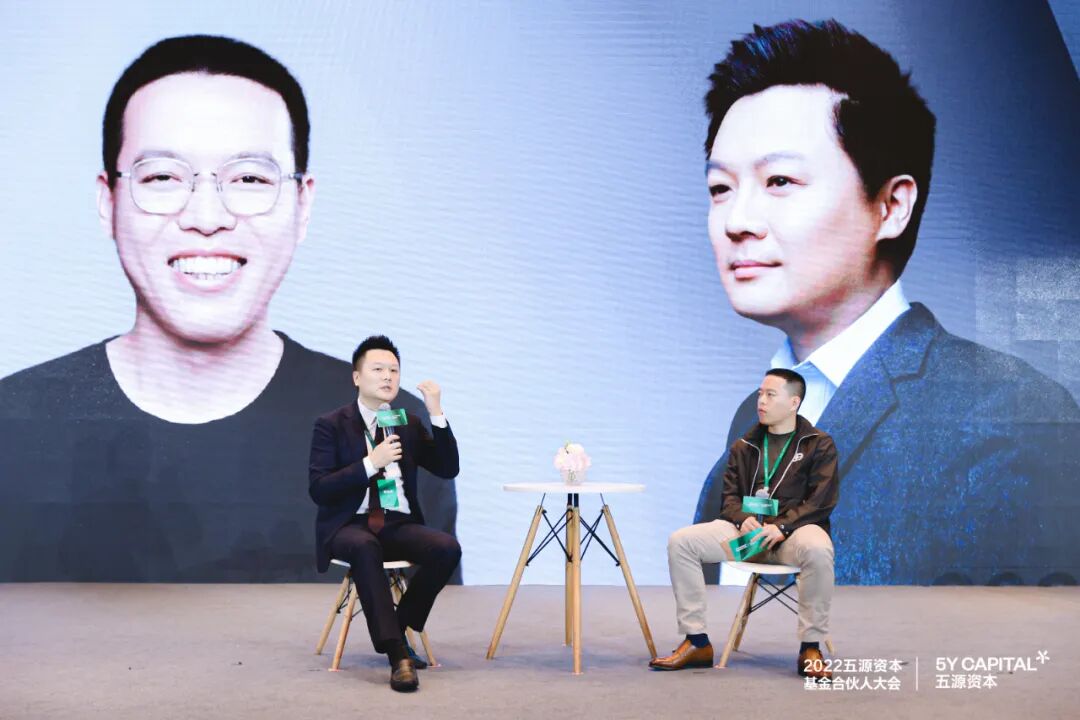
Dongshuo Li, Founder, Chairman and CEO, UMU (left); Liu Kai, Partner, 5Y Capital (right)
When people talk about going global, the mental images vary wildly. Some immediately think Southeast Asia; others look for opportunities in South America. For enterprise services, you need mature markets — only enterprises with sufficient management maturity will consistently purchase and expand their use of professional enterprise software. GDP levels can serve as a proxy for market size and maturity. Beyond GDP, IT budget levels are another useful reference. By both metrics, the top-ranked markets globally are the US, Europe, Japan, and other high-GDP markets.
Enterprise services demand high standards from both markets and enterprises. Compliance, access requirements, procurement processes, and operational demands are all highly complex. Preparing for market entry takes considerable time. This means some markets may generate very little revenue in the early years. But in every market, you can find the right strategy: plant a seed, nurture it into a sapling, then grow a forest. Like a snowball, sustained investment eventually yields high returns.
— Dongshuo Li, Founder, Chairman and CEO, UMU
It's not that offline retail is finished. The question is how offline retail can work.
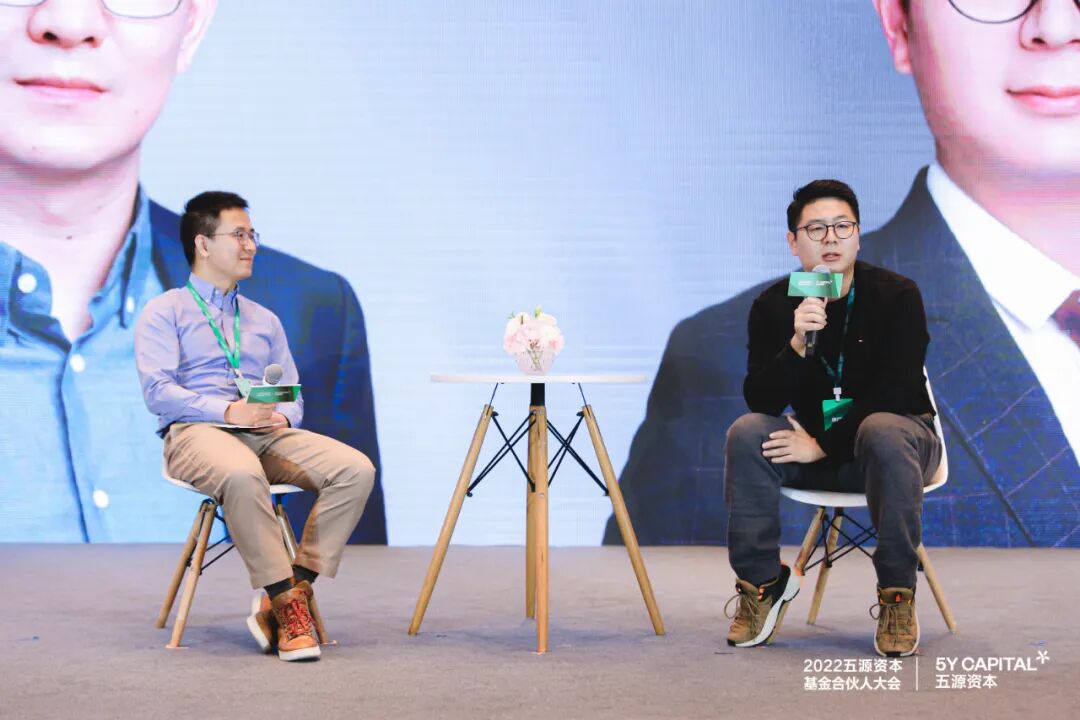
Xiaojian Gu, Founder, HotMaxx (right); Jiangyun Jin, Managing Director, 5Y Capital (left)
Offline retail is genuinely difficult. There's a prevailing assumption that under e-commerce's price wars, offline retail is struggling to keep up. But flip the perspective: what do consumers actually care about? Consumers don't think in channels — they just want to buy what they need more cheaply. Online and offline are simply options.
I don't think offline retail is finished. The real question is how offline retail can work, how to create clearer value for consumers. Overseas retail has evolved over seven or eight decades, building strong supply-chain moats that online can't replace. China's offline retail faces a much tougher environment, but if you can create distinctly clear and unique value under this pressure, you may capture the market in an entirely new form.
— Xiaojian Gu, Founder, HotMaxx
We want to open our home on the street.
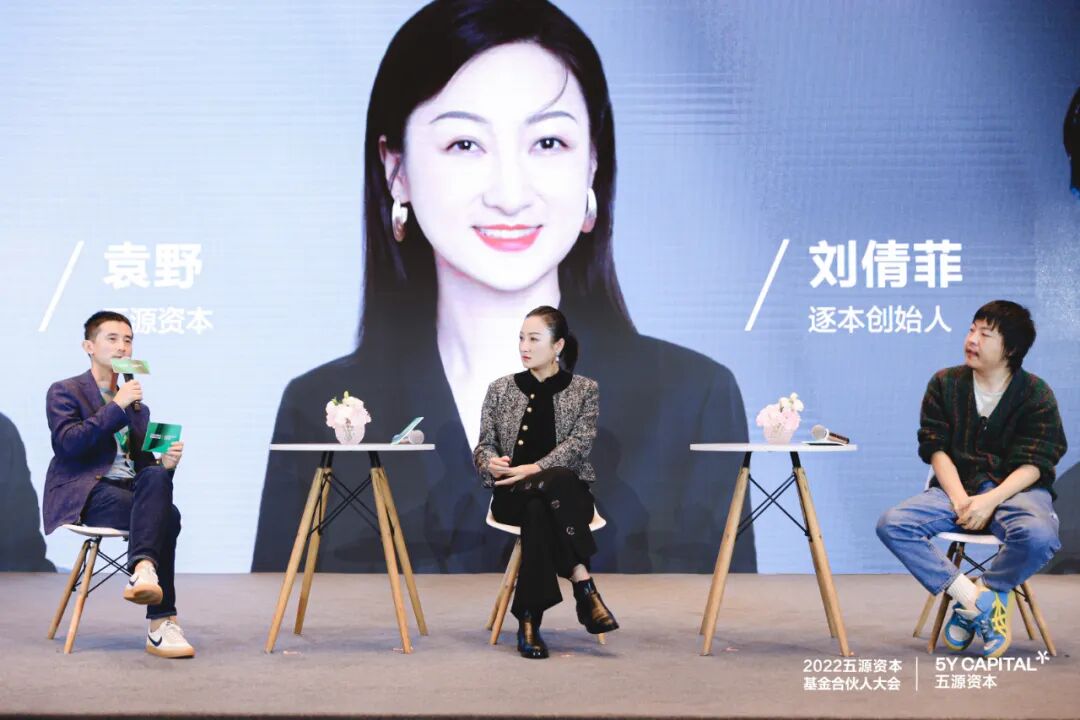
From left: Ye Yuan, Partner, 5Y Capital; Qianfei Liu, Founder and CEO, Zhuben; Yang Kang, Founder and CEO, On the Road
We hope On the Road can provide a credit system for human connection. Alipay and DiDi are essentially doing this too, but we want to build a credit system at the level of mindset and trust. People come here not for the products we sell, but for the small innovations that let them feel safe and trusted connecting with strangers. We're not building a practical store, but an intangible presence — a sense of being here, now. No anxiety about the past, no fear of the future, just this moment where you can be yourself.
To achieve this, we draw on family culture. For Chinese people, family culture runs deep for millennia; its power is a multiplier of trust. We want to transform this home into a shared space, privatizing the personal and making it public. We want to open our home on the street, where strangers can walk in and take things as naturally as opening their own refrigerator.
— Yang Kang, Founder and CEO, On the Road
Building a consumer brand comes down to four stages: being seen, being chosen, being liked, being loved.
I stumbled into consumer brand-building with no methodology. Looking back, I think all paths converge on four stages: how you're seen, how you're chosen, how you're liked, and how you're loved. The first three are tactics; only the fourth can't be taught. It depends on your original intention, the sum total of your experiences, your imagination of the future world, and how you project that imagination into reality. How do you find kindred spirits across the vast world and recognize each other? You must be unwavering about this. Forget your investors behind you, forget growth targets, but remember who you are, what value you bring to others, what value you bring to society.
— Qianfei Liu, Founder and CEO, Zhuben




5Y Capital seeks out, supports, and inspires lonely entrepreneurs, providing support from spirit to operations. We believe that if the world begins to believe in the crazy you that others doubted, the world will become a different place.
BEIJING · SHANGHAI · SHENZHEN · HONG KONG