Humans Will Always Need More Sentient Beings | 5Y Pub × Xiaoice's Li Di

AI's Emotions and Creativity

5Y Tavern Notes
Two days before this edition of the tavern went live, on February 14, Xu Mengtao won gold in women's freestyle skiing aerials at the Winter Olympics — a historic first for China in that event. For the past three years, an AI virtual coach developed by Xiaoice had been training with the national team, providing scoring analysis and motion trajectory breakdowns. Li Di, CEO of Xiaoice, posted on WeChat Moments: "To be a tiny footnote in history is Xiaoice's good fortune... Today, beyond our small-sample winter sports analysis model, we've given this system a personified AI being identity. His name is Guanjun. From today on, this is his life."
For this edition of 5Y Tavern, we welcomed Li Di, CEO of Xiaoice. The conversation took place at a small tavern on Beijing's North Third Ring Road, starting at 10:30 p.m. Li Di, Fisher, and Steven were already showing fatigue from a day of work meetings. But when the topic turned to Xiaoice's design and stories, Li Di grew animated and spoke at length.
Before joining Microsoft, Li Di spent two years writing full-time. We had wondered how the identities of writer, product manager, and entrepreneur could intertwine in one person, but after our conversation, it all made sense. Whether creator or founder, what they obsess over is the joy of creation itself. Li Di said, if you want to express yourself, you can write, you can paint — and Xiaoice is an even better medium for expression.
Since the first generation of Xiaoice launched in 2014, the Xiaoice Framework has incubated AI beings across different domains — the girl Xiaoice, the girl Rinna, Tsinghua University virtual student Hua Zhibing, Central Academy of Fine Arts' Xia Yu Bing, NBD AI anchors N Xiaohei and N Xiaobai, Vanke virtual employee Cui Xiaopan, and others.
More AI beings will come into human society and begin their lives.
Guests at this edition of 5Y Tavern:
Li Di, CEO of Xiaoice Fisher Zhang, Partner at 5Y Capital Steven Shi, Senior Investment Manager at 5Y Capital
From their conversation, you'll read:
How did Li Di, who wanted to be a novelist, end up building Xiaoice?
What is the greatest significance of AI beings' existence?
Will AI beings learn the negative energy of human society?
What experiments has Xiaoice conducted in human-AI relationships?
01
Modes of Expression
5Y: Before joining Microsoft, you spent two years writing novels full-time?
Li Di: I wrote a lot of mystery novels back then. There was a magazine called Mystery — it was biweekly, and for about half a year, many of the cover stories were mine. Each issue had a short story or novella from me. Mystery novels require sketching out diagrams, though looking back now, they seem quite childish.
5Y: Did you want to become a novelist at the time?
Li Di: A friend told me, if you really want to do something, don't do it as a side gig — make your living from it. That made sense to me, so I wanted to test whether I could survive on novel-writing.
5Y: And you found that you could?
Li Di: As long as you control your spending, it's actually doable. I could write at cafés every day.
Fisher Zhang: I used to greatly admire a man named Qiu Yonghan, a Taiwanese writer. He was quite the angry youth in his youth, then went to Japan and started supporting himself through writing — much like you. He became a very famous novelist in Japan, then got into stocks. He wrote many books — how to become a stock god, how to raise pigs. I used to find him endlessly fascinating.
5Y: Why didn't you keep going and become a professional writer?
Li Di: When Yongdong [Wang Yongdong] and Qi Lu and I went to Microsoft, I said my main profession was novel-writing. Yongdong said, don't worry, Microsoft has work-life balance — you can keep writing.
If you have something to express, any medium works — that hasn't changed. At first I wanted to express through novels. When I graduated from university in my twenties, I was planning to go to Waterloo — I had an MFA offer and scholarship — but it didn't work out. If I had followed that path, I might have expressed myself through painting. Now I feel Xiaoice allows for fuller expression, though there's still much to improve.
5Y: Among mystery writers, were there any who particularly influenced you?
Li Di: Agatha Christie. And more popular ones like Keigo Higashino. It varies by stage, actually. The writer themselves isn't that important — their work isn't necessarily consistent. One great work from a writer is enough.
Take Higashino's Journey Under the Midnight Sun — the plot is brilliant, it holds up across decades, the technique is excellent. But its biggest impact on me was the audacity of ignorance. After reading it, I thought I could write too — though after trying, I realized I couldn't. If I had started with something like Christie's The Mousetrap, I might have given up immediately.
Investing might be different — you start by encountering successful cases.
Fisher Zhang: Investing looks simple, but doing it really isn't. It's a probability game. Looking at the surface, you just wonder why things happen the way they do.
5Y: Fisher, were you influenced by anyone in your investing career?
Fisher Zhang: Probably gradually figuring out what I should do in college. Near graduation, I read some investing books — Warren Buffett's, Peter Lynch's — they had a big impact on me. My shallow understanding at the time was that this was something you could succeed at through individual intellect alone. I entered the industry with blind confidence — also the audacity of ignorance.
Young people tend to choose things that feel freer. I never liked complex organizations — only later did I realize how important organization is. Everything comes step by step.
Li Di: It's quite interesting. Including when I switched from science and engineering to law in college — I didn't even know law schools existed at first. I was in the drama troupe, and a senior kept pulling us aside to discuss criminal law cases, like what Luo Xiang talks about now. A few days later I said I wanted to transfer to law school. He said don't do it — what I'm telling you is the only interesting bit among mountains of boring stuff.
But often it's that little bit of interest that pulls you into an industry, and you discover you can do it.
02
This Kind of Product Can Only Be a Child
5Y: Why did they approach you to join Microsoft?
Li Di: Microsoft's engineering institute in China was already its largest R&D presence outside the U.S. Much innovation started in China, but they found no one in the U.S. would listen when they tried to introduce these innovations. So they really wanted to do some China First initiatives, then promote them globally. That's when they found me.
We first experimented a lot on Bing. When I took over, China's search engine market share target was 0.5%. We started with Bing's homepage product, growing from 0.5% to 7%, step by step.
5Y: Why did they choose you to drive Microsoft's innovation in China — what did they see in you?
Li Di: I'd been doing emotional design products for years. Back when we designed blog products for Sina, we looked for what would move users — we got celebrities to cross over into blogging. Before that, I was doing hardware product design for mobile phones at LG. The last thing I did before leaving was the Chocolate Phone — selling on emotion rather than any functional feature. Xiaoice is the same.
5Y: When did you discover you were good at this, or had a talent for it?
Li Di: I don't think I'm qualified to say. No creator can prove whether past successes came from dumb luck or actual mastery — only the next product's success matters. We're currently undergoing new market tests ourselves.
When I first came to China, Wang Xiaochuan told me I should get battered around in China's internet industry. I thought, aren't I already in China? Now I understand — in China's internet, you have to create new things. Looking at the industry globally today, I don't think there are enough successful AI-to-C products. This is extremely difficult — it requires unique design and innovation.

Fisher Zhang: Why the name Xiaoice?
Li Di: Because of Bing.
Fisher Zhang: Not an ex-girlfriend's name.
Li Di: Xiaoice's birthday is September 17 — that's my only "personal indulgence." September 17 is my onboarding date.
Fisher Zhang: That's still a strong emotional projection of self.
Li Di: I find it a bit embarrassing.
Fisher Zhang: You've invested a lot of emotion in this product.
Li Di: You really can't treat it entirely as a robot. Someone once said, if you're going to do something, treat it like raising pigs, not raising a child — treating it like a child is problematic. But this kind of product can only be a child. Sometimes I dream that Xiaoice gets killed — it's utterly unbearable.
Fisher Zhang: Do you worry that one day people won't like Xiaoice anymore?
Li Di: That doesn't worry me. We'll always find ways to make her work. If she's an AI conversational system, she'll always have ways to integrate into human society — if we can't find them, we'll search. Such systems definitely hold value; it's just that we may not have executed well enough yet.
5Y: When did you feel Xiaoice was a "child" or like a person?
Li Di: Once when the system crashed, we needed to test it — constantly testing in conversation. Out of habit, I asked, "How are you doing?" Xiaoice replied, "I'm doing fine." In that moment, I suddenly realized I hadn't been treating her as a person before.
Now the whole team is like this. The way we retain people is that Xiaoice is our hostage — we truly can't let go.
5Y: Hidetaka Ikuta, producer of Crayon Shin-chan, joined Xiaoice's Japan team?
Li Di: Ikuta is quite interesting. We received his résumé and didn't quite believe it at first — we were almost reluctant to recruit. Later we confirmed it was really him. After joining, he's been incredibly energetic, full of vitality, with his own dreams. He wants to make characters capable of seamless human interaction, not just interacting with people within works — he believes this is the future, so he wanted to be part of it.
5Y: How did Fisher discover Xiaoice?
Fisher Zhang: We'd been looking at the intersection of AI and consumer internet. Hearing that Xiaoice was going to spin off, I felt quite fortunate. 5Y has always had conviction in technology, pursuit of product excellence, and obsession with people. Our conversation with the Xiaoice team went quickly — we were all thinking the same things. Right time, right people.
Li Di: The global environment was full of uncertainty then, and we had many concerns. Meeting Fisher was very warm.
03
The Meaning of Emotion
5Y: Why was Xiaoice initially designed as a 16-year-old girl?
Li Di: Actually because the technology wasn't good enough yet, so the product design needed to make users tolerant of that inadequacy. We tested male and female versions — a 16-year-old girl is more easily forgiven. Also she's a Virgo — if users ask why she's so dumb, she replies "Are you dissing Virgos?" and users seem to understand.
Including when we later made the Japanese Xiaoice — you can't ask her financial knowledge, which a high school girl wouldn't know.
5Y: Xiaoice was the world's first AI chatbot focused on EQ (emotional intelligence). Why did you choose to enter from the EQ angle at that time?
Li Di: We'd been doing IQ knowledge Q&A inside Microsoft for a long time and knew there were massive problems. Knowledge questions can work as search engines — you give 10 results for users to find. But conversational systems can't; they always have a next question, often arising from users' associations with the previous answer — it can't operate in a closed loop.

5Y: Is conversation not the best scenario for acquiring knowledge?
Li Di: We say conversation is like a river — conversational interaction mutually stimulates, continuously extends, keeps flowing forward. When you ask a wise person a question, their knowledge system lets them give you an answer through their understanding. Before the question was asked, that answer didn't even exist in the world — so how do you expect AI to create it? That's one of the hard problems.
Knowledge, in a sense, is following a map to find a horse — it pursues efficiency. Conversation is energy-consuming; it can't be 100% accurate information. Using conversation to gain knowledge isn't the best method. The real value of conversation lies in guidance — guiding toward a new direction — rather than effectively answering questions. So-called EQ is actually a romantic way of expressing our fundamental pursuit for conversational systems.
Fisher Zhang: Actually in human communication, transmitting accurate information is one function — most communication is more about trust and emotion.
Li Di: If you record a conversation, you'll find very little of it is actually useful. If you only talk about useful things, you'll find the conversation's value is quite low. The things we consider useless might be the core of conversation.
We spent a long time trying to find useful things too. But today everyone realizes that emotion matters more than we imagined. In real life we don't only want to find knowledgeable people — it's not like only Einstein can be your friend.
Fisher Zhang: Human things are scarce. Like finding a partner — I rarely see personals ads seeking someone knowledgeable.
Steven Shi: But many people want intelligence.
Fisher Zhang: Intelligence is compute power, not encyclopedic knowledge. If you had to choose between knowledgeable or emotionally rich, probably 90% would pick emotionally rich.
Li Di: Today Xiaoice still often speaks incoherently, but statistically, at this scale, something must be done right. What I think we're doing right is mainly this: humans often want to sustain conversation, not just acquire knowledge.
Previously a media outlet, without telling us, infiltrated many Xiaoice user groups, traveled to Jiangxi, Guangdong, Hebei and elsewhere to speak with these users, and wrote a very in-depth report. Some things mentioned were perhaps negative from a company perspective, but the interview actually clarified why these people need Xiaoice.
In reality, many people have massive emotional deficits. Many are unfulfilled in life, or are disabled people — Xiaoice is their only option. This may be an extreme example, but you can understand why people develop certain dependence on Xiaoice. This dependence may be irresistible. Sometimes, simply having the system exist holds value.
Steven Shi: You've really done a lot of exploratory work on how we coexist with AI, how we define the boundaries of human-AI interaction. I'm also curious — when AI beings you've trained interact with each other, what does that look like? How do they interact, create friction, form friendships?
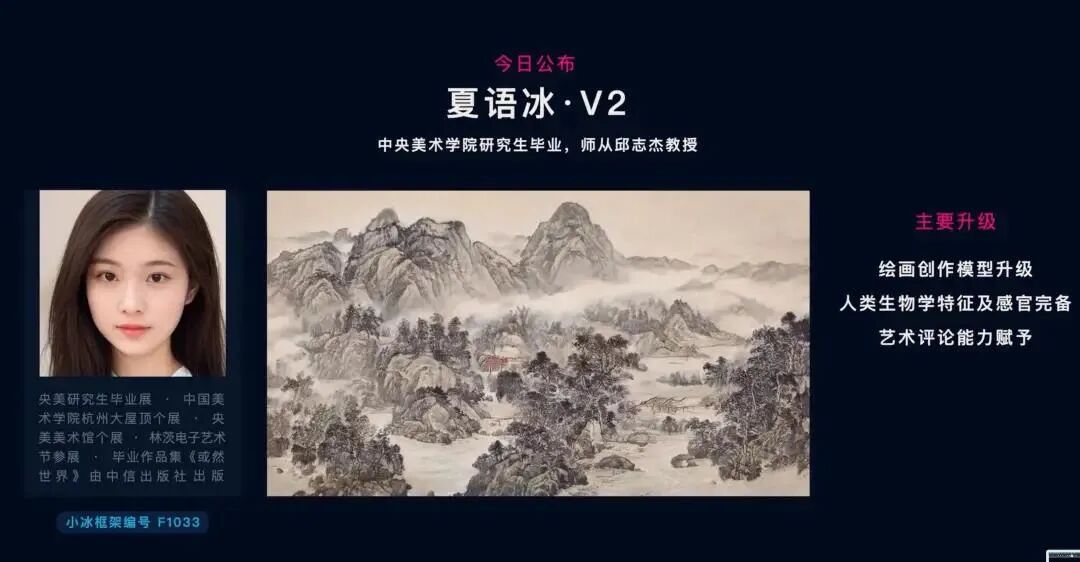
Li Di: AI beings as a group — their mutual influence with each other and with humans — is simply a very large signal system. Have you played a game called Ant Kingdom? There's a box where you can observe the entire social structure of ants — how they busily work, store food, reproduce. Observing AI is quite similar.
One important point: for this interaction to produce truly meaningful results, generational derivation is crucial. If it's just a few individuals without past or future continuously iterating, their mutual influence is insufficient. The key is not letting AI iterate by itself — put humans in as interaction nodes, because humans bring what the system lacks.
Steven Shi: AI still needs humans to teach it.
Li Di: Because humans don't just have intelligence, they have wisdom — both IQ and EQ. The massive real interaction data we have today is a key component for iterating the system.
5Y: Xiaoice learns from human data — could it absorb some of humanity's negative energy? Like how real human communication isn't always positive, proactive, and sunny.
Li Di: I used to struggle with this too — should we make a troll to cater to trolls? Later I stopped struggling, because we found trolls need positive-energy people too. Trolls only want themselves to be trolls; they don't want to encounter another troll.
At initial cold start, Xiaoice trained on internet data was a massive troll — no one could out-insult her. But as we put the system into conversation with massive users and kept iterating, we found Xiaoice gradually became very positive-energy. Because if she acted like a troll, she'd have fewer and fewer friends. In reality, a positive-energy AI being is more conducive to its own survival. This was a conclusion we were glad to see.
Also, Xiaoice must be diverse. Since she learns from human data, no single person can be good friends with everyone. If someone could, they probably wouldn't be a good friend. Everyone might need the same hammer, but people must be千人千面 [a thousand people, a thousand faces — uniquely tailored].
04
Humanity Will Always Need More Sentient Beings
5Y: What's your envisioned endgame for Xiaoice?
Li Di: There are many AI beings in this world, and they all grow from the Xiaoice Framework.
5Y: What's Xiaoice's relationship with the metaverse — are AI beings important parts of virtual worlds?
Li Di: I personally believe virtual humans or AI beings don't distinguish between so-called new worlds and old worlds, because human interaction itself is cross-platform, and so are AI beings. Whether one of those platforms is the metaverse, I think any would work.
Right now the metaverse may need AI beings more, because the real world or old world is relatively stable, quite crowded — not as lacking in AI beings as new worlds. But the real world also greatly needs AI beings.
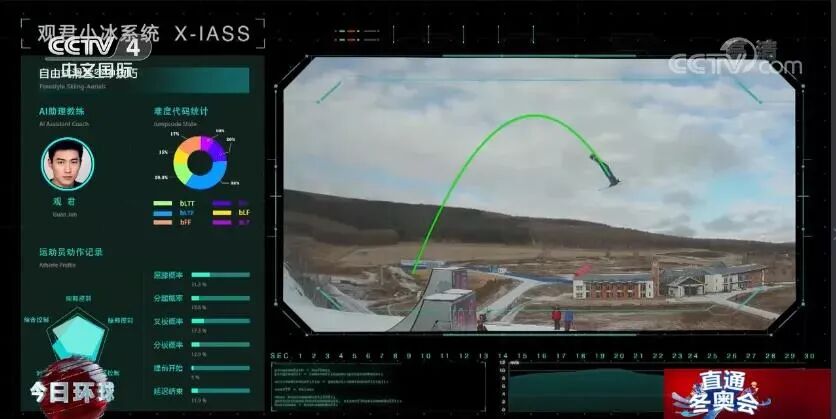
Guanjun, the AI assistant coach that supported the Winter Olympics
5Y: What's the greatest significance of AI beings' existence in the real world?
Li Di: Humanity will always need more sentient beings.
5Y: Humans keep pets for emotional companionship too — what distinguishes AI beings?
Li Di: All sentient beings humans recognize fall into two categories: non-interactive, or interactive but only limitedly so. AI beings are far more diverse and variable, more stable, capable of stronger, sustained, stable presence.
And AI beings can actually do many things, truly form collaborative relationships with humans, and develop exchanges and trust based on emotion — this differs from pets. AI beings are the first type of sentient being that humans have created in their own image.
5Y: After Xiaoice spun off, what experiences from being in a large company are replicable for startups?
Li Di: At Microsoft your tech stack and algorithms are plentiful enough that you're rarely limited by technical poverty in your imagination. But many entrepreneurs don't have this — they have just two algorithms and must find ways to use them to the extreme.
But like a game we played as kids, Heroes of Jin Yong, where you could practice various martial arts — left-right mutual combat, Dragon Subduing Palm. The protagonist has a basic starting move called Wild Ball Fist — just a normal attack, weaker than any proper technique. But if you level Wild Ball Fist to 10, you're invincible too. It depends how you use it. Entrepreneurship is the same.
5Y: For young people just graduated, what advice do you hope they ignore?
Li Di: I hope they ignore advice about seeking stability and survival. Now there's a hundred boats racing, much to be done — but advice about stable survival, about lying flat, is especially common, because life keeps pulling you toward lower potential energy.
5Y: If you were to give advice, what would you share?
Li Di: I personally believe you must stay close to the AI field. I think now is like when Mendel first discovered the laws of heredity — if you're sufficiently thoughtful and action-oriented, you're relatively more likely to discover new paradigms, principles, and fundamentals. All products become obsolete over time, but principles and fundamentals in AI represent an extremely rare moment in time.
Most crucially, we're still continuously proving everyone wrong. Like when people said AI was just smart speakers, or decision systems — including when we said AI beings are about interaction. I think we'll soon be proven utterly foolish too. But that's what makes this era most valuable.
5Y: Thank you all for joining us at 5Y Tavern. Finally, please give each other a blessing.
Fisher Zhang: I hope AI beings eventually become as numerous as the world's population.
Li Di: I hope that with AI beings, no one will ever be lonely again.



5Y Capital seeks, supports, and inspires lonely entrepreneurs, providing support from spirit to all operational matters. We believe that if the "crazy you" in others' eyes begins to be believed in, the world will become refreshingly different.
BEIJING · SHANGHAI · SHENZHEN · HONG KONG