From Tech to Business: New Possibilities Brought by ITBT | 5Y Talk

We spoke with five entrepreneurs about their progress and breakthroughs.

The importance of life sciences has long been self-evident — it's about health and disease, and about the future of everyone. Moving from the lab to industry, and ultimately influencing society, the pharmaceutical field itself requires lengthy trial-and-error cycles, and entrepreneurs in this space are exploring different verticals.
As one of the earliest investors to bet on the ITBT track, over the past few years we've discovered and supported many entrepreneurs in digital pharmaceutical R&D. From technology to business, from innovation to market, they've all made significant breakthroughs this year.
Recently, 5Y Capital and VB Data jointly hosted a roundtable discussion titled "The Path to ITBT Commercialization: Technology and the Future." Jing Xu, Managing Director at 5Y Capital, was joined by five founders from our portfolio — Hang Chen, Co-founder & CEO of Neox Biotech; Caida Lai, Co-founder & CEO of METiS Pharmaceuticals; Yuchong Wang, Founder & CEO of CellX Biosciences; Shuhao Wen, Co-founder & Chairman of XtalPi; and Wen Wen, Founder & CEO of Huanyi Bio — to share progress in their respective fields and their vision for the future.
We've compiled highlights from the roundtable. We hope you find them inspiring : )
Roundtable Guests
Jing Xu
5Y Capital
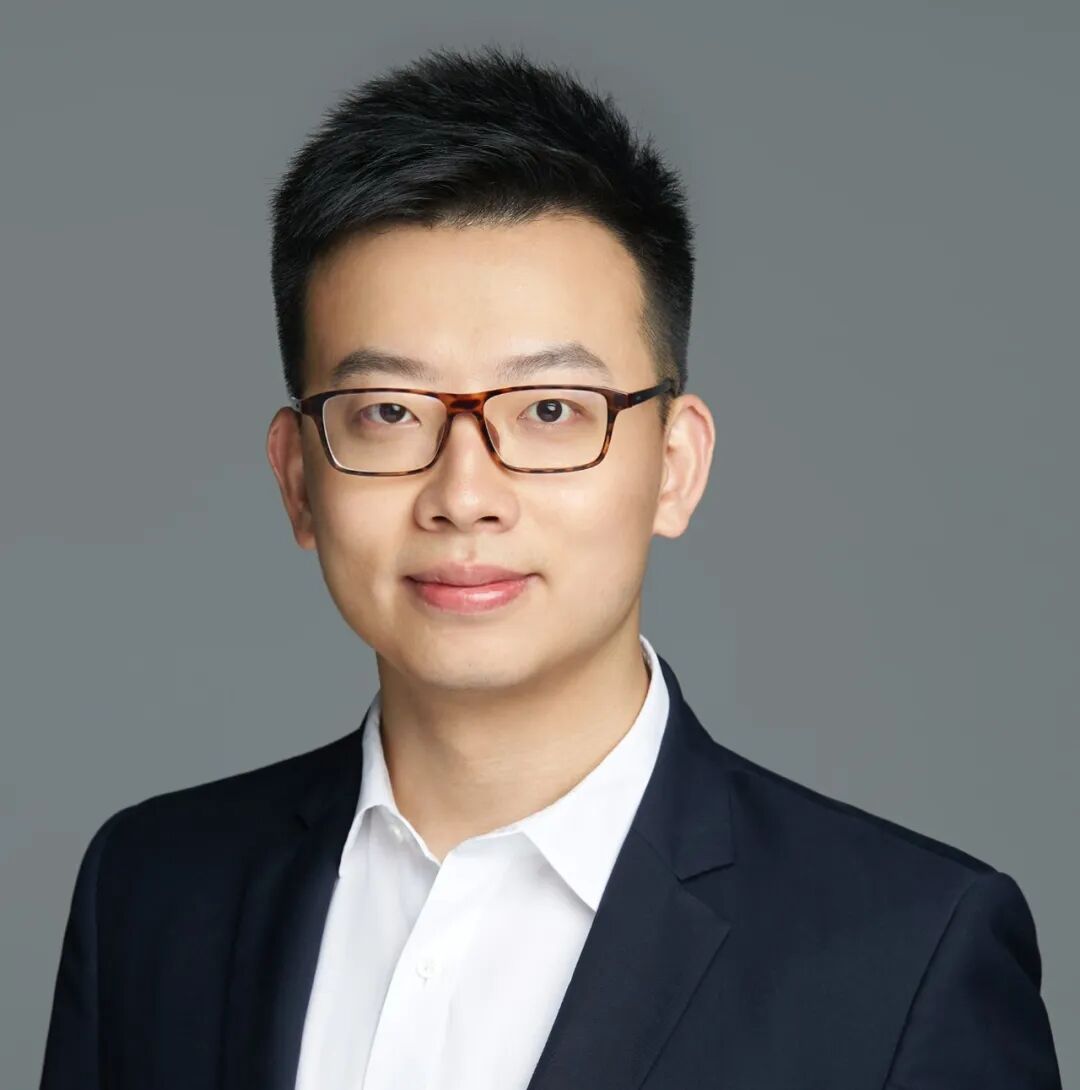
Hang Chen
Neox Biotech
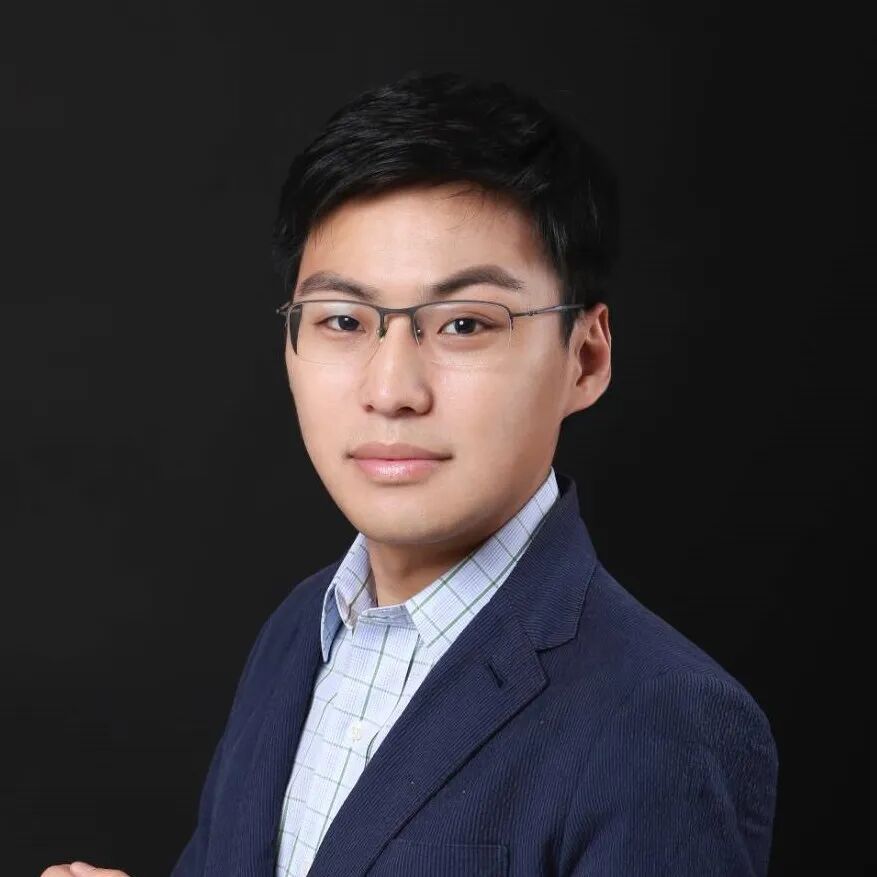
Caida Lai
METiS Pharmaceuticals
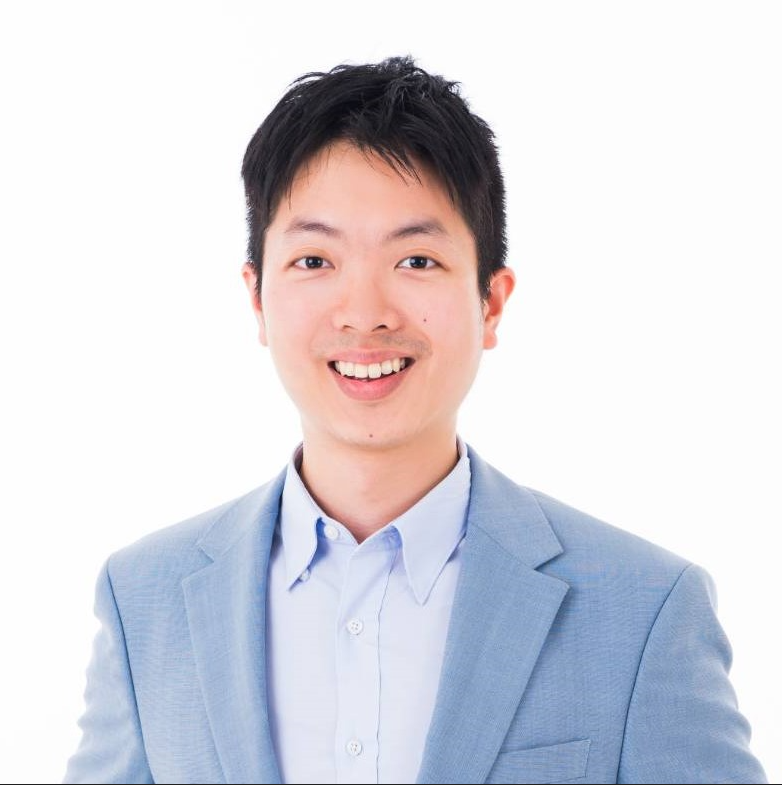
Yuchong Wang
CellX Biosciences
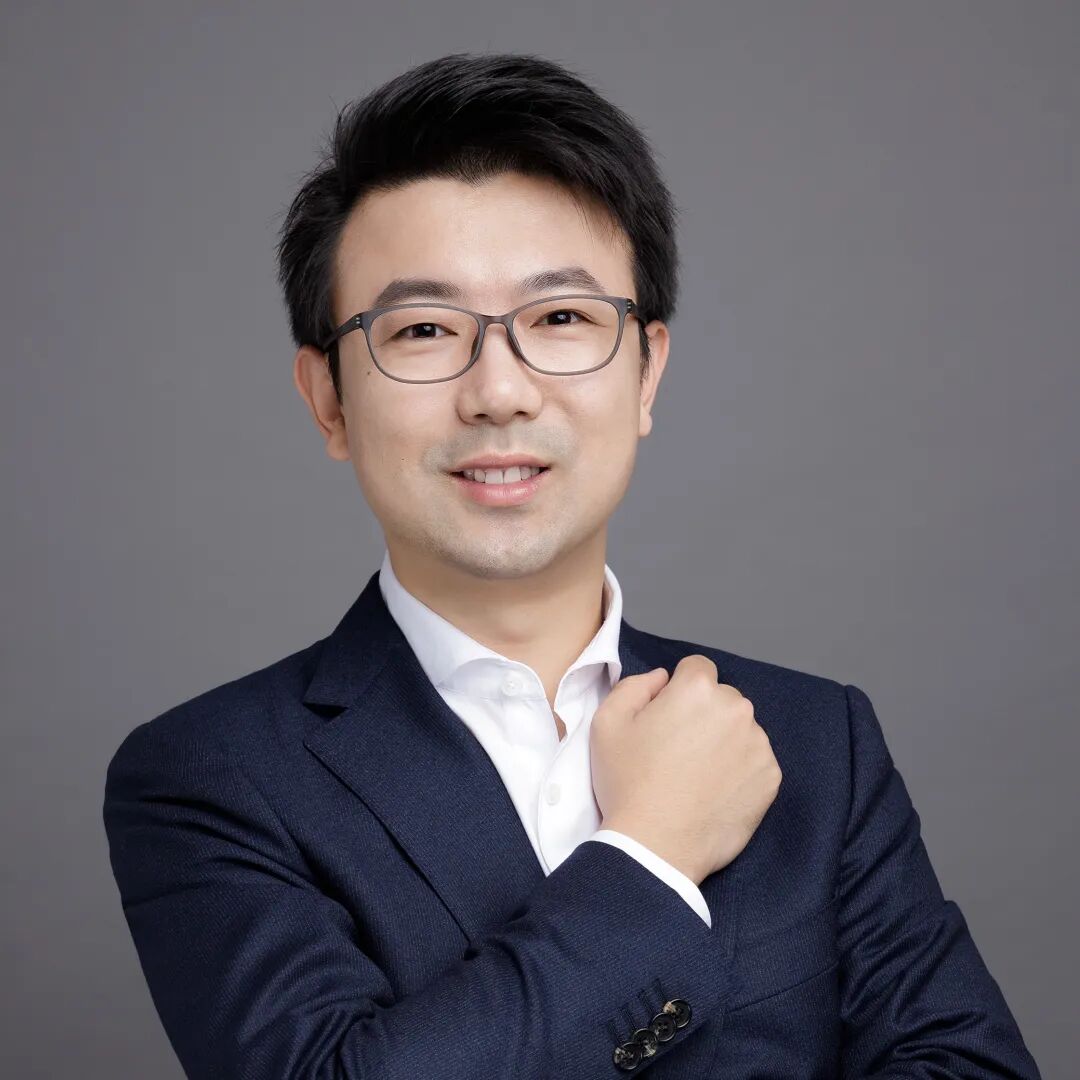
Shuhao Wen
XtalPi
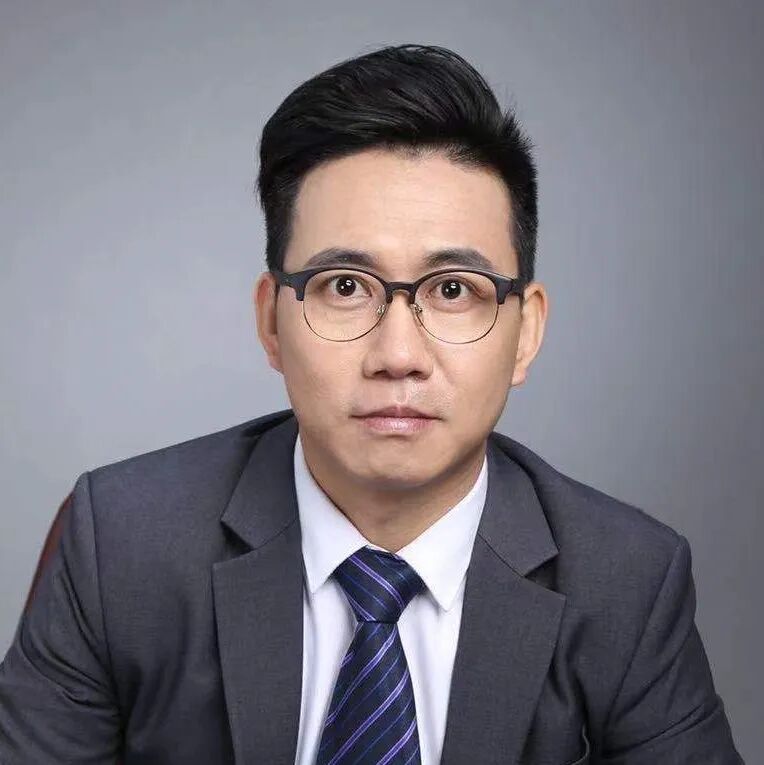
Wen Wen
Huanyi Bio
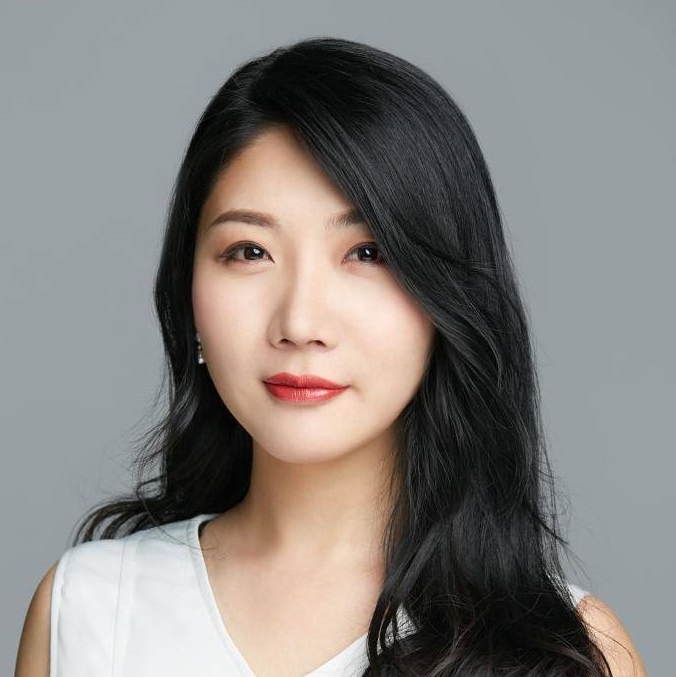
01
New Possibilities for ITBT
Jing Xu: 5Y Capital has always paid close attention to the application of information technology across vertical industries, and pharmaceutical R&D is a particularly important one. Over the past decade, digital development across the pharmaceutical field has accelerated rapidly. Foundational building blocks across the industry have become digitized, and many problems can now be solved through new approaches.
We began actively investing in this space three years ago. Looking at where we stand today, both technologically and commercially, the industry has already achieved very solid early validation. Today we've invited five entrepreneurs from this field to share their companies' progress and their outlook on the industry's future.
Please start with brief introductions.
Caida Lai: Hello everyone, I'm Caida Lai, founder and CEO of METiS Pharmaceuticals. METiS focuses on using AI to drive drug delivery, including small-molecule drugs and mRNA-based nucleic acid therapeutics. We leverage AI, high-throughput technology, and quantum computing to develop multi-organ and tissue-targeted delivery platforms for the liver, lung, spleen, muscle, and other organs.
Currently, with delivery as our core capability, we collaborate with pharmaceutical companies to develop pipelines, and the range of deliverables keeps expanding — from mRNA to siRNA, saRNA, and CRISPR. We're also advancing several proprietary pipelines, with our lead candidate potentially reaching Phase III clinical trials next year. The company is now transitioning from a technology platform to a product platform.
Hang Chen: I'm Hang Chen, co-founder and CEO of Neox Biotech. Founded in 2018, our company combines AI, biophysics, and high-throughput experiments to design and develop drugs from the ground up. We're also the first company in China to focus on AI-driven biologic drug development.
We initially entered the field of large-molecule biopharmaceuticals. In the small-molecule space, we're focused on developing generalizable methods for PROTAC design. In both directions, we're building proprietary pipelines while partnering with major pharmaceutical companies on co-development.
Wen Wen: I'm Wen Wen, founder of Huanyi Bio. Huanyi Bio is the first company in China to combine AA algorithms with systems immunology data, establishing a multi-omics computational platform solution. We focus on oncology, autoimmune diseases, and neurological disorders. Based on human multi-omics data, we combine AI and computational biology to build digital disease models, decode the immune system, and efficiently enable the discovery of novel biomarkers and drug targets.
The key pain point we address is that existing in vitro models and animal models for drug R&D often fail to translate into therapeutics that prove effective in clinical trials. We believe the only way to move forward on this problem is to build digital models based on real human data — that's what Huanyi Bio is working on.
Yuchong Wang: Hello everyone, I'm Yuchong Wang, founder and CEO of CellX Biosciences. CellX Biosciences is a foundational biotech company that I founded with several colleagues after returning to China in 2016. We're dedicated to developing tools that can drive fundamental advances in how we understand life sciences.
The platform we're currently developing is called mass cytometry, a leading single-cell analysis technology by global standards. We're actively exploring everything from underlying hardware and reagents to end-to-end solutions.
Shuhao Wen: I'm Shuhao Wen, founder of XtalPi. XtalPi is dedicated to the digital, automated, and intelligent transformation of the pharmaceutical industry. Our vision is to let AI flow into every new drug.
We believe the pharmaceutical industry is undergoing a paradigm shift — one driven by algorithms, computing power, and robotics, rather than the previous human experience-driven trial-and-error approach. These new technologies can be applied to upgrade the digital infrastructure of the drug industry, and XtalPi is committed to building this new digital infrastructure to empower novel drug discovery.
02
From Technology to Business: Progress and Breakthroughs
Jing Xu: Overall, digital pharmaceutical R&D remains a relatively emerging field. For any emerging industry, people care deeply about tangible progress. As insiders, we're quite confident and can clearly see the actual progress each of you has made.
Please share some concrete breakthroughs in your products and technology, as well as your commercial experiments and progress.
Shuhao Wen: Looking at the pharmaceutical industry as a whole, the world's largest top-tier pharma companies are all actively embracing new digital solutions — this is an inevitable trend.
For our company, we're building integrated R&D capabilities and using AI and automated robotics to improve efficiency in critical drug development stages, with several strong partnership cases. Many companies are initially skeptical of this new model, but the results often exceed their expectations. Under this AI- and digitally-driven new paradigm, R&D costs are lower, delivery is reliable, and overall efficiency improves dramatically.
In novel drug discovery programs, algorithms, computing power, and robotics can solve many previous bottlenecks in pharmaceutical R&D, generating enormous returns. Recently we signed an excellent partnership where robots work alongside humans to provide customized drug discovery services for clients, feeding high-quality data back to AI algorithms in a closed loop. The robots can run experiments 24/7 uninterrupted — in terms of speed, this is genuinely a qualitative leap.
Yuchong Wang: Starting in early 2021, we gradually opened our platform to cornerstone users and partners, and officially launched it at the Chinese Immunology Conference on October 22 last year. We now have substantial user-side installations and testing underway. From meeting baseline platform performance to actual user-side applications and optimization, we've done extensive work for different scenarios. Our installed user base is growing rapidly across China, including top clinical institutions in hematology and oncology, as well as pharmaceutical industry partners.
The core value we provide is, on one hand, largely solving current problems in clinical cellular analysis — especially since the pandemic, clinical demand for high-performance products has been very strong. On the pharmaceutical side, the demand for screening efficiency is also increasing. More sensitive, higher-resolution analytical tools are needed, and we're further integrating and developing industry-standard solutions.
Wen Wen: What we do is build digital models to improve the efficiency of novel drug R&D and ultimately the success rate of clinical trials.
On the technology side, we're trying to handle every step of early-stage R&D in a very granular, systematic, industrialized way. From obtaining clinical samples, to generating multi-omics data in the lab, to modeling on our computational platform, generating large-scale hypotheses, and conducting various validations based on knowledge bases and expert input.
Every step in the value chain has companies working on it, but building an end-to-end platform is really the key to improving efficiency. We also use AI and automation technologies to enhance efficiency at each step.
Through three years of effort, we now have preliminary validation for targets in two oncology indications and one autoimmune disease. Running these programs through our platform, both efficiency and validation success rates have improved significantly compared to traditional experimental methods. Because we start from humans rather than animals, the success rate when we return to humans becomes higher.
Commercially, we provide customized services to some companies. On the product side, we both co-develop with partners and pursue independent R&D. What we do is actually the earliest stage of the R&D chain — achieving clinical trial success truly takes a very long time. But we believe there's enormous value in doing this stage, so we're patient about proving our technology platform's capabilities over time.
Hang Chen: In the large-molecule biologics space, our platform technology spans protein-protein interaction-based drug design, precision library construction combining high-throughput experiments with phage and yeast display, AI-based rapid screening for developability, and finally computational design-based optimization — achieving end-to-end drug discovery with both proprietary and partnered pipelines.
Over the past six months we've focused heavily on R&D, with the goal of advancing our pipelines to the clinical stage. Our partnered pipelines are progressing very well, and our proprietary pipelines are expected to file IND applications in the second half of next year. We're currently in a transition from an AI-empowered biotech to a clinical-stage biotech, and hope next year will be a harvest season.
Caida Lai: As I mentioned, we work on drug delivery. Over the past few years we've connected AI with our high-throughput platform. We're the first globally capable of this kind of complex formulation delivery, particularly LNP platforms — it's like our own equipment set, with efficiency improvements of several orders of magnitude.
We're currently co-developing several vaccines and pushing these functional pipelines toward POC stage. We're also partnering with several major domestic pharmaceutical companies on mRNA and siRNA collaborations to develop application scenarios, with very substantial deal sizes.
Meanwhile, as we work on mRNA we're also moving upstream in the process. Because the track itself is so new, many steps naturally require AI integration. Beyond delivery, we're also building out sequence design capabilities to complete an end-to-end platform, then partnering extensively with pharmaceutical companies.
Beyond platform-based external collaborations, we also have a self-driven pipeline platform running roughly 19 programs in parallel, including small molecules and mRNA. Delivery is inherently closer to the clinic — our small molecule program will complete Phase I this year and begin Phase III next year, while our mRNA pipeline should reach IND filing stage next year, hopefully allowing us to advance pipelines at scale.
03
The Future We Envision
Jing Xu: I'm very glad everyone shared such encouraging progress. We can already see that the integration of IT with pharmaceutical R&D is outperforming traditional methodologies in R&D efficiency, resource savings, and many other dimensions. The entire pharmaceutical R&D paradigm is shifting.
The third question is more open-ended. Please imagine what changes might occur across the ITBT field over the next 5-10 years or longer. This could be commercial or technological.
Caida Lai: I've always said that applying AI to novel drug discovery is an exceptionally good use case — we're really just getting started. Starting from delivery, the entire gene therapy, nucleic acid therapy, and cell therapy space represents enormous opportunities. Especially for nucleic acid drug R&D, since these are inherently endogenous human codes, I think many companies will work to decode how they influence disease states.
The other direction is, after understanding how codes affect disease, companies like ours design codes to transform a diseased cell back into a healthy one. There's so much to do here. After biology drives the discovery, you basically have to use AI — like with delivery, the design space is enormous. I think over the next 5-10 years, the ability to read and write disease cells will be critical. AI's role will become increasingly important at every step. What it brings may not just be efficiency gains, but things that are simply impossible without AI — that's an enormous application scenario.
Hang Chen: In large-molecule biologics, we're currently integrating multiple technologies, with computation being one very important component. Gradually, as our understanding of data and proteins deepens, computation's share will grow larger. It may open up spaces previously unimaginable. Nature can discover proteins, and non-natural proteins can also be obtained — we can understand and design both based on computation. Across protein engineering, traditional methods combined with AI can have very broad applications.
Additionally in PROTAC (proteolysis-targeting chimera), what we're doing is rational drug design based on AI computation. Small molecules had the Rule of Five — can the Rule of Five still apply to PROTACs? Not necessarily, and many results have shown it no longer works. Is it possible to rapidly establish rational design standards for PROTACs and other protein-degrading small molecules based on AI computation? This is something the industry is heavily focused on.
Wen Wen: We're also working on some fairly large projects, and it's very clear that the digital disease model space is at an incredibly exciting moment. Much of what we're doing now wasn't possible five years ago.
The concept of systems biology has existed for a long time. People often talk about systematizing biology, but in reality we're still very far from systematizing biology. The biggest reason is data. But with the development of various upstream technologies in recent years, we can now obtain vast amounts of data, and our understanding of relationships between data is growing exponentially.
Academia worldwide is now extensively using AI technology and biological computation to piece things together bit by bit. Going forward, digitally and systematically simulating biology or disease is no longer a pipe dream — this is what's happening now. People are coming together, the entire medical community is working hard on this, to understand disease and solve problems. This is happening now.
Of course, even under very ideal conditions, translating a target into a drug takes many years. But today represents a starting point. Some exciting things will gradually emerge, and in 5-10 years there will definitely be very good results from some of these digital models. This is incredibly exciting for us.
Yuchong Wang: I very much agree with this perspective. Five years ago, it would have been nearly impossible for us to build such large-scale complex mathematical models and achieve breakthrough innovations in algorithms or more advanced fields. A crucial underlying reason was data generation.
In my understanding, life sciences has always been a top-down science. New cognitive tools will always drive progress in the industry's understanding. The reason ITBT is flourishing so vigorously is largely that vast amounts of high-quality data can now be generated — this is partly accumulation over time, and partly improvement in data production tool performance.
Some international industry research reports also argue why ITBT will be a "golden goose" story. Actually, their core argument isn't that ITBT is a goose that lays golden eggs, but rather a goose that lays better eggs.
In the current industry landscape, global pharmaceutical industry's demand for innovation is increasingly strong. Everyone is hoping for new breakthroughs, and we're trying at many levels. Whether in the short term or long term, new technologies, new tools, and new methods can bring greater certainty and clearer efficiency improvements to this industry — this is definitely a clear trend.
In the near term, commercially, the challenge we face is how to provide significant efficiency improvements for existing needs in this industry. This is what we're doing and can prove in the short term. In the current macro environment, I clearly sense that both Chinese and American companies are increasingly willing to try efficiency improvement tools — not decreasing — because we know that doing more of the same homogeneous things probably offers no hope.
In the long term, ITBT technology brings not just efficiency gains, but the ability to achieve things previously completely impossible. Of course, medicine itself requires very long trial-and-error cycles, and may not be provable to everyone in the short term. But we're already seeing many positive attempts at various stages, achieving new scenarios that were previously completely unrealizable. For the ITBT field as a whole, this has long-term value.
Shuhao Wen: I very much agree with the other founders. New technologies will definitely bring a wave of paradigm change and significant dividends to the pharmaceutical industry. Everyone has mentioned progress at many stages, and I have some concrete feelings as well.
Recently our automated robots have begun to be deployed at scale in drug discovery. Robots can test continuously without interruption, with minimal requirements for the operating environment, and can largely take over standardized manual labor in laboratories. I look forward to seeing AI + robots unlock enormous R&D productivity, transforming drug experiments from labor-intensive to computation-intensive work. Perhaps only experienced experts need to make decisions remotely, and robots can conduct synthesis and testing 24/7 uninterrupted. This will bring very large, previously unimaginable changes in models to this industry and to companies, bringing more efficient, cheaper, and globally optimized drugs to the entire pharmaceutical industry.
Jing Xu: Thank you all very much for sharing. As an investor, I believe ITBT has today completed its proof-of-concept phase, and we're very fortunate that this concept has been validated. The overall market may currently be in a cooling-off period, but I also think it's an excellent opportunity for us to seize the technological lead in early-stage productivity, transform this new generation of productivity into commercial leadership, and ultimately achieve corporate success.




5Y Capital seeks out, supports, and inspires lonely entrepreneurs, providing support from the spiritual to all operational aspects. We believe that if the world begins to believe in the "crazy" you that others see, the world will become a different place.
BEIJING · SHANGHAI · SHENZHEN · HONG KONG