Ten Years of Lessons: 9 Tips for International SaaS Startups | 5Y View

Find people who also believe in long-termism.


Kai Liu, Partner at 5Y Capital
Building a SaaS startup is a long-term game. How do you improve your odds of success? In this article, Teddy Chan, CEO of AfterShip, shares the lessons and insights distilled from a decade of entrepreneurial experience. The approaches he describes may not suit every SaaS company, but they could help founders avoid some common pitfalls — and hopefully offer useful reference and inspiration.
Reposted from SaaS 102
Author: Teddy Chan
Starting a company in SaaS is brutally hard. Roughly 92% of SaaS companies fail within their first three years. In my view, there are many factors that make a SaaS company succeed, but the reasons for failure are depressingly similar.
So I want to draw on my ten years of experience building international SaaS businesses, plus observations of other SaaS companies in the industry, to share some recommendations that might improve our odds as SaaS founders:
1. Start from a pain point the founder personally experiences;
2. Dominate a niche with a sharp, focused product, then expand up and downstream;
3. From day one, think about how to sell the product;
4. Understand that the core of SaaS is service, not software;
5. Stay lean and prioritize standardized product offerings;
6. Stay open and connected, partnering with others to serve customers well;
7. In the early stage, prioritize customer retention and gross margin, not customer count;
8. Find metrics tightly linked to customer success, and use them to drive the entire team toward customer success;
9. Prepare the patience and cash flow to keep going for at least five years before seeing results, and find talent who also believes in long-termism.
These lessons won't apply to every SaaS company, so please take them with an open mind. And if you see things differently, I'd welcome the conversation.
1. Start from a pain point the founder personally experiences
When we start a company, we typically need to do two things: identify a customer pain point, and find a way to address it.
In my view, the ideal scenario is when the founder has deeply felt this pain themselves, then found a way to solve it, and eventually iterated that solution into a standardized SaaS product for the market.
If you have a personal pain point and build a solution for it, your odds of success are roughly 1%. If you don't have that personal pain point — if you have to go find one first, then build a solution — that's essentially two startups stacked together, and your odds become 1% × 1% = 0.01%.
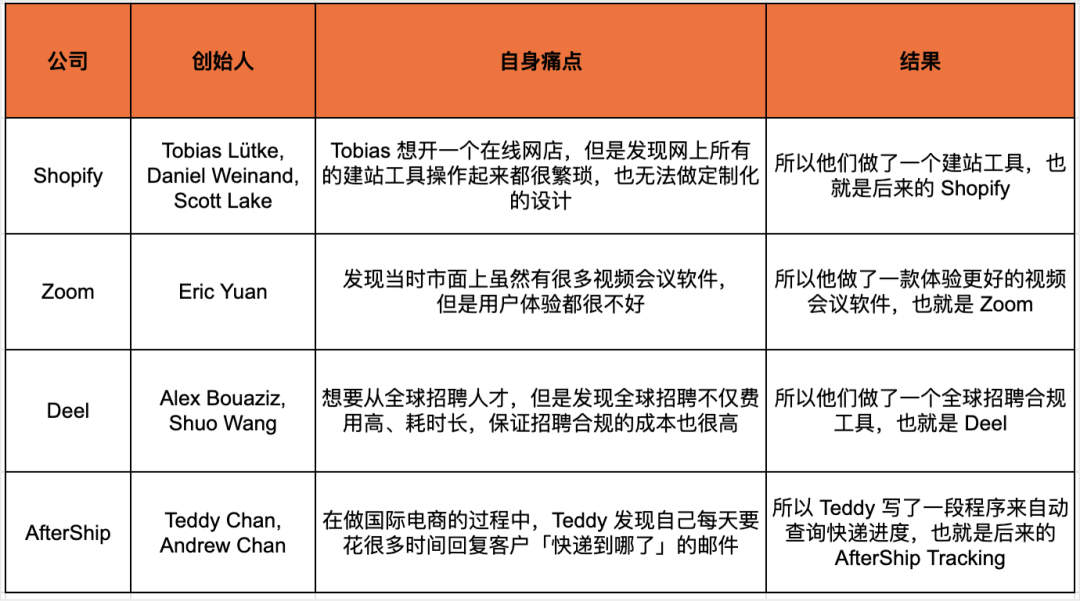
From what I've observed, many successful SaaS founders started by building products to solve their own pain points:
2. Dominate a niche with a sharp, focused product, then expand up and downstream
After identifying a pain point, founders typically face two questions:
- Should I start from a very small market segment and aim to become the leader there first? Or should I go after a larger market from day one and fight my way through established competitors?
- Should I build a comprehensive product covering all business scenarios? Or start with a small, elegant product solving a single point problem?
My recommendation: prioritize finding a niche, build a small but excellent product, and once that product is performing well enough, use it as a wedge to expand up and downstream with more products.
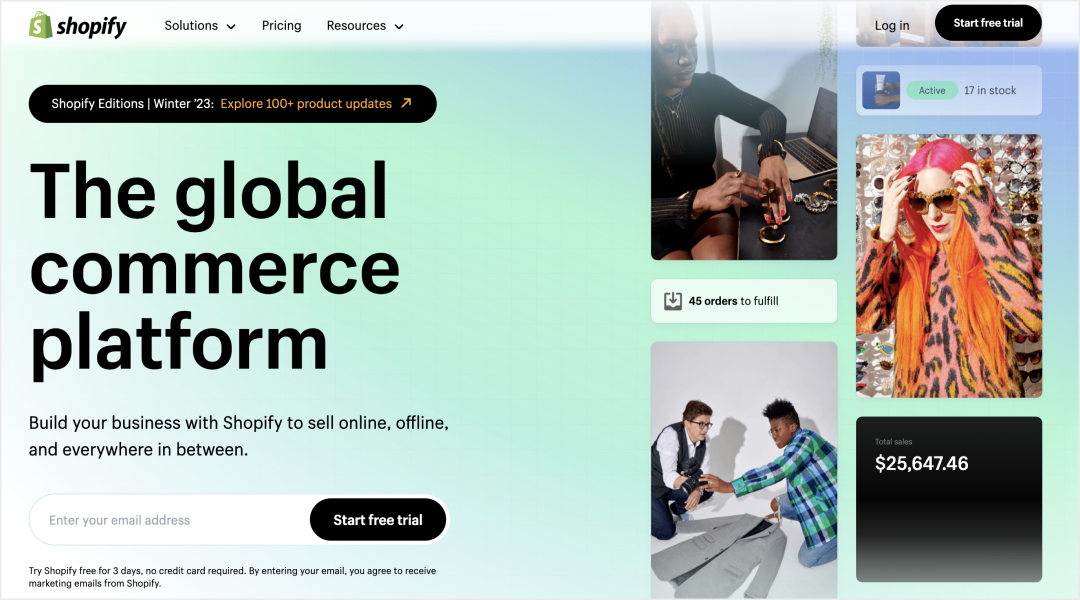
Take Shopify. It started as a tool that let individuals and small businesses with zero web development experience quickly build their own e-commerce sites. After attracting an initial batch of customers, Shopify rolled out more features that customers needed in their online store operations — store design tools, SEO tools, payment gateways, and so on. As its customer base grew, it continued adding marketing tools and an app store, expanding up and downstream into Shopify Plus, POS systems, and Shopify Pay, while opening its API to let external developers build integrated applications. Eventually it built a full e-commerce ecosystem [2].
(Image source: https://www.shopify.com/)
Or look at HubSpot. It started with products to help businesses with blogging, social media, and email marketing. Then, based on customer business scenarios, it expanded up and downstream into HubSpot CRM, Marketing Hub, Operations Hub, Service Hub, and more [3].
And if you look closely, whether it's the recently hot Deel or established giants like Microsoft Office 365 that transitioned from on-premise software to SaaS, they all basically follow this strategy of "find a niche first, build a sharp product, then use it as a wedge to expand up and downstream."
3. From day one, think about how to sell the product
In the early stages of SaaS entrepreneurship, one of the most important things is finding target customers and quickly validating whether you're selling a "vitamin" or a "painkiller."
A "vitamin" means: the product might help the customer somewhat, but not using it isn't a big deal.
A "painkiller" means: the customer has an acute pain right now, and they must use your product to solve it — with immediate visible results.
The most direct way to validate whether you're selling a vitamin or a painkiller is to try selling the product to customers.
Here's the traditional product development flow:
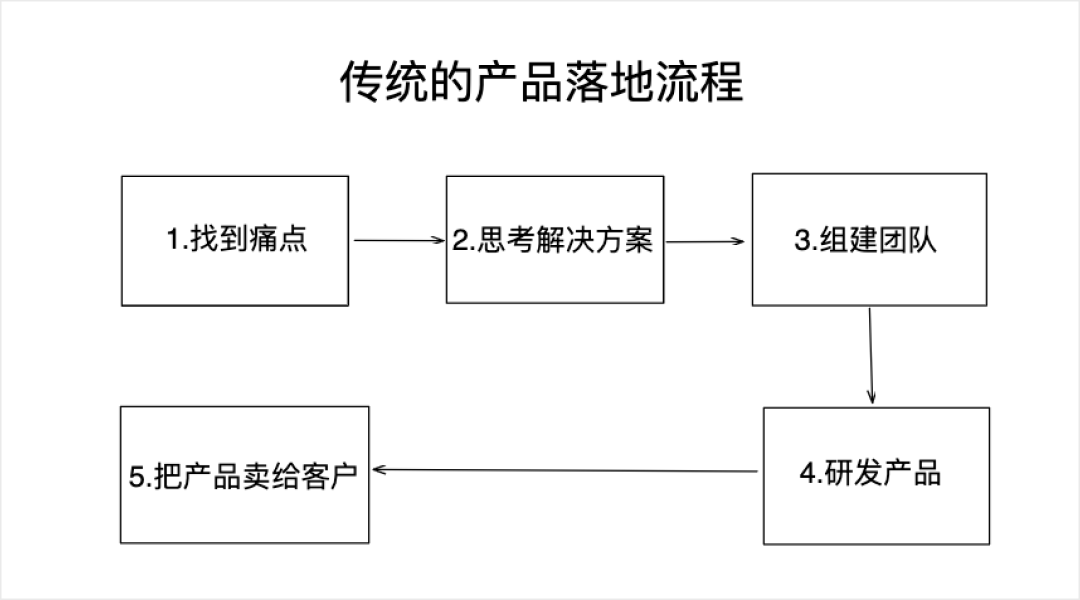
The biggest problem with this traditional flow: the feedback cycle is extremely long, and validation costs are high. Too often, we spend six months building a team, invest one to two years developing a product, and only when we finally bring it to market do we discover: the pain point we assumed wasn't the customer's real pain point, and the product we built has almost no paying customers.
So to validate pain points as early as possible, I recommend moving "sell the product to customers" ahead of "build a team" and "develop the product":
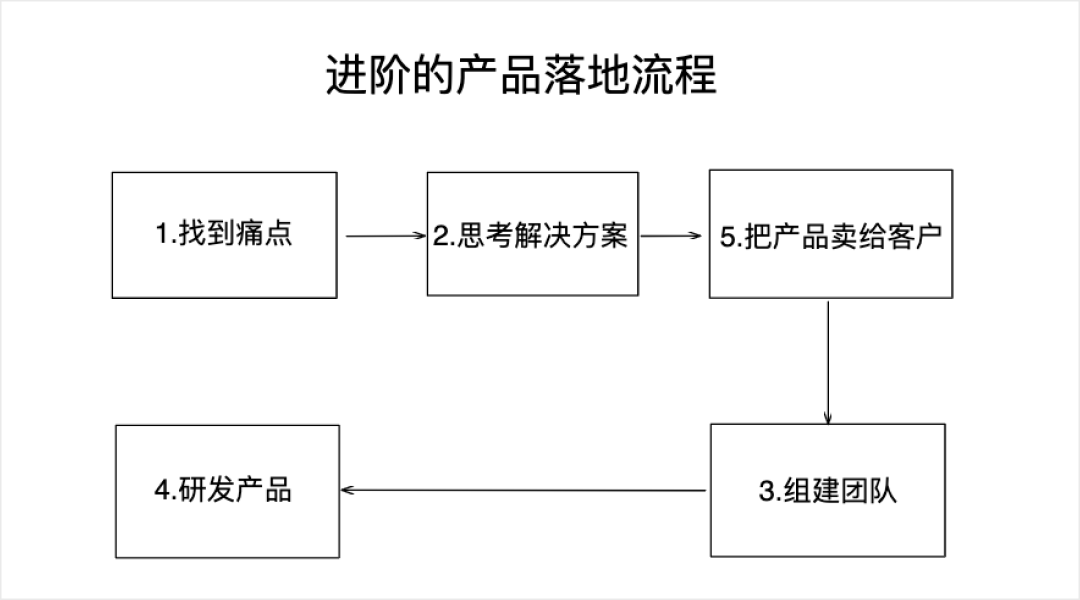
We don't need to invest massive time and energy building teams and developing products upfront. We can pretend the product is already done (or build only a core-functionality Beta version), then try selling it to customers and see how many are willing to pay.
If many customers are willing to pay, then we go all-in on team building and product development. If almost no one is willing to pay, we can rethink the customer pain point and solution, then run through the "1-2-5" loop again.
4. Understand that the core of SaaS is service, not software
As a technical founder, I deeply understand the fixation some peers have on "I need to use the best technology to help customers solve problems." But from the customer's perspective, compared to what technology underlies your service, they care far more about whether your solution actually solves their problem.
So as founders, we need to focus more on what customers truly need, not on what our technology can do.
For example, to help customers solve the problem of compliant hiring around the world, Deel registered over a hundred legal entities across different countries and regions, and hired numerous local legal advisors to develop contract templates that meet local regulatory requirements.
These things may not be "software," but they are "services" that genuinely solve customer problems.
Another example: our AfterShip Tracking product. To provide logistics tracking services for global e-commerce sellers, we had to integrate with shipping carriers from all over the world.
Technically speaking, this work isn't sexy at all — in fact, it's tedious and unglamorous. But because we wanted to provide better service to our customers, we had to do it. That's why AfterShip has spent the past ten years persistently integrating with over 1,000 shipping carriers globally.
5. Stay lean and prioritize standardized product offerings
In the early days of building a SaaS product, many people face two questions:
- Should I raise funding?
- Should I take on large customer customization requests?
Some people raise funding without a second thought, then build teams of dozens or even hundreds. And because the team has grown, burn rate increases, so under pressure from investors and cash needs, they feel forced to take on customization requests from large customers. But in my view, large customer customization is like slow poison for SaaS companies — it may relieve cash pressure in the short term, but the damage grows over time.
To avoid this problem from the start, we came up with a simple solution: in the early stage, keep the team small, avoid raising funding if possible, and refuse customization requests.
Staying lean and standardized has several benefits:
- Small teams have lower communication costs and lower trial-and-error costs;
- Small teams burn cash slowly, letting you focus time and energy on refining the product rather than fundraising or chasing large deals;
- Standardization lowers customer acquisition and maintenance costs, speeds up customer acquisition, and maximizes marginal profit.
Because of its standardized product offering, Crisp serves 200,000 global users with just 14 people [4]. Expensify serves over 639,000 paying customers globally with 140 people [5].
Even among successfully listed SaaS companies, according to Meritech Capital's research on 2022 SaaS IPOs, the median team size was only 940, with a median ARR of $223 million [6].
6. Stay open and connected, partnering with others to serve customers well
Because we start with a small team and solve customer problems through standardized product offerings, a common situation arises:
Our product and service can only satisfy about 70% of customers' real business scenario needs. For the remaining 30%, our product can't cover them.
For this portion, my recommended approach is:
Stay open and connected, and meet this part of customer needs by supporting integration with more partner solutions.
According to SaaStr data, SaaS companies in their growth phase support integration with an average of around 15 partner software solutions; listed SaaS companies average around 350; and market-leading SaaS companies like Shopify, Atlassian, and Slack support integration with over 2,000 partner software solutions [7].
SaaS open connectivity is actually a win-win-win:
- For customers, they can better solve their business problems by integrating and using partner software;
- For partners, they gain opportunities for more traffic and customers;
- For the SaaS company itself, we not only avoid custom-developing certain specific features while still serving customers well, but also gain opportunities for more traffic and customers from partners.
So I strongly recommend friends building international SaaS businesses to stay open and connected, partnering with others to serve customers well.
At AfterShip, we currently integrate with over 60 partner software solutions, including some competitors to certain of our products:
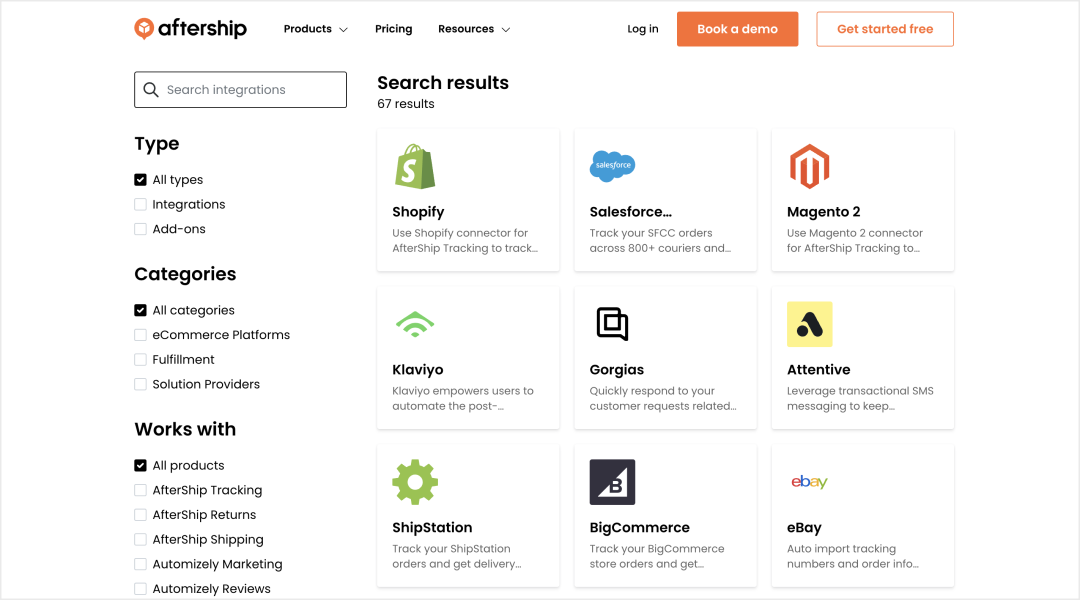
(Image source: https://www.aftership.com/integrations/search)
7. In the early stage, prioritize customer retention and gross margin, not customer count
Once we've found our entry point, built a lean team, refined our product, and acquired some customers, many founder friends face a new question:
Should I accelerate customer acquisition and grow the customer count as fast as possible? My recommendation: before growing customer count, we should first ensure customer retention.
I often tell teams working on new products: "You have 100 customers now. Don't talk to me about getting 1,000 new customers, or 10,000. Can you first serve these 100 customers well and get them to stay?"
Because in most cases, acquiring new SaaS customers requires customer acquisition cost, and ongoing service delivery has costs too. Even once our SaaS product is generating revenue, it typically takes about six months to a year to recover acquisition costs [8].
So if we haven't raised customer retention and product gross margin to a certain level, the more customers we acquire, the faster we die.
If your target customers are SMBs, a healthy monthly retention rate is 95%-97% [9]. And before accelerating acquisition, I recommend getting your product gross margin above 70%.
8. Find metrics tightly linked to customer success, and use them to drive the entire team toward customer success
The core of SaaS is renewals, and the key to renewals is continuously helping customers succeed.
But in the process of helping customers succeed, two problems typically arise: first, the team doesn't understand the importance of customer success, and can't constantly think about how to help customers succeed in their daily work; second, how do we make company revenue grow alongside customer business growth while providing better product service and helping them achieve better business results?
To solve both problems, I strongly recommend tying your product's pricing model to the customer's key business success metrics.
For example, our AfterShip Tracking product prices its service based on the customer's (e-commerce brand's) shipping order volume.
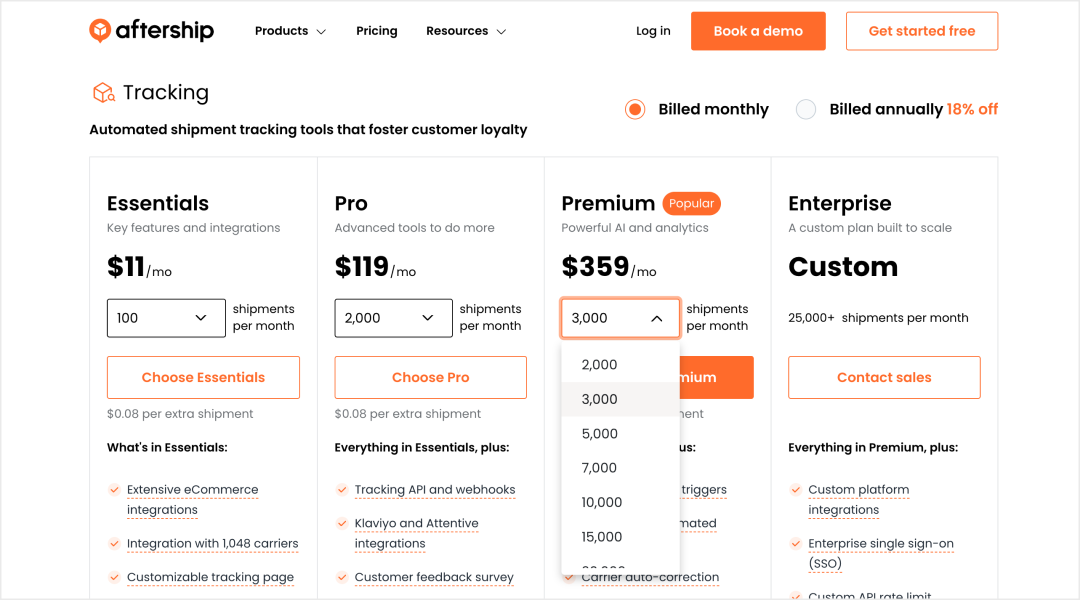
(Image source: https://www.aftership.com/pricing/tracking)
If AfterShip Tracking helps a customer create a better shopping experience for their consumers and strengthens the customer's brand influence, consumers will be more willing to shop on that customer's site.
As consumers buy more from that e-commerce brand, the brand's shipping order volume increases, which drives higher revenue for AfterShip.
Beyond this, we also push our team toward customer success by "trying not to let salespeople sign contracts longer than one year":
Because if we provide inadequate service but the customer is locked into a multi-year contract, they're essentially held hostage by the contract — even if dissatisfied with our service, they still have to pay us the following year.
But if we only sign one-year contracts, the team must find ways to serve customers well and help them succeed after signing, or the customer won't renew the following year.
9. Prepare the patience and cash flow to keep going for at least five years before seeing results, and find talent who also believes in long-termism
While in recent years, various factors have produced a series of hyper-growth SaaS companies like Slack, Deel, and Wiz that rapidly broke through $100 million ARR.
Overall, SaaS entrepreneurship remains a long-term endeavor — and by long-term, I don't mean two or three years, but five years at minimum.
According to Kimchi Hill's 2020 research on 140 top global SaaS companies that broke $100 million ARR, only 8.3% reached that milestone in five years or less [10].
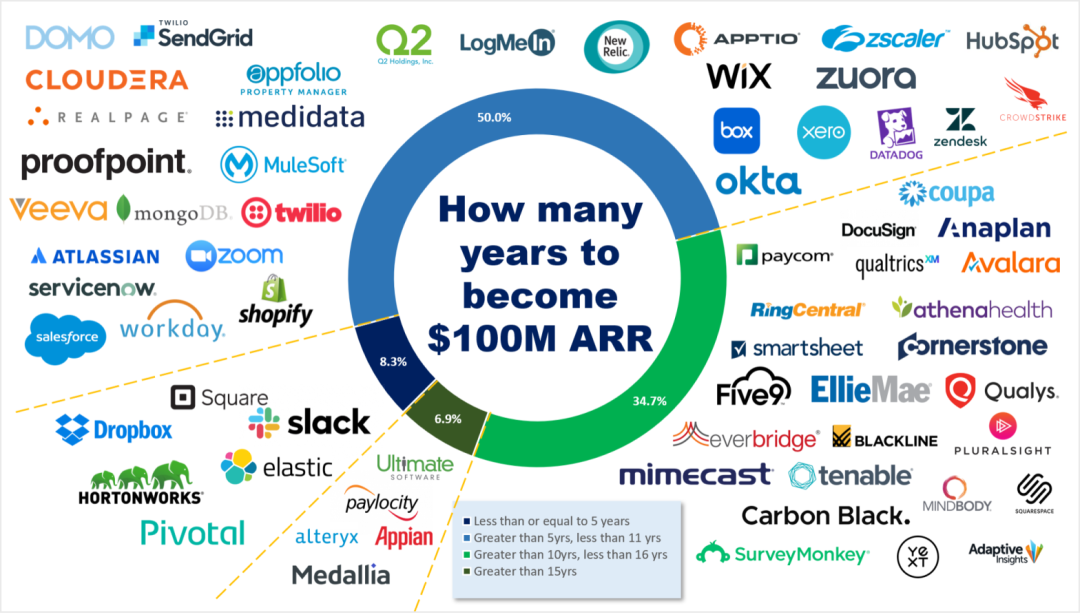
(Image source: https://kimchihill.com/2020/04/09/path-to-100m-arr/)
Even these highly successful SaaS companies in the industry mostly took five to ten years, or even fifteen years or more, to reach $100 million ARR and become visible to the world.
We only see how successful these SaaS companies are now, but overlook that on average they also spent 4.5 years just to reach $10 million ARR from founding — not to mention all the other companies that fell along the way.
So in SaaS entrepreneurship, even if we've found a great customer pain point and market entry point, and built a sharp product with the core team, we still need the patience and cash flow to keep going for at least five years before seeing results.
And when building the team, beyond assessing professional capabilities, we need even more to evaluate whether someone is truly long-term oriented, whether they believe in what we're doing, and whether they have the determination and patience for long-term commitment.
Only by finding the right people who share this long-termism can we walk together to the finish line.
Summary
Starting a company in SaaS is brutally hard. There are many factors that make a SaaS company succeed, but the reasons for failure are depressingly similar.
So to help friends who want to build international SaaS businesses avoid some detours, I've summarized the following recommendations:
- Start from a pain point the founder personally experiences;
- Dominate a niche with a sharp, focused product, then expand up and downstream;
- From day one, think about how to sell the product;
- Understand that the core of SaaS is service, not software;
- Stay lean and prioritize standardized product offerings;
- Stay open and connected, partnering with others to serve customers well;
- In the early stage, prioritize customer retention and gross margin, not customer count;
- Find metrics tightly linked to customer success, and use them to drive the entire team toward customer success;
- Prepare the patience and cash flow to keep going for at least five years before seeing results, and find talent who also believes in long-termism.
I hope these recommendations are helpful.
Reference links:
[1] https://www.lightercapital.com/blog/why-do-most-saas-startups-fail
[2] https://en.wikipedia.org/wiki/Shopify
[3] https://en.wikipedia.org/wiki/HubSpot
[4] https://www.reddit.com/r/SaaS/comments/pj0uvb/we_bootstrapped_crispchat_as_a_2person_team_to_1m/
[5] https://www.saastr.com/5-interesting-learnings-from-expensify-at-140000000-in-arr/
[6] https://www.meritechcapital.com/blog/2021-review-select-saas-ipos
[7] https://www.saastr.com/the-top-saas-companies-have-an-average-of-350-integrations/
[8] https://www.paddle.com/resources/payback-period
[9] https://www.saasgrowthhacker.com/average-churn-rate-in-saas/
[10] https://kimchihill.com/2020/04/09/path-to-100m-arr/
5Y Capital seeks out, supports, and inspires lonely entrepreneurs, providing support from the spiritual to all operational aspects. We believe that if the world begins to believe in the "crazy" you that others see, the world will become a different place.
BEIJING · SHANGHAI · SHENZHEN · HONG KONG