"Vika.cn Vika" Closes Two Rounds Totaling Over $10 Million in Funding, Chen Peilin: Giving 1 Billion People IT Capabilities | 5Y News

"High-code" new-generation digital business systems — giving IT capabilities to a billion people.

Shenzhen Vika Intelligent Data Technology Co., Ltd. ("vika") completed two consecutive funding rounds in late 2020 — Pre-A and Pre-A+ — totaling over $10 million. The Pre-A round was led by Eminence Ventures, with 5Y Capital participating; the Pre-A+ round was led by Hillhouse, with follow-on investments from Eminence Ventures and 5Y Capital.
Previously, 5Y Capital had led vika's angel+ round.
Founded in late 2019, vika's core product "vika.cn" is an API-oriented intelligent multidimensional spreadsheet, positioned as a next-generation enterprise data collaboration tool. Founder Peilin Chen previously served as CTO and head of digital marketing at HEYTEA, and as an architect at Kingsoft Software. He experienced and led a traditional company's digital transformation from scratch — a journey that ultimately inspired him to build vika.
We sat down with the founder to discuss what sparked his entrepreneurial leap and what he's learned about digital transformation along the way. Chen says the company's mission is to "empower 1 billion people with IT capabilities" — making it easier for ordinary people to wield programmer-like abilities while making programmers themselves more powerful. This, he believes, is a process of technological democratization.
Here's our conversation, edited for clarity. Hope you find it useful :)

Peilin Chen
Founder, vika
01
Making SaaS as Simple as Excel
5Y Capital: What was the original inspiration for starting vika?
Peilin Chen: It began with a frustrating experience.
In early 2019, I was helping relatives open a store in a third-tier city. We evaluated various business management systems, but they all found them too cumbersome — and ended up using Excel instead.
That was demoralizing. Those of us who talk about digital transformation every day — are we actually building things that are accessible enough? Easy enough? Are we really enabling technological democratization for ordinary people?
Around the same time, I was CTO at HEYTEA, leading a hundred software engineers who developed and maintained over a hundred IT management systems. I noticed two major problems:
Despite having so many engineers, most of their daily work involved repetitive database CRUD operations.
And no matter how polished our systems became, business teams would inevitably request one gut-punching feature — "Excel import."
I started asking myself: "What am I actually doing every day? Is it truly valuable? Meaningful?"
Something was missing. Between complex enterprise software and flexible Excel spreadsheets, there had to be a new product form.
I wanted to simplify complex SaaS enterprise software to be as intuitive as Office and Excel — so ordinary people could seamlessly access extraordinary digital technology.
This wasn't just my personal problem. If left unsolved, it would become "a societal problem" — every individual and organization seeking to elevate themselves through digitalization and IT would eventually face what I'd encountered.
So my starting point was never actually entrepreneurship. I hate starting a company for the sake of starting a company. I simply wanted to solve this societal problem and felt compelled to act. Entrepreneurship was merely the means to that end.
Looking back, launching the company was quite impulsive, and the journey has been so tortuous that I shudder a little. But if I'm honest about how I felt then — if I hadn't done this, I would have regretted it for the rest of my life.
vika may be what I was born to do. Every accumulation from my past career magically pointed toward this, as if by sleight of hand. I even feel I was made for this — it's my responsibility.
I must solve these problems for society, sparing enterprises, governments, organizations, and ordinary people from the agony of difficult IT digitalization. Everyone should be able to enjoy extraordinary digital technology.
5Y Capital: Compared to traditional SaaS software, what's vika's greatest advantage? Where's the disruption?
Peilin Chen: vika is an API-oriented multidimensional spreadsheet, but also a database technology that looks like a spreadsheet.
Different people understand vika differently. Common interpretations include: no-code/low-code application development platform, next-generation Excel spreadsheet, API-enabled visual database, and enterprise data collaboration software.
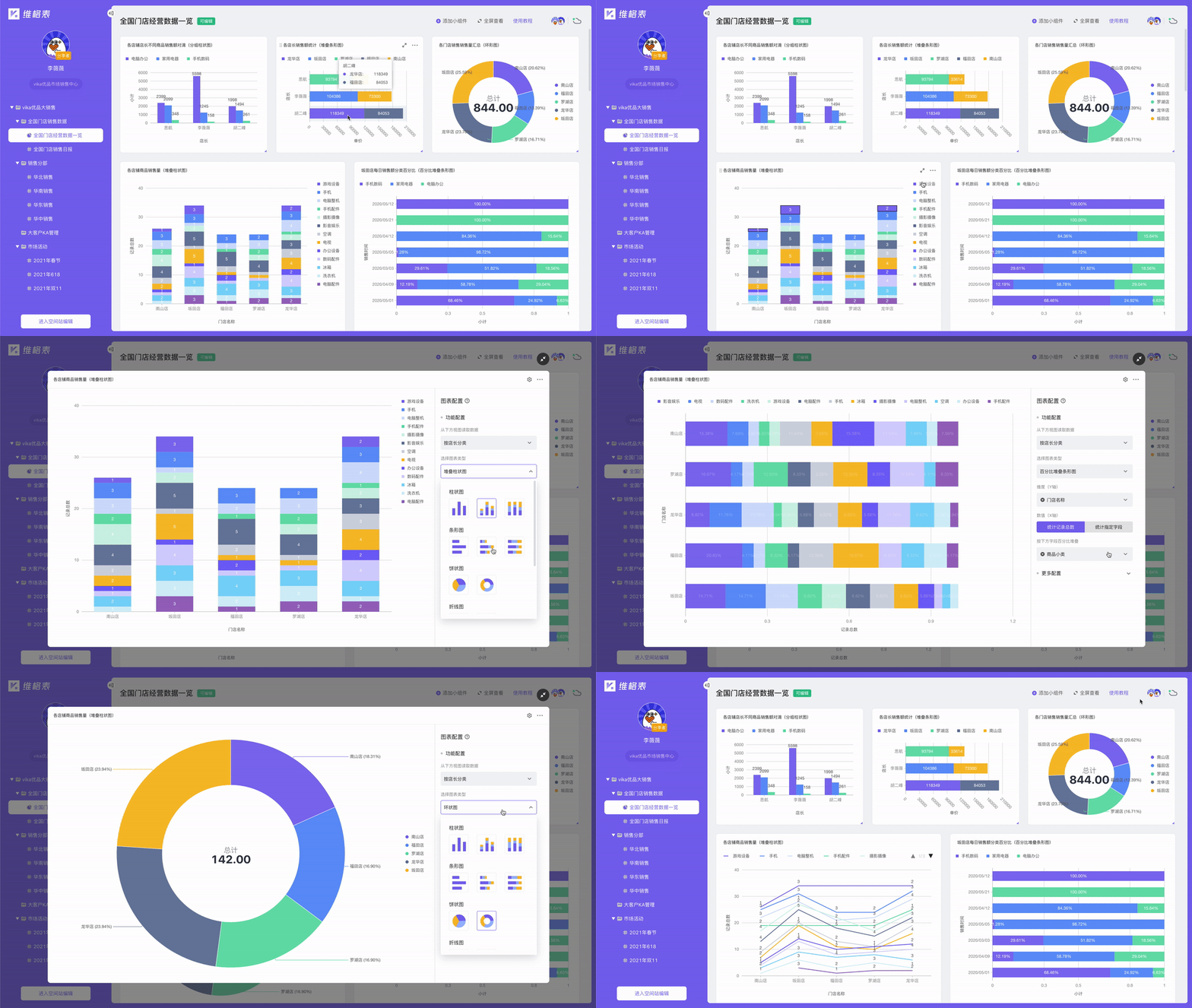
The biggest difference from traditional SaaS is that conventional software typically hardcodes business processes — each domain requires its own specific system.
Managing customers requires one system, managing products requires another, HR needs yet another, and project management needs a separate stack.
With vika, there's no software to download, no code to write. Ordinary people who understand Excel operations and basic data principles can easily build 1,000+ different scenario-based systems online — CRM, project management, e-commerce operations, inventory management, and more.

I firmly believe that in the long run, vika can solve massive organizational digitalization challenges and drive unprecedented societal efficiency gains.
Why is this possible?
vika looks like a new kind of "spreadsheet" on the surface, but at its core it's a "cloud-based relational database" with fixed column types and row structures.
Strictly speaking, it's an enterprise-grade connected "multidimensional spreadsheet" — or an enterprise-grade connected "visual database."

First, we need to understand a foundational principle of computer software — databases are the bedrock of all modern software.
Nearly all software is database-driven. But because conventional databases are highly abstract and lack graphical interfaces, a profession emerged: programming, or writing code.
The bulk of everyday coding work is essentially engineers taking highly abstract database models and writing concrete, human-friendly business logic to produce software that "humans can use."
Rather than "disruption," I'd call it "history rhyming." As early as the 1980s, dBase and similar database software already embodied this thinking.
I was fortunate to encounter computers and programming in kindergarten. The first three DOS programs I used were the game Prince of Persia, Kingsoft WPS, and Microsoft FoxPro.
Fate seemed to play a joke on me — my entire career revolved around these three pieces of software. I studied economics in college; my professional aspiration was to become a manager, with a passionate interest in using modern software to improve management efficiency. I had zero intention of entering the computer industry. Yet by chance, I landed in Kingsoft's gaming division, developing various productivity tools — spreadsheet tools, mind mapping tools, map editors... At HEYTEA, the scope expanded even further, implementing management software and middleware systems across every aspect of business operations.
And the true intellectual prototype of vika today traces directly back to that childhood database, FoxPro.
Visual databases aren't novel in the West — FoxPro, Access, Smartsheet, Airtable, Stackby, Lists, and others share similar DNA.
So I'd say this isn't really disruption. It's more like a correction — like the evolution from DOS command-line operating systems to Windows graphical interfaces, or from Nokia S40 to Apple's iOS multi-touch. The functions remain the same, but the user experience changes, the audience broadens, and the societal value increases.
We're simply standing on the shoulders of giants.
02
Empowering 1 Billion People with IT Capabilities
5Y Capital: What contrarian thinking do you bring to your field? Have you faced market misunderstandings?
Peilin Chen: Constantly. Two examples.
First, many people categorize vika as a no-code or low-code product — a boogeyman that makes programmers tremble, a tool that will put engineers and tech experts out of work.
Ridiculous. The truth is exactly the opposite.
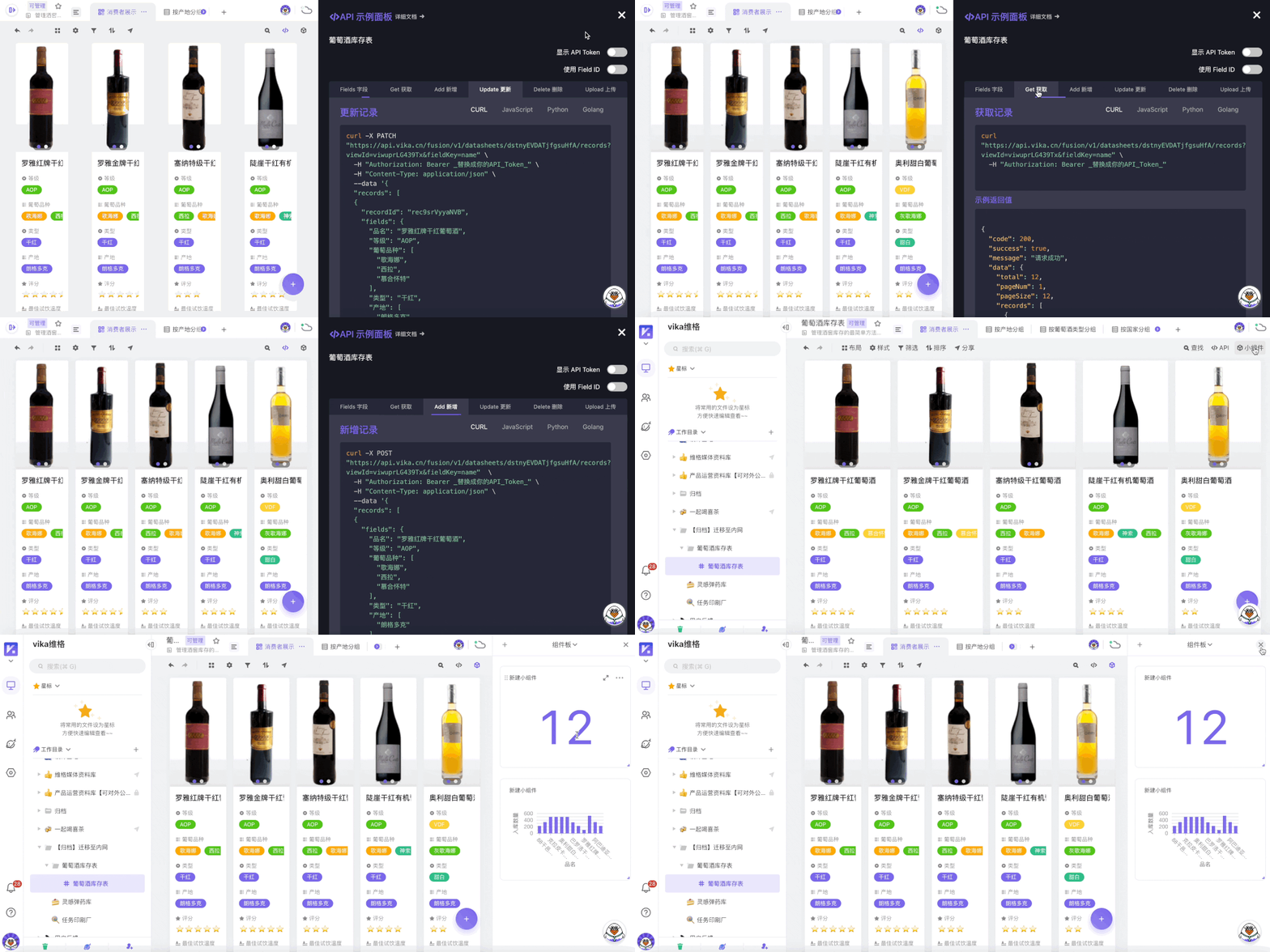
From day one, vika positioned itself as an "API-oriented multidimensional spreadsheet," complete with open-source API SDKs in Java, Python, JavaScript, PHP, and more for advanced developers — with more high-code capabilities to come.
Our mission is to "empower 1 billion people with IT capabilities." So we're the opposite of the no-code "replace programmers" narrative. We want to make it easier for ordinary people to acquire programmer-like abilities, while making existing programmers more powerful. This is a process of technological democratization.
Second, people keep asking if my company pivoted. Why does it seem different from what I originally described?
I'm puzzled. From day one, our direction and form haven't changed at all. But the people around us have changed — and so has how they perceive us.
Initially, people liked comparing us to data middle platforms, thinking that's what we were.
Later, they compared vika to Excel, seeing it as a new type of spreadsheet productivity tool.
And countless other comparisons. In the early days of emerging technology, people easily misidentify its market — like assuming "toner" and "mineral water" are competitors because both are "water."
I keep emphasizing: vika simplifies complex SaaS enterprise software to be as easy as Excel, but its essence remains enterprise software. The lightweight, easy-to-operate "spreadsheet form" is merely our first step toward fulfilling that mission. We're building world-class software products that can compete with Microsoft and Salesforce.
Sometimes emerging technology is simply ineffable. It really does go through the four stages of "can't see it, dismiss it, don't understand it, too late to catch up." It requires patience.
As long as there's long-term value, people will gradually understand.
03
Users Above All
5Y Capital: At this stage, what's most important for the company?
Peilin Chen: Service — building service capability at all costs, creating customer value, and ensuring data security.
We're in the SaaS industry, which translates to "Software as a Service" — or simply, the "service industry." Service first, software second.
Our customers don't need a drill; they need the hole in the wall. Creating customer value is the goal. The software product is just the greatest common divisor for meeting customer needs. Revenue is merely a side effect of this process.
When people discuss the rise and fall of SaaS in China, they blame market conditions, technology, product, or sales. But I believe the root issue is service.
Building service capability takes time. Tech professionals tend to be arrogant, hammer in hand searching for nails. Bending down to build service systems based on innovative software isn't easy.
Colleagues easily bring consumer thinking to B2B, viewing market competition as zero-sum life-or-death struggles — this is deeply not customer-centric.
To address this, I recently added "Lei Feng Spirit" to our company values, with the slogan "Serve the People," to emphasize the importance of service.
That's also why I put "Odd-Jobber & CEO" on my business card. CEO, Chief Executive Officer — the Chinese translation is quite precise: the chief, the executor, the odd-jobber, the chief servant of employees. I don't know when this title became misread as something glamorous.
We're also strengthening our data security capabilities. Customer data security is our lifeline. Data is encrypted and backed up across geographically distributed regions to ensure high availability of services and data. We also offer a private cloud version for customers to deploy on their own servers.
I've increasingly felt that if you serve users and customers well and create value for them, they will inevitably reward you with their business.
We also hope more people will eagerly join this industry and build similar products, creating customer value together and making the industry flourish. Only then can users and customers truly be well-served.
Helping customers succeed — that's what truly brings joy.
5Y Capital: Since starting the company, what principles or common sense have become increasingly important to you?
Peilin Chen: Users above all, customers first, organizational capability.
These three phrases appear in countless contexts. They sound clichéd, even like empty platitudes.
But in execution, you'll discover these are the most excruciatingly difficult principles — easy to understand, nearly impossible to master.
First, users above all.
The internet industry loves talking about "users," but humans are inherently ego-driven. Many colleagues approach work from a self-centered perspective.
We think we're creating for users, but in practice, engineers' and product managers' daily work devolves into object-oriented programming and competitor-oriented planning — a massive chasm between intention and execution.
A common founder mistake is competitor-oriented entrepreneurship. The goal isn't to do things well, but simply to "win" — without truly putting users at heart.
Those who chant slogans about changing the world for users, while harboring desires to dominate the world, often signal dangerous technological self-indulgence.
Second, customers first.
Sometimes it's quite sad. Ask colleagues who the company's customers are, and why they pay. Many white-collar employees at tech companies can't answer.
My rule of thumb: the vast majority of day-to-day operational problems stem from not understanding customers.
Tech entrepreneurship often measures markets through technology and product, lacking grounding, lacking the determination to immerse in customer needs.
Those who sit in offices all day most easily develop cognitive dissonance about customers. It's like the front lines are bleeding in battle, while the rear mess hall leisurely researches exquisite palace cuisine, utterly oblivious to the war ahead.
Third, organizational capability.
Founders don't start companies without some skills. They're absolutely top performers in their domains.
What startups truly struggle with is transforming a motley crew into one team — building organizational capability.
And early-stage startups have scarce talent resources. Unlike large companies with unlimited talent reserves, they must fight the hardest battles from zero to one.
I was fortunate that from day one, I attracted old friends and former colleagues. They weren't just backbone talent from major tech companies, but could quickly grasp our vision, mission, and values.
Recently we compared our 2020 year-end party attendees with 2019's — 100% still with us. Even I was surprised.
We can't underestimate the power of culture.
04
Don't Underestimate the Difficulty of Innovation
5Y Capital: What's been the biggest challenge since starting the company?
Peilin Chen: Innovation — specifically, underestimating its difficulty.
People generally assume innovation is a group of geniuses having a brilliant idea, and innovation naturally follows.
In reality, a good idea and a true innovative product are separated by vast distances, requiring eighty-one tribulations to bridge.
During an idea's execution: Do users really need it? Do colleagues understand it? Is the interaction intuitive enough? Is it marketable? How should documentation be written? Is it technically feasible? Does the data model align? What are the social costs? Are finances controllable... and on and on.
Moreover, in everyday reality, people tend toward action inertia and intellectual laziness. Single-threaded, idea-driven innovation rarely transforms into systematic innovation during execution.
My experience now: Even achieving effective innovation at the level of a single pixel requires cramming 1,000 problems into your head, undergoing repeated refinement and deliberation. It's absolutely not a matter of marking the boat to find the sword, copying a UI interface and calling it done.
Innovation is ultimately the concrete manifestation of entrepreneurial spirit.
5Y Capital: What's the most important experience of your life? How did it influence you?
Peilin Chen: Working at HEYTEA.
First, I need to define what makes an experience "the most important."
I believe it should be about "finding yourself."
From Kingsoft to HEYTEA, outsiders saw a programmer's reckless cross-industry leap with wildly contrarian ideas, constantly questioned by many.
Without the belief and support of HEYTEA CEO Neo, and our shared value orientation of "make a dent in the universe," none of the subsequent digital innovations would have been possible — like going all-in on mini-programs, WeChat Work, middleware, data BI, "order-and-become-member" in 2017.
More importantly, through this experience I "found myself": across what seemed like a跨界 decade, my daily driving force was thinking about how to use software to make the world better.
I consider myself incredibly fortunate. Many people reach their deathbed never knowing why they lived, why they existed. Yet I found myself precisely at thirty — truly "standing firm at thirty."
What I'm doing today is abstracting that work experience into products and services, replicating that value across society.
Entrepreneurship isn't about becoming the richest person in the graveyard. It's about following your intuition and curiosity to contribute to society.
05
Entrepreneurs Are Also Making Investments
5Y Capital: A book/show/movie you've particularly enjoyed recently? Why?
Peilin Chen: I recommend the German WWII miniseries Generation War (Unsere Mütter, unsere Väter).
I love WWII films, especially from different combatants' perspectives. Generation War is a three-episode German miniseries, told from the defeated Third Reich's perspective, following young Germans through the war's emotional and psychological toll.
Very understated, very real, yet powerfully moving. There's that particularly representative line:
"Many think war consists of 'fighting.' It doesn't. War is actually 'waiting' — waiting for the next battle, the next meal, the next morning you're alive."
Isn't entrepreneurship the same?
Many think entrepreneurship is about passion and excitement. It isn't. Entrepreneurship is "the Foolish Old Man Moves the Mountains" — problems every day, challenges every day, hoping to "survive" every day, moving bricks every day, calmly and cool-headedly creating real value for society, customers, and users.
Also recommend the series The Man in the High Castle — an alternate history where Germany and Japan won WWII, dividing America... quite mind-expanding.
5Y Capital: Why did you choose 5Y Capital's investment?
Peilin Chen: In short: love at first sight, deeper admiration upon reunion.
July 31, 2019 — I remember it clearly. I'd just rented a desk at a co-working space.
We'd just finalized our angel round terms. That day I met Levi (Kai Liu), figuring we'd get acquainted without going into detail. No product demo, no pitch deck, no materials — just sitting on a sofa chatting casually.
That conversation left a deep impression. Around the third minute of my explanation, Levi said "I'm very interested." Though we'd just locked in our angel round, we kept it brief. But I could tell from his eyes — he was a visionary investor who could see the 10-to-20-year value of this space at a glance.
Over the following two months, Levi checked in regularly. Later I met Richard (Qin Liu), and understood even more deeply that this investment team's values aligned with ours.
Our team thought, "Wow, China actually has institutions that understand this space so well." Investors with this level of insight — if they invested in someone else, that would be trouble. This led to our angel+ round with 5Y, and our continued partnership through Pre-A and Pre-A+.
5Y's slogan: "If the crazy you in others' eyes begins to be believed, the world becomes better." I think every thoughtful founder deeply feels this.
In my first six months of entrepreneurship, most people around me didn't understand what I was doing. I exhausted myself explaining daily, like a madman.
Recently, a user proactively found us, saying "thank you for saving me hundreds of thousands" — and paid us during our free public beta. Not only were we starting to be believed, but we were genuinely helping people. That night I was too excited to sleep.
Investors make investments. Entrepreneurs are also making investments.
Investors deploy financial capital into companies with long-term value. Entrepreneurs invest their limited time, energy, and lives into specific "things" with long-term value.
It's an honor to have long-term investors like these walking alongside us.
Zhuyi Yan
Investment Manager, 5Y Capital
**5Y Capital began deploying in the online collaboration track as early as 2014, investing in numerous outstanding companies. We've continuously reflected on the meaning and value of collaboration tools.
We believe the fundamental value of collaboration products lies in efficiency gains. Whether in emerging sectors or traditional industries, user demand for improving work efficiency through digital tools is increasingly pronounced. In the spreadsheet domain — the most universally applicable category — actual user needs remain vastly unmet. Users remain trapped in data silos, constantly experiencing massive repetitive work and inefficient communication.
Referencing global collaboration leaders like Airtable, Smartsheet, and Notion, we believe next-generation workplace collaboration products, and the lightweight tool-driven model for connecting internal and external information, hold tremendous potential in China.
During this period, we've witnessed vika's forward-thinking product architecture, deep exploration of customer needs, and the team's all-in determination and attitude. On this road requiring long-term value commitment, we greatly look forward to seeing vika help more enterprises and users enjoy the efficiency and convenience of digital technology through "API-ized multidimensional spreadsheets," fulfilling the company mission of "empowering 1 billion people with IT capabilities."
「vika」was founded in late 2019 as a company focused on underlying software technology innovation. As the pioneer of multidimensional spreadsheets, its core product "vika.cn" is an API-oriented intelligent multidimensional spreadsheet, positioned as a next-generation enterprise data collaboration tool. vika.cn launched its private beta in April 2020, entered public beta in October 2020, and planned commercialization for March 2021.
Founder Peilin Chen previously served as CTO and head of digital marketing at HEYTEA, and as an architect at Kingsoft Software. In past roles, he procured over a hundred different SaaS enterprise software products, and independently developed and operated various enterprise systems including membership, e-commerce, food delivery, POS, marketing middleware, data middleware, supply chain ERP, and collaboration OA — experiencing and leading a traditional company's digital transformation from scratch, while managing a 150-person IT R&D and digital marketing team.
vika aims to create a revolutionary product combining spreadsheets with IT business systems, API-oriented and high-code capable, simplifying complex SaaS enterprise software to be as flexible and easy-to-use as Office and Excel — democratizing enterprise software to help business owners reduce costs, improve efficiency, and increase sales, generating real value. Overall, vika.cn can compress what previously required 100 programmers one year to build into something one office worker can complete in one day.
Moreover, unlike products emphasizing no-code, zero-code, or low-code, vika emphasizes "high-code." From day one of launch, vika offered API functionality and open-sourced SDKs for Python, JavaScript, and Java on GitHub, Gitee, and other platforms — continuously building "high-code" capabilities around APIs for online code-based development on vika, extending to rich application scenarios.
Chen states that vika.cn's positioning is diametrically opposed to the no-code narrative of programmers becoming obsolete. "vika's mission is to empower 1 billion people with IT capabilities, even helping programmers evolve into 'the strongest species on the planet.'"
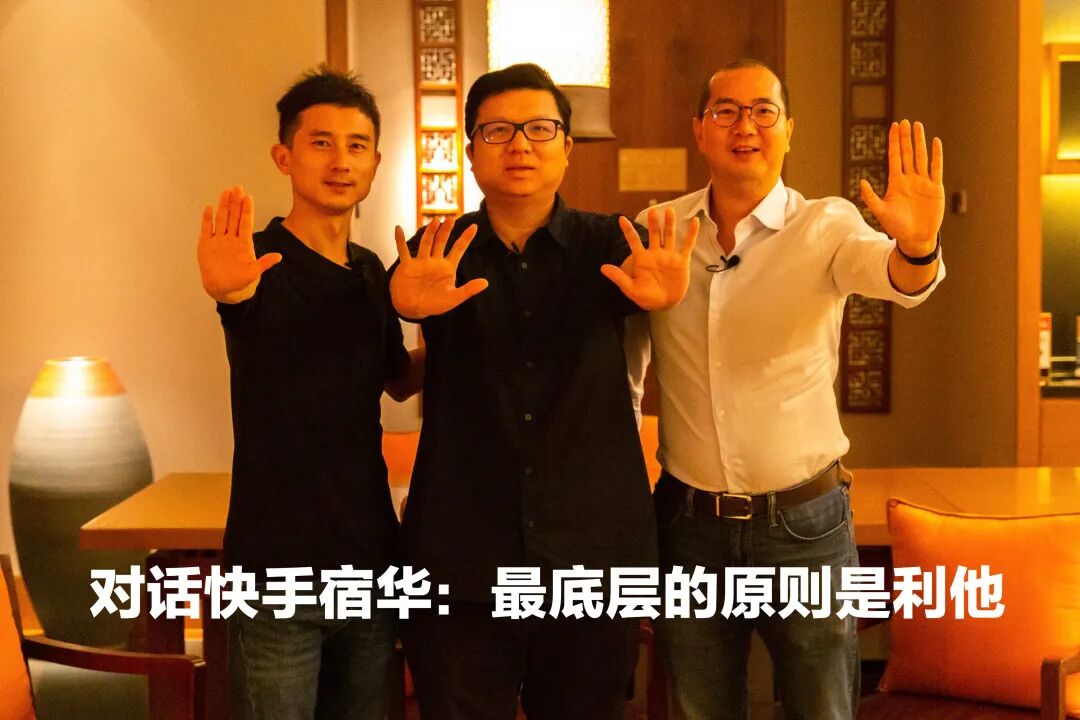

5Y Capital (formerly Morningside Venture Capital) currently manages approximately $3 billion across USD and RMB dual-currency funds. We believe: If the crazy you in others' eyes begins to be believed, the world becomes better.
BEIJING · SHANGHAI · SHENZHEN · HONG KONG