Where the Monsoon Blows | 5Y Tavern Vol. 10: Going Southeast Asia

A VC Investor's Observations on Life in Southeast Asia.

What comes to mind when you think of Southeast Asia?
Vibrant colors, distinctive cuisine, diverse cultures... Ancient mariners called it "the land the monsoons blow upon": situated below the tropical monsoons and above the typhoon belt, its waters were safer to navigate, its warm turquoise currents easier to predict.
For entrepreneurs expanding overseas, the region's complex and heterogeneous market ecosystem makes it difficult to simply replicate Chinese experience. The land brims with energy, yet presents no shortage of challenges. Regional and cultural differences abound, yet the commonalities between people outweigh the distinctions.
This edition of the 5Y Tavern originated from a gathering in Jakarta, Indonesia, in October 2022, where Hu Haichuan, an investor at 5Y Capital, sat down with several 5Y-backed entrepreneurs who had ventured into Southeast Asia to discuss their experiences and reflections on building businesses there. This March, we invited them back to share fresh perspectives on their observations of the region.
They are entrepreneurs and investors, but also firsthand witnesses and observers. Their sharing encompasses both the lessons and introspection of going global, as well as nuanced personal observations. Perhaps from their stories, you might glean some insight into Southeast Asia :)
Our guests for this edition of the 5Y Tavern:
Gong Ben Founder & CEO, Desty
Li Zhiping Founder & CEO, Laizanbao
Fang Xing Founder & CEO, Focallure
Hu Haichuan Executive Director, 5Y Capital
Returning to Indonesia to Build a Company, Because There Was Light in People's Eyes
Gong Ben, Founder & CEO, Desty
Gong Ben is an Indonesian Chinese, born and raised in Indonesia. He studied and worked in China for over a decade before returning to Indonesia to start his company. Founded in 2020, Desty empowers Indonesian e-commerce merchants and transactions through a range of products and services. The team is based in Jakarta and Hangzhou.
Gong Ben shared about his life in Jakarta. During our conversation, his third child had just been born. He described himself as currently "taking care of three kids under five, plus a startup."
5Y Tavern: Which is harder — taking care of kids or running a company?
Gong Ben: I feel somewhat guilty — my family contributes more on the childcare front, especially since I haven't devoted much energy to it since starting my company, so it's not really a direct comparison. But at each milestone, whether with the children or the company, the changes and the challenges they bring feel quite similar in terms of the emotional journey. Often you don't know what tomorrow will bring, and there are many surprises.
5Y Tavern: When did you return to Indonesia, and what made you want to come back and start a company?
Gong Ben: I went to university in China, and after graduation I basically worked at Chinese companies. My last company was Alibaba — about three years in Hangzhou, roughly a year and a half in Singapore, and then by chance I was sent back to Jakarta for work.
When I came back in 2018, I found Indonesia had changed enormously. It felt like China around 2011 or 2012 — clearly a period of demographic dividend. You could distinctly feel that people were full of confidence, that there was light in their eyes. Before that, things had been rather subdued; people found it hard to break through their social class, and there wasn't that idealism about changing the world.
I felt that the experience I'd accumulated in China over the years would be valuable, and I hoped to serve as a bridge between Indonesia and China, bringing over Chinese technology, frameworks, and some experience.
5Y Tavern: How does working and living in Jakarta differ from your time in China?
Gong Ben: The difference is stark. Jakarta's urban planning and infrastructure are less than ideal, so daily life can feel somewhat constraining. I used to live in Binjiang in Hangzhou — that area was very new, very convenient. I also went to Zhejiang University, so I have deep affection for Hangzhou.
What's interesting is that as a foreigner, I witnessed China's rapid development firsthand. When I started university, I still had to fly to Shanghai, then take a green-skinned train to Hangzhou; now the high-speed rail is so convenient. Later at Alibaba, I also caught the wave of explosive growth.
But Indonesia has developed very quickly in recent years too — in commerce, in urban infrastructure. The most interesting thing is still the people, which is why I decided to stay after returning in 2018.

5Y Tavern: Do you manage your Hangzhou team and Jakarta team differently?
Gong Ben: I feel that with Chinese colleagues, you absolutely have to talk about the future — explain why we're building our product this way, where we're headed, how we're different from others. Otherwise you won't address their questions. Once the logic is clear, people's self-motivation is very strong. But with Indonesian colleagues, you have to talk about the present; they need more tangible, immediate feedback.
5Y Tavern: Is this due to education or cultural reasons?
Gong Ben: Probably both, and this is just my personal observation, not any validated theory. There are no seasons here — it's virtually the same year-round — so people rarely sense what changes come with what season, and they don't value planning as much. They're more focused on concrete, immediate things. People also really value a sense of participation at work; I feel their emotional needs beyond money are higher.
I've been visiting industrial belts in Indonesia's second- and third-tier cities frequently. When we tell many merchants that our tools can increase their sales by a certain amount, they don't feel it strongly. For example, going from 1 million to 2 million a month — they don't see much use in that. But when we talk about social responsibility, about elevating the reputation of this industrial belt, about creating more employment — that gets them going. When I used to visit industrial belts at Alibaba, I'd talk numbers with those merchants and they'd immediately get excited. It's really different.
Indonesia's economy is relatively less developed, so if you have a BMW, people here will label you — "you're successful." Having two or three doesn't make much difference. But if you can do something beyond money, the influence and sense of achievement may be much greater.
5Y Tavern: What do you do with your time outside of work now?
Gong Ben: Childcare and sleeping, plus a lot of time stuck in traffic.
Hu Haichuan: Jakarta's traffic is terrible. When I went to Indonesia on business last October to meet Gong Ben, he got stuck in traffic for three hours on the way over. It was incredibly difficult — driving plus walking — and he finally arrived around midnight. After that, I realized you can't run around Jakarta city-wide. Most meetings with Indonesian investors and entrepreneurs are concentrated in one small central area.
One interesting thing: one day Gong Ben asked me to wake up at six, and he picked me up in his Wuling. Wuling has very strong brand power in Indonesia locally. We went to a neighborhood in central Jakarta where every Sunday morning is "car-free day" — lots of pedestrians, very lively. Later Gong Ben took me to a completely different area in the north, where we ate very local food, bought street snacks and coffee. We took the kind of route only an old friend would show you — very warm. That morning helped me build a lot of embodied understanding of local society.
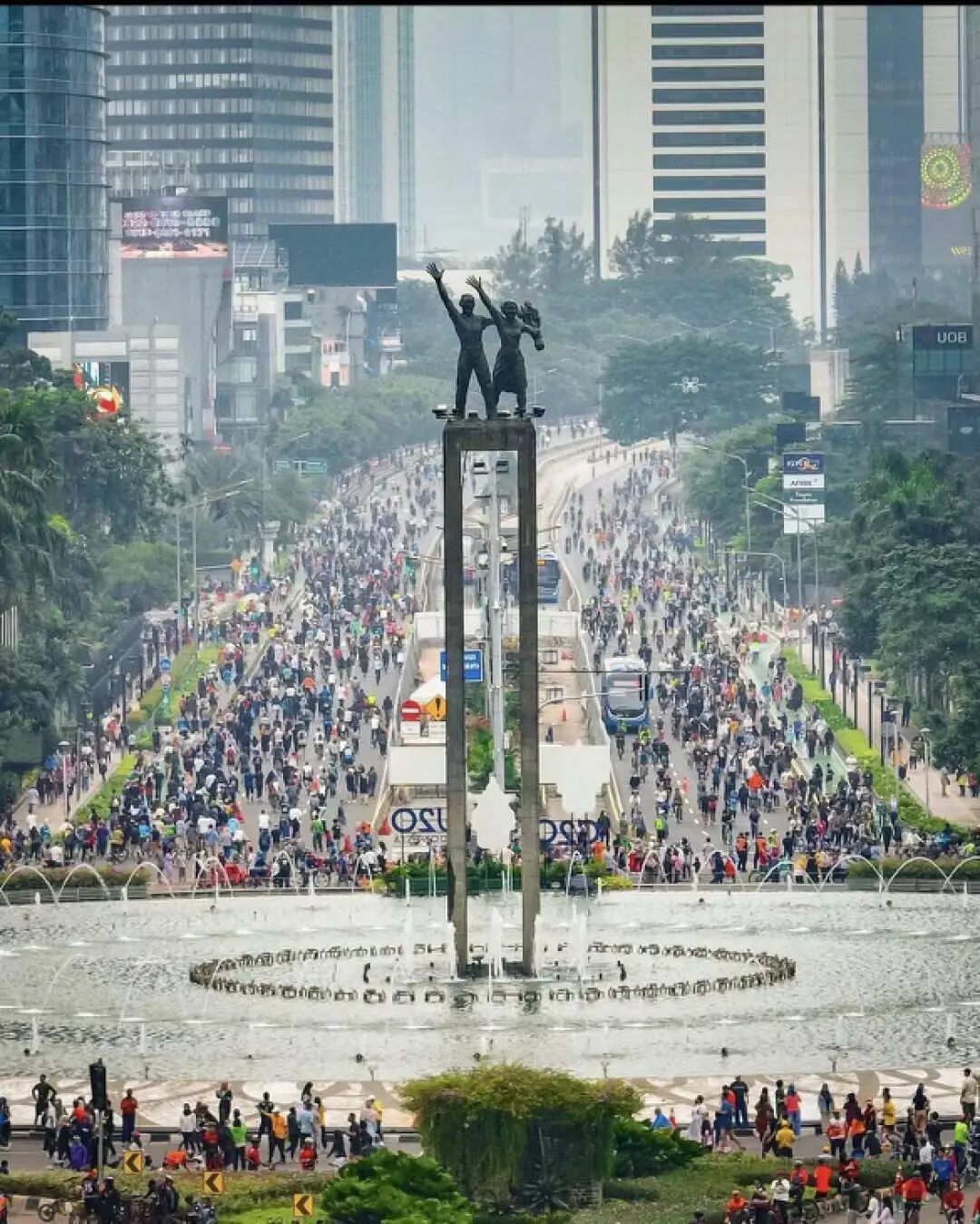
Jakarta's Sudirman Street on "Car-Free Day"
Gong Ben: Many Chinese investors who come to Jakarta stay at places like the Hyatt or Four Seasons. You can't feel Indonesia at a five-star hotel. Walking that route, you can truly feel Indonesia's demographic dividend, feel what Indonesia's grassroots are like. So if there's opportunity, I still like to show Chinese friends around.
5Y Tavern: You're Indonesian, lived in China for a long time, and understand both Indonesia and China well. Many Chinese entrepreneurs are expanding overseas. What misconceptions or detours do you observe them potentially facing?
Gong Ben: I think the biggest factor is whether they truly have commitment, whether they have genuine determination to invest. Over the years I've seen countless Chinese people come. 2017-18 was probably a particularly active wave. Many people came with merely tentative ideas — once they encountered problems, they left, or they'd look for shortcuts, and their actions would become distorted. That's very different from truly wanting to put down roots here.
Additionally, talent is probably the biggest issue. As for exactly how to find people, I don't think there are shortcuts. In every society you can find people who want to accomplish something; you still have to screen layer by layer, and there's some element of luck.
5Y Tavern: When you decided to return in 2018, it was because you felt there was light in people's eyes here. What were your expectations for the future then? How does now compare to then?
Gong Ben: The biggest difference is that now I know what I want to do. Back then I only knew I wanted to do something, but didn't know what; my thinking about the future was broad. Now I'm rooted much deeper. We hope to become the most influential company for Indonesian e-commerce merchants and transactions, able to drive the entire industry.
5Y Tavern: What stage is this goal at currently?
Gong Ben: We have a certain foundation, but it's not enough yet; we're still consolidating. I think it will take another two or three years to have industry-wide influence. This is a long-term endeavor, but our foundation is very solid now, both in product and team.
Going to Southeast Asia, Always Keep a Map in Your Mind
Li Zhiping, Founder, Laizanbao
Laizanbao was founded in 2019, providing Southeast Asian consumers with high-quality, cost-effective goods through online retail, while offering e-commerce merchants full-chain services including warehousing and logistics, brand operations, and supply chain curation.
During our chat, Li Zhiping was in Shenzhen. He had prominently posted several maps in his office, because for entrepreneurs going global, "you must always keep a map in your mind."
5Y Tavern: Why hang world maps in your office?
Li Zhiping: Also Southeast Asia maps, and topographic maps. My communication with team and clients often happens while looking at maps. Like planning a military campaign, you need maps and terrain reconnaissance to formulate strategy. Besides land transport, we'll soon be doing sea and air freight too — you need to have maps loaded in your mind at all times. Maps are the most fundamental data and information, and you immediately think of them when making decisions.
It's not just maps — you also have to go see for yourself, walk these roads. To deepen our advantages, we need to invest more energy, use more methods, and root ourselves deeper.
5Y Tavern: How is working in Southeast Asia different from domestic work, and what are the cultural differences?
Li Zhiping: Before Laizanbao, I also led a 200-person Thai team in Thailand. One very strong impression was that our Thai employees were relatively more laid-back. For example, if something came up at the warehouse tonight and you offered 500 baht for overtime, they definitely wouldn't do it — they put life first.
5Y Tavern: It seems people aren't easily "involuted" into overwork, and don't care much about the boss's opinion of them?
Li Zhiping: I've discussed this with many local Chinese. One reason may be that Southeast Asia is abundantly resourced, food is easily obtained — people aren't easily starved to begin with. And looking further back, Thailand historically hasn't experienced major catastrophes; perhaps there's no inherent sense of crisis in their bones. People here basically don't save money, including in e-commerce — platforms offer discounts on payday, and orders snatched then are the real orders, because afterward people may have no money left; it's already spent.
5Y Tavern: When leading teams in Thailand, how did you motivate people?
Li Zhiping: You still combine various methods, creating adapted systems. For example, 500 baht for one day's overtime has no motivational effect, but tell them that over a certain period they'll get 10,000 baht, and that can get people moving. Another example: we send part of salaries directly to employees' families.
Different countries are all different. Vietnam may be more like China — people work hard to earn money. Indonesia may have lower labor costs, but people stop for prayer. In the Philippines we pay weekly, following the Western model.
The biggest challenge locally is refined management capability — you can't completely replicate Chinese methods.
5Y Tavern: In the process of expanding to Southeast Asia, what decisions do you feel were very correct, and how did you think about them at the time?
Li Zhiping: When we first started Laizanbao, we had several options. If we were replicating China's e-commerce path, we probably should have done agency operations. But at that time I instead chose to go deep into supply chain and fulfillment — this is very heavy and very difficult. Our judgment then was that, unlike China, Southeast Asia e-commerce's biggest pain point was stock shortages, and e-commerce fulfillment services were relatively backward, while we had the capability to do this well. So we built around these capabilities, and so far this path has proven correct.
5Y Tavern: When you still didn't understand the local market, did you step into any pitfalls?
Li Zhiping: When expanding from Thailand to Vietnam, we rushed to enter the market without sufficient understanding of Vietnam. Initially we used the same operations as in Thailand, and found order rejection rates exceeded 15%. We hit the brakes quickly. Afterward we did very deep analysis of Vietnamese products, various delivery routes, and Vietnamese consumer habits. It took about half a year of continuous adjustment.
5Y Tavern: In Southeast Asia, what do you do with your time outside of work?
Li Zhiping: I seek out all kinds of local good food. I love Southeast Asian fruits; I often joke that having fruit freedom in Southeast Asia is a very happy thing. I still remember around 2016 when I first came here, eating that kind of banana — the naturally ripened taste from childhood memories, completely different from artificially ripened bananas. I originally didn't even like durian, but once in Malaysia I ate at least two kilograms of Musang King durian — so soft and sticky, incredibly delicious.
In Thailand I really like pork leg rice, and mango sticky rice; the first Thai word I actively learned was "sticky rice." In Vietnam you must eat pho — they use mint, lime, and various plants to flavor it; I even finish the soup. But you must find the kind locals eat, maybe at street-side low tables and small stools.
I also visit various places. I really like listening to people's oral accounts — this firsthand information lets you more intuitively feel the locality. I also love digging into local history, understanding countries on a longer timescale.
5Y Tavern: For entrepreneurs who might want to go global in these years, what advice would you have?
Li Zhiping: First, empty your cup. Don't apply Chinese experience; spend some time locally, understand the locality from various angles, then combine it with Chinese experience. You can go a bit slower, but do your preparatory homework thoroughly, otherwise you may hit walls.
Bypass Path Dependency — Don't Let "Chinese Only Look for Chinese"
Fang Xing, Founder & CEO, Focallure
Fang Xing started cross-border e-commerce in 2013, and created the Focallure brand in 2016. Today Focallure is the top-selling beauty brand in cross-border e-commerce in Southeast Asia, Russia, Bangladesh, and other regions.
During our chat, Fang Xing was in Jakarta, in an empty office on the weekend, because "no one works weekends here." Fang Xing shared many observations: "Many Chinese who come to Indonesia still first look for local Chinese, but to go deep locally you need to bypass path dependency and understand the market through local people's lifestyles."
5Y Tavern: Going to Southeast Asia after the pandemic, what new discoveries and feelings?
Fang Xing: I clearly feel the Southeast Asian market has exploded after the pandemic. To put it dramatically, e-commerce livestreaming is basically sending people over plane by plane. We also came locally relatively early, bringing our Chinese core team over to let everyone understand local culture, life, business environment, etc.
I also found something interesting: many Chinese who come to Indonesia, the first thing they do is still look for Chinese people already here. Maybe it's a thinking habit — people still prefer familiar environments. But to go deep locally, you need more local resources and nourishment; you still need to bypass path dependency and avoid only communicating with Chinese people.
5Y Tavern: What year did you come to Southeast Asia, and how did you familiarize yourself with these different cultures?
Fang Xing: We came to Southeast Asia in 2016. Before doing cross-border e-commerce, I completely didn't understand Indonesia, but saw this country's cross-border e-commerce data growing very obviously. My university classmate was an Indonesian international student; initially I came over to travel around, doing some research at various Indonesian attractions and malls, before formally entering Indonesia.
5Y Tavern: When you first arrived in Indonesia unfamiliar with the place and people, did you encounter any pitfalls?
Fang Xing: Too many — all blood and tears. For example, early on when shipping from our warehouse, we had a driver who took a truckload of goods and vanished into thin air. There were also new hires who, after the company provided them with a computer, disappeared the next day. We also almost never sign exclusive distribution agreements with others now, because it's very uncontrollable.
5Y Tavern: How do Indonesian work styles and culture differ from domestic?
Fang Xing: Here it's religion first, life second, work third. We very much respect this cultural atmosphere.
Currently our company's middle- and back-office teams are in China; locally in Indonesia we have a 100+ person team with only three Chinese people. These 100+ local colleagues also went through roughly four rounds of elimination before the current group remained.
Some very interesting things: in China, if you give a colleague something new, young people will probably rush to do it. But Indonesian colleagues might choose not to. This is also why people feel Indonesia's business has great opportunity — you'll find that clearly this business format is so good, yet why isn't anyone opening shops.
5Y Tavern: Doing beauty, you directly touch consumers. How do Indonesian young consumers differ from Chinese?
Fang Xing: One very obvious feeling is that cultural confidence here hasn't fully been established yet; it's still in a state of searching. Other differences may be trivial — for example, Indonesian young people don't seem to pursue colors that make them look fair when dressing; some colors that make them look darker are反而 very popular. Perhaps aesthetic education hasn't arrived yet; unlike Xiaohongshu in China with so many posts explaining various beauty and skincare knowledge.
Consumption preferences also differ. For example, in China, clothing is the largest category, while in Indonesia clothing ranks below beauty. We previously did a consumer insight on how rising basic living costs (such as more expensive transportation, basic food) affect people's consumption, and found the main impact is on clothing, bags, watches. During the pandemic, Indonesia's beauty and skincare actually saw increased sales, while in China the pandemic's biggest impact was on beauty.
Indonesian young people basically all gather at shopping malls. Indonesia has private land ownership; you'll find many hereditary low houses, but cities have some very concentrated commercial complexes where all commercial activities happen, with many road shows on weekends. Something interesting: the most popular booths are mainly travel-related, including our customers and influencers; travel basically ranks as the top hobby, and people spend a lot of money on various travels.
5Y Tavern: Domestic beauty has so much experience; does going to Indonesia constitute "dimensional reduction"?
Fang Xing: Capabilities or playbooks may be dimensional reduction, but everyone faces the same problem: if you're famous in China, you may be a nobody here. Take Vietnam as an example — Vietnam was once a French colony, so L'Oréal performs very well locally, and other Chinese brands struggle. It's the same in Indonesia — strong playbook capability doesn't equal established brand; everyone still needs to do the 0-to-1 brand-building process. Though we can see many Chinese brands are very capable in this regard.
5Y Tavern: If you want to better understand Indonesia, which cities would you recommend visiting?
Fang Xing: I think you should visit Indonesia's top 10 cities; each place is very different. The first category is Jakarta and its surroundings — its economic center and hinterland. The second category is central Indonesia, the urban cluster built by Yogyakarta, Surakarta, and Semarang — very localized, mainly Indonesian local factories, education, and tourism centers. There's also an industrial city called Surabaya, also very much a localized working city, but with comprehensive urban vitality no lower than Jakarta's.
Entrepreneurs Must Find Where Their Roots Lie
Hu Haichuan, Executive Director, 5Y Capital
I think entrepreneurs must find where their roots lie. This root isn't a place, but why you're doing this thing. Because wherever you are, entrepreneurship is difficult; ultimately you still need something inside to sustain you, to carry you through the dark tunnel for long-term persistence.
5Y Tavern: You spent a long time in India before, and also met many entrepreneurs in Southeast Asia. What's your intuitive impression of Southeast Asia versus India?
Hu Haichuan: In one word: intense. Whether in terms of color sensation, or life and culture, it's all very intense. Every place has very distinctive characteristics, greatly different from others.
I feel both India and Southeast Asia are particularly vibrant places. Perhaps the sense of order is weaker, but the vitality is especially strong. Both India and Southeast Asia have considerable startup ecosystems; where there are many entrepreneurs, it feels bustling. The liveliness of the startup ecosystem actually stems from young people in these places daring to dream and daring to fail. Not just in venture capital, but society as a whole, and entrepreneurs may be the most vital group among them.
5Y Tavern: After the pandemic, you've also met many entrepreneurs in Southeast Asia. What new discoveries?
Hu Haichuan: Being on the ground enriches more local perspectives. Actually, venture capital is quite a localized affair — you need to walk into the soil and environment where startups' products and services are rooted to build better understanding and judgment.
For example, we very naturally use Chinese consumer mentality and habits to understand Southeast Asian consumption formats. To illustrate: coffee in China is a growth market, but coming to Indonesia I discovered that drinking coffee is a very traditional thing here, a stock market; you often see street carts selling coffee, much like selling snacks in China, and there are many large and small cafes throughout Jakarta at not-high prices. Financial markets too — India, Indonesia, each country's financial market is very different, and the financial innovation models that grow from them differ from China's. Many localized innovations may have tenacious vitality.
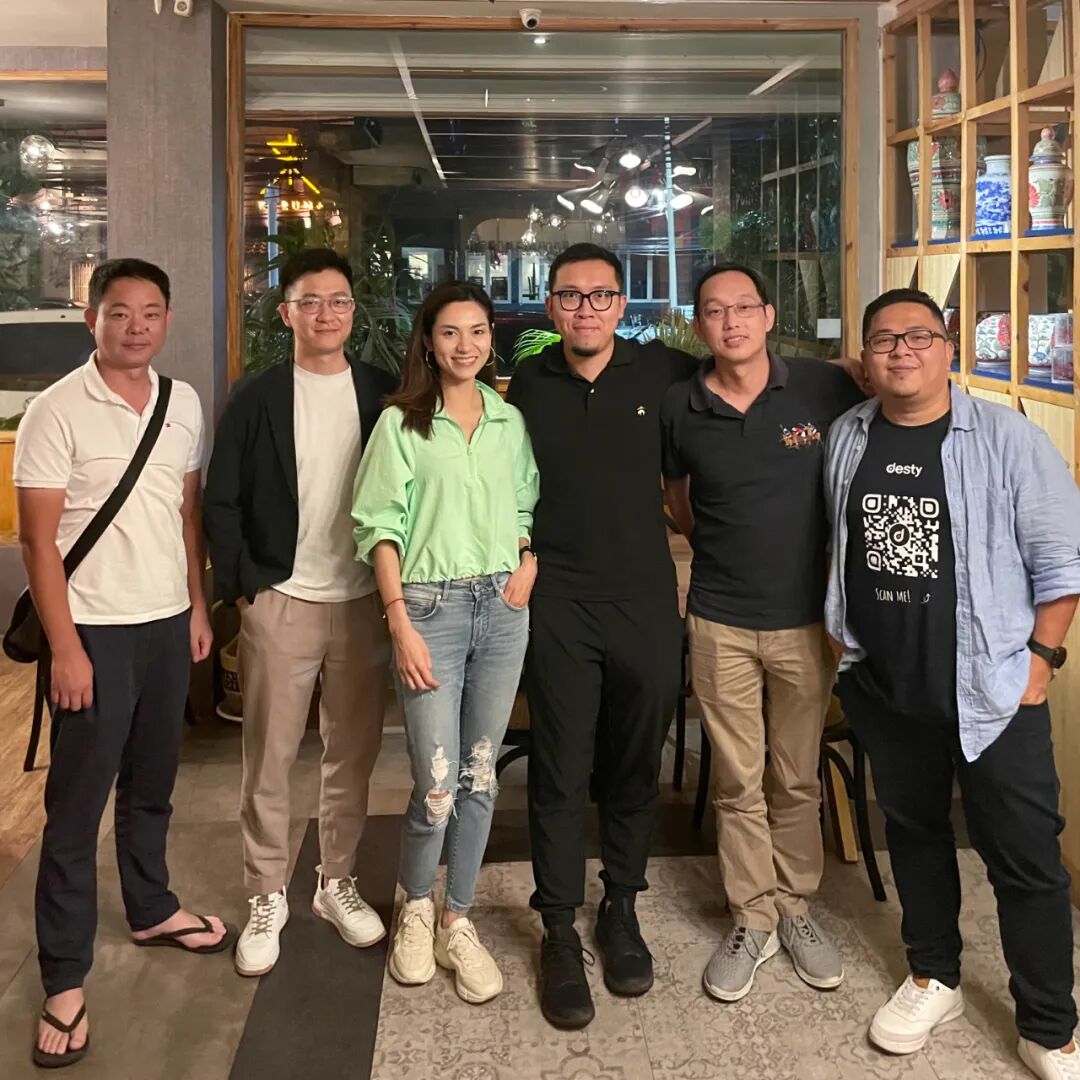
Photo from October 2022: 5Y Capital investor Hu Haichuan with several 5Y-backed entrepreneurs expanding to Southeast Asia, gathered in Jakarta, Indonesia. Left to right: Lin Jie, Co-founder of Laizanbao; Fang Xing, Founder of Focallure; Zeng Ying, VP of Xingyun Group; Hu Haichuan, Executive Director of 5Y Capital; Li Zhiping, Founder of Laizanbao; Gong Ben Mulyono, Founder of Desty
5Y Tavern: The entrepreneurs also mentioned they can't replicate Chinese experience over there.
Hu Haichuan: Use more first-principles thinking, less analogy. Analogy often sacrifices many details, easily causing you to inadvertently miss important things. Additionally, minimize preconceived ego; don't crudely apply Chinese experience or "time machine theory," but do more careful observation before deciding.
Before the pandemic, when doing investment in India, it was the same — dive in there, first forget about Beijing life, and like locals go daily to the nearby mom-and-pop shop to buy fruit, buy milk. When you become a local resident in life, you can get closer to the real situation.
5Y Tavern: To open up local markets and become familiar with locals, what methods are there? How do you build trust with people from different social and cultural backgrounds?
Hu Haichuan: I believe that globally, despite great differences, human commonalities are greater, so I never have any preconceptions or fears, never worry that people from other countries or regions are different from us. Everyone is human; just communicate, at most some jokes they tell you won't understand, but that's fine.
Trust also comes from familiarity. If people see you in many places, seeing you more leads to familiarity. At the time I also made a Twitter account, posting a lot about China's internet and venture capital from the persona of a Chinese investor, which was very well-received. Locally, I also routinely asked friends to introduce more friends, building new connections through this trust transmission between people. No great secrets, mostly common-sense methods. So I feel for entrepreneurs wanting to integrate locally, long-term local presence is still very important.
Regarding localization, I've pondered a question: Chinese entrepreneurs going overseas, especially to developing countries, often have particularly strong national pride — does this help or hinder localization? For this strong Chinese identity and strong pride, is some balance needed?
Li Zhiping: Before Laizanbao, when doing Vcanbuy in Thailand, I had very strong superiority then. But looking back now, that superiority didn't help; what followed was actually missing out on massive communication and exchange, and employees would also feel distance from you. The higher you present yourself, the worse your results.
Fang Xing: Yes, (this strong identity or pride) may need to be toned down locally; you must fully respect the locality.
5Y Tavern: What kind of entrepreneurs do you appreciate more? What advice do you have for entrepreneurs going global?
Hu Haichuan: Don't let arbitrage thinking be too heavy. Going overseas inherently has arbitrage elements, which is not blameworthy, but don't let the arbitrage mentality dominate too much.
Many people going to Southeast Asia will find many things to do; I feel those entrepreneurs with more patience, greater ambition, longer-term thinking, while also being able to do things solidly, all have decent probability of success.
Speaking of entrepreneurship in Southeast Asia, compared to entrepreneurship in China, there's an interesting difference. For Chinese entrepreneurs doing things in China, there's often emotional investment — you may be solving problems you yourself encounter, you or people around you may be the users of your product and service, these are easy to empathize with. But in overseas markets, entrepreneurs may not easily form this emotional resonance with local users. For example, making Indonesian consumers' lives better — will this become your mission, a motivation you're willing to strive for?
I think entrepreneurs must find where their roots lie. This root isn't a place, but why you're doing this thing. Entrepreneurship has multiple motivations, and fortune and fame are unavoidable parts, but I also feel there must be some part that transcends worldly gain and loss. Entrepreneurship is hard; ultimately you still need something inside to sustain you, to carry you through the darkness for long-term persistence. Most entrepreneurs probably don't think that much at the beginning — just charge forward. But this question must eventually be considered; if you can think it through earlier, it may help you go further.
Interactive Gift
What impressions and observations do you have of Southeast Asia? What are your thoughts on the content mentioned by our guests? Feel welcome to share your insights and perspectives in the comments. We will select 3 featured comments to receive a 5Y commemorative T-shirt.
Note: The deadline for this activity is 18:00 on April 13, 2023. Please reply with recipient information within 24 hours of receiving notification.





5Y Capital seeks, supports, and inspires lonely entrepreneurs, providing support from spirit to all business operations. We believe that if the you whom others see as crazy begins to be believed in, the world will become refreshingly different.
BEIJING·SHANGHAI·SHENZHEN·HONGKONG