Sports, Limits, and the Possibilities Beyond | 5Y Pub Vol. 11

The world is vast — go explore it.
Levi Liu, a partner at 5Y Capital, tried sailing for the first time last year. Worried he'd be bored before boarding, he brought 15 bottles of liquor, even a fancy hip flask. "Completely unnecessary — finished them all on day one."
Seasickness, vomiting, days without sleep. And on his very first outing, he got knocked overboard. "I was too slow changing sails, hit me right in the chest." Still, he wanted to go back. "It's so quiet, so isolating. That state gets addictive."
Maybe that's the pull of the outdoors and extreme sports. For this episode of the 5Y Tavern, we drank plenty of baijiu in Shenzhen with three guests — TJ Tang, founder of Tapdata; Zhang Liang, explorer; and Levi Liu from 5Y — to talk about their experiences with extreme sports, mountaineering, and sailing.
Over 18 years, Zhang Liang completed 36 expeditions, summiting all 14 of the world's 8000-meter peaks, and reached the North and South Poles on foot via ski. He was the first Chinese person to complete the "14+7+2" ultimate dream of human exploration. Yet speaking of these achievements, he's remarkably understated: "I'm far better known for my drinking than my climbing."
TJ's own life reads like an extreme adventure. He's a veteran kitesurfer of ten years. Before entrepreneurship, he spent four years as a keyboardist in a rock band. "I wanted to experience a different life from childhood."
We've spent too much of the past year looking inward. Now, the vast world is stirring our imaginations again. This episode of the 5Y Tavern is about limits — with some firsthand insights and experience, but that's not the whole conversation. We hope to convey possibility and inspiration, because exploring limits is something you ultimately have to do yourself.
Limits mean beyond the boundary, and beyond the boundary lies endless unknown. The unknown can be frightening, but more often, it's captivating.
Below are excerpts from our conversation. The world is vast — go adventure :)
Guests for this episode of the 5Y Tavern:
TJ Tang
Founder of Tapdata, veteran kitesurfer, former rock band keyboardist
Zhang Liang
Explorer, summited all 14 global 8000-meter peaks and the Seven Summits, reached North and South Poles on foot via ski
Levi Liu
Partner at 5Y Capital, extreme sports enthusiast, novice mountaineer and sailor who just unlocked 5000-meter climbs
On Limits
Between 2000 and 2018, Zhang Liang undertook 36 expeditions, summiting 25 snow mountains, surviving 4 major mountain disasters, and turning back from 9 summit attempts. In June 2018, he completed the ultimate dream of human mountaineering exploration: "14+7+2" — successfully summiting all 14 of the world's 8000-meter peaks, climbing the highest peak on each of the seven continents, and reaching the North and South Poles on foot via ski. He shared some thoughts on limits.
New climbers feel intense fear
5Y Tavern: Do extreme sports require very special physical conditions?
TJ Tang: It's mainly the brain, really — not being sensitive to speed or thrill.
Zhang Liang: Snow mountain climbing doesn't necessarily require exceptional fitness. Sometimes being too fit doesn't help.
Levi Liu: But both of you do have a physical foundation.
TJ Tang: When you first started climbing, did you ever imagine reaching what you've achieved today?
Zhang Liang: I didn't think about it at all. It was just interest, doing it for fun — what grand ambitions? I only started climbing in 2000, when I was 36, my zodiac year.
Levi Liu: Don't people say avoid risks during your zodiac year? What got you started?
Zhang Liang: I don't buy into that. I only believe in myself, in doing what I want to do.
Outdoor sports were just emerging in China then. Before that, there was no way to pursue them even if you wanted to. I came to Shenzhen in 1986 after university, working at the Agricultural Bank. There was no concept of outdoor sports yet — young people's entertainment was eating, drinking, and partying. We basically built Shenzhen's bar scene (laughs). The outdoors felt like another world entirely.
That year, a mountain disaster happened on Yuzhu Peak in Qinghai. Reading that news, I realized: you can actually climb snow mountains. I've always been contrarian by nature. Most people hear about a mountain disaster and are terrified — don't go. I wanted to experience it.
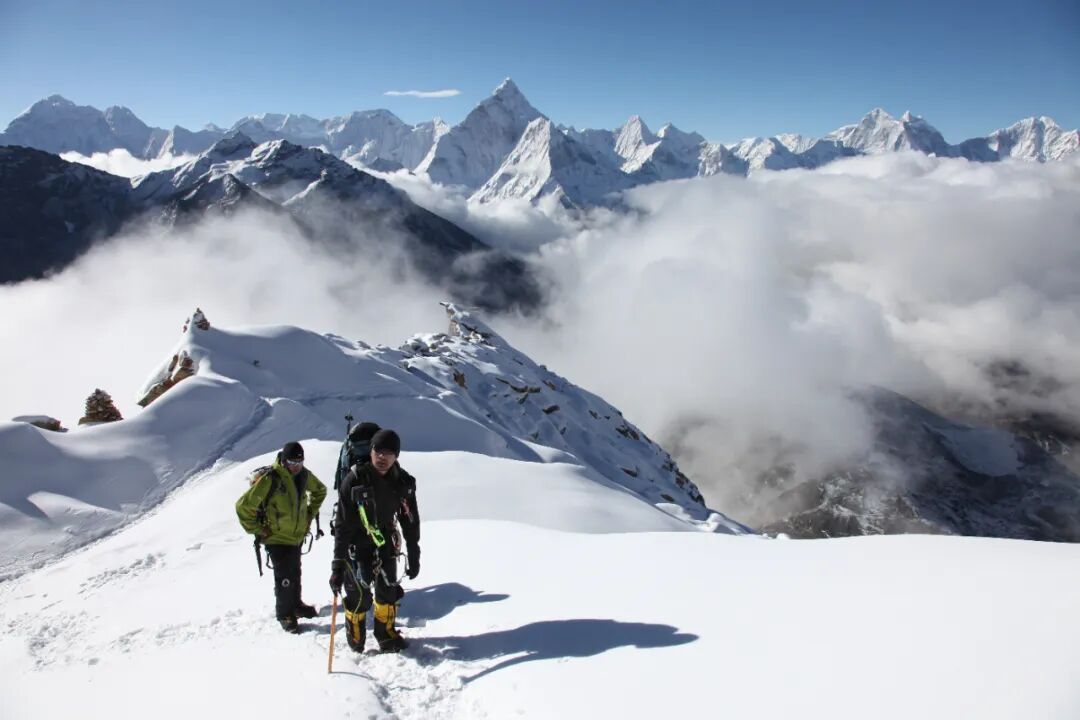
Zhang Liang mid-climb
Levi Liu: I think new climbers feel intense fear. After climbing a few mountains, I realized how genuinely difficult mountaineering is.
Zhang Liang: Because it's all unknown. And some people are naturally prone to altitude sickness, which is miserable.
Levi Liu: I'm a beginner, just reached 5000 meters. When you get to the base of a snow mountain, you feel intimidated. The mountain is massive, humans are tiny. Unlike climbing Wutong Mountain or Tanglang Mountain — there the mountain is right in front of you. Here you're surrounded by mountains, mountains above you in the sky. The first challenge is a warning: it feels impossible to climb.
5Y Tavern: During the later stages where willpower takes over, what's that state like? Every second wanting to quit?
Levi Liu: You don't even get to that thought. It's more: why am I here, why did I make this decision. Photos online are flat, misleading. Your guide might be just ahead, but it feels like they're above your head. The most despairing part is feeling you'll never reach where they are.
The slope is basically vertical. You need all four limbs to ascend. You're at your physical limit, wind is fierce, everything is ice. You have one pole, thick clothing, a backpack. You feel you can't possibly reach that limit.
Brother Liang's 8000-meter climbs are even more extreme. You're basically oxygen-deprived, your brain reduced to physiological response: how do I survive, nothing else matters. Reaching that point by giving everything you have is already incredible. Forget conquering — just let me get down safely.
TJ Tang: When I'm surfing in the ocean, I often feel this too. When waves crash down like mountains, you feel how tiny humans are, like a droplet of water, helpless.
5Y Tavern: But you still want to keep going?
TJ Tang: Yes, learn lessons, try not to make mistakes. You can't fight it. You need to understand its natural patterns, respect it, work around it. Don't think you're so capable.
On the mountain, you can't count on anyone
Levi Liu: When you go climbing, does your family try to stop you? I imagine there's a lot of resistance.
Zhang Liang: I think people first need to live for themselves. Only when you live brilliantly can others see your excellence. Otherwise you could stay home every day — perfectly safe. Chinese people often ask this; foreigners don't, they only ask about your route.
Probably a difference in mindset. I believe you need to be in the right state first. If you're constantly looking over your shoulder, you can't do anything. I joke: if you can't even face life and death, how can you climb? Every time, you don't know if you'll come back alive.
But for me, every departure and return, my organization always said they never doubted Brother Liang wouldn't make it back — those were my leader's exact words. I never made any promises or statements, but your behavior conveys this information. That matters.
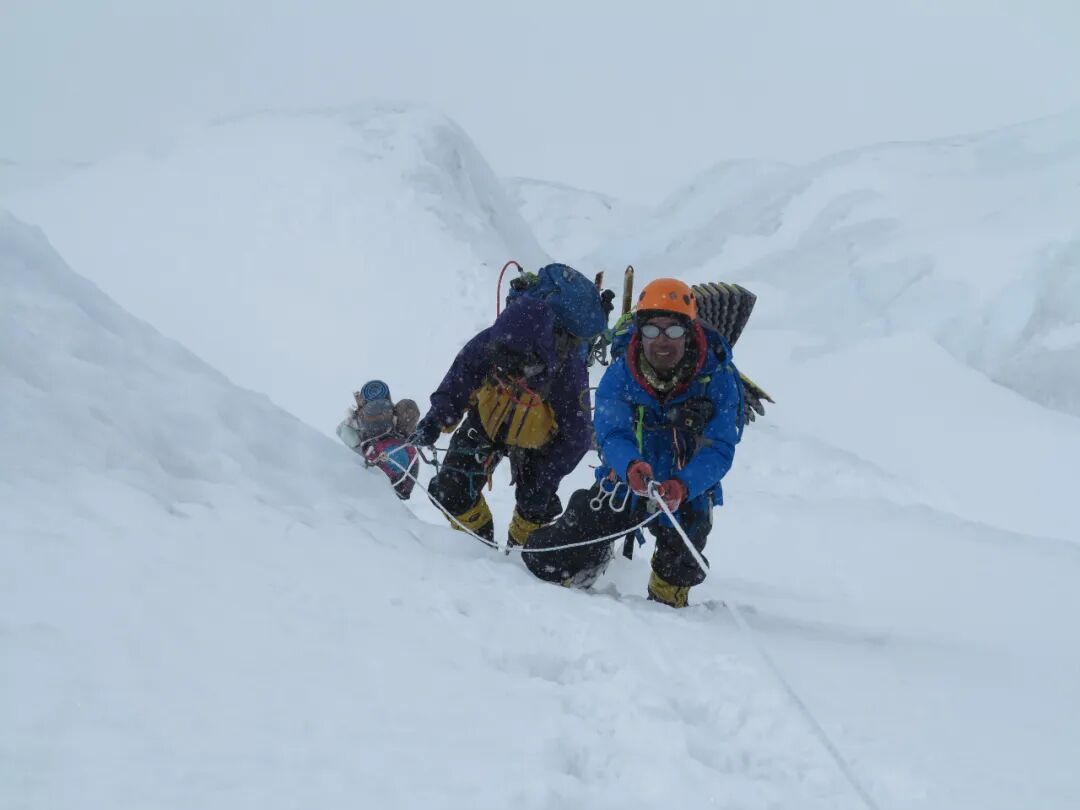
Zhang Liang mid-climb
Levi Liu: When you first started climbing, how did you know your limits, how did you know you could do it?
Zhang Liang: My mother's 95 now and still running around the neighborhood — maybe genetics. Though that's a joke. The process actually requires more wisdom, inner strength, the simple truths people always mention but are crucial.
5Y Tavern: How do you judge whether to turn back or keep going? That boundary is subtle, yet you've climbed so many mountains and stayed alive.
Zhang Liang: Still able to enjoy good food and good liquor.
Levi Liu: You mentioned 4 near-death experiences before. All from climbing?
Zhang Liang: Mainly 8000-meter peaks.
Levi Liu: How do you handle that?
Zhang Liang: Face it. Can't solve it. Grind through it, get down to base camp alive — that's step one. Might need to endure dozens of hours. Once at camp, you're safe. When summiting, you can usually push through with focused effort. Danger mostly comes descending from summit to camp.
It's not about ability — weather, various conditions, team state. Like on Nanga Parbat, there might be several teams, each doing their own thing. You see another team fall, there's nothing you can do, just be careful, more careful.
5Y Tavern: Did you ever break down during the process?
Zhang Liang: During the Arctic Challenge. Called the world's hardest race. April, extremely cold. Our team of 3, sleeping 3-4 hours daily, walking 15-16 hours continuously for 20 days. Started with 27 participants, explorers from around the world. 11 dropped out, couldn't finish.
By the end, severe frostbite. I didn't know frostbite is like burns — full of blisters, skin peels off when touched. Later stages you go numb, excruciating.
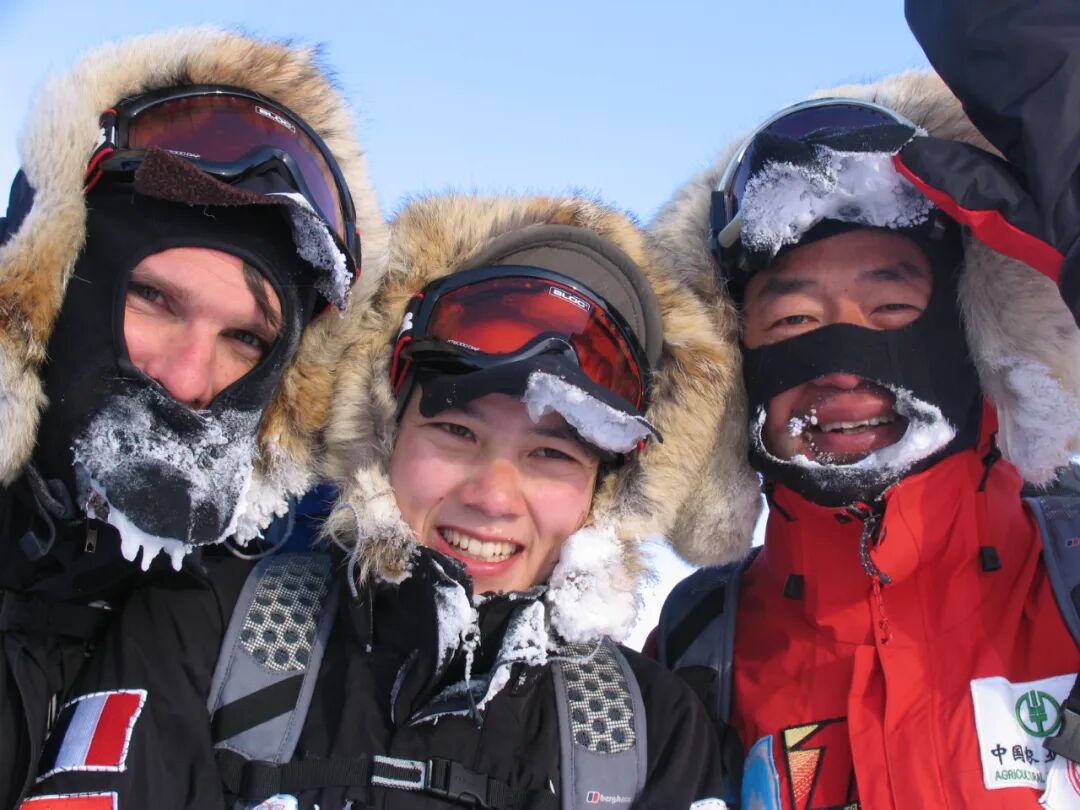
Zhang Liang with two teammates during the Arctic Challenge
5Y Tavern: You said before "8000 meters is like a truth-revealing mirror, exposing human weaknesses." How to understand this?
Zhang Liang: It's not about specific incidents. Human character is always there, can't be hidden, like physiological reactions.
5Y Tavern: Did this make you lose faith in human nature?
Zhang Liang: No, opposite — I have more friends now. At minimum you gain judgment about who to spend time with. This isn't deliberate selection, I felt it through the process. Everyone has flaws, no one's perfect, I have many weaknesses too. Mainly how to accommodate each other, like at the poles — everyone's pace differs, you must包容 and yield to each other.
5Y Tavern: Who helped you most throughout this?
Zhang Liang: If talking help, it'd be Old Wang, Wang Shi — mainly financially, including initial communication with the Agricultural Bank. But on the mountain, you can't count on anyone. Only yourself.
TJ Tang: Like entrepreneurship — investors provide financial help, but the process depends on you. My colleagues once asked if our investors could provide lots of help. I said I never really thought about it; we just have to do this ourselves.
Zhang Liang: I never defined anyone as my dedicated guide during climbing. I used whoever — don't depend on them, instead think what if they die, what do you do. Not that dramatic in reality, but need that mindset.
Levi Liu: The longer we do investing, the more we find what ultimately determines if an entrepreneur succeeds has nothing to do with conditions — it's character, it's courage. Ultimately not about what you do, but your disposition. If you only look at how much money you make, you'll get lost.
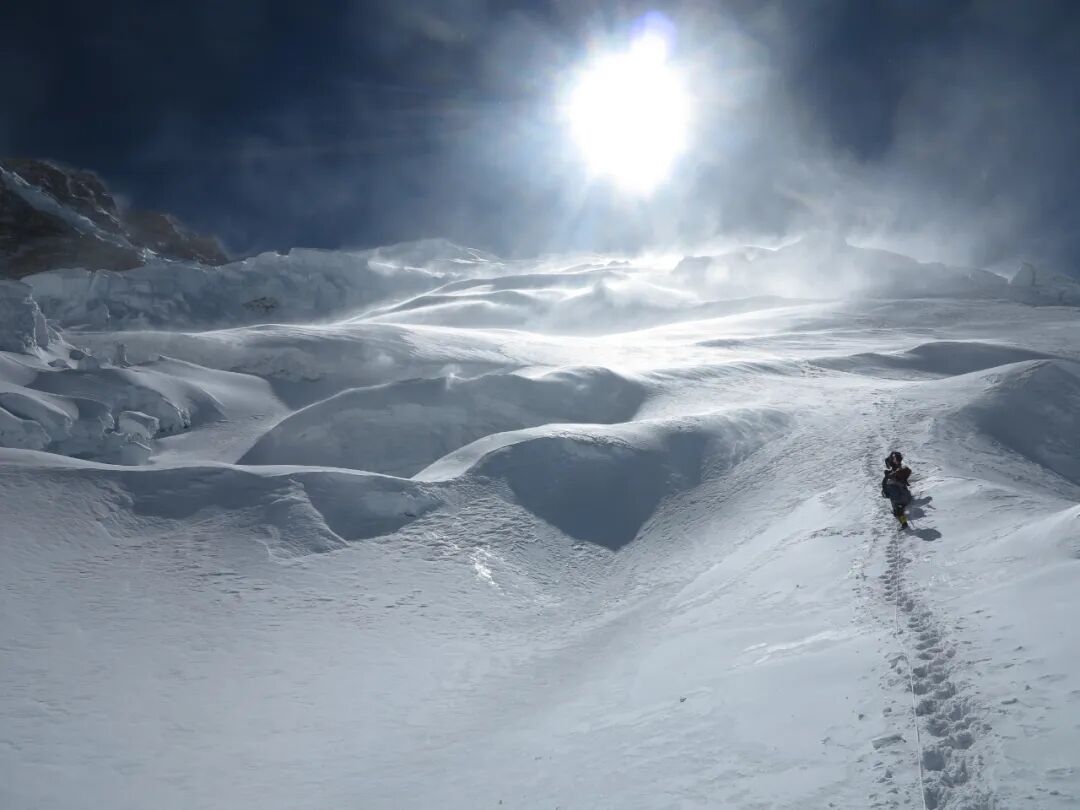
Zhang Liang summited all 14 of the world's 8000-meter peaks over 18 years
Zhang Liang: There may be parallels, also differences — everyone's perception or feeling differs. Some climb 5000 meters, feel miserable, never do it again. Some can't stop. Some force it.
I don't think you should force it. Be responsible for yourself, don't put yourself or others in danger. Life is so beautiful. My greatest hope every descent is for a hot pot meal. That's enough.
Rock Musician and Entrepreneur
The Many Possibilities of Life
TJ's life brims with possibilities — passionate about kitesurfing, five years as a rock musician after university, over a decade studying and working in North America while fulfilling his dream of traveling the world. Now founding Tapdata, embarking on a new adventure as an entrepreneur.
We were curious how these different identities and experiences coexist in one person, and heard TJ share his story.
The dream of traveling the world
TJ Tang: I also made a change in 2000, when Brother Liang started climbing — I "washed my hands" of rock music, since it had hit a "dead end."
5Y Tavern: How did you become a rock musician?
TJ Tang: After university I went to Beijing as a drifting artist, about five years. I loved music since childhood, but grew up in a village with no resources. In middle school, a wealthier classmate had a toy electronic keyboard. I saw it and thought: this is too fun. Later I'd do his homework, he'd let me play it. Though that was pretty childish stuff.
Levi Liu: You already showed business potential, making trades.
TJ Tang: I was in a youth talent class, skipped middle school to university, studied math. Once walking to the cafeteria, I heard Für Elise from the music department classroom. I thought: heavenly sound. Skipped other classes, found the music teacher, taught his kid math in exchange for piano lessons.
Later we formed a band, spent all day holed up in the practice room rehearsing and composing. We held the school's first concert. In the school auditorium, everyone below was thrilled, cheering for you — this is life. After graduation, went to Beijing without hesitation.

TJ (fourth from right) during his band days
Maybe it's in my genes from childhood — loving this state, loving novel experiences, rebellious nature, not afraid of things. My childhood idol was Xu Xiake from my hometown.
5Y Tavern: The seed of exploration was planted then.
TJ Tang: I always felt life should be spectacular, fully lived, different.
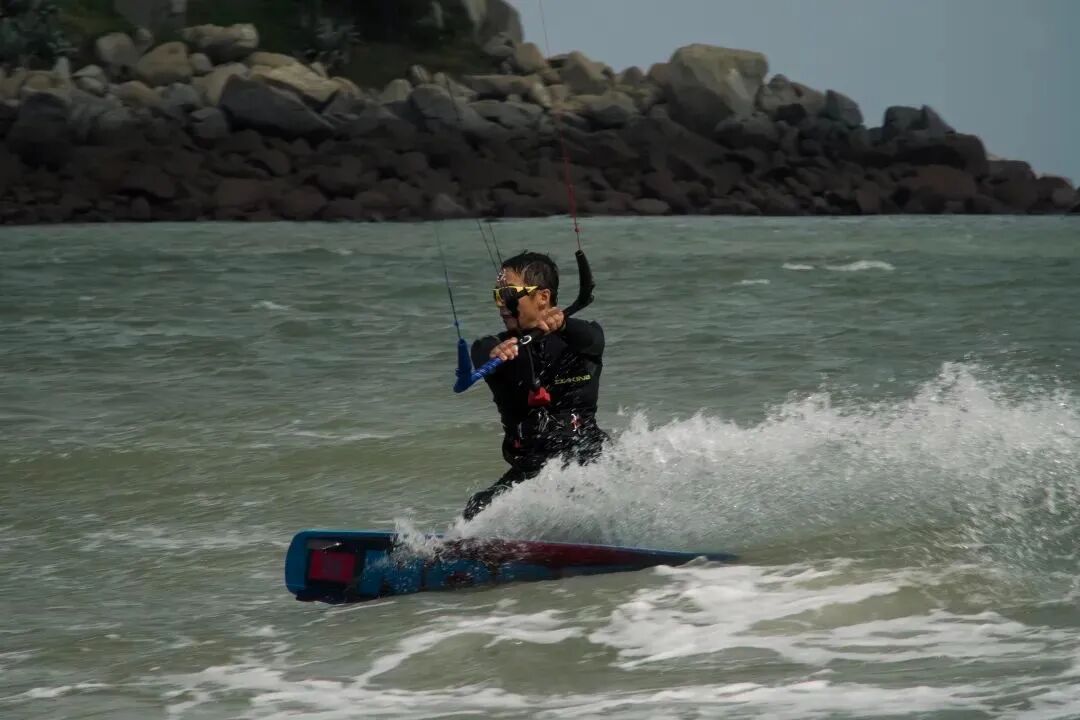
TJ has ten years of kitesurfing experience
5Y Tavern: How did you go from rock keyboardist to entrepreneur, and also achieve your dream of traveling the world?
TJ Tang: Couldn't survive, really starving — not exaggerating, no income, commercial gigs weren't working out.
Had an opportunity to go abroad in 2000. A friend from my rock days — his father ran a woodworking factory in Africa, asked if I wanted to go. Didn't end up in Africa, or it'd be a different story.
Later I went to the US for school, worked as a programmer for years, relatively normal life. Started at a startup — Opsware, mentioned in The Hard Thing About Hard Things. Later acquired by HP. HP was decades-old, different from startup culture, limited personal growth potential. I told my boss I wanted to quit.
He asked why. I said too depressed — Seattle has 233 cloudy days out of 365, I like sunny places. He asked where. I said Florida.
But he said: how about this, you go. Remote work wasn't mainstream then. I said, really? He said: between losing you and remote work, I choose you working remotely. I realized my childhood dream of traveling the world might actually happen. Spent three months in Florida, next went to Paris, where I met my now-wife, then began two years of backpacking.
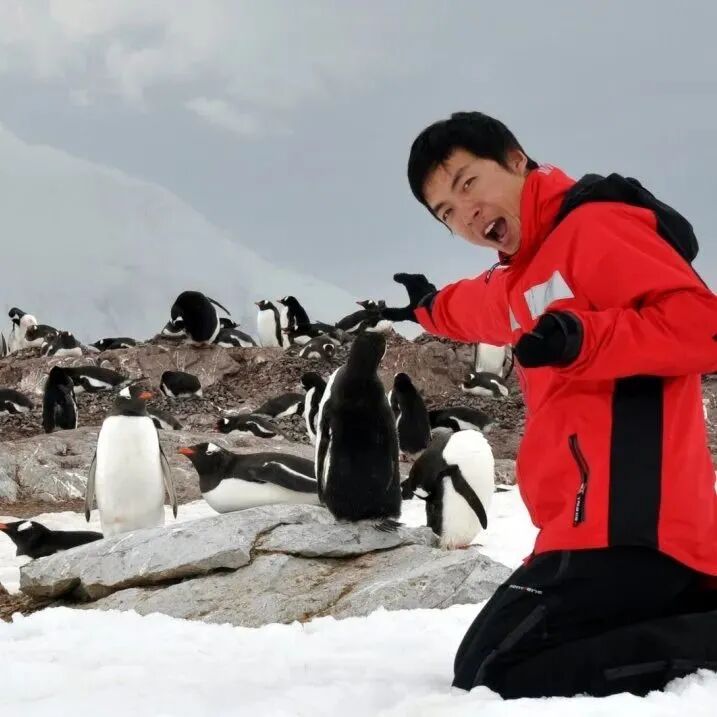
TJ in Antarctica
5Y Tavern: After traveling the world, you started another extreme sport — entrepreneurship.
TJ Tang: Yes, I'm quite satisfied with my life — been many places, met many friends, experienced many cultures, done many things. If there's anything left to pursue, it's seeing entrepreneurship through.
I used to think on planes: what if it crashes? Now I feel I wouldn't regret it. But my mindset may differ from young entrepreneurs — we balance rationality and emotion differently.
Having endured wanting to quit 100 times
You can withstand anything
TJ Tang: Though incomparable to 8000-meter climbs, I've also felt that wanting to quit 100 times. In university, I bicycled from Jiangsu to Beijing.
Levi Liu: Me too, from Hefei to Beijing during university.
5Y Tavern: You two have quite the rapport.
Levi Liu: One summer vacation, a classmate and I stayed for lab work. Afterward he said let's go cycling, prepare some clothes. I thought it was nearby. Turned out it was Beijing. No cycling gear then, just school T-shirts.
TJ Tang: Nothing at all. No road bikes like now, just 28-inch heavy bikes. No tents or sleeping bags like modern cycling. At night we'd find newspaper, spread it on a bench, sleep.
Levi Liu: Our route was slightly better — had cheap motels at 40-50 RMB a night. First two days okay, still putting up a brave front for each other. Day three or four, I started cursing my classmate. Got heatstroke mid-way, then diarrhea, but still had to ride to the next stop.
Basically didn't talk, one behind the other. When resting, both collapsed on the ground. Multiple times I wanted to take the train back. Bike cost 500 RMB, not worth keeping, fixed countless times, hardly any luggage.
TJ Tang: The thing is, in that state you still have to keep pedaling. My bike's ball bearings wore out and deformed, replaced three times. These bikes weren't designed for this kind of riding.
I only brought 80 RMB. The last ten days I remember clearly — had to figure out food. I'd ask villagers where the teacher was, teachers might understand better, say it was experiencing life. Two days I truly didn't eat, exhausted, hungry, miserable, and no one forced me into this.
Levi Liu: You're hard on yourself.
TJ Tang: I found a classmate to join, but unlike yours, he retreated before starting.
5Y Tavern: Why didn't you turn back halfway?
TJ Tang: Hard to say — quitting would disappoint myself. But your body is telling you no, then it's willpower.
Levi Liu: I don't know what impact this had on you, but it was huge for me. I used to travel with nothing, just go. Later realized planning is crucial.
TJ Tang: Later I understood, the meaning is immense — you can overcome anything difficult. Like any problem in entrepreneurship now, at least not physically painful, more mental pressure.
Like the pandemic years, startups struggled. When things go smoothly, everything's fine, problems get buried. But in tough times, you doubt: were our decisions right, is our direction correct? Lots of discussion and questioning. As CEO, as the person steering, you naturally face the most pressure.
I'd think back to cycling, every minute wanting to quit. Having endured that pain, you can withstand any pressure now.
Interactive Gift
What are your thoughts on extreme sports? What do you think of the guests' stories? Share your reflections and perspectives in the comments. We'll select 3 featured comments to receive a 5Y commemorative T-shirt.
Note: Activity deadline is 18:00, May 10, 2023. Please reply with shipping information within 24 hours of notification.





5Y seeks, supports, and inspires lonely entrepreneurs, providing support from spirit to all business operations. We believe that if the you whom others see as crazy begins to be believed in, the world will become a different place.
BEIJING · SHANGHAI · SHENZHEN · HONG KONG