Food, Drink, and Clothes, On the Road | 5Y Tavern Vol.15

Cowards never start. The weak die on the road. Only we remain, moving forward — not one step can stop.
Notes from the 5Y Capital Pub
This edition of the 5Y Capital Pub took place during 5Y Capital's 15th Anniversary CEO Summit. Three consumer entrepreneurs sat down with a 5Y investor to talk about "eating, drinking, and wearing" — the mindset and rhythm of building a company, their own consumer habits, and some keen observations.
Though their categories differ, we saw common threads across all three founders. No matter how the environment or weather shifts, entrepreneurs stay on the road — and it's precisely this state of being in motion that makes them more confident and resolute. As they quoted from Nike founder's autobiography: "Cowards never start. The weak die along the way. Only we remain, moving forward, unable to stop for a single step."
We've compiled some highlights, hoping they offer something useful.
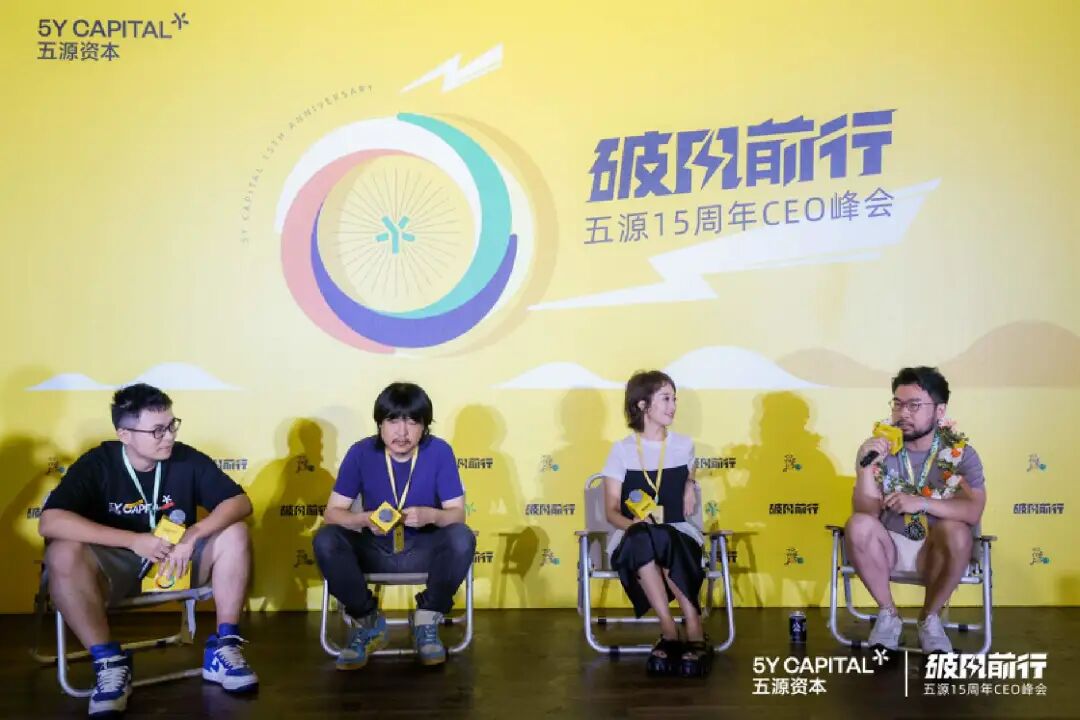
This episode's guests:
Xiaomeng Tian, Founder of happy nocnoc & Wanwu Selection
Kang Yang, Founder of On the Road Store (Gonglu Shangdian)
Yu Zhou, Founder of Daily Dark Chocolate (Meiri Heiqiao)
Ji Tong, Investor at 5Y Capital
Ji Tong: Our topic today is refreshingly direct: "eating, drinking, and wearing" — mapping neatly to chocolate, alcohol, and children's clothing. Let's start with introductions, and each of you can recommend a consumer product you've been into lately.
Yu Zhou: I'm Yu Zhou, founder of Daily Dark Chocolate. I stayed up watching Apple's product launch, so my strong recommendation is "Apple-brand toothpaste" — they squeeze out a little every year.
What impresses me is how instantly recognizable their design is as Apple. For us, in brand design, becoming classic matters more than changing every year.
Xiaomeng Tian: I'm Xiaomeng, founder of happy nocnoc and Wanwu Selection. This question is hard for me because I'm extremely fickle. Lately I'd recommend TANGO, a stationary bike.
Kang Yang: I'm Kang Yang from On the Road Store. I have very low consumer desire, but I've discovered an interesting new consumption pattern — I like wearing head-to-toe merch from friends or brother companies.
Ji Tong: Are you hinting we should send you more swag?
Kang Yang: Exactly. Clothes, shoes, socks — all free. I love everything free.
Ji Tong: From the perspective of a consumer company, what's the biggest change you've seen these past few years?
Yu Zhou: I think we've moved from noisy to calm. People focus more on themselves now. Before, when things were hot, it was chaotic — you could brute-force miracles. Now it's back to calm. With scarce resources, you have to focus inward. Like the AI folks concentrating on their algorithms, we're thinking about optimizing every element, paying more attention to content and product craft.
Xiaomeng Tian: Our team often discusses how the market seems to have split into two extremes. Some people have stopped buying entirely. Others, when they do buy, insist on buying good things. "Good" doesn't mean expensive — it means genuine value for money. Their budget goes only to what's most worthwhile.
One fascinating phenomenon: the world's greatest brands were almost all born in the worst conditions. When the macro environment is tough, it's actually an opportunity for the best companies to stand out — to pull ahead of competitors when resources are scarce. This is quite interesting. The temporary difficulties right now should open up entirely new territory for companies with real fighting strength.
Kang Yang: A change I've noticed is that you always have to pay attention to people. Behind people there's culture, there's memory. Consumption isn't often the end goal — what's more important is understanding why people consume. People in this era, especially Gen Z, care more about this.
Also, I feel this market consistently lacks revolutionary things — it's missing power, which saddens me. Second, sometimes dominating the sky isn't as good as blanketing the earth. Third, I hate anything over 100 yuan.
Ji Tong: You all joined our CEO Summit cycling activity — you probably noticed that for cycling, rhythm matters as much as speed. As founders, how do you think about the pace and speed of building a company?
Yu Zhou: At the start of the ride, I kept following Fisher (5Y Capital partner Fei Zhang). It was my first time on a road bike, so I wanted to see how a pro does it, learn from his experience. If the road was bumpy, ride slower. If smooth, pedal hard and accelerate. It's like entrepreneurship — when it's rough, slow down, don't crash; when it's smooth, pedal for all you're worth.
Most importantly, you have to be on the right road. We have so much innovation and insight now. First, we need to stay true to our belief — Daily Dark Chocolate's belief is "making every day happier." At the same time, we innovate around user insights. So we spend enormous time with users, understanding when our regular buyers actually eat our chocolate, what barriers stopped one-time buyers from returning, why some people have heard of us but never purchase. For us, we need to clearly see the obstacles to solve, which roads to take, then match resources and efficiency.
The environment is like weather — we can't change it, but we can predict it. So many wars and battles in history were won by predicting weather. You can use weather to win too. So no point complaining about weather, but we can see what the future environment looks like and prepare in advance.
Ji Tong: No wonder you took first place in the 26-kilometer group.
Xiaomeng Tian: In my view, maintaining rhythm should be the top priority. On top of that, maximize speed as much as possible.
Why rhythm matters most: when resources are insufficient, your margin for error is lower, and getting the rhythm wrong leads directly to fatal mistakes. In good environments, mistakes aren't fatal; in bad ones, they are. So with low error tolerance, minimizing mistakes is something everyone must think about.
Rhythm mistakes are easy to make. In my experience, whenever something looks smooth, when you're very close to the goal — that's when I tend to get anxious, and that's precisely when mistakes happen most easily. So rhythm is the first priority, but while maintaining rhythm, still play offense as much as possible.
Kang Yang: Let me use an analogy: a catamaran. It has two power sources — an electric motor and wind sails — with the hull itself as a vessel. Sometimes you need a mission; the mission is that vessel. Ambition might be the electric engine. Then there are external forces — financing, society, capital.
When the external electric engine breaks, you can only sail. Though the sail's rhythm is surging, wave by wave, it's peaceful, without noise. So I think the sail is vision. When the external environment fails, only vision can fulfill your mission. Sometimes it's about how you manage — when to use the sail, when to use the electric motor.
Ji Tong: For consumer companies, especially in food, drink, and apparel, these years have certainly brought many difficulties. What did you see, or what do you still believe in, that keeps you optimistic?
Yu Zhou: Our product is chocolate. The emotional value we bring consumers is joy and happiness — that need is eternal. Look at our industry's elders: besides Daily Dark Chocolate on the shelf, the rest are predecessors with seventy to eighty-plus years in chocolate, some founded in the early 19th century, others post-WWII. These respectable brands have weathered countless cycles — wars, economic cycles. And they're global categories, unaffected by single-market fluctuations. So I believe, as long as the road is right, my mindset stays fairly positive.
Ji Tong: If the road is right, keep moving forward.
Yu Zhou: Always forward, as we discussed — master the rhythm. Like today's ride: I really had no technique, but I exercise daily, so I brute-forced it with endurance. But brute force might only get you twenty-some kilometers. Beyond that, you need technique, and you can't do without daily training. So I think you need daily reserves too. The road must be right, and always maintain that confidence and belief.
Xiaomeng Tian: I feel very similarly. After reading many brand histories, I realize all the suffering we experience today — someone in history has already been through it. There's nothing special about it. The problems we face today have repeated countless times in history; perhaps just the complexity and immediate stacking are greater. But someone always wins. The ceiling of the macro environment doesn't determine the ceiling of the individual — that's quite important.
My mindset is still very good, and one reason is the team. When I feel anxious, my team can recharge me. I haven't felt much loneliness on this entrepreneurial road, which I find quite good.
Kang Yang: In the past, what made me confident was culture, because I feel everyone right now is fighting a war in their minds — using culture to transform many things, rather than having consumption construct identity or some kind of privilege. I think in this era everyone is equal; there's no specialness or privilege. In the past we focused on culture itself, but going forward what will make me confident is learning more capabilities — leadership, goals, team building. These are what will make me more confident going forward: the state of always being on the road, on the road.
Ji Tong: The theme of 5Y Capital's 15th Anniversary CEO Summit is "breaking wind and moving forward." Could each of you send a word — no more than four characters — to yourself and your company?
Yu Zhou: I think founders are meant to break rules, so I'll use four sentences instead. I particularly love the preface to a book by Nike's founder. Nike's spirit is: as long as we can still move today, we have the drive to move forward. I think athlete spirit and entrepreneur spirit are the same. Those four sentences are: "Cowards never start. The weak die along the way. Only we remain, moving forward, unable to stop for a single step."
Ji Tong: Wonderful — breaking the four-character rule right out of the gate.
Xiaomeng Tian: That quote happens to be my WeChat Moments signature too. For me, just two words: passion. It's also our company's cultural value. Passion ensures we never have a midlife crisis, that we stay young forever.
Kang Yang: I'll borrow from two company biographies — Starbucks and Airbnb. One is "pour your heart into it." The second is "belong anywhere."
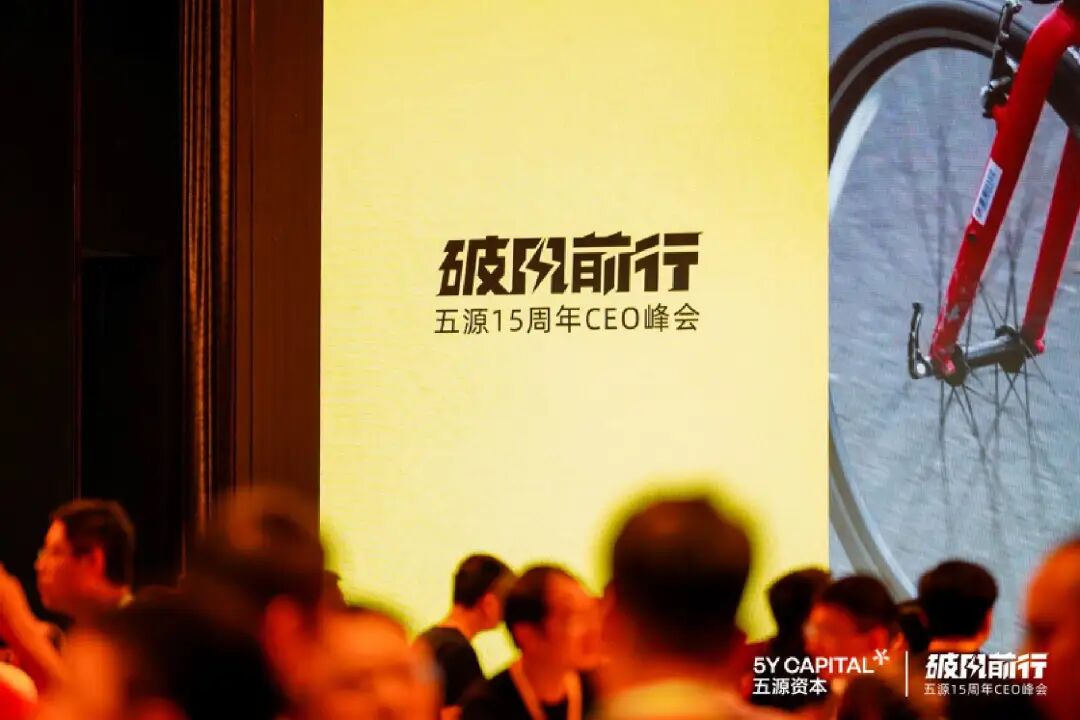
Comment to Win
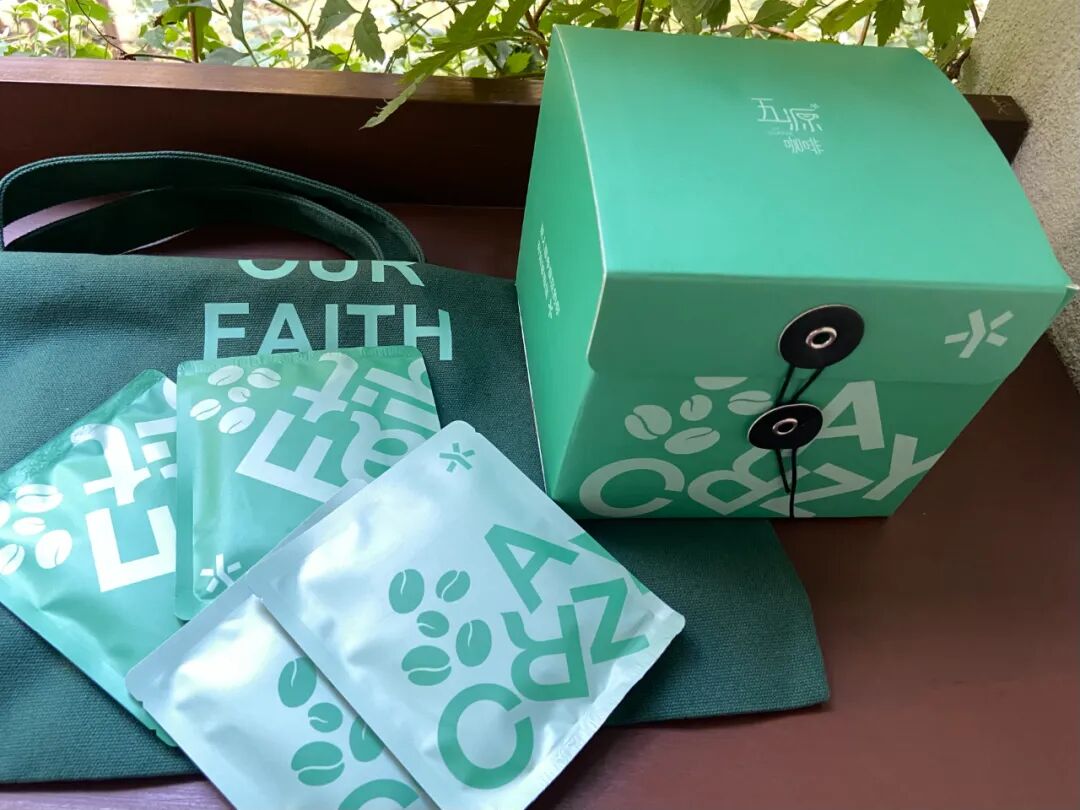
Share your thoughts on this episode in the comments, or questions about "eating, drinking, and wearing" you'd like to discuss. We'll select 2 featured comments to receive 5Y Capital coffee.




5Y Capital seeks out, supports, and inspires lone entrepreneurs, providing support from spirit to all operational matters. We believe that if the you whom others see as crazy begins to be believed in, the world will become a different place.
BEIJING · SHANGHAI · SHENZHEN · HONG KONG