Fly Away, Leave the Earth's Surface | 5Y Tavern Vol. 4

Because this is what humanity longs for.
5Y Capital Tavern Notes
The conversation took place in early March. 5Y Capital Tavern opened a bottle of baijiu. At the time, we had no idea that a month later, we'd be locked down at home due to the Shanghai outbreak, face-to-face conversations would become a luxury, and many people's lives and work rhythms would be disrupted.
But it's precisely at moments like this that we need hope and energy more than ever. The kind of energy we felt a month earlier, at a Hunan restaurant in Panyu District, Guangzhou, when Zhao Deli spoke about his obsession with flight.
Nearly four years have passed since Zhao Deli's flying motorcycle first took to the air. Compared to the sheer stubborn courage of those early days, his company and team are now barely recognizable. They've found a clearer path through systematic R&D and exploration. And in this entrepreneur from Hunan, you can still see the courage and obsession of his first attempts at flight.
There's a saying in Hunan dialect: "stubborn enough to endure, patient enough to persist, tough enough to suffer." It's hard to say whether geography shapes character. But from 2016 to 2018, through the long dark stretch, over 1,500 tests, with the team down to just one person, Zhao Deli never gave up. In June 2018, his flying motorcycle successfully flew.
What does flight mean to humanity? April 12 is the International Day of Human Space Flight. Sixty-one years ago today, Soviet cosmonaut Yuri Gagarin orbited Earth for 1 hour and 48 minutes aboard the Vostok 1 spacecraft, reaching an apogee of 301 kilometers, before returning safely.
Earlier still, in 1899, two young men who ran a bicycle repair shop — 32-year-old Wilbur Wright and 28-year-old Orville Wright — began attempting to fly. Between 1900 and 1902, they conducted over 1,000 glider tests. In 1903, they built the first powered aircraft capable of carrying a person, the Flyer.
Once the obsession with flight takes hold, it cannot be stopped. As Wilbur Wright said, flight was a "vocation" to him. This is humanity's aspiration.
This era desperately needs things that break through the boundaries of imagination.
Guests at this edition of 5Y Capital Tavern:
Zhao Deli — Founder and President, Xpeng Motors
Peter — 5Y Capital
What they talked about:
Why is flight so captivating and addictive?
When the team was down to two people, what was the motivation to keep going?
We see this in sci-fi movies all the time. It's humanity's aspiration.
👇
5Y Capital: This is the first time our tavern has had baijiu. We were going to order the restaurant's house-made rice wine, but Peter (Chen Zhe) went straight for this 52% Luzhou Laojiao.
Peter: I grew up in Sichuan. My mother is from Luzhou, so seeing Luzhou feels very familiar.
5Y Capital: There are so many stories about you online — spending all your savings to develop a flying motorcycle, for instance.
Zhao Deli: Everything online is true.
5Y Capital: Then let's talk about those things, and the things that didn't make it online :)
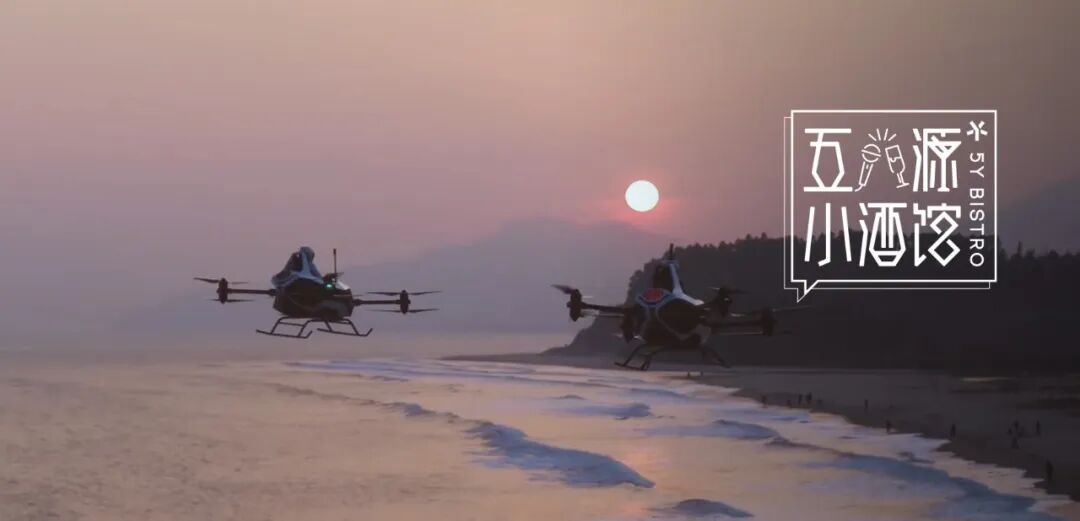
When you're flying, you're focused and empty at the same time.
5Y Capital: Why does flying become an addiction for you?
Zhao Deli: When you're up in the air, you're completely empty. All life's trivialities are left behind. You're only focused on the act of flying itself.
Years ago, when I was learning to fly ultralights, I went with my instructor to Jiamusi, to a farming reclamation airport with no signal. I spent a week there learning to fly — didn't worry about anything else, just flew like crazy. That experience was pure joy.
Ever since I fell in love with flying, I've thought about it every single day. Not just thought — I've kept at it. I'd call myself a geek about this. Now when I watch our team testing, I can tell what's wrong just from the flight attitude and the sound.
But it's not just me anymore. I'm leading a large team now. I can't put the company or the project at risk. I think a lot more now, more restrained than before.
5Y Capital: When you first founded HT Aero, you were making RC models. Later you started developing manned aircraft. How did you get into RC models in the first place?
Zhao Deli: From 2006 to 2008, I ran a small restaurant and earned my first bucket of gold — roughly 1 million RMB.
One day by chance, I saw a group of people flying remote-controlled planes in an open area. My eyes lit up. This was something I'd wanted since I was a kid. I got their contact info and bought one myself. I thought it would be simple, but it was hard — push the throttle and it would crash. That whole year I lurked online researching this, asking people on forums.
Peter: 2008–2009 was also very early days for DJI.
Zhao Deli: Right. I researched it that whole year. Besides communications, I figured out the flight control systems completely. I could disassemble the entire plane and rebuild it to fly stably, even do aerobatic tricks.
After that I got into RC aircraft. At first I just wanted to start a club, then later sold products. There weren't particularly good products on the market then, so I formed my own team. Around 2010, we developed the world's smallest fuel-powered RC helicopter, the Global Hawk 480N. You can still find it online.
Peter: The team started with small drones, racing drones, products like that. And through that process, you began attempting manned flight.
Zhao Deli: Right. Again by chance, I saw someone flying manned ultralights and helicopters. I decisively went to learn from them. Learning ultralights and helicopters was incredibly enjoyable, but also quite difficult, a very long process. At the time I thought, no wonder this can't become widespread. I wondered if I could make an electric version — like Harry Potter's broomstick or the Black Cat Detective's flying motorcycle — something that could take off and land vertically anywhere, something very easy to learn.
I strung these ideas together and talked to my team about making something like this. When I proposed this concept, they thought only a madman would think this way. Though they didn't agree, I still pushed in this direction. But at the time there weren't even large motors available, no propellers, no motor controllers — just tiny batteries.
Peter: Actually, when you were making RC models, there were no products on the market you could reference or learn from either. You were doing something that didn't exist on the market, that no one had succeeded at. You had to figure it out and find the direction completely on your own. Did a lot of people oppose you?
Zhao Deli: Basically 99% of people opposed it. Many friends treated it like a joke. Only my family tacitly accepted it, because they knew my personality — I had to do this.
Most of the company had left by then. The worst time, there was only one engineer and me, just the two of us. From 2016 to 2018, those two years were the darkest. He's still with our company today.
Not "don't give up easily" — never give up at all.
5Y Capital: When people were all leaving and you were still persisting with aircraft R&D, weren't you nervous or anxious?
Zhao Deli: At the time I really wasn't thinking in business logic at all. I just wanted to make this thing work, had to produce a result.
What comes after the result? Didn't think that far. Needed a result first. I basically had no social life then, just threw myself into this. The other engineer would also help the company liquidate remaining RC aircraft inventory to free up more R&D funding.
5Y Capital: Did you consider what if there was no result? Why did you believe you would eventually succeed — where did that confidence come from?
Zhao Deli: There was no confidence. I was struggling, like falling into a river — if you don't thrash, you die; maybe thrashing a few times gets you to shore. Those two years were the absolute bottom. Like being in a tunnel with no light ahead, not knowing how much further the road goes, but having to keep walking.
I think a person doing one thing well in their lifetime is enough. Once you've set your direction, it's not about not giving up easily — it's about never saying give up at all. Not wanting to overcome difficulties, but having to overcome them.
I didn't worry about where my next meal was coming from, didn't pay attention to what peers my age were earning. When I first made money, people around me were buying houses so they wouldn't have to work for decades. None of that seemed relevant to me. I know nothing about luxury goods or consumption. I just burrowed into my obsession.
Peter: Manned flight is completely different from your previous RC aircraft work.
Zhao Deli: With RC you can see the aircraft's attitude, but when a person is sitting in it, your posture, where your hands go — there's no fixed reference. You have to figure it out bit by bit through trial and error.
Those two years involved massive R&D and testing. Many parameters were interdependent — pull one thread and everything moves. When Guangdong TV first interviewed me, I'd already flown over 1,500 times. The first thousand-plus times had no person aboard. Crashed quite a few times too, eventually to the point where your hand wouldn't dare push the throttle.
This was still without a person. Had to do empty flights, weighted flights, fatigue tests, reliability tests — all of that before a person dared get on. There was no simulation capability then, and simulation wasn't that precise anyway. Everything relied on actual testing. Fortunately we recorded all of it.
5Y Capital: Were you scared before the first test flight? The original flying motorcycle had no protection around it — that took courage.
Zhao Deli: June 2018, all testing was done. I thought I should get on and fly. The original dream was a person riding and flying, but after so many tests I'd gone numb. And it really was dangerous — propellers all around, no protection whatsoever. Like jumping from seven or eight stories up. Mixed feelings. Had to fly, but scared to fly too. When I made up my mind, I remember clearly — three days later was my mother's 70th birthday. I went back and celebrated with her, like going off to war. Returned to Guangdong and got on to fly.
5Y Capital: Did you succeed the first time? Were you especially excited after takeoff?
Zhao Deli: Since I couldn't see the control attitude from up there, I set it to automatic mode — altitude 8 meters, hovering very stably. The test site was a grassy field surrounded by walls. At 8 meters up, I saw a lot of people outside holding up phones to film.
After it flew successfully, I truly felt that sensation of being lifted by the wind. Switched to automatic landing, descended slowly, touched down gently — exactly what I wanted. In that moment, I felt all those years had reached a milestone.
After various automatic flights were done, I wanted manual control — high altitude, low altitude, turning, weaving through streets. I practiced for a month and got quite good at manual control. A friend called me for late-night snacks, I asked where he was and sent me the location. I flew one kilometer over, landing and blowing everything around me into a mess. That feeling was incredible, like being a bird, wind on your body, so free.
5Y Capital: Did you crash in between?
Zhao Deli: Crashed three times too. The first two were due to interference, improper operation. Since I wasn't flying high, it wasn't too serious. After crashing, I wasn't concerned about my body — slapped the dust off and checked if the aircraft was damaged.
Peter: Did your family worry so much they couldn't sleep, trying to talk you out of it?
Zhao Deli: I didn't tell my wife when I first started manned test flights. She only found out after I broke my leg. I invited her to watch but she wouldn't come — too scared to look. It wasn't until Hunan TV needed her on camera for a program that she came to see.
Peter: When you two first met, you probably never imagined you'd be making flying cars.
Zhao Deli: Didn't think about it early on. People are like this — when you have continuous success, your confidence explodes and you think you can do anything. I succeeded with my restaurant first, then succeeded with helicopter products, which made me want to challenge manned flight. I knew manned flight would be difficult, but if you think too much about the difficulties, you wouldn't dare move.
Massive innovation requires crazy people, because they dare to imagine.
5Y Capital: Did the fascination with flight start in childhood? You grew up in Hunan — what are your impressions of the place?
Zhao Deli: I grew up by Dongting Lake. There were lots of reeds there — used for paper-making back then, sprayed with pesticides periodically to prevent pests. There were no crop-dusting drones then; they used manned aircraft flying very low. You could see the people in the plane. I so wanted to own a plane like that. As a kid I loved anything that flew — the Black Cat Detective's flying motorcycle, Sun Wukong's somersault cloud. My dream was to fly a plane.
I was very good with my hands. I took apart the household radio and tape recorder to get magnets, motors, and dynamos. After taking apart a dynamo, I used foam plastic to make a boat, added belt pulleys so it could run in water. I also tried making planes — they could indeed launch up, but I hadn't mastered remote control technology.
Peter: A childhood dream, after many years of exploration, finally led you to this path.
5Y Capital: Probably plenty of kids wanted to fly planes. But making it your career and persisting for years — that's rare. After leaving your hometown, you worked many different jobs.
Zhao Deli: Our family wasn't well-off. I dropped out of high school, took 500 RMB my family pooled together, and entered a factory in Dongguan. I'm the only one in our company without a college degree — dragging down the academic credentials (laughs).
It was a golf equipment factory. I was responsible for painting club heads. In the factory you worked from 7 or 8 in the morning until 1 or 2 a.m., standing all day. As a newcomer, it felt much harder than rural life — my legs would swell from standing so long. Assembly line work doesn't require your brain. Like you could see your whole life stretching ahead.
After two or three months, I chose to leave. In the following years I did many things. I sold insurance, which thickened my skin. Later I did real estate brokerage, and with the foundation from insurance sales, did quite well. Ever since I jumped out of that factory, I stopped doing things where I could see my whole life ahead.
Peter: My feeling is that deep down you've always been an extremely tenacious and crazy person. Before finding aircraft as your life's passion, every step you took was gradually accumulating. Along the way I'm sure many people called you crazy. How do you view that label?
Zhao Deli: I think it's a compliment. Massive innovation requires this kind of craziness, because you dare to imagine.
Xpeng once gave me a painting, paying tribute to the Wright brothers. He said Deli, maybe there are one or two hundred people in all of China doing this, and you're the only living one I found. It's true — in early testing, if you don't get on, no one will test for you. Like the Wright brothers early on — no simulation then, people got on and flew, very likely to crash and die. But humanity is truly great. In massive innovation, humans have the guts to go all in.
Peter: I feel this deeply too. When we first made contact in 2019, early 2020, we also felt this was extremely difficult, very hard for a startup. Last March when I came to your office with Richard (Qin Liu) and Fisher, we were still discussing the company's product roadmap. At the time we also thought, this idea is too crazy. But indeed, you only know by doing — you can't think your way to understanding. From last March to now, the company has iterated and progressed very rapidly in thinking, product, and team, becoming much clearer.
Zhao Deli: Through this long evaluation of technical paths, what follows is for us to verify, step by step according to our rhythm, one footprint at a time. The X2's mission is to hone the team. The sixth-generation flying car is delivery-oriented, developed strictly according to automotive development logic.
Because this is humanity's aspiration.
5Y Capital: After the successful test flight, many media outlets interviewed you. How did they find you?
Zhao Deli: I thought such a great thing had to be promoted, to let more people experience the joy of flight. But this dream is too big for me alone. I wanted more people to do this with me, so first more people needed to know. I posted short videos online too. Later Guangdong TV came first — that news spread very widely, and many people found me through them. The headlines were all like this: grassroots farmer invents flying motorcycle, Dongguan factory worker invents flying motorcycle, things like that.
Our co-founder Wang Tan also found me through media reports. He saw this and told me, bro, your design is too ugly. I do industrial design in Qingdao, I can help you make it look better. Later he came to Dongdao, brought Qingdao draft beer, and we talked in the studio until midnight, imagining lots of future possibilities.
Peter: You gave me a deep impression — craziness is your way of doing things, but underneath you're a very kind and upright person. This is also what attracts others to support and trust you during low points and difficulties. Probably cultivated from childhood, something at the foundation of human nature.
Zhao Deli: After getting some angel investment, we made the T1, which leveraged Wang Tan's design capabilities. The T1 won many awards. The T1 was single-seater — without a pilot you might be scared. So I wanted to make a two-seater. This product later took many people flying — government officials, investors, celebrities, journalists. But this product's greatest value was that Xpeng found me because of it.
Xpeng came to Dongguan to find me in July 2020. I took him for an aerial spin, landed, and he saw this was genuinely substantive. And we'd been working for years at a remote airfield, middle of nowhere. He was very moved. We were betting our lives on this — people selling houses and land purely to do this.
After Xpeng saw it, we very quickly decided to pursue this dream together. We officially moved from Dongguan to Guangzhou in October 2020. Development was very fast after that — our X1 and X2 were developed simultaneously, test flying within half a year.
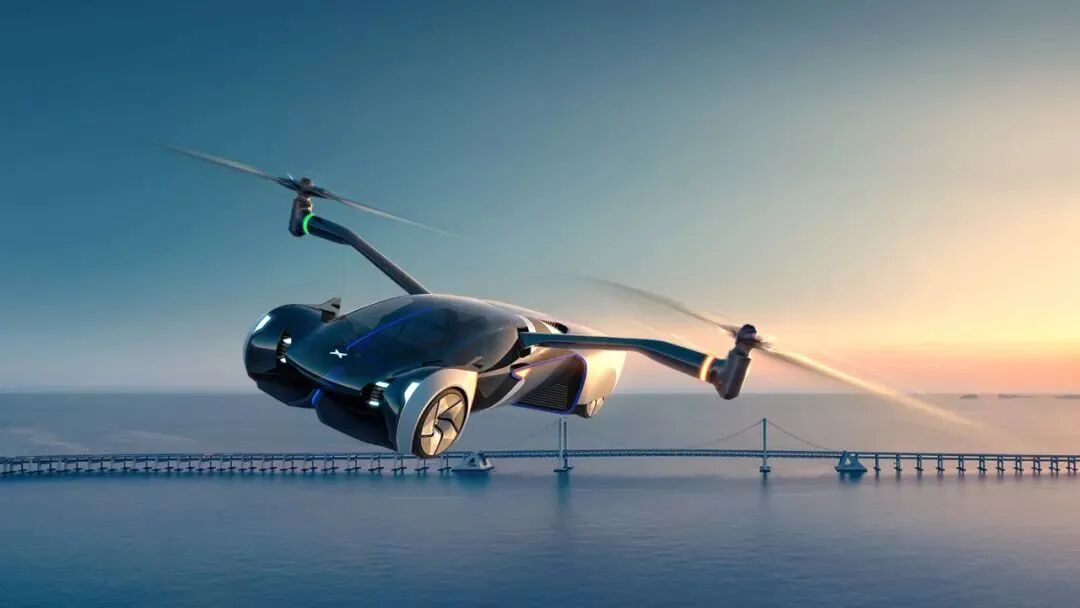
Peter: With systems in place, R&D quality and efficiency are much higher.
Zhao Deli: Product aesthetics also improved immediately. Most importantly, when discussing strategy we also figured out a very good business model and deliverable product — a to C product. And with technological changes, cars will become increasingly widespread, but roads are only so wide, cities only so big — congestion will persist. If we can utilize air resources, we can truly solve social problems.
Peter: It's actually like inventing skyscrapers at the end of the 19th century — utilization of urban space. After that, development happened very quickly. Flying cars aren't currently a market consensus. What do you think is the biggest misunderstanding or lack of understanding from the outside?
Zhao Deli: Early on people didn't understand why you'd make a car that can fly. When you explain the business logic clearly, they feel it's an exquisite thing.
Peter: To C flying cars face a market that may be carved out from the luxury car market — a category that didn't exist at all before, that was unimaginable in the original market.
Zhao Deli: Right. The precondition is that we can make it road-legal, that it can fly in some legal and compliant places. This is very important. We're still feeling our way across the river.
Peter: I know you've still been very busy this past year.
Zhao Deli: My schedule is packed every day. After being busy, I feel grounded in my heart, not hollow. If you're always feeling hollow, it means whatever you've accomplished was just luck.
5Y Capital: Is there anything you worry about or fear? You seem to never set any limits for yourself.
Zhao Deli: Because I've hit bottom several times. When everything's going smoothly you feel like you can do anything, but when you're truly in the bottom, you don't know how many years it'll take to recover — that's still very painful. But every time, the scars heal and the pain is forgotten.
I don't remember past worries anymore. There are definitely fears about the future — fear of failure too. But it's precisely because of this fear that you have to work harder. As the Chinese saying goes: when heaven wants someone to perish, it first makes them arrogant. So we minimize this possibility, do our work solidly, maintain entrepreneurial spirit, and make this more certain through every little thing.
Peter: I saw a tweet Elon Musk posted. He said Munger talked with him in 2009, said Tesla was certain to fail, gave all the reasons why it would fail. The key thing was Musk said all these made perfect sense, but I still insisted on doing it.
Zhao Deli: Right. So looking back now you can see Musk's foresight. Including the first time I saw Musk recover a rocket, tears shot out. His Raptor engine reached 7,000 tons of thrust, and later their Falcon 9 could be recovered. I saw people under the rocket, tiny as ants. Something so massive, so tall, thousands of tons, responding in milliseconds — the control had to be so good. Like pushing a 30-story building into the sky and bringing it back down. He had this idea 20 years ago, invested in doing it. I find it incredibly moving.
We often see these things in sci-fi movies. These are things humanity aspires to. Since they're humanity's aspiration, and technology can do it, why not do it well. When others aren't doing it and we accomplish it, we can open up an entirely new field or track, and maintain the lead.
Peter: You'll be recorded in human technological history like the Wright brothers.
Zhao Deli: Once you've set your direction, just move forward. Early on I didn't think of this as entrepreneurship either — it was just doing what I loved most and persisting. You'll definitely encounter all kinds of difficulties along the way. Given enough time, there will eventually be a result. Some results will at least meet expectations, some may exceed imagination.
Peter: Actually we're defining many new rules, defining this product, rather than following.
Zhao Deli: Defining rules itself is also major innovation. Without rules you also feel it's so hard, but you push forward bit by bit, and others will be willing to cooperate. I also pushed myself to the point of being unable to do more, but maybe it's like this — push a little more, and people will come support you. As long as you don't give up, as long as you're still alive, there's opportunity.
5Y Capital Tavern
Interactive Gift Time
After reading this article, what are your thoughts or takeaways? Feel free to leave a comment. We'll select three outstanding comments to receive a book blind box.
The books in the blind box come from recommendations by 5Y Capital investment colleagues. Join the interaction, win a prize, and read together! Comments accepted until April 20. Due to the pandemic's impact, gifts may be delayed — we'll contact you in advance.




5Y Capital seeks out, supports, and inspires lonely entrepreneurs, providing support from spirit to all operational matters. We believe that if the you whom others see as crazy begins to be believed in, the world will become altogether different.
BEIJING · SHANGHAI · SHENZHEN · HONG KONG