Drunk but Not Down: 5Y Capital Tavern Vol. 5

What's on the minds of twenty-something founders?
*** 5Y Tavern Notes ***
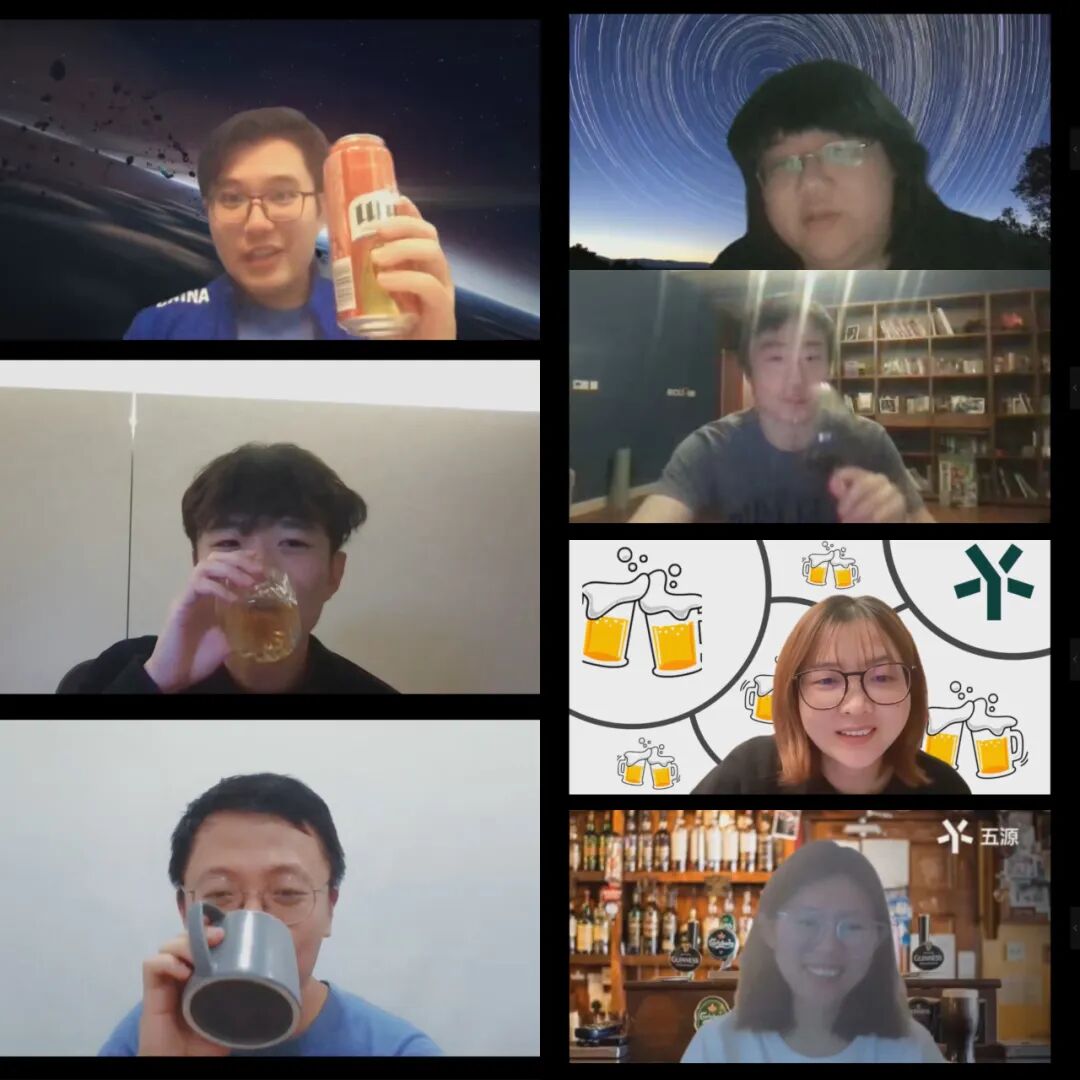
This edition of the 5Y Tavern was a bit unusual — no one drank the same thing: whiskey, craft beer, chilled sake, "deathly" Wusu beer, elegant red wine, and even happy water. Trapped by the pandemic, we gathered at a cloud tavern.
The drinks were nothing new; what was fresh were the people — like the twenty-something founders in this edition.
Today is Youth Day, and we always end up having various discussions about young people. What do those in their twenties chase after, crave, anxiously fret about, care about? There are always the usual words: exploration, curiosity, adventure, contradiction, seeking knowledge, bewilderment, breaking rules.
But youth cannot be defined. Every generation of young people has their own difficult path to walk. Still, never underestimate any generation of young people.
Our guests at this 5Y Tavern:
Ricky, born in 1999
Shanghai's elegant red wine drinker, founder of no-code collaboration platform Treelab
Lin Xin, born in 1997
Beijing's whiskey neat drinker, founder of sodoi bar
Zhang Di, born in 1994
Dongguan Songshan Lake's chilled sake drinker, founder of Benben Technology
Raven Gao, born in 1993
New York's craft beer drinker, founder of Troph virtual social
Steven, born in 1995
Shanghai's "deathly" Wusu beer drinker, investor at 5Y Capital
What they talked about:
Buying a spaceship ticket is on my life list.
The real world is too boring, so I want to create a virtual one.
Isn't getting drunk basically the metaverse?
Only a few years into entrepreneurship, and the pandemic took three.
The worst outcome is seeing each other at the next company.
Survival strategies for the Great Plains era.
Because I want to.
No need to force meaning onto it.
Steven: Why did you all start companies?
Raven: There's a place I want to go. That place is currently impossible to reach, and I don't think it'll just appear if I wait another ten years. Since I want it and no one's doing it, I'll do it. Doing it requires starting a company, so I started one. The company needs funding to grow, so I raised money.
I find the real world boring and want to create a virtual world.
Zhang Di: To put it simply, same answer — I wanted to. Nothing particularly deep. I think fundamentally life has no meaning. If you really put a person against the vast scale of the universe, none of today's achievements will likely remain in a thousand years. So rather than weighing choices as good or bad, just do what feels good.
Lin Xin: I quite agree. I think it was a very accidental choice. You could force meaning onto it if you had to, but there's no need. But once you enter the state of entrepreneurship, you get real satisfaction from the process itself. Like whether users buy what you're selling, whether they praise or curse you — you get very direct feedback from the real world, not some false sense of satisfaction.
Ricky: Part of it comes from family. My parents also started companies three times. In college I was already writing systems for big apparel brands, and discovered many companies had this kind of customized IT need that no one was meeting. So I wanted to start a company to do this. At the time I didn't know anything about VC or fundraising — just me and my cofounder writing software. Later an investor found us through a friend's introduction, and gradually we got to where we are today with a company, funding, and a team.
When you have a certain future.
Steven: Sounds like there's still a lot of randomness. Maybe the most important thing in entrepreneurship is choosing the right battlefield. How do you know your target definition is correct?
Raven: Maybe the starting point is different. If you're aiming for some achievement, you'd definitely pick a bigger track, estimate timing and market. But I think if you want to do something, have a certain vision, believe in some future — then for you it's betting on that future, it's an all-in state.
Zhang Di: I think one question is whether this future will come, another is when. For me personally and our team, we saw the direction of robots without reducers, and we saw the whole market. These two things support that this can be done. What we need to watch is when this future arrives.
Ricky: Someone said before that almost no successful entrepreneur in the world studied entrepreneurship. Ideas from business school rarely make great companies — I agree. If today you could whiteboard an idea with a huge market, and it was that easy to come up with, either someone already thought of it, or there are many problems you haven't thought through deeply enough.
I think entrepreneurship happens by chance — you cut in from a small problem, and gradually encounter a big market, or create the market itself. Maybe we're also on the wrong path but don't know it yet. But if you're 100% certain you're on the right path, you're probably 100% wrong.
Steven: Lin Xin, how did you think of starting a bar?
Lin Xin: Emotionally, I think a bar is something especially worth doing. I'm a relatively introverted person, but I also crave communication. I used to really like murder mystery games or Werewolf, because you can speak freely or play a role. In real life it's hard for me to interact with people like that, but after drinking, people more easily generate exchange and collision. Drinking is actually a way of communicating with the world — isn't getting drunk basically the metaverse?
Zhang Di: To some extent, Lin Xin and Raven might have some underlying resonance.
Raven: So for you, is drinking a kind of escape from reality?
Lin Xin: I think you could understand it that way, but this escape isn't about wanting to evade reality — it's simply transcending one's personality.
Steven: Why don't we all escape together for a drink. I'm having deathly Wusu.
Raven: Mine is a craft beer bought from the bar next door. Still very much in demand.
If man could step twice into the same river.
Ricky: I wanted to ask Raven — I've never understood. What's the difference between the metaverse and today's RPGs?
Raven: Actually when we started there wasn't even this word. I don't particularly like the word metaverse either — I prefer virtual world, or more broadly, virtual internet. I think what's most attractive about the next era is that everything will be visualized. Whatever you do in reality, you'll be able to do on the internet. That's quite different from RPGs.
Ricky: Games all have objectives, something you can win. But a world isn't like that.
Raven: I understand it as having no story or purpose. Like using an iPhone itself has no objective, right? There are many different functions and things to do. Maybe the virtual world is similar — it's just a new generation of internet.
Ricky: Have you all seen that Black Mirror episode where some assistants help with your daily work, and the assistant itself is a person's consciousness running in a virtual computer? I'm wondering if this technology existed, letting your brain merge with a virtual world, would you dare to try it?
Raven: I would probably answer instantly: yes.
Steven: From the invention of modern computers to now, it's only been a few decades. If technology progresses at this speed, maybe we're not real people either — maybe we're created by computers.
Zhang Di: You can imagine it, but it's hard to find evidence to support it.
Ricky's question is interesting. Raven would say yes instantly, but I'd hesitate, and probably wouldn't try it. My thinking on this is more practical — trying it now wouldn't necessarily enhance the experience, and might add troubles. My only goal right now is to make full use of my heart. But when I'm about to die, I'd probably try it, and even pay to try it. Maybe it's thinking at different life stages.
But if it's not transcending the physical world, but letting your consciousness transcend some rules and limits of the physical world — like controlling a robot agent completely consistent with all my cognition — I'd definitely be happy to. This isn't transcending from the real world to the virtual world, but also transcending some rules of the real world, like man cannot step twice into the same river. That would work. I studied robotics precisely for this.
Spaceship tickets.
Ricky: If one day you've started a company and are completely financially free, what's the first irrational thing you'd buy?
Zhang Di: A spaceship. If I can't buy one, then a SpaceX spaceship ticket.
Lin Xin: How do you define irrational? A spaceship seems pretty rational.
Ricky: Maybe the motive isn't that altruistic — not about saving the world or realizing some value, just something you like and want.
Raven: I'd also want to buy a SpaceX spaceship ticket.
Zhang Di: Of what's purchasable, definitely this. Though if you mean anything goes, a time machine, then I might need to think more.
Raven: Maybe we'll be shipmates by then.
Lin Xin: I can't think of anything. At most maybe buy an island.
Zhang Di: Then we can put the launch base on your island.
Ricky: I'm thinking if one day I could invest infinitely without considering commercialization, I'd make an extremely extreme game. Have you played GTA5? My impression is that level of detail control made me feel the people who made this game have artistry — thinking of all kinds of situations players might encounter, many I could never have imagined. I think that's especially cool. I might want to do this.
Zhang Di: Delete the main storyline from a game, isn't that a small virtual world?
Raven: Didn't expect Ricky to also be on team metaverse.
The worst case is seeing each other at the next company.
Steven: Looking forward to the day you all buy SpaceX tickets. Thinking in reverse, what if your startup fails? After all, the probability of entrepreneurial failure is far higher than success.
Raven: Raise money and continue in this direction.
Ricky: Then it can't be called failure. If you can raise money, you haven't failed.
Zhang Di: The word failure doesn't exist in his dictionary. That's also an attitude.
Steven: I'm curious if you've all thought about this scenario.
Zhang Di: It's impossible not to think about it at all — it's just continuing in a different way. For me, what is success and what is failure, this question is still very important. As long as you haven't lost, you're on the path to success.
Raven: I think standards of success and failure vary by person. There are some objective standards, and some subjective ones. Like the commonly cited commercial success — the most extreme definition might be the threshold for giants, tens of billions of dollars to count as success, otherwise it's failure. I know some people are deeply troubled by this definition of failure. But for me, I want to go to such a place. If I make that place go from unreachable to reachable, that's success.
Entrepreneurship itself does have very low success rates. You have to prepare to face failure, and communicate this with team members. The most extreme thing was something I said: I said there's nothing to worry about — the worst case is we see each other at the next company.
Ricky: Failure is when you no longer have the confidence to persist. Even if the company is down to just you and your cofounder working without salary, as long as you haven't given up, you haven't failed.
Only a few years into entrepreneurship, and the pandemic took three.
5Y Capital: What's been your biggest worry lately?
In unison: The pandemic.
Zhang Di: We might share a common title — the Pandemic Generation. The first generation to start companies after the pandemic. There's a joke: only four years into entrepreneurship, and the pandemic took three. Probably about right for most of us. Our first round closing happened right when the pandemic broke out.
5Y Capital: So what do you do to relieve anxiety?
Ricky: Stay busy. The most anxious moments are when you're doing nothing. When you send an email, have a meeting — maybe it doesn't change the actual outcome much, but you know you're trying or making some changes.
Zhang Di: I also agree with stay busy — whether work busy or life busy.
5Y Capital: What's made you happiest recently?
Lin Xin: What makes me happy and what makes me sad are the same thing. Because of the pandemic our bar's revenue dropped by half, but the happiness was it rose back 10% — that let me know stay busy works. Though there may be no causal relationship, when you're stay busy and the result happens to be good, you're very happy.
Ricky: I'm borrowing this answer — we're exactly the same.
Zhang Di: Since I work on robots, our bipedal wheeled-legged robot recently had a major performance breakthrough — jumping more nimbly, watching it run all over the floor makes me very happy, very pure happiness.
Recently we took the robot to Beijing's Guomao, Zhongguancun, Sanlitun, Financial Street — lots of places. Everywhere we went people would come over and say this thing is so cool, where's it from, what does it do, does it not fall over? All these questions. Though you've answered them hundreds of times, you're still willing to answer again — like your own child being praised.
Time, Choice, Regret
Steven: Suppose you all went back to age 18 with your current cognitive level but without specific memories — what choices would you make? Would your experiences be the same?
Zhang Di: Probably my whole path wouldn't change that much.
Steven: Do you feel like you missed out on a lot, like the whole mobile internet wave?
Ricky: Can't look at it that way. Maybe in 20 years many people will look at our era and say if only they'd started on the metaverse earlier. I think it's about always having hope.
Zhang Di: You could say we missed the era of our predecessors racing to claim territory, but you could also say predecessors couldn't be in our era — it's just that maybe there's less land to claim now.
Raven: But no one's answered Steven's actual question. At 18 I was about to start college. At the time I had no understanding of VC, only of technology. If my cognition had kept up, I might have chosen to start a company directly.
Lin Xin: Same for me. I feel like previous eras were more like mountain climbing — there was obvious ascent, clear direction. Our current era is a bit like being on a great plain. You look around and don't see anything, but maybe any direction you walk is opportunity. Many choices are accidental.
5Y Capital: Then in this plains era, what's your standard for choosing, or your frame of reference?
Lin Xin: I think it's grasping small but certain things. In the plains era you still need some construction of inner order, however small, that makes you feel certain — walk in that direction. The initial choice to start a company was also from something small and certain.
Ricky: Speaking of going back, what do you think is your biggest regret — something you had the opportunity for but gave up or didn't do for various reasons?
Zhang Di: Too many regrets, don't know which to weight more. Probably the biggest miss was building rockets very early on — my first project. Back then in 2015-2016 it was still very early for building satellites. We had a complete set of micro-nano satellite technology, but in the end I packaged and sold it off, very unhappily. If I hadn't been so young and arrogant, the handling might have been different.
Raven: Actually I also had many ideas I wanted to tinker with quite early, but looking back I don't really regret them — they were just brief passions, not yet at the level of lifelong pursuit. But what I'm doing now is something I'd do even knowing it will fail in ten years.
Lin Xin: From a rational perspective I have no regrets. Some choices weren't made because my cognitive level wasn't sufficient — not too much regret. Emotionally, maybe because my family was quite tiger-parenting, I didn't build deep friendships during middle school. That's a bit of a regret.
5Y Capital: Age 18 is all history. Suppose you're 35 — what's your ideal state?
Zhang Di: I just want to go to space at 35. Buying a SpaceX ticket — I seriously wrote this on my wish list. Late by no more than 3 years; any later and I won't have the energy to brag about it. (laughs)
Lin Xin: I haven't thought that far. I just turned 25, and my expectations before and my current state are no different. I don't think people should peak at 25, or peak at 27 — you should peak at 40. So I feel no difference.
Ricky: I haven't thought that far either. Things change too fast, my ideas change too. Live in the present, make as many less regret as possible — reduce things you'll regret.
5Y Capital: Here's a random question — at what point did you realize you were a genius, or at what point did you realize you were ordinary?
Zhang Di: I should be constantly aware that I may not be that much of a genius, but also constantly believe I'm not ordinary. I never believe in born to be — I define myself.
Ricky: You probably realize it as you meet more people. I remember in college exams, many people didn't need to review at all — they'd look at things once or twice and be fine. I reviewed about 12 hours. That's when I realized that to get the same result, I apparently needed to put in ten times the effort.
Lin Xin: 12 hours is pretty short.
Then I'm different. I used to constantly think I was a genius, then later realized I was ordinary. I think it was meeting more people, realizing how different everyone's knowledge systems were. But people with different knowledge systems can all succeed.
Every generation of young people has their own path.
5Y Capital: As Lin Xin said, in the plains era you look around and don't see anything, and many people slide toward another coping method — like the hot term now, "lying flat." How do you understand "involution" and "lying flat"?
Lin Xin: Personally I think lying flat and involution are relatively dynamic emotional changes, not your main thinking about the world. Maybe you involute for a while, then want to lie flat for a bit — it's a temporary emotion and state, not an attitude toward facing the world.
I think the Great Plains era has too much accidentality, too much randomness. Maybe all the optimistic things have already happened, but in a pessimistic world there are still "profitable" places — though this word may sound a bit utilitarian.
Zhang Di: I think that's a very good word — it depends what you're profiting from. What's global maximum, what's local maximum — it's finding the fastest way and the most "profitable" direction.
This metaphor is excellent. We're in a Great Plains era, and much of my thinking has subconsciously accepted this model. Survival strategies on the Great Plains. The most important thing isn't standing there looking around, but finding a direction and walking — even with some twists in between, but this is a new direction, and maybe this direction is a second growth point, the next Mount Everest.
Ricky: I think entrepreneurship is still about enjoying the process itself. When you enjoy the process, you don't really care about these concepts of optimism or pessimism — they're all just process. One thing I do agree with: I'd rather be optimistically wrong than pessimistically right.
I think for people, regret is the most unbearable feeling. When I dropped out, I also thought: if in ten years I look back at this choice, if I hadn't done this, life would probably feel pretty bad too. But if I did it and failed, so be it.
Zhang Di: I might remember this line of yours for a long time, though I'm a bit drunk. Rather be optimistically wrong than pessimistically right. This might be an attitude toward living, also a self-defined meaning.
5Y Tavern
Interactive Gift Time
After reading, what are your thoughts or takeaways? Feel free to leave a comment — we'll select three featured comments to receive a youth-themed book blind box.
Comments accepted until May 14. Due to pandemic effects, gifts may be delayed — we'll contact you in advance.




5Y Capital seeks, supports, and inspires lone entrepreneurs, providing support from spirit to all business operations. We believe that if the you whom others see as crazy begins to be believed in, the world will become refreshingly different.
BEIJING · SHANGHAI · SHENZHEN · HONG KONG