Qin Liu x He Xiaopeng: An Entrepreneur's Resilience and Faith in Technology | 5Y View

Luck matters, but it takes skill to climb back to the top.

On July 23, 2023, Xpeng Motors, a leading Chinese smart EV manufacturer, and Volkswagen Group, one of the world's most powerful automotive multinationals, jointly announced that they had signed a framework agreement for strategic technical cooperation. The two parties also signed a share purchase agreement, under which Volkswagen Group would invest approximately $700 million in Xpeng Motors, acquiring roughly 4.99% of its equity at $15 per ADS (American Depositary Share).
This partnership also represents the fruit of Xpeng's years-long investment in intelligent technology. Ralf Brandstätter, Volkswagen Group's board member responsible for China operations, stated: "Teaming up with Xpeng Motors gives us another strong partner in China's key technology fields."
After decades of rapid development "from nothing to something," China's automotive industry has become the world's largest producer and consumer of automobiles. Particularly in the new energy vehicle sector, domestic market demand for electrification, connectivity, intelligence, and shared mobility is driving global automakers to transform. Throughout this process, Xpeng Motors, now nine years old, has consistently focused on technological innovation, achieving multiple industry firsts and continuously pushing the boundaries of the smart EV industry.
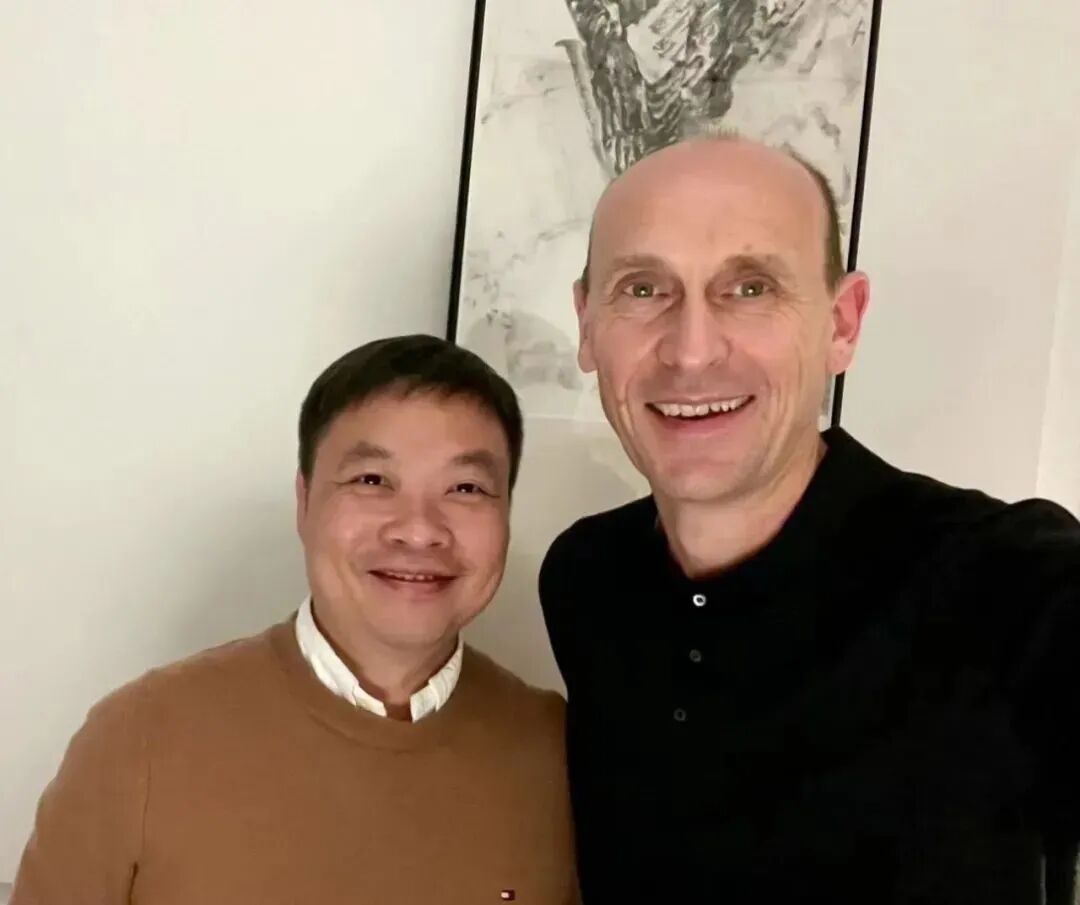
In 2017, He Xiaopeng left UCWeb to join Xpeng Motors. Since entering the automotive space, he has experienced both highs and lows. He has faced practical challenges such as fundraising difficulties and chip shortages, as well as broader macroeconomic and product-business headwinds. His rare and precious quality of purity, combined with entrepreneurial spirit, has driven him to fear no failure, pouring his passion and energy into this endeavor. Building cars is a long-cycle undertaking, inevitably involving pressure and pain — but this pain has also ignited greater fighting spirit and potential.
At a 5Y Capital event this May, Qin Liu, founding partner of 5Y Capital, sat down with He Xiaopeng for a conversation. At the time, Xpeng Motors was not in a highlight moment; it was under various pressures and external skepticism. Yet it is precisely in facing challenges that we can see an entrepreneur's resilience. He Xiaopeng spoke about his mindset toward setbacks: "Good times may not be that good, bad times won't be that bad. Luck matters, but you need strength to climb back to the peak — that's our mentality now."
Technological innovation is a difficult and long-term path, but those who truly believe in technology fear no brambles. We wish Xpeng continued milestones on its entrepreneurial journey, and we believe that time always rewards innovators, and the road ahead will only grow broader.
Conversation Guests:
He Xiaopeng Chairman and CEO, Xpeng Motors
Qin Liu Founding Partner, 5Y Capital
Qin Liu: Actually, we were UCWeb's first institutional investor. I first met Xiaopeng around 2005 or 2006, so it's been more than a decade. During this time, Xiaopeng not only achieved tremendous entrepreneurial success with UCWeb but also went on to found Xpeng Motors, where we also became an early investor. I feel deeply honored — not only have I witnessed Xiaopeng's entrepreneurial journey, but we've also become good friends.
As you know, there's been enormous curiosity about Xpeng lately, simply put because Xpeng is not in a highlight moment right now. Whether it's stock price or performance, there's significant pressure. Before this, we've all been through many ups and downs — both Xpeng and UCWeb experienced numerous difficulties. I'd love to hear you share: Xpeng was once in a highlight moment after going public, and now faces pressure — how do you view these fluctuations? And what have you learned from going through these twists and turns?
He Xiaopeng: I'm glad 5Y invested in all three of my startups: UC, Xpeng Motors, and Xpeng AeroHT. In 2018, 5Y held a meeting in Anji that I attended. I had just joined Xpeng Motors full-time, and the company was facing many challenges at the time.
Our goal was very simple then: when could we achieve mass production of 100,000 units? In 2018, our team was about 1,000 people. Five years have passed, and we've gained a lot, while also encountering many challenges and setbacks. Richard just asked me how I think about this. Actually, the past five years brought many gains for Xpeng Motors, and the next five years — from 2023 to 2027 — represent a brand-new five years for Xpeng, what we consider a restart from 1 to 2.
We often say there are three logics to running a company: set strategy, build the team, and lead the troops. In the previous five years, our strategy, team, and troops were all in a from-0-to-1 phase. Last year we faced some challenges, which we see as a process of redefining strategy, rebuilding the team, and restructuring how we lead troops — going from 1 to 2.
One thing we didn't anticipate in the previous five years was how fast China's new energy vehicle market would grow. In 2018, the two companies with the highest NEV sales in China were BYD and BAIC, each at roughly 100,000 units. By 2022, China's largest NEV maker sold about 1.8 million units — approximately 1.1 million from hybrids and 700,000 from pure electrics. What changes will happen in the next five years? This is an extremely challenging question.
We're also thinking about how China's market development has exceeded everyone's imagination. We used to have many assumptions: we thought ICE vehicle sales would decline, but not this rapidly. We once believed the auto sector wouldn't concentrate as much as smartphones or home appliances, but now it appears the reality is more intense than we imagined. Xpeng Motors achieved a lot in the past and attracted much attention, with many studying our products, management, and marketing models. Internally, we're reflecting: were our achievements due to strength or luck?
From a ten-year perspective, how many automakers will exist globally? We think it might be like qualifying for the World Cup — a 32-to-8 logic. In China, a few large companies may survive, possibly with multiple brands, with annual sales between 5 and 15 million units. So Xpeng Motors has readjusted its strategy. From initially producing 100,000 vehicles, to aiming in 2020 for roughly 200 billion RMB in market cap and 200 billion RMB in annual revenue. Last year, we concluded that if we can't become number one in China, we won't survive ten years from now. In 2017-2018, China had about 100 automakers and 300 automotive startups. By 2022, only about 50-plus companies sold more than 10,000 units. We believe by 2025 we'll see who can't win in China, and by 2030 we'll see who can.
So in our restated strategy, we considered what challenges we'll face and rethought what systems and tools we need to ensure end-to-end product competitiveness and technology competitiveness oriented toward customers. We also rethought our China marketing strategy and global marketing strategy.
Compared to five years ago, we now have 15,000 people, tens of billions in cash, and multiple models launched. For this massive restart of entrepreneurship, it's actually much more comfortable than in 2018. This restart targets achieving 1 to 2 trillion RMB in annual revenue, becoming one of the few Chinese companies that can push both hardware and AI software globally, changing ordinary people's lives.
Our task now is very simple: rebuild all strategy, team, and troops. Compared to 2018, this reconstruction is easier, so we're quite confident we'll move in a good direction this year. Everyone should also remember: "Good times may not be that good, bad times won't be that bad. Luck matters, but you need strength to climb back to the peak — that's our mentality now."
Qin Liu: For Xpeng, this may be an inevitable hurdle in the growth process. The difficulties Xpeng faces today are probably ones many startups can't avoid. As an entrepreneur, you must have faced enormous pressure and internal and external doubt during this process — how did you think about this?
Also, compared to the UCWeb era, you're now a much larger leader. I'm very curious whether your management style and relationship with organizational teams have adjusted and changed? What do you insist on continuing to do, and what aspects need adjustment?
He Xiaopeng: I think my mindset has changed significantly recently, with several ideas becoming clearer. The first is refusal to accept defeat. When I first started UC or Xpeng, conditions were extremely tough; many people didn't understand what I wanted to do and thought it was impossible. Now we have so many resources, doing something that looks big but is relatively not that difficult compared to before — I feel we must not admit defeat.
The second point is, when refusing to accept defeat, how to actually get things done — the most important thing is self-rebirth. I often tell the team internally: this year's performance is your OKR or KPI; next year's performance is your team-building and organizational capability; the year after's performance is the self-growth capability of you and your senior executives. I believe self-rebirth means partially overturning your own past — this is something I've been thinking about importantly recently, so I'm also forcing all managers to undergo self-rebirth.
The third logic I've been thinking about recently is called being willing to bet and accept loss. That is, if after rebirth it still doesn't work out, I'll accept that too — this puts you in a very good mental state.
We talk about using "five dos" to set strategy: want to do, can do, should do, not do, and how to do. For early-stage startups, most of the time we focus on what we want to do. But when a company reaches certain scale, we often consider whether we can do it and whether we should do it, because this better conforms to the essence of business and technology. However, when we're undergoing self-disruption, we ask ourselves: what do you want to achieve? So you must adjust your team and adjust how you lead troops to achieve it — this is more like entrepreneurial logic.
When we were a startup before, people asked me what was the probability of UC or Xpeng Motors succeeding? I said maybe 1%. Now if we want to become number one in China or top-ranked globally, the actual odds might still be just 1%. It's the same entrepreneurship — why wouldn't you dare to bet? And at this point we have more resources, so the probability of success is higher.
Also, if a founder wants to overturn from the highest level the company's past ways of working and DNA, it's impossible to satisfy everyone — only time can prove that most people can be satisfied. Now I also pay attention to the logic of human nature, but completely unlike before, I won't do massive amounts of communication trying hard to make everyone satisfied. I think these have greatly impacted my management style and mindset. But when you cross that threshold, you feel much more boundless.
Many people dare not move in a large enterprise. Most Chinese private enterprises' self-disruption is very gradual, taking many years. But today in a market where technology changes so rapidly, it won't give you much time — maybe 12 to 36 months, and you must complete self-disruption. We've been at it for about four months now, and many things have far exceeded our imagination. Often you'll dare not do something or delay doing it, but when you roll up your sleeves and dive in, there's actually great opportunity.
Qin Liu: Xiaopeng has revealed an entrepreneur's normal state — returning to original aspiration. Whether the company is successful or failing today, large or small in scale, if your goal is ambitious, you'll always have fearless courage and resilience.
When measuring an entrepreneur, it's actually not about what achievements they've made, but about many of their personal qualities. Entrepreneurs are fundamentally ordinary people, with ordinary people's emotions and pressures. But they're also a different group — often they must face pressure directly and return to their original aspiration. One word Xiaopeng just used that I think is excellent: self-rebirth.
In an entrepreneur's process of self-rebirth, they will certainly face negative feedback and enormous pressure. The outside world and public often focus on their moments of success, not understanding the pressures they face. And in venture capital investing, we're not so much investing in a successful project, but betting on entrepreneurs with huge potential. What we see is how they face重重困难 when they haven't yet succeeded — I'm very glad to hear Xiaopeng's sharing.



5Y Capital seeks, supports, and inspires lonely entrepreneurs, providing support from spirit to all business operations. We believe that if the "crazy you" in others' eyes begins to be believed in, the world will become refreshingly different.
BEIJING · SHANGHAI · SHENZHEN · HONG KONG