From One Person to 1,000: How to Find and Hire People Through Every Painful Transformation | FreeS Talk

150 people is a tipping point. It's the most dangerous moment, when company culture gets diluted and washed out.

"FreeS Fund Fireside Chat" is a small-scale offline gathering for CEOs in the FreeS Fund family. We invite experts who know their stuff and seasoned FreeS Fund family CEOs to share insights and experience on topics and directions that matter to them.
Yesterday we published a talk by Du Hong, HRD at ByteDance, from a FreeS Fund Fireside Chat. One reader commented, "Nothing in HR is small. Every CEO should be the chief human resources officer."
Ning Rui, CEO of Shima Finance and co-founder of Shima Chuxing, is exactly the kind of CEO who treats himself as HR. Many of Shima's early executives were people he personally recruited. Shima Group focuses on rural transportation. After raising a Series C round in May this year, its incubated new business — Shima Chuxing, a rural new energy vehicle trading platform — raised over $10 million in a Pre-A round just 66 days after launch. At the FreeS Fund Fireside Chat, Ning shared what he's learned about hiring and managing people across three phases of a company: "when there's no one," "when there are people," and "when transformation hits."
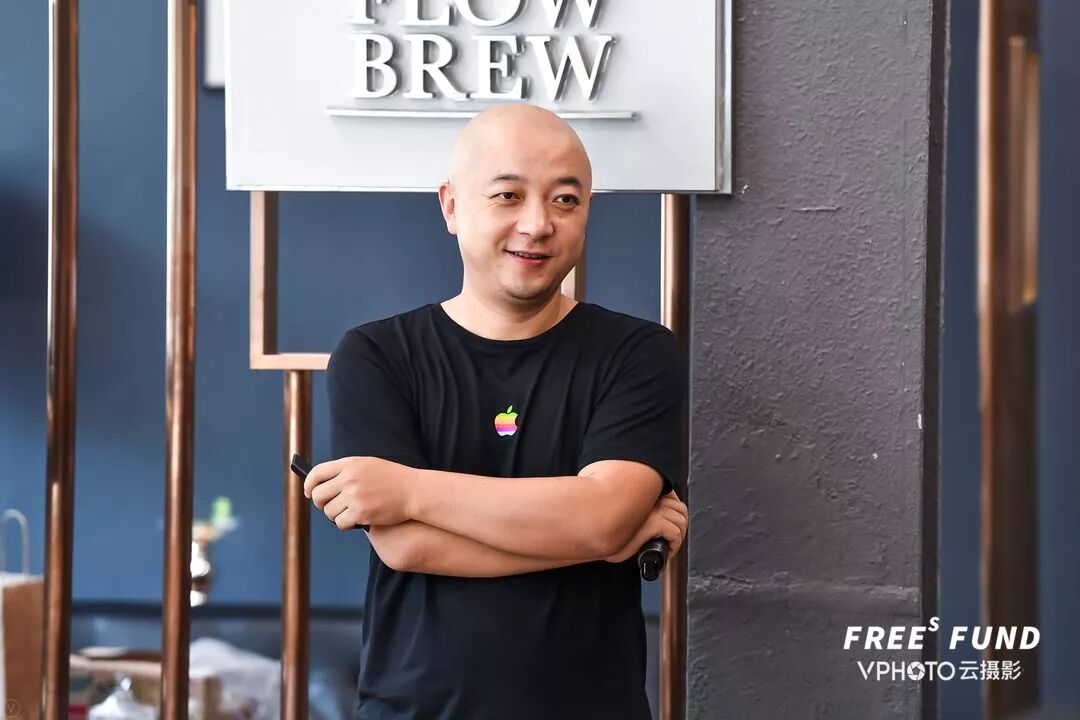


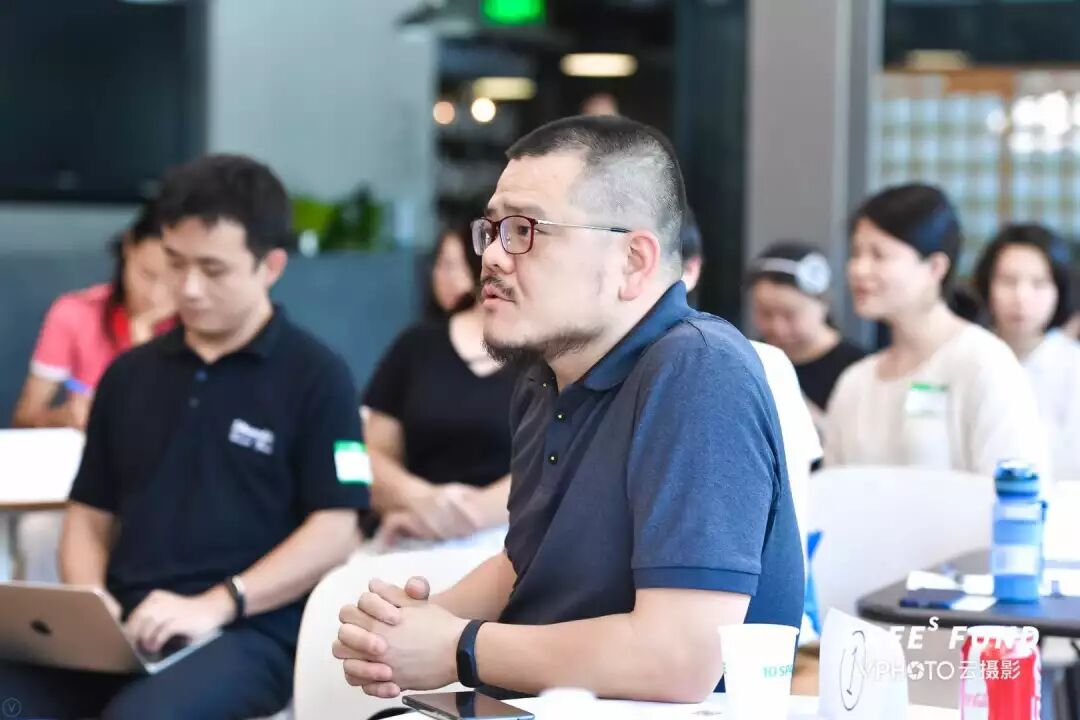
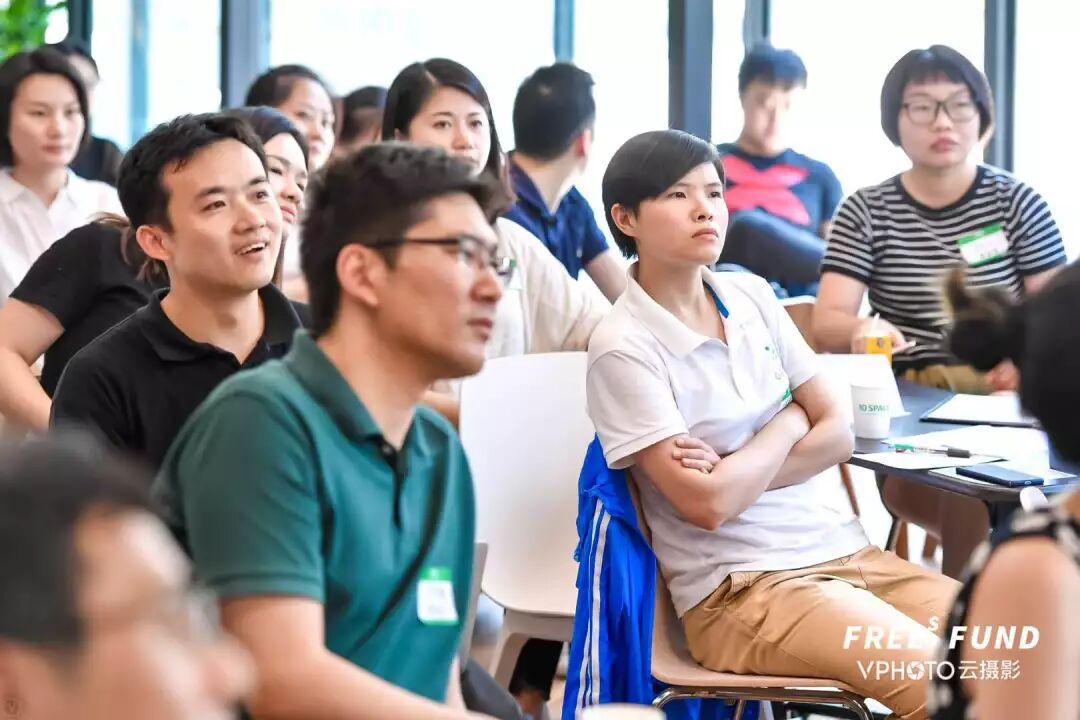
(Swipe left or right for more surprises) Share your thoughts and insights at the end of the article. By 9:00 PM on August 30, the 3 readers with the most thoughtful comments and the 2 readers with the most liked comments will each receive a copy of Elon Musk: Tesla, SpaceX, and the Quest for a Fantastic Future. This is a book Ning once read with his team. He said finishing it gets your blood pumping. We hope it brings you more inspiration too.

Ning Rui
CEO of Shima Finance, Co-founder of Shima Chuxing
I started my first company in 2008, so it's been about ten years now. In that time, I've founded three companies. None were outright failures, none were outright successes — I'm an entrepreneur who's still very much on the road. Today I'll share some of what I've learned.
Now, my third company, Shima, is something of a small conglomerate. We have roughly 1,000 people across financial services, what I'd call an early-stage trading platform, and an investment arm. Over the past three and a half years, we've gone from nothing to something, and every transition has been brutal and painful.
In my view, Shima's growth over these three and a half years breaks into three phases.
/01/
In a Cramped Room, Selling a Badass Future
The first phase I call "when there's no one."
In 2015, Shima had nothing except me and an office under 100 square meters. Even though I was a somewhat experienced founder, convincing people I considered seriously talented to join still took some skill. I call this the "reality distortion field."
Anyone who wants to be CEO needs at least some ability to distort reality. Put simply: you have to sell an incredibly badass future from inside a tiny, cramped room. And you have to genuinely believe in that future yourself. You also need to explain clearly why you can do it better than anyone else, and why joining you is the biggest bet they'll ever make on their own lives.
Our first batch of executives were all recruited through this reality distortion field. But even with decent ability to influence people, I still scrutinized everyone I brought in carefully.
First, for core executives, I'd meet with their spouses, their families. I found that talking to family members gave me a more three-dimensional view of who they were.
Second, I looked for people with shared "bad smells" — kindred spirits. To this day, the people I recruit all share some "bad smell" with my own temperament. They feel a certain chemistry with me.
And so, in that sub-100-square-meter office, we started grinding together. "Feasts and drinks together, tears and toil together, blood and sweat together."
/02/
Beware of Racing Ahead
The first phase was joyful and relatively brief. For a fast-growing company, you might not even make it a year before entering the second phase — "when there are people."
Shima Finance peaked at over 1,000 people. One hundred and fifty was a threshold that really stuck with me. At that point, it's easy to make mistakes. The CEO might get a little swollen-headed, thinking the company is in high-growth mode, the broad direction is fine, the team is fine, so let's go full speed ahead.
Then the problems come.
When the company suddenly crossed 200 people, I realized I didn't recognize a lot of them. Of the first 150, 99% were people I'd personally interviewed. But past 200, even 500, there were so many unfamiliar faces. Looking back, that was the most dangerous moment for our culture being diluted and washed out.
At that point, a wave of people came in who weren't quite like the kindred spirits with aligned values I'd originally wanted. We ran into this when we hit 300, 500, 600 people.
Beyond cultural dilution, another problem emerged as the organizational system filled out. What started as maybe five or six departments slowly became a dozen-plus, each one supposedly critical. Even though we had tier-one and tier-two departments, I gradually noticed that when six or eight departments were in a meeting, overall efficiency — both in meetings and in actually getting things done — dropped dramatically.
There was a period where I was genuinely distressed. I couldn't exclude these people from meetings, but this kind of meeting culture was also unworkable. Eighty percent of my time was swallowed by various meetings.
Later we restructured and transformed the organization. In retrospect, I found that a core group of five was most effective. For major initiatives, we'd establish a core team of five or six people. We'd jointly set strategy, they'd participate in decisions, and shared support departments would actively coordinate to win the battle.
In the "when there are people" phase, reducing interference from different voices in the decision-making process is absolutely critical.
/03/
Be Decisive. Don't Hesitate.
The third phase we experienced in the second half of last year, and are still experiencing now, I call "when transformation hits."
Last year's second half, I felt we had to spin out another company from our competitive structure — Shima Chuxing. The spin-off process was itself a massive split of organizational culture.
At moments like this, transformation is imperative. Some teams need optimization and adjustment. Some need to be moved to new positions to do new things. This is when the CEO has to make some hard, decisive calls. No hesitation. These are lessons I learned from early mistakes.
Early on, I was a very nice CEO. I wasn't tough enough. Not being tough enough became a problem later. When someone became ill-suited for their position, I'd wait. I'd say let's see, or let's try to change them a little more.
In fact, this was wrong. From later experience, if someone is fundamentally wrong for the team, you need to replace them before the fire spreads, before bad blood infects good blood. "Don't hesitate" is crucial.
The second critical thing is breaking through cognitive barriers. Startups grow extremely fast, so whether it's organizational structure, hiring, tactics, or our demands of talent — everything is advancing by leaps and bounds.
I described it to my team this way: if the company is moving at 150 mph, the CEO's capacity for transformation needs to be 180 mph, and my requirement for you is at least 120 mph. If you're still moving at 80 mph, you'll inevitably be eliminated.
But many colleagues initially couldn't overcome their cognitive barriers well. Our cognition is limited by our vision and capacity for reflection. If every day you're only solving trivial matters with no time for deep learning and thinking, it's easy to fall into a trap — assuming that anything that breaks your existing mental models must be wrong.
To address this, in 2017 I started reading with my team, hoping we'd grow together. I bought every book I read for core members. We read together, constantly reviewing and reflecting, so everyone could step back from work to look at the work itself, at what we were doing and our model.
Gradually, I saw massive change. Many colleagues and executives could truly think like entrepreneurs, like CEOs, about many problems. They developed more empathy and could increasingly break through the boundaries of their original cognition.
You have to personally lead your core members forward, breaking through their cognitive barriers. Then they pass on your logic and methods of teaching and learning to colleagues below them.
Third, every transformation is both a moment when crisis may strike and an excellent opportunity to reshape culture. We've been through business adjustments, organizational restructuring, and team compression. The process was excruciating, but it was also when everyone, from top to bottom, reshaped Shima's early values together.
At this stage, HR and I did a lot of integrated work. For example, after talent adjustments, we'd hold an all-hands meeting so everyone understood why we were transforming and adjusting this way, and why we hoped to ensure more people survived to the end. Fundamentally, we wanted strategy to be implemented faster, with everyone moving forward together.
Don't hesitate. Break cognitive barriers. Reshape culture. These are my three lessons for "when transformation hits."
/04/
How to Get Employees and the CEO on the Same Page,
Taking Ground Under Fire
Separately, I'll share some thoughts on recruiting and retention.
Finding core people is never something HR can solve 100% for you. HR can provide leads, help you screen and gatekeep, but to find the absolute best people, the CEO must fully deploy every possible connection and capability — treat yourself as HR.
Everyone says startups' biggest headache is not finding people, but I really haven't found that to be true. If you genuinely want to find someone, lock onto the target, figure out a way. Like courting, like pursuing a partner — you'll definitely find your other half. But you have to have good enough attitude. I didn't stop at three visits to the thatched cottage — six, nine visits were common.
Many of our executives were people I pursued this way. At the company's founding, we were the classic "three-no's" team. At that point, you need good enough attitude, humble enough posture, to communicate with people. Actually, the lower your posture at that moment, the more you can attract top-tier talent to join.
I have another observation: truly first-rate talent often doesn't come from traditionally defined senior executives or famous resumes. Our core management today includes one type from very well-known companies who are doing excellently; another type who've fought with the company from day one; and a third type who joined mid-journey, originally just unknown middle managers, but who we sensed could erupt like small volcanoes, with everything going well, so we gave them full authority and opportunity.
These several types together form our talent pipeline. External hires are talent. Veteran employees are talent too, because our growth process has been extraordinarily difficult.
In the mobility space across county, township, and village levels in China's tier-three-to-six rural markets, we're doing both finance and trading. This requires traditional industry people, internet people, and finance people — three cultures that are completely different, with no shared language. It took me three years to forge these three types into one type, to twist these three cultures together, before they truly became one team.
Here are a few moves I've found effective.
The first is "Baldie Dates" (since the whole team calls me Baldie Bro). All our frontline colleagues can book me through WeChat or other channels to chat at the company or a nearby café. Almost every Shima frontline employee has had a Baldie Date with me. A significant number of employees, when they're about to quit, will book a Baldie Date with me to raise company issues — things they've always wanted to say but didn't dare to, or never had the chance to tell me.
Our company notebook very explicitly states Shima's people principle in three words: meritocracy. Everyone uses these three words to examine the entire company. If a frontline employee comes to me saying, you said the company practices meritocracy, but I don't think that's happening in this area, this matter — I'll say, tell me about it. If true, we adjust and improve directly.
This way, culture and desired goals align. The CEO has to put some thought into these things. It's not that 100% of your energy goes to entertaining clients or focusing on strategy and decisions. On talent development, brand, and culture — things that can't be achieved overnight — the CEO also needs to invest energy.
When transformation happens, when rapid fission or defending territory is needed, culture determines whether the company's foundation is solid enough.
The second move is management trainees — roughly 10 per year. Last year we ran our first management trainee program, this year our second. Who leads the management trainees? The CEO personally. On average, every month I hold a half-day session with the trainees. These people start from a higher baseline than ordinary employees. Without the baptism of workplace politics, after rotating through all Shima's divisions, they settle in one.
A number of management trainees became core players in Shima's 2018 organizational transformation. When we incubate projects, we'll also select one or two trainees to participate. I find management trainees a very effective method for building talent pipelines.
The third insight is that executive lunch meetings are a good way to create alignment with senior leaders. Everyone's busy with their own turf now. We find a time, order boxed lunches, sit in a conference room, and exchange recent thoughts and perspectives, doing retrospectives.
No materials needed, no concern for format, definitely no PowerPoint. Our team can quickly reach consensus on things at a whiteboard. Forget that making a PPT might take three to five hours — it easily turns into a reporting exercise. Instead, only when everyone's at the whiteboard together, drawing, erasing, writing together, can people find the feeling of jointly mapping out the territory. This is something we commonly use in actual combat.
On using people, I also have some thoughts.
First, I think the CEO has to understand their own weaknesses, then verify them, and dare to dissect and fix them.
Next, dare to find people and methods that can compensate for, substitute for, and help you based on your shortcomings. Finding a team is the same — the partners and core team I look for are all addressing areas where I'm deficient as CEO.
This has proven correct. Each of their verticals is run better than I could do it. But I have my strength, which is what I mentioned first: the reality distortion field.
Over the past three and a half years, not a single core management member has voluntarily left Shima. Using people isn't about subjugating talent beneath you. Bringing them in, recruiting them — that may only be step one. A company that can truly scale is one where the CEO can then push talent forward, helping them succeed. That may be the sustainable path.
Additionally, build a self-driving organization. Early-stage companies may need the boss pulling like an old horse, straining with all their might. But past a certain stage, it has to be the organization driving itself. Otherwise, even if the CEO had 100 lives, it wouldn't be enough.
So give the organization sufficient authority to make its own decisions, even to make mistakes.
On team cohesion, I think the core is this: the CEO and founding team must truly go all in, betting everything on the venture. Only then might your colleagues feel they're following the right person, might they think this person is worth spending years walking with — what if we make it?
Finally, three points. First, battle is always judged by results. The CEO is responsible for the company's life and death. I repeatedly tell the team: I'm willing to give you all trust, authority, resources, even an entrepreneurial platform — but ultimately, results are what matter. If you commit to results in this position and don't deliver, in three months you're out. Everyone needs this kind of accountability.
Second, teams fear staying long in a flat, monotonous company that always moves at constant speed. So the CEO has to set phased goals — not too far out, because distant goals are hard to motivate with. For example, Shima's recent goal was to hold a 2,000-person dealer conference on July 18. This was the order given 66 days before July 18. The goal was virtually impossible, but we pulled it off. This feeling of battle, of taking ground under artillery fire, is the core key to motivating the whole team and building cohesion.
Finally, do what aligns with human nature. Don't have employees sell their souls for you, only for the boss to be the sole beneficiary, or for them to get kicked to the curb after giving everything. Try not to do such things. Treat people with sincerity.
Summary
-
At a company's starting stage, the hardest problem may be: without being able to spend much money, how do you win people over? The CEO needs the "reality distortion field" — selling a badass future from a cramped room.
-
When a company grows from 100 to 150 people, then from 150 to 1,000, the challenges go beyond convincing people to join. Lessons on using and retaining people are earned through actually stepping in potholes.
-
Early stage, the CEO should treat themselves as HR for recruiting. As the team expands, increasingly drive the team toward becoming a self-driving organization.
-
When transformation hits, the CEO inevitably has to make hard decisions. At this stage, culture determines whether the company's foundation is solid enough.
Giveaway
Share your views in the comments below. By 9:00 PM on August 30, the 3 readers with the most thoughtful comments and the 2 readers with the most liked comments will each receive a copy of Elon Musk: Tesla, SpaceX, and the Quest for a Fantastic Future. This is a book Ning once read with his team. He said finishing it gets your blood pumping. We hope it brings you more inspiration too.
Feel free to share to your Moments. For republication on other official accounts, websites, or mobile apps, please reply "reprint" to learn republication rules and contact "Frees Xiaorui" (ID: freesfund) for authorization. Copyright belongs to FreeS Fund.

▲ ByteDance HRD Du Hong: What Can Startup HR Actually Help the CEO Do? | FreeS Fund Fireside Chat
▲ [Long Read] How Can Startups Ride This Douyin Traffic Wave? | FreeS Fund Fireside Chat
▲ The Anxiety You Can't Shake, That Made a Viral Sensation Across the Web | Content Entrepreneurship Closed Forum (Part 1)
▲ BAT Stars Came and Left — Why Can't You Retain Them?
▲To Recruit, He Drove a BMW to Be a Rideshare Driver Outside Baidu. Are You This Committed?