From One-Tenth to One-Third Market Share: How Did Domestic Industrial Robots Break Through? | FreeS Fund Dialogue

The Past, Present, and Future of Domestic Industrial Robots

How fast have domestic industrial robots developed in China?
"When I first founded Yifei Technology in 2012, domestic industrial robots accounted for only 14% of total industrial robot sales in China. Now it's more than one-third," marvels Sai Zhang, founder and CEO of Yifei Technology.
Yifei Technology is a company that builds industrial robots and automated production lines, with a full range of robot products for the light industry sector. It's one of the few Chinese robot brands to make it onto the supplier lists of Fortune 500 companies.
Many products we use daily have a connection to Yifei Technology. Foxconn and Lens Technology, the equipment manufacturers behind our smartphones, use Yifei robots on their production lines. BYD and CATL have also enlisted Yifei's help in building their production lines. The company's robots appear on the production lines of leading brands making ham sausages, ice cream, shampoo, and hyaluronic acid. Even the sorting of banknotes in bank vaults and gold ore in Australian mines — these high-value production processes — are handled by Yifei robots.
We invited Qianhang Yan, vice president at FreeS Fund, to join Sai Zhang in a conversation about the past, present, and future of industrial robots. They analyzed the difficulties and challenges facing domestic industrial robot companies today: the 3C industry entering a plateau, slow adoption in new scenarios, pressure from established players... But crises must be confronted, and opportunities lurk within them. The domestic industrial robot industry may be entering a new cycle of consolidating existing markets while competing for niche incremental markets. Moreover, with the rise of semiconductors and the new AI wave, the domestic industrial robot industry is set for another round of reshuffling.
We've edited excerpts from the podcast, hoping to offer fresh perspectives. We welcome you to continue observing and discussing with us. You can also head to Xiaoyuzhou or Apple Podcasts, search for and subscribe to "High Energy" (Gao Nengliang) to listen to the full episode.

Interactive Giveaway Have you ever used a robot in your daily life? What do you think about the robot market? Share your observations and thoughts in the comments. By 17:00 on June 28, we'll give Dedao APP recharge cards worth 200 yuan to the 2 users with the most likes and the 3 users with the most thoughtful comments.


/ 01 / What Is an Industrial Robot?
Qianhang Yan: Today let's talk about the past, present, and future of industrial robots. Could you start by explaining what an industrial robot actually is?
Sai Zhang: The word "robot" was first coined by Czech writer Karel Čapek in his science fiction play R.U.R. (Rossum's Universal Robots). He created the word "robot," giving people the concept.
 ▲ A scene from R.U.R. featuring robots. Image source: Wikipedia
From an application perspective, we typically divide robots into three categories: industrial robots, consumer robots, and special-purpose robots.
Industrial robots are robots that help people carry out various industrial production processes on manufacturing lines.
Consumer robots are robots used in daily life, outside of industrial settings — for delivering food, making coffee, and so on.
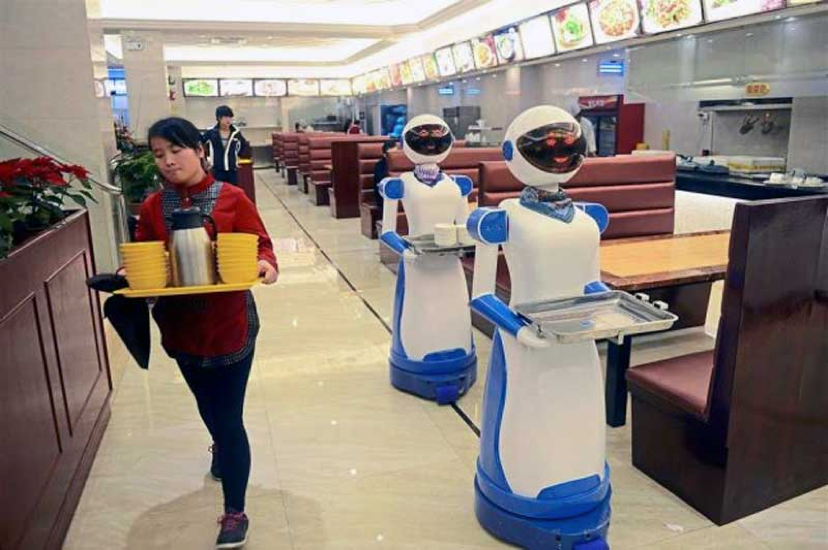 ▲ In 2014, a newly opened restaurant in Cixi, Zhejiang introduced two intelligent food delivery robots as "waiters." Image source: Xinhua News
Special-purpose robots are typically used for firefighting, disaster relief, earthquake rescue, search and rescue for survivors, and so forth.
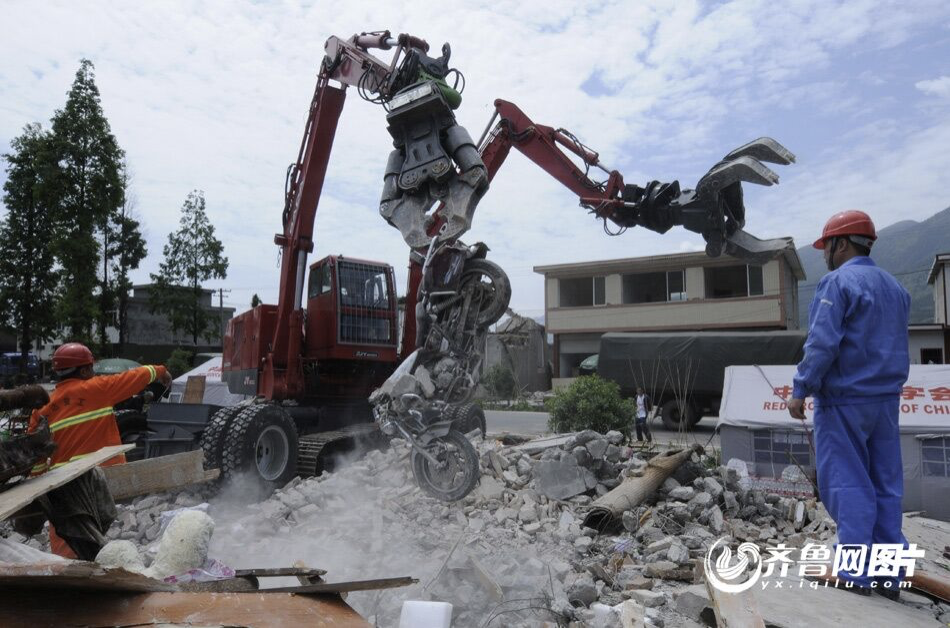 ▲ After the 2022 Lushan earthquake, a rescue robot helped affected households dig out buried property. Image source: Qilu Network
Broadly speaking, industrial robots can be divided into mobile robots and stationary robots.
Mobile robots are typically called AGVs (Automated Guided Vehicles); there's also a newer term, AMR (Autonomous Mobile Robot), referring to wheeled or tracked robots that can move around.
Most robots, however, work from a fixed position. These can be categorized by structure into articulated robots, desktop four-axis robots (also called SCARA robots, short for Selective Compliance Assembly Robot Arm — a robot arm used in assembly operations), and parallel robots. Yifei started with parallel robots, which look like upside-down spiders, so they're also called "spider hands."
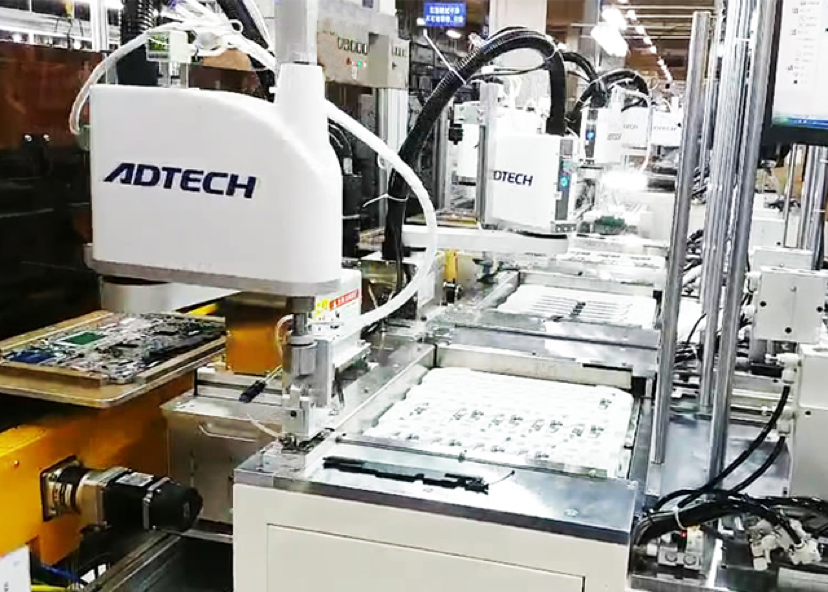 ▲ SCARA robot. Image source: ADTECH
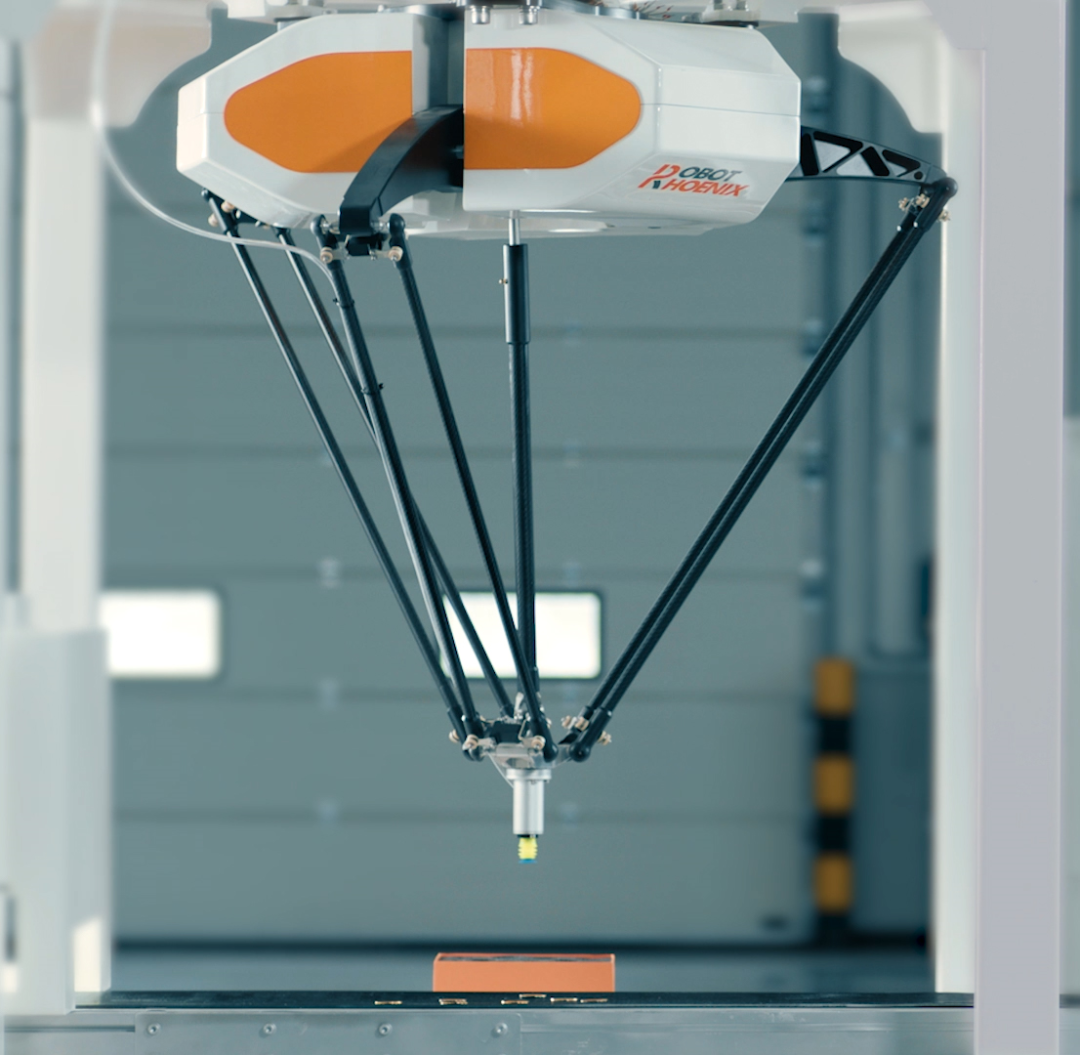 ▲ A parallel robot, also known as a spider hand, produced by Yifei Technology at work. Image source: Yifei Technology
Qianhang Yan: What's the fundamental difference between industrial robots and consumer robots in terms of hardware or form?
Sai Zhang: The biggest difference between industrial and consumer robots is whether they "look like a person." Industrial robots look nothing like people — they basically just replicate the function of human hands or feet. Consumer robots, to increase their approachability and make people like and accept them more, tend to look somewhat human, or cute and appealing — like a dog or other pet.
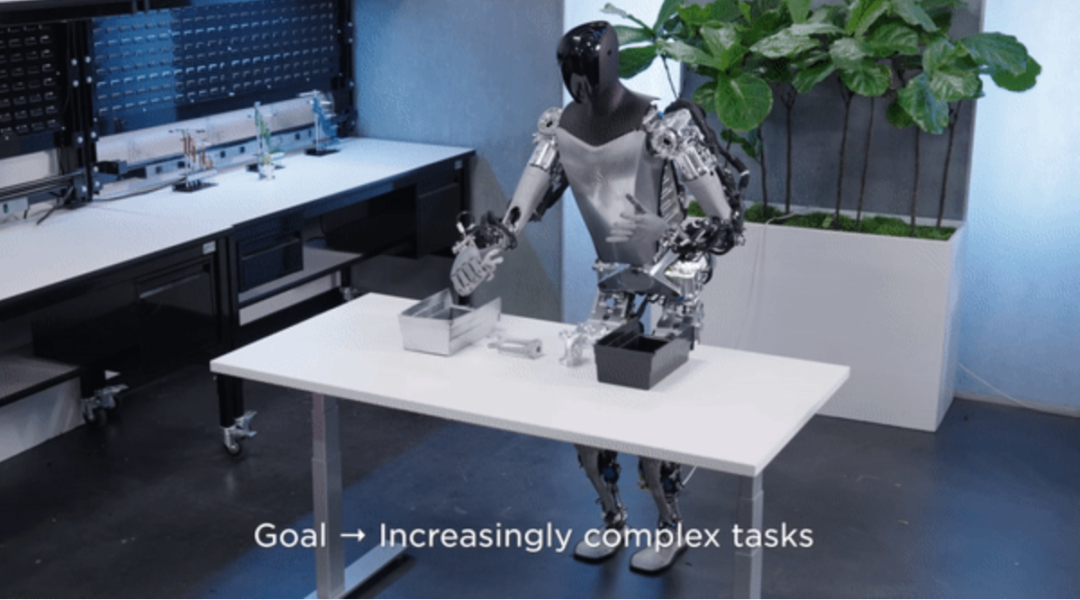 ▲ Tesla's humanoid robot, Tesla Bot. Image source: Synced
/ 02 / From One-Tenth to One-Third: How Did Domestic Industrial Robots Achieve Explosive Growth?
Qianhang Yan: What's Yifei's current positioning in industrial robots?
Sai Zhang: We initially wanted to be a robot body provider, but later realized that path wouldn't work. As a startup, without real-world validation from customer sites, system integrators wouldn't buy in — they wouldn't readily recommend our robots to end customers. (Read "How to Invest in Industrial Robots? | FreeS Research — Learning from Investing" to understand the structural opportunities we see in the industrial robot sector from Yifei Automation's growth and exploration.)
Around 2017, we started trying to act as system integrators ourselves, applying our parallel robots directly at customer sites, providing turnkey solutions, doing system integration, matching peripheral equipment, and developing customized solutions. Through this approach, we gradually reached top-tier end customers, and our parallel robots began to scale in the market.
While doing solutions, we discovered that customers didn't just need parallel robots — they also needed SCARA robots, AGV mobile robots, wafer handling robots, and other types. Since we already had the underlying robot technology, we developed these types as well.
Now we've returned to being a robot body manufacturer, supplying robot bodies to system integrators and distributors.
Qianhang Yan: Yifei's growth history is closely tied to the rapid development of China's robotics industry over the past decade-plus. Looking back at the history of China's robot industry development, what stages do you think the industry has gone through?
Sai Zhang: Even now, six-axis robots (articulated robots) remain the workhorses of the industry, with primary applications in automotive and similar sectors — this is the fiercely contested territory of the "Big Four" (Yaskawa, FANUC, ABB, KUKA).
The earliest leader among domestic robot manufacturers was Siasun, China's first publicly listed robot company and still one of its largest. It spun out of the Chinese Academy of Sciences' Shenyang Institute of Automation, carrying national-team credentials. Its robot portfolio is remarkably comprehensive, and its R&D capabilities are formidable.
Roughly a decade ago, companies like Efort, Estun, and STEP entered the industry, having built their foundations on core components like motors and inverters. During this phase, many focused on large six-axis robots.
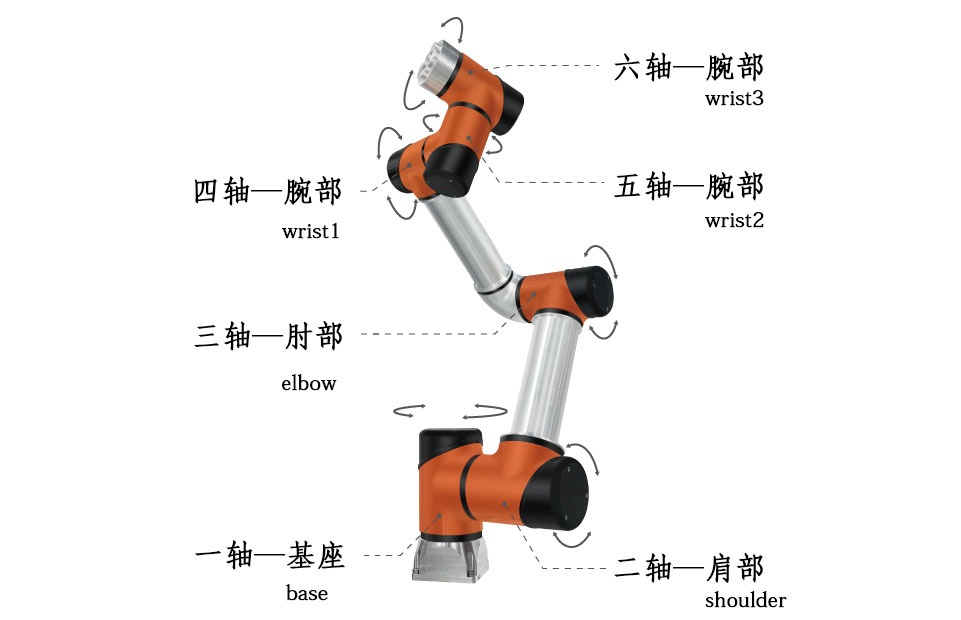 ▲ Large six-axis robot. Image source: Techsoft Intelligent
In the subsequent phase, companies like Yifei, QKM, ATO, and Boikinet began developing delta robots, sparking a wave of interest in parallel kinematic machines.
By 2019 and 2020, SCARA robot adoption suddenly surged. Before this, Epson and Yamaha dominated the SCARA landscape. Domestic manufacturers were led primarily by ADTECH, though Inovance later emerged as a disruptive force. Inovance itself originated as a core components supplier specializing in servo motors. By 2021, Inovance's SCARA robots had claimed the top position in China.
Beyond SCARA robots, two other categories have seen intensifying domestic competition in recent years. The first is mobile robots.
Siasun, Kunming Shipbuilding, and BJRI were the early players in this space. After Amazon acquired Kiva and its disc-shaped, swarm-scheduling robots, Chinese companies quickly followed suit, giving rise to manufacturers like Geekplus and Quicktron that produced disc-style AGVs and began capturing much of the domestic warehousing and logistics market. These companies even expanded overseas, with sales volumes surpassing Kiva's.
The second category is collaborative robots, or cobots — equipped with safety features that automatically halt operation upon human contact, enabling human-robot collaboration. Denmark's Universal Robots and Rethink Robotics pioneered the cobot concept. Rethink pursued a high-end path but ultimately failed to gain traction, while Universal Robots aligned more closely with industrial applications and thrived, becoming the largest cobot company today. China has also produced a strong cohort of cobot companies, including Jaka, Elite, and Aubo, which have performed exceptionally well and exported significant volumes.
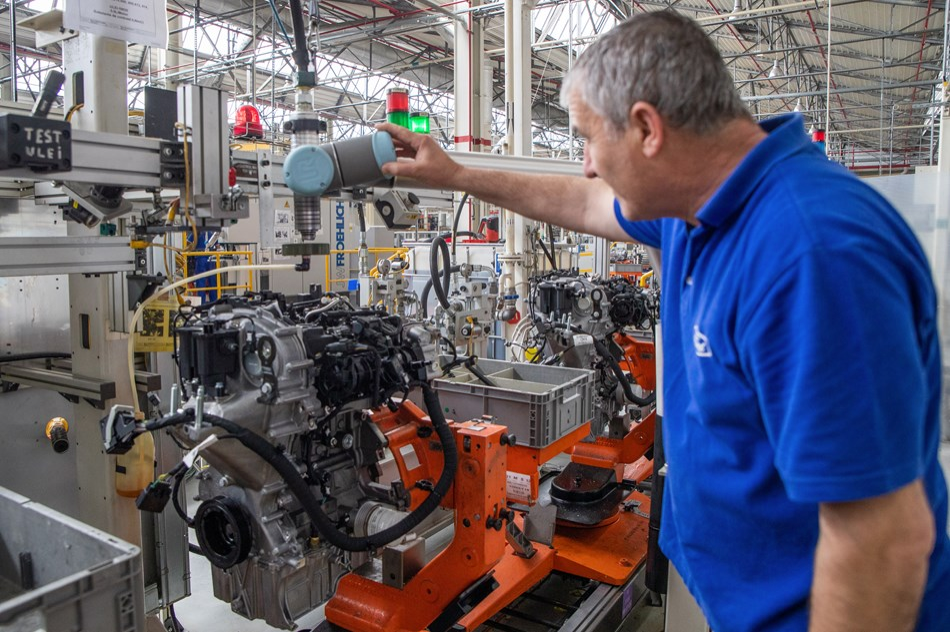
▲ Universal Robots at Ford Motor Company. Image source: Universal Robots
Domestic industrial robots have developed with remarkable speed over these years. When I first started my company, domestic industrial robots accounted for just 14% of total industrial robot sales in China; now they've exceeded one-third. China's industrial robot market represents 45% of global consumption — China is already the world's largest industrial robot consumer.
Qianhang Yan: Sai has addressed both supply-side evolution — from virtually no domestic robot manufacturers to today's proliferation of innovative domestic players developing their own robots across AGVs, SCARAs, and cobots — and market share growth, from domestic industrial robots being negligible internationally to now capturing one-third of the market.
Looking back at this development, what enabled China's dual explosion in both quantity and quality on the supply side?
Sai Zhang: The fundamental reason is China's massive market. Continuously growing demand, with rapid growth rates, provides robot manufacturers ample room to maneuver and trial-and-error opportunities. A critical constraint on European robot development is Europe's small market — their technology has always been leading, costs can be driven low, but there simply aren't enough buyers. Without sufficient applications, you can't generate the sales and profits needed to scale companies and reinvest in R&D.
Universal Robots succeeded partly because a substantial portion of its market is in China. ABB and KUKA are similar — they've captured the China market dividend. Over the past decade, China's rapid GDP growth has driven industrial robot expansion, particularly in automotive and 3C sectors where Chinese companies have become global leaders, creating more application opportunities for industrial robots.
Technological development is also a necessary condition. As computing power and chip performance have improved, and algorithms, off-the-shelf controllers, and sensors have matured, tasks that were previously difficult or prohibitively expensive can now be accomplished with robots.
When I first started, vision technology was immature — identifying items with height variations or performing randomized bin picking simply wasn't achievable. Without the technology, robot application scenarios were severely limited. Now, 3D vision, deep learning, and mature controllers have emerged continuously, actually lowering barriers to entry in robotics and advancing market development.
What Challenges Do Domestic Industrial Robots Currently Face?
Qianhang Yan: On the flip side, the robot赛道 has become increasingly competitive. As we approach various ceilings, we're encountering diverse challenges. As Chinese industrial tech entrepreneurs, what problems do we need to solve?
Sai Zhang: While Chinese industrial robots continue growing, the market is far from saturated — vast scenarios remain where robots can replace human labor. China currently has roughly 300 robots per 10,000 workers; South Korea exceeds 1,000.

▲ According to the IFR's World Robotics 2022 report, the top 5 countries by manufacturing robot density in 2021 were South Korea, Singapore, Japan, Germany, and China. Image source: IFR World Robotics 2022
But markets don't operate in isolation — they're affected by external factors like international relations and supply chain relocation. China's 3C industry has entered a bottleneck period: on one hand, consumer demand is insufficient and replacement cycles have lengthened; on the other, substantial supply chain relocation to Southeast Asia is underway. Major manufacturers are currently focused on addressing production line moves rather than investing in new lines.
Moreover, because electronics upgrades haven't changed dramatically, many production lines can be reused. One advantage of industrial robots is their flexibility — they can handle one task, then with minor adjustments, different grippers, and reprogramming, perform another. But this very advantage means robots aren't easily replaced, constraining the industry's faster growth.
In 2014, we sold our first industrial robot. Now in 2023, that same robot is still running.
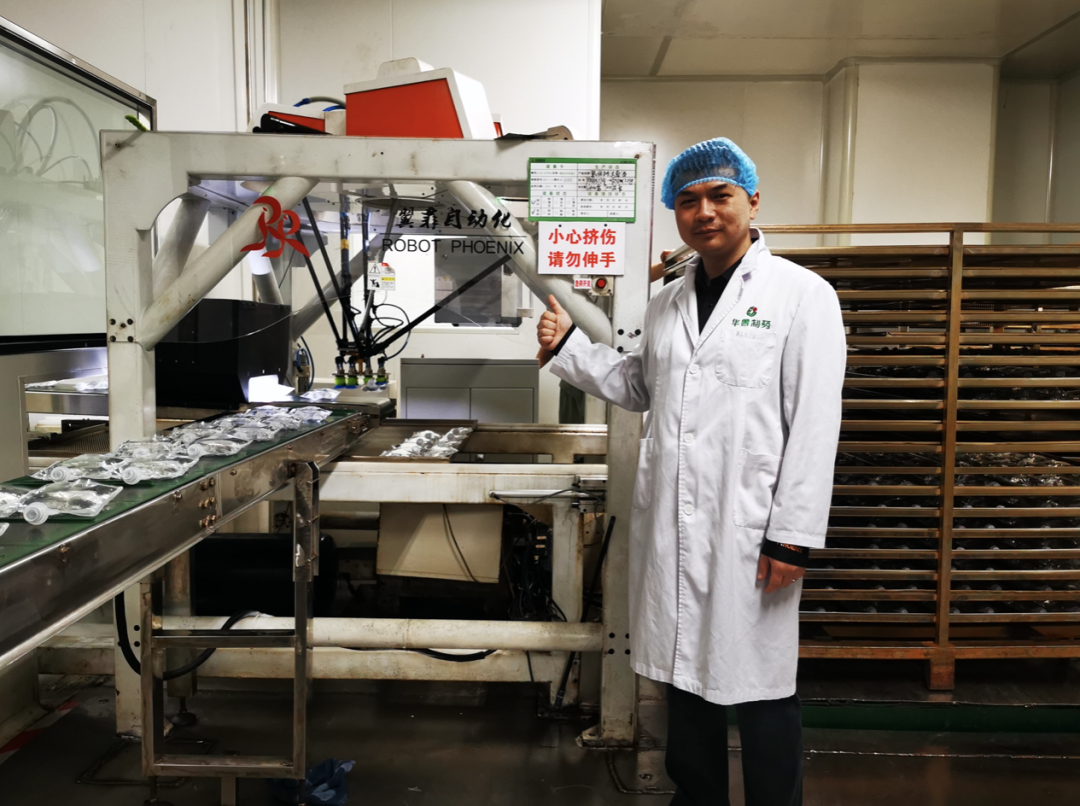
▲ In 2014, Yifei Technology sold its first delta robot. In 2023, this machine was still operating normally. Image source: Yifei Technology
Qianhang Yan: Sai just mentioned that China has roughly 300 robots per 10,000 workers — compared to South Korea and other countries, there's substantial room for penetration growth. Many scenarios haven't yet been robotized — why? What improvements do robots need to cover more applications?
Sai Zhang: Several factors constrain domestic industrial robot development:
First, customer willingness. Is the robot cheaper than using human labor? This is the fundamental consideration. When customers evaluate options, they first calculate return on investment.
Second, technical limitations. Simple applications like palletizing, sorting, and case packing have long been satisfied. The remaining unsatisfied demands are mostly more challenging — requiring either extremely high speed, exceptional precision, strong flexibility, or special capabilities like high-temperature resistance, corrosion resistance, or explosion protection. These factors limit further penetration growth.
Third, international competition. As domestic robot companies advance, they inevitably collide head-on with established players — the Big Four, Epson, Yamaha, and others. Chinese companies' core competitive advantage is cost-performance ratio, but now foreign brands are cutting prices to compete. So many domestic companies are focusing on providing better, more localized service and customized solutions for customers.
The Big Four and Chinese Industrial Robot Companies

Qianhang Yan: Sai has mentioned the Big Four again — could you introduce their history and that of foreign robots more broadly?
Sai Zhang: The robot industry's Big Four comprise two European and two Japanese companies. The European pair are ABB and KUKA. Strictly speaking, KUKA is now a domestic Chinese company, having been acquired by Midea Group. The Japanese pair are Yaskawa and FANUC.
ABB, Yaskawa, and FANUC didn't originate as robot companies, and robotics isn't their largest business.
ABB's primary revenue comes from low-voltage electrical equipment, power products, and similar areas. They entered industrial robotics with the rise of the automotive industry. Our company's first product was a delta robot — its original patent was purchased by ABB from EPFL in Switzerland. ABB maintained a monopoly for an extended period; the patent only expired in 2011, allowing us to begin producing this robot type in 2012. ABB remains extremely strong today, with nearly comprehensive robot product lines.
The two Japanese companies, Yaskawa and FANUC, also didn't start in robotics. Yaskawa originated in motors and excels particularly in large six-axis robots.
FANUC started in numerical control (NC), and its most widely used products are NC systems for machine tools. FANUC itself is an acronym for Fuji Automatic NUmerical Control — the name literally contains "NC." The company makes various types of robots, with particular strength in delta robots. FANUC built a cluster of factories at the foot of Mount Fuji; if you look down from the mountain, you can see the yellow roofs of the facilities.
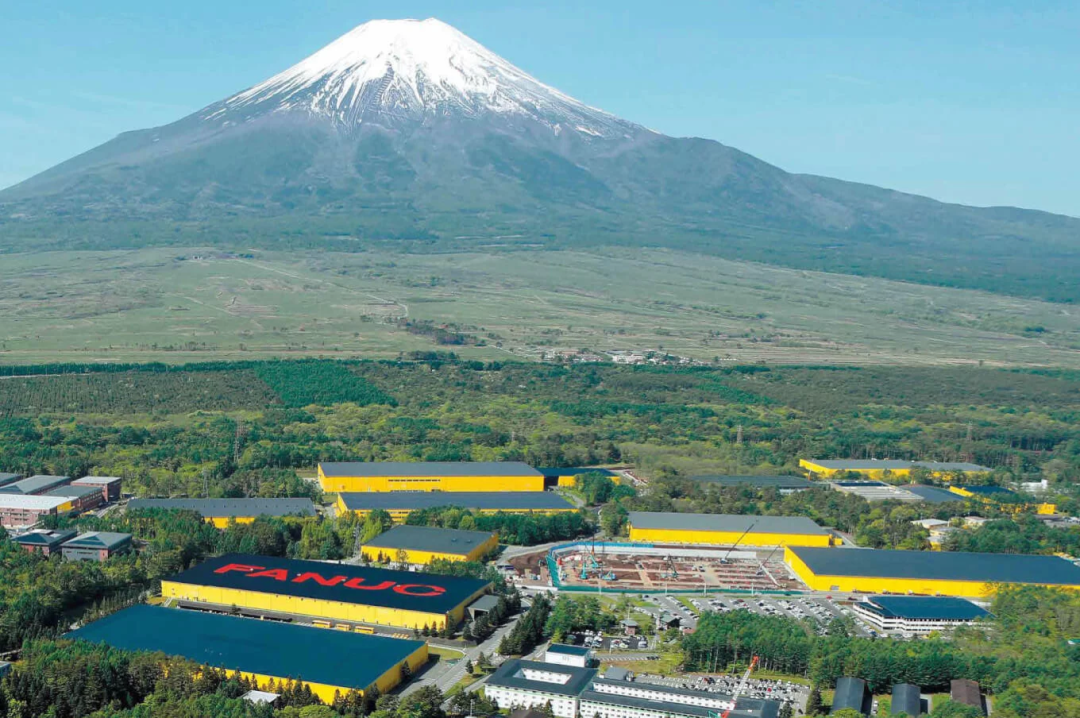
▲ FANUC, the "Yellow Giant" at the foot of Mount Fuji. Image source: Wealth Magazine, FANUC
KUKA is a German company. It originally supplied components to German automakers, and was later acquired by Midea Group, making it legally a Chinese company. It has extensive customers in the automotive sector and the new energy battery sector. In factories tightly connected to the auto industry — CATL, Fuyao Glass, and the like — you can find large numbers of orange KUKA robots.
Yan Qianhang: For domestic industrial robot companies to establish themselves in this landscape, do technical barriers or commercial barriers matter more?
Zhang Sai: For robot companies, the ability to win orders and investment is what matters most — that's what keeps the company alive. Chinese companies are very strong at seizing market opportunities, tracking new market trends, and following up quickly.
Take AGVs and collaborative robots: they weren't invented by the Chinese, but once they emerged, Chinese robot companies rose up in an extremely short time. They even outperformed the "old masters" and truly expanded and strengthened these categories.
On one hand, Chinese engineers are exceptionally capable, able to iterate rapidly in software, industrial control, and other areas, generating many new designs and ideas. On the other hand, we're very good at identifying customer needs and creatively applying robots to more scenarios.
We started with delta robots; they already existed in the world when we began. During the long period when ABB monopolized the patent, the application scenarios they developed for delta robots were quite limited — mainly milk carton packing, chilled meat platter arrangement, and so on.
To grow the market and the company, we had to creatively apply delta robots to more scenarios. For example, Yifei developed applications like wet wipe lid adhesion with planar glue coating, irregular cigarette carton palletizing (tobacco sorting) combined with deep learning algorithms, and 3D bottle unscrambling for Unilever — continuously expanding the application market for delta robots.
If we use martial arts as an analogy, the "Big Four" families developed the foundational techniques of Bodhidharma, while domestic companies have expanded that influence and branched it out in all directions.
Do Industrial Robots Make Money? How?
Yan Qianhang: You just mentioned that the most important thing for a company's survival is winning orders, or making money. Currently, some people say the robot industry has low gross margins and is losing money to build buzz.
From a business perspective, is China's industrial robot industry a good, profitable sector? What needs to happen for it to truly make big money?
Zhang Sai: This industry is absolutely essential. Machine substitution, workforce reduction with efficiency gains, achieving automation and unmanned operations — these are inevitable trends in industrial development for China and the world.
Chinese industrial robot companies roughly fall into three categories.
The first is pure system integrators — buying others' robots to build integrated systems. These companies have two barriers. The first, and most important, is accumulating industry know-how: thoroughly understanding industry processes and the special ways each industry operates. The other barrier is their business relationships.
The second category makes robot bodies. Most robot body companies focus on one type of robot, driving costs low enough and refining their supply chain well enough.
The third is core components companies, such as those making motors, reducers, and controllers.
Initially, these companies were upstream and downstream of each other, not encroaching on each other's territory. Everyone was a small company, doing their own thing, not yet thinking about going public. The market was thriving.
Later, some companies grew large. Their small patch of land was no longer enough to cover personnel costs, or insufficient to go public, so they had to cross into other businesses. Controller and motor makers started making robot bodies; robot body makers started doing system integration. Controversy followed these crossovers. But expansion is inevitable when enterprises are booming.
Now we're in a "Warring States period" of constant competition. When domestic competition gets too fierce, everyone goes overseas. Many robot companies already have overseas business approaching half their revenue, or even more. Without this competition, sales won't grow enough to meet targets. Some companies are even facing survival issues.
Only companies that truly master underlying technologies or genuinely satisfy customers' essential needs will survive to the end. Perhaps in as little as five years, or as long as ten-plus years, the entire robot industry will undergo another round of consolidation and restructuring, forming a new system.
Yan Qianhang: From a micro perspective, what hard work does an industrial robot company need to do to earn profits?
Zhang Sai: Identify customer needs. What you do must satisfy real customer needs, not something imagined in a vacuum — that's number one.
Second, never just look at yourself; see what everyone around you is doing. Whether a product can sell at a customer's site, and for how much, isn't simply determined by the customer's input-output ratio. More often, it's the result of comparison with others. You need to know what others can achieve, and how to survive even when it looks like you're losing money.
Third, you need core competitiveness.
Yan Qianhang: You just mentioned that the key is satisfying customer needs. In the early stages, how do you balance large customers versus small customers?
Zhang Sai: Some companies may be born with resources and have the opportunity to land big customers — that's certainly excellent. Without such resources, any customer you can reach and close is a good customer.
After completing initial accumulation, you still need to pursue large customers. Large customers often mean high barriers and difficult service, but they have advantages: first, they can place batch orders, which is crucial for product iteration at scale; second, large customers define industry direction. We can use cases with large customers to educate smaller customers — this process rarely works in reverse.
Yan Qianhang: At a certain development stage, if business becomes too dependent on large customers, people may want to reduce that concentration and diversify the customer mix. When is the right time to consider this?
Zhang Sai: In the early stage, when you can't survive, take any orders you can get — survival comes first. When should you start thinking about this? When that large customer hits a bottleneck.
Even the largest customer can't give you unlimited orders. It starts at a few million, then tens of millions, then hundreds of millions — at some point, that's probably it. You can look at these large customers' financial reports, see how much they spend on equipment procurement annually, and roughly estimate where their ceiling is. You can't expect them to spend 100% of their budget with you; 10% might already be a lot. When you're approaching that ceiling, it's time to be alert.
You need enough large customers. If these large customers are distributed across different industries, even better — that can hedge against industry cycles. Additionally, companies should pay attention to policy direction and market conditions, see which industries suit them, and develop the next large customer.
Yan Qianhang: When industrial robots reach a certain stage, customers have new needs, and companies expand categories or switch scenarios — this involves whether to enter a new direction, industry, or scenario. What experience can you share on this?
Zhang Sai: When we look for a new direction, two requirements must be met: first, there must be demand, and this demand must be real and reachable. Second, we must be capable of doing it — focusing more on what's within our ability. Our key to success is that we developed our own robot controller software, hardware, and algorithms. We also have a vision team, enabling us to judge how to integrate with vision. Even if I can't personally make it happen, we have the ability to assess it.
Of course, not all our explorations in new fields have been successful — we've spent plenty of money on mistakes. But these six words, "there's demand" and "we can do it," have helped us find some new directions.
Yan Qianhang: From an investor's perspective on industrial robot entrepreneurship, one unavoidable topic is customization versus standardization. To satisfy customer needs, we do a lot of customization, but from a profitability angle, everyone wants to be a product company. What's a practical path between customization and productization?
Zhang Sai: In the robot field, the answer is very clear: you must move toward standard products. Customization belongs in integration.
Take our business as an example: on one side is the robot business, on the other is the automation business. Undoubtedly, the robot business must move toward standardization, pushing the customized parts outward. You must produce according to standards, in batches, at scale, with speed, quality, and efficiency.
Customer needs remain the first priority, but we move the customized parts into the automation side. We have a guiding principle called "standard customized solution" — finding common standardized elements within customization and modularizing them. These standards might be standardized grippers, algorithms, or standardized process packages. The more you do this, the more standards you can extract, and the more cost and time you'll save on future customization.
What Will Be the Next Breakout Scenario for Domestic Robots?
Yan Qianhang: You mentioned earlier that Chinese robots developed alongside China's industrial and 3C industry upgrades. Today, the 3C industry has reached a plateau. For the next breakout scenario for domestic robots, which areas are you more optimistic about?
Zhang Sai: Semiconductors — I think there's potential for volume growth.
Also, within the 3C industry, there are still massive unmet needs. Even if the industry contracts, the volume is still quite large; I think there will still be explosive developments.
Secondly, many collaborative robot companies are now doing non-industrial, consumer-oriented work — having robots make coffee, give massages, do moxibustion, and so on. This market may also have considerable potential. As robot algorithms, especially in visual recognition and deep learning, improve, applications with robot teaching-free operation (traditionally, robots need to be "taught" by humans in advance to complete tasks, with positions adjusted and recorded via a teach pendant) can greatly lower the barrier to robot deployment. Combined with falling robot costs, applications that previously couldn't be replaced due to cost may gradually break out.
Yan Qianhang: What new robot capabilities do you think people will invest more heavily in going forward?
Zhang Sai: On the software side, I think vision will make major advances. Machine vision is already quite sensitive; the next step is for machines to become as smart as the human brain plus human eye — more accurately judging or recognizing what to do next.
Another critical area is robot grippers — this deserves special attention. In many cases today, the problem isn't that robots can't recognize objects; it's that they can't grasp them. If robot grippers could match or even surpass human hand dexterity, application scenarios would expand exponentially. There are many industries with urgent demand for machine substitution where companies are willing to pay to solve the problem — garment and textile manufacturing, fruit sorting, tea leaf selection — but robots simply can't handle it because grasping remains a major bottleneck. Many companies are now researching five-finger dexterous hands, soft grippers, and other solutions that address certain problems, but none have achieved human-level flexibility.
Then there's autonomous decision-making — knowing what action to take in what situation. If this advances, it would at minimum lower the barrier to using robots. In the future, humans may not need to learn robot programming; through simple commands, or even without commands, robots could determine what needs to be done.
Yan Qianhang: In March this year, OpenAI invested in 1X Technologies, a robotics company combining AI technology with humanoid robots. This aligns exactly with what you just mentioned — that in the future, we may not need robot programming to tell robots what to do.
Another very interesting development: Meta (formerly Facebook) recently released a new model called SAM for finding and segmenting any object in images without prior training. This effectively liberates robot vision from narrow, segmented scenarios, giving robots more general-purpose visual and feature recognition capabilities.
If AI and robotics converge going forward, how should robotics companies position themselves in the market and find new footholds?
Zhang Sai: Although we don't work on AI or ChatGPT ourselves, we should embrace it, study it intensively, and integrate it with robotics. We may not be able to do theoretical research, but we can excel at application.
Take something as simple as threading a nut onto a bolt — currently robots require many steps, extensive teaching, even specialized fixtures to complete. But if large models could be applied, and you could accomplish this with just a verbal command, that technology would be massively disruptive. We hope to find suitable application scenarios for new technologies and scale them. That's one way robotics companies can better adapt to the next era.
Yan Qianhang: For the domestic robotics industry, you've shared two crucial insights: first, capturing customers' core needs; second, delivering products that truly solve problems through core competencies. These were not only key factors in Efort's growth and takeoff over the past decade-plus, but also central to the development of China's industrial robotics sector as a whole.
Of course, domestic industrial robotics still has much room for improvement. Whether through large model augmentation or advances in robotic actuators, there's enormous potential ahead. Looking back at China's industrial robotics development in ten years, we may well see many scenarios from science fiction gradually become reality.
We must maintain conviction that we can solve problems and succeed, and that we will keep striving.
Reader Engagement Have you used robots in your daily life? What's your perspective on the robotics market? Share your observations and thoughts in the comments. By 17:00 on June 28, we'll give out 200 RMB credit cards for Dedao App to our top 2 most-liked commenters and 3 commenters with the most thoughtful responses.

Amid the GPT Frenzy: Anxiety and Breakthroughs in China's Chip Market | FreeS Research
40 Years of 3D Printing: How Far From Niche Tech to Mass Application? | FreeS Report 31
How to Invest in Industrial Robotics? | FreeS Research — Learning to Invest Through Investment
FreeS Report 20 | Learning From History: Why We're Bullish on Industrial Robotics
Star the FreeS Fund WeChat Official Account for timely business insights delivered straight to you.