Li Feng Column | How I Think About Consumption Upgrades and New Retail: Lessons from Lipton 120 Years Ago, Walmart 50 Years Ago, and MUJI 30 Years Ago

Industry chain foundations + new lifestyles = ?
In this fourth column installment, we're talking about new retail and consumption upgrading.
Over the past six months, we've discussed several emerging phenomena in the consumer space with our readers, including new tea drink brands and vending machines, urban convenience stores and shopping malls.
In this column, I'll attempt to answer some common questions:
- How does consumption upgrade? What's "new" about new retail?
- Which categories benefit from logistics and supply chain improvements? Which categories will represent new lifestyles in the next 5-20 years?
- For new retail brands, what helps them stick in consumers' minds?
Of course, the evolution of consumption trends from past to present can't be fully covered in one column. We hope to connect with those of you living in this consumer society who have relevant experience.
We welcome your thoughts at the end of this piece. We've prepared perks for the 8 most insightful commenters (details at the end).
Also, after the October holiday, we'll continue conversations with entrepreneurs in consumption upgrading and new retail, and share their perspectives.



What Underpins Consumption Upgrading?
Consumption upgrading is a coin with two sides.
The first side is what we're familiar with — brand upgrading, category upgrading, and channel upgrading. For example, shifting from buying roasted sunflower seeds at an unbranded street stall to buying assorted nuts from Three Squirrels' flagship store on Taobao. The improvement to quality of life is visible, tangible, and frequently discussed.
The other side is logistics, supply chain, and industrial chain upgrading — more back-office, less talked about. But in reality, changes on the first side must be built upon this foundation.
Let me tell two food-related stories.
First, a century ago, milk was a luxury product. Only people living within 50 kilometers of dairy farms could drink it. It wasn't until the 1960s-70s, with advances in low-temperature sterilization and the emergence of transportable, storable Tetra Pak packaging, that milk could be shipped hundreds or thousands of kilometers.
In the mid-to-late 1990s, two Chinese companies introduced Tetra Pak packaging and quickly grew from regional brands into national dairy giants. Those brands were Yili Group and China Mengniu Dairy Company Limited.
Second, a little over a decade ago, we'd occasionally buy cooked foods and braised products from small vendors at wholesale markets. As purchasing power grew, we gradually wanted to eat these at home more regularly — and wanted them preservative-free, healthier, fresher.
One merchant sensitively captured this shift in demand and worked to improve the back-end supply chain. They spent over a year researching nitrogen-filled fresh-keeping packaging that could maintain good taste for 7 days without preservatives or freezing, without significant moisture loss. Meanwhile, back-office steps like slaughtering, cutting, cleaning, and cooking became industrialized.
That brand became Zhou Hei Ya, later found on streets everywhere.
The common thread in both stories: technological progress optimized the process from production through distribution to sales, making previously impractical user demands achievable. Brands that mastered these technologies became major brands in turn.
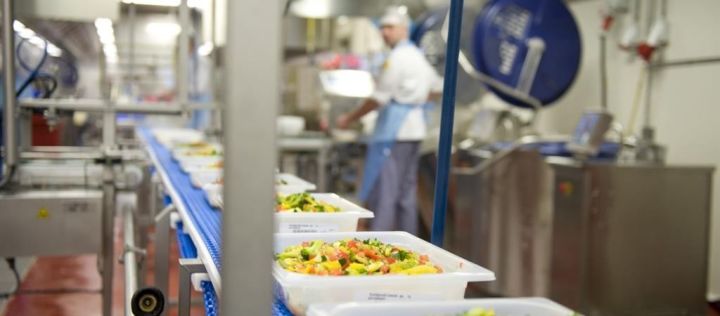
▲ Supply chain upgrades enabled industrialized food production and long-distance transportation.
Eating and drinking are fundamental to human survival. Going forward, our demands for food and beverage will only grow more sophisticated. In this sense, the food industry still has enormous room for upgrading.
Our portfolio company Xinliangji is experimenting in food supply chain upgrading. They've established over 200,000 mu of proprietary farming bases in Shandong, Hubei, and other regions, partnered with 5 processing factories to produce standardized products like crayfish, and supply these to restaurant partners through cold chain logistics.
These products use "flash-freeze freshness lock" technology. Restaurants simply heat them up before serving — reducing channel and labor costs while improving product consistency.
Beyond food and beverage, in recent years I've met many home goods entrepreneurs who want to build an "online IKEA." They see an inflection point for China's home goods industry. Consumer demand for home products continues growing. From toothbrushes and towels to decorative objects, people are pursuing better quality of life.
If we look at the other side of the coin, we find that IKEA — often held up as the model — first distinguished itself not through experience but by finding the right suppliers and flattening furniture for transport, enabling self-assembly. This dramatically reduced shipping costs, improved parts supply efficiency and inventory turnover, and created sufficient margin.
We recently invested in an ODM factory-turned-home goods brand: Jordan & Judy. The company previously did OEM for over a hundred foreign enterprises for fourteen years and was one of MINISO's largest suppliers. Now they've accumulated strong supply chain capabilities and solid design foundations, giving them significant product value advantages.
Home goods e-commerce brand Haowu follows the same logic. Founder Zhongyi Zhang has over 20 years of experience supplying quality export home goods to American retailers. This allows him to apply his accumulated supply chain and quality control expertise to building a new brand.
Good brands across industries essentially find room for improvement somewhere in the supply chain, which then translates to so-called user experience advantages. If a brand only focuses on the front end without addressing industrial chain problems, it will likely be eliminated.
Q: Here's a question for readers: In your industry, what categories have been transformed by technology? Which brands have benefited?
Industrial Chain Foundation + New Lifestyle = ?
Let's briefly review history. Before World War I, Britain gave birth to Lipton tea and Scotch whisky; from the 1950s-70s, America saw Disney, Coca-Cola, Walmart, McDonald's, KFC, and Starbucks emerge or enter rapid growth; from the mid-1970s to mid-1990s, Japan saw MUJI, Panasonic, and Sony appear or begin expanding quickly.
The common prerequisite for these countries incubating world-famous brands in different cycles: sufficient national scale, productivity gains and production scaling driving GDP growth, which in turn stimulated consumption.
China's per capita GDP now exceeds $8,000. People have more money to spend, and society needs to absorb these funds. Meanwhile, national productivity levels have risen, industries are trending toward standardization and industrialization, vastly expanding consumers' range of choices.
If a consumption category can represent a new lifestyle, and its industrial chain foundation is sufficient to support upgrading, then that category is very likely to produce world-class brands.
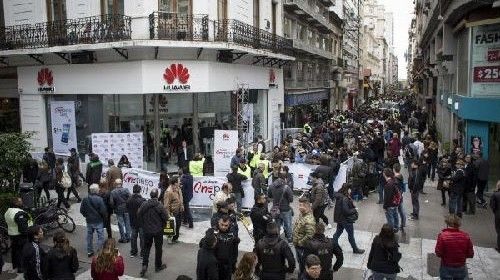
▲ Some domestic smartphone brands have already gone global.
This transformation has already occurred in some industries, such as smartphones — now very familiar to us.
In the mid-1990s, we were still using feature phones, without sufficiently good wireless communications technology of our own, relying on encouraging foreign manufacturers to establish joint ventures in China to import advanced technology.
From 2002-2007, we gradually converted productivity factor advantages into manufacturing cost advantages, becoming the world's phone factory. It was during this stage that shanzhai phones rapidly rose to capture market share. By 2010, when smartphones began guiding new lifestyles, we imported entire supply chains.
Now, on this track we have domestic brands like Huawei, Xiaomi, Vivo, and OPPO, which have been going overseas since the year before last to markets in Southeast Asia, Central Asia, Africa, and Europe.
For sixty to seventy percent of consumer categories, China is the largest producer with the best industrial chain foundation. Theoretical upgrade opportunities exist across these fields.
Q: In your view, which categories might represent future new lifestyles while also having upgrade room?
From "Novice User" to "Expert"
Having covered supply chains and industrial chains, let's look at changes on the user side.
About 20 years ago, I bought my first car. There were very few models to choose from — basically just Audi, Santana 2000, Jetta, and Fukang. Like most people, I didn't know much about cars. I ended up buying a Fukang, solely because I was drawn to its two electric front windows.
Today, even women without much interest in cars can, I believe, rattle off several criteria for a good car.
Across consumer categories, the proportion of users capable of judging product quality is rising rapidly. I think this is because users have bought enough things to gradually learn which items, though somewhat expensive, are worth investing in, and which aren't worth buying.
As users mature, it becomes increasingly difficult for brands to influence decisions through information asymmetry. In the past, traditional consumer brands could build themselves by advertising on television, constantly reinforcing "who I am," binding themselves to a category. But now, centralized media influence is gradually dissipating, advertising channels are increasingly fragmented — including various e-commerce platforms, shopping apps, video sites — with rich marketing content everywhere.
At this point, the ability to attract user attention through interesting content, more quickly, more proactively, and at higher frequency becomes crucial. This presents a good opportunity for new brands to stand out.
▲ Communication channels and content have become abundantly rich; users are hard to attract through one-way broadcasting.
For example, our portfolio matcha food brand Guancha. Founder Xiaoguan, during WeChat Official Accounts'红利期 in 2015, documented her culinary studies in Paris — content that happened to resonate with young users' aspirations for quality and individuality, quickly accumulating seed users.
Personal care brand Zhi Guan, two months before product launch, sends samples to influential online opinion leaders, planting seeds for them to spontaneously recommend to followers.
Q: Here's a small curiosity. Over the past decade-plus, in which consumer categories have you become an expert? How did you deeply understand the category? What are your requirements now when buying in this category? And what kind of advertising moves you today?
How to Attract Discerning Users?
Offline, the difficulty of attracting user attention is similarly increasing.
Think about how we decide where to eat when we want to dine out. Before, with limited choices, "tasty" was the primary criterion. But now, standing on any random street, the surrounding food and beverage offerings are incredibly rich.
If a restaurant only has "tasty" going for it, it probably won't convince us to choose it. It needs additional features that satisfy non-fundamental needs. For example, what made Haidilao memorable wasn't its flavor, but "good service."
The same applies to everyday purchases. When we buy tea or alcohol, beyond their basic beverage function, we value how they meet certain spiritual needs.
Buying alcohol is buying a kind of spiritual enjoyment — whether dizzying, joyful, or indulgent. Buying tea is also buying spiritual enjoyment — whether healthy, invigorating, or calming.
As consumption levels rise, user demand for a product has transcended the fundamental need itself; non-fundamental functions are becoming increasingly important. At this point, brands need to differentiate themselves, and this "difference" can't be excessively niche — it must address the needs of a larger mass of mature users.
We've tried to summarize characteristics of new consumer demographics: roughly pursuing fashionable, cute, well-designed, warm things; chasing individuality while craving emotional resonance; hoping to enjoy the present and live healthy lives. New retail brands broadly need to meet these needs.
The next challenge: the retail industry needs to constantly change.
McDonald's and Coca-Cola, throughout every stage of their development from the 1950s to today, have done their utmost to cater to young people's preferences. For example, a couple of years ago McDonald's introduced customizable burgers where users could freely combine buns, cheese, and sauces, responding to evolving young tastes.
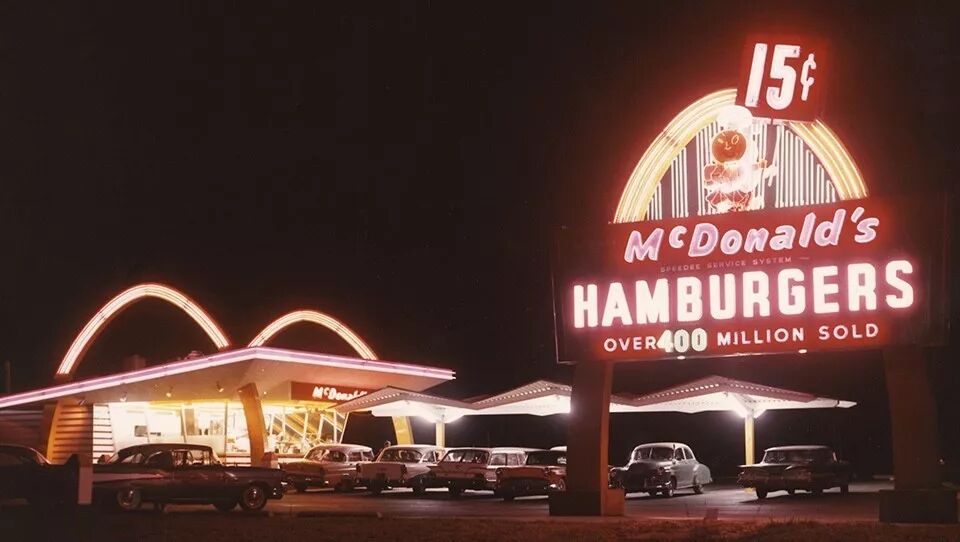
▲ McDonald's has continuously adjusted over decades, striving to meet users' new demands.
Going forward, the frequency of such change will only increase. This also presents challenges for our investing, because seeing a trend clearly doesn't mean we can necessarily find suitable investment targets.
For example, we currently believe in the broad direction that alcohol and tea categories can produce world-class brands. Both have deep cultural foundations, industrial chain support, and can meet new consumption demands.
We recently invested in tea drink chain Teasoon. They emphasize the "original tea" concept, targeting 25-40 year-old white-collar workers in office buildings. These people wear white shirts and employee badges, prefer additive-free healthy beverages, and won't queue for long periods just for a cup of milk tea.
But in the tea category, will the eventual big brand be a tea drink shop or an industrialized tea product? Or some combination or mutation of both? Is a cheese-cap tea brand more likely to produce the next Starbucks, or is a tea leaf brand more likely to produce the next Lipton? These are questions we can't clearly answer now.
Like entrepreneurs, we can only keep learning, try to discover factors that may become important but we haven't yet recognized, then observe whether they become more typical or longer-lasting factors.
New Retail Entrepreneurship: Where's the Edge?
Business models aren't hard to copy, but excellent entrepreneurs are relatively scarce. The better entrepreneurs we've seen in retail share certain common traits.
Richard Liu had offline 3C sales experience before founding JD.com; Zhang Liaoyuan had 9 years of offline retail experience before starting Three Squirrels; Li Jian replicated his standardized product management experience from Xinladu to Xinliangji; Tao Shiquan, before creating Jiangxiaobai, spent 9 years as assistant to the president of Jinliufu, managing marketing and sales — enabling him to leverage traditional channels while using internet characteristics for new brand marketing.
We recently invested in unmanned self-service shelf Guoxiaomei. While this is indeed a scenario closer to consumers and a more flexible, personalized SKU operation method, what attracted us more was founder Yan Limin himself. He has proven success in retail operations, management efficiency (ERP, SaaS), giving him higher probability of breakthrough.
So, the people most likely to succeed in new retail roughly share these traits:
- Deep industry experience, understanding of industrial essence, accumulated resources, with proven capabilities;
- Ability to identify and recognize new trends at consumption upgrading inflection points, understanding young users;
- Leveraging past experience and resources, combining internet methodologies, wholeheartedly doing new things to become leaders of the next phase.
Finally, for retail brands to succeed, the essence remains starting from providing users the best possible products. Whether we look at Starbucks or 7-Eleven's history, we find these great brands established very correct user perspectives in their early stages. With good products as foundation, persisting for 10 or 20 years, some brands may reach heights we today cannot anticipate.
Recently, FreeS Fund collaborated with Waterdrop Product Evolution Camp (founded by former Chaos University partners) to develop the "Consumption Upgrading Evolution Camp" course.
Regarding the questions raised at the beginning and throughout this article, we welcome your thoughts. We'll invite the 8 most insightful commenters into the course interview process (bypassing application and preliminary review), and will provide a full scholarship (worth RMB 98,000) to the single most outstanding participant.
Let's explore the meaning of consumption and capture signals of the future together~

▲ Li Feng Column | Shared Bikes Enter the IoT Track: Where Does the Data War Go Next?