Here are 17 industry research reports and a podcast episode to get you started — happy first day back at work.

How do we embrace the changes that lie ahead?

Back to work today — we've selected 17 industry research articles and one special Spring Festival podcast episode to share with you. We hope that more sharing and exchange might spark new possibilities and fresh ideas.
Over the past year, we're especially grateful for the many friends who left comments on our WeChat articles, sharing their thoughts and perspectives on different industries. Those thousands of comments are invaluable feedback to us, and they've become an essential part of every research piece we publish. In the year ahead, we look forward to even more interaction and exchange. Wishing you a prosperous start to the work year!
Engagement Giveaway
We welcome your comments at the end of this article — tell us which directions you're bullish on this year and why. By 5:00 PM on February 23, the five readers with the most thoughtful comments will each receive a FreeS Fund industry research handbook plus a book recommended by Feng Shu.


In 2023, most of the macro content we published on our official account came from "High Energy," a podcast co-hosted by Feng Shu and Li Xiang — author of the Detailed Conversations book series and host of The Age of Turbulence.
Feng Shu once discussed on the show how he approaches macro topics: "When studying the macro, the difficult part is making a conscious effort to step outside the parts where you're influenced by emotion — to detach from your current position or viewpoint, and try to connect the relatively long-term policy dots, whether horizontally or vertically. That's been enormously beneficial for me." Volatility in economic markets is the norm. No matter how the winds shift, what matters is finding the anchor that keeps you steady — that is, a rational understanding of macroeconomic patterns and frameworks.
In the High Energy macro discussion Spring Festival special, Feng Shu and Li Xiang chatted about everything from Blossoms Shanghai and Like a Flowing River to the 1990s, from the "curtain call" of the four major AMCs to capital market reforms, and looked ahead to the global economy and politics of 2024. You're welcome to head over to Xiaoyuzhou, Apple Podcasts, or Ximalaya to search for and subscribe to "High Energy" and listen to our podcast series.



On the 2023 technology landscape, generative AI undoubtedly marked a major inflection point. Its development has not only attracted widespread industry attention but also exerted far-reaching influence on the global economy, social structures, and even our expectations for the future. This is an AI revolution that every ordinary person can participate in. From the continued evolution of large language models to the broad application of AI technology across different industries, to the ongoing contest between open-source and closed-source strategies — every step of AI's development is sketching the contours of future trends. On February 16, 2024, OpenAI released Sora, its first text-to-video model, redefining the current state of AI video generation technology. This once again proves that in 2024, we must continue to pay close attention to AI's progress and understand the transformation it brings.
"Heading Into 2024: How We Think About AI Entrepreneurship and Investment | FreeS Fund Year-End Special"

This article reviews generative AI's development in 2023, exploring technology's impact on humanity, industry landscape and future trends, and entrepreneurship and investment opportunities. It's not just a retrospective on AI's past year, but a meditation on where AI is headed. The piece noted: "As technology continues to advance, video generation and processing will be the next focal point of AI development." Looking back now, this report also partially foreshadows the current explosion of interest in the Sora model.
"A Debate: Two Investors From Different Directions on How They View GPT | FreeS Research Institute"

We invited two investors from different fields to share their perspectives on AIGC. The conversation featured plenty of clashing viewpoints: What sparks might fly from the intersection of GPT and biotech? Between AlphaFold 2 and ChatGPT, which will drive greater change in biology? Amid these major shifts, which areas — AI for science, generative biology, AI drug discovery — hold more opportunity?
"After ChatGPT Went Viral, Where Is AIGC Headed? | FreeS Report 28"
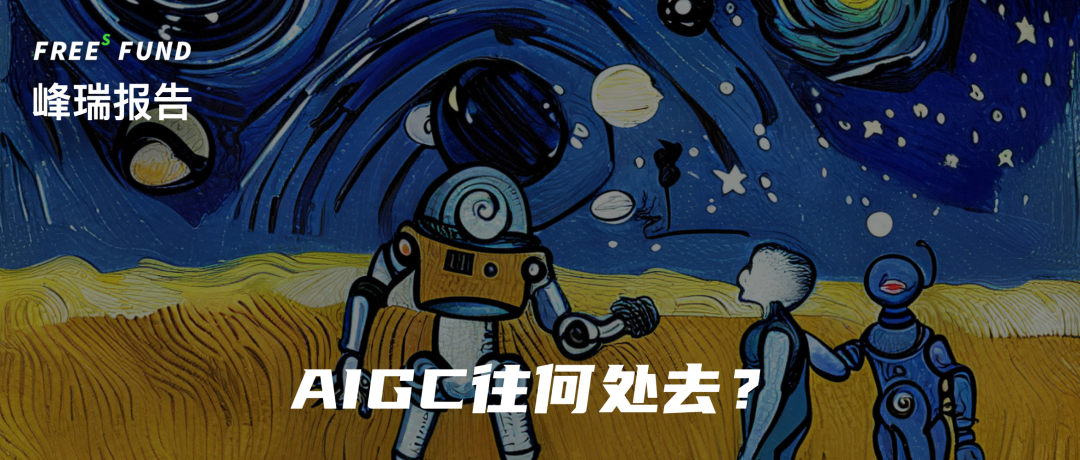
In this report, we trace ChatGPT's historical lineage: where it came from, and what technologies are driving it forward. Our thinking also unfolds around the debates surrounding it: How long will its momentum last? Does it have a shot at becoming a "human brain" or artificial general intelligence (AGI)? Equally important, we ground our analysis in the venture capital industry, exploring entrepreneurship and investment opportunities related to AIGC.
"Li Xiang x Li Feng: Why Did ChatGPT Emerge Today? What Happens Next? | Li Feng Column"

Li Xiang and Feng Shu talked for over an hour, starting from the digitization of text information and using digitization as a thread to string together the past three decades of the internet, while attempting to answer some hot questions about ChatGPT:
- Why has ChatGPT emerged now? What happens next?
- Which companies will matter most along the ChatGPT value chain? Is there still room for startups?
- Is there still a chance to build China's OpenAI?
- Did the first wave of AI leave behind any valuable "legacy"?

Looking at China's 2023 economic report card, we can see that GDP growth relied almost entirely on two sectors: consumer goods and services. A long-term trend in consumption innovation is that consumer entrepreneurship is increasingly intersecting with technology. The underlying logic is that no matter how hot technological innovation gets, its ultimate outlet — the end of the tech industry chain — comes down to just two things: military and consumer. Of these, the consumer market is unquestionably the largest by volume. "How We View the Consumer Market in 2023 and 2024 | Li Feng Column"
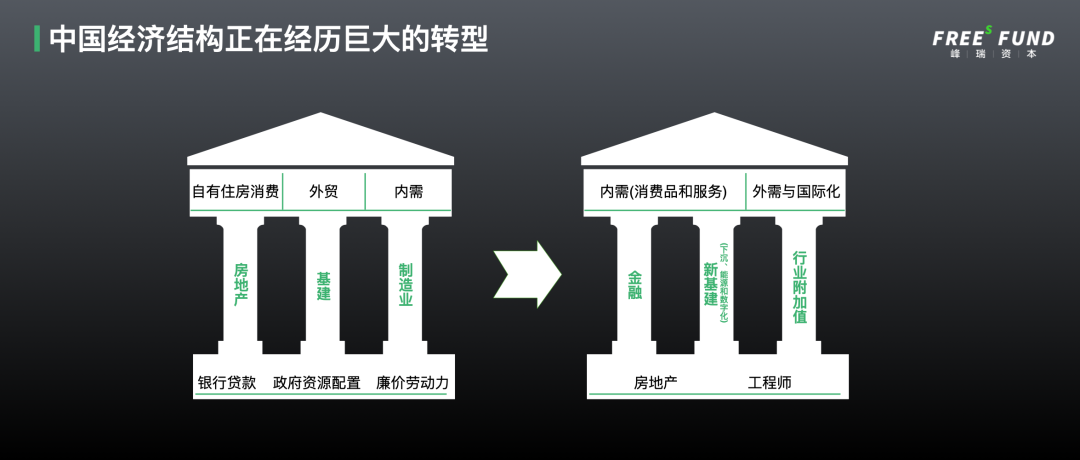
The growth picture painted by macro data diverges significantly from individual lived experience. The 2023 consumer market was a textbook case. Unlike the frustrations felt at the micro level, macro data told a different story: China's total retail sales of consumer goods grew 7.2% year over year, and consumption's contribution to economic growth reached 82.5%. Li Xiang and Feng Shu discussed:
- What's driving the disconnect between micro-level feelings and macro data?
- Extending the timeline, has China's economic growth entered a stage driven by domestic consumer demand?
- How should we view the 2023 consumer market?
- What does China's current and future consumption innovation opportunity look like?
- What slow-moving variables might we have overlooked that will actually shape China's future consumption?

Li Xiang and Feng Shu started with water, talking through the consumption phenomena unfolding in China and the underlying shifts in consumer trends. They moved from bottled water to beverages to coffee, dissecting the real face of domestic consumption upgrade: lower-tier markets have begun a brand-oriented consumption upgrade, consumer demand has shifted from "endless variety" to "carefully curated," and the boundary between service and retail is increasingly blurred...
"A Trip to the US: 6 New Opportunities in Consumer Sub-Segments | FreeS Research"

As the world's largest consumer market, the US is like the Amazon rainforest in its biological diversity — traditional giants too big to fall, emerging brands constantly sprouting up. Keeping an eye on the US market helps us understand the complexity and emerging trends in consumer markets. This article focuses on the changes and new opportunities in the US consumer market post-pandemic, and what Chinese entrepreneurs can learn from them.
"How Should We Age in the Future? | FreeS Report 29"

China has become the first country in the world with over 100 million elderly people. How to respond to population aging has become a problem that cannot be taken lightly. In this report, we explore what impact the silver economy will have on future society, how it will reshape consumer markets, how it will affect employment and entrepreneurship, and how we can identify and capture innovation opportunities under the aging trend.

The proliferation of new energy vehicles has already unleashed a storm of transformation on the brand side and in manufacturing. We're curious: as the industry shifts from internal combustion to new energy, what changes will occur in NEV sales and after-sales service systems? This article examines the evolution across four dimensions: vehicle sales and logistics, maintenance and parts markets, car care and wrapping markets, and automotive lifestyle.

In hard tech, some sectors have devoted enormous resources to import substitution because external "chokepoint" pressures left them no choice. But we should also recognize that our real mission is indigenous innovation, leapfrogging on new technological tracks, and maintaining leadership. Only then can we truly break free from the threat of being choked. We believe the current technological competition is not the final battle — there will be many more opportunities to surpass.
GPT Fever: Anxiety and Breakthroughs in China's Chip Market | FreeS Research
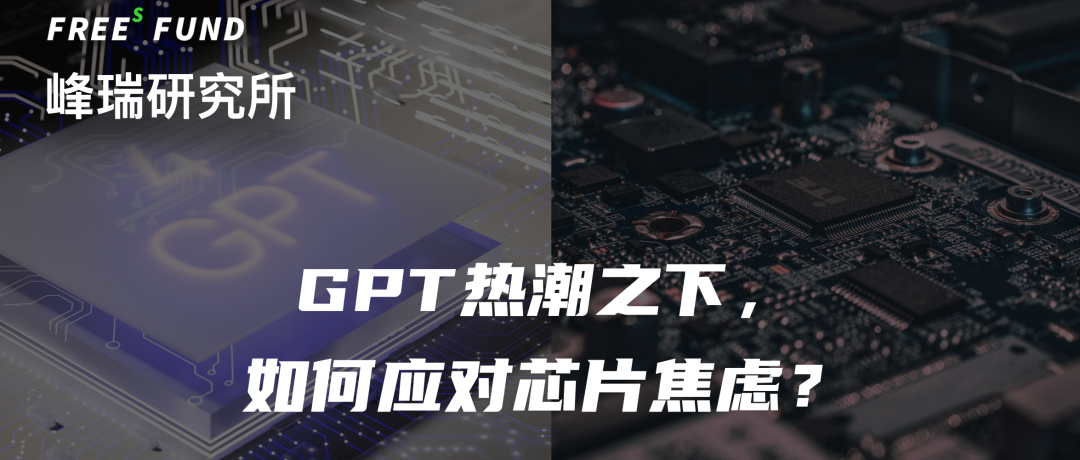
Chips are both the crown jewel of industrial manufacturing and a weight in great-power competition. This article examines the current state of China's domestic chip R&D industry and explores:
- Why has large model hype directly boosted the chip market? Will this wave reshape it?
- What factors allowed NVIDIA to stand out during this AI boom?
- How should Chinese tech companies respond to chip anxiety and overcome design weaknesses?
- What substantive impact has the U.S. CHIPS Act had on the global semiconductor industry?

The article examines: Under successive rounds of restrictions, what changes will China's semiconductor industry undergo? Strategically and tactically, how should Chinese chip companies respond? And what impact will the AI industry face?

Huawei's new Mate 60 Pro put satellite communications in the spotlight. Current satellite capabilities allow people to use basic phone and text functions via Tiantong satellite networks even without any mobile coverage. Satellite communications has developed fitfully over decades, and China's capabilities are gradually advancing. This report explores:
- From Inmarsat to Starlink, how has satellite communications evolved step by step? What were the technical hurdles and how were they overcome?
- What does industrial-scale satellite manufacturing signify?
- Globally, why is competition for satellite launch slots so fierce?

At Apple's June 2023 Worldwide Developers Conference, the Vision Pro — seven years in development — finally debuted. Beyond the glamour, the XR industry faces challenges and uncertainties. This report focuses on XR and explores:
- How has the XR industry developed?
- With AI integration, why has Vision Pro's launch been hailed as "the iPhone moment for XR"?
- What are the key technical challenges currently facing XR advancement?
3D Printing at 40: How Far From Niche Tech to Mass Application? | FreeS Report 31

How has 3D printing evolved over the decades? Where is it being applied today? What does the future hold? This report focuses on 3D printing and examines:
- How can 3D printing combine with the latest AIGC technologies?
- Why did 3D printing first take off in aerospace and dentistry?
- Why is hybrid manufacturing considered the future of 3D printing?
- What are 3D printing's advantages and disadvantages?

In 2023, the biopharma industry underwent market adjustment. In our view, the capital downturn is merely the "surface" — the sector is moving in a more rational direction, and we are at the starting point of a new cycle: numerous novel technology platforms have achieved international validation from mechanism to clinic; policy environments and regulatory review systems are gradually opening; China's investment in basic research continues to grow; and large numbers of overseas talent are returning.

This report discusses radiopharmaceuticals — drugs related to nuclear medicine, also known as radiation medicine. At a time when Japan continues to discharge treated nuclear wastewater into the sea, how to control and harness nuclear power is of great public concern. Everything has two sides, and "nuclear" can also bring hope to cancer patients. In this article, you will learn:
- Is nuclear radiation really that scary? Why we shouldn't talk about toxicity without considering dosage
- Why is now a good time to develop radiopharmaceuticals?
- What advantages do radiopharmaceuticals offer in cancer treatment?
This report focuses on epigenetics. The importance of epigenetic research lies in its potential to help us overcome some of the toughest challenges in cancer treatment, such as delaying the development of drug resistance and improving tumor sensitivity to drugs. It also helps us study complex diseases caused by abnormal epigenetic modifications — including lupus, Alzheimer's, and Parkinson's — by understanding their pathological mechanisms and finding new treatments. In this article, you will read about:
- How can epigenetics help us conquer malignant tumors, Alzheimer's, and other complex diseases?
- What are the prospects for epigenetics in academia and industry?
- What entrepreneurial and investment opportunities exist in the field of epigenetics?
"How to Invest in Biotech in 2023? | FreeS Research Institute"
 This article was published in early 2023. After two years of rapid expansion in 2020 and 2021, the biotech and healthcare sector underwent significant correction in 2022. The core questions the article seeks to explore: What is the outlook for biotech, and from our perspective, how should one invest in it?
Reader Perks
We welcome your comments at the end of this article sharing which directions you're optimistic about this year and why. By 5:00 PM on February 23, the five most thoughtful commenters will each receive a FreeS industry research handbook plus a book recommended by Feng Shu.
Star the FreeS Fund WeChat Official Account for timely business insights delivered to your feed.