Zhidong Zhang: How Tencent Grew Into a Major Company From 1998 to 2017 | FreeS Fund Business School

Two hopes in the early days of starting up: don't let the company die, and don't let users get disconnected.


How Can a Company Become "Better" as It Grows "Bigger"?
If we look back at the journeys of successful entrepreneurs, we find they were rarely born business leaders or technology prophets.
In 1998, Tencent started out in the "network paging" business, riding successive waves from the PC era to the mobile internet era, gradually becoming an internet giant with over a billion users over nearly two decades. But when they took their first steps, they were no different from any ordinary founders — uncertain of which direction to go, completely unaware of the challenges ahead.
In this article, Tony Zhang (Zhang Zhidong), Tencent co-founder and former CTO, shares the challenges, pressures, and risks the Tencent team faced over the past decade-plus, as well as the successes and joys they experienced. In his view, it was diligence, courage to take on challenges, unyielding resilience, ambitious vision, plus a bit of luck that made up their remarkable entrepreneurial story.
On how Tencent explored and evolved, Tony Zhang says:
- For the first three years, the goals were simple: don't let the company die, and keep users from getting disconnected and cursing at us.
- At the crossroads of transformation and being transformed, if management can't see how the world is changing and how the company is aging, they'll end up like frogs in slowly boiling water.
- Good products have elegant revenue models.
- "Product people who shine" care more about pursuing product ideals than pleasing their bosses.
- Speaking truth is a crucial way to help companies fight aging.
↓ Full article below ↓

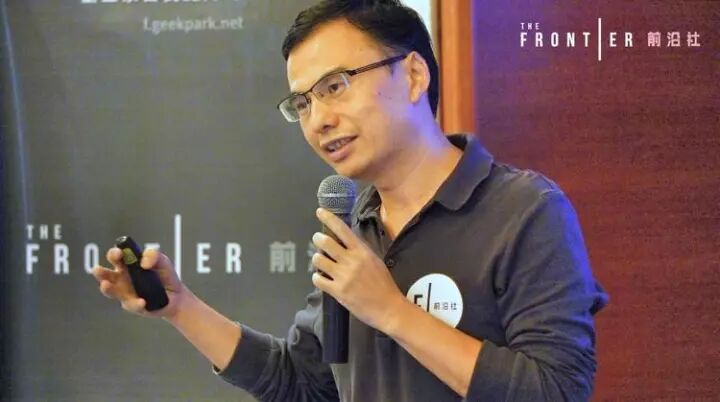
Tony Zhang: On Corporate Growth — How Tencent Explored and Evolved
Source / GeekPark (WeChat Official Account ID: geekpark)
Narrated by / Tony Zhang
Compiled by / Zhou Xiaodan
Large companies are always entangled with countless "possibilities" during their development, and Tencent is no exception. It has gone through transformations and several organizational restructuring efforts, continuously secreting and digesting the growing pains of expansion, ultimately forming a unique corporate culture.
What outsiders praise most about Tencent is its strong "product DNA" and open ecosystem. So what makes a truly good product? What is a "product person who shines"? How did this unique DNA grow and become implanted in a company's body? From 1998 to 2017, how did Tencent grow into a large company? And how did it become "better" as it became "bigger"?
Below is Tencent co-founder and former CTO Tony Zhang's sharing at GeekPark Frontline Society's "Proximity Research" on building good products, managing teams, and establishing and passing on corporate culture.
The First Three Years: Survive, and Don't Get Cursed At
When we first founded Tencent, we actually didn't understand what VC was, what venture capital meant. We founders were simply tired of working for others and wanted to start a small company making internet products that could support ourselves.
We were fortunate to encounter excellent "timing" and "geographic advantage" when we entered the internet industry. When Tencent was founded in 1998, we originally just wanted to build a network paging system to sell to paging stations. OICQ (the predecessor of Tencent QQ) was merely a side project born from interest, something that could add some paging volume for paging stations — its original purpose wasn't to make money. But after a year of development, the paging industry began to decline, with paging stations constantly closing or merging. The major trend of mobile phones replacing pagers was already evident, while our side project OICQ was growing like crazy.
The reason was probably that bandwidth was very narrow back then, and people had no entertainment options when going online, making instant messaging a rigid demand. China Telecom invested heavily in internet line expansion and backbone network construction every year, and Guangdong happened to be the province with the fastest network infrastructure development, while Shenzhen was a hotbed for young entrepreneurs. This is how we stumbled into the river of the times.

▲ In the late 1990s, people began communicating through instant messaging software.
At first, we were just a small company of a few people. Our expectations were only two things: first, don't let the company go under, keep it alive; second, don't let users get disconnected, and get cursed at less.
Back then, the company had no written systems whatsoever, not even standard working hours. The early members were all internet enthusiasts who loved internet products. After getting up, they'd run to the company and hunch over PCs reading user feedback. We had a very simple statistical chart that we used for several years: counting online users every minute and plotting a point on the graph. If this curve suddenly dropped, it meant there was a malfunction. At that point, I didn't even need to call colleagues — by the time I took a taxi back to the company, everyone was already locating and fixing the problem. Our team itself were heavy users of the product, and we deeply felt the frustration of users getting disconnected.
This experience involved a lot of accidental factors: if we weren't living in China, we wouldn't have felt the pain points of Chinese netizens and China's network infrastructure so deeply, and there wouldn't have been such an opportunity; or if we had graduated a few years earlier and already had some achievements and titles in our original industries, we wouldn't have been able to leave our original trades so easily and resolutely embrace the internet as this new thing.
Character + Diligence — Can That Sustain a Company?
When encountering business windfalls, some companies can develop very quickly. But for a company's internal传承力量, team cultivation requires slow, careful work. Moreover, the world is constantly changing, and companies must also constantly change to adapt.
In this process, a company's determination to变革 becomes extremely important. We faced such challenges several times.
From 1998 to 2004 was Tencent's "first entrepreneurship." We grew from a small workshop of a few people into a medium-sized company of nearly a thousand employees, and listed on Hong Kong's main board in 2004.
By 2004 and 2005, the company had two paths to choose from. One was to focus only on communication and entertainment — this was Tencent's DNA, and the path that the original team was most skilled at and that was relatively profitable. The other was a much broader direction, which Pony (Ma Huateng) summarized at the time with terms like "online life." The team debated for a long time and finally chose the second path.
The second path was more difficult to walk, and it quickly had a considerable impact on the company's original organizational structure.
Previously, the company's business lines were relatively simple. Several founders could vertically handle their respective businesses, and the frequency and efficiency of communication were very high. We could sustain company operations through our character and diligence. But after developing diversified businesses, we realized that the founders' capabilities had considerable bottlenecks. Issues like resource allocation between product lines and various organizational problems began to emerge one after another, bringing significant challenges.
Our solution at the time was to restructure the organization into Business Unit (BU) driven, merging product R&D and marketing in the same direction into one BU, with a single leader taking unified responsibility. The challenge of this was that the requirements for the BU's first-in-command were very high. They had to have comprehensive capabilities while also having internal cultural认同度. Several important management team members who later played key roles at Tencent took up their positions at that time. The founders became horizontal support. Everyone felt that as long as the company did well, that was enough.
By 2008 and 2009, when the company celebrated its tenth anniversary, we felt that the company was growing well, business growth was stable, and the team had decent talent cultivation capabilities. But things usually don't develop so ideally — whenever you feel good, a crisis is already lurking.
This change came from the mobile internet wave. By 2010, we suddenly felt something was wrong — Tencent's organizational structure had become unable to adapt to this era. The arrival of the mobile era brought us to a crossroads of "revolution" or "being revolutionized."
By 2011, we dismantled the mobile BU at the time, merging it with the PC teams of various existing products to form self-contained闭环, letting colleagues who were mainstays on PC transition to learning mobile development, making a comprehensive shift to the mobile era. Challenges arose in the process — existing departments' interests, inertia, and emotions were all impacted. But in this era, if you don't change, the world will change for you. If we hadn't made that变革 then, Tencent would have fallen behind the mobile internet tide in the following years.

▲ WeChat seized an important time window during Tencent's transformation.
In early 2011, when WeChat had just launched, the first three months were actually uneventful. But after adding voice functionality in May, it suddenly exploded. What was the user growth幅度 in the following three months? Daily user growth of 10%, with active user volume growing 70% in a week. This was the steepest growth curve I had ever seen in my career.
It was during these three months that WeChat seized an important time window. This growth rate solidified Tencent's organizational变革 and determination to fully transition to mobile internet.
Later, Tencent dismantled the wireless BU, and subsequently invested in Sogou, Dianping, and JD.com, merging search into Sogou and e-commerce into JD.com — this was the second major organizational变革 in Tencent's history. At the time, many colleagues didn't understand: if we're merging this into Sogou and that into JD.com, what do we do ourselves? I believe Tencent's future is as a company based on connections and big data services. If Tencent can build the foundational infrastructure connecting people, enterprises, and services well, it will have the opportunity to promote transformation and improvement in more industries.
Thrilling Transformation, or "Frog in Boiling Water"?
I personally felt that the变革 during that period was extremely thrilling. If we had been one year later, we might have missed the mobile internet tide.
When I left the management team in 2014, I thought about why a company with over a decade of operating experience was still so caught off guard when facing变革? I think this may have had a lot to do with the mobile era. In the PC era, perhaps our product was only 70 points, but it could still survive and generate considerable revenue when placed on several major traffic portals. But the mobile era was different. In the mobile era, users' ability to choose independently was greatly enhanced. If your product and service couldn't reach 90 points, you would quickly be eliminated.
But historical achievements easily become a burden for corporate transformation. Managers become attached to their accomplishments, feeling that they have substantial revenue and "江湖地位" in market share. But the reality is, if you can't complete self-revolution within a certain time window, you may already be aging and no longer able to adapt to the new era.

▲ Don't let historical achievements become a burden for corporate transformation.
Companies easily make certain mistakes. In the PC era, after initial product success and having a business model, teams constantly pursued making it bigger in scale and generating more revenue, unconsciously making the product heavier and heavier, doing a lot of forced bundling. In this process, the organization also grows larger, and various "seat determines head" interferences of large companies also grow larger. What people often consider is whether they can超额完成 the KPI assigned by the boss, while their understanding of users becomes迟钝.
Whether you can seize this变革 time window depends on whether the management team has a sense of crisis. When you feel secure yourself, your reactions become迟钝. If the leader doesn't have awareness of danger, relying on superficial "transformation" won't get things done. Pony's management style is relatively open — as long as time allows, he's willing to hear opinions that differ from his, willing to spend time discussing with everyone. If one argument isn't finished, there can be a second, a third. The structure of Tencent's founder team also allows for high mutual trust.
Transformation, in hindsight, always seems理所当然 and大势所趋. But at the time, it wasn't that easy. Management determination and timing are crucial. Without sufficient external stimulus and internal determination, things will be like a frog in slowly boiling water — they'll just pass by. Corporate transformation will definitely bring pain. A large enterprise will have many bugs. We can't expect every step to be taken accurately. For various reasons, if the timing of transformation is late, it will be very painful. But if everyone can Debug together and get through it together, that's quite a good thing.
Good Products Have Elegant Revenue Models
How should we define a good product?
We sometimes see certain industry phenomena. For example, some teams love to pump themselves up, celebrating record product revenue at annual meetings in exaggerated ways. Some managers use harsh 996 schedules to push various management pressures on teams... But in my view, none of these qualify as good product teams.
Truly good product teams don't need pumping up. They don't need the CEO to tell the team how awesome and great they are. Rather, every member involved can feel that what they're doing has greatly improved the original experience.
This may sound convoluted, but I think it's one of the obstacles hindering many companies' development. We often see something's revenue growing and find it hard to let go, but overlook a question: Is it actually the next step for the world?
As time changes, a product's importance for that era also changes. If a product can generate considerable revenue but makes users feel awkward and unhappy, from a product perspective, this model isn't ideal. If you're the person in charge of the enterprise, how do you view this revenue? If you can learn to take it lightly a bit earlier, perhaps your team can create something new in other more elegant places. If you keep being attached to this revenue, the team easily falls into various "seat determines head" self-justifications, becoming迟钝 in perceiving the changes happening in the world, with weakened creativity.
In the mobile era, I believe good products will also have very elegant revenue models. For example, Netflix is a very elegant product. Netflix doesn't desperately fill your screen with exclusive dramas and ads. Its interface is clean and清爽, with many details done thoughtfully and beautifully. In fact, users don't spend any less time on Netflix, and users pay Netflix happily. Making users pay happily is the pursuit that good products should have.

▲ Netflix's clean interface doesn't fill the screen with ads.
Next, when a product's influence and time occupied by users reach a certain level, the product begins to have its social responsibility. For example, the two products with the fastest growth at Tencent in recent years: WeChat and Honor of Kings.
After WeChat surpassed 800 million users, many heavy users began experiencing interpersonal overload, information overload, and time overload. After society becomes highly digitized, it's estimated that new and more complex social problems will continuously emerge. Whether WeChat can use products and technology to alleviate these problems will be a future topic for the WeChat team.
Honor of Kings faces a different problem. This game's product and technology are excellent, but after the product reaches high普及度, this team's mission shouldn't merely be to make the game itself more fun and get more people to play. It also needs to care about family harmony. The game has now added parental supervision measures for minors' game time and spending, but in terms of promoting harmonious family relationships, the product still has substantial room for evolution.
When a team does some of these things, on the surface it may not help their revenue or business volume, but in the long run, I think these are things that good products should strive for.
Speaking Truth, Fighting Aging
A large enterprise with multiple product lines will face many bugs. Between multiple product lines, multiple departments and teams, there will also be many "seat determines head" ways of thinking, easily letting "sense of presence" and "short-sightedness" affect the team, making it unable to see clearly how the world is changing and how it itself is aging, easily falling into "frog in boiling water."
From the perspectives of people and culture: on one hand, a company needs "product people who shine." Such people are always scarce. They pursue product ideals more than pleasing their superiors. They have strong beliefs and insights about products and the future, while their experience and capabilities are trusted by colleagues. They can lead teams to find dawn when the team is confused. Young colleagues actually don't mind working hard — what they mind is meaningless hard work. If what they're doing can have a large positive impact on society, team members will feel it themselves. You don't need to pump them up; they'll naturally be excited. "Product people who shine" can pass on such product beliefs to the team.
On the other hand, a company needs a relatively open mechanism that encourages speaking truth. Speaking truth is an important way to help companies fight aging. And whether truth can be spoken depends to a large extent on the team's first-in-command. If this person cares too much about face and insists on having the final say, it will be hard for anyone in this department to criticize them. When the company is small, it's manageable — the CEO and management team members often eat with everyone, so there's sufficient communication frequency. After the company grows larger, opportunities for face-to-face communication decrease substantially, so it may be necessary to create low-cost internal吐槽 mechanisms.

▲ Establish mechanisms within the company that encourage speaking truth.
Tencent has an internal platform called "Lewen" (乐问), where people can ask questions anonymously but must answer with real names. Within Tencent, if something you've done annoys users, colleagues from other departments won't be polite in criticizing you. If you're thick-skinned enough and don't want to change, that's your freedom. But the vast majority of colleagues want to make good products. Rather than pretending not to see many things, it's better to face them more proactively. Lewen's anonymous questions and real-name answers are a communication撮合 experiment within Tencent.
Some worry: won't this cause every employee to feel full of negative energy when they open Lewen in the morning? After several years of experimentation, this hasn't happened. If your enterprise has sufficient openness, even if some people are somewhat偏激 about certain issues, there will inevitably be mature, rational colleagues who can participate in思辨. This is a relatively efficient, multi-angle思想碰撞 and effective communication for individuals, teams, and enterprises.
In the future, facing digital society, Tencent still has two major challenges to confront.
One is the social challenge. New technology is driving rapid societal digitization, greatly improving social efficiency while also bringing many derivative social problems. As an internet enterprise positioned as a connector, whether Tencent can use technology and products to effectively help society alleviate these problems may be a major challenge to face in the next stage.
The other is internal organizational evolution. The tide of new technologies, including the rapid development of big data, AI, and cloud, has catalyzed upgrades across all industries in society. For Tencent, there should be particularly large innovation opportunities, but Tencent's internal organizational structure is not yet adapted to this era. The original fully BG-ized organizational structure faces this new era with many organizational walls and many pitfalls.
Both are challenges that Tencent must face, but also great opportunities. I hope Tencent people can persist in their original aspirations, produce more product people who shine, and help the team overcome these challenges.
(Feel free to share to Moments. This article was first published on the WeChat official account GeekPark, ID: geekpark. For reprints, please contact the original source.)

Wrong People, Wrong Things! Learning Talent Review from Alibaba
The Hardship of Entrepreneurship: 10 Crisis Moments a Company Must Experience