Zhang Liaoyuan of Three Squirrels: A Once-in-20-Years Brand Opportunity — How to Win in Three Steps | FreeS Fund 2020 CEO Annual Meeting

Three Squirrels' New Strategy for the Next Eight Years

On August 15, FreeS Fund hosted its 2020 CEO Summit and fifth anniversary celebration in Shanghai. As the keynote speaker, Zhang Liaoyuan, founder and CEO of Three Squirrels, delivered his first in-depth public sharing since the company's IPO one year prior.
The first half of 2020 had been brutal for businesses. COVID-19 sent store foot traffic plummeting and consumer spending into retreat, leaving many companies under enormous operational pressure. As the second half began, uncertainty still loomed. Three Squirrels — the first internet-native FMCG food brand to cross the 10-billion-yuan threshold — faced its own challenges. But exceptional entrepreneurs have a knack for finding opportunity in crisis and growing toward the light.
Speaking on the theme "From the Traffic Era to the Content Era: The Next P&G Age Has Arrived," "Squirrel Dad" Zhang Liaoyuan shared his deep thinking and practical methodology for building new brands, drawn from Three Squirrels' evolution from a single brand to a multi-brand portfolio. Before diving in, here are three key takeaways:
- FMCG is undergoing a leap from the traffic era to the content era. With new content entry points like short video reshaping the landscape, legacy marketing chains are being shattered. The old models of "building sales through brand" and "building brand through sales" are giving way to a new "brand-sales integration" model. In this new paradigm, the efficiency of connecting products to users increases dramatically, lowering the barrier to building new brands and accelerating their growth. This means a "new P&G era" that comes perhaps once in twenty years is already here.
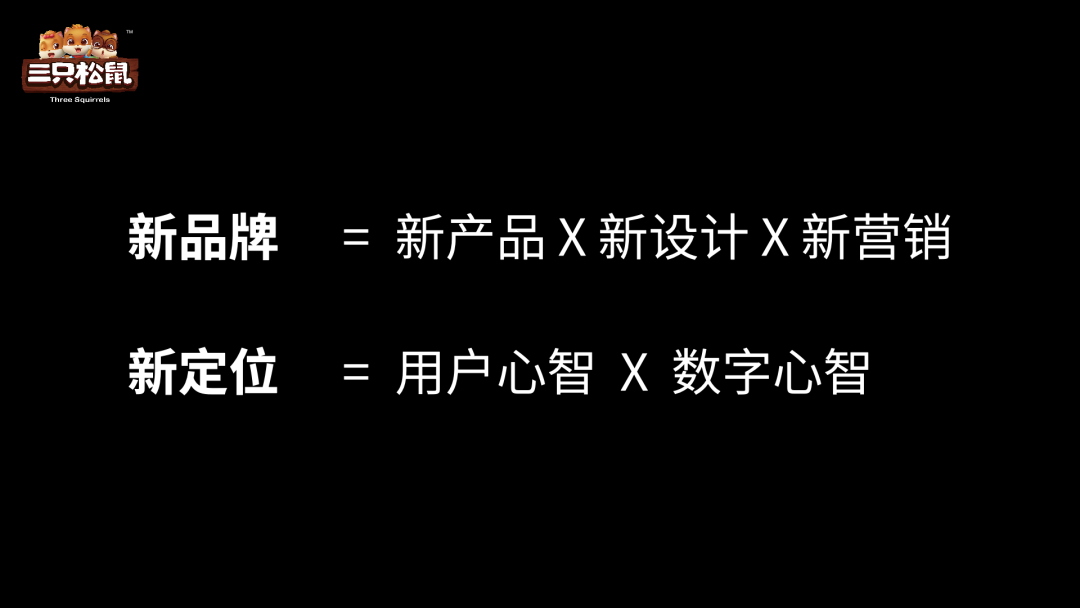
- To seize this opportunity, Three Squirrels has distilled a "Three News Strategy": New Brand = New Product × New Design × New Marketing. That means new products enabled by new processes, new appeal expressed through new design, and new reach achieved through new media channels. New product is the foundation; efficiency compounds at each successive layer.
- To capture the "new P&G" era, Three Squirrels must break free of cognitive patterns forged over its eight-year history: forget the traffic era and embrace the content era; get comfortable with slower growth and embrace sustainable development; learn to subtract and maintain strategic discipline; do the harder things; truly commit to being one meter wide and one thousand meters deep.
Below are highlights from Squirrel Dad's talk. We hope they offer some inspiration. (There's a bonus at the end: a video of Dad explaining the brand innovation formula.)
Contact Us We're always eager to meet innovators in the consumer space. Send your pitch deck to bp@freesvc.com. If you're interested in joining our consumer investment team, reach out to hr@freesvc.com.

/ 01 / The "New P&G Era" of Multi-Brand Synergy Has Finally Come of Age
"Why doesn't Three Squirrels launch multiple brands?"
Many people used to ask me this. My answer was usually just one sentence: the timing wasn't right.
Why?
Over the past 15 to 20 years, the internet has reshaped the world. Yet in FMCG, few emerging companies have reached the 10-billion-yuan scale, and emerging snack brands at that level are even rarer. Whether it's Dali Foods (founded in 1989) or Want Want (which formally entered the mainland market in 1992), the moats built by these traditional snack giants have remained formidable.
The underlying reason: building a brand requires progressing through "awareness → purchase → loyalty." Many brands fail to clear this hurdle because they collapse at the "awareness" stage. Without user awareness, nothing downstream can happen.
Today, as the internet enters the short video era, the "awareness-purchase-loyalty" loop is closing for the first time. This is incredibly exciting.
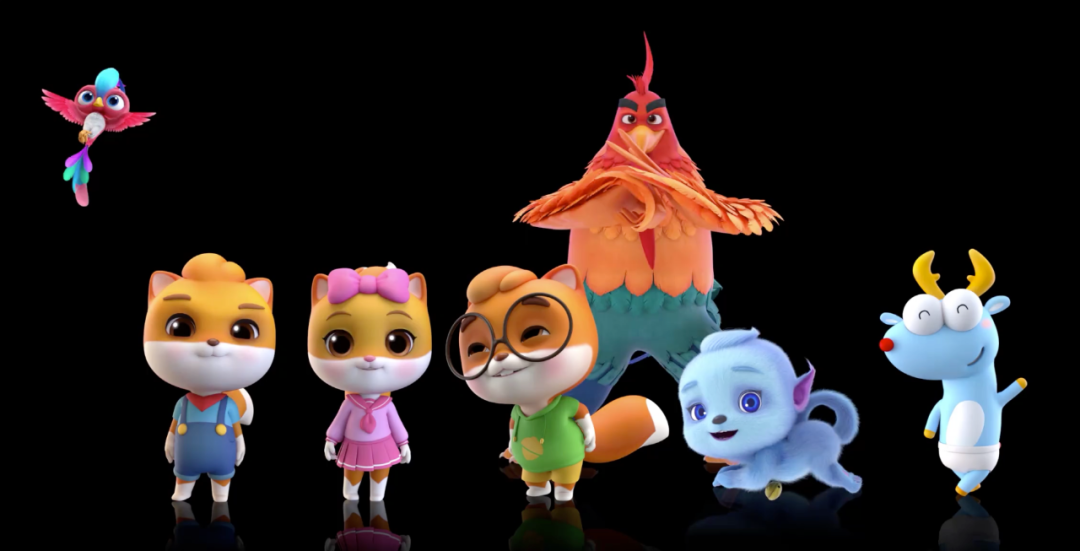
Three Squirrels is making a major shift — from single brand to multi-brand. We now have our own zoo. Beyond Three Squirrels, we've launched four new "animal brands": Little Deer Blue Blue (Xiaolu Lanlan), Raised a Fur Kid (Yangle Ge Maohai), Tie Gong Ji, and Xi Xiao Que.
This is an extraordinarily difficult path, but one we must explore given the opportunity before us. Once we establish this new model, we'll launch even more animal brands.
/ 02 / What Is the Omnichannel Marketing Era? What Does It Mean for Brand Building?
From a marketing perspective, let's look back at the past 20 years and examine how successful brands were built. Based on their methodologies, we can roughly divide this into three periods:
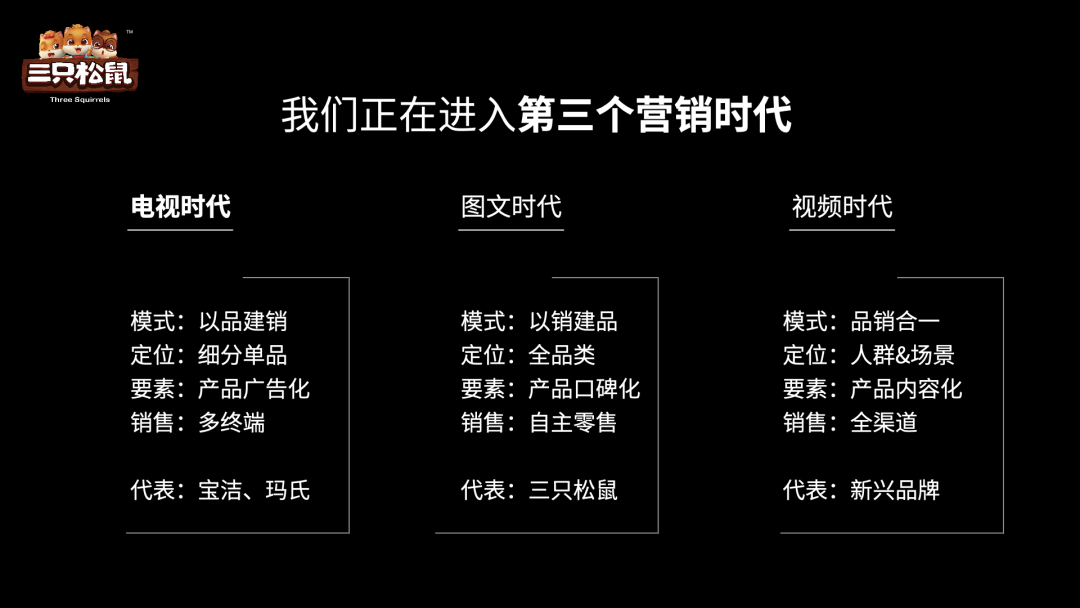
▍TV Era (exemplified by P&G): Building sales through brand — using TV media to establish brand awareness and drive sales.
- Core element: Product as advertisement
- Core channel: Supermarkets and hypermarkets
- Core strategy: Dominate the ad entry point. If I owned the TV ad slot, I owned consumer mindshare, which gave me leverage across all sales terminals
At this stage, brand publicity had to come first before sales could follow. So the optimal positioning was: the more segmented the single product, the better.
▍Text-Image Era (exemplified by Three Squirrels): Building brand through sales — using internet text and images to sell products first, then forming a brand.
- Core element: Product as word-of-mouth. We let users buy products with strong value for money. Eight years ago, when we first met our users, we included bonus accessories with each package to elevate the consumption experience. These above-and-beyond experiences helped us generate word-of-mouth, and the rise of social platforms like Weibo and WeChat amplified that spread.
- Core channel: E-commerce
- Core strategy: Dominate the traffic entry point. If I owned the traffic entry point and sold products, I could build word-of-mouth touchpoints along the way, generating publicity through social media.
Unlike the TV era where segmented single products worked best, this stage favored full-category offerings. At the time, Taobao's traffic allocation weighted store traffic heavily. If Taobao was a mega shopping mall, no matter how users browsed, they first saw the #1 in each category. Once a brand captured that traffic entry point, it just needed to keep adding quality products to the pool to further lock in consumer spending.
▍Video Era (the omnichannel marketing era of "X-K-D-Z-B-T" [Xiaohongshu-Kuaishou-Douyin-Zhibo-Bilibili-Taobao]): Brand-sales integration.
Yes — not "brand-effect integration." We changed one character. Because in the short video era, the传播销售链路变短了,品宣和销售完全一体化,我们可以通过短视频内容建立产品认知并快速形成精准销售。
- Core element: Product as content. Product contentization differs from product advertising. Product advertising means distilling everything into one sentence within limited time. Product contentization means continuously enriching content under the same positioning. For example, an education product might show potential users dozens of different pieces of content in a single day, guiding them to download the app. That's product contentization.
- Core channel: Diversified
- Core strategy: Dominate the content entry point.
By dominating the product content entry point, you can precisely and rapidly sell products to users, achieving integrated brand publicity and sales — a transformed marketing chain.
What's certain is that new media forms led by short video are capturing more user time, cultivating new habits, and enabling more efficient product-to-user connections. New brands can grow faster with lower barriers.
This stage demands that every product be contentized: content is product, product is traffic. Therefore, product positioning must emphasize a specific user segment's urgent need in a specific scenario. Under this focused positioning, your content can be much richer.
To summarize: any change in marketing model reshapes the entire chain. Restructuring elements unlocks new value. Compared to the past, the biggest changes in this omnichannel content era are the shortened marketing chain and traffic that shifts dynamically based on content.
For Three Squirrels, this presents both crisis and opportunity. The crisis: the three models that once served us well — product model centered on micro-innovation, operations model centered on traffic, and single-brand brand model — no longer fit the new era. The opportunity: the "new P&G era" of multi-brand synergy has finally come of age. Transformation is imperative.
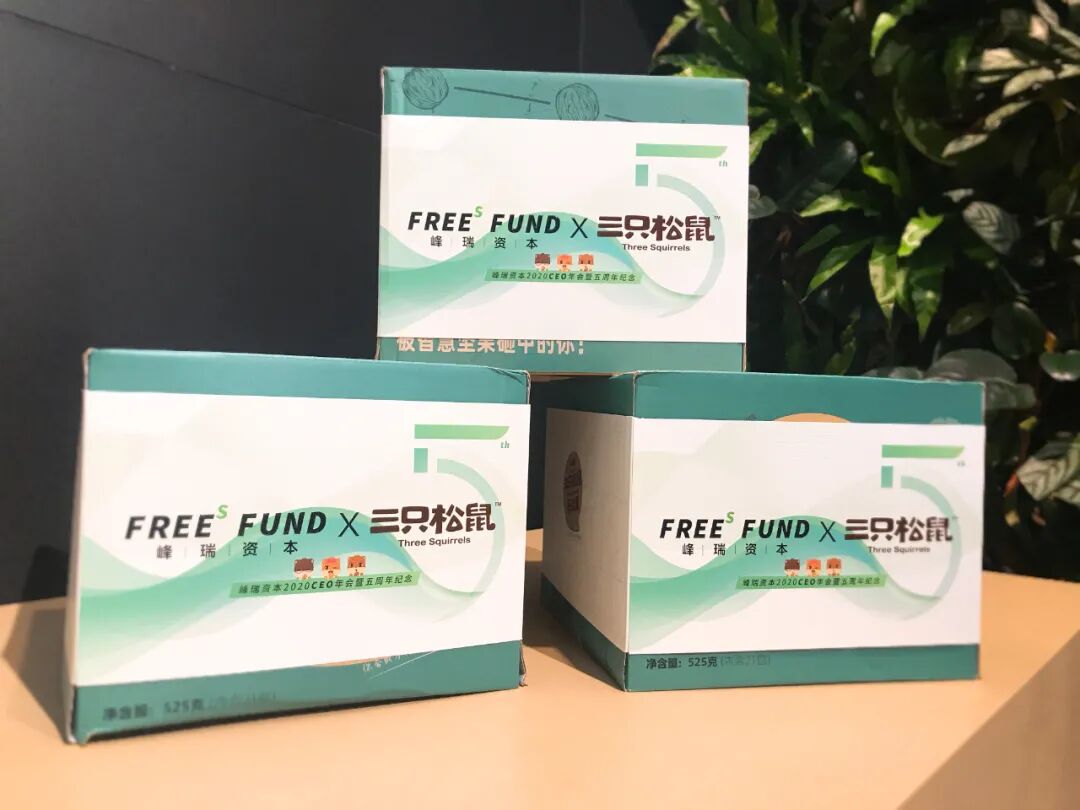
Food for Thought At the end of 2011, when Feng Shu [Li Feng] first met Dad, they both agreed on one thing: "E-commerce as a new channel will inevitably give rise to new brands." Eight years later, Three Squirrels is evolving once again. Dad believes that in this new content era, it will inevitably be a new era of multi-branding. So, looking at China's current consumer entrepreneurship landscape, do you think the birth of new brands is primarily an opportunity for innovative brands, or for established brands to reinvent themselves? Give us a "like" at the end of this article, then reply "Three Squirrels" to see our answer. We especially welcome your observations and thoughts in the comments. By 9 PM on September 9, the 5 most thoughtful commenters will receive Three Squirrels Daily Nuts Gift Box (FreeS Fund 5th Anniversary Custom Edition), a star product built using Three Squirrels' "Three News Model."
/ 03 / New Brand = New Product × New Design × New Marketing
So, entering the omnichannel marketing era, how do you achieve "brand-sales integration"?
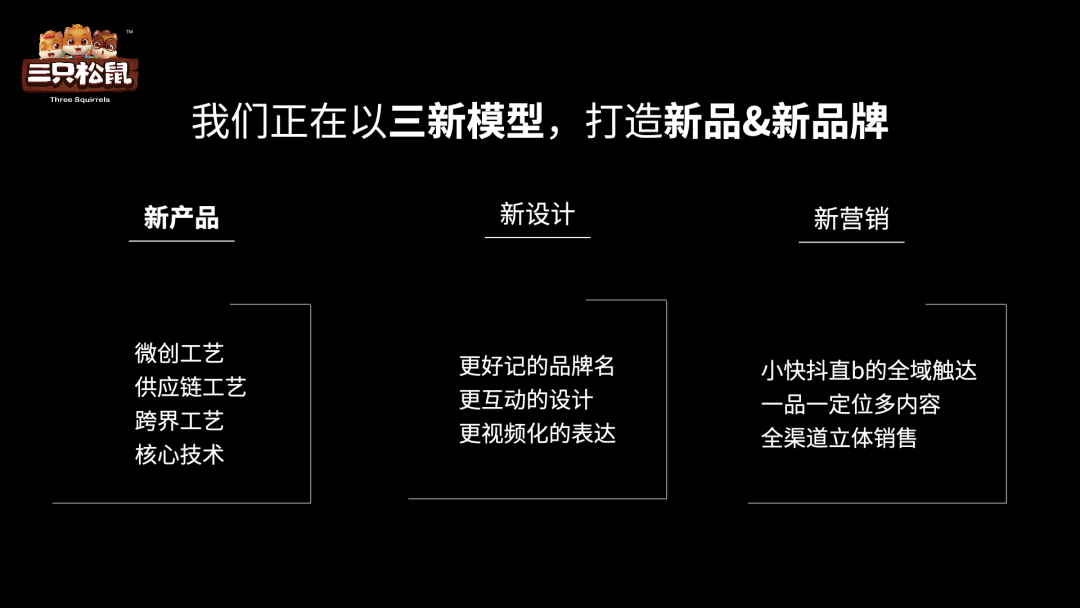
Three Squirrels' answer is a formula: New Brand = New Product × New Design × New Marketing. This is what we internally call the "Three News Transformation Strategy" — new products enabled by new processes, new appeal expressed through new design, new reach achieved through new media channels, with each layer compounding the one before it.
▍New Product: New Products Enabled by New Processes
Three Squirrels has been through the full-category era and understands the food industry landscape. We operate two food research institutes and have supply chain technology capabilities. This solid foundation gives us richer creative latitude at the new product level. Here's what we've been exploring.
New products through micro-innovation processes: Making micro-adjustments in formula application, packaging工艺, labeling, and flavor upgrades to create new selling points and new content. Examples: the flavor innovation of White Peach Jujube, the wet-dry separation packaging for Daily Nuts, formula upgrades and portion-controlled packaging for pet food brand Raised a Fur Kid.
New products through supply chain technology: Shortening the sales chain through direct-ship models to reduce shelf life, cold chain supply innovations for product functionality. For example, products with 15-day short shelf life made fresh to order after purchase.
New products through cross-industry process application: Applying a process or formula from one domain to another. Example: "Grandma's Sweetness" (Nainai Tian), which applies canning processes to desserts. Or new brand Tie Gong Ji, which industrialized previously unindustrialized ingredients like duck blood and chicken liver, letting users eat authentic, generously-portioned duck blood vermicelli soup and Huainan beef soup.
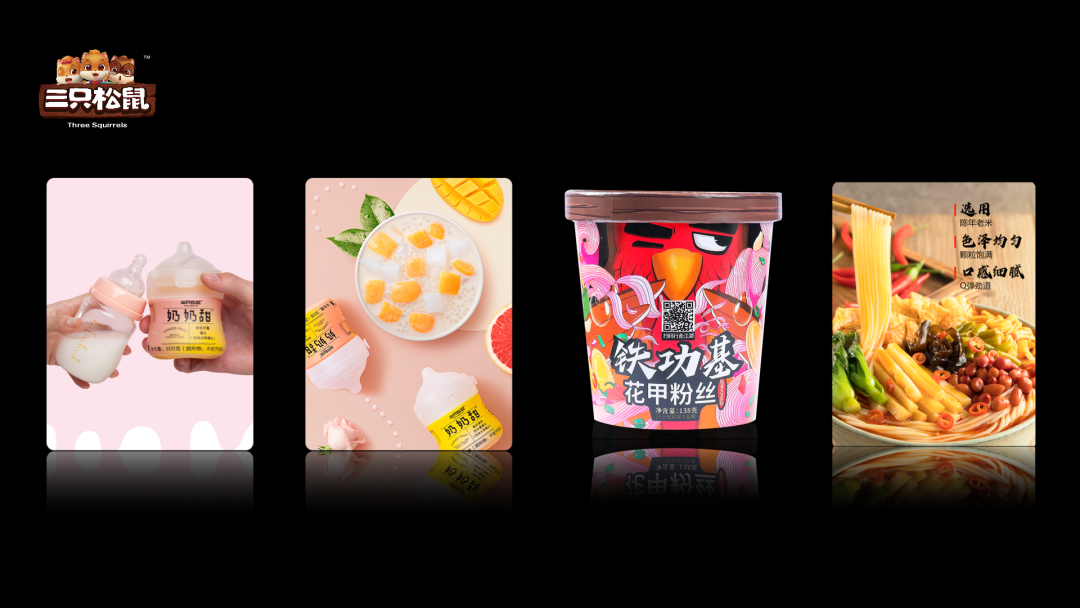
New products through core technology from fundamental research: Example: "Sour Pro" for fitness enthusiasts. By applying fermentation processes to shelf-stable foods, we spent two years developing chicken breast and beef that not only feature the usual low-fat, low-calorie, high-protein selling points, but through fermentation achieve safer meat and easier absorption.

Of course, the flip side of adding through innovation is continuously subtracting at the product level, ultimately achieving a fully redefined new product.
▍New Design: New Appeal Through New Design
New design encompasses both brand design and packaging design. The core characteristic of both must be video-visualizability, serving the new marketing that follows.
In brand and packaging design, we're gradually transitioning to a multi-brand structure, forming both category-representing brands and single-product-representing brands. We aim for fresh associations between each brand and product, striving for innovation and visual impact in brand naming, packaging design, and scenario expression — promoting long-term沉淀 of product content mindshare.
Examples: Three Squirrels' four new brands — Tie Gong Ji (positioned as a new-generation internet fast food brand), Little Deer Blue Blue (positioned as an internet professional infant and children's food brand), Raised a Fur Kid (positioned as a new-generation internet domestic pet food brand), and Xi Xiao Que (positioned as a new-generation internet gift brand).
These positioning statements were carefully considered. If traditional positioning theory emphasized matching user mindshare, then in the omnichannel marketing era, positioning's内涵 must evolve: New Positioning = User Mindshare × Digital Mindshare. You must consider not just user mindshare but digital mindshare — when planning a brand, you must clearly answer: what specific people are using you? And in answering, you must account for digital systems' intelligent recommendations.
Take Taobao: it's shifting from store-based traffic recommendation to precise user-segment recommendation. So when planning product lines, you need to select specific segments from its eight major user categories. This is also an important reason for Three Squirrels' multi-brand transition — under the single Three Squirrels brand, our coverage was too broad. Being泛 meant recommendation precision suffered and effectiveness was diluted.
If a product's digital mindshare tags are clearer, then whatever platform you advertise on, the system can better complete automatic recommendations, achieving more with less. This means future digital marketing is built on precise artificial intelligence. The more precise your audience selection, the higher your efficiency.
Take Three Squirrels' new brand "Little Deer Blue Blue." In the new design phase, we required not just more visual packaging expression but also interactivity. Our brand IP image — a cute blue deer with big eyes, long neck, slightly goofy. How was this selected? We showed different designs to one-year-olds and asked: which one is the deer? Whichever one the child pointed to, whichever one they most wanted to interact with — that's the one we chose. Later promotion results confirmed this approach. On e-commerce platform comment sections, many users posted photos of their children with the products, showing the design genuinely appeals to kids.
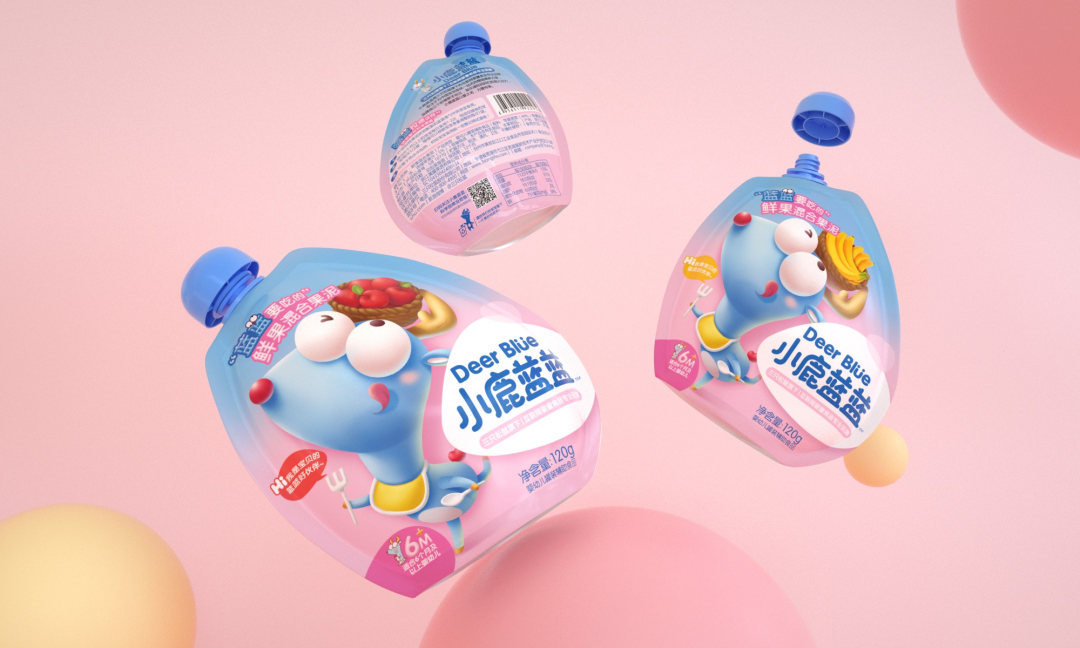
Beyond design, there's the digital mindshare we mentioned. Little Deer Blue Blue is positioned as an internet professional infant and children's food brand. Its user tag (mothers and infants) is extremely precise, targeting a long-underserved category.
If you've raised children, you'll notice that before us, there was no well-known brand specializing in infant and children's complementary foods and snacks beyond formula. Our brand mainly serves children from 6 months to 14 years with one-stop scientific feeding from nutritional complementary foods to children's snacks. Because of excellent products and precise positioning, filling this missing category, the product series has sold well. Little Deer Blue Blue launched in June this year; by August it had reached several million yuan in sales, and should soon hit monthly sales of 10 million yuan.
▍New Marketing: New Reach Through New Media
With new product and new design compounding at each layer, the final step is new marketing. The "omnichannel" in omnichannel marketing means comprehensive user touchpoints across "X-K-D-Z-B-T" [Xiaohongshu-Kuaishou-Douyin-Zhibo-Bilibili-Taobao], more rapidly establishing user mindshare. With short video at the core, for Three Squirrels this means building normalized touchpoints across different brands, different single products, different levels, different content, and different audiences. Through more brands and more single products casting a wide net, we gradually occupy content entry points, ultimately forming a brand content publicity matrix that empowers omnichannel sales, achieving marketing model transformation and replicability.
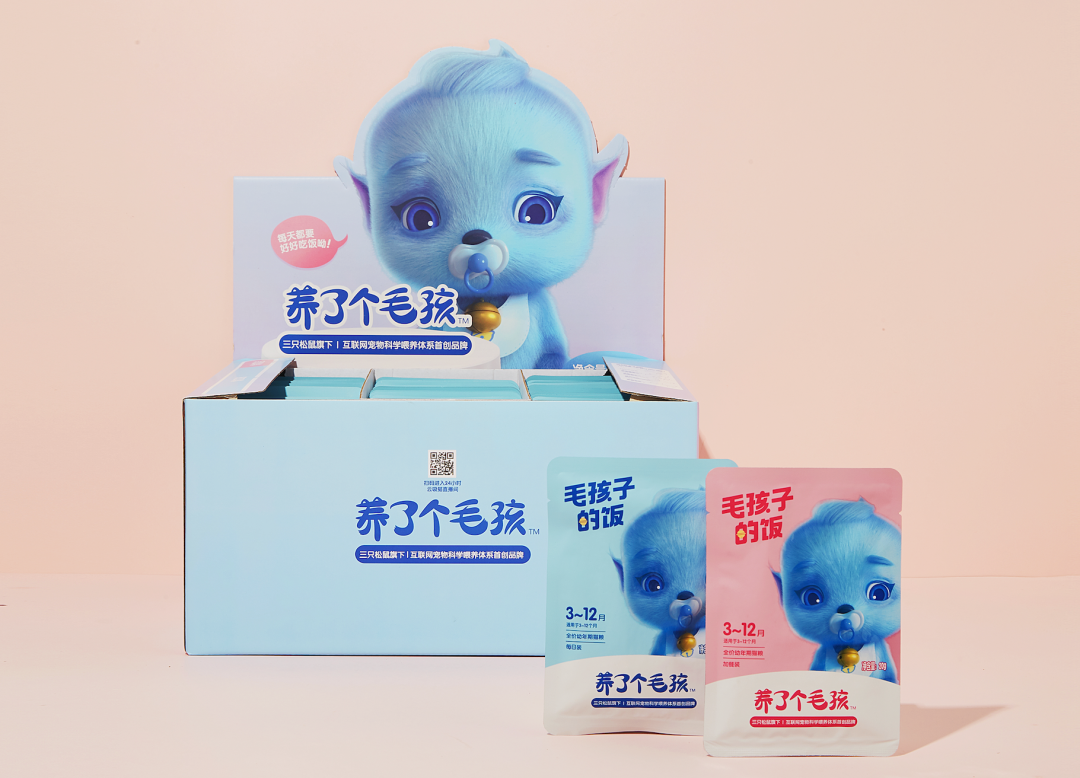
Example: our new cat food brand "Raised a Fur Kid." Around the brand positioning of "baby-like care, how to achieve scientific feeding," we developed new products and new design, including suggestive brand naming (cat owners treat their cats as children), formula upgrades for specific pets (定向研制 based on different cat breeds' characteristics), portion-controlled bag design (no more dumped from蛇皮袋 onto the floor), and shortened shelf life (from the typical 18 months to 8 months). These new selling points are highly visualizable. Combined with clear cat-owner audience tags, through omnichannel touchpoints we've achieved excellent precision marketing results — whether on short video platforms or within Taobao, efficiency is high.
Another example: single-product brand Grandma's Sweetness. As mentioned, at the "new product" level, it uses cross-industry process, applying canning techniques to desserts. At the "new design" level, we named it "Grandma's Sweetness," shaped it like a baby bottle — small, portable, cute. Then we created content across "X-K-D-Z-B-T." This product launched just six months ago; it now has over 400 million views on Douyin and accumulated sales of tens of millions of yuan across all channels.
What must be emphasized: the logical relationship between new product, new design, and new marketing is compounding at each layer. So the foundation of "Three News" remains good product. If product is zero, no matter how much you multiply after, it's still zero.
**/ 04 / ** Breaking Free of Eight Years of Cognitive Path Dependency,
Embracing the "New P&G" Era
This is a once-in-twenty-years opportunity to birth a "new P&G." From the traffic era to the content era, the transformation in marketing model means enormous challenges for 10-billion-yuan Three Squirrels, because change inevitably brings short-to-medium-term pain. Yet we firmly believe the opportunities from transformation are greater. The new "brand-sales integration" model can rapidly establish product awareness and form precise sales, closing the loop across "X-K-D-Z-B-T."
For Three Squirrels, as this new marketing loop emerges, our ultimate goal is to provide solutions for every household food consumption scenario. We must seize this window to complete our P&G-style multi-brand upgrade.
Capturing the "new P&G" era means everyone at Three Squirrels must break free of cognitive patterns forged over eight years: forget the traffic era and embrace the content era; get comfortable with slower growth and embrace sustainable development; learn to subtract and maintain strategic discipline; do the harder things; truly commit to being one meter wide and one thousand meters deep.
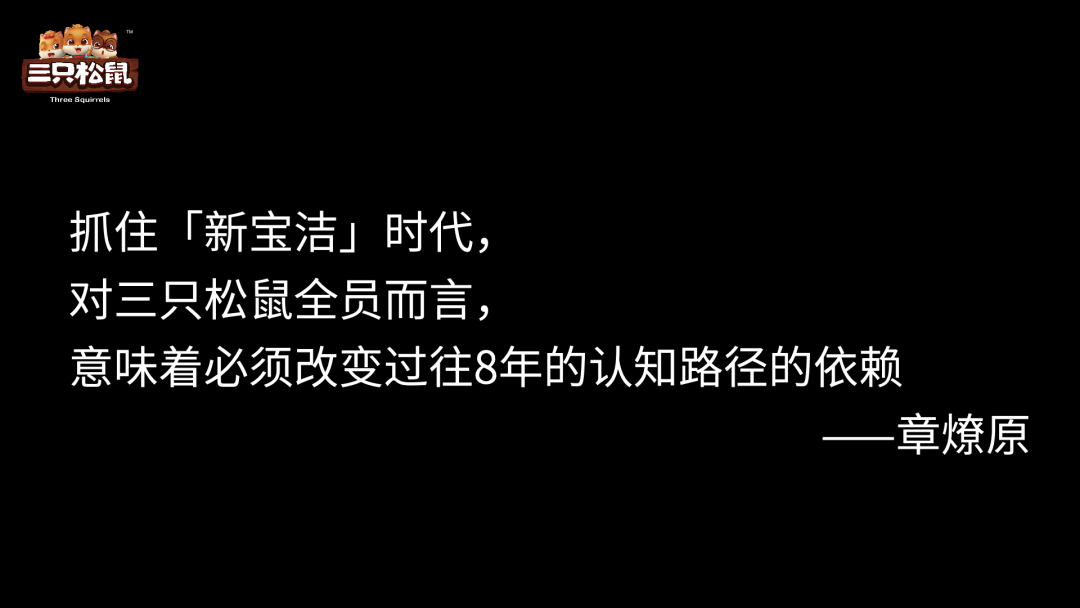
(Click the bottom-right corner of the video for full screen. First released on Dad's Douyin account; follow "松鼠老爹_章燎原," ID: songshulaodie)
Interactive Giveaway At the end of 2011, when Feng Shu first met Dad, they both agreed on one thing: "E-commerce as a new channel will inevitably give rise to new brands." Eight years later, Three Squirrels is evolving once again. Dad believes that in this new content era, it will inevitably be a new era of multi-branding. So, looking at China's current consumer entrepreneurship landscape, do you think the birth of new brands is primarily an opportunity for innovative brands, or for established brands to reinvent themselves? Give us a "like" at the end of this article, then reply "Three Squirrels" to see our answer. We especially welcome your observations and thoughts in the comments. By 9 PM on September 9, the 5 most thoughtful commenters will receive Three Squirrels Daily Nuts Gift Box (FreeS Fund 5th Anniversary Custom Edition), a star product built using Three Squirrels' "Three News Model."
Hiring | Beijing, Shanghai, Shenzhen — Three Directions
We're seeking investors in Beijing, Shanghai, and Shenzhen across three focus areas: biomedicine, deep tech, and consumer/TMT. Welcome those with industry backgrounds interested in investing to join us, and we welcome referrals of outstanding candidates. Please send resumes to hr@freesvc.com. *Email subject line: Application for "[Specific Position Name]" - "[Work Location]" Click for details: Moving Into Year Six, FreeS Fund Recruiting Investors | Doing What's Right, Not Easy