Sharing 20 industry research reports and 1 podcast episode to kickstart your work.

What happened in the past? What changes lie ahead?

Back to work tomorrow. We've rounded up 20 research articles and one podcast episode from FreeS Fund's archives that might spark new ideas or possibilities for your work and life. Borrowing from French philosopher Pascal: "Give meaning to time, not time to life." May positive, vibrant energy run through the days ahead of you. Wishing you a smooth start~

We use "future living" as our anchor point, thinking through what changes are coming as we move from the present toward the future.
"How Will Humans Work in the Future? | FreeS Report 26"
 This report introduces new organizational forms — remote hiring platforms, volunteer collaboration communities, decentralized autonomous organizations — that might become options for your career, or offer reference points when you're thinking through organizational models for your own startup.
"What Will Humans Eat in the Future? | FreeS Report 27"
 This article focuses on the long-term proposition of future food, analyzing several core questions: Where is China's food industry headed? What new applications are emerging from interdisciplinary fields like synthetic biology, foodomics, and food sensory science? What global challenges must the food industry address? And behind the technological innovation, what entrepreneurial and investment opportunities exist?

FreeS Fund has been tracking the going-global space since 2015. Cross-border e-commerce may look like a red-hot赛道, but surviving and thriving in it is never a matter of "luck" or "accident."
 This article reviews the history of Chinese companies going global, focusing on two dominant models: "internet-based cross-border e-commerce targeting developed Western markets" and "Chinese entrepreneur-led ventures in developing Southeast Asian markets," analyzing the advantages, challenges, and future trends of going global.
"How Will the Cross-Border E-Commerce Track Evolve in 2022? | FreeS Going Global Series"
 Questions explored include: What is the biggest challenge for going global right now? Who is positioned to become the next winner in this space? How should we view the consumer and Taobao-native brands of years past, and how should we view cross-border e-commerce today? Which regions look most promising for globalized entrepreneurship?

Consumption is one of the "three engines" driving economic growth. We need to look past the hype and bubbles to identify what will give consumer brands sustained momentum and growth.
"Where Are the Next-Gen Consumer Opportunities in 2022? | Li Feng Column"
 This article focuses on how to interpret the new consumption cooldown of 2022, and where China's next consumer opportunities lie.
 This article takes a ten-year view to explore two questions: what long-term structural forces will shape the consumer market over the next decade? And in the consumer sector, what future-oriented entrepreneurial and investment opportunities lie ahead?
"Who Can Save Young People From Hair Loss? | FreeS Fund's Everyday Business Musings"
 We examine the rapidly growing population experiencing hair loss and the anti-hair-loss care market, addressing questions many people care about: what actually counts as hair loss? How should it be treated? And what's the science behind anti-hair-loss products?

For China's semiconductor industry, the past two to three years have been a rare window of opportunity. The global chip shortage has created a major opening for China to integrate its chip supply chain and build collaborative ecosystems spanning R&D, product development, and testing validation.
 Centered on the question "Two years in, why hasn't the chip shortage ended?", this piece explores: why does the chip industry take longer to rebalance supply and demand than other sectors? How is this shortage different from previous ones? With chip shortages hitting many industries, why could consumer electronics recover faster while automotive lagged behind? And how should we assess the challenges and opportunities for China's semiconductor industry amid this shortage?
 In this article, you'll learn: how should Chinese chip companies, especially startups, navigate volatile markets? Why did automotive face chip shortages while consumer electronics chips saw excess capacity? And how can we think about the chip industry's future opportunities through the lens of geopolitics and great-power competition?
"FreeS Fund's Yongcheng Yang: The Red Ocean Is the Ultimate Battle Entrepreneurs Must Face"
 This piece focuses on whether entrepreneurs should enter blue ocean or red ocean markets, using specific chip company cases to analyze the opportunities and challenges companies may face at different stages of market development.

"Do what is right, not what is easy" is a principle FreeS Fund holds dear. We are always working to identify innovative companies that deliver both commercial and social value.
"ESG's Past and Future: From Dividing the Pie to Growing It | FreeS Research Institute"
 This article traces ESG's development overseas and in China, addressing: how did ESG evolve to where it is today? What's the difference between ESG, CSR (corporate social responsibility), and dual carbon goals? What metrics and frameworks matter for evaluating ESG? How can consumer companies in China and the US do ESG well? And how can startups implement ESG?
 The "dual carbon" topic is vast — not confined to any single industry or sector, but a system where every part is interconnected. This article strips away the outer shell of "carbon neutrality," breaking it down layer by layer to clarify where the technological innovation opportunities lie in the dual carbon landscape.
"How We Think About Green Investing | FreeS Research Institute"
 The article analyzes the necessity of emissions reduction and the innovation opportunities and challenges behind it, maps out the differences between the current wave of green investment and the previous clean tech boom, and shares case studies of innovative companies in the green technology space.

From the perspective of biotechnology trends, we believe biomedical problems are fundamentally data problems. Digitizing biological systems and processes represents the greatest opportunity for biotech innovation. From an investment standpoint, it's particularly important to back innovative infrastructure and cutting-edge interdisciplinary biotech in China.
"The 'Smartest' Organ in the Human Body: How Can We Explore It Further? | FreeS Research Institute"
 Many scientists regard the brain as "the most complex object in the universe." If "the brain is a miracle of biological evolution," then understanding the brain becomes one of the longest and most meaningful journeys in human evolution. This report focuses on: the strategic significance of advancing brain science, research methods and the current state of the brain science industry, and the current applications of brain science technology.
"How to Invest in Biotech in 2023? | FreeS Research Institute"
 After two years of breakneck growth in 2020 and 2021, the biotech and healthcare industry underwent a major correction in 2022. This article explores: what does the future of biotech look like?

Standing at this watershed moment, how we understand the subtle threads buried in history, and how we discern the changes brought by policy and environment and the deeper forces stirring beneath them — these determine our perspective on the future and the boundaries of our imagination, as well as whether we can maintain foresight.
"Farewell to a Year of Transition: Will 2022 Be Better? | Li Feng's New Year Outlook"
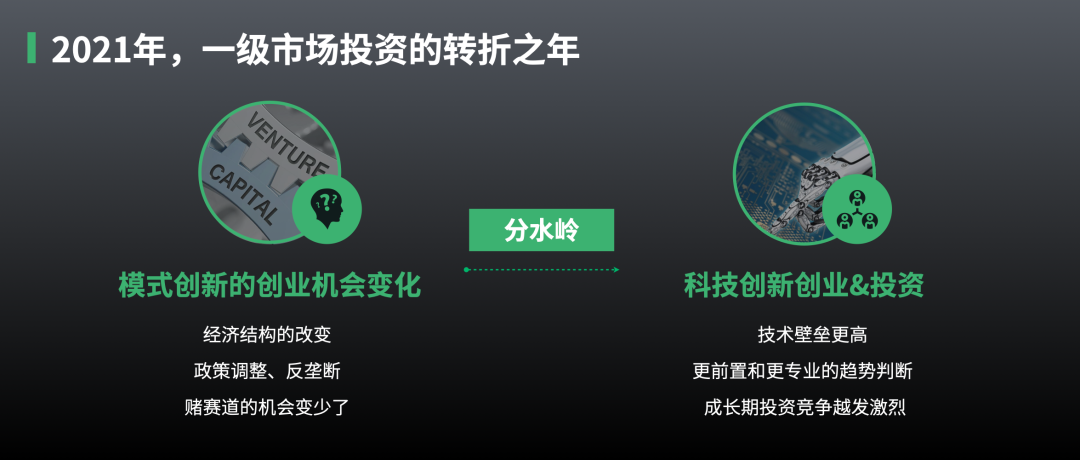 At the start of 2022, we wrote: "In the year ahead, we will still encounter various short-term challenges and setbacks. But as long as the right people do the right things, they will ultimately be recognized by the market — making the world a better place while earning outsized returns."
"Will 2022 Be a Capital Winter? | Li Feng Column"
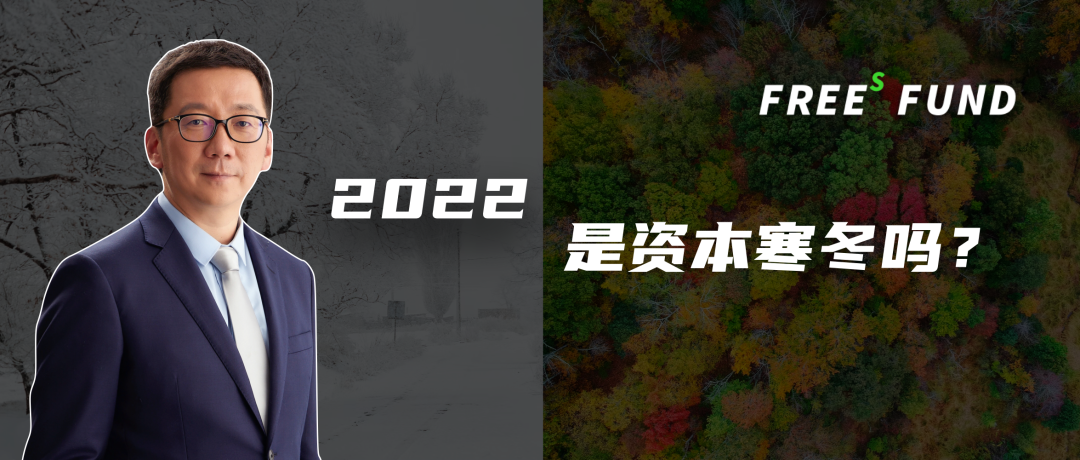 In 2022, capital markets in China, the US, and Europe all experienced a certain degree of volatility — to the point that some in both China and the US revived talk of a "capital winter." But in our view, if we compare the two countries' economic cycles to the four seasons, the US is currently in "late autumn heading into winter," while China is more like a "late spring cold snap."
"Why Are Chinese and US VC Drifting Apart? | Li Feng Column"
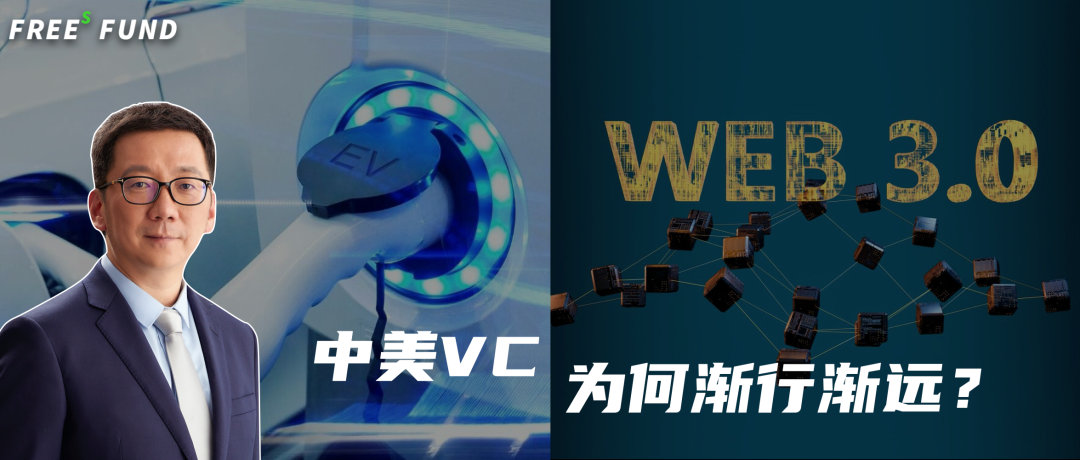 In 2022, China and the US — the world's two largest economies and the two most favored destinations for international capital — began diverging in their startup directions. This article examines the characteristics of Chinese and US VC today, and what caused their paths to split.
 2022 was an extraordinarily difficult year to predict or navigate. Though the industry cooled, it left a window for investment and growth for those who were diligent and prepared. In this article, you'll find: Why is the 2023 Spring Festival a critical moment to watch? What does "new supply and new structures forged by new demand" mean? And what are the three major propositions facing entrepreneurs today?
"Li Xiang × Li Feng: The Dollar's 'Monopolistic Success' and 'Gradual Dilemma' | Li Feng Column"
 When people confront uncertainty, emotions tend to run high while genuine consensus remains scarce. Even faced with the same facts, interpretations can be diametrically opposed. "Uncle Feng" and Li Xiang, editor-in-chief of Dedao App, shared their views on the current macro situation, discussing the impact of Fed rate hikes on capital markets and the RMB exchange rate, and looking back at history to explore how dollar dominance came to be. Their conversation also touched on two hotly debated topics: US manufacturing reshoring, and globalization versus deglobalization.
In 2022, we tried something new: FreeS Fund partnered with Li Xiang to share our observations and thinking about the business world through podcasting. Going forward, Uncle Feng and FreeS will be deeply involved in producing the High Energy podcast. We also welcome you to follow the "FreeS Fund" WeChat account, where we'll continue to publish first-hand industry research and investment thinking, plus selected transcripts from High Energy.
We're honored that our exploration in audio has earned recognition from Apple Podcasts and Xiaoyuzhou.
In Apple Podcasts' "2022 Editor's Picks," High Energy was named both "Made Us Think" and "Hot New Show of the Year."

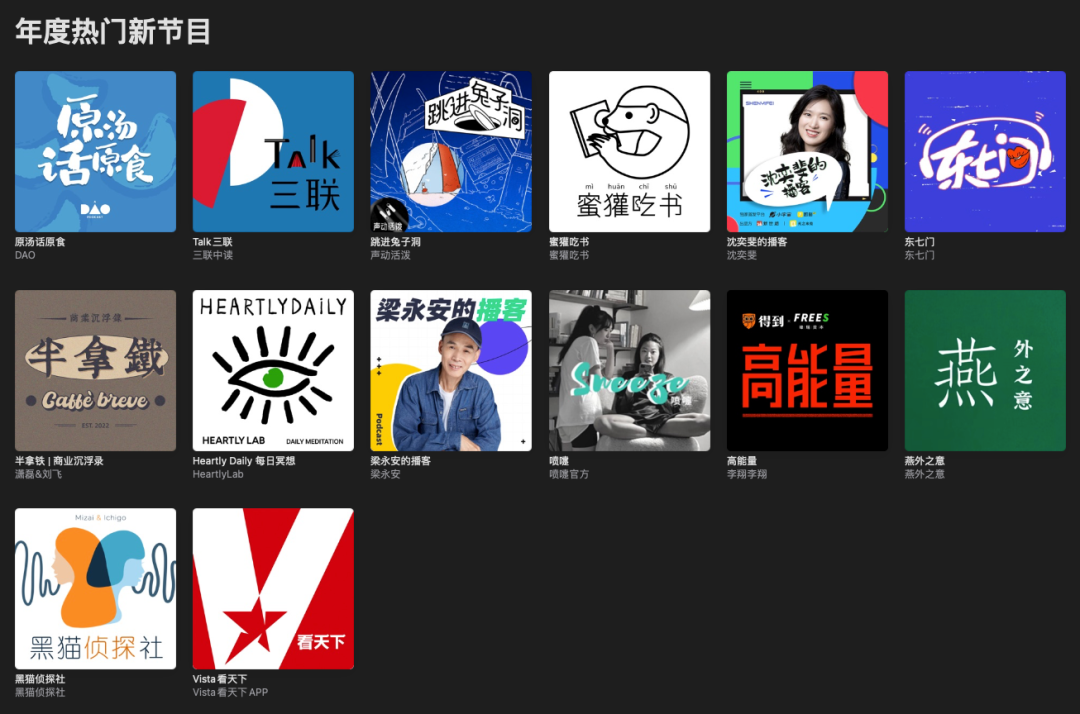
In the "2022 Xiaoyuzhou Podcast Awards," High Energy won "New Podcast of the Year," and its Macro Chats series was named "Thematic Series of the Year."
In the Macro Chats series, Li Xiang and Uncle Feng offer objective, neutral discussions of current domestic and international macro conditions, attempting to find historical reference points across longer cycles.
Search for High Energy on the Xiaoyuzhou App or Apple Podcasts to listen.