Yonghao Luo: Six Years at Smartisan, Five Lessons Learned | 2018 FreeS Fund CEO Annual Meeting Recap

When you start a business in a red ocean, it's "working twice as hard for half the result" multiplied by ten.
**
Entrepreneurship is about opening up new worlds, and also about living in an arena. Once you start, you're permanently at war. On January 19–20, 2018, in Shanghai, nearly a hundred CEOs from the FreeS Fund family gathered at the "2018 FreeS Fund CEO Annual Meeting" to reflect on the year they'd shared — 2017 — and set out together on the road ahead.
That day, an old friend of FreeS Fund, Yonghao Luo, CEO of Smartisan, took the earliest flight to be there. He shared with the FreeS Fund family CEOs the "tragedies" he'd experienced over six years of building Smartisan (the company would mark its sixth anniversary on May 15, 2018), along with the lessons and growth he'd gained.
In 2017, after enduring hardships, Smartisan began to turn around, arriving at a fresh starting point where spring flowers bloomed. Having broken through in the face of entrepreneurial adversity, achieving a journey "from sorrow to joy," Luo carefully distilled five insights from his entrepreneurial experience.
We've compiled his reflections into this piece to share with you. May they offer some inspiration and yield rewards on your own path of striving.

**
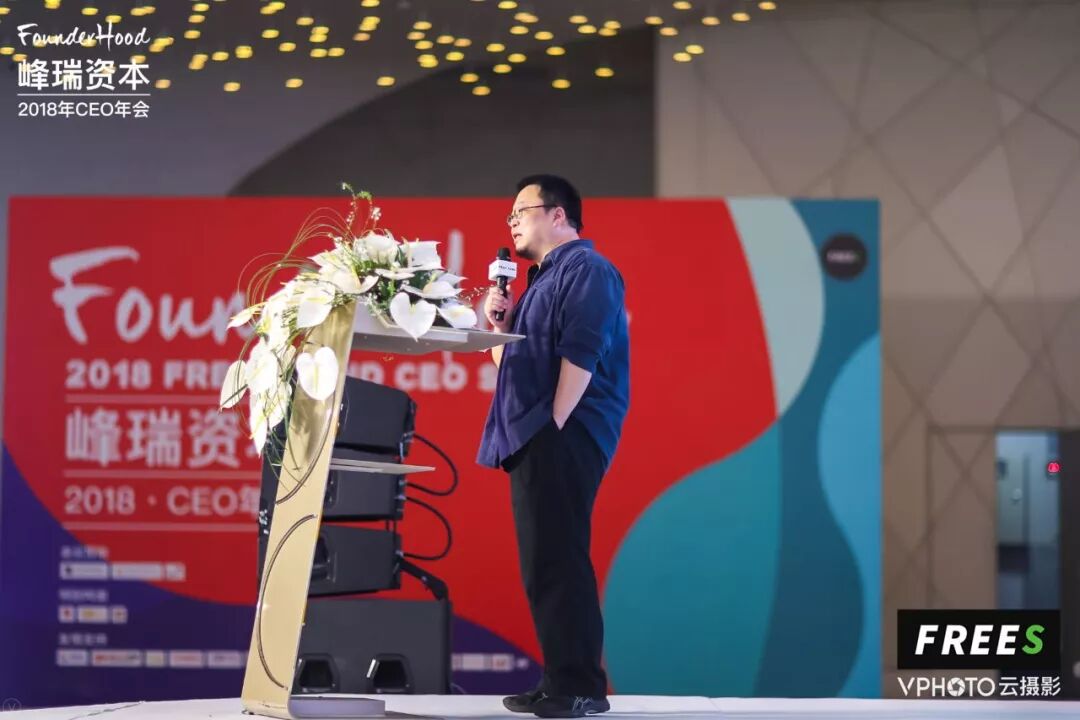
Yonghao Luo: Six Years of Smartisan — My Five Entrepreneurial Insights
Source: Yonghao Luo's speech at the 2018 FreeS Fund CEO Annual Meeting

Warning! You Need to Get Out There and Meet People!
The first major mistake I made as an entrepreneur was severely underinvesting in recruiting. Unless you're running a technology-driven company, or you're a scientist yourself, a CEO should spend at least 30%–50% of their time on hiring.
Smartisan severely underinvested in this area early on. It wasn't because I didn't understand this principle — it was because I had severe social anxiety. If there were six people at a dinner and I didn't know four of them, the pressure would be so intense that I'd probably find an excuse not to go. That's my personal issue. If you don't have this problem, you should be investing even more time in finding people.
When you find the right key person at the director level or above, they can carry an entire domain. Tao Zhang, founder and CEO of Dianping, mentioned this in an interview once: we sometimes think a company is exceptionally strong in some area and construct elaborate, profound explanations for why — but the real reason is simply that the founder found the right person.
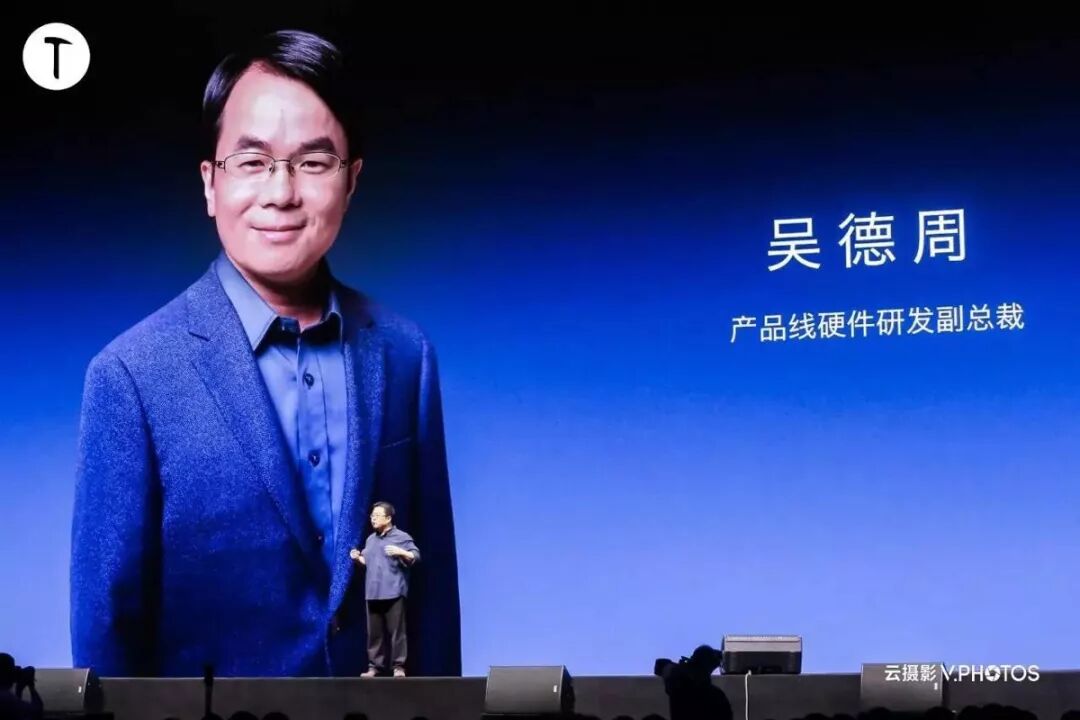
▲ October 2016: At the Smartisan M1 series launch event, Luo introduces Wu Dezhou, newly joined VP of Product Line Hardware R&D.
This is something I've come to appreciate more and more over the years. I spent over eight months finding Smartisan's current CTO, Wu Dezhou. During those eight months, I met with him on average more than once a month. After he arrived, Smartisan's hardware R&D went from third-rate in the industry to first-rate.
After this talk, I'm going back to ask a calligrapher friend to write me a scroll saying "Warning! You need to get out there and meet people" and hang it opposite my desk. I hope you'll take this to heart too, and commit at least 30% of your time to getting out and meeting people.
Don't Overestimate the Impact of Your Strengths
People who dare to start companies at a young age usually have some exceptional abilities. These people tend to easily overestimate the role their strengths can play.
Note — I'm not saying don't overestimate your strengths. There's a difference here. We can't overestimate our strengths enough, but what's dangerous is overestimating what those strengths can contribute to building a company. The distinction is subtle, so guard against it carefully.
For example, when Smartisan first started making phones, we looked at industry statistics: 40% of users, when buying a phone, look at appearance first. We believed our industrial design team was among the best in the world. If 40% of people care most about looks, we figured we'd have no competition in China. Our team had won virtually every major industrial design award globally, so our assessment of this strength was perfectly sound. But why didn't our conversion match expectations?
Upon reflection: yes, 40% of users prioritize appearance — the number was correct. But "beautiful" is hard to define. Most people who seem to be choosing what they like are actually following the crowd, especially on matters of taste. In China, phones that sell well generally copy the iPhone's look. Aesthetic standards have converged on the iPhone. Our different design language caused problems. We'd overestimated what industrial design could contribute to our success.
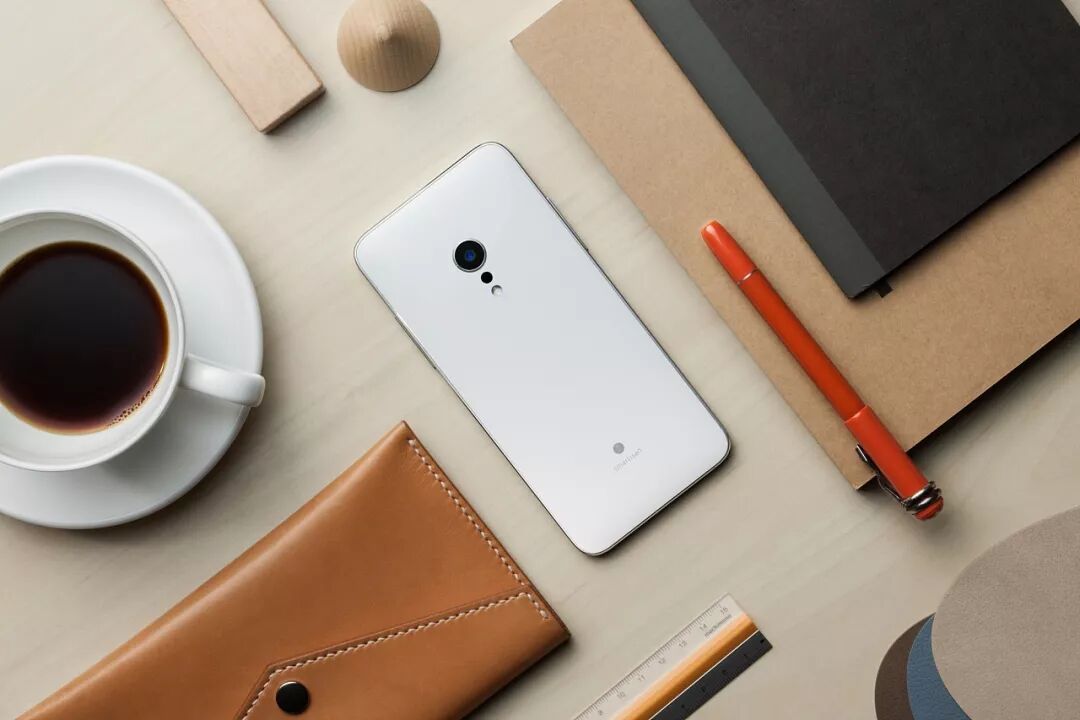
▲ Luo reflects that Smartisan once overestimated the role of its leading industrial design capabilities in driving success. (Image from Gao STUDIO)
Another example: many people say hardware quality is roughly comparable now, and users care more about software experience.
Early in our startup, we also believed we were unbeatable at human-computer interaction. If Steve Jobs were still alive, we might not have dared make this claim. But today, looking around, we're definitely the best in the world at interaction design and experience.
But in practice, we found this strength played a very limited role in converting phone users — progress was extremely slow. While users who tried our products easily became sticky, the problem was getting them to try in the first place.
Things easily demonstrated in hardware became extremely difficult in software. Especially for internet viral marketing — videos rarely exceed 30 seconds, and we couldn't explain software interaction excellence in 30 seconds.
These two examples illustrate that even with full, correct, rational understanding of our strengths, we could still overestimate their impact. Commercial success is a systems engineering problem — it's not something you achieve simply by knowing you have a genuine advantage.
Product Managers Are Forever Greedy,
But Entrepreneurship Demands Focus
If you happen to be a product-manager-type founder, you may commit a serious error: wanting to do too many things — what's called "product manager greed."
For example, my wife bought a humidifier for our home. She said Beijing's air is too dry, often the water tank runs dry before dawn, could we get one with a bigger tank? I immediately bought the largest tank on JD.com. Once it arrived, we discovered the tank was so large she couldn't lift it herself. She needed my help every time, but I often wasn't home in the evenings, so she suffered.
I researched and found that virtually all humidifiers require inverting the tank to refill. As a product-manager-type person, how could I accept something so inconvenient for women? I wanted to solve this. I spent a week with our engineers, developing three different top-fill designs, comparing their merits. That week, all my proper work got derailed. In my first three years of entrepreneurship, this happened constantly.
▲ Product-manager-type founders constantly face the temptation of "wanting to do too many things."
The more you understand and excel at product, the more the world appears full of broken things. One of the most touching stories: in his final week, Steve Jobs was unconscious more than conscious. When he struggled awake, he'd tell family members by his bedside how unscientifically designed the IV stand was. As a product manager, I love this story. Barring surprises, I'll probably research everything in my hospital room too, and change it all, and in my final moments open my eyes to check if every device was corrected.
But entrepreneurship is about focus. You must watch out for this product manager greed. I've taken countless detours and wasted precious time because of this — especially in software, where we'd do massive amounts of work only to discover the need had diverged from our core business.
Startup teams are limited. You can't do everything. You must exercise restraint. I learned this lesson from Lei Jun when we discussed partnership with Xiaomi two years ago. Internet giants who've tried hardware have almost all failed — only Xiaomi's hardware products have almost all succeeded. This owes to Lei Jun being a genius product manager who understands this.
Entering a Red Ocean
Is "Twice the Effort for Half the Result" Times Ten
If you ask what Smartisan's biggest problem has been over the past five and a half years, I'd say: we entered a red ocean.
In 2012, when we started with 9 million RMB, phones were still on the so-called "wind." I wasn't chasing the wind — I just wanted to make phones. But I came from a "performing arts" background with no tech circle connections or resources; collaborating with hardware people was extremely difficult. Everyone said 9 million RMB could only make phone cases, not phones. Without having eaten pork or even seen pigs run, we figured we'd need at least two or three years to make a phone.
Many people advised me against it, including my friend Li Feng at FreeS Fund. He firmly supported my pivot from English education to something else, but said phones had long, complex supply chains with high capital and technical barriers — not suitable for me. In retrospect, this was golden advice. But at the time, I didn't like him for saying it.
This is a common error among startup CEOs. Because you feel it's your mission, your ideal, your life's ambition, your future — when someone runs out to dissuade you, claiming it's all for your own good, it's psychologically hard to accept.

▲ When startups are in a red ocean, much effort gets diluted.
Later events proved they were all right to warn me. Few winds last five years. By the time we made phones and entered this market, the wind had passed.
Initially I only knew I had grand ideals — to build the best operating system of this era, the biggest platform. I thought even if we were late to phones, we could treat it as training, preparing for the next platform.
But strategically, it's very unwise for startups to enter red oceans. What actually happened was worse than my most pessimistic projections. Over these years we've been excellent in many ways, but because we're in this blood-red sea, all effort gets diluted to almost nothing.
There's a saying: "twice the effort for half the result." For startups entering a red ocean, it's "twice the effort for half the result" times ten.
Only Revolutionary Products Can Break the Deadlock
Entering a red ocean brings another problem: fundraising has always been extremely difficult. For a long time I was puzzled — many seemingly mediocre projects got funded, so why was it so hard for us?
Especially when the company wasn't doing well, I'd feel somewhat sorry for shareholders who'd already invested. They waited and waited, and we showed no signs of profitability. Though I always believed their returns would ultimately far exceed expectations, unless you have other good ways to solve sustainable development, companies in red oceans will definitely struggle to raise funds. Be prepared for this.
Beyond difficulty making money, fighting in red oceans brings another sadness: even working hard every day, you're not creating value for the world. Others struggle in the chaos; you struggle too. No one makes revolutionary innovations. In this process, you gain a little here, lose a little there — fundamentally it's all zero-sum. This is the least exciting and motivating aspect.
In this environment, as a product-driven company, Smartisan's only way out — the only way to break the deadlock — is to make a revolutionary, disruptive product. This is the path we've believed in from the start. It may not be a 100% good choice, but once it succeeds, the returns will be substantial. In a red ocean, being 30%, 40%, 50% better than competitors is useless — you need to be 300%–500% better.
Finally, some good news to share. After five and a half difficult years, having unconsciously accumulated tremendous assets, we've finally reached a major turning point in product. On May 15 this year, we'll release an absolutely revolutionary, disruptive product at the Bird's Nest.
You're all welcome to come witness it together. Thank you.
(Feel free to share to Moments. For republication on other official accounts, websites, or mobile apps, please reply "republication" to learn the rules, and contact FreeS Fund for authorization. Copyright belongs to FreeS Fund.)

Explore, Strive, Persist | 2018 FreeS Fund CEO Annual Meeting Recap
Duan Yongchao: The Next Thirty Years Are the Era of "Zuō" | FreeS Fund CEO Annual Meeting Speech
Three Squirrels' Zhang Liaoyuan: Six Things I Did in My First Year of Entrepreneurship