How Will New Technologies Transform the Trillion-Dollar Education Market? | FreeS Fund 2019 CEO Annual Meeting

The Triumph of Education: Crossing the Triple Threshold of People, Technology, and Environment

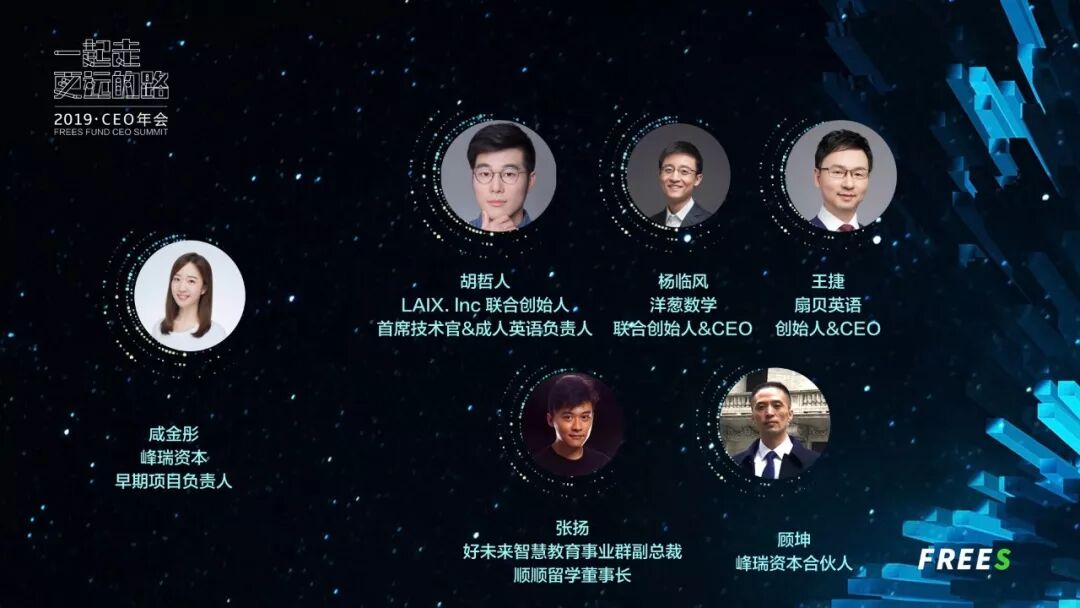
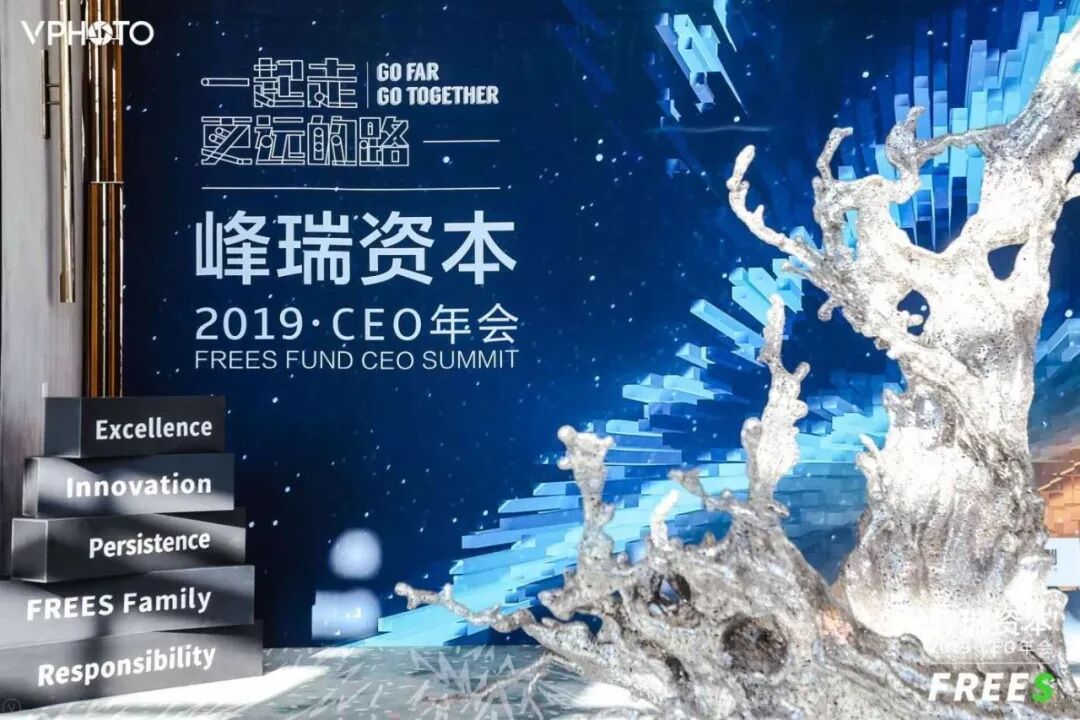
On March 30, 2019, in Beijing, a hundred CEOs from the FreeS Fund family gathered at the third annual FreeS Fund CEO Summit to look back on three years together and set out on a longer journey ahead.
That day, a longtime friend of FreeS Fund — Zheren Hu, cofounder, CTO, and head of adult English at Liulishuo — shared his reflections on seven years of building the company from a residential building in Hangzhou to its IPO on the New York Stock Exchange, becoming the first "AI + education" stock.
At the education roundtable, six guests explored the opportunities and challenges facing the education industry amid constantly emerging new technologies:
- Yang Zhang, VP of TAL Education Group's smart education business group and founder & chairman of Shunshun Liuxue;
- Zheren Hu, cofounder, CTO, and head of adult English at Liulishuo;
- Jie Wang, founder & CEO of Shanbay;
- Linfeng Yang, cofounder & CEO of Onion Math;
- Kun Gu, partner at FreeS Fund;
- Jintong Xian, early-stage project lead at FreeS Fund.
They looked toward the future, considering what roles humans and technology would play in education, and shared their own approaches to parenting.
As the German philosopher Karl Jaspers wrote in What Is Education?: "Education is a tree shaking a tree, a cloud to promote a cloud, a soul awaken another soul." Education is a vital proposition in human life.
We've compiled their thoughts and insights, hoping they offer you some inspiration. FreeS Fund continues to focus on early-stage investments in education. For inquiries, please contact Jintong Xian at jintong@freesvc.com.

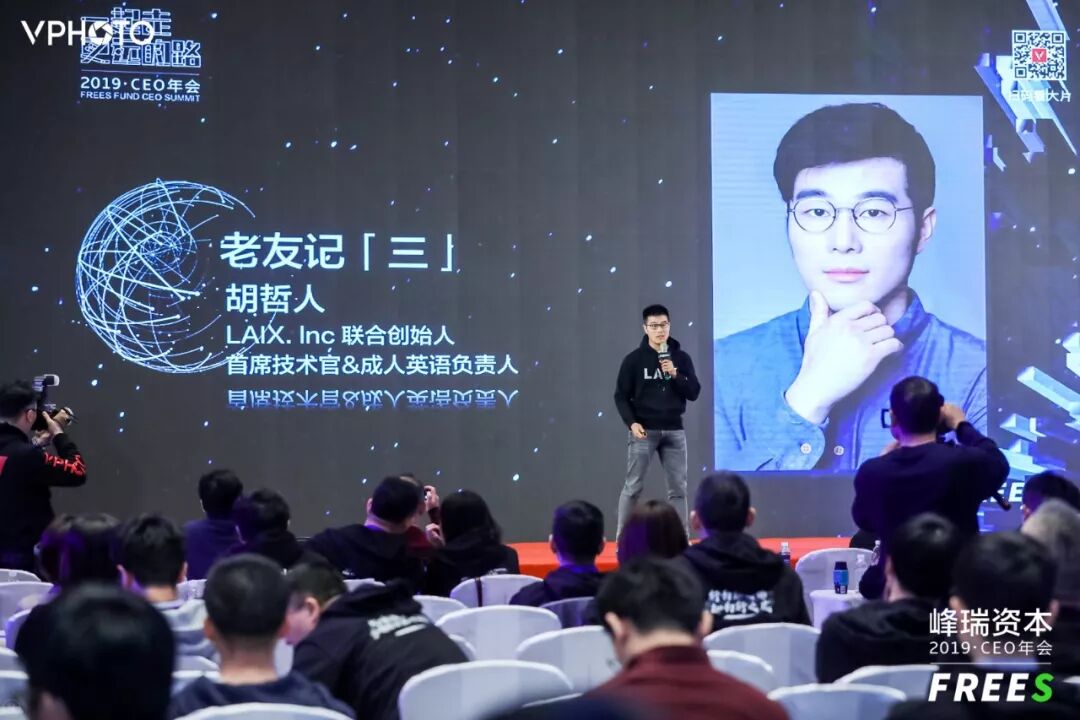


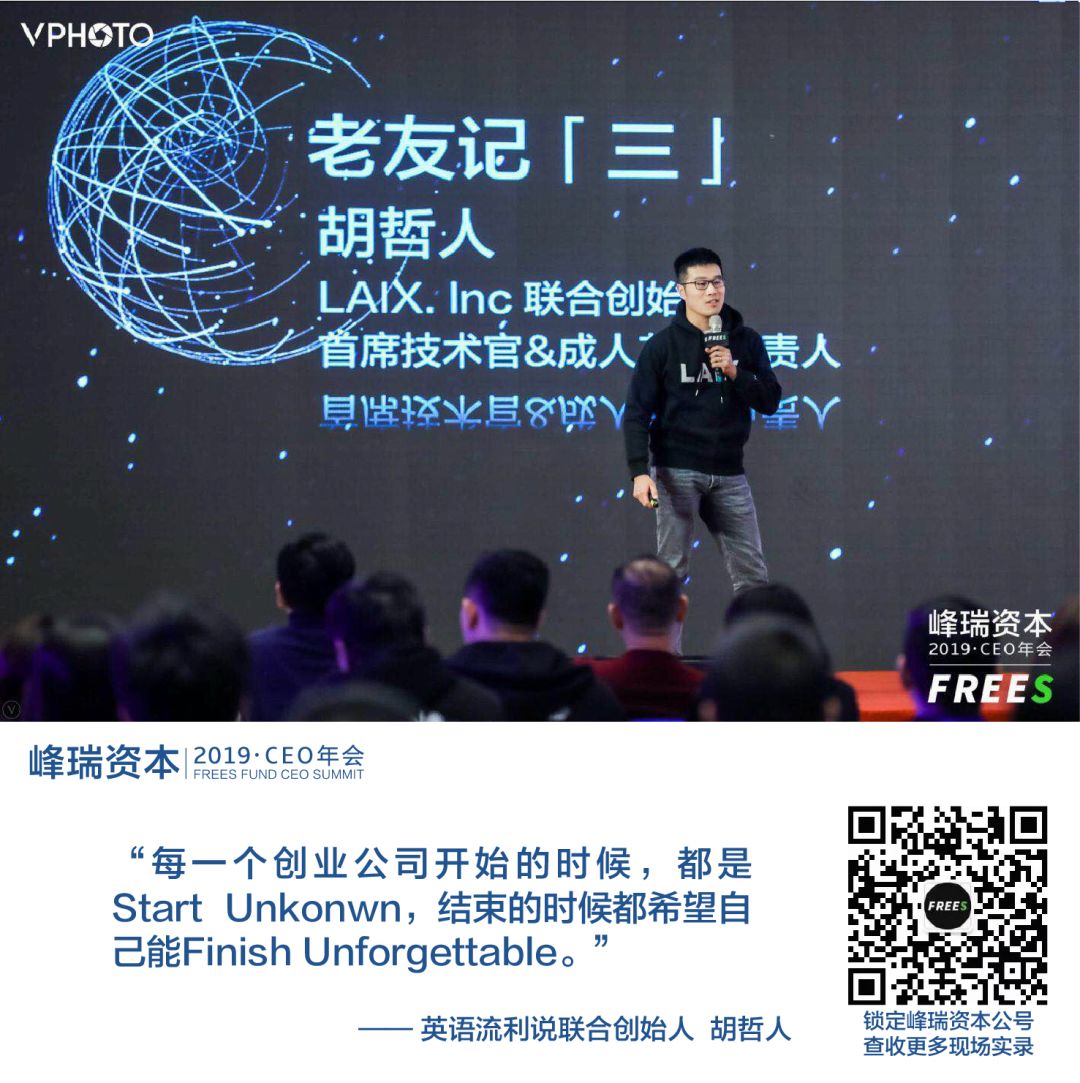
This line comes from Nike, the American sports goods manufacturer, and I love it. Every startup begins unknown — the goal is to finish unforgettable. In September 2012, we started out from a residential building in Hangzhou. Seven years later, I've gathered some thoughts to share with you here.

A large enough market, well-timed
Liulishuo listed on the NYSE in September 2018. By year-end, we had over 110 million cumulative registered users. Getting here came down to good timing — riding the convergence of several waves.
First, the online English education market is enormous, giving us ample room to grow.
Many people have heard the claim that "China's education market is worth trillions." A substantial portion of that sits within the state system. Outside it, the market breaks into three main segments: language learning, with English training as the largest piece; K-12 after-school tutoring, which produced TAL Education Group and New Oriental; and vocational education.
Before Liulishuo was founded in 2012, the top free app on Apple's App Store was something called "English 8000 Sentences." User demand for learning English was intense — many people were spending 15,000 to 50,000 yuan per year on it. This app simply embedded 8,000 English MP4s, and that was enough to make it number one.
With market demand that strong, there had to be something we could do.
Then came technological developments that gave us ways to address long-standing pain points in education.
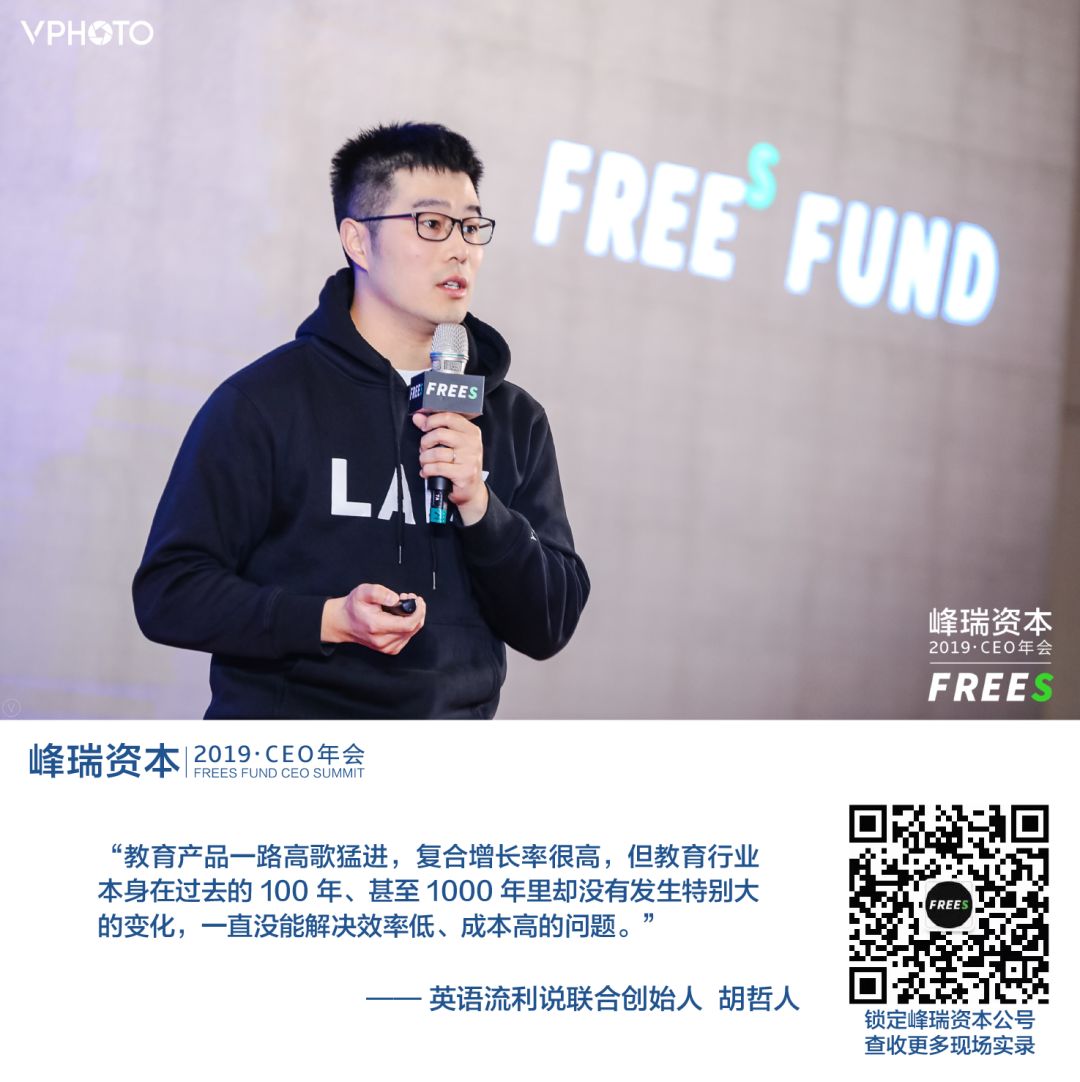
We noticed that while education products had grown at high compound rates, the education industry itself hadn't changed much over the past hundred or even thousand years. It still hadn't solved the problems of low efficiency and high costs. From ancient times to the present, most education still involves one teacher instructing many students in a physical classroom. The industry's ability to diagnose student capabilities and tailor instruction accordingly remains quite rudimentary.
Low efficiency and high costs ultimately stem from education being an analog process, highly dependent on teachers. And good teachers are a scarce resource, mostly concentrated in coastal cities.
Healthcare once faced a similar problem: a shortage of good doctors. But over the past century, the industry produced transformative technologies like CT scans. Technology steadily enhanced humanity's ability to detect and treat disease, reducing relative dependence on top doctors.
Could education reduce its dependence on good teachers? The answer is yes.
In fact, people have been working on this for decades. If you follow Apple, you'll know it's a company with genuine passion for education. In 1984, shortly after launching the Macintosh, Steve Jobs spoke in an interview about how computers would transform education. Though the next 30-plus years didn't bring the revolution he envisioned, by the mobile era — particularly around 2010 and 2012 — when everyone carried a smart device, change gradually began.
Education evolved from the "Education 1.0" era of traditional offline classrooms to the "Education 2.0" era of online distance learning. Then, powered by AI, big data, and cloud computing, it advanced to "Education 3.0."
From a longer perspective, what Liulishuo does is minimize student dependence on "good teachers" during the learning process.
The industry is shifting from analog to digital, and teaching methods from "teacher-centered" to "student-centered." However, in education, consumers' opportunity costs are high and brand loyalty is strong. Short-term capital investment can't quickly change market habits. Consumers need time to accept new ways of learning. During this transition, 1.0, 2.0, and 3.0 models will coexist.
Ringing the bell is just the beginning of a new phase
Looking back, three phases of the company's growth stand out.
The first phase ran from our first product launch to 2016, before we released "Dongni English." We rented a duplex apartment in Enji Garden on Hangzhou's Wen'er West Road. Life was simple — from eyes open to eyes closed, basically just coding. Downstairs was a baozi shop called Ganqishi, then just starting out in Hangzhou; it's now a well-known restaurant chain.
On Valentine's Day 2013, we launched an app that could automatically score users' English pronunciation. Compared to "English 8000 Sentences," we added far more engaging content and gamification. User growth was rapid — within six months we had millions of users and topped the App Store. By 2014, we passed ten million users.
We'd stayed focused on building a great tool, not thinking much about monetization. But by late 2014 and early 2015, this became an urgent question.
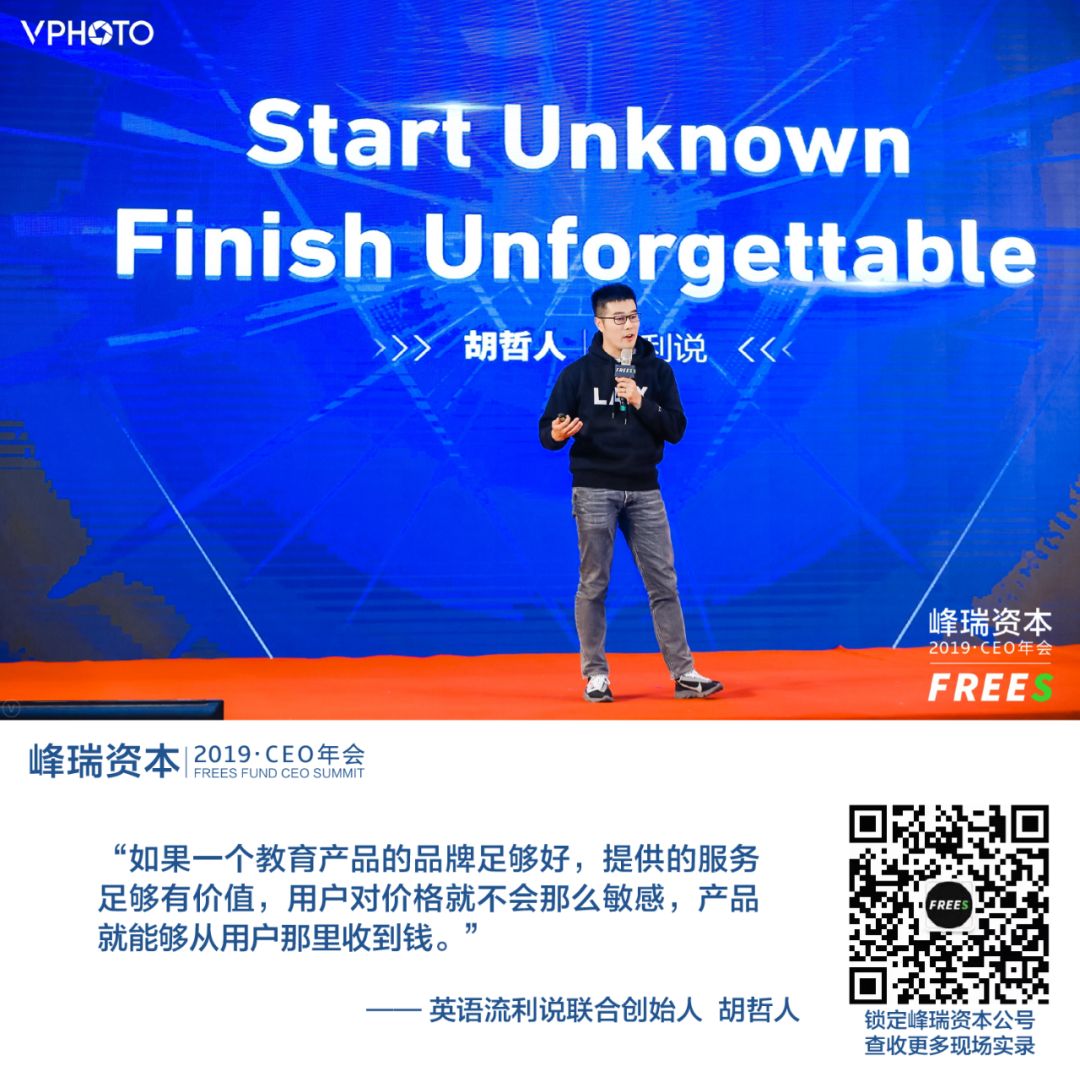
What's the monetization path for education products? After much deliberation, we reached a conclusion: if an education product's brand is strong enough and its service valuable enough, users become less price-sensitive, and the product can charge users directly.
We tried talking to the world's most famous educational publishers, but after going around in circles, we realized they couldn't do this with us — we had to dive in ourselves. In the end, we made a major decision: build our own curriculum team, hoping to design an education product good enough to stand on its own.
For the three of us founders, this wasn't terrifying, but it wasn't easy either. All three of us came from product or engineering backgrounds. We knew nothing about education content. We had to learn from scratch. Fortunately, for a considerable stretch of the company's development, we didn't face funding problems. So we could settle in and focus — from early 2015 through mid-2016, we spent 13 months polishing the product. By July 2016, we officially launched "Dong Ni Ying Yu" (Understand Your English), an AI-teacher-based course. Drawing on over three years of user accumulation and a systematic curriculum, we hit the pain point that made users willing to pay. The company's revenue grew extremely fast — I remember for four or five quarters after launch, revenue doubled every quarter.
This was our second stage: figuring out monetization channels and experiencing rapid revenue growth.
After a full 24 months of commercialization, we decided to apply for an IPO. On September 27, 2018, we rang the bell at the NYSE. The entire venue was covered in our company logo that day, which made it feel very special. But in reality, the listing was only the beginning of our third stage. After the bell, we immediately had to return to daily routines and keep handling company matters. In the half-year just past, the company issued two earnings reports. Through this process, I gradually learned how a young public company should communicate with capital. For me personally, these experiences were quite extraordinary.
After hearing Hu Zheren's lessons learned from real battle, we'd also like to invite you to revisit the highlights of the education roundtable forum.
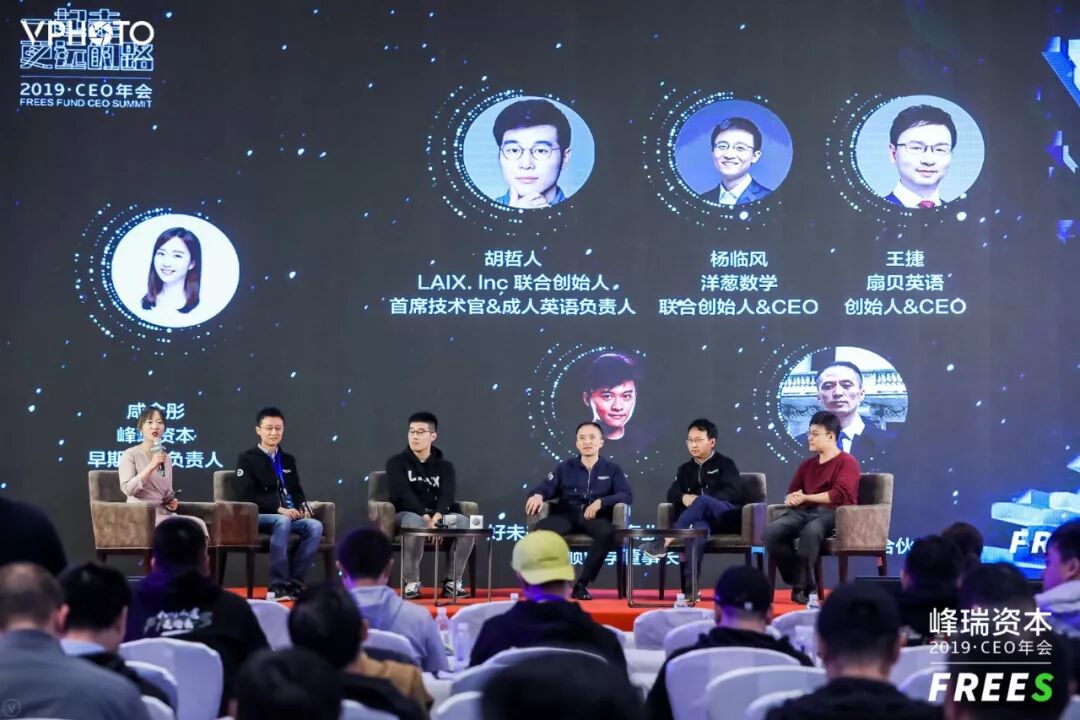
What Changes and What Stays the Same in EdTech Entrepreneurship Under New Technologies
Guests: Hu Zheren, co-founder, CTO & head of adult English business at Liulishuo; Yang Linfei, co-founder & CEO of Onion Math; Wang Jie, founder & CEO of Shanbay; Zhang Yang, VP of TAL Education Group's smart education business group & founder and chairman of Shunshun Liuxue; Gu Kun, partner at FreeS Fund
Moderator: Xian Jintong, early-stage project lead at FreeS Fund
How Technology Empowers the Education Industry
Xian Jintong: In recent years, we've seen the breadth and number of people and families touched by education consumption increasing, with demand becoming more diverse. In 2018, China's after-school tutoring market approached 3 trillion yuan; "for every 7 yuan the state spends, 1 yuan goes to education" — education spending accounts for 15% of fiscal expenditure, exceeding 4 trillion yuan.
At the same time, we can see that in this cycle, the development of internet, AI, big data, and cloud computing has made integrating technology into education possible. More and more education companies are building their own technology teams and investing in R&D.
Today I'd like to discuss with everyone: what new changes and opportunities will new technologies bring to the trillion-scale education industry?
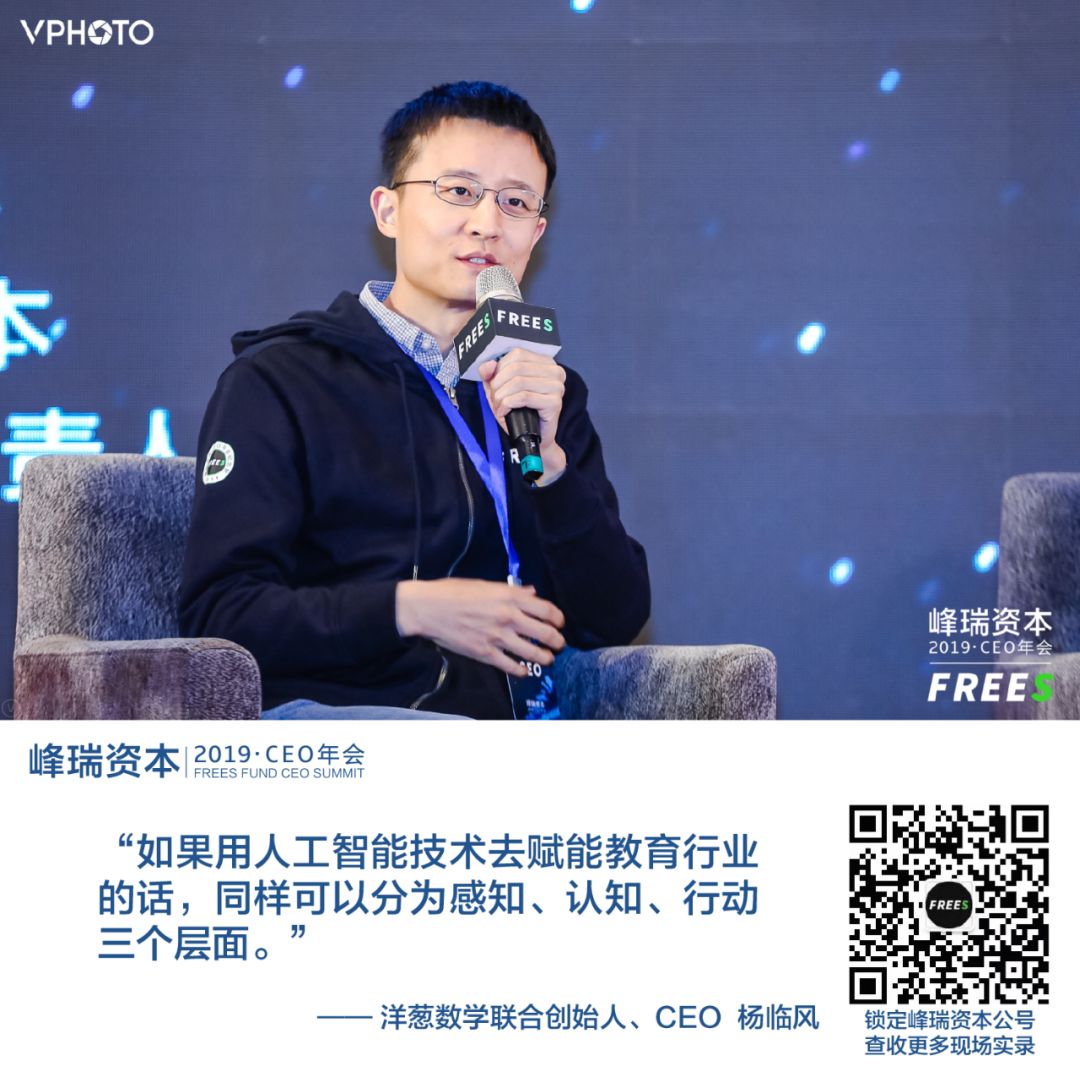
Yang Linfei: If we use AI technology to empower the education industry, it can similarly be divided into three levels: perception, cognition, and action. From the perception level, we need to gradually process the data from offline education processes into digital form. This is actually quite difficult, because education is a non-standardized process, especially when teaching some very deep content.
Onion Math creates online courses for middle school math, physics, and other subjects. Junior high math takes three years to learn, with many granular steps, requiring启发 students to engage in deep mathematical thinking. How do we digitize and standardize this process? Empowering education through technology faces huge challenges starting from the perception stage. If we can't perceive, we can't solve the next cognition problem — we can't analyze where students have problems, or what parts of the teaching process are effective. If cognition isn't in place, we can't even talk about action — we don't know how to teach so students actually understand. So we put all these learning processes online through human-computer interaction, so the data and processes obtained are digitized.
Returning to new technology itself, in the coming years, we're more looking forward to many new changes at the perception level. For example, if eye-tracking technology can track students' thinking and reaction data during the learning process in the future, it would be equivalent to greatly enhancing the perception level, which would then allow us to better innovate in the second step of cognition and third step of action.
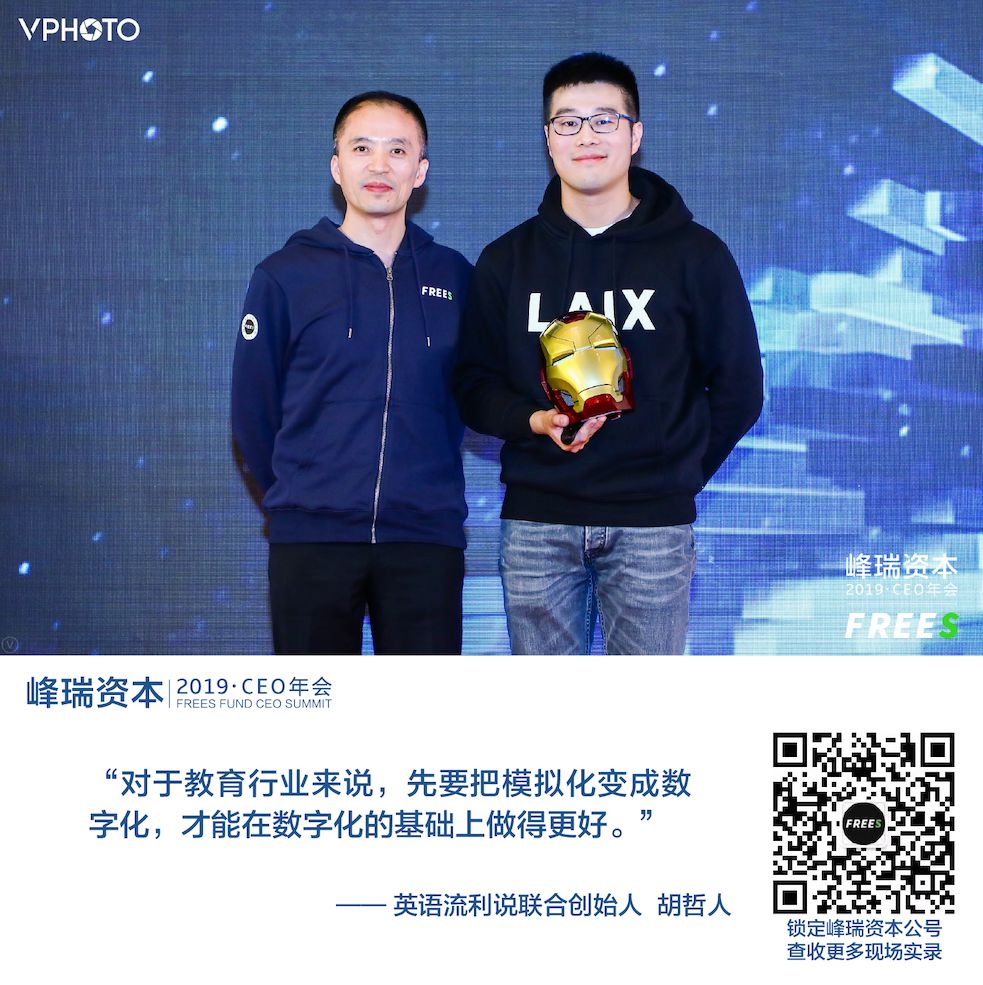
Hu Zheren: For the education industry, we first need to transform from analog to digital, and only then can we do better on a digital foundation. Most teaching scenarios and learning processes are still very analog today. Even after computers have developed for so long, some schools still resist using iPads in class. The reason Liulishuo has gotten to where it is today is precisely because we've digitized the entire English learning process and completed the closed loop — only on this foundation could we do some business model innovation.
Gu Kun: I've worked in education for many years, and have a few small observations.
Around 2010, I was in vocational education. The vocational education market was huge — the students we served on weekends were counted in tens of thousands. Every weekend I felt very uneasy, because it was hard to predict the exact attendance numbers in advance, so I couldn't be sure whether we could serve students well. Weekend vocational education offline attendance rates are typically not very high — most of the time, out of 100,000 people, only 20,000 would show up. But once we bet on a certain day having only 20% attendance, and because the weather was nice, 32,000 people showed up. We weren't prepared, so it was chaotic — we scrambled for remedies, apologized to students, and compensated them.
After online education emerged, it allowed scarce teacher resources to be shared and served students with better teaching methods. Big data technology also enables teaching to be truly personalized — identifying gaps and filling them based on student conditions, more effectively and efficiently improving learning outcomes. That's one observation of mine.
I have one more small observation. Whether through AI technology or big data technology, we can separate teaching and curriculum research. Some people are suited for research, but their teaching style may not necessarily be popular with students. So we choose people students like, even those with influencer qualities, to participate in teaching work — making students fall in love with learning because they fall in love with that teacher.
Wang Jie: When I first started Shanbay, I only knew I was making a learning software. Only after contacting investors did I realize what I was doing fell under online education.
These past few years, I've gradually developed my own understanding and views on education. At a deeper level, education is a process of refining information into knowledge, internalizing knowledge into experience, and turning experience into actual action to achieve results. Refining information into knowledge — this itself has value. But the most difficult point is how to internalize external knowledge into personal experience.
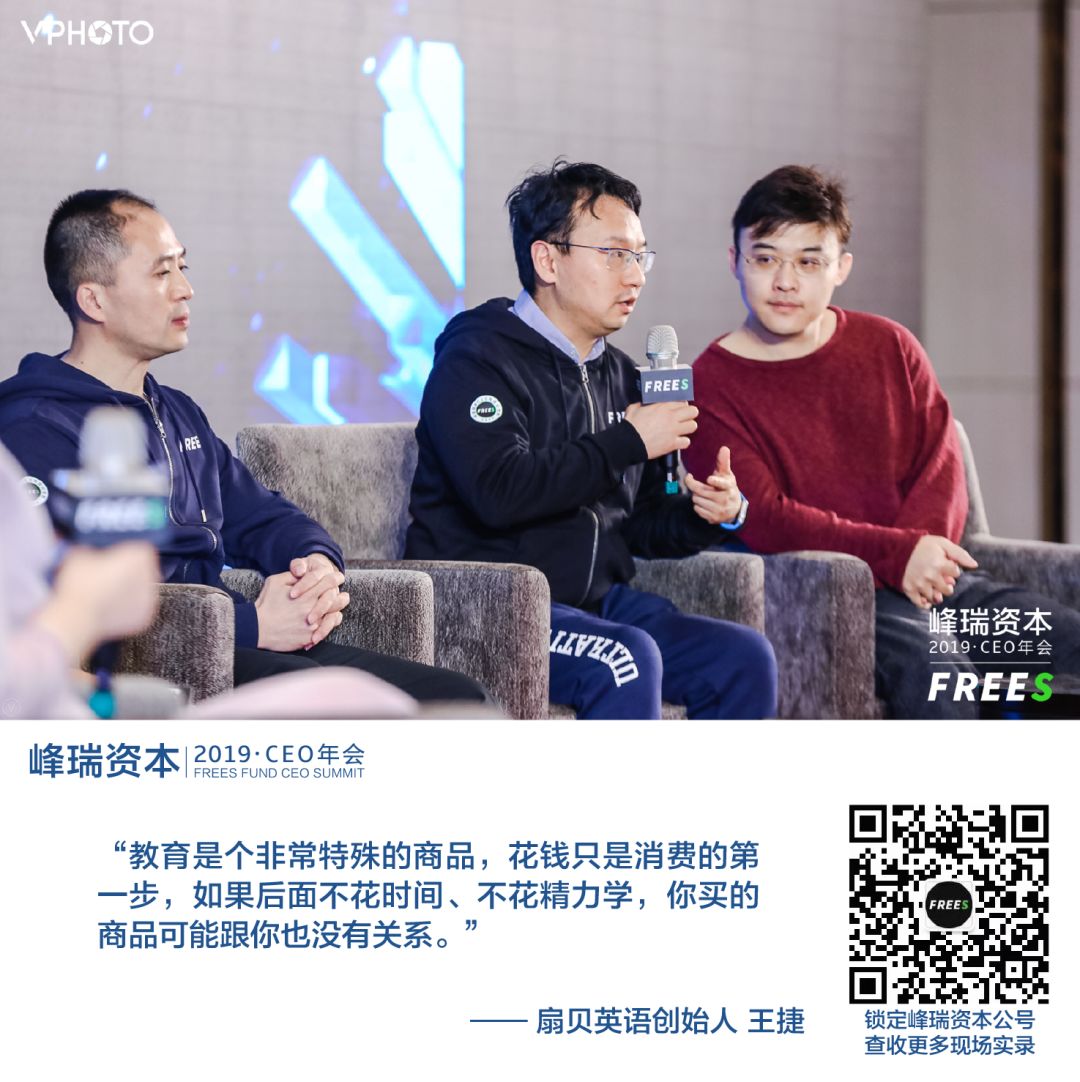
Education is a very special product — spending money is only the first step of consumption. If you don't spend time and energy learning afterward, the product you bought may have nothing to do with you. We've tried every means to make the internalization process more interesting and more effective.
Besides my main entrepreneurial work, I also love gaming. Games and education fundamentally shouldn't be that different. For kittens and puppies, there's no distinction between play and learning. For small children, learning and play are no different either. Why is it that for adults, education is education and games are games? The biggest problem is that the older people get, the more abstract the knowledge they encounter, and the longer the feedback chain. Why do people love gaming? Because the feedback is especially fast. How to combine gaming's feedback mechanisms with the psychology behind it — that's something I'm very interested in.
Zhang Yang: My background is somewhat complicated — I used to work on niche education products, and after my company was acquired, I joined TAL Education Group. Recently we've had an important realization: the granularity of education can be divided very finely.
Internally, TAL has three layers of products: To C, To B (open platform for training schools), and To G (serving government and public schools). Personally, I feel these three layers have very different sensitivity to technology and pace of application deployment.
To C products are the most leading-edge in technology application. TAL Xueersi started with in-person instruction, emphasizing learning outcomes, then extended to online products like Xueersi Online School and Xueersi Online. Now we've invested heavily in R&D for neuroscience, AI, and "dual-teacher" technology, exploring how to standardize and scale the course delivery process through technology. "Dual-teacher" sits between in-person and online — the teaching instructor is on a terminal online, while the tutor is offline, helping students adapt to this learning format.
To B products are still at the stage of dual-teacher as primary, AI as supplementary.
To G products are basically still in the process of transitioning from in-person to "dual-teacher."
Besides "dual-teacher" technology, there have been two other technology waves affecting education in recent years: AI technology, and neuroscience — still in exploratory stages, with effects not yet fully demonstrated.
However, all of this ultimately must be carried by learning outcomes.
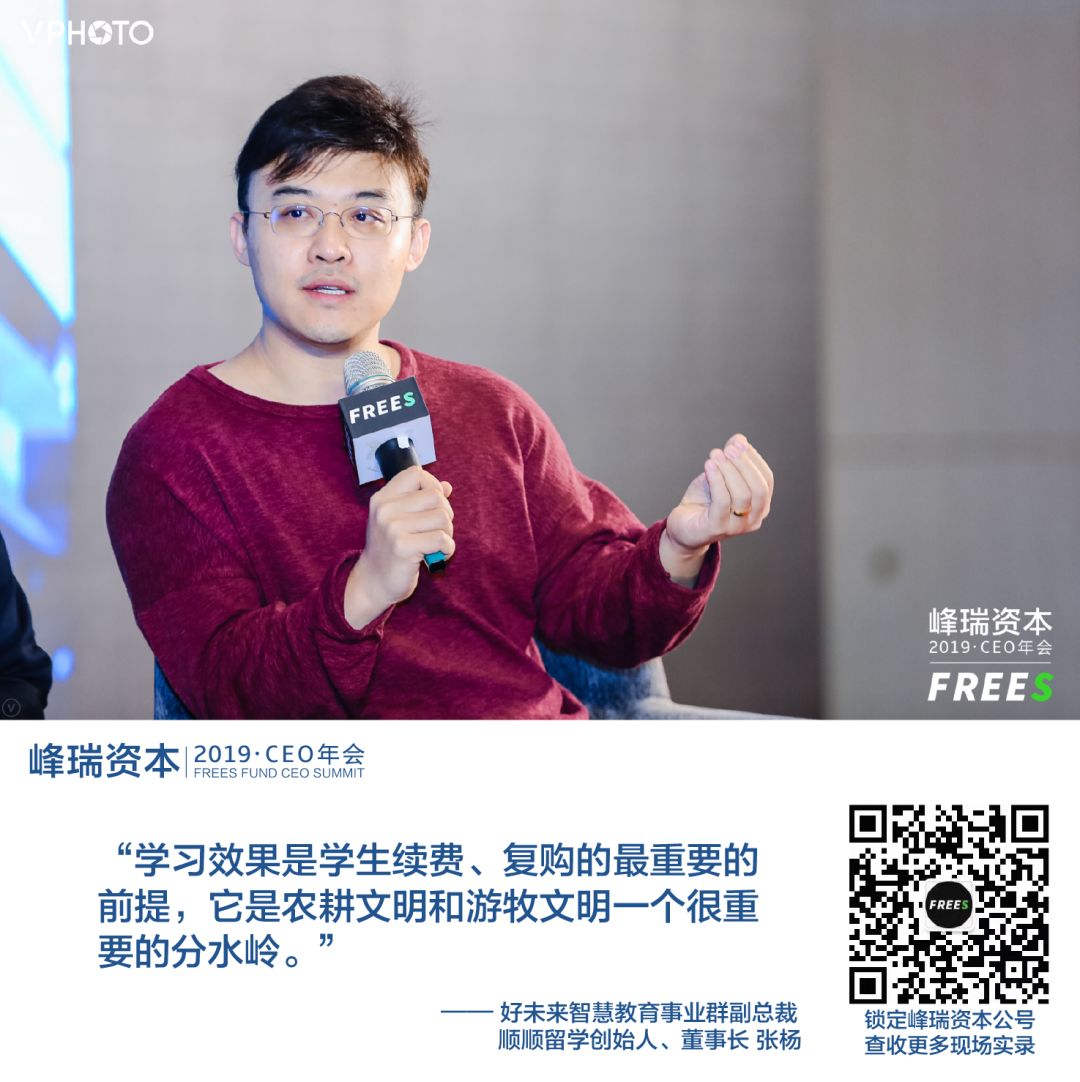
Learning outcomes are the single most important prerequisite for student renewals and repeat purchases. They represent a critical dividing line between agrarian and nomadic civilizations. An agrarian model means high renewal rates — no need to acquire customers from scratch every year. A nomadic model means zero renewals, chasing new customers annually.
The Future of Education: Allocating Roles Between Humans and Technology
Xian Jintong: Despite all these new opportunities, we can see that over the past two decades, education has been one of the industries least transformed by technology. I'd like to discuss with the CEOs here: why has technology penetration remained relatively low in education? And looking ahead, what role will humans play in education, and what role will technology play?
Hu Zheren: I think technology's low penetration in education comes down to how difficult consumer habits are to change. DiDi and Uber took 12 to 18 months to get people comfortable with an amateur driver behind the wheel. How much capital would we need to invest before people accept an amateur teacher educating their child?
That's the unique nature of education. Education products — especially K12-related ones — carry extraordinarily high opportunity costs. A child only gets one shot at first grade. Parents can't afford trial-and-error. Consumers instinctively believe in-person instruction is best, and wonder why face-to-face teaching should suddenly be replaced with machine-based learning.
Moreover, K12 education is genuinely a livelihood issue. As we make education better, more digital, more efficient, perhaps what used to be a 12-year curriculum gets completed in 6 years. But if a child graduates at 13, right in the middle of puberty, that creates definite social problems.
Education is extraordinarily complex, with many stakeholders involved. We won't necessarily reach that ideal state quickly.
Zhang Yang: The dominant form of education remains government-led public education. Everything else is fundamentally supplementary. From kindergarten through university, the vast majority of educational scenarios play out in public school campuses. Under these circumstances, every decision about education is made with extreme caution, evolving rather slowly. Take the gaokao reforms — everyone recognizes that test scores don't determine future success, and there's been an attempt to introduce more quality-oriented education elements. Yet the core of today's gaokao is probably still largely what I experienced over 20 years ago. It's not just China; education systems worldwide are basically public-education-dominated. In this context, decision-making inertia is tremendously strong.
The teaching format has evolved over millennia, and it's still fundamentally teacher-teaches, student-learns. Many people think that's simply what learning is, that there's no other way. We've spent considerable time guiding parents to first accept the concept of online education. Getting families to recognize that beyond face-to-face instruction, you could also have 600 kids in one online large-class, or learning through an app. If parental decision-making evolves this slowly, each level of government decision-making will take even longer.
Earlier Wang Jie discussed the commonalities between gaming and learning; let me add the distinctions. Anything that aligns with human nature feels pleasurable and joyful — it requires no drive. Gaming aligns with human nature; it's addictive. But education runs counter to human nature. Children initially acquire language out of survival instinct. Once they enter formal schooling, learning becomes associated with pain — the need to sit still and focus.
Education also carries an element of companionship. Why have "dual-teacher" products gained traction recently? Why can't we eliminate the tutoring teacher from the "dual-teacher" model? Because you need someone physically there monitoring the child, collecting homework. Things that run counter to human nature don't bring joy in themselves, so their evolution won't be as rapid as gaming's.
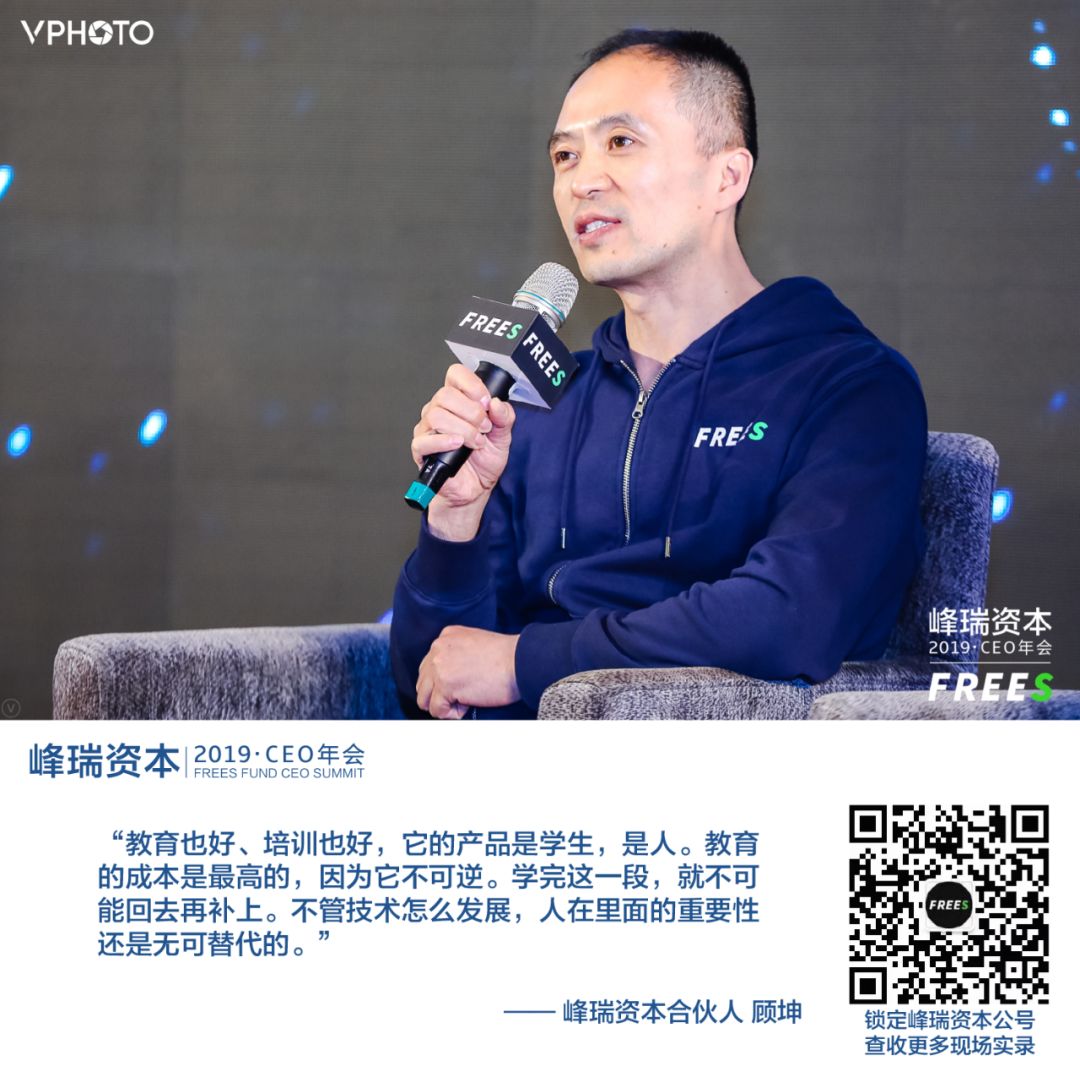
Gu Kun: Whether we're talking about education or training, the product is the student — a human being. The cost of education is the highest because it's irreversible. Once you've completed a segment, you can't go back and make it up. Regardless of how technology develops, the importance of human involvement remains irreplaceable.
For this counter-human-nature endeavor, whether through technology empowerment or experience optimization, we need to make students less resistant to it — even help them come to enjoy it.
Wang Jie: I've been thinking about how to conceptualize education. If we define education by space and time, that concept has been continuously expanding in recent years. Previously, people confined education to the period from elementary school through university, with physical space limited to schools and classrooms. Now people spend more time learning than on leisure relaxation, and learning scenarios extend far beyond classrooms.
If we measure education by the standard of "transforming external knowledge into internal experience," then many products like ByteDance, Douyin, and Bilibili have educational attributes to some degree. The previous generation never drove cars or used modern kitchen appliances — how did they learn these things? We couldn't exactly enroll in a dedicated class, yet we could learn from products like Douyin. Peers or those younger than me — their life experiences can actually provide me with reference points.
The public education system moves somewhat slowly due to its decision-making processes. But in the broader landscape, channels for knowledge absorption have become far more diversified. And among these channels, technology evolves extremely rapidly.
Yang Linfeng: Let me add another perspective. When we discuss why technology has been applied relatively slowly in education, we might first imagine what education could become once technology arrives.
The keyword that probably first springs to mind is "efficiency." My understanding of efficiency is high-speed transmission of effective action. High speed, effective action — those are the two key terms. The internet can achieve high speed. But there's also effective action. Say I want to watch a movie today, and you upload it to me over the network — you can 100% guarantee both high speed and effective action, because the experience I receive is the movie itself, a complete experience.
Returning to teaching: if I don't understand a particular concept, who can guarantee I'll definitely understand it after it's explained? The internet can deliver high speed, but it doesn't know what constitutes effective action — it can't tell whether the brain has absorbed and processed the relevant knowledge. Technology can't do anything about that latter stage, and our teaching systems haven't been refined to that granular level. At present, even everyday communication between humans and machines can't be guaranteed, so technology's role in the "effective action" process remains highly uncertain. Therefore, what's most urgently needed now is continuous R&D of genuinely machine-deliverable "effective actions."
Education CEOs' Parenting Philosophies
Xian Jintong: Finally, a question that may be relevant to every CEO here across different industries. You've all been in education for many years, providing educational access and support to many other people's children. I'd like to know: how do you educate your own children, and what expectations do you have for their growth?
Zhang Yang: The competition Chinese children face growing up is brutally intense. I hardly dare revisit my own childhood, or the entire journey of getting into Tsinghua University, then Harvard, then starting my own business.
My wife and I share a consensus: we want our children to create some value for society. The intensity and breadth of knowledge don't have absolute bearing on a person's success. What truly impacts a child may be three things: first, their life mission; second, the environment created by parents and school; third, their own curiosity and learning ability.
Compared to test-taking and competition, what's more important in a child's life is having international perspective, Chinese grounding, good habits, strong learning ability, and a life mission. From this standpoint, I've steered my children away from knowledge-based competition and test-dominated domestic education, placing them in North America instead. Even if this experiment fails, there's no real loss — they can still live happily.
Wang Jie: I don't have a definite plan for education. What I can help my child with is: first, cultivating interest in learning; second, helping them not fear failure; third, learning to delay gratification. If a child can achieve these three things, I'm broadly prepared to accept whatever they become.
Gu Kun: I think the most important thing is giving children a healthy environment. Parents' words and deeds matter more than anything. How parents love their family, treat friends around them, and avoid harming the environment — all of this influences the child. School is merely supplementary. What's paramount is that parents create a good environment during the critical first 8 years.
Hu Zheren: If someone simply wants to acquire knowledge and become an expert in a field, the role of school is quite limited. I believe people attend school now primarily for the social network — a good school provides a floor.
I'll certainly provide my child with good environments. As for how much they learn, two things matter to me. I won't be a tiger parent, but I won't practice free-range parenting either. There are life stages where you need to push your child. At the same time, I'll be relatively open, respecting their learning interests. In our generation, parents forced us toward STEM. For the children of post-80s and post-90s parents, there will be far more choices in what to study.
Yang Linfeng: I don't have children yet, so this is hypothetical for me. There are many things we'd want to teach, but we can't possibly list every quality and trait a child needs and systematically implement them. In this process, we need to keep asking ourselves: if only one thing could remain in this world, what would it be? That simplifies the objective.
If I could only teach my child one thing, I would want to cultivate in them the habit of independently asking "why" about various things, and learning how to analyze, think through, and answer their own questions. Once this habit is formed, you simply take care of their daily needs, and they'll continuously explore, discover, and learn on their own. That would be a fascinating process.
Feel free to share to your Moments. For republication on other official accounts, websites, or mobile apps, please reply with "reprint" to learn republication rules, and contact "Feng Xiaorui" (WeChat ID: freesfund) for authorization. Copyright belongs to FreeS Fund.

▲ Mininglamp's Minghui Wu: Every New Data Wave Drives a Business Model Iteration | FreeS Fund 2019 CEO Annual Meeting
▲ Post-Dividend Era: How Can Early-Stage Consumer Brands Break Through? | FreeS Fund 2019 CEO Annual Meeting
▲ Ning Tang × Feng Li: Truly Great Companies Are Polarizing | FreeS Fund 2019 CEO Annual Meeting
▲ Be Long-Term Greedy, Be a True Hero | FreeS Fund 2019 CEO Annual Meeting