Tang Ning × Li Feng: Truly Great Companies Are the Ones That Spark Debate | FreeS Fund 2019 CEO Annual Meeting

In the DNA of great companies, "original aspiration" matters most.

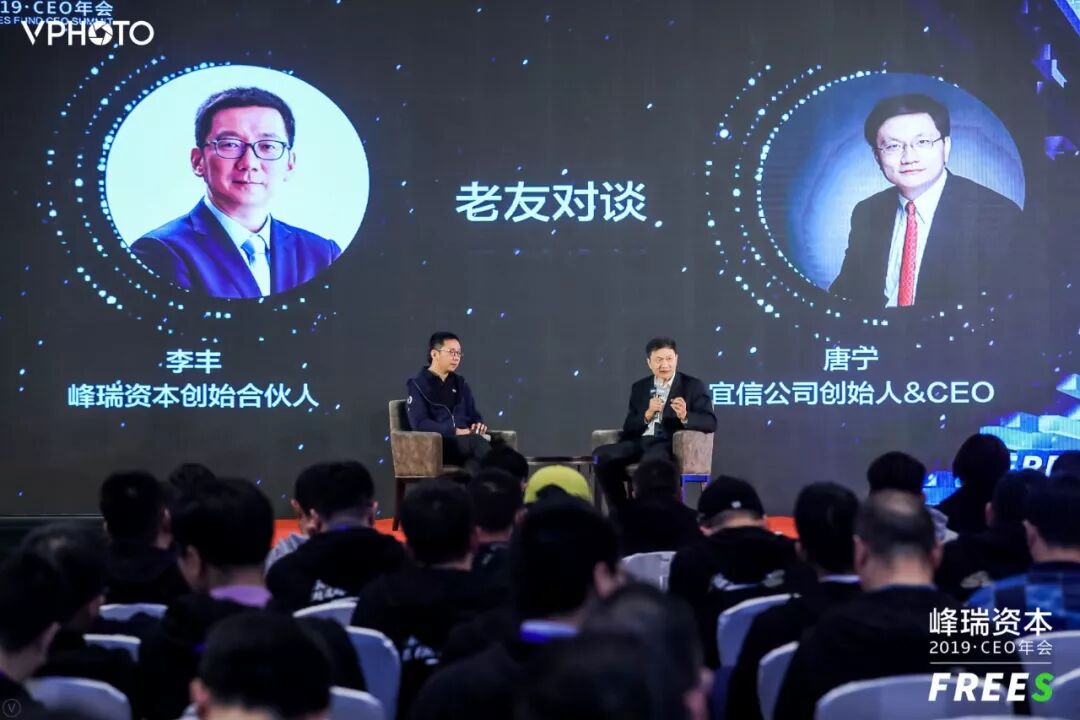
On March 30, 2019, in Beijing, a hundred FreeS Fund portfolio CEOs gathered at the third annual FreeS Fund CEO Summit to look back on three years together and set out on a longer journey ahead.
That day, Feng Shu (Li Feng) sat down with Tang Ning, a well-known angel investor and founder & CEO of CreditEase, for a conversation between old friends. The two had much in common: both were Peking University alumni, both had studied abroad, both had taught at New Oriental, and both had become investors. Tang Ning expressed his gratitude for the help Feng Shu had given him and his team. CreditEase Wealth's private equity fund of funds, as an LP in FreeS Fund, had also accompanied FreeS on a long road.
Tang Ning shared with the FreeS Fund CEOs his understanding of the bottom line for financial innovation, the DNA of truly great companies, the three levels of anxiety in work and how to dispel them, and what companies should and shouldn't do in the new economic landscape over the next five to ten years.
We've compiled his thoughts and reflections into this article. We hope you find them inspiring. Join the discussion at the end — we have small gifts for participants.

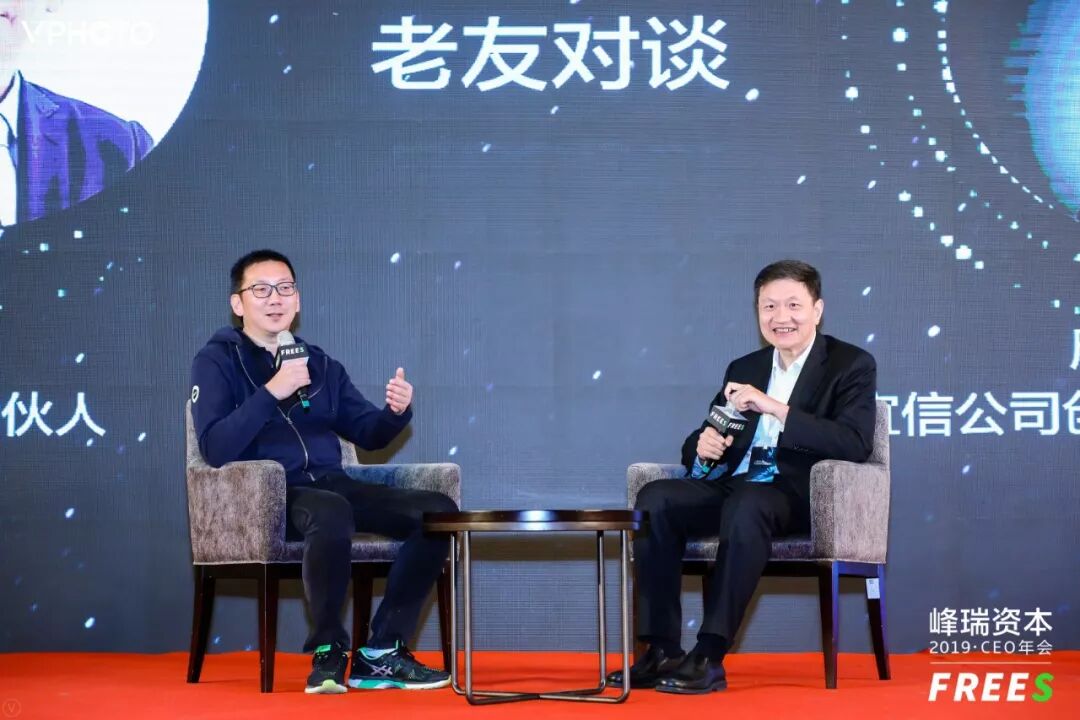
Tang Ning × Li Feng: Truly Good Companies Should Be Controversial
Source: Tang Ning's sharing at FreeS Fund's 2019 CEO Summit

Financial Innovation Needs a Clear Bottom Line
Li Feng: We met nine years ago, when you had just started CreditEase and people didn't really understand what you were doing. Even when CreditEase was fundraising, there was a lot of opposition — people weren't sure it would work. What lessons can you share from those early days?
Tang Ning: Truly good companies, good investments — they should be controversial. Controversy means something is genuinely innovative. If everyone applauds and approves, it's not necessarily the best.
People may think of CreditEase as "an internet finance company." But we were working in this space before the term "internet finance" even existed. Later, we were fortunate to ride the wave of internet finance, then fintech. In 2015, we took Yirendai public on the NYSE, pioneering the listing of Chinese internet fintech companies. Today, CreditEase's business extends far beyond internet finance. We serve entrepreneurs, and our wealth management business is among the leaders in China.
Even earlier, I was doing angel investing. At that time, there was no "venture capital" industry to speak of. I would go door-to-door in Zhongguancun Science Park, from one end to the other, explaining to startups what we did — they didn't really get it either. Then I'd see you coming from the other direction, we'd run into each other, and that's how we met. Later we became good friends.
When a company and its investors share such deep bonds, when they can collaborate again and again in so many forms — that's a profoundly happy thing. I'm truly delighted and honored to have this chance to share with everyone today.
Li Feng: Internet finance went through some policy shifts in 2018, facing heavy regulation. I was nervous at the time and called you to express my worries and concerns. What struck me was how grounded you were. How did you manage that?
Tang Ning: By the time you called me, you were already very nervous. If I'd told you about my own struggles and pain, you'd only have gotten more anxious. So I played it cool.
I very much agree with your view that finance, healthcare, and education all carry both commercial and social value — they're largely infrastructure-level endeavors. Working in these fields demands more from entrepreneurs. With games, if one market doesn't work, you can try another. But not with healthcare, education, or finance. The risks we face aren't just risks to one company. We have to look beyond our own enterprise, keeping a tighter grip on things at both the regulatory and public opinion levels.
Li Feng: So there's a clearer, more definite bottom line.
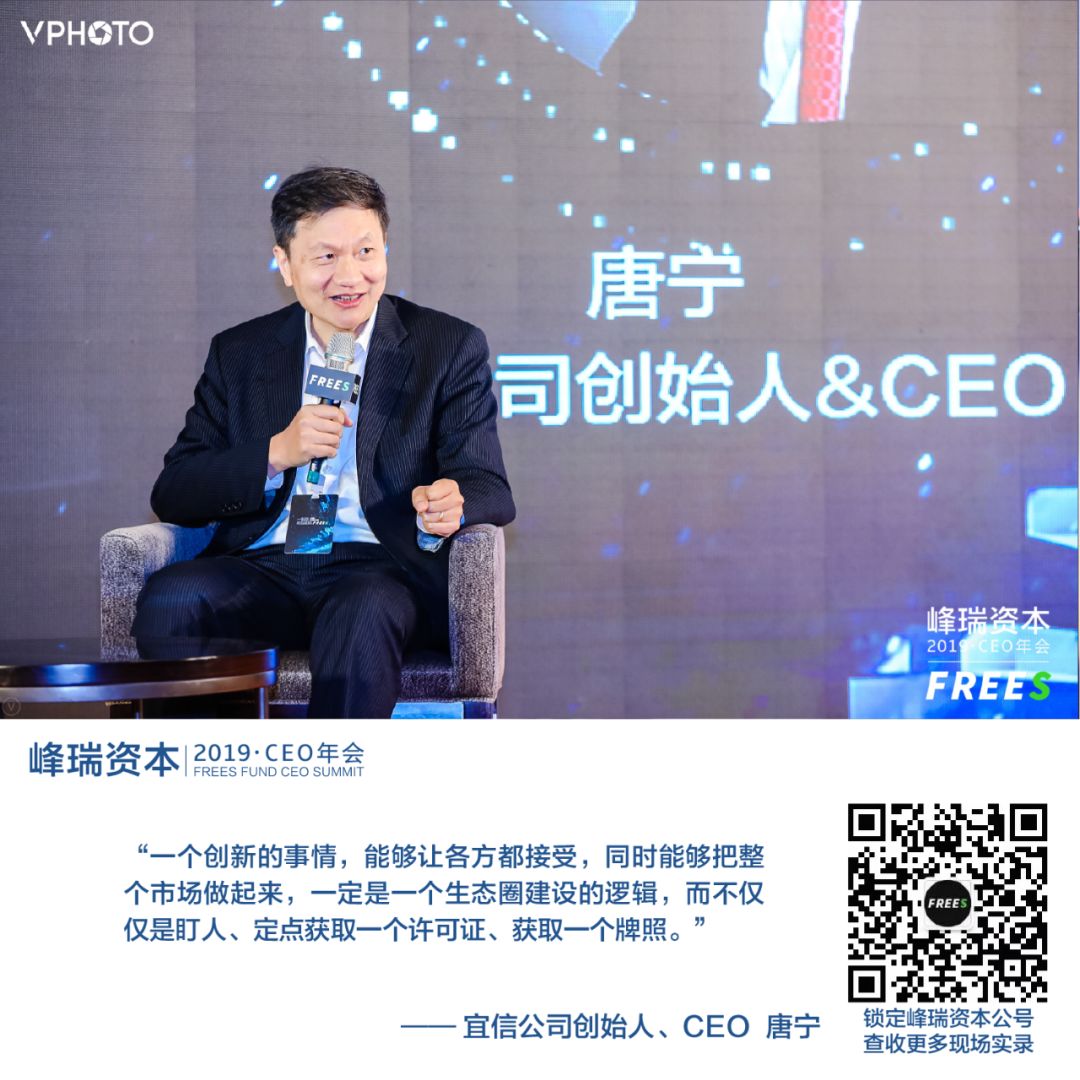
Tang Ning: Exactly. Another point is that when building an organization, you need to ensure it has the corresponding capabilities. Faced with heavy financial regulation, we need the ability to interact constructively with regulators. In the early days of entrepreneurship, we didn't know which government departments we'd end up dealing with — it seemed like every department was relevant. And when doing financial innovation, you need all parties to buy in, to grow the entire market, before you can substantially improve resource allocation efficiency. This is fundamentally about ecosystem-building logic, not just focusing on obtaining one license or permit to operate. Of course, licenses and permits are crucial. But without the capability to actually run the business, without genuine respect for financial risks, there's no possibility or qualification to obtain them.
The DNA of Great Companies: Six Secret Weapons
Li Feng: You've founded a public company yourself, and as an investor, you've also backed companies that went public. Based on your more than ten years of experience, what's the most important quality in an entrepreneur?
Tang Ning: Angel investing — putting money into very early-stage companies — requires methodology. They're so far from success, many with just a small office. How do you judge whether they'll make it? We developed a framework we called the "Six Secret Weapons" — six words starting with M: Market, Model, Money, Men, Mobile, Motivation.
The first five Ms are hard conditions: large market, leading model, fundraising capability, strong team, and effective use of mobile internet. A company with these five points has the potential to reach one billion RMB. Back then there was no word "unicorn" — we called such companies "thousand-li horses." When you encounter a "thousand-li horse," you should immediately lock the founder in a "small dark room" and get the deal signed.
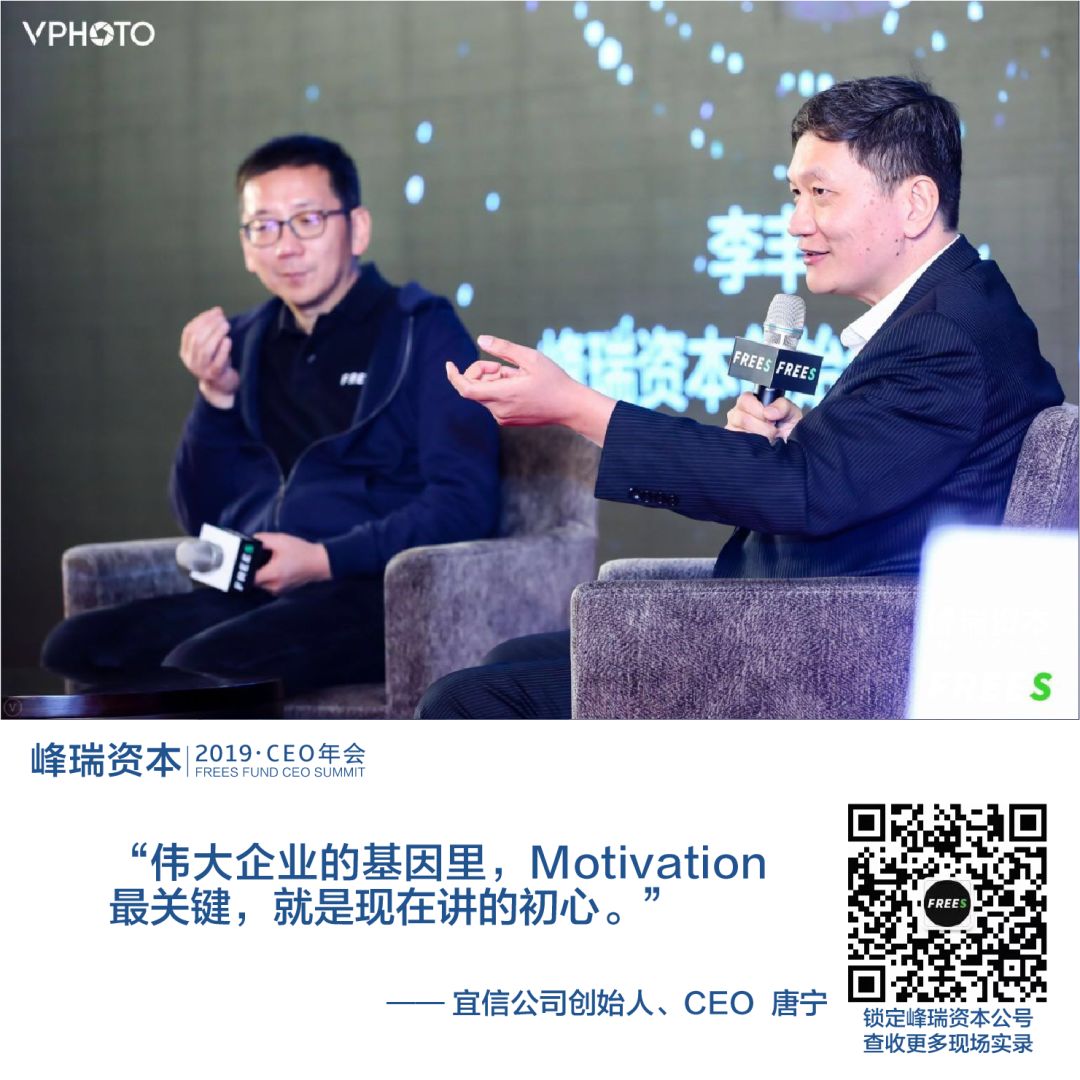
But over the years, I've felt again and again that in the DNA of a great company, the sixth weapon matters most. Motivation — what we now call "original intention." Why are you really starting this company? Is it as a tool for profit, a way to improve your living standards, to climb the social ladder? Or does it come from genuine, heartfelt interest in what you're doing, with ambitious ideals and goals, wanting to drive progress in people, in things, in society? These are completely different starting points.
The entrepreneurial path is a long, lonely, thorny one. Along the way you'll face choice after choice. You may choose wrong, you may choose what looks like the easier direction. When your original intention is right, you can overcome difficulties and become a better version of yourself again and again. How far an organization can go is determined by these countless choices, large and small.
Li Feng: I couldn't agree more. Over the past year, we've looked at several teams with very impressive backgrounds and ultimately decided to pass. The issue wasn't intelligence, wasn't capability — it was original intention and resolve.
The Deepest Anxiety Comes from Self-Examination
Li Feng: When I describe you to colleagues, I say you're a very "hard" person. "Hard" meaning unbreakable, very difficult to shake. But I'm also curious — what were your most difficult, most painful, most lonely, most helpless moments?
Tang Ning: By May 2019, CreditEase will be 13 years old. Over these 13 years, at every anniversary or similar occasion, colleagues have asked me similar questions. Overall, I feel okay. This may have something to do with my early experience in angel investing. Angel investing isn't just about putting in money — you invest your body and soul, get your hands "dirty," thinking through strategy with entrepreneurs. I've already been through the headaches and fevers of early-stage companies.
Broadly speaking, startups have two development paths, and they affect your mentality in completely different ways. The first is the patient, craftsmanship path. Finance, education, and healthcare aren't winner-take-all fields. In these areas, you need to take relatively more time finding your positioning. You can choose to do something with a market of a few hundred million, or at the billion, tens of billions, or hundreds of billions level. The second is the winner-take-all, fight-to-the-death path. This wastes tremendous resources and makes entrepreneurship seem like something that can be short-circuited, bought with money.
I consider myself better suited to the first path. Without cutthroat competition, I can more calmly choose a longer track, looking five or ten years out.
As for specific anxieties, I face challenges large and small every day — roughly at three levels.
The first level is relatively micro. For example, if a colleague has grown with the company but may not be suited for its next stage of development, what do you do? Give them another chance, or bring in fresh blood? Everyone faces this, everyone struggles with it, and looking back, everyone says: I should have acted sooner. Acting doesn't mean letting the colleague go — it means finding them a better arrangement. You can't let personal emotions hold back organizational development.
The second level is anxiety about the company's future development. A few years ago, the mobile internet wave arrived. I remember you telling me to increase investment in mobile internet and even recommending talent in that area. So in the next five to ten years, what opportunities can we seize? When opportunity comes, can we see it clearly? If we seize an opportunity overnight, its value must be very low. We may need several years to encounter a real opportunity. Then the question becomes: what new capabilities must the organization develop to seize that real opportunity? These are absolutely critical questions.
The highest level of anxiety actually comes from examining yourself at different stages: Is what I'm doing aligned with my values, my interests, my capabilities? Does it fit my definition of success and happiness? Sometimes we achieve worldly success but find it doesn't match our interests, and that becomes deeply frustrating.
Li Feng: How do you usually dispel these anxieties?
Tang Ning: I'm fortunate to be genuinely interested in what I and my team are doing. Interest is the best teacher — it helps individuals and teams keep moving forward. On one hand, I've achieved some victories and can see the industry changing bit by bit. On the other hand, we should have something of an idealist streak.
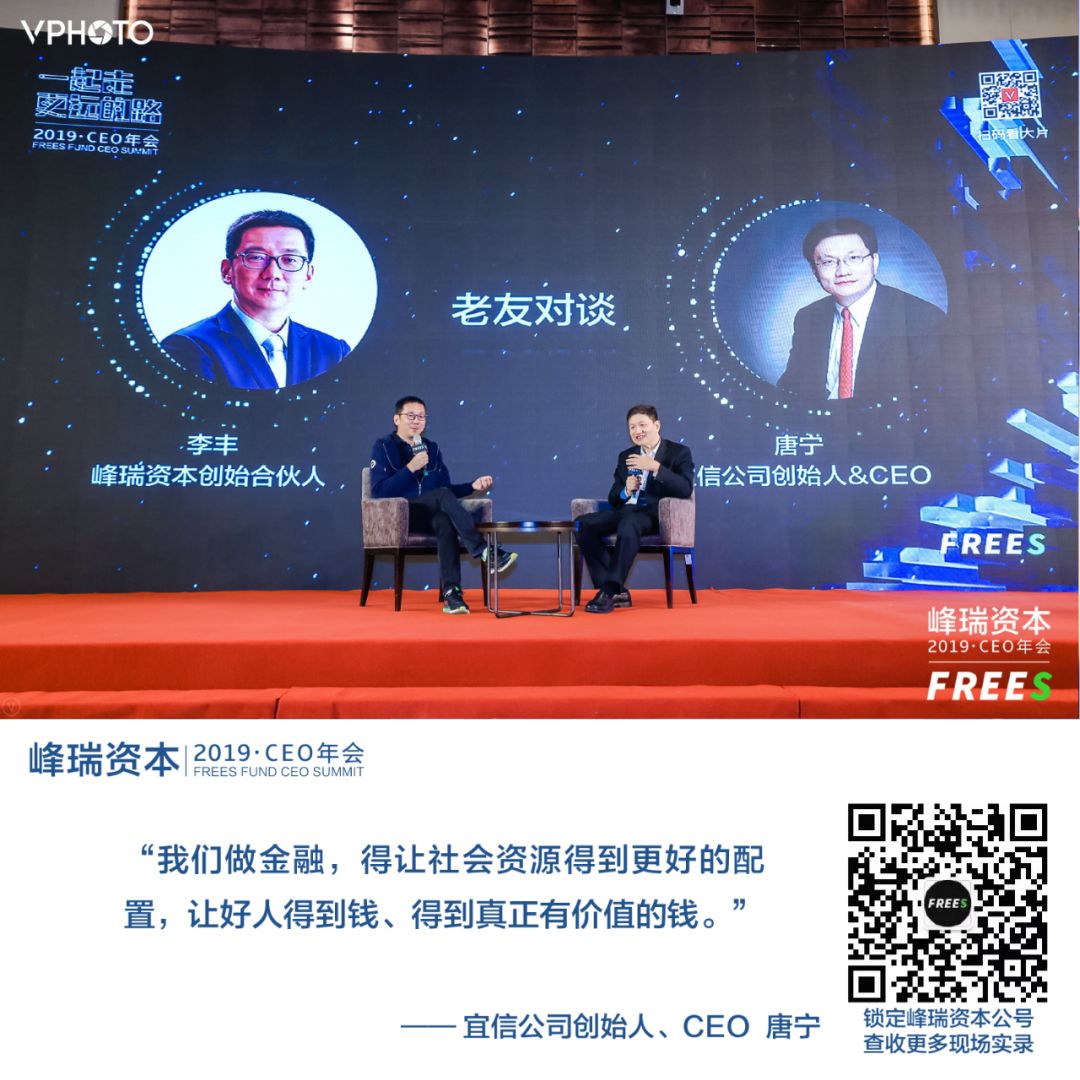
In finance, you need to enable better allocation of social resources, so that good people get money that truly has value. We do asset allocation, and I often tell colleagues: if we allocate assets to excellent firms like FreeS Fund, they can invest in outstanding companies and support entrepreneurs on ten-year journeys. In China, patient capital, professional capital — these are extremely precious. Everything we do relates to social resource allocation, to driving social progress. When everyone works with pride and confidence, things feel much better.
Intensely Focused, Yet Highly Diverse
Li Feng: As CEO, how do you view improving your personal life?
Tang Ning: Material things aren't the source of a happy life. I don't draw too sharp a line between work and life. Coming to the FreeS Fund summit today, I feel I'm drawing energy from a powerful, innovative organization, deepening the bond between our two firms, and letting more friends learn about CreditEase — I don't feel like I'm checking off a work task.
Whether I'm with family or alone, work things may naturally come to mind. This is a very natural state for an entrepreneur. This is what I do; it's the lifestyle I've chosen. Work is part of my life. I don't punish myself for not separating work and life.
However, as the main person responsible for an organization, I need to be both intensely focused and highly diverse. For example, as an entrepreneur, if I go to a newsstand to buy something, I'll ask the owner how business has been lately, how much internet has affected newspaper and magazine sales, what the split is between online and offline payment channels. An arts person buying something at the same newsstand would ask completely different questions. But when needed, I can also pull myself out and understand it from an artistic perspective. Diversity brings innovation, helps me better understand team members from different backgrounds, and better facilitates teamwork. An organization that's too one-dimensional has a hard time going far.
Five Keywords for Making Money in the New Era
Li Feng: One last question — let's step back from specific industries, projects, and models to talk about something more macro. China went through many changes and challenges in 2018, and 2019 still looks like it will bring much uncertainty. If we take 2018 as an inflection point, how do you see China in five or ten years?
Tang Ning: I have a deep feeling I'd like to share. Though the original words aren't mine — they come from Wang Zhongmin, former vice chairman of the National Council for Social Security Fund, who spoke at one of our events.
Mr. Wang said that the era of easy money is over. In the past ten or twenty years, making money was too easy — speculating in real estate, for instance, with markets constantly rising, a rising tide lifting all boats. But in the next ten or twenty years, wealth differentiation will be extremely pronounced. There will be strong "80-20 effects," "90-10 effects," even "1-99 effects." The era of good people making money, capable people making money, making money from long-term value creation — this has arrived. This is good news.
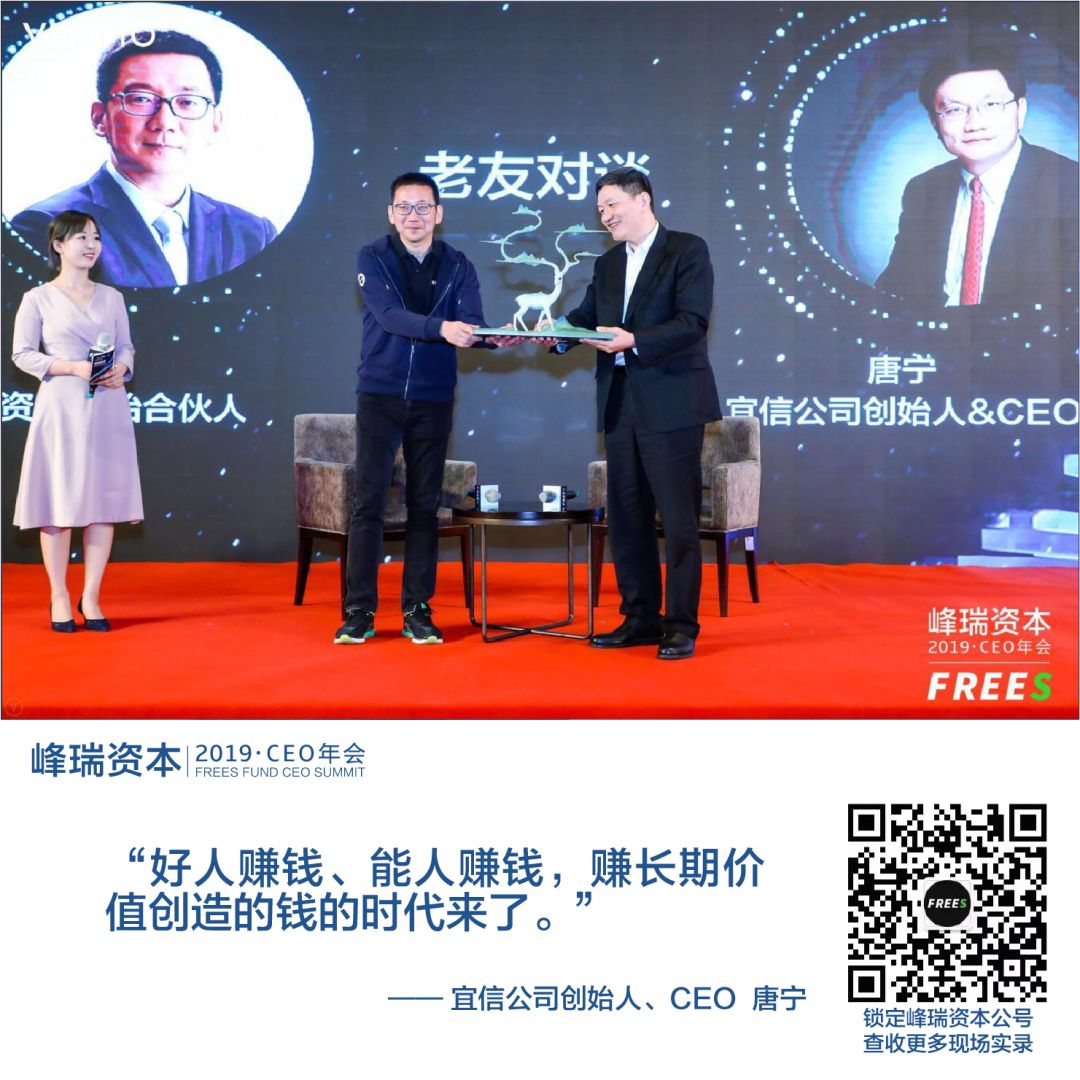
So what are the keywords for making money in the new era? Mr. Wang used several words: "professional, top-tier, cutting-edge, niche, vertical."
Every industry will become more professional. I remember when I first returned to China, telecom operators' procurement still operated on "lowest bid wins." In practice, the low bidder often disappeared after a few months. Now people consider not just price but professionalism, taking a longer view of business partnerships.
In our fund-of-funds investing, we see over ten thousand fund managers in the Chinese market — twelve times the number in the US. In finance too, I feel that industry positioning is unclear: where are you on the value chain, where am I, is our relationship cooperative or competitive? It's fuzzy. Many internet companies feel they're not up to par if they don't do finance. China has so many opportunities that everyone wants to do everything. But when every industry piles in at once, that's wrong.
Going forward, "land-grabbing" won't work. For example, Chinese companies rarely paid for B2B software before. Their thinking was: what professional software? We don't need it. The territory is so vast, we'll just grab land by riding horses — the horses won't die of exhaustion anyway. If we use vehicles to grab land, we'd have to stop and develop the vehicles; if we fail to develop them, we'd delay land-grabbing too. But now the land has become barren, so they must use developed vehicles, and after getting the land, they must study three-dimensional irrigation.
From chaos to order. I believe in the next phase, everyone will become more professional. We'll each do our part, cooperate better, and grow the market together. This is tremendously helpful for innovation-driven, technology-driven, high-quality Chinese economic and social development.
Live Q&A
After concluding his conversation with Feng Shu, Tang Ning took questions from two FreeS Fund portfolio CEOs. Their concerns are shared below.
Question: So far, it seems no Chinese team has completely taken down an American giant in the global market. Will this happen? If so, in what form?
Tang Ning: Excellent question. For the past six years, we've been building product and service lines around clients' global asset allocation needs, and we've been thinking hard about internationalization. One preliminary observation: cultural factors matter enormously.
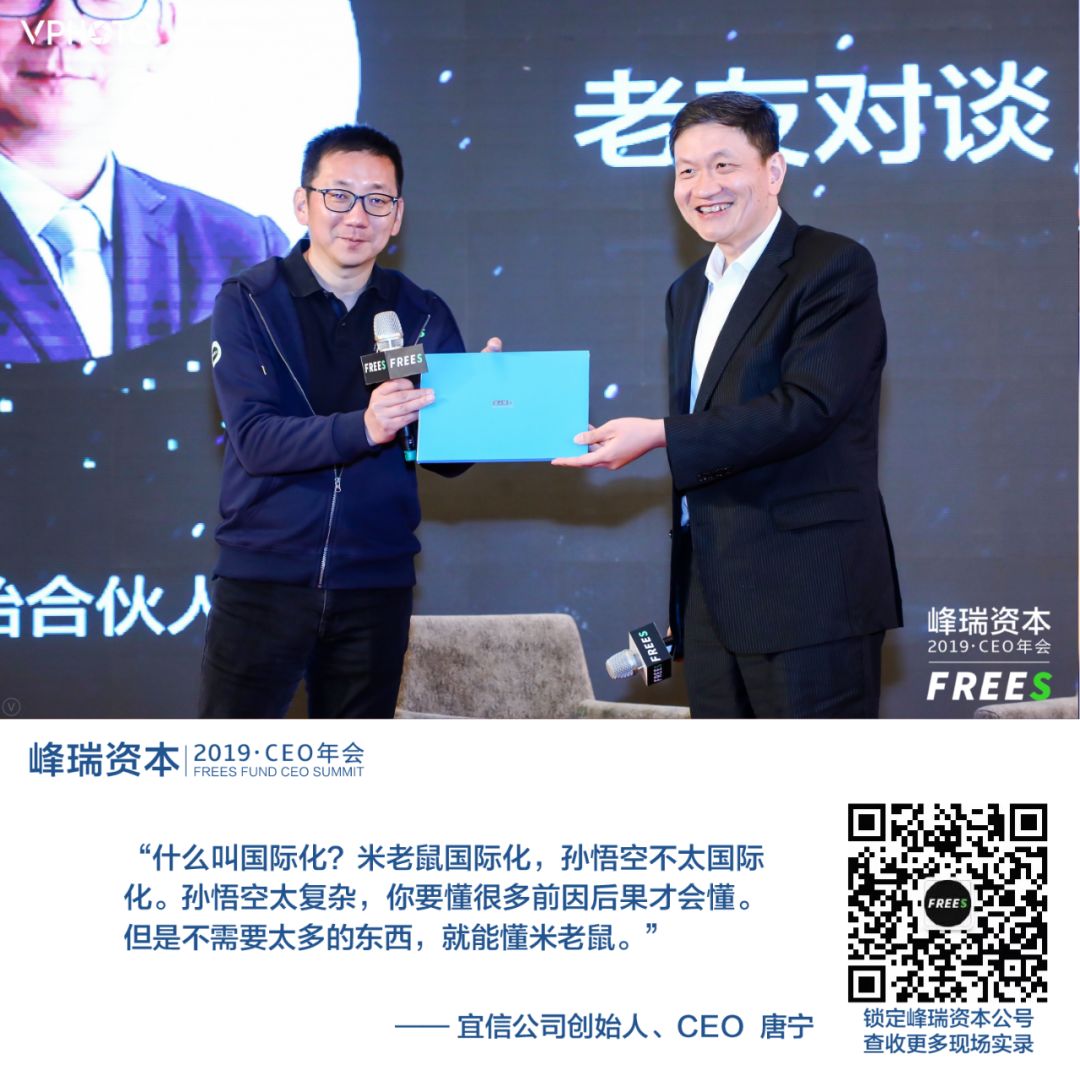
What counts as international? Mickey Mouse is international; the Monkey King isn't very international. The Monkey King is too complex — you need to understand a lot of backstory to appreciate him. But you don't need much background to understand Mickey Mouse.
In learning from, understanding, and absorbing the world's cultural treasures, we haven't done enough. Whether it's the first generation who got rich first, or children sent abroad to study, they still believe "master math, physics, and chemistry, and you'll succeed anywhere." But people need to comprehensively absorb the best of excellent cultures. American universities talk about education's purpose as cultivating someone who can contribute to society, not training a specialist. In the past we may have trained more specialists; going forward, we need more Mickey Mouses.
So if this is to happen in the future, the precondition is that we need to be more "international."
Question: What do you see as the core difference between wealth management in China versus Europe and the US?
Tang Ning: Chinese wealth management is still in the first-generation wealthy, first-generation entrepreneur stage, while in Europe and the US they're already on the fifth generation — so there's a huge difference.
From the client perspective, our entrepreneurs have a Midas-touch mentality, still very powerfully equating their entrepreneurship, their business, with their personal lives. From a societal development perspective, the Chinese market used to have government taking care of everything, financial institutions taking care of everything; going forward, companies must take responsibility themselves, and market complexity has increased. Additionally, China's first generation of wealth is now beginning to think about succession. Two trillion in assets need to pass to the next generation in a short time. Never before in human history has there been wealth succession on this scale. This is a unique historical opportunity we face, and also a major challenge. Professionalism reigns supreme — this is what every institution wanting to win in the next phase must grasp.
Today's Thought
Tang Ning said Mickey Mouse is very international, while the Monkey King isn't very international. His explanation: the Monkey King is too complex — you need to understand a lot of backstory to appreciate him — but you don't need much background knowledge to understand Mickey Mouse.
What's your view on this?
Leave a comment below with your thoughts and perspectives. The most thoughtful commenter and the two commenters with the most likes will each receive:
A "Star Blessings" (Zhuge Piglet) desktop ornament from FreeS Fund portfolio company Hui Brand, retail price 229 RMB. Deadline for participation: 9:00 PM, April 10, 2019.

Be Long-Term Greedy, Be a True Hero | FreeS Fund 2019 CEO Summit
Explore, Strive, Persist | FreeS Fund 2018 CEO Summit