How Can Early-Stage Consumer Companies Break Through in the Post-Dividend Era? | FreeS Fund 2019 CEO Annual Meeting

China never lacks high-dividend channels — you just have to stay sharp.

The term "hongli" (红利, literally "dividend" or "bonus") gets thrown around constantly in today's internet economy: traffic dividends, entry-point dividends, fan dividends, you name it. But in the past couple of years, another buzzword has entered the lexicon — "the second half of the internet" — and overnight, it seems all those dividends have vanished, replaced by ever-flatter user growth curves.
In this post-dividend era, how should companies build brand momentum? What new opportunities do category upgrades and channel upgrades create for startups? And what new marketing playbooks emerge as traffic dividends fade?
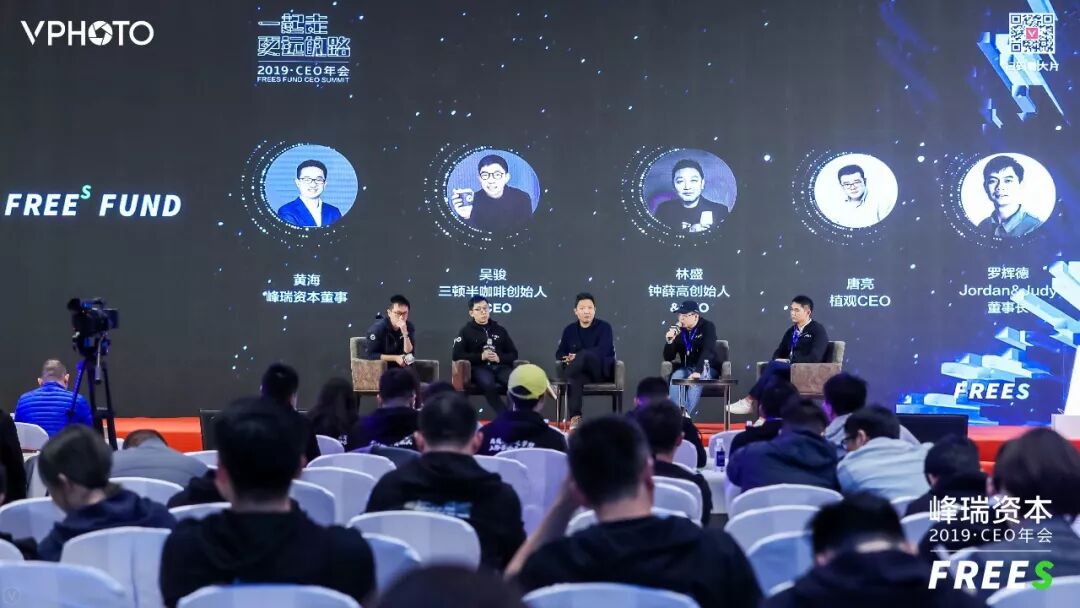
At FreeS Fund's 2019 CEO Summit, FreeS Fund Executive Director Huang Hai sat down with Wu Jun, founder & CEO of Saturnbird Coffee; Lin Sheng, founder & CEO of Chicecream; Tang Liang, CEO of Botanist; and Luo Huide, Chairman of Jordan&Judy, to discuss how early-stage consumer companies can break through in a post-dividend world.
The panelists' ventures span food and beverage, personal care, home goods, and more. We've distilled their insights below — hopefully they'll spark some ideas. Share your own thoughts on the post-dividend era at the end, and we'll send gift bags to 10 readers.


How Do Startups Win in a Post-Dividend Era?

Huang Hai, Executive Director, FreeS Fund
Email: hai@freesvc.com
I chose this topic because the era when companies could become giants simply by riding Tmall and Taobao's coattails — think how Three Squirrels took off — is clearly over. This is the reality every consumer-facing company now faces.
That makes marketing strategy and customer acquisition thinking especially critical. Founders need to figure out what makes their product model different, and identify potential partnerships both online and offline.
China Never Runs Out of High-Dividend Channels
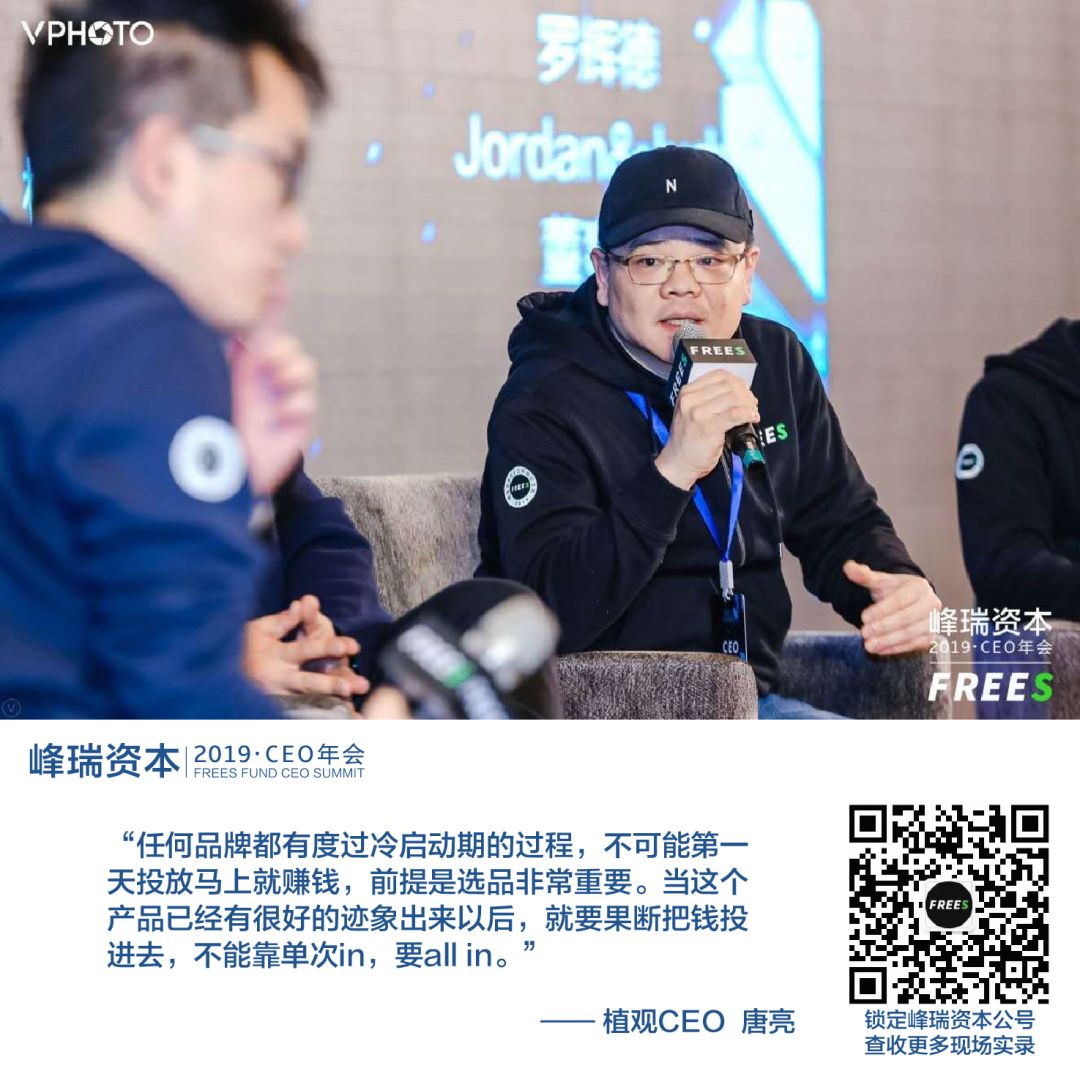
We currently have 800,000 users on WeChat and over 1 million on Tmall — about 2 million total, still very much in early stages. The "post-internet dividend" topic got me thinking about a few things.
First, every startup brand is born from some kind of dividend — either a channel dividend or a product dividend. You catch that first wave, and the brand emerges.
Second, once a brand reaches a certain scale and gets past cold start, it inevitably faces a transition. To grow bigger, you need to adjust your product mix and prepare for the next phase. In other words, after the traffic dividend births your brand, you must move toward scaled traffic.
We often say internally: a brand may be born on a high-traffic channel, but you have to escape the high-ROI trap. If you stay obsessed with ROI, you'll hit a hard ceiling.
What counts as high-ROI changes over time. When we launched in 2016, WeChat official accounts delivered incredible returns — we'd get 1:6 or 1:7, turning a few hundred thousand in spend into millions in revenue. Those days are gone. But China never runs out of high-dividend channels. 2018 was the year of Xiaohongshu and Douyin. 2019 will bring something else. China is a place where new channels constantly emerge.
So we prepare on two fronts: stay hyper-alert to catch the next high-dividend channel fast, but also remind ourselves not to get too comfortable in that cradle — you'll never grow if you stay there. You have to step out decisively and deliberately do some lower-ROI things.
To Huang Hai's point that "high-ROI channels can't be your only play; you need some lower-ROI approaches that enable faster growth, which inevitably means some early burn or losses" — my take is that product selection is critical. Pick the wrong category, and pouring money in becomes a bottomless pit. Pick the right one, and even if per-unit ROI dips below 1, the overall picture works.
We worked with KOLs early on, and ours were exceptional at product curation — sometimes better than our own marketing team. They'd seen products across every category and could tell us which would outperform others. They were usually right; they'd developed sharp intuition. We'd push the products they flagged, watch early metrics, and if the signals were positive, we'd double down.
Every brand has to survive cold start — you won't be profitable from day one. But it comes down to product judgment. Once a product shows real promise, you have to commit capital aggressively. Don't fixate on single-transaction ROI; look at all-in ROI across every channel.
Botanist's medium-term goal is to become China's #1 hair care brand. Long-term, we want to build a multi-brand portfolio like Procter & Gamble.
Small-Scale Testing: Plant Seeds Off-Platform, Harvest On-Platform

We're an ice cream company. Our flagship products are zero-additive ice creams for home consumption — we're working to convert some of that impulse street-corner ice cream buying into at-home stock-up behavior.
We're the youngest company here — launched last year, and within six months became a major presence across social media. To be precise, Chicecream is exactly one year and 13 days old today; our products went live on May 20 last year. We've moved fast, so I can't claim deep operational experience — just that we've thoroughly figured out one channel while staying alert.
First, we require our sales and marketing teams to identify new platforms, channels, and opportunities every month. We don't pre-judge whether they're good or bad. Second, once identified, we must run a small-scale test — fast. Third, after the test period (15 days or a month), data flows back, we analyze, and we decide whether to go big.
The overall philosophy: always have scouts out front probing, with the main force ready to follow. It's not exactly scientific — more about playing probabilities. But the world changes so fast now, we want to change even faster. If you ask about our customer acquisition method, that's it. Not fundamentally different from others, just institutionalized as habit.
One more thing: pure traffic arbitrage and acquisition gets exhausting. We're increasingly convinced that all "planting" happens off-platform, while "harvesting" still happens on-platform. So we weight off-platform traffic much more heavily.
That said, Taobao's traffic pool remains remarkably deep. Last Double Eleven, we got caught off guard. As a five-month-old brand, during pre-sale warm-up we hit 1.7 million store visitors in a single day — visitors, not visits. We weren't prepared; we'd never imagined that scale so soon.
When people say Tmall and Taobao dividends are over, for new brands that actually doesn't matter. The bench is so deep that even if the dividend period has passed, if you can just sit down solidly, that's plenty — enough for three years of growth at least.
On Huang Hai's question about early marketing investment and potential losses: all tactics serve strategy. You need to know your total target for this year, for next year. If what you're doing now serves that target, do it.
Of course, don't bet the farm. Keep some margin. Chicecream hasn't mastered this perfectly — during last year's hyper-growth, we made internal control mistakes. Classic case: when the team felt relatively flush, they'd substitute spending for the hard work they'd previously put in. That's dangerous.
Overall, how you view losses comes down to whether you're creating value. Profit or loss isn't the point. What matters is: after a year, or a quarter, or a month — what do you have to show for it? Users? Profit? Fans? You farmed for a year; something should remain. That's what we care about.
From Word-of-Mouth to Scaled Traffic
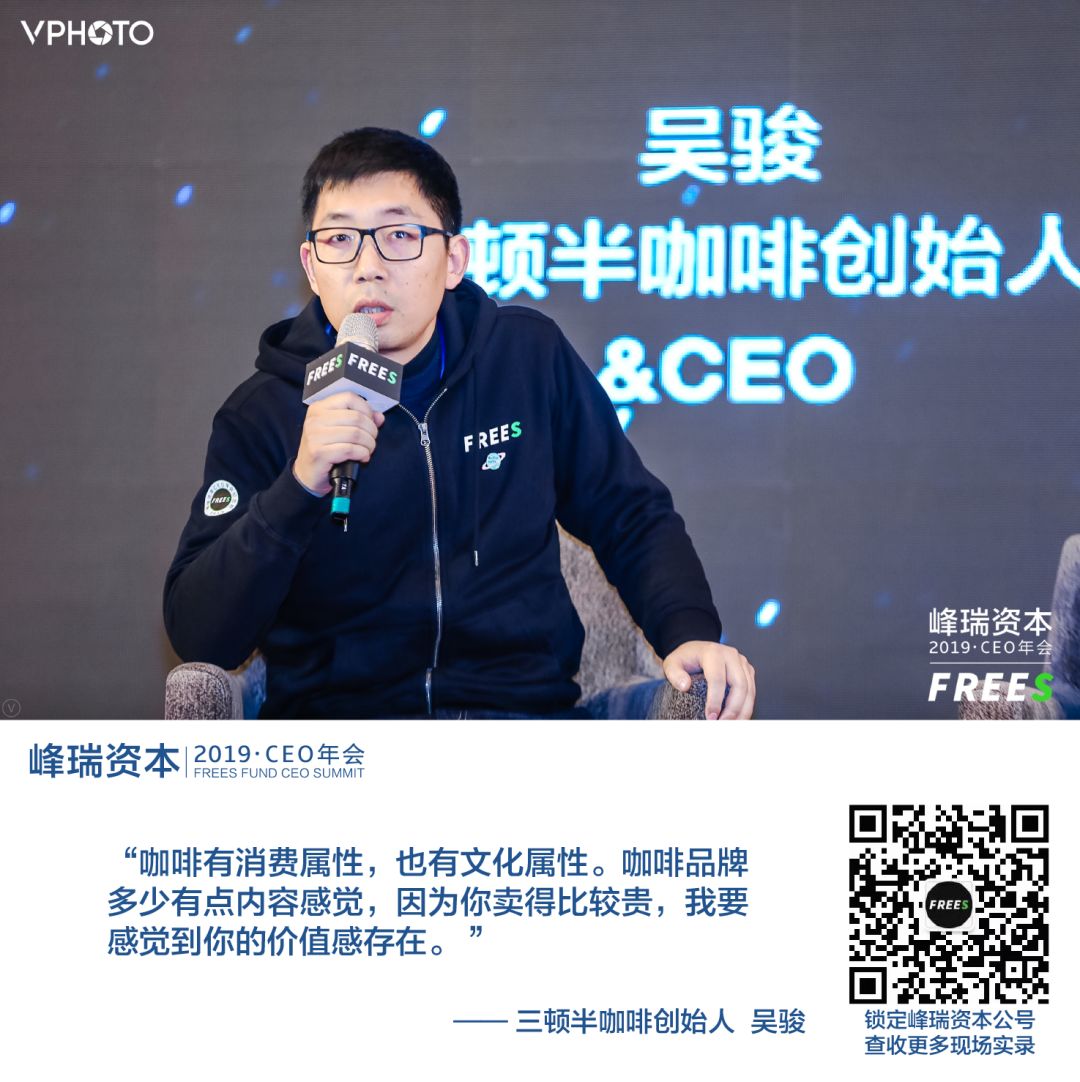
Saturnbird Coffee's main sales are on Tmall. We haven't done scaled seeding or traffic acquisition yet — early sales were entirely organic. The product launched last May, and through Double Eleven we barely spent on marketing. We'd spent two years on R&D; it has real technical differentiation — our flavor-preserving extraction technology works with hot water, cold water, even cold milk, delivering something close to freshly ground coffee.
So our products were genuinely different from existing options. The product momentum we'd built translated quickly into word-of-mouth — users spontaneously recommended us to friends. When we hit monthly sales of 2-3 million, marketing spend was under 1%, which is why we're profitable.
We also caught Double Eleven's massive traffic wave, ranking #1 among domestic coffee brands and #2 globally. Right place, right time.
But we've also recognized that beyond organic word-of-mouth, scaling traffic is the challenge every e-commerce brand faces. Weibo, WeChat, Xiaohongshu — these platforms keep changing their mechanics unpredictably. For us, it's about learning, acquiring more traffic at this stage, and preparing for scale.
For now, we're doubling down on product itself. Like serving coffee here today — people taste it, then open Tmall to order. We want more offline product experiences, more touchpoints, more refined service, more complete experiences. That's how we hope to build steadier traffic.
From Manufacturing Mindset to Brand Mindset
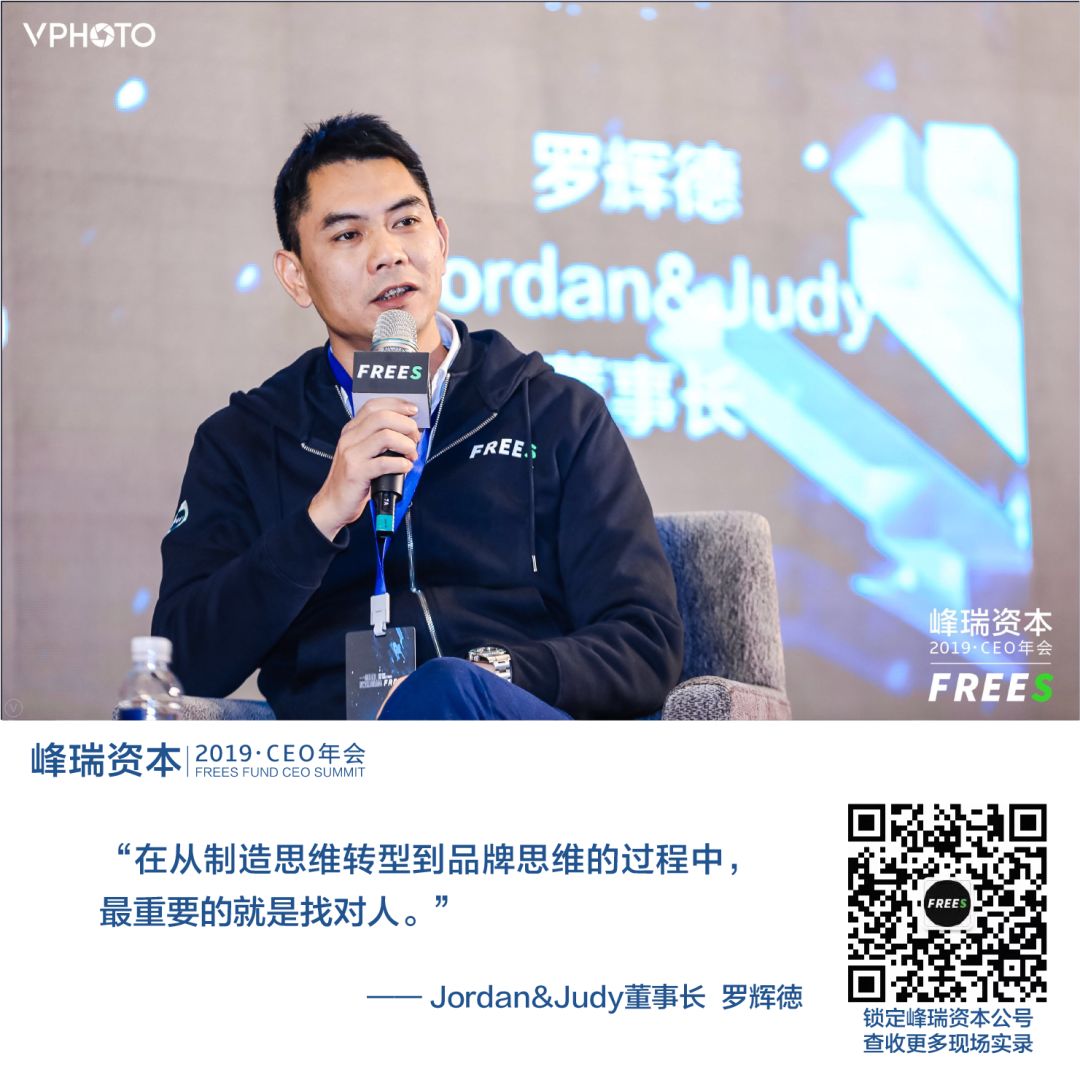
We're a MINISO and Xiaomi ecosystem company. This year we're opening offline experience stores with a product mix similar to MUJI, covering most of their categories. We're like Marie Dalgar in cosmetics — started from factory, gradually building brand strength, though our brand marketing and e-commerce capabilities still need work.
In 2018, we focused on product development and global channel distribution. Current channels include Yonghui, Freshippo, Rainbow, Xiaomi Youpin, Xiaohongshu, Yitiao, Target in the US, Natori in Japan, and others.
The key to shifting from manufacturing mindset to brand mindset is finding the right people. We've been recruiting brand marketing talent; our current team includes executives from HSTYLE, Mao King, and Procter & Gamble handling new media, brand, marketing, and e-commerce.
We've also attracted talent from Nike, Purcotton, and Yiner for our offline stores. As Luo Zhenyu said, every product in China deserves to be remade. We've invested heavily in design, packaging, and value — so even with a small SKU count (under 200, very few for daily necessities), we hit 300 million in sales last year.
This year we're planning 1,500 SKUs, targeting 800 million in sales. And that's just offline distribution — we haven't figured out e-commerce yet. Not embarrassed to say, I didn't even know what "zhongcao" (planting seeds, i.e., social seeding) meant until recently. With online traffic getting scarcer, we're prioritizing offline first. Once stores are open, we'll learn from HEYTEA and develop online content marketing that fits our brand users.
2019 Opportunities and Challenges in Consumer
Wu Jun: On opportunities — Saturnbird Coffee is now a Tmall KA (key account) merchant in instant coffee. What I've noticed is Tmall's support for innovative products, especially in resources. Tmall and Alibaba recognize that innovative products can shift traffic flows, so merchants with real product innovation get special, deeper resource support.
E-commerce operators should pay attention to Tmall. They just launched an upgraded Super Category Day — that's one angle.
Another opportunity: manufacturing. I think a major dividend over the next few years is combining China's manufacturing capabilities with consumer products. We're working on this — it's more stable.
We'll also do more peripheral and cultural products, which helps with acquisition and retention. Coffee has cultural properties beyond consumption. Coffee brands carry content weight — you're charging premium prices, so users need to feel that value.
On content and culture: I see growing opportunities. IP collaborations, content licensing, even user-generated content — the cost is lower than expected, quality is good, and barriers to collaboration aren't that high. Vlog video, for example, is exploding. Over the past two months I've met dozens of Vlog creators and KOLs. They're hungry to create, wanting to produce work with depth, independent perspective, strong point of view. If brands can land something interesting from that angle, it's a very real opportunity for us.
Lin Sheng: We haven't formally discussed "2019 opportunities" as a company. But looking at what's out there, if Chicecream had to name where opportunity lies, we'd say in content depth and richness — that's open to all consumer brands.
Simple example: last year we felt we had to do everything — Weibo, WeChat, build yourself as a media property, Xiaohongshu obviously, Douyin obviously. That's too much. Do you have the money and energy? We ran Weibo and WeChat, but knew Xiaohongshu was our anchor.
This year's good news: after re-analysis, we test where we need to, but among mainstream platforms, we'll choose one primary battlefield. Second good news: after meeting many people and analyzing Douyin and Xiaohongshu operations, we've developed some methodology. Before, we couldn't articulate it — we were still testing. But by 2019, we have enough methodology to go big on our chosen platform with confidence. That's potentially huge for us.
On content depth and richness: as a genuinely high-value brand — we sell China's most expensive ice cream — we see reviews saying "everything's great except the price." We've pushed ourselves to the "expensive" pinnacle; it's hard to come down from. In marketing too, it's hard to come down.
Last year on Douyin, the biggest hits were comedy skits, singing videos — we knew why they worked, but would we parody our own brand? Probably not. You know what people like, but if it doesn't fit your brand, you can't do it.
This year we can sense what's trending up versus down. The upward trends happen to align better with our brand tone — we're thrilled, because we can lean in hard. So 2019 is a massive opportunity for Chicecream. And Tmall opportunity is always there.
Tang Liang: This year both Alibaba and JD.com are talking about "user下沉" (user下沉, reaching lower-tier cities) — that's the most important trend. We were similar to Saturnbird and Chicecream at birth: niche market, unique category, great product, purpose-built brand.
Our first shampoo targeted Kiehl's — they charge 170 yuan, we charged 70, which we thought was great value. But third and fourth-tier cities didn't know Kiehl's had amino acid shampoo, so they still found us expensive. In China, first-tier cities build reputation; third and fourth-tier cities build real revenue.
Previously, without e-commerce, a single brand faced channel challenges — you needed massive coverage and high margins. Now with Alibaba and JD.com pushing channel下沉, we can use these channels to reach people we couldn't before in tier 2-4 cities. How to meet their needs? Otherwise we stay an aloof brand.
We recently talked with Three Squirrels' Zhang Liaoyuan. He said users are pragmatic — how do we acquire more of them, leverage China's massive consumer market volume, and grow fast? That's what matters. Don't cling to what you think is "right." Get the business built fast. That's the huge opportunity I see.
Luo Huide: For lifestyle home goods, the big opportunity is still in differentiated offline stores. For brand marketing and internet, my strategy is: trust the team fully, let them run with clear targets and sufficient funding.
China's lifestyle home goods break into three types: MINISO (high quality, low price, buy with eyes closed, dense channel coverage — eight stores on Beijing Road in Guangzhou alone, blocking competitors); MUJI-style retailers; and niche designer brands.
Our positioning: a lifestyle brand better suited for Chinese people, through original design, hit-product thinking, high-frequency SKU updates, with a simple, fashionable, fun, slightly trendy design philosophy, matching new-generation consumption values.
China's shopping malls will add another 100-200 this year. So we're working to win offline retail dividends (the continued expansion and下沉 of commercial real estate) through distinctive spatial design, plus brand strength, product strength, operational strength, and supply chain advantages.
Key Takeaways
In 2019, consumer opportunities exist both offline and online, including but not limited to:
1. China never runs out of high-dividend channels — stay alert.
2. Focus on long-term ROI, escape the high-ROI trap. Product selection judgment is critical; when a product shows strong signals, commit capital decisively.
3. Test new platforms, channels, and opportunities at small scale. The philosophy: always have scouts probing ahead, main force following.
4. Plant seeds off-platform, harvest on-platform. Taobao's traffic pool is deep enough that even post-dividend, new brands can succeed by executing solidly.
5. Build distinctive product attributes (e.g., giving coffee cultural dimensions), strengthen offline product interaction experiences that drive online conversion.
6. For high-frequency goods (tissues, cosmetics, etc.), on top of product-category fit, consolidate and strengthen existing sales channels to capture offline retail dividends.
Today's Question
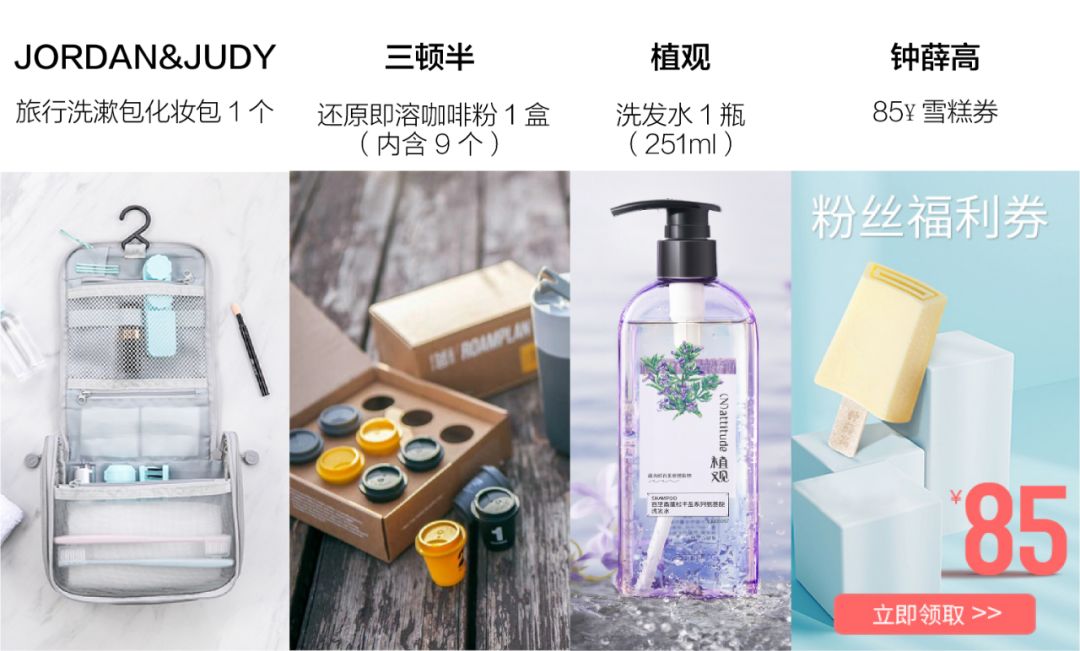
If you have unique perspectives on the "post-dividend era," share them in the comments. We'll send gift bags (two random items each) from Jordan&Judy, Botanist, Saturnbird Coffee, and Chicecream to the top 5 most-liked comments and 5 most thoughtful comments. Deadline: 9 PM, April 15, 2019. Thanks for reading.

Feel free to share to your Moments. For republication on other platforms, reply "转载" for our republication rules and contact "Feng Xiaorui" (WeChat ID: freesfund) for authorization. All rights reserved by FreeS Fund.

Tang Ning × Li Feng: Truly Great Companies Are Controversial | FreeS Fund 2019 CEO Summit
Be Long-Term Greedy, Be a True Hero | FreeS Fund 2019 CEO Summit