Wu Minghui, Minglamp Technology: Every New Data Point Drives Business Model Iteration | FreeS Fund 2019 CEO Annual Meeting

Why haven't Chinese software and data companies made serious money?

There was once a question on Zhihu: Which domestic companies don't make their programmers work overtime?
It attracted little attention. At a time when 996-worshipping companies were everywhere, among the handful of answers, only one company was named: Miaozhen Systems. That answer was written three years ago, back when 996 hadn't yet provoked such intense backlash from the programmer community.
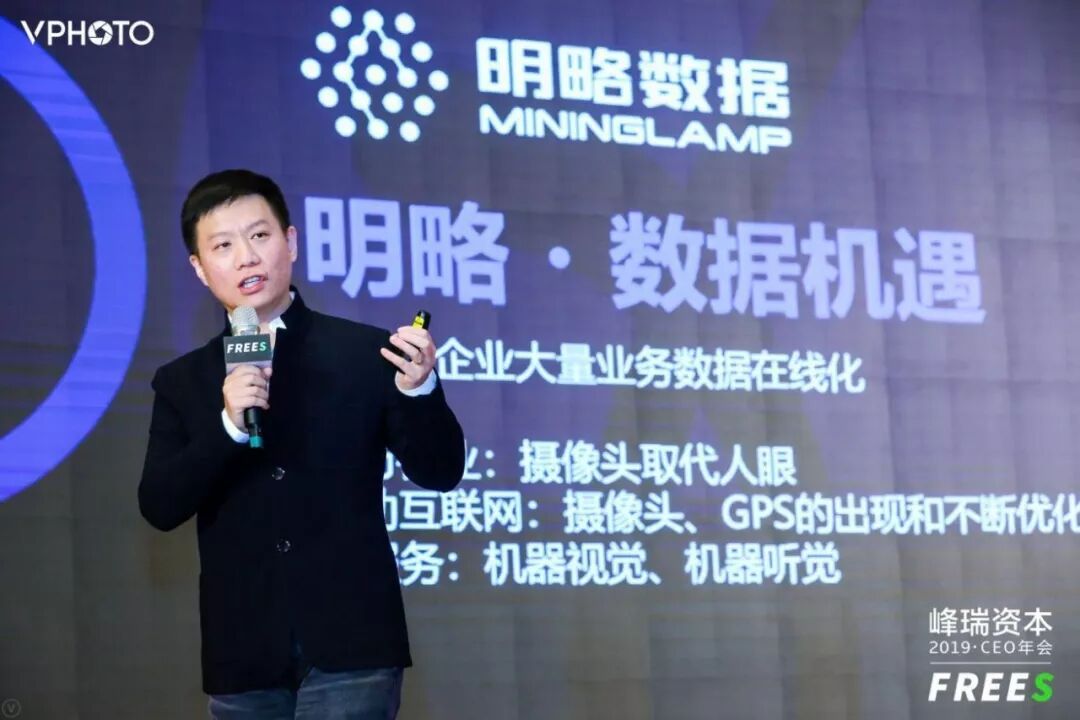
On March 30, at FreeS Fund's 2019 CEO Annual Meeting, Wu Minghui, founder of Miaozhen Systems, delivered a keynote speech. A Peking University math department graduate, Wu is a serial successful entrepreneur. At the end of 2006, he co-founded Miaozhen Systems with Feng Shu (Li Feng). Later, Feng Shu left to become an investor, while Wu persisted on the front lines of entrepreneurship, growing Miaozhen into China's largest internet advertising data analytics provider. In 2014, Wu founded MiningLamp Data, digging deep into AI applications in finance, industry, security, and digital cities. This March, MiningLamp Data was upgraded to MiningLamp Technology Group, with Wu serving as Chairman and CEO, announcing the completion of a 2 billion RMB Series D funding round.
Wu, who describes himself as having worked with data every day for over a decade doing data analytics-related business, shared his understanding of enterprise services, business models for big data applications, and artificial intelligence. After the speech, his old friend Feng Shu asked him two soul-searching questions. We've edited and organized the content to share with you, hoping it provides some inspiration.

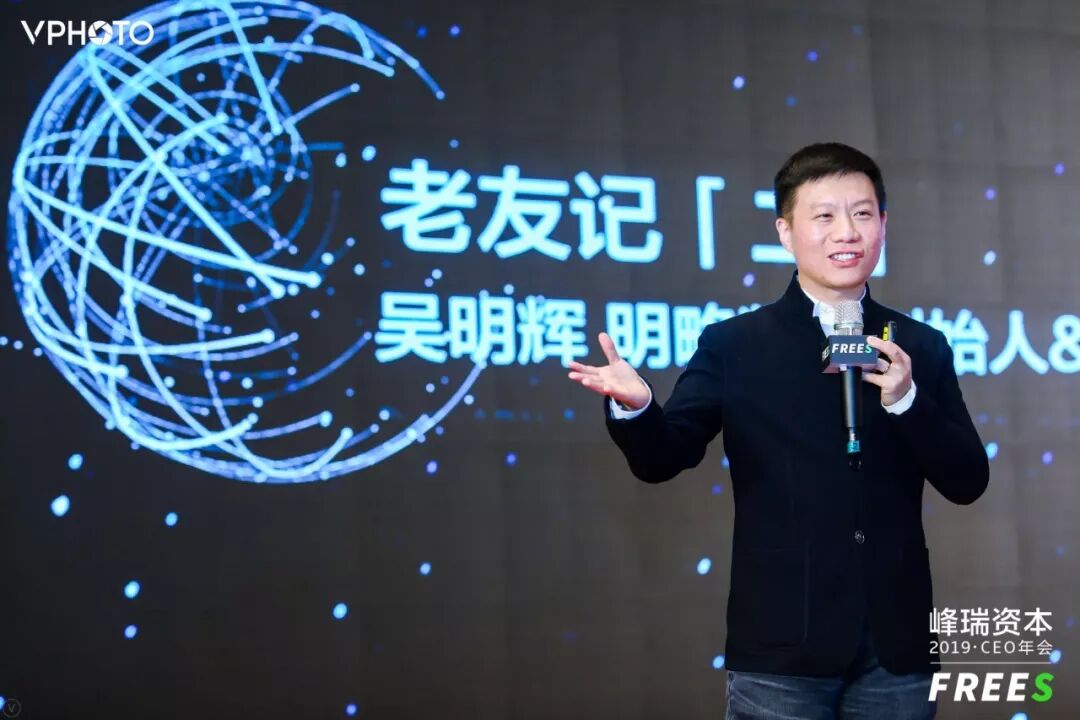
MingLamp Technology's Wu Minghui: Every New Data Source Brings Iteration of Business Models
Source: Wu Minghui's sharing at FreeS Fund's 2019 CEO Annual Meeting

AI Closed-Loop Implementation in Three Steps: Perception, Cognition, Action
Our company has always been in enterprise services, and the vast majority of our business is data-related, so today I'm sharing my experiences and ideas from doing enterprise services over the past decade or so.
Miaozhen Systems is China's largest internet advertising data analytics provider. Whether you're here buying ads or selling media, you more or less have some relationship with us. Every consumer on the internet, whether on PC or mobile, sees ads that are monitored and tracked by our company nine times out of ten. So we possess the most powerful online user behavior data analytics capability in China, second only to BAT.
When I named the company Miaozhen (which means "second hand" of a clock), a friend told me it was a great name for an ad monitoring service. My mother used to work at an alarm clock factory. The ad before the CCTV Evening News was called "The Evening News reports the time for you." If you're older than me, you've probably seen that ad. I grew up repairing alarm clocks and watches at home, and my mother's work at the Yantai Alarm Clock Factory was remarkably similar to what Miaozhen does — she did quality inspection.
Every day when I visited my mother's workplace, I saw whole walls of cabinets in her office, filled with all kinds of alarm clocks and watches. She would often take several watches and alarm clocks, set them to standard time, run them for two or three days, then check how much the times differed. If they were unreliable, that production line would be shut down.
The business I started in 2014 had a lot to do with my father, because the biggest client was the public security bureau — my father is a police officer. I didn't consult them about this business, and they didn't help in any way, but to this day it's doing quite well.
Recently we upgraded MiningLamp Data to MiningLamp Technology Group with a clear goal. Previously we mainly did data business, but today much of our work has transitioned from simply helping clients build big data platforms to doing various AI applications on top of them. So today's positioning for MiningLamp is: we hope to help clients build complete, closed-loop AI solutions in certain vertical domains — the "Perception-Cognition-Action" loop.
First is connecting perception and cognition. Perception AI is familiar to everyone — companies like SenseTime and Megvii are in facial recognition and image recognition. My graduate major at Peking University was precisely this field, though back then facial recognition wasn't trendy; we worked on fingerprints and palm prints.
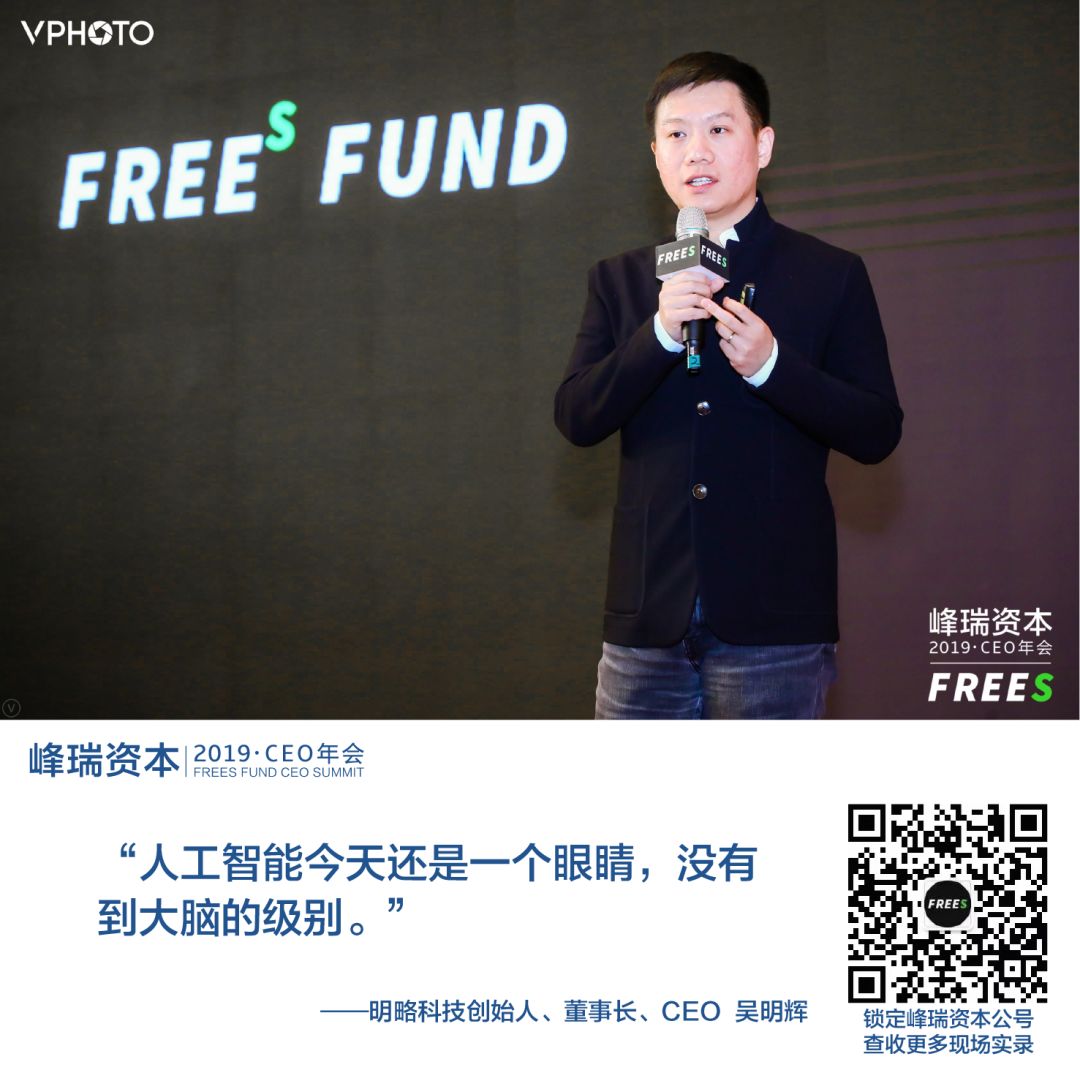
Cognition is more complex. AI today is still just eyes, not yet at the brain level. We've attempted to help public security systems with analysis and decision-making at this cognitive stage.
For example, at a typical crime scene, the video footage retrieved may not clearly show who the suspect is. Even if it does, China has a facial database of 1.4 billion people, and at least 10,000 people will have a similarity score exceeding 70%. Sometimes the person with 70-something percent similarity is the suspect, while someone over 80% isn't.
In the process of solving cases, after using facial recognition — the "eyes" — simply screening out these 10,000 people doesn't crack the case, because you can't bring all 10,000 in for interrogation. So the subsequent relationship analysis work is what MiningLamp does — we have to analyze who among these 10,000 has a criminal record, who has an alibi, who has conflicts of interest with the victim, and so on, involving massive comprehensive data-based analysis. So today we're making AI products with analytical decision-making capabilities, having moved beyond the perception stage into cognition.
Using AI to Catch "Mice" in Vertical Industries
Over the past decade or so, many people have claimed to have big data, claiming their data-based products can make money. But in reality, our company's valuation isn't that high compared to To C companies — we're at roughly two to three billion USD. I've been thinking about why Chinese software companies haven't made big money, and why data companies haven't made big money either. I'd like to share some thoughts on this.
First, let's look at a video. This is a restaurant kitchen, and in the red box is a rat. Recently we've been working on this business — using AI to help kitchens identify rats. Previously our company counted ad impressions; now this counts rat appearances.
So far, all the restaurant kitchens we've served take rat control very seriously, because worldwide there are more than three times as many rats as people. You don't normally see them, but they need to eat, so they often emerge in kitchens after 11 PM or midnight. So food safety is a major issue, and listed restaurant companies have this problem too — once discovered, it's an incident that can lead to serious consequences.
A typical restaurant spends one to two thousand RMB per month checking whether their kitchen has rats. The irrational part is, even if you hire this company, you can't actually check, because rats don't come out during the day, only at night. And this requires expensive labor — the best experts go to the kitchen, take one sniff, say there are rats here, find rat footprints, study how they move, figure out which hole they came from, block the hole, and maybe the rats won't come out.
So far, in every kitchen we've seen, if there's even a tiny bit of residue not cleaned up, rats will smell it and come out, especially in Chinese restaurants, though Western restaurants are similar too. On the high end, rats emerge more than ten times; on the low end, three to five times.
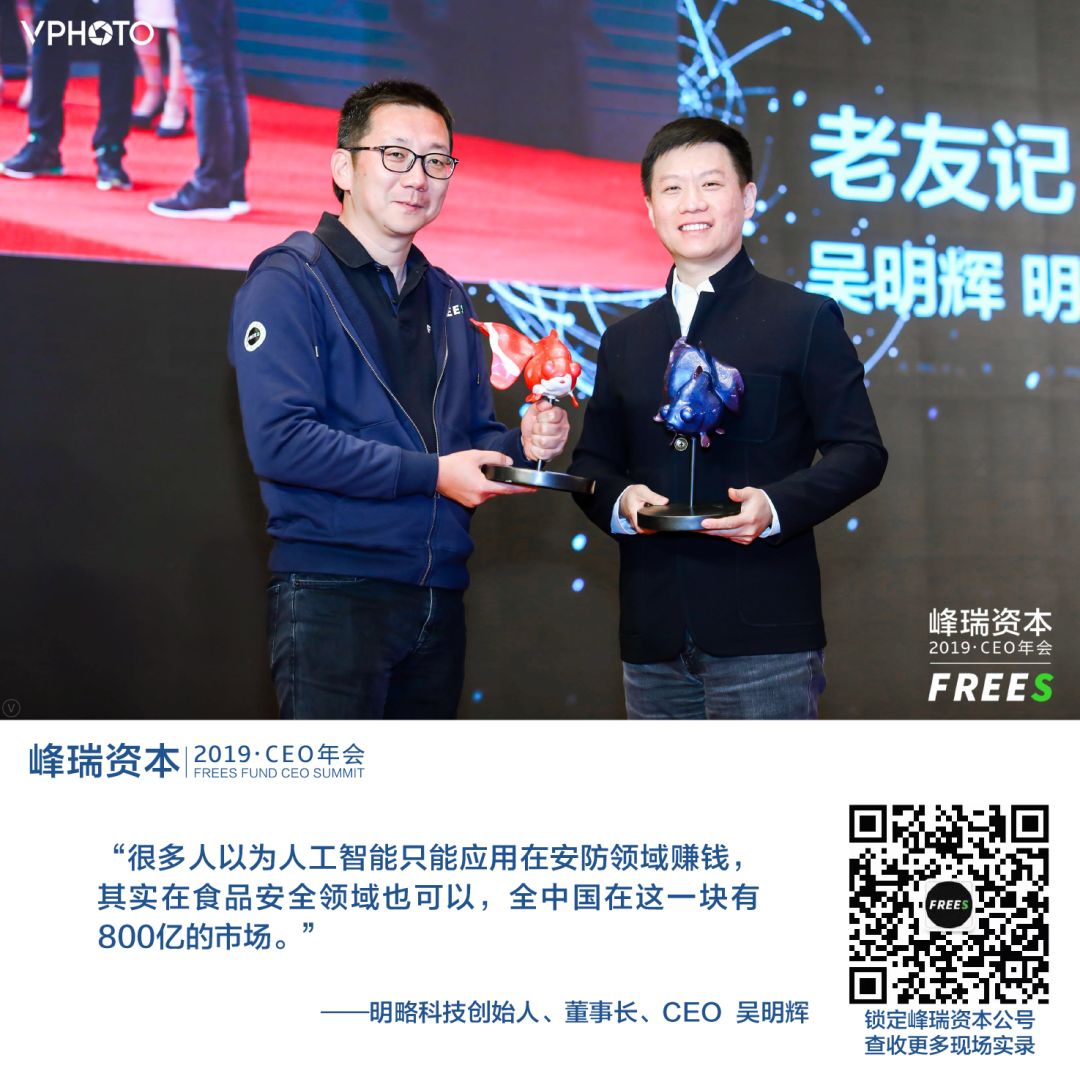
A dining establishment spends 10,000 RMB per year on kitchen hygiene and safety. With 8 million restaurant enterprises in China, if all restaurants followed national food safety requirements, this alone would be an 80 billion RMB market in China — a massive market.
Many people think AI can only make money in security applications, but actually it works in food safety too. To do this, we rented an office and raised rats, writing AI algorithms to identify them. It's going quite well now — we can determine rats' trajectories.
Once this technology detects no rats, it first saves pest control people from making wasted trips. If rats are detected, based on the trajectories we provide, the pest control people come and directly block the holes, improving overall work efficiency by a factor of three. This is recurring business — after you block the holes, rats reappear in about one or two months because they dig new ones.
Beyond monitoring kitchen food safety, AI video analytics can also identify kitchen staff. You may have heard of the "Bright Kitchen, Clean Stove" initiative, where restaurants display their kitchens on large screens. The kitchens look clean in the video, but staff might not be wearing masks or gloves — these can also be identified with AI.
AI can also monitor front-of-house operations to improve efficiency. Through video recognition, it can see every staff member and customer, and track food serving speed.
For example, KFC requires that if a customer raises their hand at a table, staff must respond within 30 seconds according to regulations. Previously no one could analyze whether such service quality was being achieved; today AI can handle this — showing food serving speed, payment speed, and service speed.
Or, if trash suddenly falls on the floor and normally no one deals with it, this indicates poor restaurant hygiene and quality management, which AI can also help identify.
Beyond image recognition, AI can do voice recognition. For example, all conversations between service staff and customers during service can be collected through audio collection devices — microphones are already on ordering devices. From these conversations, we can analyze how staff are doing sales, because if staff make good recommendations during ordering, it can increase the table's average ticket size. This technology can better assist restaurant CEOs in managing service staff and even help with training.
Another example: we previously served clients like Procter & Gamble, which has tens of thousands of counters nationwide. When their beauty consultants sell products, how good are their techniques? These can all be analyzed and optimized through voice recognition technology.
Before our company existed, this was the work of companies like Nielsen, which were competitors to Miaozhen. Previously, market research companies like Nielsen helped many offline service industries with "mystery shoppers" — you may not have heard of this, but there's a comparable concept in the hotel industry called "sleep testers." When many offline service industries open one or two thousand stores nationwide, headquarters wants to know the quality of service at each store, so they hire a market research company to do spot checks, score them, and report back uniformly. However, data obtained through this sampling method is easily contaminated.
New Data Sources Bring Iteration of Business Models Across Industries
Regarding so-called new data, I have a view: technology is constantly evolving, with new hardware and new sensors emerging every day, and with them come new data sources. Every time new data emerges, it brings iteration of business models across industries.
Previously data was collected through surveys and questionnaires; today it's collected through the internet — faster, more timely, with higher resolution. Assuming you have back-end data processing capabilities, you should theoretically be able to disrupt the previous generation of providers doing efficiency optimization work in that vertical.
This was exactly what Miaozhen's business did from the start — mainly helping clients analyze and optimize ad placements, monitor e-commerce operations, official websites, official Weibo accounts, and so on, including online social listening. We help over 2,000 brands worldwide listen to online word-of-mouth and their competitors' word-of-mouth, providing them with real-time recommendations.
Before Miaozhen's technology, this was what companies like Nielsen did. When they analyzed word-of-mouth, they would go offline and do sampling surveys, asking some student how they felt about a certain cosmetic product. Today, if consumers post their opinions on Weibo, it can all be scraped online — more timely feedback, larger data volumes.
Another example: previously TV ratings were measured through set-top boxes, but back then with over 20 million permanent residents in Beijing, there were only 800 set-top boxes. This data could easily be manipulated — I could give you 10,000 RMB to watch a certain TV channel every day, and this cheating could affect tens of millions in ad spending. If measured through Miaozhen Systems, anti-fraud capabilities would be much stronger.
Including public security work — previously police did manual investigation and clue-finding, but today there are all kinds of sensors. From ubiquitous ID card scanning, various real-name authentication systems, to ubiquitous cameras, through this image data, we can do both portrait analysis and vehicle analysis.
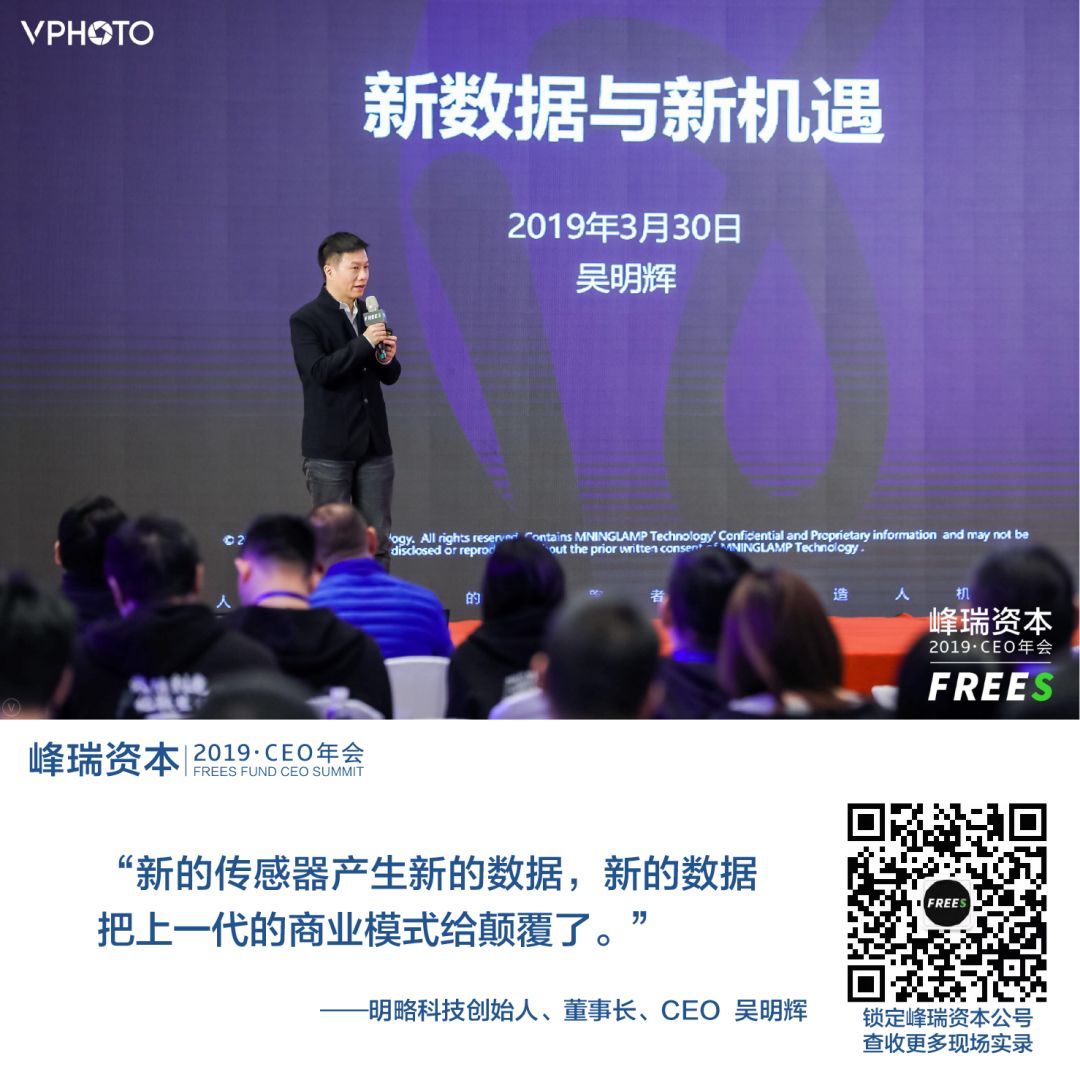
In short, new sensors produce new data, new data disrupts the previous generation's business models, and we need to find our opportunities by doing business in vertical industries.
Our company is quite diversified today. My main role in the company is looking at different industries to see what efficiency problems they have, whether there are new data and technologies that can solve these problems, then selecting vertical industry tracks to pursue — like the restaurant industry mentioned above, which is quite interesting.
Previously we served a Fortune 500 food processing company, originally helping them with ad monitoring. Then one day we helped them with a rat-catching product.
They said, how did you think of this business? I said, fundamentally it's all monitoring. They desperately needed this service, because their food raw materials — like the chocolate you eat — if a rat gets into the chocolate raw material pot, it's terrifying. They've had this accident before: a rat appeared in the pot, and tens of millions worth of chocolate slurry was wasted. So spending several hundred thousand to solve this problem is quite meaningful.
Whether using AI, big data, or IoT, MiningLamp Technology is essentially a one-stop AI solution provider. We help clients aggregate all collectable data — voice collection devices, video collection devices, IoT, and everything else — forming a complete brain system in the back end to help clients discover and solve problems.
Solving problems is extremely important. I've seen some data service companies with excellent technology in hand, like facial recognition, but facial recognition at the client is just recognition — after recognition, nothing can be done. For example, with rat-catching, just discovering rats is useless to the client. The client will ask: you found so many rats for me, but what do I do about them, how do I solve it? We invented a product that adds a microphone to the camera. As soon as a rat appears, it immediately plays cat sounds.
So AI needs to proceed in three steps: first perception, then cognition, then action. When we implement AI at a client, it's also three steps — perception is collecting all kinds of data and connecting it; cognition is humans and data interacting together, analyzing and researching what to do before a complete closed loop is formed; the final step is forming an automatic closed-loop feedback to help the client solve the problem.
For such an ultimate solution, clients will definitely pay, because data itself is worthless and has no value to clients. Many people say they have big data, but that's meaningless and worthless. What's valuable? According to Marx's economic theory, you're valuable if you can help others save time, or help others create opportunities for action.
If on this closed loop, we can help clients continuously iterate and optimize, making a restaurant's execution efficiency increasingly higher, so that the extra time and energy can be invested in more dish innovation and service innovation — that's what the whole company hopes to accomplish.
When we do enterprise services, we're constantly thinking: in each specific scenario, which action does each technology promote for the client to execute. MiningLamp Technology Group's mission is to use AI technology to make organizations operate efficiently and accelerate innovation.
When we previously did ad monitoring, we found that for advertisers like P&G, once you gave them ad monitoring results, they could act on it themselves and would pay for it. They took the data, found which media had lots of fraud, stopped investing in that media, and saved money.
But when facing SMEs, if you gave them a bunch of ad monitoring data, they might not even have anyone to look at the data, and they lack execution capability — they don't know what plan to make after getting the data. So facing SMEs, no one has ever made money in the data analytics business. Actually many people have made money from SMEs in advertising, like BAT, by directly helping SMEs optimize ads and directly bringing sales revenue and traffic.
We recently released a new logo that I particularly like. The character on it is the Chinese cursive script "明" (ming), written by the Sage of Calligraphy Wang Xizhi. This "明" character symbolizes the sun and moon — it's a pictograph. When I was conceptualizing this logo, I was thinking about how when Wang Xizhi wrote this character, it particularly resembled the three numbers 1, 2, 3 combined together. In naming it, we transformed a pictograph into the globally universal 123 symbol — essentially digitizing the world.
The work of AI is also first to digitize the world; after digitization, form the closed loop of perception, cognition, and finally action and decision-making — only then can ultimate AI results be achieved.
Old Friends Q&A
After Wu Minghui finished his speech, Feng Shu asked him two questions. Wu's candid answers are shared with you as well.
Feng Shu: In these 12 years of entrepreneurship, what's the biggest difficulty you've experienced?
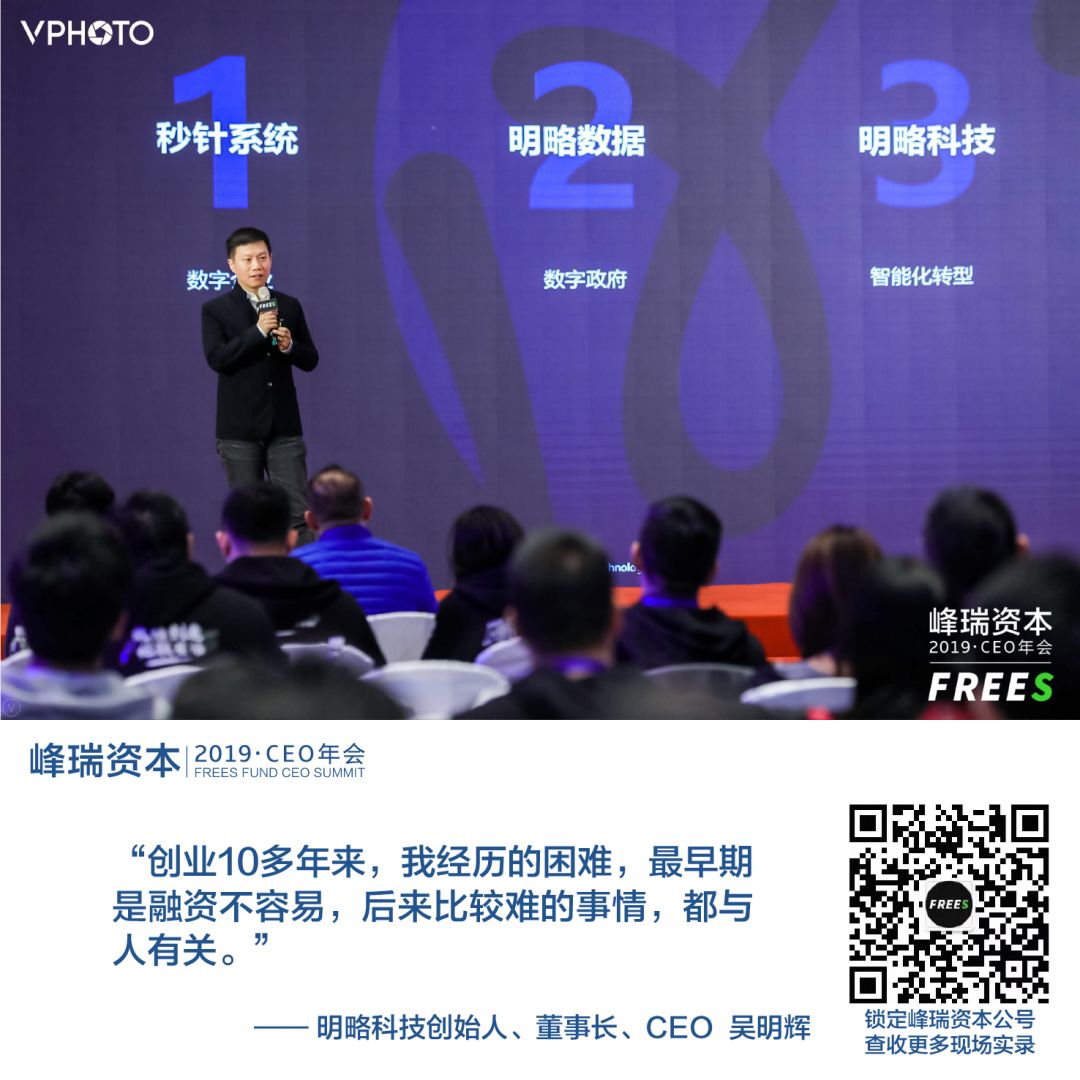
Wu Minghui: The difficulties I've experienced — besides fundraising being hard in the very early days, later fundraising went quite smoothly. The harder things have all been people-related. For example, when Li Feng, who was also a founder of Miaozhen, left, I was very reluctant. When we first started, I hadn't even graduated from graduate school yet, and I went straight into enterprise services. The company lacked mature management talent and was clearly not very reliable. Of course, today if I do enterprise services, it's much more reliable.
When I founded MiningLamp in 2014, since I was still CEO of Miaozhen, and I couldn't simultaneously be CEO of two companies, I hired a senior executive to help. But the entire team actually spent more than half a year without clarifying the business direction. During this process, this executive gave up, and I was thrust into managing MiningLamp myself. Then I spent half a year finding the security direction to切入 (enter).
During this process, another very important thing is that throughout a company's development, founders and partners will inevitably keep changing. I previously talked with an HR executive from Huawei — among a company's founders, partners, and veterans, if there are 10 people, after several years of development, about 30% can keep advancing with the company's development pace; another 30%, at a certain stage, can't keep going — maybe they'll always just be a director, and if the company grows bigger, they might not even remain a director; and 40% will start declining at a certain stage.
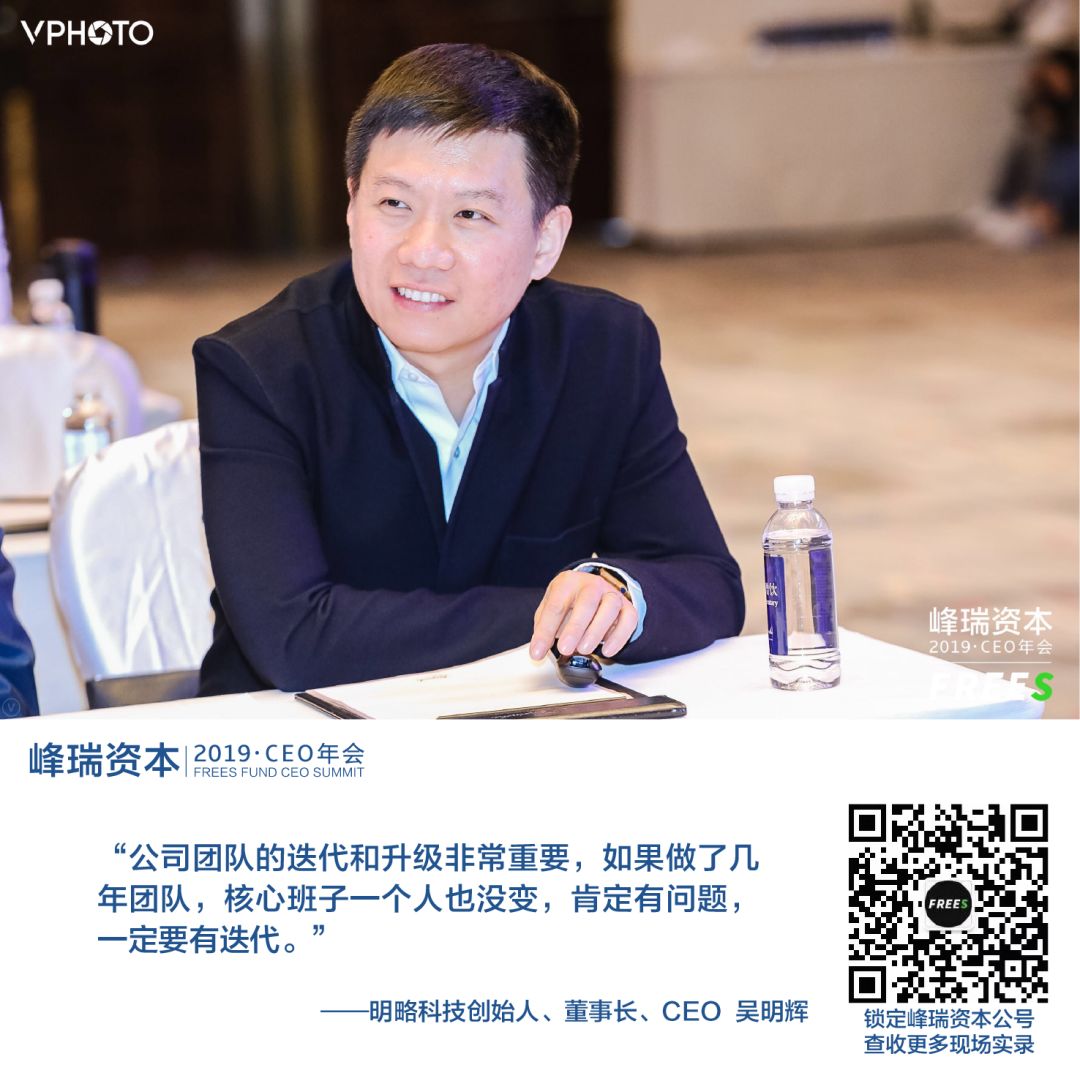
So team iteration and upgrading is extremely important. If you've been doing this for years and not a single person in the core team has changed, there's definitely a problem — there must be iteration.
During iteration, it involves how to part ways peacefully, or how original equity was structured. Some companies fall apart during this process. MiningLamp has gone through several rounds of dynamic equity adjustments; I thought of many ways to get to today, and many partners have stayed. This is quite a difficult thing — raising money is easy, but distributing money is hard.
Feng Shu: How do you view hiring many smart people in the company, and what methods do you use to retain them?
Wu Minghui: At different stages, you need different people. Alibaba started with people from Hangzhou Normal University, then Tsinghua and Peking University people, and now the top layer is Harvard and Yale people. When your business model isn't clear, the best people have too many choices and high opportunity costs, so they're hard to retain. Most of the time, the people you can retain from day one, who'll work with you, definitely aren't the best batch. But in this process, you need to help people with potential become the best, and of course some people won't grow and will eventually be eliminated.
In the process of retaining people, you need to strengthen everyone's learning and growth. First is the founder's own learning and growth — I've attended many learning programs, with many classmates and teachers. Furthermore, I require all senior executives to clearly understand what they need to learn this year, and I'll spend money finding teachers and courses for them, helping them grow together with the company's business. Because any enterprise can't rely on one product to conquer everything. Like Miaozhen's ad monitoring product has been running for nearly 13 years; this product today, moving forward, might have three or four more years of 50% growth, then it will definitely decline. If a company stops growing, problems arise, because all companies rely on growth to sustain everyone. So products must be diversified.
In a company, how to get people who originally worked on technology with you to gradually transition from technology to running projects — this is difficult. They need to learn to independently operate a business line, which is also a particularly challenging process requiring learning, especially difficult in the enterprise services domain because it requires very deep understanding of society and industries.
Looking at the world's major To B companies today, whether Alibaba or Huawei, they're all companies with strong value orientation and strong culture building. I've also done extensive culture building in my company, constantly giving everyone "ideological and political lessons," doing values communication.
Welcome to share to your Moments. For reprinting to other official accounts, websites, or mobile apps, please reply "reprint" to learn reprint rules, and contact "Feng Xiaorui" (ID: freesfund) for authorization. Copyright belongs to FreeS Fund.

▲ Ning Tang × Li Feng: Truly Good Companies Must Be Controversial | FreeS Fund 2019 CEO Annual Meeting
▲ Be Long-Term Greedy, Be a True Hero | FreeS Fund 2019 CEO Annual Meeting