Li Feng: One Chart to Decode Biotech Innovation Opportunities | Your Complete Guide to the FreeS Fund 2020 Biomedical Summit

Three Livestreams and One Offline Symposium, Decoding the Era of Biomedical Innovation
Since its founding in 2015, FreeS Fund has consistently bet on the growth of biopharma innovation in China. We believe the country will inevitably give rise to era-defining biotech companies on par with Genentech, Moderna, Alnylam, Spark, and Nimbus Therapeutics. With that conviction, we've spent five years building our biopharma investment capabilities from scratch, riding the wave of surging innovation and standing by our portfolio companies as they've navigated their challenges.
In 2020, the value of biopharma innovation became even more pronounced, making it the hottest sector in capital markets. In mid-September, we held a biopharma-focused Open Day in Beijing. There, Feng Li, founding partner of FreeS Fund, looked back on five years of biopharma investing and explained why we remain so bullish on China's biopharma innovation. In our view, Chinese biotech innovation sits at the intersection of "three overlapping cycles" — a convergence that separates the wheat from the chaff. Today, we're sharing his remarks in full, hoping they offer some useful perspective.
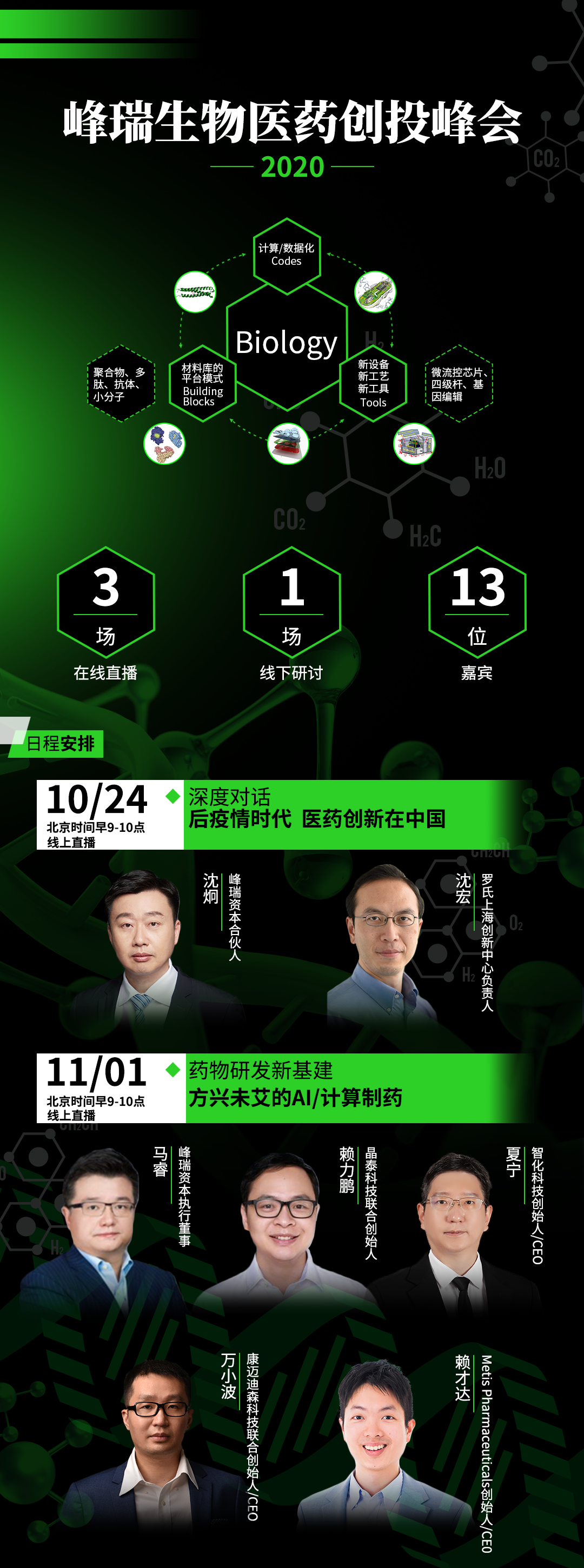
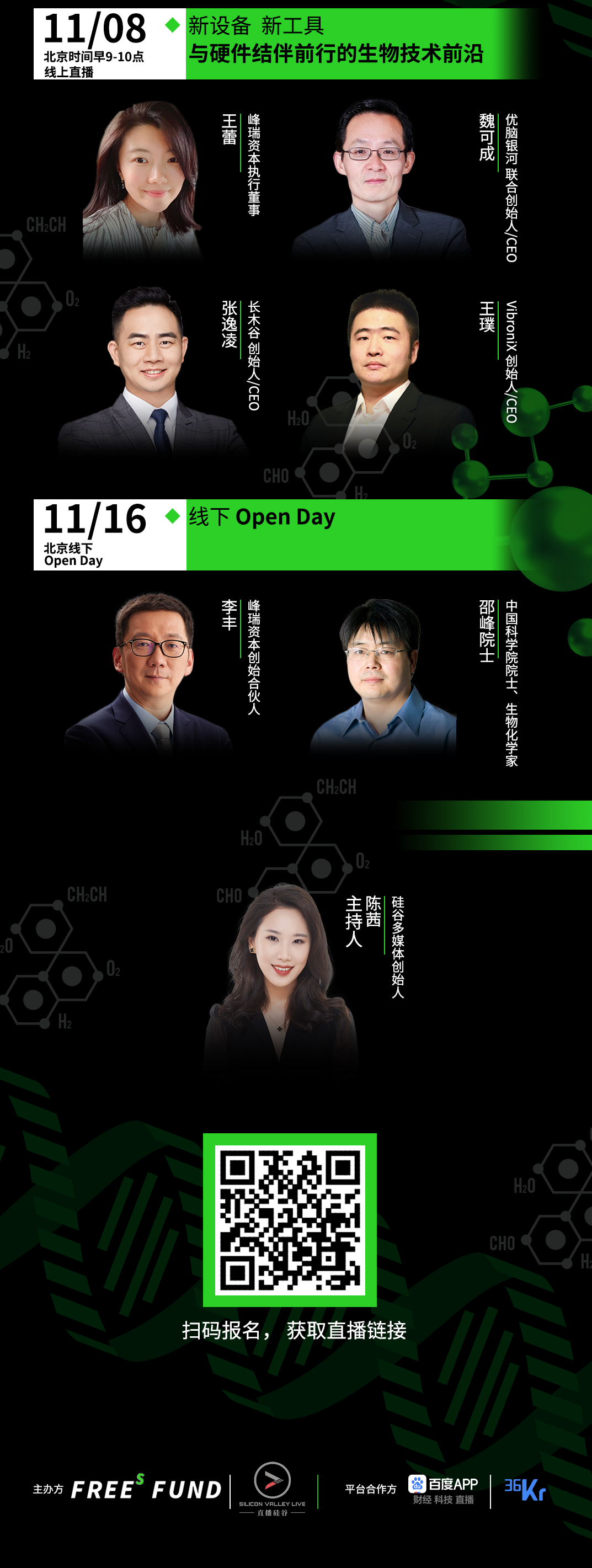
Equally important, a quick announcement: next Saturday, October 24, we'll kick off the FreeS Fund 2020 Biopharma Venture Capital Summit — three online livestreams and one offline seminar, continuing to decode the great era of biopharma innovation.
The summit will bring together scientists, industry experts, early-stage investors, and founders on the front lines. Speakers including Feng Shao, academician at the Chinese Academy of Sciences and biochemist; Hong Shen, head of Roche Shanghai Innovation Center; the FreeS Fund biopharma investment team; and Lipeng Lai, founder of XtalPi, a leading AI drug screening company, will delve into forward-looking biotech trends, COVID-19 research and vaccine development, gene editing, pyroptosis, and other frontier topics — charting directions for the health industry's post-pandemic future. Researchers, industry experts, and entrepreneurs in the health sector are welcome to register.
Scan the QR code in the poster above 👆
to register for the FreeS Fund 2020 Biopharma Venture Capital Summit

Feng Li of FreeS Fund: Understanding Innovation Opportunities in Biotech, in One Chart
While our backgrounds skew toward consumer and TMT, our actual investment results show that beyond consumer/TMT, tech and biopharma are the other two areas where we've placed substantial bets. The numbers speak for themselves: taking biopharma as an example, since FreeS Fund's founding in 2015, we've invested in over 40 projects in this space — nearly one-third of our total portfolio.
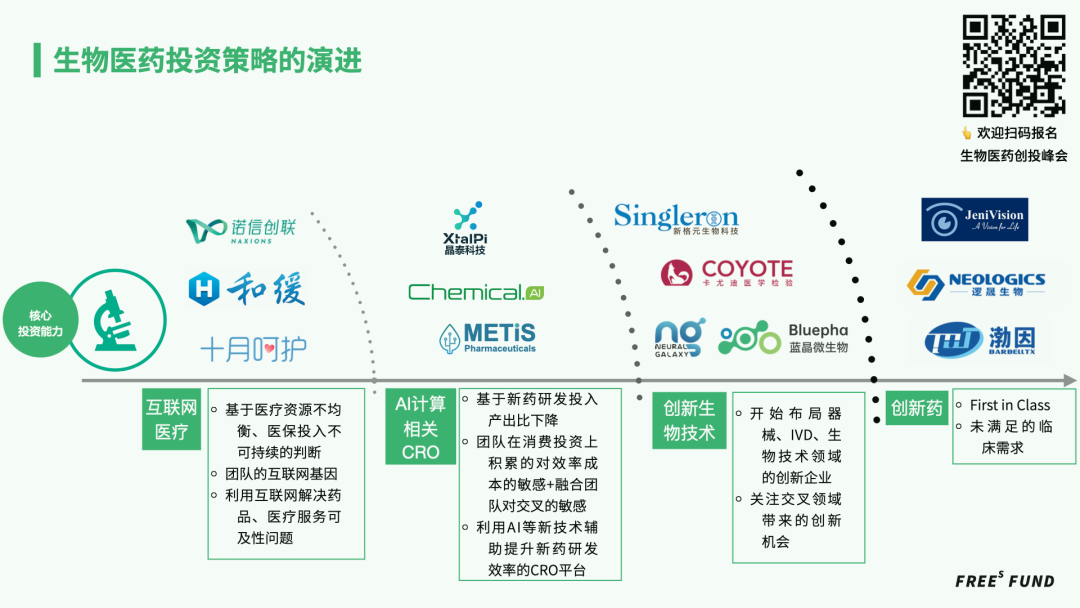
Internally, we roughly divide our biopharma investments into two categories. The first is traditional healthcare investing — medical services, drug R&D — where we've made relatively fewer bets. The second, and our main focus, is biotechnology. Over the past five years, FreeS Fund's biopharma investment logic has evolved as follows:
- Against the backdrop of unevenly distributed medical resources in China, we invested in internet healthcare companies like Nuoxin Chuanglian and Hehuan Medical that address accessibility of medical services;
- Facing the challenges of long cycles and high costs in new drug development, we bet on CRO platforms like XtalPi and MetiS Pharm that use AI and other new technologies to improve R&D efficiency;
- Subsequently, we began deploying in IVD, medical devices, and biotech innovation, investing in companies like Singleron, Coyote Bioscience, and Bluepha. As the new drug R&D supply chain has become increasingly complete, we've invested in innovative drug and novel therapy companies like JeniVision, Logic Bio, and Boyin Bio.
Scan the QR code in the image above 👆
to hear 13 guests discuss biopharma entrepreneurship and investing
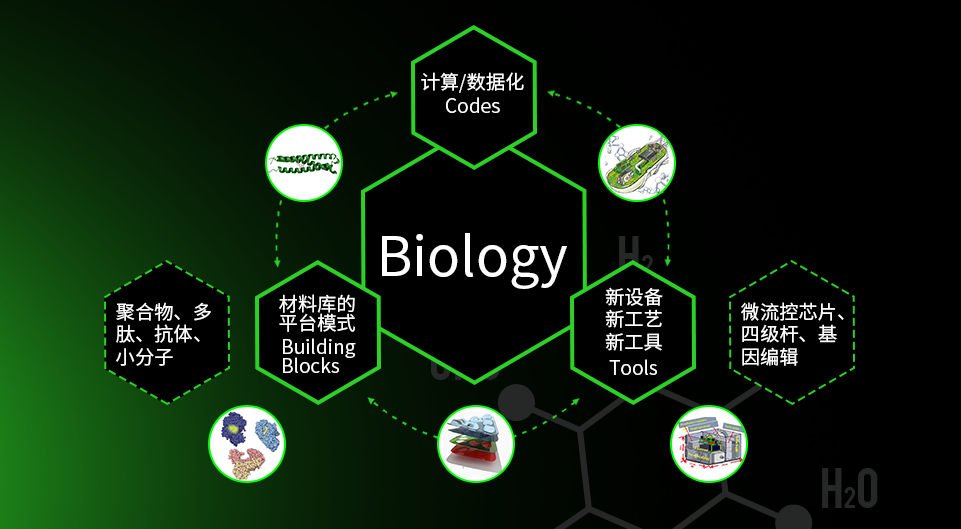
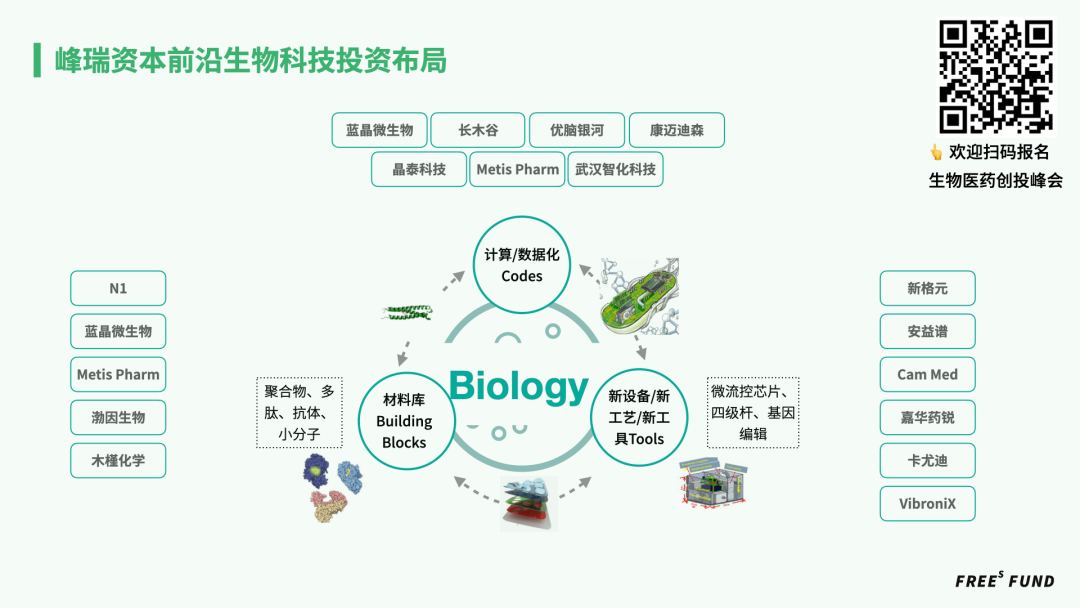
Five years on, how do we now view the overall innovation opportunity in biopharma? In this piece, I'll try to answer that with one chart: Chinese biotech innovation sits at the intersection of "three overlapping cycles":
- New equipment/tools/processes driving datafication of the industry;
- Computational re-application of this new data, bringing gains in discovery and production efficiency;
- Once production is reached, as efficiency improves dramatically, the raw materials, key components, and technology platforms needed for industry expansion begin to iterate.
These three cycles form a spiraling, iterative industry loop, jointly propelling the development and innovation of biotechnology. At the upcoming FreeS Fund 2020 Biopharma Summit, we'll share more specifically around the logic of this industry loop — scan the QR code below to register.
Scan the QR code in the image above 👆
to register for 3 online livestreams and 1 offline seminar
These three cycles may sound a bit convoluted or complex, but they follow the same logic as mobile internet development.
In mobile internet, the companies now widely recognized as most valuable — Meituan, DiDi, Uber, Airbnb, Instagram (acquired by Facebook) — what do they have in common? The answer: their emergence and rise all benefited from a shared backdrop — roughly 12 years ago, when many new sensors (high-definition cameras, gyroscopes, GPS and other positioning devices) began being installed in phones.
These sensors became good enough to transform vast amounts of information into data. This datafication process dramatically improved matching and allocation efficiency, allowing platforms to grow.
A typical example is DiDi. When smartphones became widely普及, the GPS in smartphones could transform our changing location information into data. Once datafied, passengers' need for rides and drivers' ride services could be matched far more efficiently, creating the opportunity for new efficiency-platform models like DiDi to develop.
Now back to these three cycles in biotech.
▍Cycle One: New Equipment / New Processes / New Tools
Following the logic of mobile internet development I just described, FreeS Fund has invested heavily in projects with "sensor-like" significance. These projects are often interdisciplinary. Whether related to chemistry, biology, chip hardware, or other cross-disciplinary fields, as long as they can apply advanced technologies from other fields (whether equipment, processes, or tools) to biotech and healthcare domains including analysis, detection, testing, and treatment — achieving low-cost, rapid, large-scale datafication of certain information — we firmly believe in their value.
For example, Anyeep is dedicated to mass spectrometry technology R&D and instrument development, aiming to provide robust mass spectrometry for multiple application scenarios. The team believes mass spectrometry, as a high-end detection technology and equipment, has broad applications spanning not just food safety and security, but also clinical and biopharmaceutical settings. In clinical and pharmaceutical scenarios, mass spectrometry can simultaneously test panels of dozens of small molecules, as well as detect amino acids and proteins, pathogenic microorganisms. The accumulation of this detection information can propel the industry's datafication.
Another example is Singleron, which FreeS Fund invested in back in 2018, focused on high-throughput single-cell sequencing. Recent advances in single-cell analysis technology enable researchers to gain unprecedented high-resolution deep parsing of disease mechanisms and characteristics. Singleron's core single-cell analysis technology platform comes from one of the company's founders, Professor Rong Fan of Yale University. This technology provides a high-throughput, stable, simple, and cost-effective original method. Meanwhile, on the back end, post-sequencing data is extremely rich. From its founding, Singleron has built its own database and hopes to mine clinically relevant meaning from the data.
▍Cycle Two: Computation / Datafication
Once large amounts of previously non-datafied information are efficiently converted into data, three key questions emerge — who will use this data, why, and how.
The same was true in the mobile internet era. Perhaps even Apple didn't anticipate that when zoom-capable optical cameras were put into smartphones, massive amounts of image data would follow, giving rise to Meitu and Douyin in China and Instagram in the US. Or that when GPS was put into smartphones, ride-hailing apps would take off.
On computation and data, take XtalPi, which FreeS Fund invested in back in 2016. It's a computation-driven innovative drug R&D company. Based on quantum physics, quantum chemistry, artificial intelligence, and cloud computing technology, it has changed the path of drug discovery. In terms of results, thanks to accumulated advantages in algorithms, computing power, and data, XtalPi's intelligent drug R&D system has order-of-magnitude advantages across cost, speed, and success rate dimensions.
In the past couple years, XtalPi has been very hot in capital markets, recently completing a new $300 million funding round — the largest to date in the AI drug R&D space. But when we got involved in 2016, the value of what they were doing wasn't recognized by many US and Chinese investors. A major concern was whether it could scale large enough. So why were we bullish? Precisely because we saw its value in datafication and using simulation algorithms to replace manual experiments.
▍Cycle Three: Platform Models for Material Libraries
An analogous example is cars. In the past, when buying a car, we'd often talk about which brand had a good engine or transmission — these were our main reference points. Now, the conversation has shifted to electric vehicles. A car's power source has changed from gasoline to batteries, so our evaluation criteria have shifted to which brand has good motors, batteries, and electronic controls; which platform has good autonomous driving, assisted autonomous driving, user experience, and so on.
As we discussed earlier, once large amounts of biopharma industry information are efficiently converted into data, how to leverage these vast new datasets becomes a new business opportunity. Next, just as our evaluation criteria for cars (component building blocks) have changed, in biopharma, antibodies, small molecules, peptides, and others have become the industry's new building blocks in recent years.
Take gene therapy as an example. About 20 years ago, gene sequencers first appeared. The importance of gene sequencers to the gene industry is like that of engines to the auto industry, or chips to the electronics and communications industry. It was precisely because gene sequencers existed that massive amounts of genetic information could be accumulated — this was step one. After海量 gene-related information was analyzed, it became gene data, and over the past decade we've seen many companies emerge that leverage gene data — this was step two. And because we want to use this data for new scientific research into biological therapies, our needs have also changed: we need help making proteins, doing gene editing, and so on.
Market demand for platforms that can provide these new building blocks will increase dramatically. Because platforms enable industrialization — by breaking things down into fine-grained components, various parts can be efficiently combined, and through computation and simulation, testing and analysis can be completed more efficiently, at lower cost, and with higher throughput. At the same time, the scope, speed, and degree of datafication of what we can test and analyze will keep increasing, and results will keep improving.
Ultimately, these three cycles form a spiraling, iterative industry loop that jointly propels biotechnology forward — the evolution of new technologies enables large amounts of previously undiscovered or unprocessable information to be mined and rapidly, high-throughput digitalized; once digitalized, information can be broken into smaller units for higher-precision analysis and computation, dramatically improving efficiency and saving costs; then, entering the production stage, because demand has changed, the raw materials, components, and technology platforms needed for production will also transform, creating opportunities for platform models for material libraries that integrate different segments, thereby ensuring speed, efficiency, and scale.
Biology is one of the most scientifically intensive industries. This spiraling iteration model can also explain the development and evolution process of almost every other industry — new equipment/tools drive datafication; after datafication, efficiency improves significantly; then means of production and production methods change dramatically; and change breeds entrepreneurial opportunity.
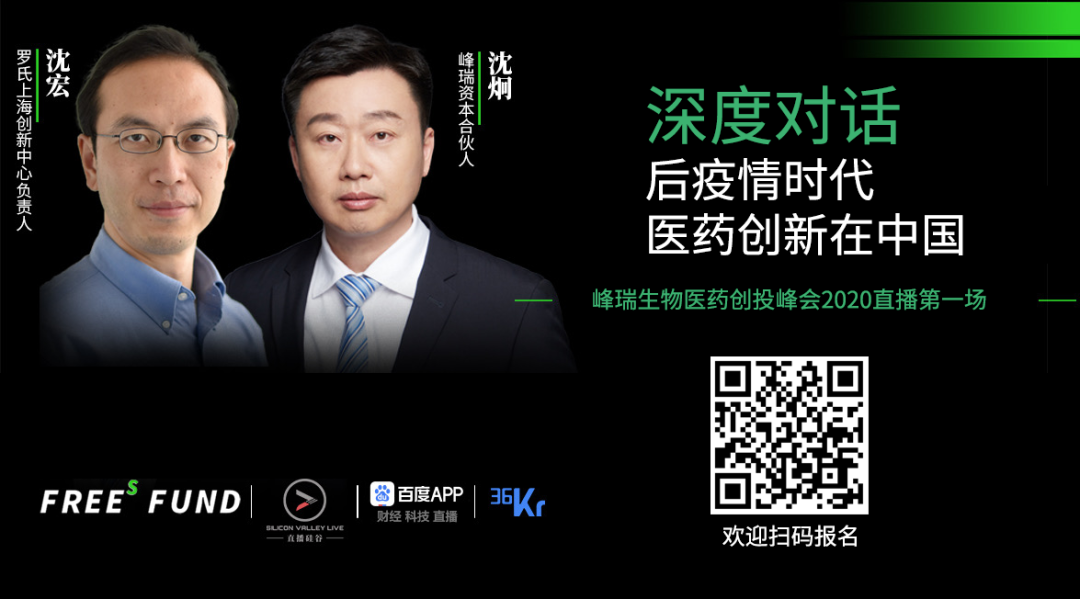
So in biopharma, where is the next platform-type opportunity? How do you ride and lead the wave in this biopharma entrepreneurship boom? Once again, welcome to scan the QR code to register for the FreeS Fund 2020 Biopharma Summit. The first session kicks off at 9 AM on October 24, when FreeS Fund partner Jiong Shen will dialogue with Hong Shen, head of Roche Shanghai Innovation Center. We look forward to your participation.
Scan the QR code in the image above 👆
The first livestream goes live promptly on October 24
▍Organizers
FreeS Fund, Live Silicon Valley
▍Promotional Partners
Thanks to the following 22 organizations for their support:
Peking University Northern California Alumni Association, Bio Spark, BioWorld, CEO Chinese Entrepreneurs Organization, CMU Chinese Alumni Association, CMU CSSA, Columbia University CSSA, Dartmouth CSSA, Harvard China Health, Harvard College China Forum, Harvard CSSA, Leap, MIT CEO, MIT CHIEF, Oxford CSSA, Princeton CSSA, Renmin University California Alumni Association, UCB ACE, UCLA CSSA, UCSB CSSA, Wharton Shanghai Alumni Club, Young Scholar Association, Yale University Chinese Health Care Club YHCC
▍Platform Partners
Baidu Live, 36Kr
(Welcome to read, share, and hit "like." For reprint requests, please reply "reprint" to learn about reprint rules and contact Feng Xiaorui [ID: freesfund] for authorization. Copyright belongs to FreeS Fund.)

Riding the Gene Therapy Wave | FreeS Research Institute
FreeS Report 15: Life's Gamble — The Risky Journey of Drug Development | FreeS Research Institute
Understanding Changes and Opportunities in China's Industry Chain, in One Chart | Feng Li Column