Blue Ocean Strategy: How Early-Stage Biopharma Startups Can Break Through and Win with Big Pharma | FreeS Fund 2020 Biopharma Summit Session 3 — Registration Open

From "Me Worse" to "First in Class": How Can Biopharma Companies Compete Through Differentiation?
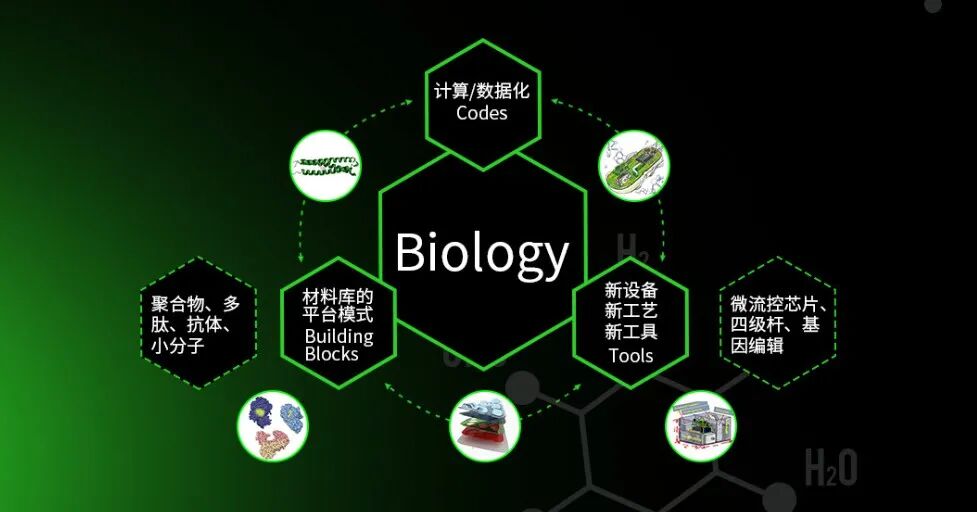
In 2020, the value of the biopharma industry became increasingly apparent, and China's biopharma sector entered a window of opportunity — meaning more attention and resources began flowing into a field that had long been a "narrow door." Yet under the spotlight, how should entrepreneurs adapt and respond to better capitalize on these tailwinds and accelerate growth?
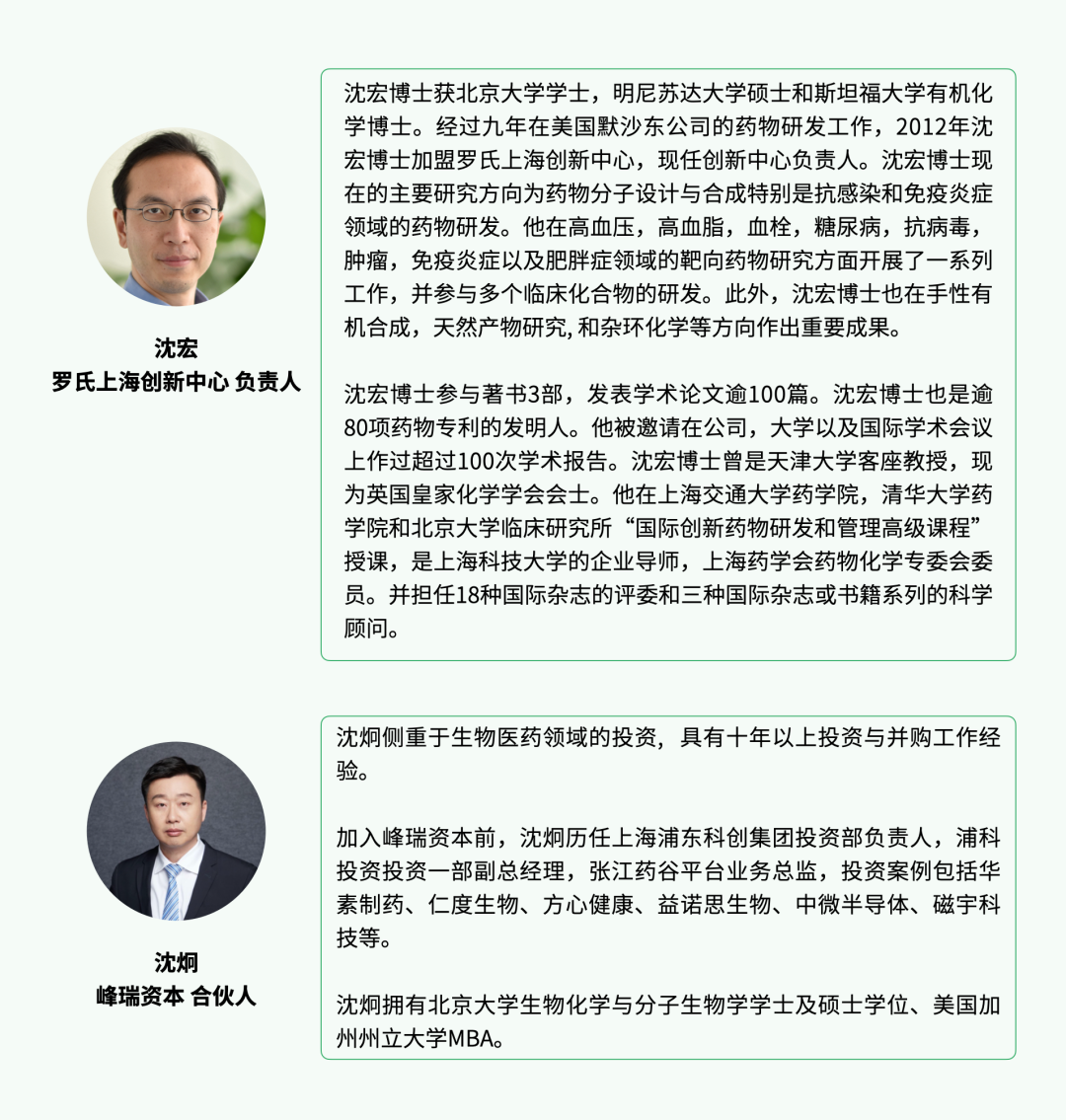
On October 24, the first live session of the FreeS Fund 2020 Biopharma VC Summit went online. Centered on the theme "China's Pharmaceutical Innovation in the Post-Pandemic Era," Hong Shen, Head of Roche Shanghai Innovation Center, and Jiong Shen, Partner at FreeS Fund, engaged in a virtual dialogue. They explored:
- The trajectory of China's biopharma innovation over the past decade
- Whether China can produce First-in-Class drugs at scale, and in which therapeutic areas FIC breakthroughs are most likely
- What impact emerging technologies like AI will have on drug R&D, and whether they will disrupt traditional R&D models in the long run
- Whether license-in and license-out represent a new CRO model, and how early-stage biopharma companies can win alongside large corporations
We're sharing an edited transcript of portions of their conversation, hoping it offers some useful perspective. On Sunday, November 8, from 9–10am, we look forward to our third discussion with entrepreneurs and researchers in the biopharma space: New Equipment, New Tools: The Frontier of Biotech Moving Forward with Hardware.
At the end of this article, you'll find a preview of Session 3 and a few reasons why it's worth tuning in.

Scan the QR code in the poster above 👆
to register for the FreeS Fund 2020 Biopharma VC Summit

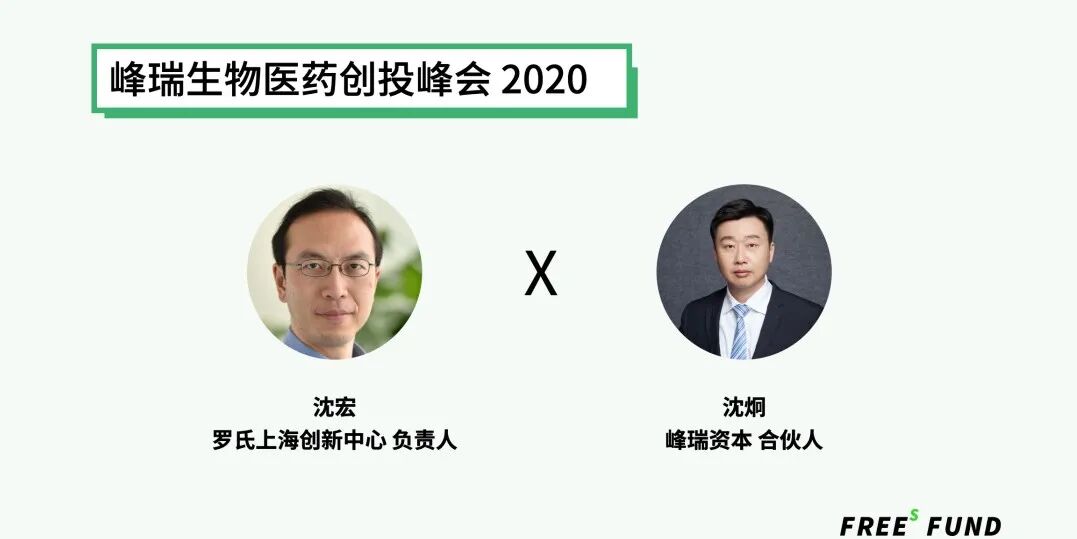
/ 01 / China's Biopharma Development Over the Past Decade
Jiong Shen: Since its founding in 2015, FreeS Fund has been firmly bullish on the development of biopharma innovation in China, consistently investing in early-stage pharmaceutical projects. Ten years ago when I first came to Shanghai's Zhangjiang, I saw that Roche was among the earliest multinational biopharma companies to establish a full-scale presence in China encompassing R&D, manufacturing, and more. In recent years, some multinationals have chosen to pull their research and R&D operations out of China, but Roche has maintained its domestic R&D footprint. Dr. Shen, you've been with Roche China for nearly a decade — I'd like to start by asking you to share your up-close observations of China's biopharma innovation over this period.
Hong Shen: Roche has been in China for sixteen years. Over that time, we've achieved considerable success in novel drug R&D — nine compounds we've been involved in developing have entered clinical trials. Roche is very confident in China's innovation environment, and going forward we won't be reducing our investment; we'll continue to increase it.
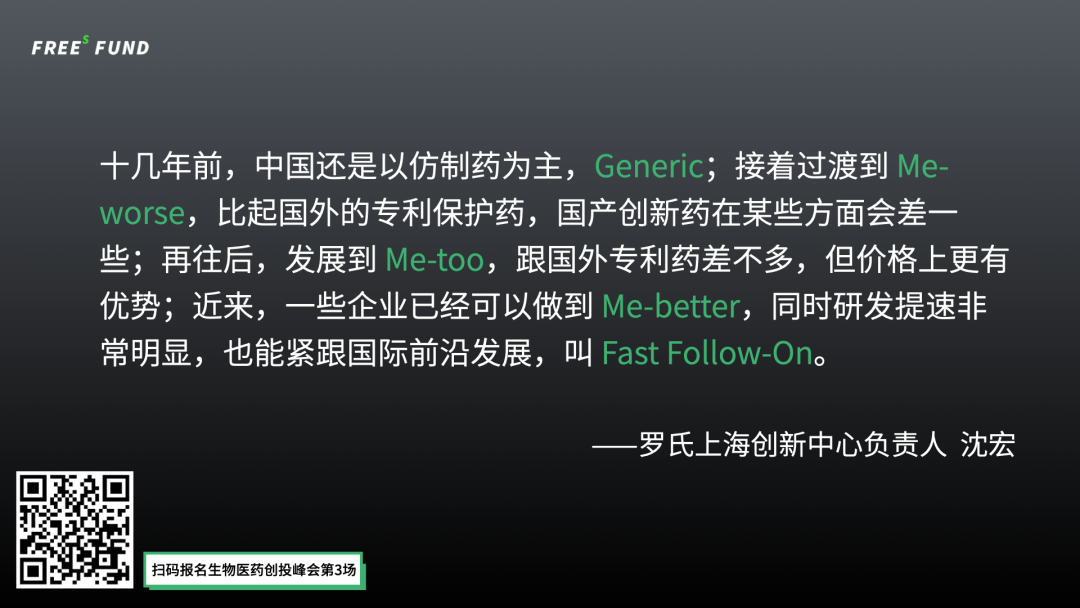
Over the past decade, China has undergone a sea change in novel drug innovation. A little over ten years ago, China was still dominated by generics; then it transitioned to "me-worse" drugs — domestic innovations that lagged behind patented foreign drugs in certain respects. After that came "me-too" drugs, comparable to foreign patented medicines but with price advantages. More recently, some companies have achieved "me-better" status, with markedly faster R&D timelines and the ability to keep pace with international frontiers — what we call "fast follow-on." Looking ahead, I expect to see more best-in-class drugs, meaning those that demonstrate clear clinical advantages over first-in-class therapies, whether in safety or efficacy. And I also expect to see more Chinese FICs (first-in-class, i.e., the first original drug globally for a given target and indication). In certain areas and on certain tracks, we're already seeing the first signs of this.
On another front, we've witnessed a dramatic improvement in China's fundamental research capabilities, particularly in translational medicine and disease biology. These used to be weak links for China, but in the past five years, with the return of many overseas scientists and advances in domestic scientific capacity, basic science has flourished. Only with sufficiently solid basic science can we even discuss FIC. The two are intimately connected.
At the same time, I've been excited to see capital pouring into novel drug innovation, and the government has introduced many favorable policies. For instance, you used to need strong sales revenue and market performance to go public, but under new policies, many excellent companies still in clinical trials can now access public markets. This channels substantial funding into novel drug R&D, better enabling these companies to innovate and catalyzing more domestic best-in-class and FIC drugs.
The future belongs to companies with differentiated competitive advantages — differentiation is essential. Most Chinese pharmaceutical companies still face homogenization issues, with armies of competitors crowding onto the same narrow bridge, seemingly targeting the same targets and indications. While many such companies have successfully IPO'd, I believe that without change, they will likely hit bottlenecks in the next innovation cycle, or see limited returns once their products reach market. This situation tells us that we must strive for differentiation, and not limit our vision to the domestic market — we need to see the larger global opportunity. Don't just fight for a place in the red ocean; more importantly, expand our horizons in the blue ocean, finding differentiation whether in efficacy, safety, or indications, to open up new territory.
Food for Thought
Q: Against the backdrop of turbulent US-China and China-EU relations, international cooperation in biopharma faces many difficulties. How will Chinese pharmaceutical companies respond?
Reply "international situation" on the FreeS Fund WeChat official account to learn more about Hong Shen and Jiong Shen's perspectives on this question.
/ 02 / In Which Areas Are Chinese Companies Most Likely to Achieve FIC Breakthroughs?
Jiong Shen: I very much agree. As you summarized, talent, policy, and capital are all essential elements of innovation, and all three have seen substantial development over the past decade. My second question: when we talk about "innovation," we can't avoid FIC. Everyone hopes to create a gold-standard innovative drug with a novel mechanism, novel target, and novel molecule. But currently, FIC remains extremely challenging for Chinese companies. Many people question whether China can achieve genuine innovation. Ten years ago, few believed China could produce truly innovative drugs, but over this decade, companies including BeiGene have thoroughly proven China's innovative capabilities. So can China produce FIC drugs at scale in the future? And in which therapeutic areas is FIC most likely to break through?
Hong Shen: Seeing more FIC emerge in China has long been my hope. But producing FIC at scale still faces many challenges.
First, while we're seeing considerable capital enter this space, overall investors remain hesitant: whether to invest in FIC? How to invest? In what proportion? Generally speaking, FIC carries high investment risk. According to Deloitte's 2018 report, the global top 12 pharmaceutical companies achieved an R&D ROI of just 1.9% — the lowest in nine years, down from 10.1% in 2010. And in terms of average cost to develop a new drug from scratch, Deloitte's data shows $2.18 billion, nearly double the $1.18 billion in 2010.
In China, both companies and capital are highly sensitive to risk. You rarely see clinical programs fail publicly; even when they do, companies tend not to disclose it. Limited risk tolerance leads to constrained investment scope, so capital naturally hesitates about whether to invest heavily in FIC.
Additionally, FIC requires deep capabilities in basic medical science and disease biology R&D. While China has made clear progress in these areas, gaps remain with top-tier European and American levels in translational medicine and disease biology. Of course, there are also some very impressive original basic research achievements domestically. Overall, FIC will be difficult to achieve at scale in China in the near term — the soil for it isn't broadly fertile.
There's another factor: industry participants make their own choices. Some companies doing "me-too" or "fast follow-on" are quite successful, and from an IPO returns perspective, that's fine. Compared with targeting the riskier blue ocean of FIC, some capital prefers stability — especially investing in "me-too" companies, where market benchmarking is easier and valuation more straightforward to calculate, unlike FIC where you're estimating future potential. Some also argue: many large foreign companies do plenty of "fast follow-on," so why can't I? Compared with FIC, many domestic companies also tend to continue with "me-too."
There's another factor. Doing FIC in China without prior literature or patents to guide you means companies have to start from scratch with new targets. For small molecules, that means screening from compound libraries — and compared with foreign pharma giants that have decades of accumulation, China's existing compound libraries lag significantly in both scale and quality. That's a non-trivial obstacle.
/ 03 / Where Is FIC Most Likely to Break Through?
Shen Hong: As for whether we can attempt FIC in certain areas — of course we can.
First, although our compound libraries have limitations in quality and quantity, we can try new technologies. For example, DNA-Encoded Library technology enables high-throughput, high-speed, low-cost screening across billions of compounds. That's something we can explore.
We can also try Virtual Screening — using AI to accelerate the screening process. A recent Nature article covered this. If you understand a target's structure well enough, you can use computational simulation to screen for Virtual hits, then synthesize and validate whether the computer's prediction holds. That's another direction worth trying.
There are also platforms like the currently hot Bispecific antibody space. Can our domestic companies identify targets that foreign firms haven't focused on, then creatively combine several different targets to develop newer-generation bispecifics? Why do I say this matters? Compared with small molecules, antibody engineering has a relatively mature toolkit. You can move faster to claim a position, making FIC more achievable.
Another point: consider indications that are more prevalent in China. Whether in oncology or infectious disease, there are conditions with high incidence rates here. Compared with Western peers, domestic experts can more easily accumulate expertise and become global leaders in these areas. Startups can collaborate with these specialists, leveraging their insights to identify new drug development directions.
Finally, pay close attention to the latest R&D developments in the industry. Finding reliable, verifiable, rapidly deployable technologies and staking a claim is crucial. Information transparency is high now, so "claiming" becomes critical. When you spot something new, you need sharp instincts. Once you confirm its innovative potential in biopharma and its market prospects, move quickly. Compared with large foreign companies, startups may actually have an advantage here. While big companies are still having internal discussions, startups can already begin experiments. By the time the big players get interested, you'll have a more developed prototype and can seek partnerships to scale the opportunity.
We see many Western platform companies taking exactly this path, whether in Degrader or RNA target fields — lots of fast-following startups. These novel platform companies quickly build on newly published papers to establish platform technologies, then partner with big pharma. For large companies, building such platforms internally would take far longer, so they'll likely partner with smaller companies that have already established a foothold. Domestic technical-platform startups should consider this route too.
How Will AI and Other New Technologies Change Drug R&D Models?
Shen Jiong: This year we've seen AI drug discovery projects exceptionally hot in the capital markets. XtalPi, an early FreeS Fund portfolio company, just completed a Series C round exceeding $300 million. More people are bullish on AI-related plays, partly for the reason you mentioned — the input-output ratio of new drug development has been declining. Everyone hopes to leverage innovation from other fields to improve R&D efficiency. I understand Roche has invested heavily here. My question is: how do you view the impact of AI and other emerging technologies on drug discovery? In the long run, will they disrupt traditional R&D models? Could they create the kind of large platforms you mentioned?
Shen Hong: That's a great question. Any truly breakthrough technology goes through a curve: it starts with hype, where expectations exceed actual utility; after the hype, when people realize the technology hasn't delivered immediate benefits, confidence crashes and some companies exit; eventually, as the technology itself gets refined and optimized, it rises again.
Looking back over the past two or three decades, every major technology has followed this curve. In my view, AI digital will too. Essentially all large multinational pharmas have made moves here — they have FOMO. The fear is: if we don't engage and a competitor gets ahead, we might not catch up. Roche is no exception. We've established strategic partnerships with at least two or three AI companies in recent years. Personally, I'm very bullish on AI's significance for future drug discovery, mainly in three areas:
First, target ID. Innovation requires direction — deciding what to do. Which target do I choose? Among vast amounts of DNA and RNA, which target and which pathway will affect this disease? Correct choices depend on analyzing massive datasets. Can we use AI digital approaches to optimize this analytical screening process and gain unique insights into disease areas and targets? We have a project called target ID. Once you identify the target, you form a hypothesis and can do preliminary in vitro or animal validation. AI can play a major role throughout this process.
Second, discovery. During drug optimization, deep learning can analyze multi-dimensional R&D data to help researchers solve problems faster, achieve optimization, find good molecules, and advance to clinic. Related papers have been published, though for rather special targets. What I want to see next is whether AI can help us find broadly achievable preclinical candidates for more difficult targets in relatively short timeframes. Of course, as I understand the AI field, more data generation promotes gradual algorithm optimization, leading to better results — a positive cycle.
Third, Clinical Trials. Roughly 70% to 80% of our R&D budget goes to clinical trials — that's where the big money is. How do we design trials? How do we select patients? How do we monitor data? How do we use large clinical datasets to optimize protocols so your clinical compound gets developed faster, finds its patient population, and achieves commercial value? AI can also go far in clinical trials. Particularly data-focused companies that can interface with pharmas, clinical CROs, and trial sites. Many such data companies have recently gained capital market favor, and they're clearly playing notable roles in optimizing and accelerating trials, improving success rates, reducing manpower, and increasing efficiency.
On healthcare big data, I'll add three points: First, the balance between data quality and quantity matters — you need scale and good quality. Second, the balance between data regulation and openness is equally important. Data certainly needs regulation, but data sitting unused is meaningless regardless of volume. So how to promote both industry data regulation and guaranteed open data use is an important topic. Third, collaboration: biopharma companies typically value data highly, and startups need to seriously consider how to collaborate more efficiently with these companies for mutual benefit.
Finally, I want to add: while I'm optimistic about AI, we need to recognize it's currently in a hype phase. Even so, we need sufficient patience with its applications. If the technology doesn't deliver revolutionary improvements in the short term, we shouldn't abandon it lightly. We need a long-term commitment mindset. I believe in the not-too-distant future, we'll see AI playing increasingly significant roles in drug development, reducing costs, improving efficiency, and benefiting patients.
Shen Jiong: On AI+, FreeS Fund has been firmly bullish and continuously investing, though the journey hasn't always been smooth. My question: while we've seen AI and other new technologies playing roles in specific drug discovery segments, the R&D chain is so long. When might AI truly connect the entire chain — from initial targets through discovery, animal experiments, clinical trials, and so on — bringing truly disruptive change? How do you view this feasibility, and if it's to be realized, how much longer might it take?
Shen Hong: My personal understanding is that AI applications are tightly coupled with their environments — it's hard to one-size-fits-all. Different applications require different algorithms; each case varies. Currently, I find it hard to imagine one AI company covering the full chain, because each application scenario is so differentiated. What I'm more optimistic about are companies that become exceptionally strong in one specific niche and create major impact. For example, I know a company with strong insights in antibody design. Even if it's not outstanding in other areas, a company that goes deep in one specific segment can be very valuable.
So how do we connect the full chain in the future? I believe it's through partnerships. In fact, many large pharmaceutical companies, including Roche, are interested in every single link. We will identify the AI company with the best technology application for each link and explore potential collaboration opportunities. So in the end, it's very likely that the full-chain contribution of AI in biomedicine will be achieved through different AI companies partnering with large corporations. That's my personal view.
Are License-In and License-Out a New Form of CRO?
Shen Jiong: In recent years, license-in (where the licensee pays the licensor for rights) and license-out (where the licensor grants rights to the licensee for a fee) have become exceptionally active domestically. Not only have many Chinese companies brought in projects from U.S. firms for development, but domestic projects have also been licensed out — both areas have seen numerous success stories with accelerating momentum. Over the past decade or so, the CRO (contract research organization) model has grown rapidly, with some companies outsourcing shared functions to reduce R&D costs and improve efficiency. For multinational corporations, license-in and license-out models can help trim the "R" component, as can approaches like building incubators and accelerators. So, can we understand license-in and license-out as another manifestation of CRO — one that reduces R&D risk? Additionally, how do you think the popularity of these models affects startup strategy?
Shen Hong: This is also an excellent question. Let me share my personal views.
First, the substantial increase in license-in and license-out has indeed become the industry norm. Large companies, including Roche, attach great importance to license-in. Many major companies derive more than half of their R&D pipelines from license-in, because with substantial capital, they can seize good opportunities when they see them. Large companies excel at discovery, development, and commercialization in the R&D process, enabling them to maximize patient benefit quickly. As mentioned earlier, developing original first-in-class (FIC) drugs requires enormous capital. Even large companies cannot sustain this model indefinitely. Through license-in, large companies can avoid some early-stage failure risks, rapidly enrich their product lines, and leverage their traditional strengths to advance quickly and reach the market faster. This tactic has been used for many years and has been successfully validated.
Large companies are also quite enthusiastic about participating in incubators and accelerators. Essentially, this shifts the early stages of innovation externally, enabling rational allocation of R&D resources while helping large companies cover a broader range of innovation opportunities. Although these small innovative enterprises don't currently belong to the large companies, by closely monitoring their progress, large companies can promptly step in and establish partnerships when they see promise and the timing is right — benefiting both sides. So I personally am very optimistic about this model.
Then there's the CRO model. CROs help large companies remain highly agile during strategic adjustments, since they don't need to involve major personnel changes, and efficiency improves. For example, during the COVID-19 pandemic, domestic CROs did very well because many foreign labs were shut down. To ensure projects continued, companies needed to adopt CRO outsourcing. When the pandemic subsided, CRO usage decreased accordingly — without the companies themselves needing to make many adjustments. So this model is very popular with large companies. Going forward, overall demand for CROs will continue to rise, and approaches will become more flexible. As CROs offer more technology platforms, large companies will increasingly consider whether using an existing CRO platform allows faster project initiation and lower costs when making strategic adjustments.
For your final question about how these trends affect startup strategy — I must emphasize again: you must differentiate, and in a way that attracts the attention of large companies or investors. The differentiation must be very significant. I also strongly advise startups to consider a blue ocean strategy. Sometimes startups don't need to fully launch a product before a license-out or M&A can occur — they don't need to go that far. Many license-ins and M&As now happen at the preclinical stage. If a startup can find a unique conceptual positioning, differentiate sufficiently, and present a compelling vision for its prospects, that is enough to create value. So I think startups should consider forging a different path and tackling truly challenging directions.
Take Alzheimer's disease, for instance — the market is enormous. If your original vision can be articulated well and the scientific rationale is strong, even if it's still just a hypothesis, a large company may be willing to move. Large company license-ins are happening increasingly early, some involving technology platform partnerships. I think startups can adjust their strategies accordingly, achieving growth and maximizing value through differentiation.
Shen Jiong: Understood. Over the past decade, the development of the CRO model in China has given rise to world-class enterprises like WuXi AppTec. Currently, the vigorous development of models including license-in, license-out, incubation, and acceleration may continue to drive innovation forward in China over the next decade. As investors, we hope to witness the birth of a new generation of world-class innovative biopharmaceutical companies. This is also why FreeS Fund is optimistic about innovation and this sector.

Food for Thought
Q: Against the backdrop of turbulent China-U.S. and China-Europe relations, international cooperation in biomedicine faces many difficulties. How will Chinese pharmaceutical companies respond?
Welcome to reply "international situation" on the FreeS Fund WeChat official account to learn Shen Hong and Shen Jiong's views on this question.
November 8, 9-10am Beijing Time: FreeS Biomedical & Healthcare Venture Summit, Session 3
In late October 2020, the National Natural Science Foundation of China announced the establishment of its ninth department: the Department of Interdisciplinary Sciences. This marked the first new department since the Medical Sciences Department was spun off in 2009 — eleven years later.
Indeed, as technology advances, capabilities in a single frontier may increasingly prove insufficient to drive substantial leaps. New breakthroughs and perspectives often emerge at the intersection of disciplines, revealing unexpected or even unimagined new data dimensions, new visual dimensions, and so on — giving rise to new measurement frameworks.
In Li Feng: A Single Diagram to Understand Biotech Innovation Opportunities | FreeS 2020 Biomedical Summit Complete Guide, we also noted: "In the biotech field, FreeS has invested heavily in projects with 'sensor' significance. These projects are often interdisciplinary. Whether related to chemistry, biology, chip hardware, or other cross-disciplinary areas, as long as it can apply advanced technologies from other fields (whether equipment, processes, or tools) to biomedical domains including analysis, detection, inspection, and treatment, and achieve low-cost, rapid, large-scale datafication of certain information, we firmly believe in its value."
Centering on interdisciplinary innovation, on November 8 from 9-10am Beijing time, the third live session of the FreeS Biomedical & Healthcare Venture Summit will feature FreeS Fund Executive Director Wang Lei in conversation with three founders from interdisciplinary backgrounds: Li Teng, co-founder & president of Bluepha; Wang Pu, founder/CEO of VibroniX; and Wei Kecheng, co-founder/CEO of NeuCyber. They will discuss:
- Returning to the starting point of entrepreneurship: based on your team's capabilities, how did you choose your entry point? How did you determine what biomedical applications your technology suited? Have you experienced mismatches between technology and application that required adjusting direction and technical approach? It's often said that hardware-heavy technical routes are difficult to pivot — what's your view on this as a founder?
- What impact will rapidly developing technologies like chips, optics, and batteries have on biomedical technology progress?
- In which areas have cross-disciplinary applications already begun to show signs of froth?
- As CEO, how do you embrace and adapt to the trend of interdisciplinary innovation? What lessons have you learned regarding self-development and hiring?
This Sunday, 9-10am — see you in the livestream! If you'd still like to join, please scan the QR code below.
Welcome to scan the QR code above 👆 to explore trends in interdisciplinary innovation
(Welcome to read, share, and hit "like." For reprint requests, please reply "reprint" to learn about our reprint policies and contact FreeS XiaoRui [ID: freesfund] for authorization. Copyright belongs to FreeS Fund.)

Riding the Gene Therapy Wave | FreeS Research Hammer and Dance: Investment Opportunities in Healthcare's Next Wave Amid the Pandemic | FreeS Research FreeS Report 16: The Truth About Early-Stage Healthcare Investment and China Speed | FreeS Research FreeS Report 15: Life's Gamble — The Risky Journey of Drug Development | FreeS Research Why New Infrastructure Is China's Most Impactful Stimulus Policy for the Next Decade? | Feng Li Column One Chart to Understand Changes and Opportunities in China's Industrial Chain | Feng Li Column