Synthetic Biology: The *Heavenly Crafts* of the Next Twenty Years | 2021 FreeS Fund Annual Investor Summit

How will the convergence of biotechnology and data science transform the production methods for over 60% of the world's physical goods?

In 2020, Nature published a landmark study: the total mass of human-made materials had grown to one trillion tons, roughly equal to all biomass on Earth. In other words, on this blue planet, half is living things, and half is stuff humans have created.
"Using biology to create everything" — for Haotian Zhang, co-founder and CEO of Bluepha, synthetic biology is manufacturing's Exploitation of the Works of Nature, capable of making the industry more creative and imaginative.
At FreeS Fund's 2021 Investor Summit, Zhang glossed over the hardships of entrepreneurship. What you felt more strongly was his pure joy roaming freely through the world of synthetic biology. Synthetic biology gives him the same pleasure as playing with building blocks — endless creation, continuously extending the possibilities of life.
Bluepha is a company that uses synthetic biology to innovate at the molecular and material level. It designs, develops, manufactures, and sells novel bio-based molecules and materials, creating commercially imaginative products including biodegradable PHA, regenerative medicine materials, novel cosmetic functional ingredients, new food additives, and engineered probiotics — helping B2B customers across consumer goods, food, healthcare, agriculture, and industry differentiate themselves.
The company has assembled a cross-disciplinary team of senior scientists and engineers from robotics, software development, mechanical and electrical engineering, big data, and synthetic biology. It has developed the synthetic biology R&D platform SynBio_OS, now deployed across three components: a flexible automated experimental platform (BlueArk), an ultra-high-throughput fermentation platform (AutoFarm), and an intelligent cloud data system (CyberFarm). Within three years, SynBio_OS is expected to shorten Bluepha's end-to-end product development cycle by 70% from current baselines.
On January 10, Bluepha announced the completion of its B3 funding round, bringing total Series B financing to RMB 1.5 billion. Bluepha was a FreeS Fund angel investment, and FreeS has participated in all seven subsequent rounds — betting on synthetic biology and the greener, healthier, more powerful products that biotechnology can deliver. After more than five years, Bluepha has grown into a domestic leader in the synthetic biology track.
At the summit, Zhang shared his perspectives on:
- What is synthetic biology? How does it affect manufacturing and change our lives?
- With supply-demand contradictions in new materials growing more pronounced, what can synthetic biology do?
- How do synthetic biology labs differ from traditional labs? What methods improve R&D efficiency?
- How can you build both environmentally friendly and innovative products like assembling blocks?
We hope this brings some inspiration. Share your thoughts on synthetic biology and new materials at the end. The three most thoughtful commenters will receive FreeS's 2022 custom notebook and The Billion-Dollar Molecule: The Quest for the Perfect Drug, which chronicles the history of immunosuppressive compound development.

/ 01 / What is synthetic biology? How does it change our lives?
When Bluepha received FreeS Fund's angel investment, it happened to coincide with FreeS's 2017 CEO Summit. Back then, the big shots on stage were commanding the room, and I wondered when I'd ever stand on that stage myself. After about five or six years of effort, here I am. I'm deeply grateful for Uncle Feng's support along the way.
Synthetic biology as a discipline is rather "ethereal" — where does this ethereality come from?
Synthetic biology is fundamentally biotechnology, but its products aren't pharmaceuticals. Its products are new molecules, new materials. And Bluepha is a company that uses synthetic biotechnology to create new molecules and new materials.
In my eyes, synthetic biology is the Exploitation of the Works of Nature for the next twenty years. I'm borrowing this phrase to refer to manufacturing as a whole.
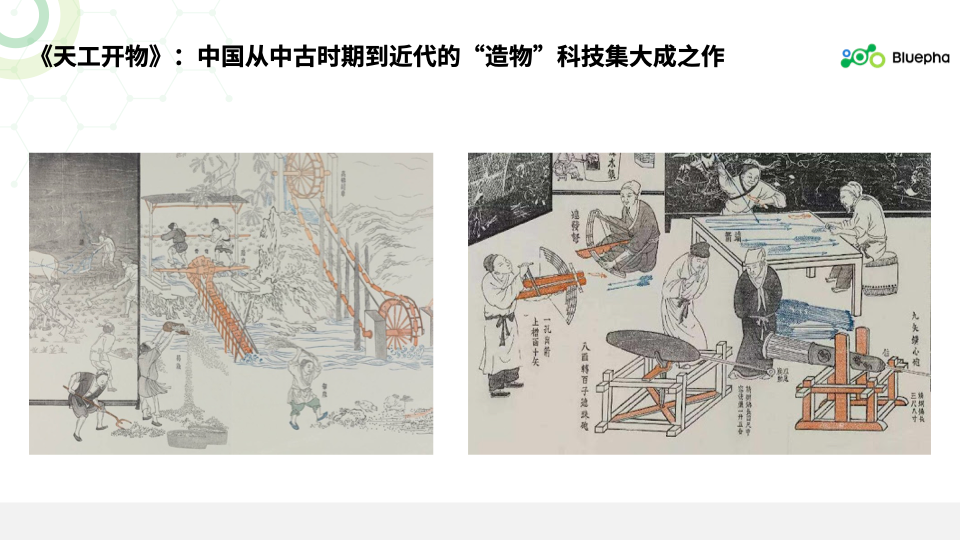
I love the history of science. In scientific history, there's a book that Joseph Needham held in extremely high regard: Tiangong Kaiwu (Exploitation of the Works of Nature). It's a comprehensive work documenting Chinese technologies from before the mid-Ming Dynasty. These technologies were intimately connected to manufacturing — mechanical engineering, brick and tile production, ceramics, sulfur, papermaking, textiles, dyeing, salt production, and so on.
Moreover, the book's approach differed from traditional Chinese culture. In traditional Chinese culture, people don't like to be precise — it's always "a pinch of salt" or "a spoonful of oil." But this book tells you exactly how long a wooden ruler needs to be, how long a nail needs to be, to build a device.
Chinese manufacturing is incredibly strong, but there's still room for improvement. For instance, in petroleum and chemicals, few new materials have reached commercial scale over the past several decades. A lack of innovation at the source constrains development across the entire manufacturing chain.
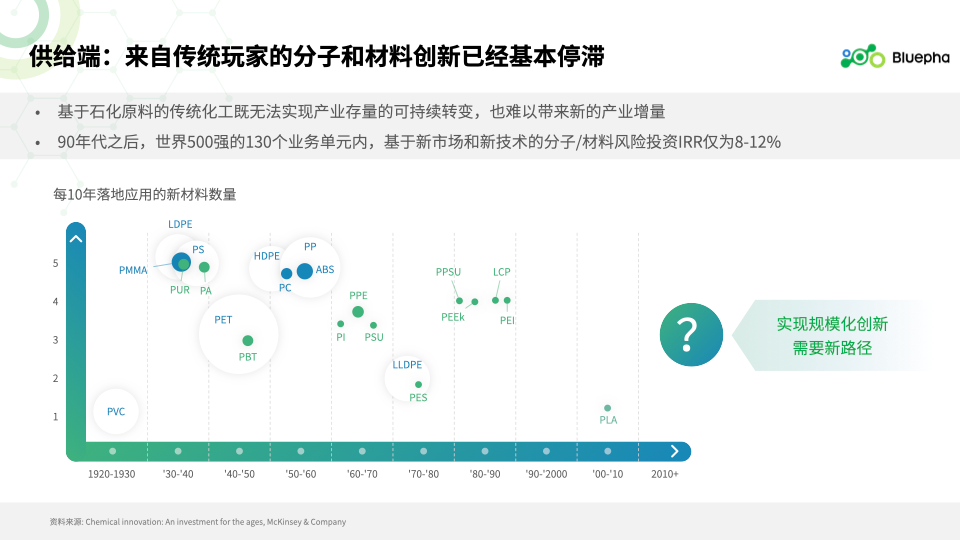
Although new materials like PLA (polylactic acid) have gradually scaled since around 2000, their stretchability and degradability still fall short — we'll elaborate below. From a production standpoint, PLA is essentially semi-biological, semi-chemical: bio-based monomers are synthesized, then polymerized through chemical processes.
In traditional petrochemicals, the visible issue is environmental pollution, but the deeper problem is that the technological potential of conventional petrochemicals has been fully tapped, making it increasingly difficult to meet new demands.
Everyone wants life to get better — replacing sugar with alternatives in soda, flexible screens for phones, cures for more untreatable diseases. But the supply of new molecules and new materials is limited. How do we resolve these supply-demand contradictions around new molecules, new materials, and new ways of producing matter?
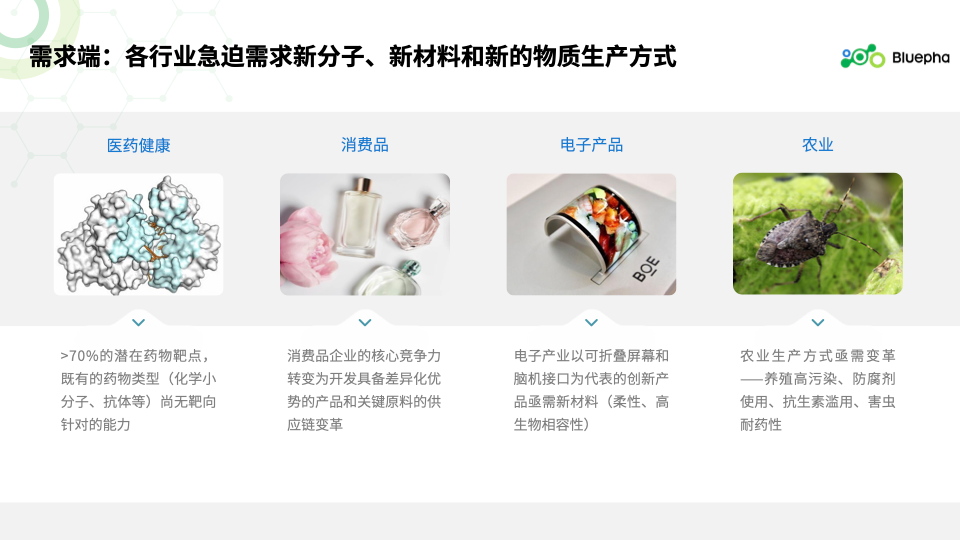
Biotechnology represents an excellent opportunity to bring industrial innovation.
First, there are over 3 million new molecular materials in nature waiting to be discovered and applied.
From the 1960s to the 1990s, major Western pharmaceutical companies and scientists collected all kinds of exotic microorganisms worldwide — organisms that naturally synthesized certain molecules and drugs.
The most iconic collected microorganism produced rapamycin, an immunosuppressant essential for organ transplants. The Billion-Dollar Molecule: The Quest for the Perfect Drug chronicles the history of immunosuppressive compound development.
But back then, you simply took whatever nature offered. Creating entirely new molecules on your own was nearly impossible.
So those 3 million-plus microorganisms remain entirely new and waiting to be explored by humanity. After that wave of discovery decades ago, we now have more advanced genetic engineering and gene editing technologies that can activate previously silent genes in these microorganisms, synthesizing things they couldn't make before. This is a new direction.
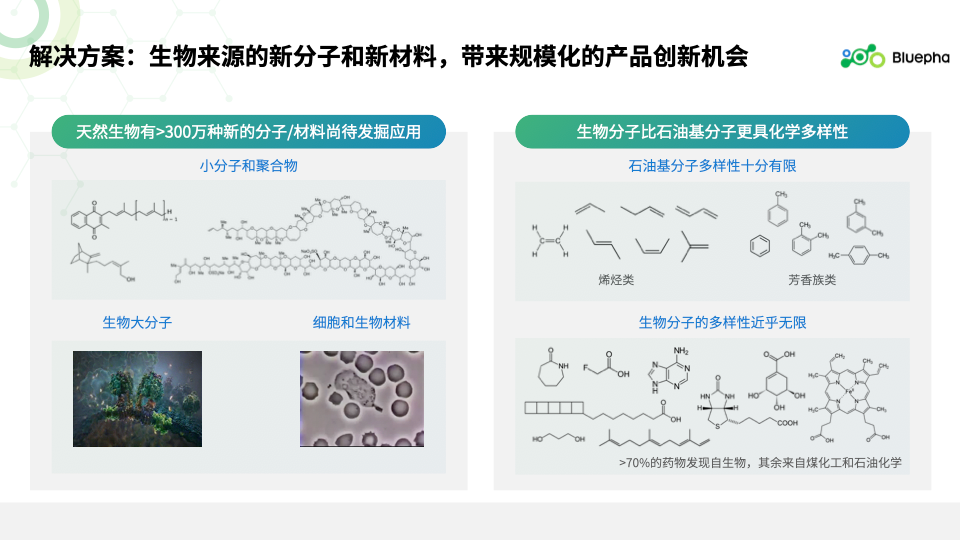
Additionally, biological diversity far exceeds the diversity displayed by chemical products.
Traditional petrochemicals have spawned so many materials based on just two classes of monomers: aliphatic compounds (like olefins) and aromatic compounds. The complex chemical products we use today are built by combining these two molecular types like building blocks.
If such simple categories of molecules can yield such varied materials and possibilities, the diversity of biology itself and its combinatorial potential are even more promising. To this day, beyond biopharmaceuticals that come entirely from biology, 70% of small-molecule drugs also originate from biological sources or are biologically synthesized.
The discipline studying how to use biology to synthesize these products is synthetic biology. Synthetic biology involves two core elements: biotechnology itself, and automation and data technology. With both elements advancing together, most organic substances producible at ambient temperature and pressure can now essentially be synthesized biologically — the question is whether production economics can be achieved.
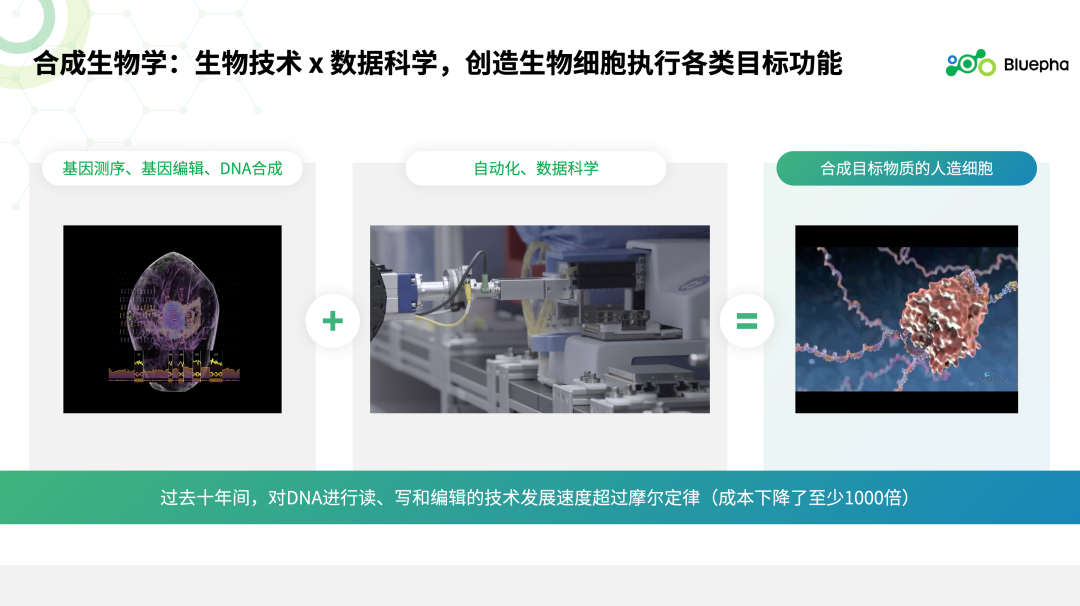
Let's start with biotechnology itself. Gene editing, gene synthesis, gene sequencing — these are foundational biotechnologies. Over the past decade, the pace of human ability to read, write, and edit DNA has outstripped Moore's Law, with technological costs dropping at least 1,000-fold.
Now consider automation and data technology. The core competitive test for a biotech company today isn't whether something can be done, but who can achieve higher throughput and higher-quality data — which requires automation and data science. Over the past decade, mass spectrometers (specialized instruments that identify compounds by preparing, separating, and detecting gas-phase ions) were mostly monopolized by big pharma and major equipment manufacturers. Now many startups develop their own mass spectrometers. Sensors, too, are advancing synthetic biology.
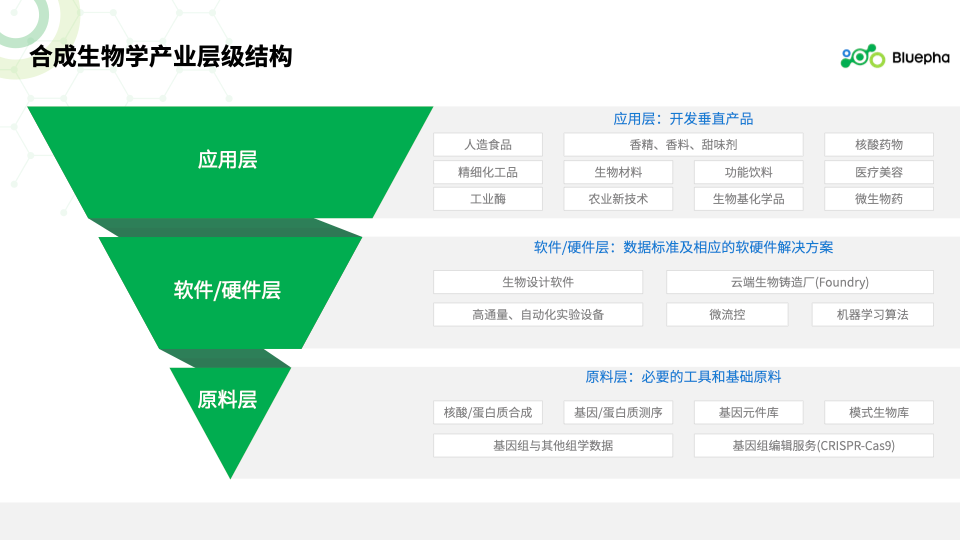
Synthetic biology itself is rapidly differentiating, roughly into raw material layers, software/hardware layers, and application layers. Generally, the higher you go, the larger the market space; the lower you go, the closer to underlying value chains. Typically, companies specialize in at least one layer; leading companies span all three.
In May 2020, McKinsey & Company published The Bio Revolution: Innovations transforming economies, societies, and our lives. The report estimated that although fully realizing the potential of biological innovation remains a long journey, biotechnology has the opportunity to replace over 60% of global material production methods. Over the next 10 to 20 years, across more than 400 application scenarios McKinsey has tracked, biotechnology applications could directly generate $4 trillion in annual economic output.
/ 02 / What kind of team is Bluepha?
Synthetic biology is a very new field. It only began gaining traction in China around 2008.
My co-founder Teng Li and I have known each other for a long time — we've been researching synthetic biology since undergraduate. We both have interdisciplinary backgrounds. I'm from Peking University, Teng is from Tsinghua University. I studied biology as an undergrad and physics for my PhD. Teng studied biology as an undergrad and specialized in biomaterials for his PhD.

We founded Bluepha in 2016. Today our team spans biomaterials, automation, software development, and other interdisciplinary fields. Generally, the closer you get to upstream industry chains, the more fresh talent you find; the closer to downstream, the more veterans. For example, our production general manager previously worked at foreign enterprises and domestic listed companies, with 30 years of bio-fermentation workshop production and factory management experience.
Teng and I had good academic connections, and after starting the company, we established deep collaborations and joint labs with most domestic research institutes.
Bluepha experienced some difficult times in its early days. As Uncle Feng once noted, for interdisciplinary projects like ours, few people could even understand what we were trying to do — they didn't even know which investment direction should evaluate us. We're grateful to FreeS Fund and Peking University and Tsinghua University alumni funds for helping us through that very difficult period.
After 2019, things improved steadily. We built our own pipeline, our pilot data was excellent, product performance was validated by multiple Fortune 500 customers, and we received orders and letters of intent from several companies. Financing hit the fast track. On January 10, we announced our B3 round, with total Series B funding reaching RMB 1.5 billion.
03 How do synthetic biology labs differ from traditional labs?
How to improve R&D efficiency?
At Bluepha, what's the difference between our synthetic biology R&D labs and traditional labs?
The biggest difference is that we don't jump straight into biology — we invest heavily in automation and digitization first.
Over the past several decades, traditional biology labs haven't fundamentally changed how they work. You might picture someone standing at a bench, mixing various bottles and jars.
But this traditional approach creates a serious problem. Take two labs researching the same cancer target — beyond the shared target, they likely share almost nothing else. Data produced by the two labs can't be compared "head-to-head."
Because the two labs likely differ in countless methodological ways. In IT terms, benchwork-based labs lack standardized, structured data. Everyone operates according to their own understanding, making cross-referencing nearly impossible.
Using robotic automation for experiments not only solves throughput problems and improves R&D efficiency — the process data accumulated is structured and extremely high quality.
▲ Bluepha's flexible automated experimental platform
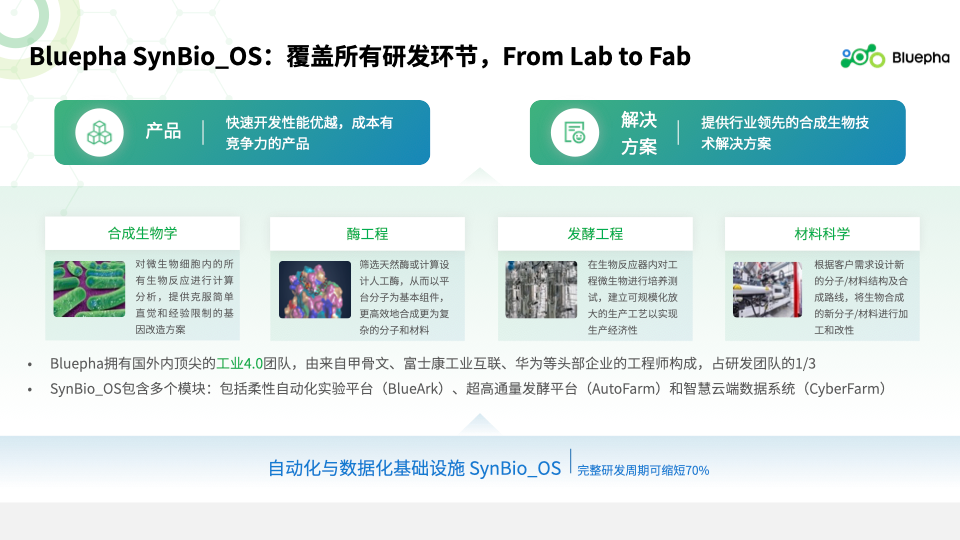
When building our labs, after setting up robotic arms, data flows, workflow management systems, and so on, we use an automation and data infrastructure called SynBio_OS to integrate every step from lab to factory: molecular structure design, microbial strain development, lab-scale and pilot-scale production, material modification and processing. This encompasses synthetic biology, enzyme engineering, fermentation engineering, and materials science.
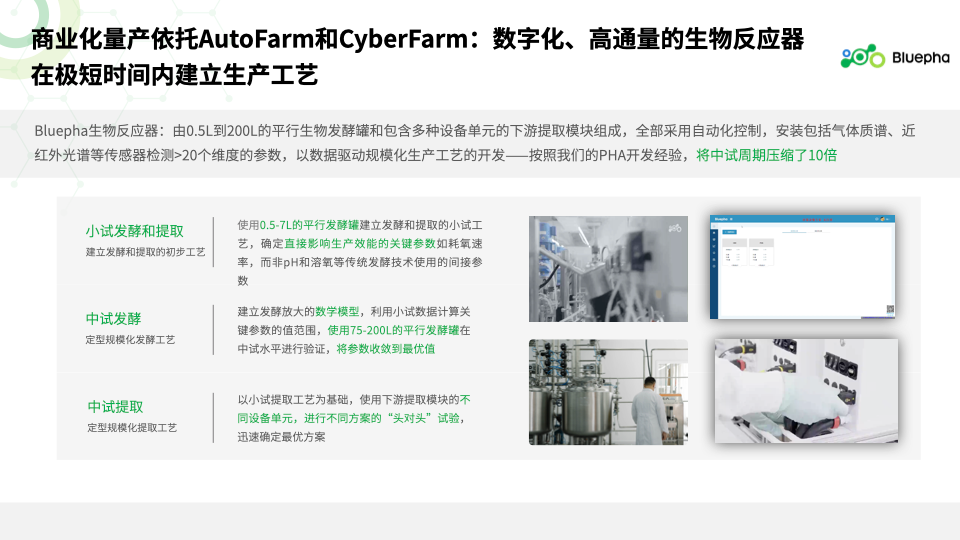
SynBio_OS can run multiple projects simultaneously — from enzyme production to strain cultivation to fermentation — all executed by robotic automation equipment, since sensors for data collection are easy to install. Humans handle some material transfer tasks and higher-level design work for the automated equipment.
We've roughly calculated that the synthetic biology R&D platform SynBio_OS can shorten a product's complete development cycle by 70% from current baselines. For example, maintaining 300 fermenters previously required about 50 people; with Bluepha's ultra-high-throughput fermentation platform, only five staff are needed.
04 How do you build both environmentally friendly and innovative products like assembling blocks?
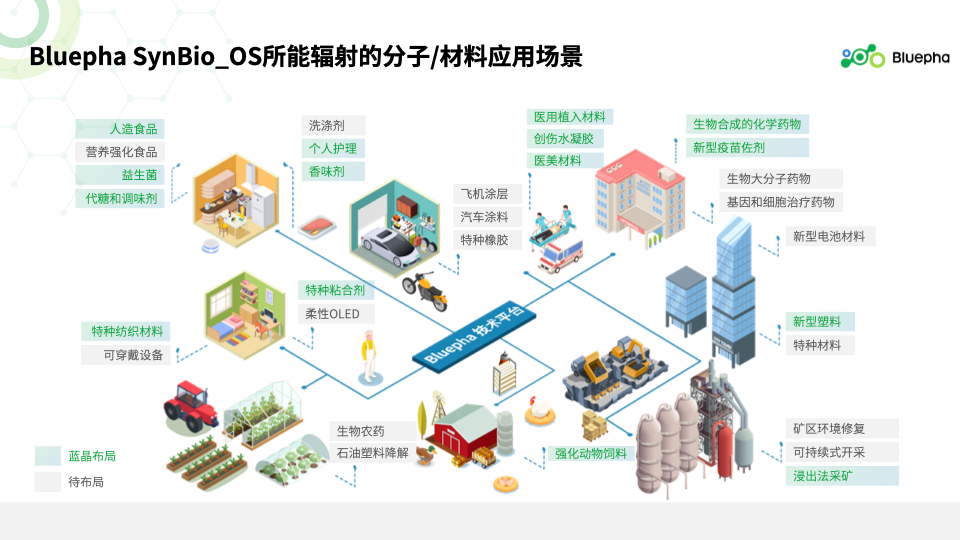
Bluepha's platform can radiate across fairly broad application scenarios. We can empower many upstream and downstream value chain partners. We output products, but collaborate with customers on solutions. Each molecule, each material represents a new business — customers have deep industry expertise accumulated over years that we can learn from.
Through serving customers, Bluepha accumulated product commercialization experience, and when we later developed our own products, we selected some particularly interesting innovative ones.
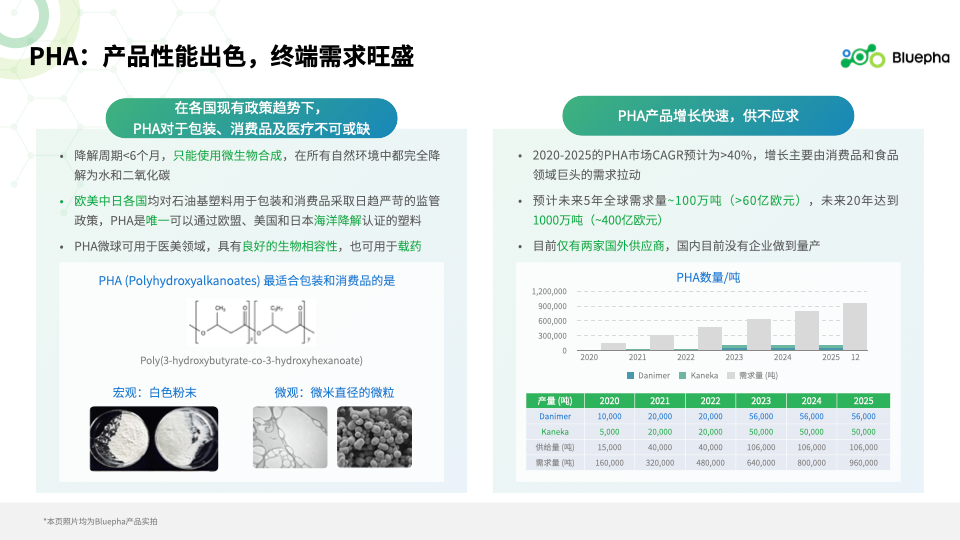
Take fully biodegradable plastic PHA (polyhydroxyalkanoates) as an example. PHA is currently the only plastic that spontaneously degrades in all natural environments. Its degradation cycle is under six months, completely breaking down into water and carbon dioxide in all natural environments. PHA microspheres can be used in medical aesthetics with good biocompatibility, and also for drug delivery. The challenge is its high production cost.
Some consumer brands now use polylactic acid (PLA) for straws. PLA is relatively rigid — barely workable for straws, and even harder for film packaging.
Compared to PHA, PLA doesn't fully degrade spontaneously. According to New Weekly: "In 2014, Central South University of Forestry and Technology simulated natural soil in a PLA landfill degradation test. After 12 months, only 0.23% of its mass was lost. In 2017, after 400 days of testing in seawater and freshwater, Germany's University of Bayreuth found only about 0.5% mass loss for PLA."
Many major consumer brands, especially Western ones, have explicitly stated they won't use PLA for consumer product packaging. In 2021, Philadelphia's official website announced that from July 1, 2021, all "plastic bans" would include PLA and all blown-film biodegradable bags.
But PHA solves both degradation and stretchability well. PHA compounds cannot be synthesized chemically — only biologically. And the specific type of PHA molecule we want can't even be synthesized by natural organisms; metabolic pathways in natural microorganisms must be engineered to achieve it. This polymer degrades spontaneously within six months, and its stretchability is excellent, making it suitable for consumer packaging.
We make two types of PHA materials with different hardness. Both correspond very closely to traditional polyethylene and polypropylene in performance. The softer material suits packaging; the harder material works for cups and paper straws. For example, a PHA coating inside paper cups can repel water. We've also made PHA into foam materials for athletic shoes.
We've compared these materials' performance head-to-head against foreign competitors — they're virtually identical.
Beyond the product itself, Bluepha is building factories. On January 1, 2022, Bluepha broke ground on its first product line — a 25,000-ton-per-year "super factory" for biodegradable PHA in Binhai County, Yancheng City, Jiangsu Province. Why Yancheng?
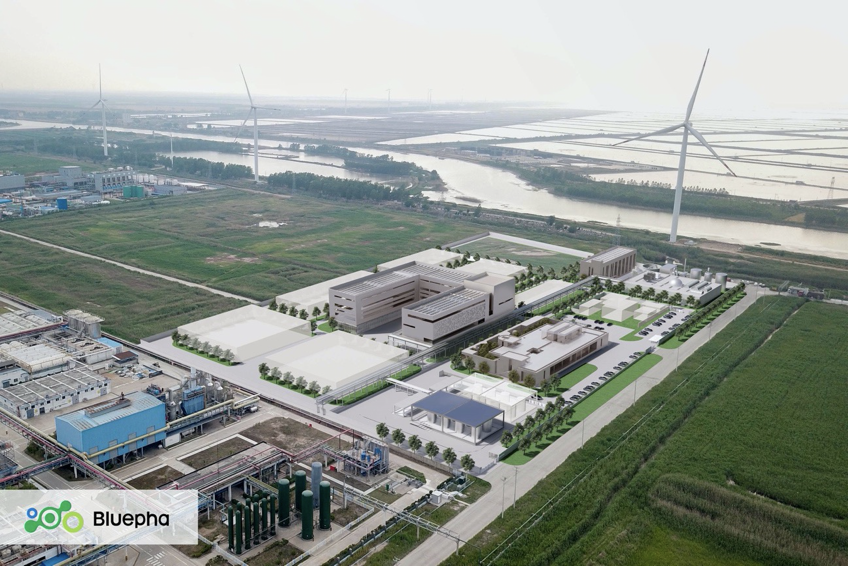
▲ Bluepha PHA industrialization project Phase I planning schematic
PHA production raw materials are bulk commodities mainly sourced from Southeast Asia and need to be imported. So our factory needs to be near a port. Additionally, Yancheng is China's "offshore wind power capital," with 70% of the province's wind power and 50% of its photovoltaic resources. The industrial park where we're building primarily uses offshore wind power. We want PHA, as an ESG-focused material, to not only have excellent degradability but also achieve 30-40% lower carbon emissions in production compared to traditional petrochemical polyethylene — realizing our "bio-synthesis + clean energy" vision.
Beyond China, we're actively expanding overseas, having established partnerships with leading PHA distributors in Southeast Asia, Europe, and Japan. On January 12, we announced a strategic partnership with Netherlands-based Helian Polymers, the largest PHA distributor in Europe by market share.
The biological synthesis process assembles many small molecules like building blocks, step by step into current molecules. These building blocks are reusable across synthesizing different compounds and materials. Acetyl-CoA, malonyl-CoA — these are "building blocks" that, combined differently, yield different molecular materials. This is what makes synthetic biology platforms extensible and fascinating.
Beyond PHA, we've also partnered with a domestic pharmaceutical company to produce products for medical aesthetic injections. Whether at the synthetic biology level, or in process, formulation, formulation development, and various physicochemical testing, we've invested enormous effort and produced solid data.
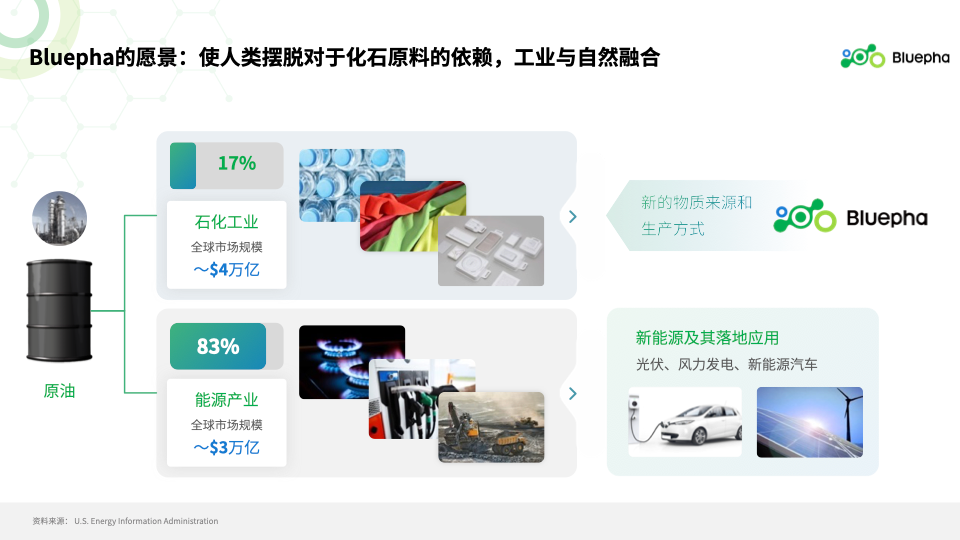
Industry often cites this fact: from a barrel of oil, 83% goes to fuel, corresponding to roughly $3 trillion in global energy market size. The remaining 17% becomes various derivative products, corresponding to roughly $4 trillion in global market size — creating nearly equivalent economic value from a fraction of the material.
To date, the industry lacks good solutions for how to create new substances and new production methods. Bluepha hopes to work with partners in this direction, achieving integration between industry and nature — this is our vision.
A job posting: Bluepha is revolutionizing material production methods and creating products that cover daily human life with superior performance through its synthetic biology R&D platform.
Welcome to join Bluepha, and together with us, drive the next technological revolution.

▲ Shize Bio founder Xiang Li: The Latest Intersection of Biotechnology — The Spring of Stem Cell Therapy | 2021 FreeS Fund Investor Summit
▲ How can single-cell sequencing help you understand the 40 trillion cells in your body? | 2021 FreeS Fund Investor Summit
What are the aesthetic roots for China to birth luxury brands? | 2021 FreeS Fund Investor Summit
What kind of spiritual consumption does Gen Z need? | 2021 FreeS Fund Investor Summit
FreeS Report 22: Can New Materials Save the Footwear and Apparel Industry? | FreeS Research

Click "Read Original" at bottom left to browse Bluepha B3 funding details
