Li Xiang, Founder of Shize Biotech: The Latest Intersection in Biotechnology — The Spring of Stem Cell Therapy | 2021 FreeS Fund Annual Investor Summit

How much longer until stem cell therapy brings hope to patients with serious diseases?

As Xiang Li, founder, CEO, and CSO of XellSmart Biotech, puts it: were it not for a chance encounter 13 years ago, he probably wouldn't have ended up researching stem cells and regenerative medicine. More likely, he would have graduated with his undergraduate degree in swine science and gone on to become a pig farm owner.
But fate pushed him down an unanticipated path. In 2008, after watching a family member develop Parkinson's disease, he began learning about neurodegenerative conditions like Parkinson's and Alzheimer's. Their causes all appeared to trace back to cellular degeneration, death, or apoptosis — yet chemical drugs could only treat symptoms, never the root cause.
That same year, Li noticed that foreign researchers had for the first time reprogrammed ordinary adult cells to obtain iPS cells (induced pluripotent stem cells). Theoretically, iPS cells could differentiate into various functional human cell types, including healthy neural cells, with promise for cell replacement therapy in Parkinson's disease. Scientifically, this was still merely an unproven prospect. But for Li, it revealed a crack of light through the door of hope, igniting his passion for stem cell therapy.
Stem cells are the "precursors" of all cell types in the human body. They can proliferate indefinitely and differentiate into various functions. Today, through cell culture, they can form constituent cells of specific tissues (such as muscle or nerve). Highly plastic adult stem cells are already in routine medical use. Stem cell research, also known as regenerative medicine, is seen by medical practitioners as having the potential to transform how humanity addresses disease — by repairing specific tissues or growing organs.
With the vision of "using innovative stem cell medicines to bring relief to millions of suffering patients and their families," Li successively studied under three internationally influential mentors in the stem cell field, then immersed himself in leading industry positions, and ultimately returned to China to found XellSmart Biotech. His years of persistent accumulation in the field, combined with rapid development across various dimensions since landing the company, caught the attention of investment institutions and earned their unanimous recognition. He secured an angel round led by FreeS Fund, followed by Pre-A and Pre-A+ rounds led respectively by Lilly Asia Ventures, Qiming Venture Partners, and HSG.
At the 2021 FreeS Fund Investor Annual Summit, Li shared with us XellSmart Biotech's core business — the R&D and industrialization of pluripotent stem cell product lines — and exchanged insights from his years in the stem cell field, along with his vision for the future.
Topics covered in his speech:
- What possibilities lie hidden in stem cells?
- As a researcher and entrepreneur, how does he perceive the gradual development and temperature shifts of the stem cell industry?
- What is XellSmart Biotech's outlook for stem cell therapy in Parkinson's disease?
We've organized the speech into this transcript, hoping to bring you fresh perspectives and new thinking on stem cell technology.
Interactive Giveaway What curiosities or thoughts do you have about stem cells and stem cell therapy? Feel free to share your unique insights on stem cell therapy technology at the end of this article. By 21:00 on January 19, the three most thoughtful commenters will each receive a 2022 FreeS Fund commemorative T-shirt.


/ 01 / What possibilities lie hidden in stem cells?
Hello everyone, I'm Xiang Li, founder of XellSmart Biotech. I'm very glad to gather with you all at FreeS Fund's invitation. My sharing today is about a field very close to our lives — life and regenerative life.
Today I've used a title: "The Latest Intersection of Biotechnology — The Third Spring of Stem Cells." I'll interpret this title from several different angles and report to you on some (potentially) distinctive things XellSmart Biotech has done in the past year.
Let's return to human beings themselves. Our essence is life. Through continuous evolution, humans have reached the top of Earth's biological chain. But the changes in this evolutionary process were not perfect. For example, at the human stage of evolution, we may have sacrificed some of our overt regenerative capacity. If we take a lowly organism like the planarian and cut off one-tenth of it, that fragment can regenerate into a complete individual. Step up to an animal like the salamander, and a severed tail will grow into a complete new limb in about ten days. But if a human limb is amputated, it typically cannot regenerate.
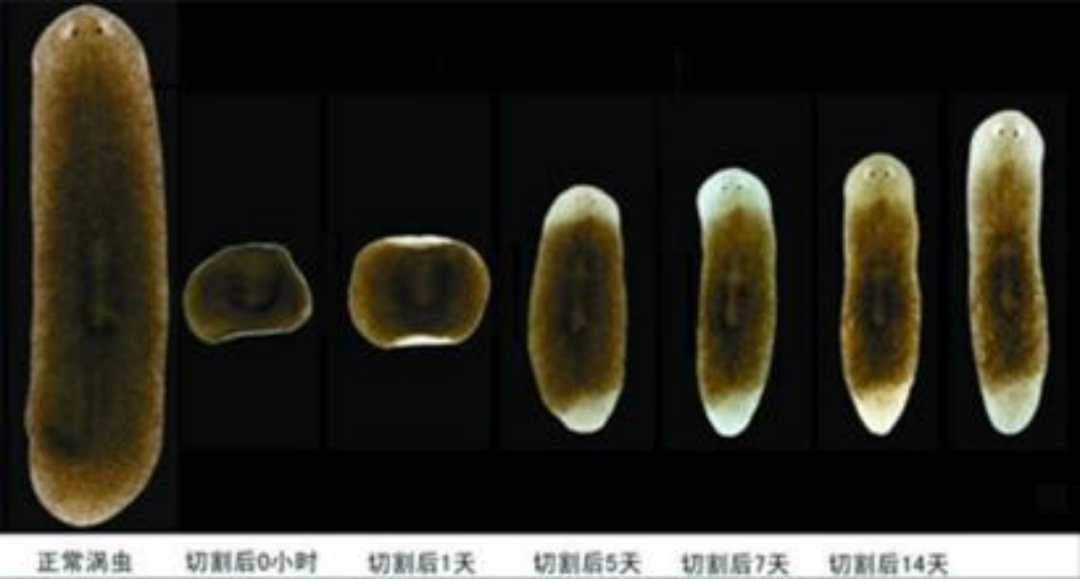
min.news
Planarian regeneration process
Losing this initially strong regenerative ability may be the price paid in the evolutionary process of life. So in order to obtain higher-quality life, can we recover this regenerative capacity? The answer is: possibly.
Returning to the essence of living organisms, the most basic functional and regenerative unit of all life forms is the cell, and stem cells are precisely the special cell populations capable of differentiating into different cell types. If we compare the human body to a towering tree constantly branching upward, stem cells are the seeds at its very base.
What are stem cells? We can understand them as a class of cells capable of unlimited proliferation, self-renewal, and unlimited differentiation. Each of us originates from a fertilized egg. During the development of the fertilized egg, there is a specific embryonic stage called the blastocyst stage. At this point, there is a special group of cells in the blastocyst called the inner cell mass. If we extract this inner cell mass, they can be stably expanded and cultured in vitro in large quantities, and continuously differentiate into almost all human cell types.
Based on this technology, we can potentially regenerate functional cells in large quantities in vitro, thereby replacing aging, degenerating, or apoptotic cells in the human body. From the perspective of human disease and aging, the causative factors of many diseases may all be cellular-level degeneration, death, or apoptosis. So if we can cultivate and regenerate relevant cells through stem cell technology and apply replacement therapy, there is hope for addressing a series of major human diseases — and possibly in a way that treats the root cause.
An authoritative institution once projected that in 15–20 years, cell therapy and gene therapy could become a routine treatment modality alongside traditional drug therapy and surgical treatment, appearing in doctors' standard treatment recommendations. So our focus in the stem cell medicine field is: how can we introduce specific gene fragments into living cells to reverse them to the embryonic stage, then massively regenerate them into different cell types, and deliver them as medicine to patients suffering from diseases caused by cell loss, degeneration, or death.
/ 02 / What did the three springs of stem cell therapy look like?
My speech title mentions the third spring of stem cells — so clearly, in the history of stem cell development, there were also a first spring and a second spring.
The first spring of stem cell therapy, in summary, was delivering stem cells themselves as products to patients. The core generally involved mesenchymal stem cells or stromal cells, which possess specific functions such as immune regulation and tissue repair capabilities. Researchers isolated these from the body, expanded them, and reintroduced them into patients to exert their effects — mainly helping with autoimmune diseases, osteoarthritis, and other immune function modulation and anti-inflammatory treatments.
In 2012, a small Colombian biotechnology company developed the world's first approved artificial stem cell drug. By August 2021, paper data showed 28 approved cell therapy products on the market, increasing to 32 by December. Of these, as many as 21 were stem cell therapy products, and the vast majority were based on mesenchymal stem cells as the core representative.
https://doi.org/10.1002/btm2.10214
Cell therapies in the clinic
The second spring of stem cells refers to using embryonic/induced pluripotent stem cells as the core — isolating them for unlimited proliferation, self-renewal, and multi-directional differentiation in vitro, then reintroducing them into the human body for cell replacement transplantation therapy, helping treat major degenerative diseases caused by functional degeneration, loss, or apoptosis of cells.
The core of the third spring, then, is the new generation of pluripotent stem cells. Currently, against the backdrop of explosive multidisciplinary cross-pollination, stem cell therapy is no longer limited to stem cells themselves, and new trends are emerging in the industry.
/ 03 / How to perceive the gradual development and temperature shifts of the stem cell industry?
Currently, there are numerous leaders in the stem cell field across the global landscape, but overall the frontrunner is probably still the United States. The US already has multiple companies using embryonic/induced pluripotent stem cell therapy as their representative approach, culturing stem cells to differentiate into different cell types to treat specific major diseases that currently lack genuine clinical solutions.
Some of these companies have been directly acquired by pharmaceutical giants while still in the preclinical stage, or have gone public during preclinical or Phase I clinical stages.
I've observed that whether we're talking about second spring or third spring stem cell technologies, China has yet to produce an internationally competitive pluripotent stem cell leader. This is very mismatched with the scale of our patient population — China's patient volume far exceeds that of the US. So China is bound to produce a representative stem cell company like Sana.
In 2008, researchers first used iPS (induced pluripotent stem) cells for human treatment of Parkinson's disease. I happened to be doing research in this field at that time, and my family itself had a Parkinson's patient. In our search for medical treatment, more than once we were told by doctors that Parkinson's itself was incurable — that perhaps only stem cell therapy in the future held any hope.
At that time, searching for "stem cell therapy" yielded nothing but marketing terms like "stem cell beauty," "stem cell anti-aging." At that time, I was still a student with an undergraduate degree in swine science.
Because of my uncle's condition, I developed the idea of making stem cell therapy my lifelong career. I first entered the laboratory of Professor Shaorong Gao at Tongji University, then the laboratory of Professor Hongkui Deng at Peking University to study, and then went to the US to join Professor Suchun Zhang's laboratory at the University of Wisconsin-Madison.
The reason I chose to study at the University of Wisconsin-Madison was that in Professor Deng's laboratory, I had learned the first stage of stem cell drug development — how to obtain stem cells. After completing this step, the important next step was how to obtain different functional cell types from stem cell sources — that is, getting the extracted stem cells to complete directed functional differentiation.
Taking neural-direction stem cell differentiation as an example, the University of Wisconsin-Madison is where the world's first human stem cell line was established, and Professor Suchun Zhang's laboratory is also internationally recognized as the top lab in this direction.
After leaving the laboratory, I realized that pure academic research still had some distance to go before translating technology into practical application. So under the support of the US Parkinson's Foundation, I first led preclinical research on stem cell differentiation into dopamine neural precursor cells for Parkinson's disease treatment, then chose to join Sana Biotechnology in the US.
After that, I returned to China and founded XellSmart Biotech. And the tiny seed that led to XellSmart Biotech's birth was actually planted 13 years ago. That XellSmart could be smoothly founded in 2021 was also because the objective soil had reached the point where explosion was needed.
First, taking major diseases represented by neurological disorders, our traditional drugs still lack the power to provide substantive solutions. Take Parkinson's: over a decade ago, Parkinson's patients like my family member took levodopa, with dosages increasing from a few pills at the start to a large handful later. Patients continuously took this expensive "internationally cutting-edge medication" while watching their bodies gradually decline. Even today, levodopa remains the first-line treatment for Parkinson's.
The reason Parkinson's treatment drugs haven't made breakthrough progress after all these years is that traditional treatment methods cannot regenerate neurons in the brain to help treat neurodegenerative diseases like Parkinson's.
Second, the very concept of using living cells as medicine in the stem cell and regenerative medicine field itself represents a huge market, with strong explosive potential across a series of unmet clinical needs. We project that its industrial scale will certainly grow substantially in the future.
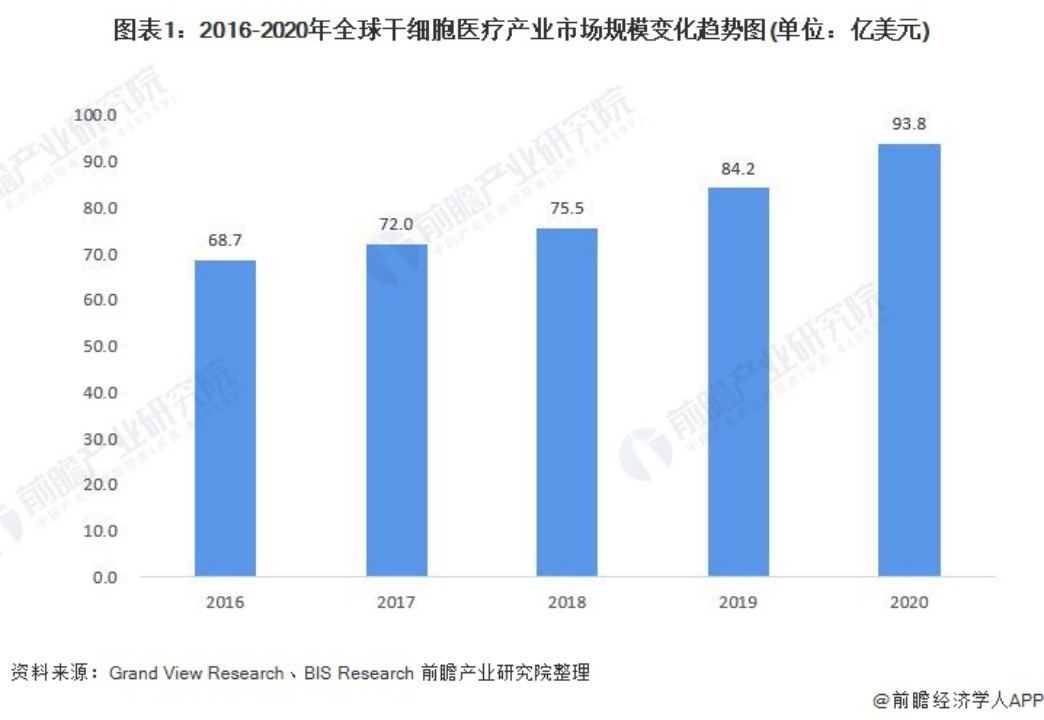
前瞻产业研究院
2016–2020 Global Stem Cell Medical Industry Market Size Trend Chart
Furthermore, regarding the "second spring" technology of induced pluripotent stem cells I mentioned earlier, developed countries in Europe, America, and Japan have successively entered the clinical stage. Although China has not yet produced pluripotent stem cell-related leading companies, official bodies have taken notice and begun supporting this direction. XellSmart's team possesses years of accumulated technology and reserves in this field, so through a kind of necessity within chance, we took this step.
For any company, especially a biopharmaceutical company, the core factors for long-term success are inseparable from its corporate culture, long-term vision, and core values. The values I established for XellSmart Biotech are: patients first, cutting edge second, shareholders third. We always put patients first. "Cutting edge second" means we must race against time to snatch people from the clutches of disease, with every cut going straight to the point. And only by firmly adhering to these two points can we create social value and give back to the shareholders who support us.
/ 04 /
XellSmart Biotech's Future Outlook
2021 was the first year of commercialization for cell therapy drugs in China, and also a period when China's pharmaceutical industry was undergoing a major historical transformation from imitation to innovation. New drug innovation, guided by clinical value, gathers various key links and ultimately implements them as products. Particularly in emerging innovative drug R&D fields represented by iPS innovative drugs, China still faces multiple challenges in talent, technology, policy, and supply chain.
Currently, XellSmart Biotech has already built a complete team.
Briefly, let me explain why XellSmart chose Parkinson's treatment as its direction. Beyond my personal reasons, Parkinson's itself is also the second-largest neurological disease globally in recent years, after Alzheimer's. Its core pathological cause is the degeneration or death of dopamine cells in the substantia nigra region of the midbrain.
China has over 3 million Parkinson's patients, with an incidence rate of 1.7% among people over 65, accounting for one-third of global patient numbers. By 2030, patient numbers are projected to reach nearly 5 million, almost half of global Parkinson's patient numbers.
Finally, I want to especially thank FreeS Fund for its tremendous support when we were founded. I clearly remember that when we went to find Jiong (Jiong Shen, partner at FreeS Fund), there was only me as a person, one PowerPoint, and one backpack. When Jiong decided to invest in me, XellSmart Biotech was still in its very early stages. I brought the early team into a bare-shell space, with tables and stools, connecting to the internet via mobile hotspot — that's how we made it happen.

XellSmart Biotech's starting point
This is a photo of historical significance for XellSmart, one worth cherishing.
XellSmart Biotech has been founded for less than a year. Objectively speaking, I believe we are indeed developing rapidly and growing vigorously. This is also inseparable from the support of institutions including FreeS Fund. Currently, our team has expanded to nearly 60 people within a year, including 10 PhDs/postdocs, several industry veterans with 10+ years of experience, with master's degree holders and above accounting for 65%. We have simultaneously established fully functional supporting departments.
In 2021, we independently designed and completed the construction of a 1,600-square-meter R&D center. In 2022, we will build a 3,500-square-meter production and transformation base.
For biopharmaceuticals, making cells into medicine is a difficult thing; making stem cells into medicine is an even more difficult thing. In this process, persistence is required, staying true to the original mission is required, and resilience to the end is required — only then will we ultimately succeed.
We hope to use XellSmart Biotech's stem cell products to bring new vitality to patients and their families. This is our ultimate ideal. Thank you all for your support here today. I hope you can continue to support us going forward. We will certainly prove it with results and become a leader in the domestic stem cell field. Thank you, everyone.
A Recruitment Notice XellSmart Biotech is in a rapid early-stage development phase. We warmly welcome ambitious and talented individuals who identify with XellSmart's vision to join us as soon as possible, to wholeheartedly devote ourselves to this correct yet difficult, but deeply meaningful endeavor! (Welcome to send resumes to: hr@xellsmart.com)

What Kind of Spiritual Consumption Does Gen Z Need? | 2021 FreeS Fund Investor Annual Summit
Standing at the Wind Tunnel of Gene Therapy | FreeS Research Institute

↙ Click "Read More" at bottom left to browse XellSmart Biotech Pre-A+ round financing details
