What Are the Aesthetic Roots Behind China's Potential to Birth Luxury Brands? | 2021 FreeS Fund Annual Investor Summit

"Can China Have Luxury Brands?"
In our article If You Don't Lose at Home, You'll Win Globally | Li Feng's New Year Outlook on Consumption, we noted: "In the future, over a billion Chinese people will have a consumption level close to that of Shanghai residents today. A significant portion of these billion people will be middle class."
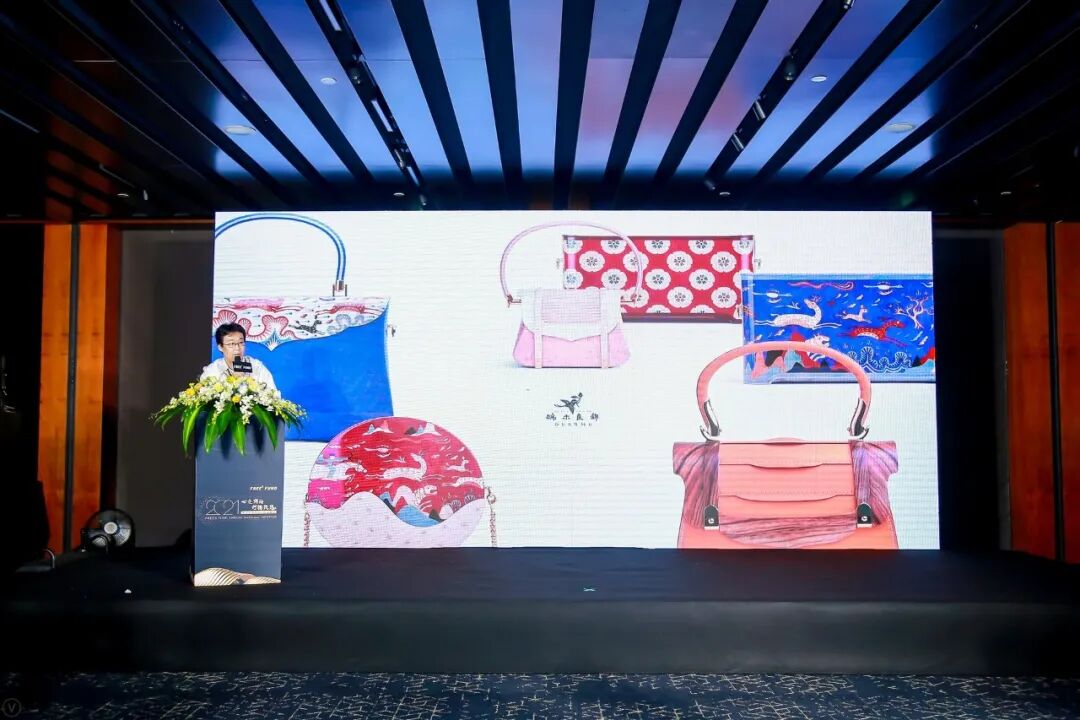
These middle-class consumers are the backbone of the market, particularly for high-end premium brands. At FreeS Fund's 2021 Annual Investor Summit, Qi Tian, founder, CEO, and chief designer of FreeS portfolio company DUANMU, explored a central question: How can we trace and innovate on aesthetics to create domestic premium brands that satisfy consumers' spiritual needs?
Qi Tian mapped out a clear thread: digging from East-West aesthetic identity into cultural identity, which led him to the foundation of Chinese cultural identity — the classical-historical system. From there, he traced back to the Chinese rhetorical mode of thinking, then used that lens to re-examine traditional Chinese culture. Beyond distilling and reviewing traditional Chinese aesthetic perspectives, Qi Tian also shared how DUANMU inherits and innovates on traditional culture.
DUANMU was founded in 2011 as a top-tier Chinese handbag brand. It specializes in designing and crafting handbags and fashion accessories with wood as the primary material. In early 2021, DUANMU raised its Series A with participation from FreeS Fund. Most recently, it secured another round of financing in the tens of millions of RMB.
Chinese traditional culture is vast and profound. Qi Tian offers an entrepreneur's perspective. What's rare is finding someone willing to keep exploring: how to breathe contemporary relevance into traditional culture. We welcome your thoughts on traditional culture and the consumer market in the comments — the six most thoughtful responses will each receive a canvas bag designed by DUANMU.

01 Success With Borders, Success Without Borders
Chinese brands achieving global success today fall into two categories: success with borders, and success without borders.
Take science and technology brands. The foundation supporting them — science itself — knows no borders, much like sports. So tech brand success is more like winning at the Olympics: regardless of your cultural background, if you're higher, stronger, faster, you're the champion.
But for brands competing on the cultural track, success has borders. If a brand wants to grow strong, whether domestically or internationally, it needs cultural resonance. If a Chinese leather goods brand shows no distinct Chineseness, merely matching Hermès in craftsmanship and quality while pricing lower, can it succeed? Perhaps it could become a premium alternative, but rarely a true premium brand. Yet if we apply the same hypothetical to an automaker or smartphone company, success would be virtually guaranteed.
I won't judge which path is harder. But the reality today is this: Chinese brands have already achieved borderless success globally, while bordered success remains rare. I, and my ten-year-old brand DUANMU, are on the journey of exploring, defending, and expanding bordered brand success.
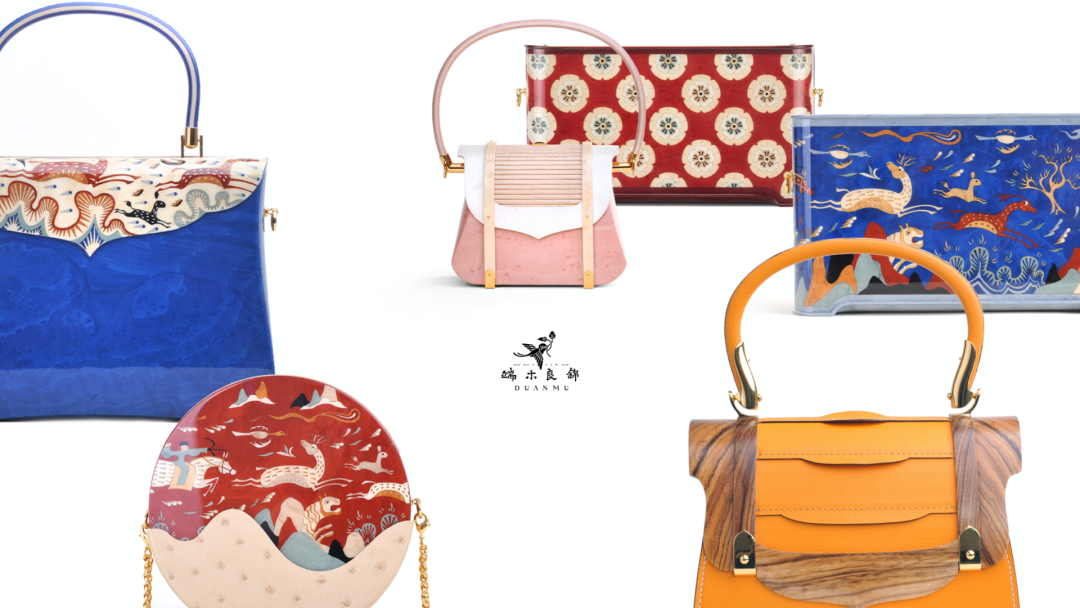
First, DUANMU's core business is designing, manufacturing, and selling high-end handbags, silk scarves, and fashion accessories. Stretching the comparison, its operations are essentially identical to Hermès. Many people look genuinely surprised hearing this — I can see it in their faces — and the question they're too polite to ask is: Can China even have premium brands? In this category, how have you survived?
It does sound improbable. But looking back at the brand's ten-year history, I believe the single most important factor keeping it alive has been our efforts in aesthetic tracing. This is both DUANMU's greatest point of value and the main focus of my sharing today.
02 What Is the Essence of Beauty?
First, tracing has two levels. On the surface, we must trace beauty itself and ask: what is its essence? This sounds profound, but the answer is simple. I know a designer, quite a character. If he likes a proposal, he'll say "Beautiful, beautiful, beautiful." If he doesn't, he won't reject it outright — he'll say: "This proposal is really distinctive."
That one word, "distinctive," betrays the essence of beauty. What is beauty? At its core, beauty is a sense of recognition. Aesthetics is the process of building recognition between people through visual information. What fails to gain recognition naturally becomes "distinctive."
The fundamental significance of aesthetics lies in its ability to build recognition universally, rapidly, and deeply through vision. Why did original Buddhist doctrine forbid idol-making, yet the moment Śākyamuni passed away, Buddha statues sprang up everywhere? Place a magnificent giant sculpture where people pass by, make it breathtakingly beautiful, so everyone who walks by stops to look twice. Compared to preaching doctrine mouth-to-mouth, this is far more efficient for spreading Buddhist teachings. Beauty, in this dimension, plays a unique role. In building recognition, human civilization cannot function without vision — this is the deep reason we need beauty.
03 What Is the Essence of Self-Recognition in Chinese vs. Western Culture?
Having understood the essence of beauty, tracing enters its second level. I want to ask: Since beauty is visually-based recognition, is this recognition innate? Or do we first establish some deeper, broader recognition beyond vision, which then enables us to perceive beauty?
This deeper recognition definitely exists. Take calligraphy. Without deep understanding of Han culture, you'll find Chinese running and cursive scripts chaotic, utterly devoid of beauty. An American classmate once told me Chinese calligraphy was too profound, completely incomprehensible — visually, it paled next to Islamic calligraphy.
Thus we must go deeper into the cultural level, continuing to trace aesthetics, and ask: What is the essence of self-recognition in Chinese versus Western culture?

First, the West.
In Western culture, people's core self-recognition is built through science. Science is the root of Mediterranean culture. After the Roman Empire's collapse, theology briefly took over; after a suppressed millennium, science revived and drove the Renaissance, then continuously strengthened and refined into modern Western civilization.
Western society's grand recognition based on science created its smaller recognition of aesthetics. Westerners find beauty in science; its underlying logic is mathematics, hence the golden ratio, perspective theory, dispersion theory — all classical Western aesthetics rest on this foundation. If we forget the word and concept of "art," and examine Western traditional art from a perspective of essential reduction, you'll find those dazzlingly skillful artists — whether Caravaggio, Rembrandt, or Vermeer — were actually scientists studying vision through rulers, compasses, and prisms.
This scientific底色 of Western civilization was carried all the way into today's brand world. If we penetrate surface appearances to understand brands like Hermès, Patek Philippe, and Rolls-Royce, you'll find their core is a titanium-alloy-shining scientific skeleton. Viewing brands as people, these are the artists with rulers, compasses, and prisms I just described. The essential consumption value of today's Western luxury world is mathematical value. The pleasure it brings consumers — more professional, more refined, more exquisite — is ultimately the pleasure numbers can give. These mesmerizing visual surfaces that we can't tear ourselves away from are merely different algebraic results derived from underlying formulas. Standing behind the brand, we can see this clearly.
If Western world's core recognition is built on a scientific system using mathematics as its foundational tool, then what is Chinese and Eastern core recognition built on? This question is difficult, but if Chinese brands don't merely want to be premium alternatives, but want to grow strong through national cultural resonance, we must figure this out.
Some might ask: Is it Confucianism? That's half right. Confucianism itself is intellectual content, not a mode of thinking. Compared to intellectual content, modes of thinking matter more for building recognition. It's like two people: they may disagree on specifics, but if their thinking patterns align, they'll get along; the reverse doesn't work.
So what is the mode of thinking that allows Chinese people to get along and build deep mutual recognition?
It's classical studies — this is the core of Eastern civilizational recognition. Classical studies to traditional China is what science is to traditional Europe. European science is built on mathematics; Chinese classical studies are built on historiography. China's classical-historical system is fully analogous to Europe's scientific-mathematical system. Let me explain step by step.
First, what is classical studies?
An imperfect analogy: Redology is the study of Dream of the Red Chamber; classical studies, in terms of knowledge volume, is equivalent to countless Redologies. Redology studies one book; classical studies studies many books, most importantly the Five Classics within the Four Books and Five Classics: The Book of Songs, The Book of Documents, The Book of Rites, The Book of Changes, and The Spring and Autumn Annals.
Chinese people used the content of these books, along with various schools' annotations, to build a recognition system spanning over two thousand years and assimilating countless foreign peoples. Even in the Qing Dynasty, the great plaque in the Forbidden Palace bore the characters "Hold fast to the mean" — from The Book of Documents among the Five Classics.
By comparison, while the Western scientific system is powerful, it was interrupted by theology, and its core is mathematics, which can self-negate and continuously approach truth. So the millennium spanned by the scientific system is a dynamic millennium of self-subversion.
The magic of the classical studies system is: first, it was never interrupted or destroyed by any external system. Whether book-burning and burying of scholars, the introduction of Buddhism, or nomadic invasions — self-destruction or destruction by others, soft or hard — classical studies was like an invincible golden bell, never overturned.
Second, the core classical meanings held as supreme standards reached peak perfection upon emergence. As history developed, there was completely no dynamic optimization process like mathematics — it was essentially static, never outdated, never wrong. These books sit there, growing more beautiful with interpretation, truly friends of time. This reverse-growth superiority is something the Western scientific system entirely lacks.
04 Western Thinking Is Narrative; Ours Is Rhetorical
If we dig deeper into the core texts of classical studies, something even more remarkable emerges. Among the Five Classics, the Book of Documents and the Spring and Autumn Annals stand at the center — one chronicling the history of the Xia, Shang, and Zhou dynasties, the other the history of the state of Lu. The other three — the Book of Rites, the I Ching, and the Classic of Poetry — address ritual, divination, and literature respectively. Though not direct historical records, all are deeply entwined with early Chinese history. Clearly, historiography matters to the Chinese in much the same way mathematics matters to the West.
China — the world's largest country and most heterogeneous ethnic community — has sustained its core identity across millennia through the study of early history confined to a small patch of its vast territory. This is nothing short of miraculous. Why? And how did we manage it?
Answering this is dauntingly complex. I'll offer a starting thought.
The reason we not only accepted this "strange" state of affairs but devoted generations to reinforcing it lies in a fundamental difference in how we think: Western thinking is narrative; ours is rhetorical.
As the noblest of creatures, when humans feel moved to express themselves, they can speak plainly: "I'm happy today" — this is narrative. Or they can say, "I'm so happy I'm flying" — this is rhetoric.
If we analogize thinking to speech, the inclination toward narrative or rhetoric upon opening one's mouth marks the divergence in cognitive style.
For narrative thinking, each sentence advances from the last. Sentence by sentence, reality is described with ever-greater fidelity to truth. Western civilizational identity is secured through this. This discipline of striving toward truth is science.
Chinese thinking, by contrast, is fascinatingly rhetorical. Where narrative pursues truth, rhetoric pursues the synesthesia that truth provokes.
Consider the Chinese poetic techniques of fu, bi, and xing. Fu is straightforward narration — narrative, that is, merely the elementary stage of Chinese expression. Bi and xing are entirely rhetorical.
To better achieve rhetorical effect, Chinese abandoned many narrative tools — tense, gender, grammatical number — and evolved an abundance of adverbs and modal particles. For degrees of comparison, Chinese deploys 稍, 益, 愈, 尤, 弥, 殊, 甚, 至, 绝, 极, and more; English mostly makes do with "more" and "most." Chinese modal particles are especially numerous: 也, 邪, 矣, 哉, 欤, 呼, 呜呼, 嗟夫, 噫嘻 — each character utterly distinct in form, each conveying subtle emotional shades irreplaceable by the others.
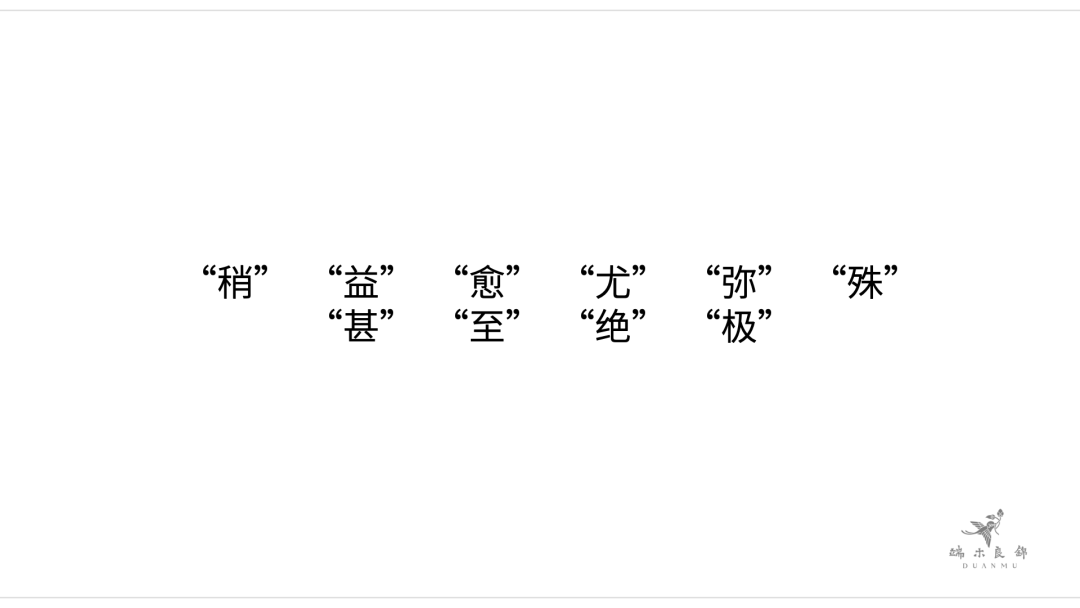
The ultimate aim of Chinese is not necessarily precision but beauty of expression. For Chinese people, "wonderful" (妙) often outweighs right or wrong. Consider Song Yu of Chu, who transformed the reputedly virtuous Deng Tuzi into a byword for lechery, while casting his own promiscuous self as a sage. The King of Chu knew it was falsehood, yet loved hearing it — because it was wonderfully said. Chinese is a linguistic system evolved for strong rhetorical power, optimized for making things sound marvelous.
/ 05 / The Classical Canon Forged Chinese Civilization's Core Identity
Language reflects thought; thought determines outcomes.
For a rhetorically-minded people, what we can grasp is that traditional China was less enthused about approximating truth, which to some extent limited natural scientific development. What is often overlooked is that the humanities were equally transformed. The result was the precocious maturity of Chinese civilization — a process coinciding precisely with the establishment of China's classical canon.
Those rare figures who participated in narrative-building at the source of intellectual civilization resemble the GP (General Partner) of a limited partnership: perhaps holding merely 0.1% equity, yet exercising 100% voting rights.
Who is the largest GP of the "Chinese Civilization" limited partnership? Confucius.
Why does he tower so large in Chinese history? Because of the five canonical narratives running through pre-Qin history — the Five Classics — he participated in editing to varying degrees. He not only established the narrative but initiated the rhetoric. If the West is a 24-episode TV series, China is a two-hour film; once finished, the remaining 22 hours are all film criticism. Confucius participated in crucial editing of this film and wrote its first review. Moreover, he embedded his reviews as permanent subtitles within the film itself. In compiling the Spring and Autumn Annals, he wrote not merely history but history charged with profound meaning — the so-called "Spring and Autumn笔法" (subtle historiographical method).
China's intellectual history from Han through Qing can be seen as an epic, enduring rhetorical exercise upon pre-Qin thought. Innumerable brilliant minds emerged: Dong Zhongshu of the Han, Cheng Yi and Zhu Xi of the Song, Wang Yangming of the Ming, Gu Yanwu and Huang Zongxi of the Qing — all made monumental contributions.
As more participants joined the rhetoric, the narrative itself became ever less alterable.
Here's an analogy: two people both had a wonderful first day. Upon waking, the Westerner goes out again to "roam," seeking new places to roam, eventually becoming a globetrotter. The Chinese, opening their eyes, finds the first day so overflowing with meaning that merely recalling it feels fulfilling. Fearing its fade, they take up the pen and write — each day writing of that first day, growing ever more spirited in the writing. Until we believe that the thrill of roaming need not be obtained through walking; memory and imagination suffice. Gradually, we become a poet who stays home. This is how identity forms.
To summarize: the core identity of Chinese civilization I have described is brought forth by the classical canon, whose essence is the repeated fermentation of intellectual nutrients within a closed history. This mode of fermentation — requiring no capture of new narratives — is causally intertwined with, and perfectly adapted to, the rhetorical patterns of Chinese thinking.
/ 06 / Chinese Aesthetic Habits Are Also Rhetorical
The lengthy investigation into Chinese civilization's core identity serves to trace aesthetics back to deeper strata of thought. Examining trends from their source yields an almost unfair advantage in building aesthetic consensus, enabling breakthrough understanding of traditional aesthetics' many characteristics.
Since Chinese culture and thinking habits are rhetorical, Chinese aesthetic habits must necessarily be rhetorical as well.
In the Chinese aesthetic system, likeness in form (形似) is always the beginning — the brick cast to attract the jade. Likeness in spirit (神似) is the jade itself. For form-likeness is narrative; spirit-likeness is rhetoric. If our intellectual system can remain anchored in history two millennia past, building an immense classical canon through endless rhetoric, then in our aesthetic world, why cannot depiction of objects themselves remain at the elementary stage of describing things, reserving ampler space for boundless expression of artistic conception?
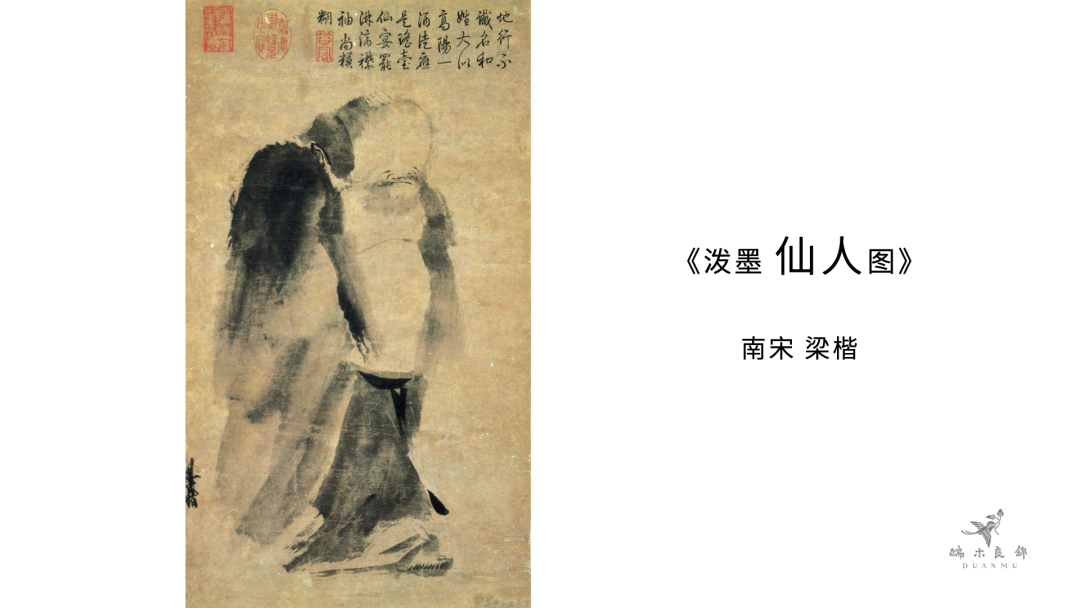
Have you noticed? Chinese figure painting depicts talented scholars and beautiful ladies; Western figure painting predominantly portrays standard handsome men and beauties. Pushed to extremes: the Chinese brush knows no villains; the Western brush knows no ugliness. For villains violate classical studies; ugliness violates science. If you narrate, poor physique introduces narrative flaw; if you rhetoricize, poor physique can be rhetorically covered. Consider this famous Song-dynasty work by Liang Kai — doesn't the figure resemble Totoro, still beautiful? But if I told you this person was utterly wicked, no rhetoric could salvage aesthetic pleasure. Hence the painting's name: Ink Splashed Immortal — "immortal" is the key.
/ 07 / We Should Approach Tradition Untemporally:
We Don't Dominate the Sprint,
But We Lead the Marathon
Now shifting to the brand perspective: to transform Chinese cultural uniqueness into brand advantage, what should we do?
First and most crucially: change how we view tradition.
Many creators in China's cultural industry today examine Chinese tradition through a Western lens. This is viewing rhetoric through narrative eyes, drastically reducing rhetoric's creative space.
In Western context, tradition is past tense, because narrative thinking is tensed. Their excavation of tradition relies chiefly on deconstruction. In a narrative context, standing on today's ground and deriving meaning through negation of yesterday offers creative dividends.
This sounds convoluted; here's an analogy. As a narrator recounting recent events, which opening hooks you: "Yesterday was great" or "Yesterday was utterly miserable"?
Clearly the latter.
Narrative thinking normalizes deconstruction and negation. Hence the Western luxury world overflows with deconstruction of Western tradition itself. One luxury brand held a major show in a Roman cemetery a few years back; models carried human heads under their arms. The concept won rave reviews — "so cool." But if this show were relocated to the Ming Tombs, would it still hold?
So when Westerners, seeking to please Chinese consumers, instinctively apply such deconstructive concepts, Chinese markets explode with outrage at insult to Chinese people; Westerners are baffled, completely unable to fathom Chinese thinking, ultimately retreating to mahjong and pandas — harmlessly inoffensive, then criticized as uncreative.
Many "guochao" (China chic) creators today are intoxicated with deconstructing tradition — a method worth questioning. Fundamentally, it's difficult to refine rhetoric through deconstruction. For rhetoric itself is deconstruction of narrative. Consider Liang Kai's Ink Splashed Immortal — he has already deconstructed everything deconstructable through rhetorical painting technique, leaving no deconstructive space. Forcibly deconstructing further risks the proverbial snake with added feet.
So how should we properly view Chinese tradition? In one sentence: we should approach tradition untemporally.
What does untemporal mean? It does not mean abandoning temporal concepts in viewing tradition, but rather refusing to treat the temporal thread as tradition's sole perspective.
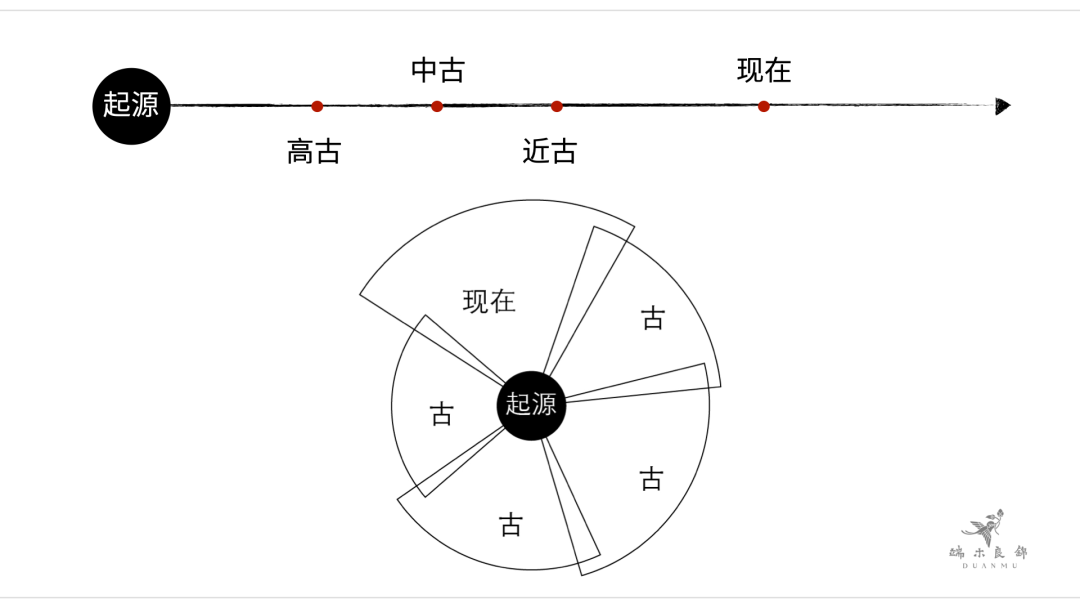
Western tradition is narrative; time is tradition's sole coordinate axis. In this image, a string of points forms a line, left to right corresponding to ancient to present — this is Western tradition.
But Chinese traditional accumulation is achieved through repeated layering of rhetoric from different angles surrounding narrative. For us today, Chinese tradition is not a line but a field. In this field, spatial angle outweighs temporal length as the variable we emphasize in comprehending tradition.
In a tradition system dominated by angular variables, the advantage of continuity through inheritance is weakened. This is one deep reason why some Chinese time-honored brands prove less compelling than century-old Western brands.
Take, for example, a shop sign founded during the Tongzhi reign. The temporal value it holds isn't merely a matter of how many years have accumulated; it's also shaped by the layers of cultural meaning that the Tongzhi era name can penetrate upward and downward. Unfortunately, Qing court culture occupies a naturally disadvantaged position within the field of identity constructed by the classical studies system. And no brand exists that can penetrate to an advantageous position (say, the Song dynasty) to inaugurate its own history. Meanwhile, Western innovative expressions of tradition generally stop at the last five hundred years. So within a nonlinear tradition system, if Chinese premium consumer brands compete with Western brands on the accumulation of these past five hundred years, we hold no advantage.
If we can't compete with Westerners on linear temporal accumulation, then what can we Chinese compete on? Don't worry — although under China's rhetorically activated mode of tradition, the sense of continuity built through linear temporal accumulation is weakened, across the long river of history we actually hold greater advantage in making large-span creative leaps through time. This is the unique convenience that Chinese tradition offers us.
In other words, Chinese people today stand closer to high antiquity than Westerners do. Consider: Western innovative expressions of tradition struggle to break through the medieval barrier and penetrate back to Greece and Rome, yet we can easily traverse Song, Yuan, Ming, and Qing to reach directly toward Zhou, Qin, Jin, and Tang.
This is precisely why Duanmu Liangjin particularly favors drawing from high antiquity themes. The brand has developed works based on The Goddess of the Luo River; it's currently releasing Peach Blossom Spring. These themes appear not old at all — they're even younger than Ming or Qing subjects. Why? Because our tradition is detemporalized, nonlinearly accumulated, intensely field-like, cyclically recurring. Put simply: while we may not dominate the sprint, we leave all others behind in the marathon.
**/ 08 / **
The subtle balance between likeness and unlikeness — this is the craft of rhetoric
Earlier we dug from aesthetic identity deep into cultural identity, introduced the classical-historical system that constructs Chinese cultural identity, and traced back to the rhetorical mode of thinking characteristic of Chinese people. We then looked back at Chinese tradition from this mode of thinking, bringing the perspective of the creative practitioner. Now that we have the perspective, how do we actually execute in aesthetic creation?
For Chinese people, what stands between tradition and innovation? In fact, just one step of rhetoric.
Whenever I feel uninspired about a traditional theme, I ask myself: if I were to make this narrative rhetorical, what would I do? How would I complete the transformation from "I'm very happy today" to "I'm so happy I'm flying"? Inspiration usually follows.
This operation of transforming narrative into rhetoric is particularly well-suited to cultural innovation in the Chinese context, because it aligns with Chinese patterns of thinking and can rapidly establish cultural identity. Fail to do this, and you often embarrass yourself.
Here's an example. A couple years ago, a certain luxury brand released a bag that directly printed Renaissance painter works onto it, achieving decent market response. If I printed Dwelling in the Fuchun Mountains onto a bag, would I get equally good results?
Many designers do this now, but most results feel tacky. Is it because we lack ethnic confidence? I don't think so. Or is Dwelling in the Fuchun Mountains itself tacky? Definitely not. Western creative thinking is narrative; this copy-paste approach, like deconstruction via graveyard runway shows, is a characteristically narrative design method — natural for Westerners. But when we copy it and use it as rhetoric, it necessarily fails. It's like complimenting a girl by saying "You're so beautiful, you look just like my favorite girl." "My favorite girl" is a narrative expression; using it as rhetoric produces an effect that's simultaneously tacky and creepy.
Through this counterexample, perhaps everyone can understand how to make tradition rhetorical. Copy-paste and deconstruction both fail because they're extreme methods for handling narrative — neither end is rhetoric. What lies between them is rhetoric. Qi Baishi said: "Too unlike deceives the world; too alike panders to vulgarity." This subtle balance between likeness and unlikeness — this is the craft of rhetoric. For Chinese brands to succeed through design, this is where effort must go.
**/ 09 / **
Case Study:
How does Duanmu Liangjin conduct aesthetic source-tracing?
Let's analyze two relatively successful design cases from Duanmu Liangjin.
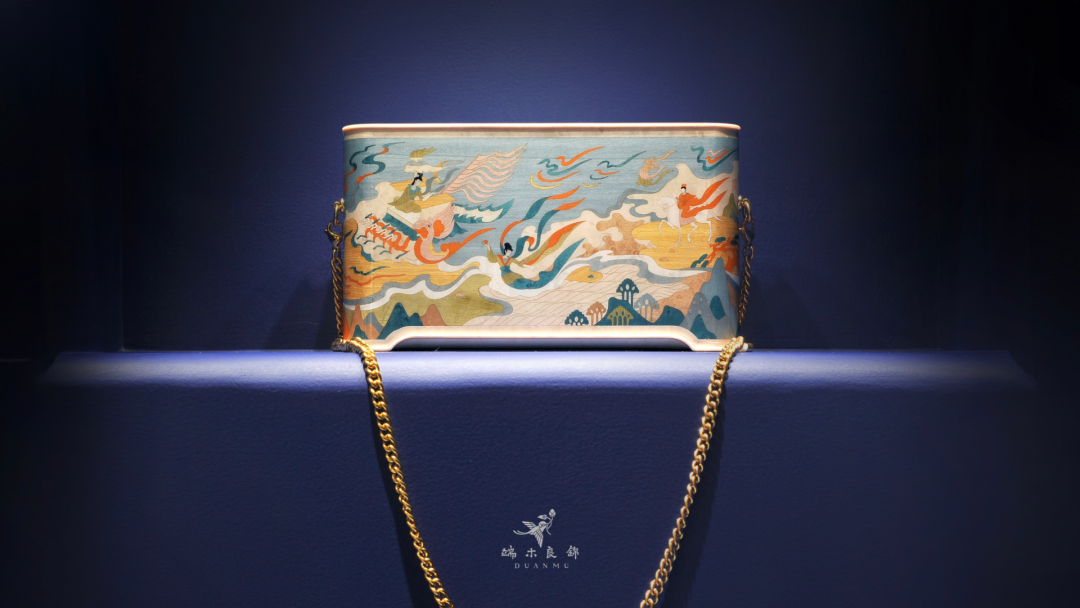
First, this is our previous season's thematic pattern. It can be seen as a successful rhetoric upon the famous Chinese painting The Goddess of the Luo River. We treated with extreme care the Wei-Jin period human figures described in the Luo River text, as well as traditional elements like celestial immortals, riverside fragrant grasses and trees. Because the original painting has been destroyed, we not only referenced the Song dynasty copy of The Goddess of the Luo River, but also sought extensive reference material from sculptures and pictorial bricks contemporary with Cao Zhi himself. Ultimately, we beautifully recreated the narrative climax described in the Luo River text — that instantaneous moment when the goddess departs from Cao Zhi.
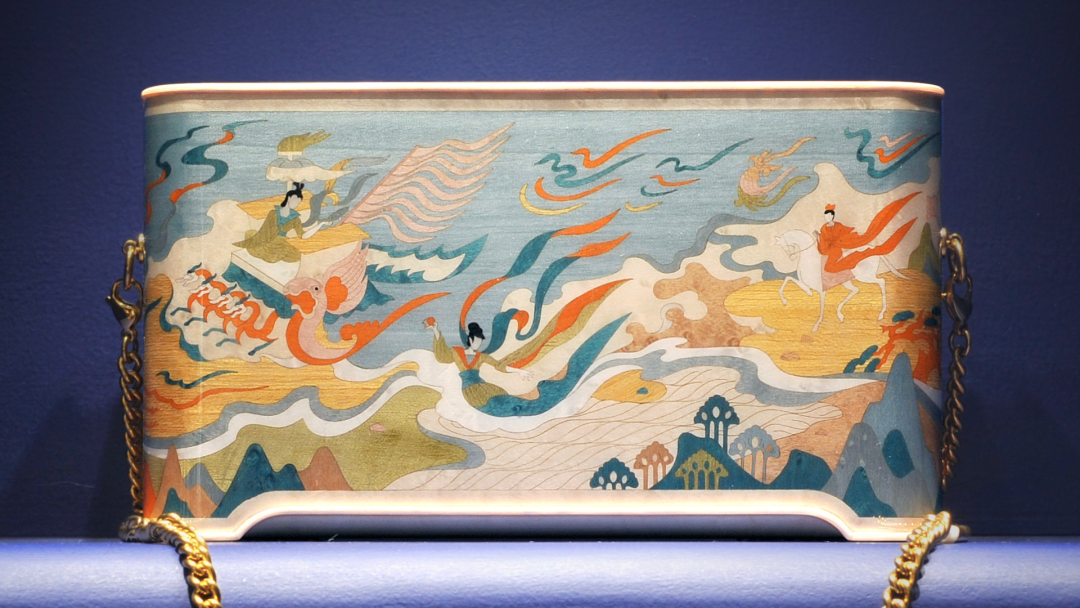
The preceding work must fully respect tradition, ensuring the creation "does not deceive the world." Beyond this, we must be as bold as possible. Take color, for instance — these colors constitute an exaggerated rhetoric upon the original work, bringing fashion sensibility. And through what medium do we present color?
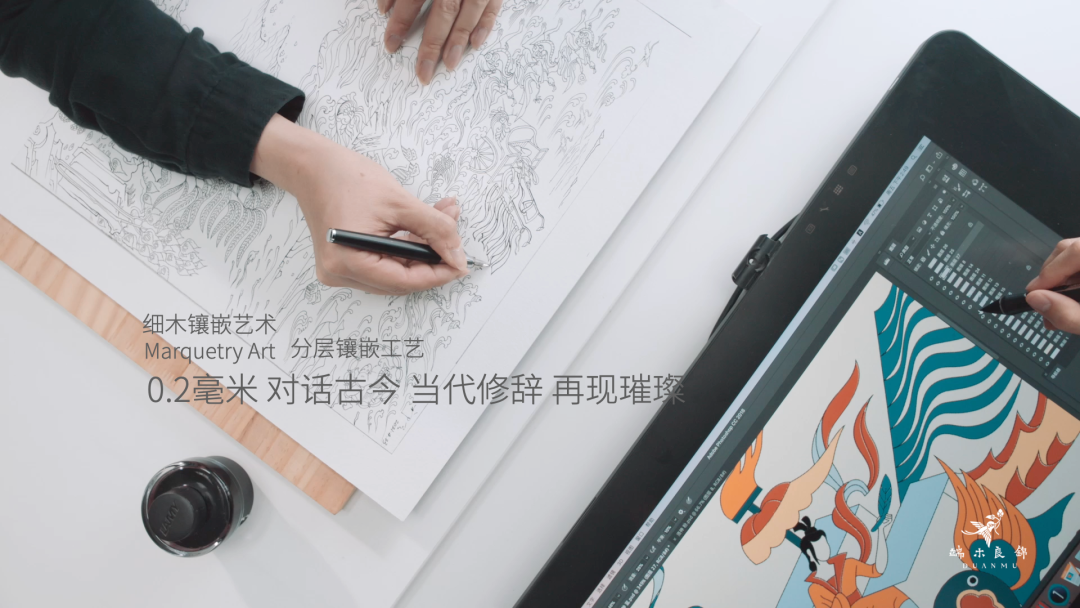
We don't use brush and pigment, but rather different colored woods, cut and assembled through marquetry to complete the entire image. This portion of the work ensures the creation "does not pander to vulgarity," bringing contemporary significance to the recreation of traditional themes.
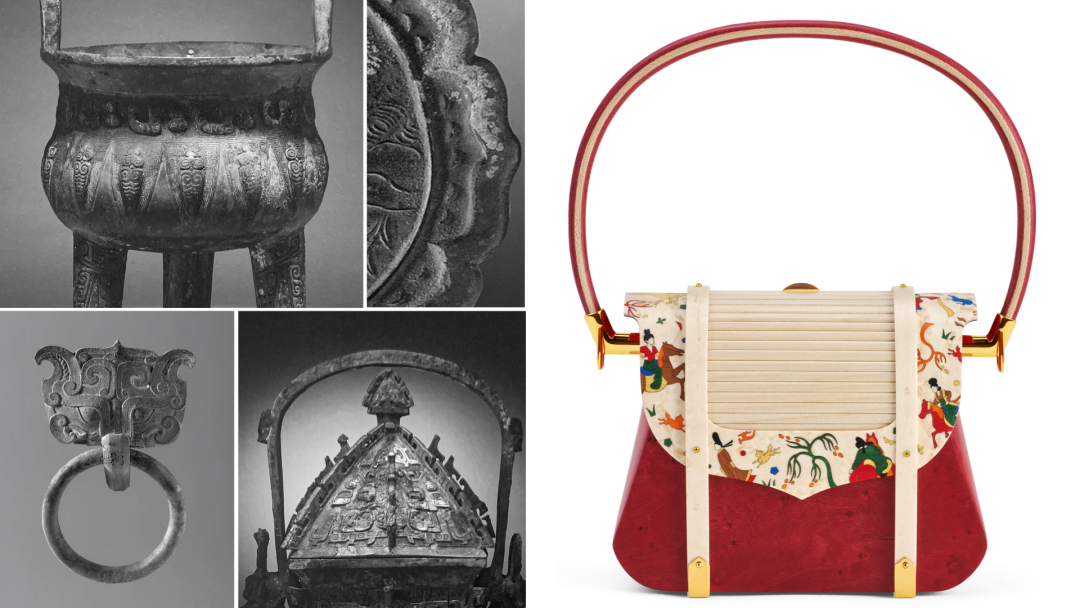
Another case concerns this small bag. Every curve in its form derives from the spiritual resonance of high antiquity bronzeware, yet not a single curve directly copies any bronzeware contour, even partially. This is an act of rhetoric.
Shang-Zhou bronzeware constitutes the narrative origin point of China's formal world; all subsequent object forms are rhetoric upon it. Han dynasty lacquerware, Song dynasty porcelain, Ming-Qing Yixing teapots — their formal inspirations all derive from Shang-Zhou bronzeware.
How should we Chinese people approach object form design today? Those lacquerwares, porcelains, and teapots have already set examples for us. I don't mean copying them, but rather placing them alongside bronzeware for comparative study, examining where these later objects' designs and conceptions originated. Summarize the formula of their rhetoric, then substitute our own parameters — the result naturally emerges.
Finally, let me summarize my view on globalization. Recently many people ask me: "You can figure out these Chinese matters, but how do you get Westerners to accept them too?" When I answer, I often quote the final line from The Later Memorial on Dispatching the Troops: "Your servant will bend to the task until bones rattle, and only desist upon death; as for success or failure, advantage or harm, these lie beyond what your servant's limited vision can foresee."
In the deep waters of culture,隔阂 between China and the West is inevitable. Any superficial bridging produces few lasting results. Moreover, brands related to beauty and culture must firmly defend national boundaries. This means all our efforts exchange for actively elevated competitiveness, not passively evolved adaptability. Thus, questions surrounding how Duanmu Liangjin might globalize become: as your competitiveness continuously strengthens, will the world accept you? And this question, I believe, should be left for the world to answer.
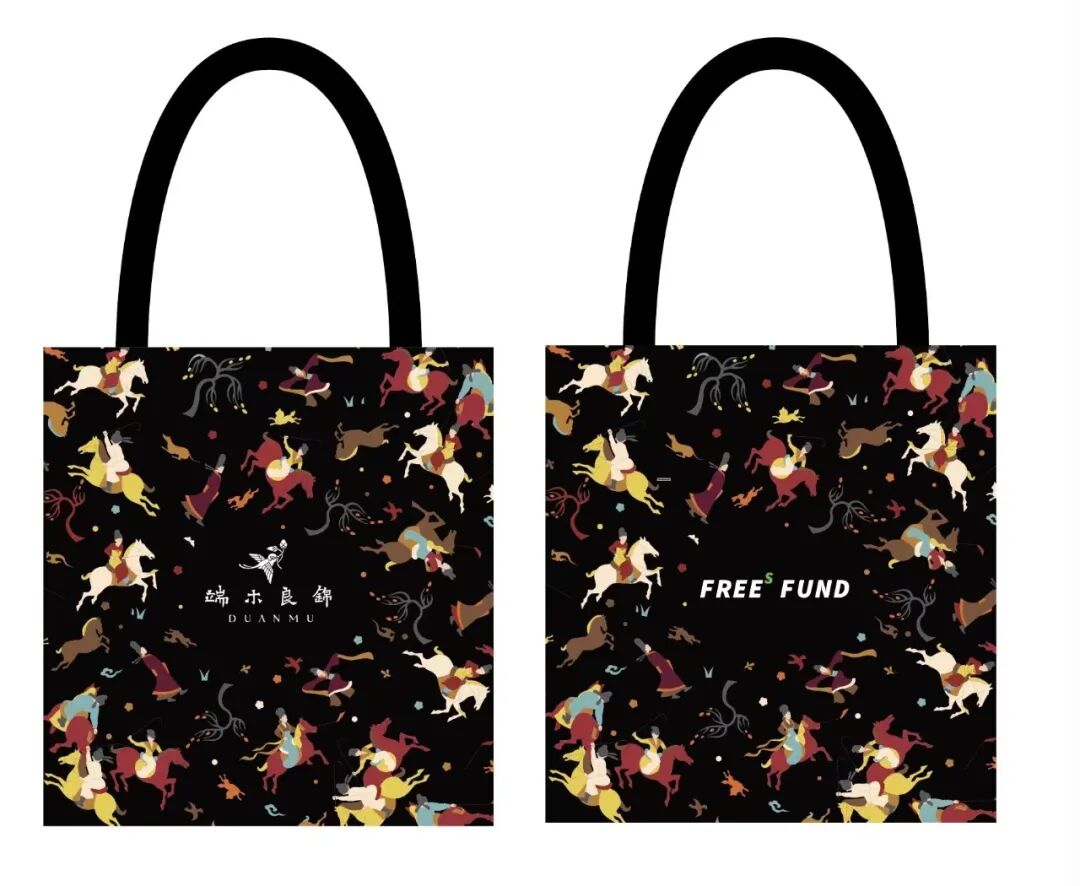
Reader Giveaway We welcome you to share your perspectives on traditional culture and consumer markets in the comments below. By January 11, 21:00, the 6 most thoughtful comments will each receive a Duanmu Liangjin-designed canvas tote.

If You Don't Lose the Domestic Rat Race, You'll Win Globally | Li Feng's New Year Consumer Outlook
What Kind of Spiritual Consumption Does Gen Z Need? | 2021 FreeS Fund Investor Annual Summit
Expansion or Store Closures? Reassessing Offline Opportunities | Li Feng Column